Learning how to care for a pineapple plant is easier when you understand that pineapples are tropical plants, not ordinary houseplants. They thrive in warmth, strong light, and soil that drains quickly. Their stiff, spiky leaves make them attractive indoor plants, patio features, and container-grown fruit plants.
However, many growers run into the same problems: brown leaf tips, yellowing leaves, slow growth, or a plant that never produces fruit. These issues often result from insufficient sunlight, overwatering, cold temperatures, or unrealistic expectations about fruiting.
The good news is that pineapple plants are relatively low-maintenance once their growing conditions are right. This guide explains how to grow a pineapple plant indoors or outdoors, how often to water it, which soil to use, how to fertilize it, and how to recognize common problems before they become serious.
Quick Answer
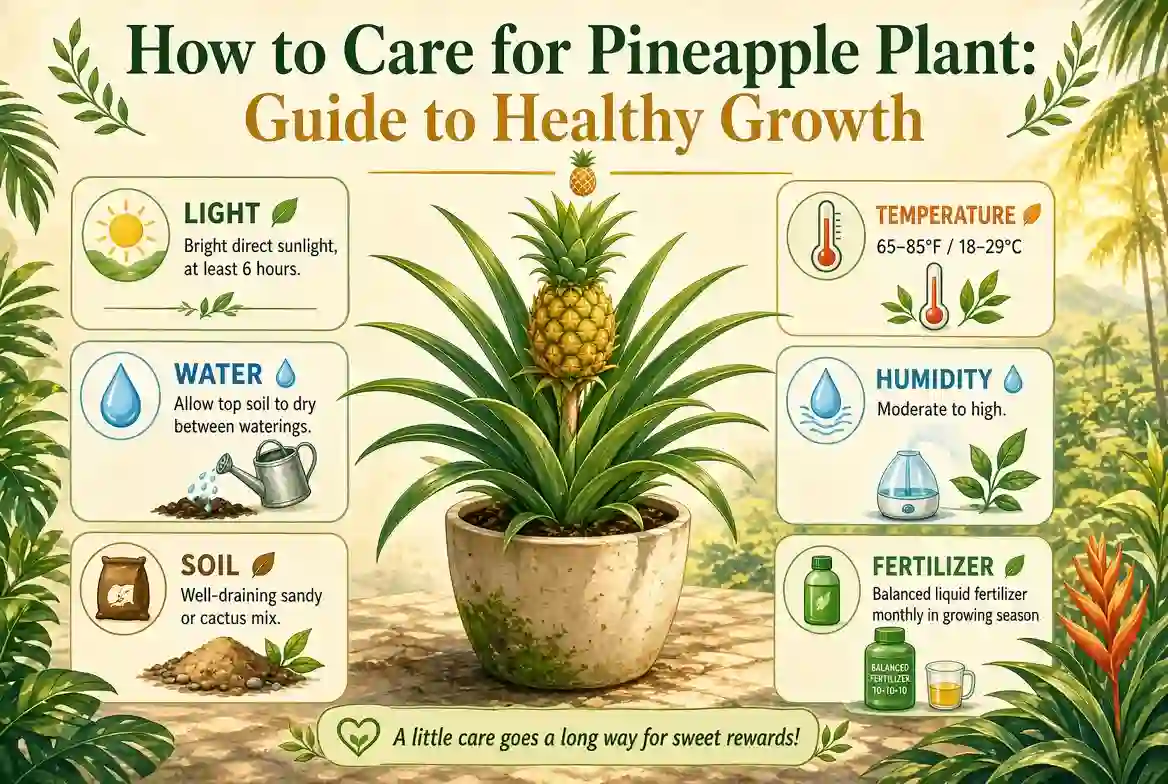
To care for a pineapple plant, give it at least 6 hours of bright sunlight daily, warm temperatures, and well-draining soil. Water when the top layer of soil begins to dry, and never leave the roots sitting in water. Use a pot with drainage holes and feed lightly during active growth. Pineapple plants grow slowly and need patience, especially indoors. With consistent warmth, strong light, and proper watering, you can grow a healthy pineapple plant from a leafy crown or an established nursery plant.
1. Understand Your Pineapple Plant


7
The pineapple plant (Ananas comosus) is a tropical perennial in the bromeliad family. Unlike fruit trees, it grows as a low rosette of long, firm leaves. A mature plant produces a flower stalk that develops into a pineapple fruit under suitable conditions.
You can grow one from:
- A pineapple crown: The leafy top removed from a store-bought fruit.
- A nursery plant: Usually the easiest choice if you want a healthy, established plant.
- A sucker or slip: A small shoot produced by a mature pineapple plant.
A crown is an inexpensive way to start, but it takes time to establish roots and grow large enough to fruit. A nursery plant or sucker may reach maturity sooner, depending on its age and growing conditions.
Important: A pineapple plant can grow well as an ornamental houseplant without producing fruit. Indoor plants often receive less light than they need for reliable flowering.
2. Give Your Pineapple Plant Enough Sunlight


9
Sunlight is one of the most important factors in pineapple plant care. Pineapples need strong light to produce sturdy leaves and store enough energy for flowering and fruit development.
How much sunlight does a pineapple plant need?
Aim for at least 6 hours of direct sunlight daily, with more bright light often beneficial when the plant is acclimated and temperatures are suitable.
- Indoors: Place it near your brightest sunny window, ideally one receiving several hours of direct sun.
- Outdoors: Choose a sunny patio, balcony, or garden location.
- In very hot climates: Watch for leaf scorching during extreme heat, particularly after moving a plant from indoors to direct afternoon sun.
- In winter: Move it to the brightest available spot and consider a grow light if natural light is limited.
How to prevent sunburn
A pineapple plant moved suddenly from a dim room into intense sunlight may develop pale, bleached, or brown patches.
Introduce it to stronger light gradually over about one to two weeks. Increase its exposure every few days and monitor the leaves.
Expert tip: If your pineapple plant grows long, weak leaves or leans strongly toward a window, it may need more light. Rotate the pot occasionally for more balanced growth.
Image suggestion: A 16:9 infographic comparing a compact pineapple plant in bright sunlight with a stretched plant receiving insufficient light.
3. Water Your Pineapple Plant Correctly


9
Pineapple plants tolerate brief periods of dryness better than constantly waterlogged roots. Their roots need oxygen, so excess moisture around the root system can cause rot.
How often should you water a pineapple plant?
There is no perfect fixed schedule. Watering frequency depends on temperature, sunlight, pot size, soil composition, and whether the plant grows indoors or outdoors.
Use this practical method:
- Check the top inch or two of soil with your finger.
- If the soil is still damp, wait and check again later.
- If it has begun to dry, water the soil thoroughly.
- Let excess water drain completely from the pot.
- Empty any saucer that collects runoff.
In warm, sunny weather, the plant may need water more often. In cool weather or low indoor light, the soil dries more slowly, so watering should be less frequent.
Should you pour water into the center of the plant?
Pineapples form a central rosette that can collect water. In suitable outdoor conditions, some moisture in this area is normal. Indoors, however, repeatedly filling the crown while air circulation is poor can encourage stagnant moisture and rot.
For container plants, focus on watering the soil and allowing the crown to dry between periods of moisture.
Signs of watering problems
| Symptom | Possible cause | What to do |
|---|---|---|
| Yellowing lower leaves with wet soil | Overwatering or root stress | Let the soil dry appropriately and check drainage |
| Brown, crispy leaf tips | Dry conditions, salt buildup, or inconsistent watering | Review moisture and water quality |
| Soft, dark plant base | Possible crown or root rot | Remove standing water and inspect the affected tissue |
| Wrinkled or limp leaves with dry soil | Underwatering or damaged roots | Water thoroughly and reassess drainage |
Do not water just because the surface looks dry. A deep pot may remain wet lower down, especially in a dense potting mix.
4. Choose the Right Soil and Pot
Pineapple plants need a growing medium that retains some moisture but drains quickly. Heavy garden soil can compact inside a container and restrict oxygen around the roots.
Best soil for pineapple plants
Use a loose, well-draining mix. A suitable starting blend is:
- 2 parts quality potting mix
- 1 part perlite or pumice
- 1 part fine orchid bark or another coarse, aerating ingredient
This is a flexible starting point rather than a strict formula. In a hot, dry environment, you may need a mix that holds slightly more moisture. In a humid environment, stronger drainage and airflow are especially helpful.
A slightly acidic to near-neutral growing medium is generally suitable. Avoid soil that remains saturated for days.
Which pot should you use?
Choose a pot with several drainage holes. Terracotta is useful because its porous sides help the growing medium dry faster, although plastic pots can work well with appropriate soil and careful watering.
Select a pot only moderately larger than the root ball. An oversized pot contains more unused soil, which may remain wet for too long.
Common mistake: Adding gravel at the bottom of a pot does not fix poor drainage. Use a suitable mix throughout the container and ensure the drainage holes remain unobstructed.
Image suggestion: A labeled soil-and-pot diagram showing potting mix, perlite, orchid bark, roots, and drainage holes.
5. Maintain Warm Temperatures and Suitable Humidity
Pineapple plants grow best in warm conditions. Cold temperatures slow growth, and frost can seriously damage or kill the plant.
| Growing condition | Recommended approach |
|---|---|
| Ideal temperature | About 68–86°F (20–30°C) |
| Cold protection | Move indoors before temperatures approach 50°F (10°C) |
| Humidity | Moderate to moderately high humidity is helpful |
| Air circulation | Keep air moving gently around the foliage |
| Seasonal care | Reduce watering and feeding when growth slows |
These temperature recommendations are practical targets for home growing; exact tolerance varies with plant condition and exposure.
North Carolina Extension Gardener Plant Toolbox
+1
Growing pineapple in a hot climate
In hot regions, including areas with intense summer sun, container plants can dry quickly. Check soil moisture more frequently during heat waves, but do not keep the soil constantly wet.
If the leaves become scorched or the pot becomes extremely hot, provide light afternoon shade and consider a lighter-colored container. Gradual acclimation is still important when moving plants outdoors.
Growing pineapple indoors during winter
Keep the plant away from cold windows, air-conditioning drafts, and sudden temperature changes. Growth may slow during shorter, darker days.
Water less frequently when the soil dries slowly, but do not let the plant remain severely dehydrated for extended periods.
Image suggestion: A 16:9 seasonal-care infographic showing a pineapple plant in summer sunlight and beside a bright indoor window during winter.
6. Fertilize for Strong Leaves and Future Fruit
Pineapple plants benefit from regular but measured feeding while they are actively growing. Fertilizer supports healthy foliage and the development of a mature plant capable of flowering.
Which fertilizer is best?
A balanced liquid houseplant fertilizer or a suitable slow-release fertilizer can work. Follow the product label and choose a formulation appropriate for container plants.
For indoor plants, a practical approach is to:
- Feed during active growth in spring and summer.
- Start with a diluted liquid fertilizer, often around half the label strength.
- Apply it to moist soil rather than a completely dry root ball.
- Reduce or pause feeding when growth slows in cool, low-light conditions.
- Avoid piling fertilizer granules into the plant’s central rosette.
UF/IFAS guidance for landscape-grown pineapples describes balanced fertilizer applications during growth, while indoor guidance commonly recommends reduced-strength feeding. Follow the label for the product you use.
Ask IFAS – Powered by EDIS
+1
Can too much fertilizer harm a pineapple plant?
Yes. Excess fertilizer can cause salt buildup and brown leaf tips or margins. It may also damage roots, especially when the growing medium is already dry or poorly drained.
If you notice a crust on the soil surface or repeated tip burn after feeding, pause fertilizer applications. If drainage is good, flush the pot with clean water and allow it to drain fully.
Expert tip: Do not try to force fruit production with extra fertilizer. A pineapple must reach suitable maturity, and strong light and warmth are more important than excessive feeding.
7. How to Grow a Pineapple Plant From a Crown


8
Growing a pineapple from a store-bought fruit crown is an affordable way to start. The main challenge is preventing the crown from rotting before it establishes roots.
Step-by-step propagation
- Choose a healthy pineapple. Select a fruit with a firm, green crown and no obvious rot or mushy leaves.
- Remove the crown. Twist it off or cut it from the fruit. Remove any remaining juicy fruit flesh, which can rot after planting.
- Expose the stem. Carefully remove several lower leaves to reveal a short section of stem. Avoid damaging the central growing point.
- Let the cut end dry. Leave the crown in a dry, shaded, well-ventilated place for a few days so the cut surface can dry.
- Plant in a draining mix. Use a small pot with drainage holes. Bury the exposed stem while keeping the leafy base above the soil.
- Water lightly and provide warmth. Moisten the soil without saturating it. Keep the crown warm in bright light, initially avoiding harsh direct sun while it establishes.
- Check for root development. New growth and resistance to a gentle tug can indicate establishment. Avoid repeatedly pulling the crown out to inspect the roots.
- Increase light gradually. Once the crown is established, acclimate it to stronger sunlight and repot as the root system grows.
University extension guidance recommends removing fruit remnants, allowing the cut base to dry, and using a well-drained medium. Rooting time varies with warmth and growing conditions.
ucanr.edu
+1
Should you root a pineapple crown in water or soil?
Soil propagation is a practical choice because it avoids transferring delicate water-grown roots into a different environment. Water rooting is sometimes attempted, but the crown’s base must not remain submerged for long periods without oxygen.
If you prefer water propagation, keep only the lower stem in water and change the water regularly. Move the crown into a draining potting mix once roots develop.
Common mistake: Planting a crown with fruit flesh still attached. The decaying flesh can encourage rot, especially in warm, wet conditions.
Image suggestion: A four-panel propagation infographic showing crown preparation, drying, planting, and root establishment.
8. How Long Does a Pineapple Plant Take to Produce Fruit?
Pineapple plants are slow-growing. A plant grown from a crown may take around two to three years or longer to flower and produce a ripe pineapple, depending on variety, climate, light, and plant size. Some well-grown plants in tropical conditions may fruit sooner.
North Carolina Extension Gardener Plant Toolbox
+2
A plant that looks healthy but has not produced fruit is not necessarily being neglected. It may simply be too young or too small.
The pineapple growth stages
Stage 1: Rooting and establishment
First several weeks to months
The crown develops roots and begins producing new leaves. Focus on warmth, careful watering, and gradually stronger light.

Stage 2: Leaf and plant growth
Often many months to several years
The plant builds a larger rosette. Strong light, suitable nutrition, and healthy roots help it reach flowering size.

Stage 3: Flowering and fruit development
Several months after flowering begins
Flowers form in the center, followed by a developing fruit. Fruit maturation often takes several months, depending on conditions.
Why isn’t my pineapple plant producing fruit?
Common reasons include:
- Insufficient light: The plant may stay small or grow weakly.
- Immaturity: A young crown needs time to reach adequate size.
- Cold conditions: Low temperatures can slow growth and delay flowering.
- Poor overall health: Damaged roots, inadequate nutrition, or prolonged waterlogging can limit development.
- Limited growing space: A very small container can restrict root development and plant size.
Do not use unverified home remedies or harsh chemical treatments to force flowering. First improve the plant’s growing conditions and allow it to mature.
9. How to Care for a Pineapple Plant Indoors


10
A pineapple plant can make an unusual indoor focal point, but fruit production indoors is less predictable than foliage growth.
Choose the brightest location
Place the plant beside a bright window that receives substantial sunlight. If natural light is weak, a grow light can supplement it. Keep the light at the distance recommended by its manufacturer.
Avoid overwatering in indoor conditions
Indoor pots often dry more slowly than outdoor containers. Check the soil before watering rather than following a fixed weekly routine.
A decorative outer pot can hide standing water. Remove the nursery pot after watering, let it drain, and empty the outer container before replacing it.
Keep the leaves clean
Dust can accumulate on long leaves, particularly in rooms with low airflow. Wipe them gently with a damp, soft cloth. Avoid leaf-shine products that can leave residues.
The leaf edges may be sharp, so handle the plant carefully and keep it away from narrow walkways.
Manage pests early
Inspect leaf bases and the undersides of leaves for mealybugs, scale insects, and spider mites. If pests appear:
- Isolate the plant from nearby houseplants.
- Remove small infestations with a damp cloth or an appropriate targeted treatment.
- Follow the treatment label and repeat only as directed.
- Check nearby plants because pests can spread.
North Carolina State Extension identifies mealybugs, scale insects, and spider mites among the pests that can affect pineapple plants.
North Carolina Extension Gardener Plant Toolbox
10. Growing Pineapple Plants Outdoors
In frost-free tropical or subtropical climates, pineapples can grow outdoors in garden beds or containers. In cooler regions, containers make it easier to move plants into shelter before cold weather arrives.
Select a sunny, well-drained site
Choose a location with strong light and soil that does not remain waterlogged after rain. Heavy clay and low-lying areas that collect water are poor choices unless drainage is improved.
Protect plants from cold
Pineapples are tropical and are not frost-tolerant. Move potted plants indoors or into a protected greenhouse when cold conditions threaten.
North Carolina Extension Gardener Plant Toolbox
+1
Give mature plants room
A mature pineapple can become broad, with leaves extending well beyond the center. Allow enough space for its foliage and avoid placing it where people regularly brush against the sharp leaf tips.
In a garden bed, keep lawn equipment away from the plant’s base. Mechanical damage to the leaves and growing point can weaken the plant.
Seasonal care at a glance
| Season or condition | Main priority |
|---|---|
| Warm, bright growing season | Water as needed, feed moderately, and provide strong light |
| Extremely hot weather | Monitor moisture and protect pots from excessive heat |
| Rainy or humid periods | Ensure drainage and good airflow |
| Cool weather | Reduce watering as drying slows and protect from cold |
| Indoor winter growth | Provide maximum available light and avoid cold drafts |
Image suggestion: A 16:9 infographic showing outdoor pineapple care through sunny, rainy, and cool-weather conditions.
11. Common Pineapple Plant Problems and How to Fix Them
A pineapple plant’s leaves can reveal a lot about its growing conditions. Before treating a symptom, examine the soil, roots, light exposure, and recent changes in care.

Yellow leaves
Older outer leaves naturally age and die. However, widespread yellowing, especially with wet soil, may indicate overwatering or root damage.
Fix: Check moisture below the surface, confirm the drainage holes work, and inspect the base for soft or dark tissue.

Brown leaf tips
Dry air, irregular watering, fertilizer salts, or physical damage can contribute to browning.
Fix: Review your watering routine and fertilizer use. Trim only the dry portion if desired, leaving healthy green tissue intact.

Soft or rotting center
A deteriorating central growing point can signal serious crown rot, especially when moisture remains trapped in cool, poorly ventilated conditions.
Fix: Stop keeping the crown wet, improve drainage and airflow, and inspect the plant for spreading rot. A severely damaged growing point may not recover.

Slow growth or weak leaves
Low light, cold temperatures, poor roots, or insufficient nutrition may limit growth.
Fix: Move the plant to a brighter, warmer location, then review its roots and feeding routine before adding fertilizer.

Bleached or scorched patches
Leaves can suffer sunburn after a sudden move from indoors to intense outdoor sunlight.
Fix: Acclimate the plant gradually. Damaged areas will not turn green again, but healthy new growth can replace affected foliage over time.
Pineapple plants can also develop root and base rot in persistently wet conditions. Good drainage, clean tools, and adequate airflow help reduce disease risks.
North Carolina Extension Gardener Plant Toolbox
+1
12. Should You Prune a Pineapple Plant?
Pineapple plants generally need little pruning. Their leaves support growth, so removing too many healthy leaves can weaken the plant.
Prune only when necessary:
- Remove completely dead or badly damaged leaves with clean, sharp scissors.
- Cut away damaged tips if they are unsightly, following the natural shape of the leaf.
- Avoid cutting into the central growing point.
- Remove diseased tissue carefully and clean your tools afterward.
Do not remove healthy outer leaves simply to make the plant look smaller. If a mature pineapple is spreading too widely for its location, moving it to a more suitable space is usually better.
Safety note: Pineapple leaves can have sharp edges and pointed tips. Wear gloves and handle the plant carefully when pruning or repotting. Plant sap may irritate sensitive skin.
North Carolina Extension Gardener Plant Toolbox
+1
13. What Happens After Your Pineapple Produces Fruit?
A mature pineapple plant produces a single main fruit from its central growing point. After fruiting, the original plant gradually declines, but it may produce side shoots that can grow into new plants.
These shoots are commonly called suckers or pups, while shoots arising around the fruit stalk are often called slips.
To continue growing pineapples:
- Allow healthy pups to develop until they are large enough to handle.
- Separate them carefully when appropriate, keeping as much healthy tissue as possible.
- Let any damaged cut surfaces dry before planting.
- Place each shoot in a well-draining growing medium.
- Give the new plant warmth, appropriate light, and careful watering.
Leaving some suckers attached can maintain a clump of plants. Removing selected shoots may help direct resources toward the developing fruit, although results depend on the plant and growing conditions.
Gardening Solutions
+1
Once the main fruit is harvested, do not assume the entire planting is finished. Check the base for healthy offsets before removing the older mother plant.
Image suggestion: A 16:9 propagation infographic showing a mature pineapple plant with a developing fruit, a side pup, and a separately potted young plant.
14. Common Mistakes to Avoid
Small care errors can become major problems when repeated. Avoid these common mistakes:
- Watering on a rigid schedule: Check the soil first because drying rates change with light and temperature.
- Using heavy, compacted soil: Choose a mix that allows excess water to drain and air to reach the roots.
- Keeping the plant in a dark corner: Low light can slow growth and make fruiting less likely.
- Moving it into direct sun too quickly: Gradual acclimation helps prevent leaf scorch.
- Using an oversized pot: Excess soil can stay wet around a small root system.
- Applying too much fertilizer: Stronger feeding does not guarantee faster flowering or larger fruit.
- Expecting quick fruit production: Crown-grown plants can take several years to mature.
- Ignoring pests: Inspect the leaf bases and undersides regularly.
- Leaving water in an outer pot: Empty collected water after watering.
- Cutting the central growing point: Serious damage can prevent the plant from growing normally.
The most useful habit is to observe the plant before changing its care. One yellow leaf does not automatically mean a nutrient deficiency, and brown tips do not always mean underwatering.
Frequently Asked Questions
1. How often should I water a pineapple plant?
Water when the upper inch or two of soil begins to dry, then allow excess water to drain. Plants in hot, sunny locations may need more frequent watering than plants growing indoors in winter.
2. Can I grow a pineapple plant indoors?
Yes. Grow it near a bright, sunny window or supplement natural light with a grow light. Use a draining potting mix and protect it from cold drafts. Indoor fruiting is possible, but it is not guaranteed.
3. How much sunlight does a pineapple plant need?
Aim for around six hours or more of strong light daily, adjusting exposure to your climate and the plant’s acclimation. Insufficient light can slow growth and delay flowering.
4. Why are my pineapple plant’s leaves turning yellow?
Possible causes include normal aging of older leaves, overwatering, root damage, or nutritional problems. Check the soil and roots before deciding which correction is needed.
5. Can a pineapple plant survive winter?
It can survive indoors in a bright, warm location. It is not frost-tolerant, so outdoor plants in cold climates need protection or must be moved inside before frost arrives.
6. How long does it take to grow a pineapple from a crown?
Rooting may take several weeks, while producing a mature plant and fruit can take two to three years or longer. Light, warmth, variety, and growing conditions affect the timeline.
North Carolina Extension Gardener Plant Toolbox
+1
7. Should I cut brown tips off pineapple leaves?
You can trim dry tips for appearance, but leave healthy green tissue intact. Trimming will not correct the underlying cause, so review watering, light, and fertilizer use as well.
8. Do pineapple plants need a large pot?
They need enough room for their roots and broad foliage, but not an excessively large container. A mature plant may benefit from a larger pot; ensure it has drainage holes and use a well-draining mix.
9. Why is my pineapple plant growing but not producing fruit?
It may not have reached sufficient maturity, or it may lack the light and warmth needed for flowering. Continue providing suitable care rather than attempting to force flowering with excessive fertilizer.
10. Can I grow a pineapple plant in water permanently?
Water can be used for initial rooting, but a pineapple intended for long-term growth is better planted in a suitable, well-drained growing medium. Permanently submerged roots can lack the oxygen they need.
Conclusion:
Learning how to care for a pineapple plant comes down to a few consistent habits: provide strong light, maintain warm temperatures, use well-draining soil, and water according to actual soil moisture. Feed moderately during active growth and protect the plant from cold weather.
If you are growing a pineapple from a crown, focus first on establishing healthy roots and producing strong leaves. Fruit production takes patience, and a plant that does not fruit immediately is not necessarily unhealthy.
With the right conditions and regular observation, your pineapple can become a striking tropical houseplant or patio plant—and, with enough time and suitable growing conditions, may reward you with a homegrown fruit.

Show a healthy pineapple plant in a terracotta pot, a sunny background, and the title “How to Care for Pineapple Plant.”