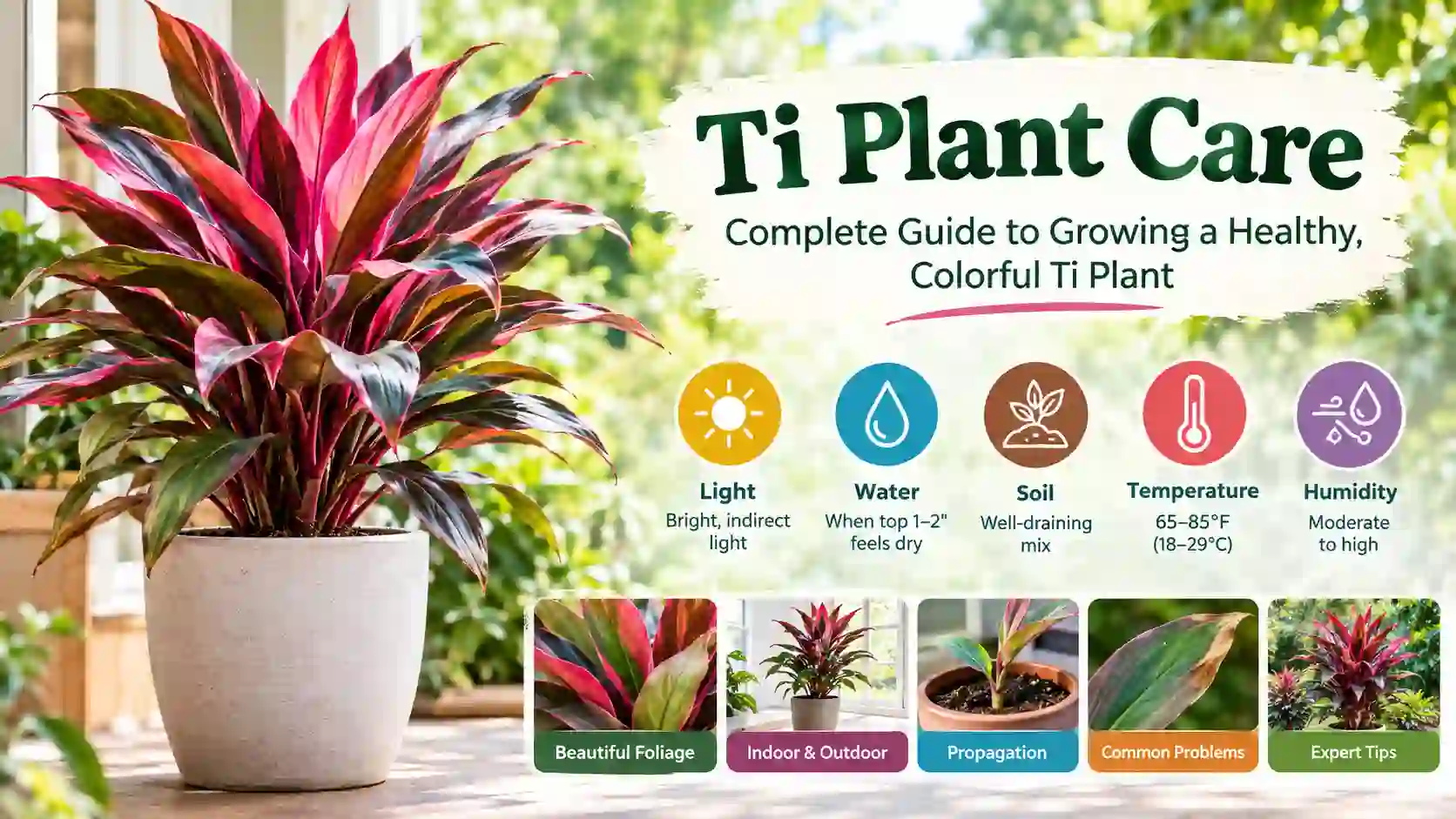
Ti plant care involves providing bright, indirect light, warm temperatures, moderate humidity, and well-draining soil. Water your Ti plant when the top 1–2 inches of soil feel dry, and never let its roots sit in standing water. Keep it away from cold drafts, fertilize lightly during active growth, and remove damaged leaves to maintain its colorful, tropical appearance.
The Ti plant is a tropical foliage plant known for its striking leaves and upright growth. Its botanical name is Cordyline fruticosa, and it is also called the Hawaiian Ti plant or good-luck plant.
Its leaves can display beautiful shades of red, pink, burgundy, purple, and green. This makes it an attractive choice for bright indoor spaces, patios, and tropical gardens.
However, keeping a Ti plant colorful and healthy requires more than occasional watering. Poor lighting, soggy soil, dry air, and cold temperatures can cause disappointing growth.
This guide explains how to care for a Ti plant indoors and outdoors. You will learn how to choose the right location, water correctly, maintain colorful foliage, solve common problems, and propagate new plants.


8
1. Understanding the Ti Plant
Before adjusting your care routine, it helps to understand what kind of plant you are growing.
The Ti plant is a tropical evergreen shrub native to parts of Southeast Asia, Australia, and the western Pacific. It belongs to the asparagus family, Asparagaceae.
Unlike plants grown mainly for their flowers, Ti plants are prized for their decorative foliage. Their leaves grow along upright stems, creating a bold, architectural appearance.
Important characteristics
|
Feature
|
Details
|
| — | — |
|
Botanical name
|
Cordyline fruticosa
|
|
Common names
|
Ti plant, Hawaiian Ti, good-luck plant
|
|
Plant type
|
Tropical evergreen shrub
|
|
Foliage
|
Green, pink, red, burgundy, purple, or variegated
|
|
Growth habit
|
Upright, with leaves arranged along stems
|
|
Mature size
|
Can become several feet tall; size depends on cultivar and growing conditions
|
|
Best indoor location
|
Warm area with bright, indirect light
|
|
Outdoor suitability
|
Warm, frost-free climates or seasonal container growing
|
Source:
North Carolina Extension Gardener Plant Toolbox
+1
Why identifying the plant matters
Not every plant sold as a Cordyline has identical care requirements. For example, Cordyline fruticosa is a tropical species, while Cordyline australis has different growth and climate characteristics.
Check the plant label whenever possible. This guide focuses on Cordyline fruticosa, the colorful tropical Ti plant commonly grown indoors.
2. Choosing the Right Light for Colorful Leaves

Light affects both the growth and appearance of your Ti plant. A suitable location helps it produce healthy leaves while maintaining the distinctive colors of its cultivar.
Bright, indirect light is a reliable starting point
Place your indoor Ti plant near a bright window where it receives plenty of natural light without harsh, prolonged direct sun.
An east-facing window can provide gentle morning sunlight. A bright south- or west-facing window may also work if you filter intense sunlight with a sheer curtain or move the plant slightly away from the glass.
Outdoor plants generally benefit from bright light and partial shade, especially when the afternoon sun is intense.
Can a Ti plant grow in low light?
It may survive in a relatively dim room, but low light can reduce growth and weaken its appearance.
Watch for these warning signs:
- New leaves appear smaller or less colorful.
- Stems become stretched or lean toward a window.
- Lower leaves gradually drop as growth becomes sparse.
- The plant produces fewer new leaves than expected.
Move it gradually toward a brighter location rather than suddenly exposing it to strong sunlight.
Can a Ti plant tolerate direct sunlight?
Some plants adapt to gentle direct sunlight, but intense sun can scorch or bleach foliage, particularly after a sudden change in location.
Acclimate outdoor plants gradually. Start with a sheltered, partly shaded position and increase exposure only if the leaves remain healthy.
Expert tip: If the plant is growing well but its pink or red markings look dull, assess the light before adding fertilizer. More fertilizer will not compensate for inadequate light.
Light guidance:
North Carolina Extension Gardener Plant Toolbox
+1
3. How to Water a Ti Plant Correctly
Watering is one of the most important parts of Ti plant care. The goal is to keep the root zone moderately moist without allowing it to remain waterlogged.
When should you water?
Check the soil rather than following a rigid calendar.
- Insert your finger about 1–2 inches into the potting mix.
- If the upper layer feels dry, check whether the deeper soil remains slightly moist.
- Water when the upper layer has dried and the root zone is beginning to lose moisture.
- Apply water evenly until excess drains from the bottom.
- Empty the saucer so the pot does not remain in standing water.
The exact interval depends on temperature, light, pot size, soil composition, and the season.
Why overwatering causes trouble
Roots need oxygen as well as moisture. Constantly saturated soil reduces the air available around roots and encourages root problems.
Signs that may indicate overwatering include:
- Yellowing leaves, especially when the soil stays wet.
- Soft stems or a persistently unpleasant soil smell.
- Soil that remains wet for many days.
- Wilting despite moist soil.
Do not automatically add more water when a Ti plant wilts. Check the soil first.
What about underwatering?
A plant that becomes excessively dry may develop drooping leaves, crispy edges, or brown tips.
If the soil has become very dry, water it thoroughly and allow excess water to drain. Avoid leaving the pot submerged in water to compensate.
Adjust watering with the seasons
|
Growing conditions
|
Watering approach
|
| — | — |
|
Warm, bright growing season
|
Check soil frequently and water when the upper layer dries
|
|
Cool winter conditions
|
Allow the mix to dry slightly more between waterings
|
|
Air-conditioned indoor room
|
Monitor moisture because airflow and lower humidity can dry foliage
|
|
Rainy outdoor weather
|
Check soil drainage and avoid adding water to already saturated soil
|
Watering recommendations:
North Carolina Extension Gardener Plant Toolbox
+2
Image suggestion: Create a watering infographic showing the correct soil-finger test, water draining through the pot, and a warning against standing water.
4. Best Soil and Pot for Healthy Roots

A Ti plant needs soil that retains some moisture while allowing excess water to escape.
What soil should you use?
Choose a fertile, well-draining potting mix designed for indoor foliage plants.
A practical mix can contain:
- Quality indoor potting soil or peat-free potting compost.
- Perlite or pumice to improve aeration.
- A modest amount of fine bark or another suitable structural ingredient.
The exact proportions are less important than the result: the mix should hold moisture without becoming dense and waterlogged.
Avoid heavy garden soil in indoor containers. It may compact, drain poorly, and make watering harder to manage.
How to choose a suitable pot
Select a container with drainage holes. A decorative outer pot is fine, but excess water must be able to drain from the inner growing pot.
Choose a container only moderately larger than the existing root ball. An oversized pot can hold more wet soil than the roots can use, increasing the risk of prolonged moisture.
When should you repot?
Consider repotting when:
- Roots are emerging from drainage holes.
- The root ball has become tightly crowded.
- Water runs through the pot unusually quickly because little soil remains.
- Growth has slowed despite suitable light, temperature, and watering.
Spring or early summer is generally a convenient time to repot a healthy, actively growing plant.
Practical tip: If the plant is struggling, inspect the roots before automatically moving it into a larger pot. Damaged roots need appropriate care, not simply more soil.
5. Temperature and Humidity Requirements
Ti plants are tropical and prefer warm, relatively humid conditions. Cold exposure can damage their foliage and slow growth.
Ideal temperature range
A comfortable indoor environment is usually suitable when temperatures remain consistently warm. Aim for approximately 65–85°F (18–29°C) where practical, and avoid exposing the plant to temperatures below about 50°F (10°C).
Keep it away from:
- Cold drafts from open windows.
- Air-conditioning vents blowing directly onto leaves.
- Exterior doors that allow sudden cold air inside.
- Cold glass during winter nights.
How to increase humidity
Dry air can contribute to brown leaf tips and unattractive foliage.
Try these methods:
- Use a room humidifier near the plant.
- Group several houseplants together to create a more humid local environment.
- Place the pot near a pebble tray containing water, ensuring the pot itself stays above the water.
- Keep the plant away from strong, drying airflow.
Misting may provide brief surface moisture, but it does not reliably maintain humidity. Avoid repeatedly wetting the foliage if it remains damp for long periods.
Temperature and humidity guidance:
North Carolina Extension Gardener Plant Toolbox
+1
6. Fertilizing a Ti Plant for Steady Growth
Fertilizer supports new foliage, but excessive feeding can create more problems than it solves.
Which fertilizer should you use?
Use a balanced liquid houseplant fertilizer during active growth. Follow the product label, and consider a reduced concentration if the plant is sensitive or has recently been repotted.
A cautious routine is more useful than frequent heavy feeding.
When should you fertilize?
- Feed during spring and summer when the plant is actively growing.
- Reduce or stop feeding during winter when growth slows.
- Avoid fertilizing a severely stressed plant until you identify and address the cause.
- Do not fertilize dry roots; water appropriately first if the soil is excessively dry.
Signs of excessive fertilizer
Too much fertilizer can cause salt buildup around the roots. Possible symptoms include brown leaf tips, damaged leaf edges, or declining growth.
If you suspect fertilizer buildup, stop feeding. If the pot drains freely and the roots are healthy, flushing the mix with suitable water may help remove excess soluble salts.
Expert tip: Pale leaves do not always mean fertilizer deficiency. Check light, watering, root health, and pests before increasing the feeding rate.
Fertilizer and salt sensitivity:
North Carolina Extension Gardener Plant Toolbox
+2
7. Pruning and Maintaining an Attractive Shape

Pruning helps keep your Ti plant tidy and manageable. It can also encourage new shoots when a healthy stem is cut back under suitable growing conditions.
How to prune a Ti plant
- Use clean, sharp pruning shears.
- Remove completely dead, damaged, or badly discolored leaves.
- If the plant has become too tall or leggy, cut a healthy stem back to a suitable height.
- Make the cut cleanly rather than crushing the stem.
- Keep the plant warm and provide suitable light while it recovers.
New growth may emerge from dormant buds below the cut. The timing and number of new shoots can vary with the plant’s health, cultivar, and growing conditions.
Should you remove brown leaf tips?
You can trim unattractive brown tips with clean scissors. Follow the natural shape of the leaf instead of cutting deeply into healthy green tissue.
However, trimming only improves the appearance. It does not correct the underlying cause.
If brown tips keep returning, investigate:
- Low humidity or drying airflow.
- Inconsistent watering.
- Excess fertilizer salts.
- Sensitivity to fluoride or other substances in the water.
- Root damage or poor drainage.
Image suggestion: A before-and-after illustration showing a leggy Ti plant, a clean pruning cut, and healthy new shoots.
8. How to Propagate a Ti Plant


5
Propagating a Ti plant allows you to grow additional plants from a healthy parent. Stem cuttings and stem sections are commonly used methods.
Method 1: Propagation from stem cuttings
- Choose a healthy stem with at least one viable growth node.
- Use clean pruning shears to take a suitable cutting.
- Place the cutting in a moist, well-draining propagation medium, ensuring a node is positioned appropriately for rooting.
- Keep it warm in bright, indirect light. Maintain moderate moisture without saturating the medium.
- Check periodically for signs of rooting and new growth. Avoid repeatedly pulling the cutting out to inspect it.
Rooting time varies with temperature, cutting condition, and growing conditions. A cutting that has not produced leaves immediately is not necessarily dead.
Method 2: Propagation from stem sections
Ti plants can also grow from sections of mature stem.
- Cut healthy stem material into sections containing viable nodes.
- Place the sections in a suitable propagation medium.
- Maintain warmth, bright indirect light, and consistent but moderate moisture.
- Watch for new shoots and root development.
Correctly orienting the sections can help keep the growing process organized. Labeling the top and bottom before cutting can be useful if you are preparing several pieces.
When is the best time to propagate?
Spring and summer are generally convenient because warmth and active growth support establishment.
Do not take multiple cuttings from a weak or severely stressed plant. Allow the parent plant to recover before removing more material.
Propagation methods:
North Carolina Extension Gardener Plant Toolbox
+1
9. Growing a Ti Plant Outdoors

Ti plants can make striking outdoor accents in warm climates. Their upright form works well in tropical borders, sheltered patios, and large containers.
Choose a sheltered location
Look for a position with:
- Bright light or partial shade suited to the cultivar.
- Protection from harsh afternoon sun when necessary.
- Well-draining soil.
- Shelter from strong winds that can tear or damage leaves.
- Protection from cold temperatures.
Although established plants may tolerate a range of light conditions, colorful cultivars often benefit from bright conditions without excessive harsh sunlight.
Can you grow a Ti plant in a garden?
Yes, if your climate provides suitable warmth and protection. Cordyline fruticosa is generally suited to frost-free tropical and subtropical conditions.
It is commonly listed for USDA hardiness zones 10–12, although local microclimates and cultivar differences matter.
In colder regions, growing the plant in a container makes seasonal protection easier.
Outdoor care through the seasons
|
Season
|
What to do
|
| — | — |
|
Spring
|
Resume active watering and feeding as growth increases. Move outdoor containers outside gradually.
|
|
Summer
|
Monitor soil moisture, protect foliage from excessive sun, and check for pests.
|
|
Autumn
|
Reduce feeding as growth slows. Prepare container plants for cooler weather.
|
|
Winter
|
Move plants into a warm, bright, protected space before damaging cold arrives. Reduce watering as needed.
|
Special advice for hot, dry climates
In places with very hot summers, a Ti plant may appreciate morning sunlight and afternoon protection. Containers can dry quickly in heat, but watering should still depend on soil moisture rather than temperature alone.
If you live in a climate with cool winters, do not assume that summer heat makes the plant winter-hardy. Cold protection remains essential.
Outdoor growing and hardiness:
North Carolina Extension Gardener Plant Toolbox
+1
10. Common Ti Plant Problems and How to Fix Them

A change in leaf color does not always mean the same thing. Look at the whole plant, check the soil, and consider recent changes in light, watering, temperature, and feeding.
Ti plant troubleshooting table
|
Problem
|
Possible causes
|
What to do
|
| — | — | — |
|
Brown, crispy leaf tips
|
Dry air, inconsistent moisture, fluoride sensitivity, or fertilizer salts
|
Check watering, improve humidity, and review water quality and feeding
|
|
Yellowing leaves
|
Overwatering, poor drainage, aging leaves, or other stress
|
Check soil moisture and roots; remove only leaves that are fully dead
|
|
Faded or dull foliage
|
Insufficient light or unsuitable exposure
|
Adjust light gradually and observe new growth
|
|
Brown or scorched patches
|
Harsh direct sunlight, heat stress, or cold injury
|
Move the plant to a more suitable protected location
|
|
Drooping leaves
|
Dry soil, waterlogged roots, temperature stress, or root damage
|
Check the root zone before deciding whether to water
|
|
Slow growth
|
Low light, cool conditions, seasonal slowdown, or root problems
|
Review growing conditions before increasing fertilizer
|
|
Soft stems or rotting roots
|
Persistently wet soil and inadequate drainage
|
Inspect roots, remove damaged tissue where appropriate, and correct drainage
|
|
Fine webbing or stippled leaves
|
Possible spider mites
|
Inspect leaf undersides and treat the pest if confirmed
|
These symptoms can overlap. For example, both underwatering and root damage can cause drooping, so checking the soil is more reliable than guessing.
Why are my Ti plant leaves turning yellow?
Start by checking the moisture level several inches below the surface.
If the soil is wet and heavy, reduce watering and investigate drainage. If it is extremely dry, water thoroughly and reassess the plant.
A single older leaf turning yellow occasionally may be natural aging. Widespread yellowing or rapid decline deserves closer inspection.
Why are the leaf tips turning brown?
Brown tips are a frequent concern with Ti plants.
Try this sequence:
- Check whether the plant is receiving dry airflow from a fan or air conditioner.
- Review the watering routine and look for prolonged dryness or waterlogging.
- Consider whether fertilizer has been applied too heavily.
- If your tap water is high in fluoride or mineral salts, try rainwater or another suitable low-fluoride water source.
- Check for root damage if the problem continues.
Allowing tap water to stand may reduce some chlorine, but it does not reliably remove fluoride or dissolved minerals.
Why is my Ti plant losing its red color?
First, check whether the plant is receiving enough bright light.
Move it gradually to a brighter position if necessary. Avoid immediately placing a plant from a dim room into intense afternoon sunlight.
Also consider the cultivar. Some varieties naturally have more green foliage than others.
Why is my Ti plant dropping leaves?
A few older lower leaves may drop as the plant grows. More extensive leaf loss can indicate environmental stress.
Check for:
- Sudden changes in temperature or location.
- Inadequate light.
- Overwatering or excessive drying.
- Root crowding or root damage.
- Pest infestations.
Correct the underlying problem before removing large amounts of foliage.
Problem identification and pest guidance:
North Carolina Extension Gardener Plant Toolbox
+2
11. Pests and Diseases to Watch For
Ti plants can experience pest problems, especially when growing conditions are stressful or indoor air is dry.
Common pests include spider mites, mealybugs, scale insects, aphids, and thrips.
How to inspect your plant
- Examine the undersides of leaves, where many pests hide.
- Look along stems and leaf joints for small insects, sticky residue, or cotton-like clusters.
- Check for fine webbing, pale speckling, distorted new growth, or unexplained leaf damage.
- Separate a visibly infested plant from nearby houseplants while you investigate.
How to manage an infestation
- Remove a small number of visible pests manually when practical.
- Rinse foliage gently if the plant and growing environment allow it to dry afterward.
- Use an appropriate insecticidal soap or other labeled treatment if necessary.
- Follow the product label and test a small area first when foliage sensitivity is a concern.
- Repeat inspections because a single treatment may not eliminate every life stage.
Avoid applying household chemicals or concentrated cleaning products to the leaves. These can cause additional damage.
What about fungal problems?
Leaf spots and root problems may occur under unsuitable conditions. Good air circulation, appropriate watering, clean tools, and well-draining soil help reduce avoidable stress.
If spots spread rapidly, isolate the plant and inspect its growing conditions before deciding whether a disease treatment is necessary.
Pest and disease information:
North Carolina Extension Gardener Plant Toolbox
+1
12. Is the Ti Plant Toxic to Cats, Dogs, and Humans?

The Ti plant (Cordyline fruticosa) contains saponins and is considered toxic to cats, dogs, and horses. Ingestion can cause gastrointestinal symptoms, and contact with the sap may irritate sensitive skin.
Keep the plant out of reach of pets and children who may chew its leaves. Wear gloves when pruning if your skin is sensitive.
If a pet eats the plant, contact a veterinarian for advice. If a person develops symptoms after ingestion or contact, seek guidance from an appropriate medical or poison-information service.
Safety information:
North Carolina Extension Gardener Plant Toolbox
+1
13. Frequently Asked Questions About Ti Plant Care
Is a Ti plant easy to care for?
A Ti plant is manageable when you provide suitable light, warmth, humidity, and drainage. It requires more attention to watering and environmental conditions than some particularly drought-tolerant houseplants.
How often should I water my Ti plant?
Water when the upper 1–2 inches of soil feel dry. The frequency varies with the season, temperature, pot size, and growing conditions. Always allow excess water to drain.
Can a Ti plant grow indoors?
Yes. Ti plants can grow indoors in a warm room with bright, indirect light. Maintaining adequate humidity and avoiding cold drafts also help keep the foliage healthy.
Does a Ti plant need direct sunlight?
Not necessarily. Bright, indirect light is a reliable choice indoors. Gentle direct sunlight may be tolerated, but harsh sunlight can scorch leaves, especially after sudden exposure.
Why is my Ti plant turning green?
Insufficient light may reduce the intensity of colorful foliage. Move the plant gradually to a brighter location and monitor the color of its new leaves. Some cultivars also naturally contain more green.
Can I cut the top off my Ti plant?
Yes. Healthy stems can be pruned to manage height and shape. New shoots may develop below the cut, and suitable stem sections can also be used for propagation.
Can a Ti plant survive winter outdoors?
Only in climates that provide suitable warmth and protection. Tropical Cordyline fruticosa is sensitive to cold and frost. In colder regions, bring container plants indoors before damaging temperatures arrive.
Why are my Ti plant leaves curling?
Curling can result from dry soil, low humidity, excessive heat, pests, or other environmental stress. Check soil moisture, inspect the undersides of leaves, and review recent changes in the plant’s location.
Should I mist my Ti plant?
Misting is optional and provides only temporary moisture. A humidifier is generally a more dependable way to increase indoor humidity.
How fast does a Ti plant grow?
Growth depends on the cultivar, light, temperature, root health, and growing season. Warm conditions and suitable light generally support more active growth, while cooler winter conditions can slow it.
Is the Ti plant the same as the Red Sister plant?
Red Sister is a commonly used cultivar name associated with Cordyline fruticosa. However, not every Ti plant has the same foliage color or growth habit, so checking the plant label helps identify the specific variety.
14. Related Plant Care Guides
If you are building your indoor garden, these related topics can help you develop a consistent care routine.
- Snake Plant care: Learn about watering, light, soil, and root health.
- Jade Plant care: Understand succulent watering and how to encourage healthy growth.
- Aloe Vera care: Explore drainage, sunlight, propagation, and watering.
- Philodendron care: Learn about tropical foliage, climbing growth, and indoor conditions.
- Spider Plant care: Discover practical ways to maintain healthy leaves and propagate plantlets.
These guides can also help you compare the needs of tropical foliage plants and drought-tolerant houseplants.
Conclusion
Successful Ti plant care comes down to maintaining the right balance of light, moisture, warmth, and humidity. Give your plant bright, indirect light, use a well-draining potting mix, and water according to soil moisture instead of a fixed schedule.
Pay attention to brown leaf tips, fading colors, yellowing leaves, and changes in growth. These symptoms can help you identify problems before they become severe.
If you grow your Ti plant outdoors, protect it from harsh sunlight when necessary and bring it into a warm, sheltered location before cold weather arrives.
With consistent care and occasional pruning, your Ti plant can develop an attractive upright shape and maintain its colorful tropical foliage.