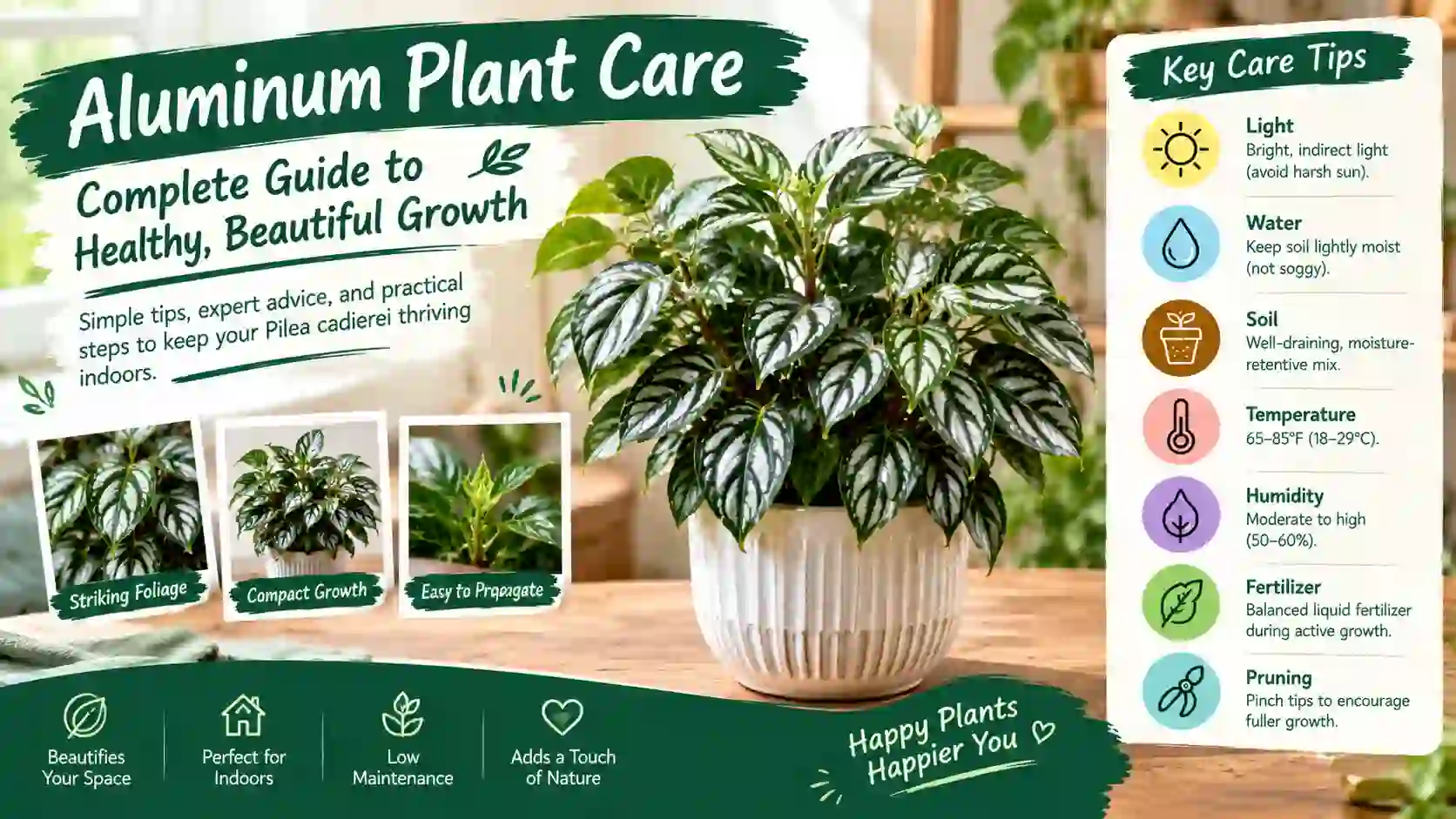
The aluminum plant is a striking tropical houseplant known for its deep green leaves marked with shimmering silver patterns. Its attractive foliage makes it a popular choice for desks, shelves, plant stands, and bright indoor corners.
However, beautiful leaves do not always mean the plant is getting everything it needs. Brown edges can indicate dry air, yellow leaves may point to watering problems, and long, weak stems often signal insufficient light.
Good aluminum plant care is about balancing moisture, light, warmth, and humidity rather than following a rigid watering schedule. Once you understand how the plant responds to its environment, it becomes much easier to maintain healthy foliage and encourage compact growth.
This guide explains how to grow an aluminum plant indoors, prevent common problems, prune it correctly, and troubleshoot signs of stress.
Quick Answer:
Aluminum plant care is easiest when you provide bright, indirect light, consistently lightly moist soil, warm temperatures, and moderate to high humidity. The aluminum plant (Pilea cadierei) grows best in a well-draining potting mix and a container with drainage holes. Water when the top layer of soil begins to dry, and avoid leaving the roots in standing water. Pinch back growing tips to encourage a fuller shape, and protect the plant from cold drafts and harsh direct sunlight.
1. Understanding the Aluminum Plant

The aluminum plant (Pilea cadierei) is a tropical, evergreen perennial in the nettle family, Urticaceae. It is native to parts of China and Vietnam and naturally grows in warm, shaded environments.
North Carolina Extension Gardener Plant Toolbox
+1
Its distinctive leaves feature raised, silvery patches against deep green foliage. These markings create the metallic appearance that gives the plant its common name.
Key characteristics
- Botanical name: Pilea cadierei
- Common names: Aluminum plant and watermelon pilea
- Typical indoor size: Approximately 6–12 inches tall, although growing conditions affect its final size
- Growth habit: Compact, upright, and bushy when regularly pinched
- Main attraction: Green leaves decorated with silver markings
- Best use: Indoor pots, terrariums, and sheltered, humid growing spaces
The aluminum plant is often confused with other pileas. Pilea peperomioides, for example, has round, coin-shaped leaves, while Pilea cadierei has elongated leaves with silver patterns. Identifying your plant correctly helps you follow the right care routine.
North Carolina Extension Gardener Plant Toolbox
+2
2. Aluminum Plant Care at a Glance
Use this table as a starting point, then adjust your routine according to your home’s temperature, light, and humidity.
| Care requirement | What your plant needs |
|---|---|
| Light | Bright, indirect light or partial shade |
| Water | Soil that stays lightly moist but not waterlogged |
| Soil | Moisture-retentive, well-draining potting mix |
| Temperature | Warm, stable indoor conditions |
| Humidity | Moderate to high humidity |
| Fertilizer | Balanced houseplant fertilizer during active growth |
| Pruning | Pinch stem tips to encourage branching |
| Repotting | When roots become crowded or water drainage declines |
| Propagation | Stem cuttings |
| Main risks | Overwatering, dry air, harsh sunlight, and pests |
These recommendations reflect guidance from university extension and horticultural references.
PlantTalk Colorado
+2
3. How Much Light Does an Aluminum Plant Need?

Light affects the plant’s shape, leaf color, and growth rate. Aluminum plants tolerate shade, but extremely dim conditions can produce weak stems and sparse foliage.
Best lighting conditions
Place your plant where it receives bright, filtered daylight without strong direct sun hitting the leaves for long periods.
Good locations include:
- Near an east-facing window with gentle morning light.
- A short distance from a bright south- or west-facing window.
- Behind a sheer curtain that softens intense sunlight.
- In a bright room with consistent indirect daylight.
In a particularly sunny room, move the pot farther from the glass or use a curtain. Harsh sunlight can discolor or scorch the foliage.
North Carolina Extension Gardener Plant Toolbox
+2
What happens when the light is wrong?
| Symptom | Likely explanation | What to do |
|---|---|---|
| Long, thin stems | Light may be insufficient | Move it closer to filtered daylight |
| Wide gaps between leaves | Weak growth from low light | Improve the light gradually |
| Pale or scorched patches | Direct sun may be too intense | Filter sunlight or move the plant |
| Slow growth | Low light or another limiting factor | Check light, roots, watering, and season |
Expert tip: Rotate the pot a quarter turn every week or two if one side receives more light. This encourages more balanced growth.
Image suggestion: A 16:9 comparison infographic showing an aluminum plant in suitable indirect light, low light, and harsh direct sunlight.
4. How to Water an Aluminum Plant Correctly

Watering is one of the most important parts of aluminum plant care. The plant prefers steady moisture, but its roots still need oxygen. Soil that remains saturated can cause root damage.
When should you water?
Check the soil instead of following a fixed weekly schedule.
- Touch the top inch of soil with your finger.
- If it feels dry, check slightly deeper to see whether the mix is still moist.
- Water when the surface has begun to dry and the root zone is no longer soggy.
- Pour water evenly over the soil until excess drains through the bottom.
- Empty the saucer so the pot does not sit in standing water.
The soil may dry faster in a warm room or a small pot. In cooler weather, water use often slows, so you may need to wait longer between waterings.
PlantTalk Colorado
+1
Underwatering versus overwatering
| Sign | Possible cause | First response |
|---|---|---|
| Drooping leaves with dry soil | Underwatering | Water thoroughly and allow excess to drain |
| Yellowing leaves with wet soil | Overwatering or root stress | Pause watering and inspect drainage |
| Brown, crispy edges | Dry conditions or inconsistent moisture | Check soil moisture and humidity |
| Soft stems and persistently wet soil | Possible root or stem rot | Inspect roots and remove damaged tissue |
These symptoms can overlap. For example, a plant with root rot may wilt even when its soil is wet because damaged roots cannot absorb water properly.
Common watering mistakes
- Watering a little every day: This can keep the surface wet while leaving some roots poorly watered.
- Using a pot without drainage: Excess water has nowhere to go.
- Watering automatically every Sunday: Seasonal changes and indoor conditions affect drying time.
- Letting the entire root ball dry repeatedly: The plant may wilt and shed leaves.
Practical example: If your plant droops but the soil is still wet, do not immediately add more water. Check the drainage holes and the condition of the roots first.
5. What Is the Best Soil for an Aluminum Plant?
Aluminum plants need soil that holds enough moisture to support their foliage while allowing excess water and air to move through the root zone.
A suitable mix should be moisture-retentive, airy, and well-draining.
North Carolina Extension Gardener Plant Toolbox
+2
A practical potting mix
For a home-grown aluminum plant, try:
- 2 parts quality indoor potting mix.
- 1 part perlite.
- 1 part fine orchid bark or another suitable aerating ingredient.
This is a practical starting blend rather than a strict formula. If your potting mix already drains quickly, you may need less perlite or bark.
How to tell whether your soil is suitable
Good soil becomes evenly moist when watered and drains freely afterward. It should not remain muddy for days or pull away from the pot’s edges after becoming extremely dry.
If the soil stays wet for a long time, check the pot size, drainage holes, room temperature, and amount of light before changing the mix.
Which pot should you choose?
A pot with drainage holes is essential. Choose one only slightly larger than the root ball when repotting. An oversized container holds more unused soil, which may remain wet longer than the plant can tolerate.
Image suggestion: A 16:9 soil infographic showing indoor potting mix, perlite, bark, and a pot with drainage holes.
6. Temperature and Humidity: Keep Your Plant Comfortable
Aluminum plants come from tropical environments, so they generally perform best in warm indoor conditions with some humidity.
Ideal temperature
Normal, stable household temperatures usually work well. Avoid placing the plant beside:
- Air-conditioning outlets.
- Heaters or radiators.
- Frequently opened exterior doors in cold weather.
- Windows that become very cold at night.
Sudden temperature changes can stress foliage and slow growth. Pennsylvania State University Extension recommends avoiding drafts and maintaining suitable indoor conditions for pileas.
Penn State Extension
+1
How to increase humidity
If leaf edges become dry despite appropriate watering, the air may be too dry. Try these methods:
- Use a humidifier: This provides more consistent humidity than occasional misting.
- Group plants together: Nearby plants can create a slightly more humid local environment.
- Try a pebble tray: Keep the pot above the water level, not sitting in water.
- Improve room conditions: Avoid placing the plant in the direct path of hot, dry airflow.
Misting may temporarily wet the leaves, but it does not reliably maintain humidity. Prolonged leaf wetness combined with poor airflow can also encourage fungal problems.
Expert tip: If your home has dry air, prioritize a stable environment and good airflow rather than repeatedly spraying the leaves.
7. How to Fertilize an Aluminum Plant
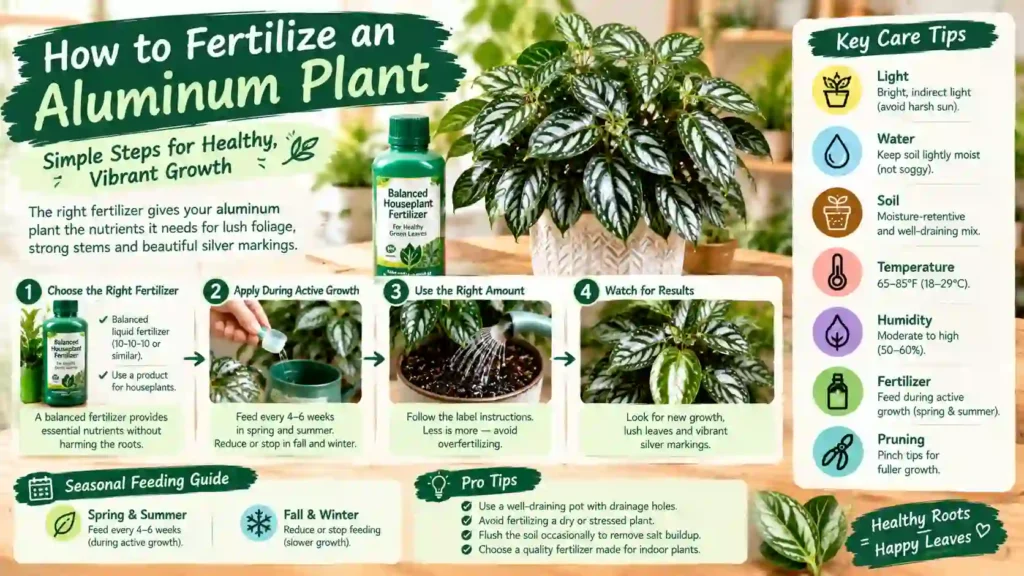
Fertilizer supports new foliage and helps maintain healthy growth when the plant is actively growing. It cannot compensate for poor light, damaged roots, or incorrect watering.
A simple feeding routine
- Choose a balanced liquid houseplant fertilizer.
- Apply it during active growth in spring and summer, following the product label.
- Apply fertilizer to already moist soil rather than a completely dry root ball.
- Reduce or stop feeding when growth slows in cooler, darker months.
- If a crust of fertilizer salts appears on the soil, review your feeding routine and flush the mix with clean water if drainage is good.
Colorado State University Extension recommends feeding aluminum plants about every five to six weeks during active growth, while other products may call for different intervals. Follow the instructions for your particular fertilizer and avoid combining multiple feeding schedules.
PlantTalk Colorado
+1
Signs of fertilizer problems
Too much fertilizer may cause brown leaf tips, salt buildup, or root stress. Pale foliage, however, does not automatically mean the plant needs feeding. Low light, overwatering, and root damage can cause similar symptoms.
Rule of thumb: Correct the growing conditions before increasing fertilizer.
8. How to Prune an Aluminum Plant for Fuller Growth

Aluminum plants can become tall and leggy when they receive insufficient light or grow without regular pinching. Pruning encourages branching and helps the plant maintain a compact shape.
Step-by-step pruning
- Inspect the plant. Identify long stems, sparse areas, and damaged leaves.
- Use clean scissors. Wipe the blades before cutting to reduce the risk of spreading disease.
- Trim long stems. Cut just above a leaf node, where new growth may develop.
- Pinch growing tips. Remove the soft tip of healthy stems to encourage side shoots.
- Remove damaged foliage. Cut away dead or badly damaged leaves without removing too much healthy growth.
- Improve the light. Move the plant to a brighter indirect-light location if stems are stretching.
Pruning and pinching are recommended ways to maintain a compact aluminum plant.
North Carolina Extension Gardener Plant Toolbox
+1
When is the best time to prune?
Spring and early summer are convenient times because the plant can produce new growth during the active growing season. You can remove damaged leaves whenever needed.
Avoid removing most of the foliage at once. If your plant is already weak, correct its light and watering conditions first, then prune gradually.
Image suggestion: A 16:9 before-and-after infographic showing a leggy aluminum plant and a compact, branching plant after pruning.
9. How to Repot an Aluminum Plant
Repotting gives crowded roots more space and refreshes soil that has become compacted. However, repotting too frequently can disturb healthy roots without providing much benefit.
Signs your aluminum plant needs repotting
- Roots are emerging from the drainage holes.
- The root ball is tightly packed.
- Water runs through unusually quickly because little soil remains.
- Growth slows despite suitable light, moisture, and feeding.
- The pot dries much faster than it used to.
One sign alone does not always mean repotting is necessary. For example, a root visible through one drainage hole is not necessarily a problem if the plant is otherwise healthy.
How to repot it safely
- Select a pot with drainage holes, only modestly larger than the current one.
- Prepare fresh, airy potting mix.
- Slide the plant out carefully, supporting the root ball.
- Inspect the roots and remove any clearly mushy, rotten sections with clean tools.
- Set the plant at the same depth it previously grew.
- Fill around the roots without packing the soil tightly.
- Water as appropriate for the new mix and let excess water drain.
Keep the plant in bright indirect light while it adjusts. Avoid heavy fertilizing immediately after repotting, particularly if the fresh mix already contains nutrients.
Important: If root rot is suspected, repotting into a larger pot filled with wet soil will not solve the problem. Remove damaged roots and correct the underlying drainage or watering issue.
10. How to Propagate an Aluminum Plant

Stem cuttings are a practical way to produce new aluminum plants. They also offer a way to refresh an older plant that has become sparse at the base.
North Carolina Extension Gardener Plant Toolbox
+1
Method 1: Propagating in water
- Choose a healthy stem with several leaves and visible nodes.
- Cut below a node using clean scissors.
- Remove leaves that would sit underwater.
- Place the cutting in a clean container with the lower node submerged.
- Keep it in warm conditions with bright indirect light.
- Change the water when it becomes cloudy, and monitor the cutting for root development.
- Transfer it to a small pot of well-draining mix when the roots have developed sufficiently.
Water propagation makes root growth easy to observe, but roots grown in water may need a little adjustment after planting in soil.
Method 2: Propagating directly in soil
- Take a healthy stem cutting with at least one suitable node.
- Insert the node into lightly moist, well-draining potting mix.
- Firm the mix gently around the stem.
- Place the pot in bright indirect light.
- Maintain warmth and steady moisture without saturating the soil.
- Check for new growth over the following weeks rather than repeatedly pulling the cutting out.
Which method is better?
| Method | Main advantage | Main challenge |
|---|---|---|
| Water | Root growth is visible | The cutting must adjust to soil afterward |
| Soil | Avoids transferring established water roots | Root development is less visible |
Propagation speed varies with warmth, light, cutting health, and the season. Not every cutting will root successfully, so taking more than one healthy cutting can improve your chances.
Expert tip: If you prune a leggy plant, use suitable healthy cuttings for propagation instead of discarding every trimmed stem.
11. Why Is My Aluminum Plant Dying? Common Problems and Solutions
Most aluminum plant problems begin with an environmental issue rather than a need for a special treatment. Diagnose the pattern of symptoms before changing several care conditions at once.

Yellow leaves
Yellowing can result from overwatering, poor drainage, root damage, or insufficient light. Older leaves may also yellow naturally from time to time.
What to do:
- Check whether the soil is persistently wet.
- Make sure the drainage holes are not blocked.
- Assess the light and recent watering history.
- Inspect the roots if several leaves yellow rapidly or the stems become soft.
Do not automatically add fertilizer. If the roots are damaged, extra fertilizer may make the situation worse.
Brown leaf tips and edges
Brown edges can develop when the root ball dries too much, humidity is low, fertilizer salts accumulate, or roots are stressed.
What to do:
- Check soil moisture at root level.
- Move the plant away from hot airflow.
- Review fertilizer use.
- Increase humidity if the room is dry.
- Keep watering consistent without leaving the soil saturated.
Brown tissue will not turn green again. Focus on healthy new growth rather than trying to reverse existing damage.
Drooping leaves
Drooping can indicate underwatering, but it can also occur when waterlogged roots fail to function properly.
How to distinguish the two:
- If the soil is dry and the pot feels light, water thoroughly.
- If the soil is wet and the plant is drooping, check drainage and roots before watering again.
- If moisture is appropriate, consider temperature stress, root crowding, or pest damage.
Leggy growth
Long stems with wide gaps between leaves usually indicate insufficient light or a plant that needs pinching.
Solution: Increase indirect light gradually, trim excessively long stems, and pinch new growth to encourage branching.
Fading silver markings
The silver pattern is a defining feature of Pilea cadierei. If the foliage becomes less attractive, check whether the plant receives too little light or too much direct sun. Both can affect the appearance of its leaves.
North Carolina Extension Gardener Plant Toolbox
+1
Solution: Try a brighter indirect-light location and allow new leaves to develop before judging the results.
Root rot
Root rot becomes a concern when the soil remains saturated and roots begin to decay.
Possible warning signs include:
- Persistent wilting despite wet soil.
- Yellowing that spreads across the plant.
- Soft or darkened roots.
- An unpleasant smell from the root zone.
What to do: Remove the plant from its pot, inspect the roots, trim clearly rotten tissue with clean tools, and repot into fresh, well-draining mix. Use a pot with drainage holes and water only when the soil needs it.
Troubleshooting table
| Problem | Likely causes | First step |
|---|---|---|
| Yellow leaves | Wet soil, poor light, root stress | Check moisture and drainage |
| Brown edges | Dry air, inconsistent watering, salts | Review humidity and watering |
| Drooping | Dry roots or damaged wet roots | Check the soil before watering |
| Long stems | Insufficient light | Improve light and pinch tips |
| Slow growth | Low light, cool conditions, season | Review the overall environment |
| Soft stems | Possible rot | Inspect roots and stem bases |
| Tiny webs or stippled leaves | Possible spider mites | Inspect leaf undersides and isolate the plant |
12. Aluminum Plant Pests and Diseases
Aluminum plants can attract sap-feeding pests, especially when growing conditions are stressful. Common pests include spider mites, mealybugs, scale insects, and aphids.
North Carolina Extension Gardener Plant Toolbox
+1
How to inspect your plant
Check both sides of the leaves, the leaf joints, and the stems. Look for fine webbing, sticky residue, small clusters of insects, cotton-like material, or tiny moving specks.
How to manage pests
- Isolate the affected plant from other houseplants.
- Remove heavily infested leaves if doing so will not severely weaken the plant.
- Rinse foliage gently where practical.
- Use an insecticidal soap or other product labeled for the pest and indoor plants, following its instructions.
- Reinspect the plant regularly and repeat treatment only as directed by the label.
Test a product on a small portion of foliage first, because some plants can react to sprays. Avoid applying products in intense sunlight or extreme heat.
Good airflow, appropriate watering, and routine inspection help you catch problems before they spread. Persistent moisture on foliage combined with poor airflow may also encourage fungal issues.
North Carolina Extension Gardener Plant Toolbox
+1
13. Aluminum Plant Care Through the Seasons
Your care routine should change with the plant’s growth and the conditions in your home. A watering interval that works in a warm, bright room may be unsuitable during a cool, cloudy period.
| Season | Care priorities |
|---|---|
| Spring | Resume regular moisture checks, begin feeding if growth is active, and prune for shape |
| Summer | Monitor faster drying, protect from harsh sun, and watch for spider mites in dry conditions |
| Autumn | Reduce fertilizer as growth slows and check soil before watering |
| Winter | Protect from cold drafts, provide the brightest suitable indirect light, and avoid excess water |
These are general seasonal guidelines. Indoor temperatures, daylight, and heating or air-conditioning use can matter more than the calendar itself.
North Carolina Extension Gardener Plant Toolbox
+1
Growing aluminum plants in hot climates
In hot weather, a bright room can become much warmer than expected, especially beside a sunny window. Keep the plant away from harsh afternoon sun and hot air from appliances or vents.
Check the soil more frequently during heat, but do not assume a warm room means the plant needs water every day. Always inspect the soil first.
Growing aluminum plants in cooler climates
During cooler months, the soil may dry more slowly. Avoid cold windowsills, drafts, and frequent watering when the plant is growing slowly. A warm room with filtered daylight is generally a better choice than a cold, dim corner.
14. Is the Aluminum Plant Safe for Pets?
If you share your home with cats or dogs, check a reliable veterinary or poison-control reference before assuming a houseplant is safe. Common names can refer to different species, so confirm that your plant is Pilea cadierei.
Keep plants out of reach of pets that chew leaves. If your pet eats an unfamiliar plant and develops symptoms, contact a veterinarian and provide the plant’s botanical name or a clear photograph.
15. Common Aluminum Plant Care Mistakes to Avoid
Even a healthy plant can decline when several small care mistakes build up over time.
- Choosing a dark corner: The plant may survive, but its stems can become stretched and sparse. Give it brighter indirect light.
- Using a decorative pot without drainage: Keep the plant in a draining nursery pot or use a container with drainage holes.
- Watering by the calendar: Check the soil before each watering.
- Using an oversized pot: Excess soil may stay wet too long. Choose a container that fits the root ball.
- Ignoring dry indoor air: Brown edges can develop even when watering is reasonable.
- Applying too much fertilizer: Excess nutrients can damage roots and cause leaf-tip problems.
- Never pruning the plant: Regular pinching helps maintain a fuller shape.
- Changing everything at once: If the plant looks unhealthy, correct the most likely issue first and monitor the response.
A helpful rule is to change one major growing condition at a time. If you move the plant, repot it, fertilize it, and change its watering routine simultaneously, it becomes much harder to identify what helped.
16. Frequently Asked Questions About Aluminum Plant Care
Is an aluminum plant easy to care for?
Yes. Aluminum plants are manageable houseplants when they receive suitable indirect light, evenly moist but well-draining soil, and warm conditions. Regular moisture checks and occasional pruning make care easier.
How often should I water an aluminum plant?
There is no universal schedule. Check the top inch of soil and the moisture beneath it. Water when the surface begins to dry and the root zone is not waterlogged, then let excess water drain completely.
Can an aluminum plant grow in low light?
It can tolerate some shade, but very low light often produces leggy growth and less attractive foliage. A bright room with filtered daylight is generally better.
Why are my aluminum plant leaves turning yellow?
Overwatering and poor drainage are common causes, but low light, root damage, and natural aging can also contribute. Check the soil and roots before changing your care routine.
Why does my aluminum plant have brown tips?
Brown tips can result from dry air, inconsistent watering, fertilizer buildup, or root stress. Check the soil first, then review humidity and feeding practices.
Should I mist my aluminum plant?
Misting is not a reliable way to maintain humidity because its effect is brief. A humidifier can provide more consistent conditions. Keep adequate airflow around the foliage.
Can I grow an aluminum plant in water?
Stem cuttings can develop roots in water. For long-term growth, however, most growers use a suitable potting mix because it provides physical support and access to both moisture and air.
How do I make my aluminum plant bushier?
Provide suitable indirect light and pinch the growing tips of healthy stems. This encourages branching. You can also root healthy cuttings to create additional plants.
Does an aluminum plant flower indoors?
It can produce small flowers, but they are usually less noticeable than its patterned foliage. The plant is mainly grown for its decorative leaves.
Ask IFAS – Powered by EDIS
+1
Why is my aluminum plant losing leaves?
Leaf loss can follow repeated drying, waterlogged roots, temperature stress, or insufficient light. Check the soil, inspect the roots if needed, and keep the plant in a stable environment.
Can I grow an aluminum plant outdoors?
It can grow outdoors in warm, sheltered, shaded conditions where temperatures remain suitable. It is sensitive to cold and harsh sun, so many gardeners in cooler climates grow it indoors.
Ask IFAS – Powered by EDIS
+1
17. Related Plant Care Guides
If you enjoy growing foliage houseplants, these related topics may help you build a healthier indoor plant collection:
- [Pilea Plant Care] — learn about the wider Pilea group and how its species differ.
- [Peperomia Plant Care] — explore care for compact plants with decorative foliage.
- [Philodendron Plant Care] — understand lighting, watering, and pruning for popular tropical houseplants.
- [Prayer Plant Care] — learn how to manage humidity and maintain attractive patterned leaves.
- [Spider Plant Care] — discover practical methods for growing and propagating a resilient houseplant.
Editorial note: Use these as internal links only if matching articles are published on your website.
Conclusion:
Successful aluminum plant care comes down to a few consistent habits: provide bright indirect light, maintain lightly moist but well-drained soil, keep temperatures stable, and protect the plant from dry air and harsh sunlight.
Check the soil before watering, use fertilizer only when growth justifies it, and pinch back long stems to encourage a fuller shape. When leaves turn yellow or develop brown edges, investigate the growing conditions instead of immediately adding water or fertilizer.
With these practical adjustments, Pilea cadierei can maintain its distinctive silver-patterned leaves and bring attractive tropical foliage to your indoor space.