
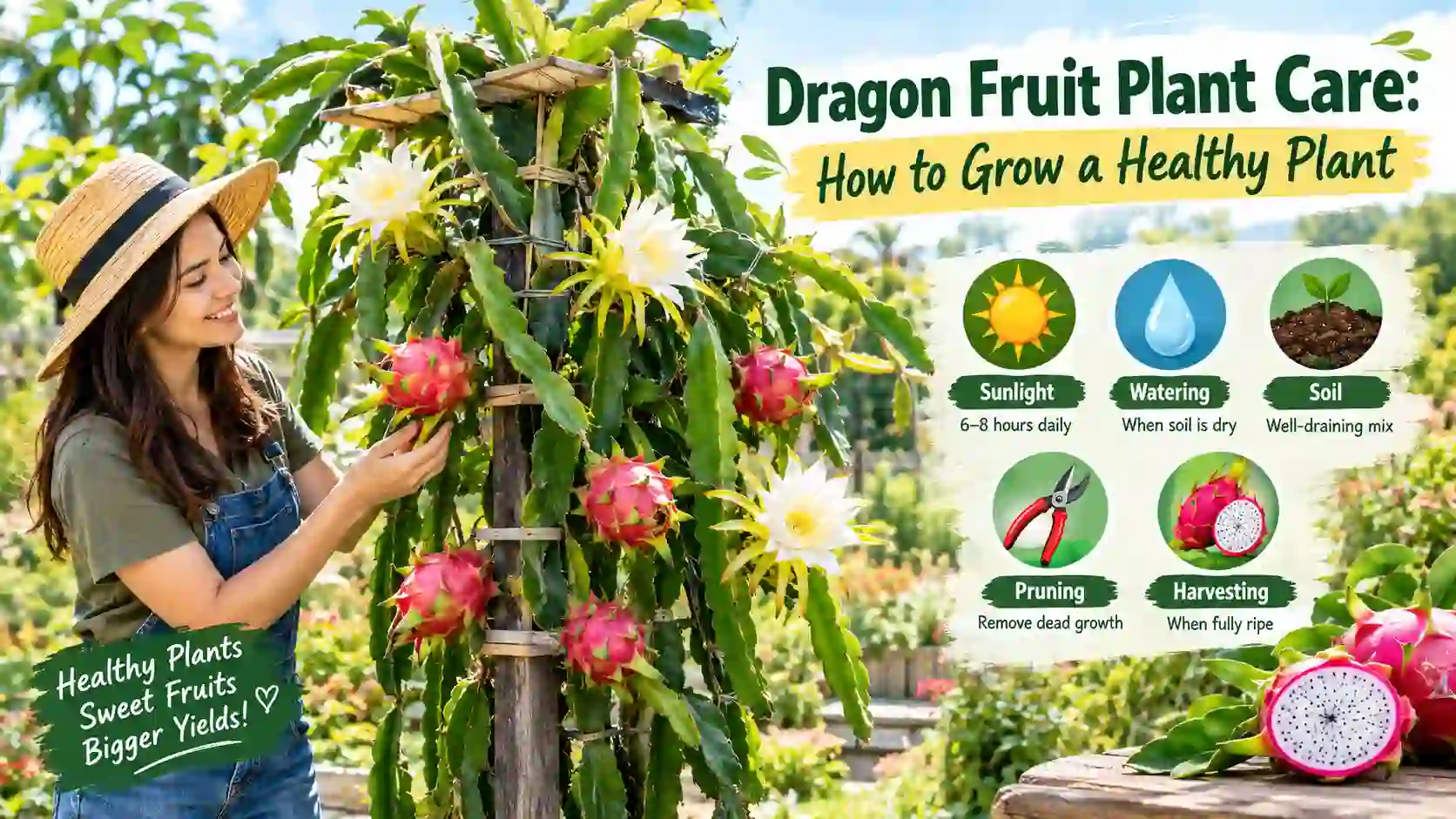
🌵 Quick Answer
For successful dragon fruit plant care, provide at least six hours of suitable sunlight, warm temperatures, and fast-draining soil. Water when the soil begins to dry, but never leave the roots waterlogged. Train the climbing cactus on a strong support, prune crowded stems, and feed it during active growth. Protect it from frost and extreme heat, and check whether your variety needs cross-pollination to produce fruit.
Introduction
Dragon fruit plant care is different from caring for many ordinary garden plants. Dragon fruit is a climbing cactus with long, fleshy stems. It needs sunlight, warmth, drainage, and sturdy support to grow well.
Beginners often make two mistakes: treating it like a desert cactus that needs almost no water, or watering it like a thirsty tropical plant. Both approaches can cause problems. Dragon fruit tolerates some dry conditions, but it also needs moisture during active growth and fruit development. Its roots, however, can suffer in waterlogged soil.
This guide explains how to grow dragon fruit in a garden or container. You will learn how to choose a planting site, water correctly, build support, fertilize, prune, encourage flowering, and troubleshoot common problems. You will also find practical advice for hot climates, cooler regions, and plants that are not producing fruit.
The most important principle is to balance moisture with excellent drainage while giving the climbing stems enough light and support.
🌱 Understand the Dragon Fruit Plant
Dragon fruit, also called pitaya or pitahaya, grows on climbing cactus species. Common cultivated types include Selenicereus undatus and related species formerly grouped under Hylocereus. The plant produces fleshy, segmented stems and large flowers that often open at night.
Ask IFAS – Powered by EDIS
+2
Dragon fruit is not a typical upright fruit tree. Its stems climb and spread, so the plant needs a structure that can support its mature weight.
What makes dragon fruit care different?
- It is a cactus, but it still needs regular moisture during growth. Drought tolerance does not mean it should remain dry throughout flowering and fruit development.
- Its stems need support. A sturdy post or trellis helps manage growth and makes pruning and harvesting easier.
- Drainage is essential. Wet soil can damage roots and encourage disease.
- Pollination can affect fruit production. Some varieties set fruit without another plant, while others benefit from cross-pollination.
Ask IFAS – Powered by EDIS+2
Image suggestion: A mature dragon fruit cactus growing on a support, with visible stems and ripe fruit.
☀️ Choose the Right Sunlight and Location

Dragon fruit generally grows best in full sun or nearly full sun, but intense heat and harsh sunlight can damage stems. Young plants may need gradual exposure or temporary shade in very hot conditions.
Ask IFAS – Powered by EDIS
+2
How much sunlight does dragon fruit need?
Aim for a bright location with several hours of direct sunlight. In very hot climates, protect young plants from the most intense afternoon sun while they establish.
Choose a location that is:
- Bright and warm for most of the growing season.
- Protected from severe winds that could damage stems or supports.
- Away from areas where rainwater collects.
- Spacious enough for the plant and its mature support structure.
What if the stems turn pale or scorched?
Pale, bleached, yellowish, or dry patches may indicate sunburn, especially after a plant moves suddenly into intense sunlight. Move it to filtered light temporarily and reintroduce stronger sunlight gradually. Also check for pests and disease if the damage continues.
Image suggestion: Close-up comparison of healthy green dragon fruit stems and sun-damaged stems.
🌡️ Maintain Suitable Temperatures
Dragon fruit prefers warm conditions and grows best in tropical and subtropical climates. It can suffer from frost, prolonged cold, and extreme heat. One regional cultivation guide gives an optimum range of about 25–32°C, while other growing references describe broader tolerances depending on species and conditions.
Specialty vegetable crops
+2
Temperature care tips
- Protect plants from frost and freezing weather.
- Move container plants to a sheltered place when cold conditions threaten.
- Avoid placing pots against heat-reflecting walls during extreme summer weather.
- Provide temporary shade if young stems show signs of sunburn.
- Keep plants out of cold, wet conditions whenever possible.
Important: Temperature tolerance varies by species, cultivar, plant age, and how long the exposure lasts. Do not treat one temperature figure as a guarantee of safety.
🪴 Use Soil That Drains Freely
Dragon fruit can grow in different soil types, but it needs good drainage and aeration. Sandy loam with organic matter is often suitable. Heavy soil that remains saturated can increase the risk of root and stem problems.
Ask IFAS – Powered by EDIS
+2
A practical soil approach
For a container, choose a well-draining cactus or succulent mix. If the mix stays wet for too long, improve its structure with suitable coarse, drainage-promoting material.
For garden planting:
- Check how quickly water drains after rain or irrigation.
- Avoid low spots that remain wet.
- Improve the planting area or use a raised mound if drainage is poor.
- Mix in well-decomposed organic matter where appropriate.
- Keep the stem base from sitting in a constantly wet pocket.
Container or garden bed?
|
Growing method
|
Benefits
|
Points to consider
|
| — | — | — |
|
Container
|
Easier to move for cold protection; useful for patios and small spaces
|
Needs drainage holes, a stable support, and monitoring for drying
|
|
Garden bed
|
More room for roots and mature growth
|
Requires suitable drainage, space, and a permanent support
|
|
Raised bed or mound
|
Can improve drainage in wet areas
|
Must be wide and stable enough for the plant’s roots and support
|
💧 Water Correctly Without Causing Root Rot
Dragon fruit can tolerate dry periods, but it still needs moisture during active growth. Regular watering is particularly important during flowering and fruit development. Too much water, especially in poorly drained soil, can encourage disease.
Ask IFAS – Powered by EDIS
+2
A reliable watering method
- Check the soil near the root zone before watering.
- If the soil is still wet, wait.
- If it has begun to dry, water the root area thoroughly.
- Allow excess water to drain away.
- Check again before the next watering.
Do not rely on a fixed daily or weekly schedule. A plant in a small pot during hot weather may dry much faster than one growing in a large bed during a rainy period.
Watering through the seasons
- Active growth: Keep moisture reasonably consistent without saturating the soil.
- Flowering and fruiting: Avoid prolonged drought, which may affect production.
- Cooler or slower-growth periods: Reduce watering when the soil dries more slowly.
- Rainy weather: Pause irrigation when rainfall has already kept the root zone moist.
Practical check: If the plant looks stressed, inspect the soil and roots before adding more water. Drooping or discolored stems do not always mean the plant is thirsty.
🪵 Build Strong Support Before the Plant Gets Large
Dragon fruit is a climbing cactus. Its stems become heavy as the plant matures, so a weak stake may bend or fall. A sturdy post, trellis, or purpose-built support makes training and harvesting easier.
Ask IFAS – Powered by EDIS
+2
Support options
- Single-post system: Useful for guiding several plants up a central support and allowing stems to hang over the top.
- Trellis system: Can suit rows or larger growing spaces, provided the structure can carry the mature plant’s weight.
- Container support: Use a stable frame secured to the pot or another safe structure. Prevent the container from tipping as the plant grows.
Train the main stem
- Select a healthy, strong leading stem.
- Guide it upward toward the support.
- Secure it loosely with soft plant ties.
- Remove or redirect unwanted side shoots while the leader is establishing.
- Once it reaches the top, encourage branching to create a manageable canopy.
Do not tie stems so tightly that the ties cut into them as they thicken.
✂️ Prune for Shape, Airflow, and Easier Harvesting
Pruning helps control the plant’s size and opens crowded growth to better airflow. Remove dead, damaged, diseased, or badly tangled stems with clean cutting tools. Good airflow can also help stems dry more quickly after rain.
Ask IFAS – Powered by EDIS
+2
How to prune
- Remove dead or visibly diseased stems first.
- Thin overcrowded growth so light and air can reach the plant.
- Keep a manageable framework of healthy stems.
- Cut away shoots that grow in unwanted directions.
- Disinfect tools between plants, especially when disease is suspected.
Avoid removing too much healthy growth at once. Heavy pruning can reduce the plant’s ability to support growth and fruiting while it recovers.
🌼 Encourage Flowering and Fruit Production
Dragon fruit produces large flowers, many of which open at night. Successful fruiting depends on plant maturity, suitable growing conditions, flowering, and pollination. Some cultivars are self-compatible, while others may require pollen from a compatible variety. Hand pollination can help when natural pollinators are absent or a plant does not set fruit reliably.
University of Guam
+2
Why might your dragon fruit not flower?
Check these factors:
- Plant maturity: A young cutting may need more time to become established.
- Light: Insufficient light can limit growth and flowering.
- Pruning: Excessive or poorly timed pruning may remove useful growth.
- Nutrition: Too much nitrogen can encourage vegetative growth at the expense of flowering.
- Pollination: Flowers may open but fail to develop fruit if pollination is unsuccessful.
- Weather: Extreme heat, cold, or other stress can interfere with normal growth.
Basic hand-pollination approach
If your variety needs cross-pollination, use pollen from a compatible flowering plant. Transfer pollen to the stigma during the flower’s receptive period, following guidance specific to your cultivar. Keep track of which flowers you pollinate so you can see whether the method improves fruit set.
Do not assume every dragon fruit variety has identical pollination requirements.
🌿 Fertilize for Balanced Growth
Dragon fruit benefits from suitable nutrition, especially while actively growing. However, fertilizer needs vary with soil, plant age, growing method, and local conditions. Extension guidance describes different fertilizer programs for home landscapes and commercial production, so avoid applying a large fixed dose without considering your setup.
Ask IFAS – Powered by EDIS
+1
Fertilizer best practices
- Use a balanced fertilizer suitable for fruiting plants or follow local dragon fruit recommendations.
- Apply fertilizer during active growth rather than when the plant is dormant or stressed.
- Follow the label for dilution and application rates.
- Keep concentrated fertilizer away from direct contact with stems.
- Avoid excessive nitrogen, which may encourage leafy growth without solving flowering problems.
- Consider soil testing if growth remains poor despite appropriate care.
Organic matter such as well-decomposed compost can support soil structure and nutrition. Do not use fresh manure against the plant, and avoid allowing organic material to keep the stem base constantly wet.
🐛 Identify Pests and Diseases Early
Dragon fruit may be affected by mealybugs, scale insects, mites, thrips, ants, and other pests. Stem and fruit diseases can also occur, particularly where plants remain wet or airflow is poor.
Ask IFAS – Powered by EDIS
+1
What to inspect
|
Sign
|
What to investigate
|
| — | — |
|
Cottony clusters or small bumps
|
Mealybugs or scale insects
|
|
Speckling or unusual surface damage
|
Mites, thrips, or other causes
|
|
Soft, dark, or rotting stem areas
|
Excess moisture, injury, or possible disease
|
|
Spreading lesions on stems or fruit
|
Possible fungal or bacterial disease
|
|
Damaged or missing fruit
|
Insects, birds, rodents, or other animals
|
Practical prevention
- Keep the plant properly spaced and ventilated.
- Avoid unnecessary overhead watering that leaves stems wet for long periods.
- Remove badly damaged or diseased material with clean tools.
- Inspect new plants before placing them near established ones.
- Identify the pest or disease before selecting a treatment.
- Contact a local agricultural extension service for diagnosis and locally approved control options.
Do not assume every dark spot is a disease. Sunburn, physical injury, and other growing problems can create similar symptoms.
🍉 Harvest Dragon Fruit at the Right Time
Fruit color and maturity depend on the variety. Harvesting too early can affect flavor, while leaving ripe fruit on the plant too long may expose it to damage. Use cultivar-specific maturity signs when available.
Ask IFAS – Powered by EDIS
+1
Harvesting tips
- Check the fruit’s expected mature color for your variety.
- Look for other maturity signs, such as changes in the bracts or skin.
- Use clean pruning shears to cut the fruit carefully.
- Handle it gently to avoid bruising.
- Check the plant afterward for damaged stems, pests, or remaining ripe fruit.
Safety tip: Some dragon fruit types or cultivars may have spines. Wear suitable gloves and protective clothing when handling thorny plants.
🪴 Growing Dragon Fruit in a Pot
Container growing can work well when garden space is limited or you need to protect the plant from cold. The container must be large and stable enough for the root system and support structure.
Container-growing checklist
- Choose a sturdy pot with drainage holes.
- Use a free-draining potting mix.
- Install a strong support before the plant becomes top-heavy.
- Place the container in a bright location, adjusting exposure during extreme heat.
- Check soil moisture more often during hot weather.
- Repot when roots become crowded or the growing medium breaks down.
- Move the plant to shelter when cold or frost threatens.
A small pot may dry quickly and become unstable as the cactus grows. Plan for the mature plant rather than choosing a container only for its current size.
🌦️ Dragon Fruit Care in Different Climates

Dragon fruit is best suited to warm tropical and subtropical conditions. In cooler areas, container growing and seasonal shelter may be necessary. In very hot areas, young plants may need protection from intense sun.
Ask IFAS – Powered by EDIS
+2
Hot, sunny climates
- Give established plants plenty of light.
- Protect young stems from severe sunburn.
- Check moisture more frequently during heat waves.
- Maintain drainage even when watering more often.
- Secure supports against strong winds.
Cool or frost-prone climates
- Grow the plant in a movable container when practical.
- Bring it into a protected space before frost.
- Reduce watering when growth slows and soil remains wet longer.
- Avoid leaving cold-sensitive stems exposed to freezing conditions.
- Return it to stronger light gradually after winter shelter.
Wet or humid climates
- Prioritize drainage and airflow.
- Avoid sites that flood or remain saturated.
- Remove crowded growth that prevents stems from drying.
- Monitor for rot and spreading lesions after prolonged rain.
🚫 Common Dragon Fruit Plant Care Mistakes
|
Mistake
|
Why it causes trouble
|
Better approach
|
| — | — | — |
|
Treating it like a desert cactus and rarely watering
|
Active growth and fruit development still require moisture
|
Check soil and water when it begins to dry
|
|
Keeping the roots constantly wet
|
Waterlogged soil can damage roots and encourage disease
|
Improve drainage and let excess water escape
|
|
Exposing young plants suddenly to intense sun
|
Stems may become scorched
|
Acclimate plants gradually and provide temporary shade
|
|
Using a weak support
|
Mature stems can become heavy and topple the structure
|
Install a sturdy support early
|
|
Applying too much nitrogen fertilizer
|
It may encourage excessive stem growth instead of balanced development
|
Use a suitable fertilizer at label rates
|
|
Pruning too aggressively
|
Removing too much healthy growth can reduce the plant’s productive canopy
|
Prune selectively and maintain healthy framework stems
|
|
Assuming every variety self-pollinates
|
Some cultivars may need compatible pollen for fruit set
|
Check the variety’s pollination requirements
|
|
Ignoring early signs of rot or pests
|
Problems may spread before they become obvious
|
Inspect stems, roots, flowers, and fruit regularly
|
🧠 A Simple Weekly Care Checklist
Use this checklist as a reminder, not as a rule to water or fertilize every week.
Dragon fruit care checklist
0/6 done
Check soil moisture and drainage
Inspect stems for pests, rot, or sun damage
Check ties, posts, and trellis stability
Remove dead or damaged growth with clean tools
Look for flower buds, open flowers, or developing fruit
Review weather and adjust watering or sun protection
Reset checklist
❓ Frequently Asked Questions
1. How often should I water a dragon fruit plant?
Water when the soil begins to dry, then allow excess water to drain. Check more frequently in hot weather and less often when growth slows or rain keeps the soil moist. Avoid a fixed schedule that ignores soil conditions.
2. Does dragon fruit need full sun?
Dragon fruit generally grows well in full or nearly full sun. However, young plants and plants in extreme heat may need gradual sun exposure or temporary shade to prevent sunburn.
Ask IFAS – Powered by EDIS
+1
3. How long does dragon fruit take to produce fruit?
The time varies by variety, propagation method, maturity, and growing conditions. Plants grown from cuttings may fruit sooner than seed-grown plants, but no exact timeline is guaranteed.
Ask IFAS – Powered by EDIS
+1
4. Why is my dragon fruit plant growing but not flowering?
Possible reasons include plant immaturity, inadequate light, unsuitable nutrition, excessive pruning, or environmental stress. Review the plant’s growing conditions and allow it time to mature.
5. Does dragon fruit need a trellis?
A sturdy post or trellis is strongly recommended because dragon fruit is a climbing cactus with heavy, spreading stems. Support helps manage the plant and makes maintenance and harvesting easier.
Ask IFAS – Powered by EDIS
+1
6. Can I grow dragon fruit in a pot?
Yes. Use a large, stable container with drainage holes, a free-draining mix, and a strong support. Monitor moisture carefully because containers can dry faster than garden soil.
7. Why are my dragon fruit stems turning yellow?
Yellowing can have several causes, including intense sunlight, watering problems, root damage, or other stress. Check the soil, drainage, light exposure, and roots before deciding on a treatment.
8. Does every dragon fruit plant need cross-pollination?
No. Pollination requirements vary by cultivar. Some plants can set fruit with their own pollen, while others may benefit from pollen from a compatible variety. Check the requirements of your specific plant.
Ask IFAS – Powered by EDIS
+1
9. Can dragon fruit survive winter outdoors?
That depends on the climate and cultivar. Dragon fruit is sensitive to frost and freezing conditions, so protect it when cold weather threatens. Container plants can be moved to a sheltered location.
Specialty vegetable crops
+1
10. What is the best soil for dragon fruit?
Choose soil that drains freely and allows air to reach the roots. A well-draining cactus mix can suit containers, while garden plants need a site that does not remain waterlogged.
Ask IFAS – Powered by EDIS
+1
🌵 Conclusion
Successful dragon fruit plant care begins with the right balance of sunlight, moisture, drainage, and support. Give your plant a bright location, protect it from frost and extreme heat, and use soil that drains freely. Water according to soil conditions rather than following a rigid schedule.
Train the stems early on a strong support, prune crowded or damaged growth, and feed carefully during active growth. If your plant flowers but does not produce fruit, check its maturity and pollination requirements. Regular inspections can also help you spot pests, rot, or sun damage before problems become severe.
Start with these basics, observe how your plant responds, and adjust care to your climate and growing setup. With suitable conditions and patience, dragon fruit can become a productive and striking feature in your garden or container collection.