Dragon’s Breath celosia is a standout ornamental plant with flame-like red flowers and richly colored foliage. It brings dramatic color to sunny borders, patio containers, and summer displays without requiring complicated maintenance.
However, even a heat-tolerant plant can struggle if its roots stay wet, it receives too little sunlight, or it is planted outside before the weather warms up.
This guide to Dragon’s Breath plant care explains how to choose the right location, water correctly, encourage strong growth, maintain its vivid color, and solve common problems. It also explains what to expect from the plant at the end of the growing season.
One important identification note: this guide covers Dragon’s Breath celosia (Celosia argentea), not ornamental peppers or other plants that may have similar fiery names.
Quick Answer
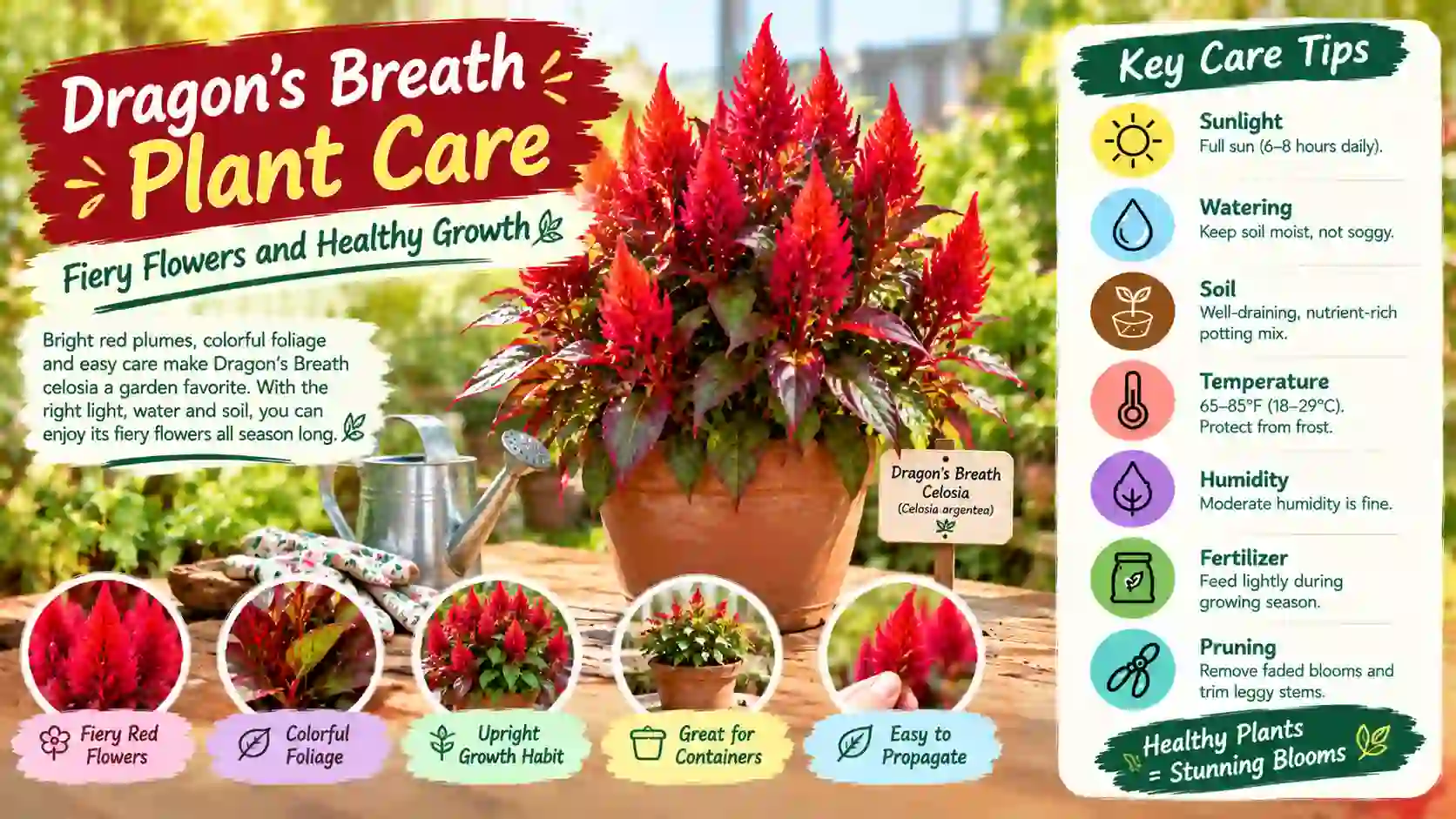
Dragon’s Breath plant care is simple when you provide full sun, warm temperatures, and well-draining soil. Dragon’s Breath is a striking variety of celosia, known for its brilliant red, feathery flower plumes and dark red-green foliage. Water regularly while young, then let the soil begin to dry between waterings. Avoid waterlogged roots, fertilize lightly, and remove faded flower heads to keep containers and garden beds looking neat. It is usually grown as a warm-season annual.
lsuagcenter.com
+1
1. What Is the Dragon’s Breath Plant?


10
Dragon’s Breath is a named variety of celosia grown for its vivid scarlet plumes and attractive foliage. Its botanical classification is commonly listed as Celosia argentea, with the RHS placing ‘Dragon’s Breath’ in the Celosia argentea var. cristata Plumosa Group.
lsuagcenter.com
+1
What makes it special?
- Fiery red flowers: Feathery plumes create a bold focal point.
- Red-tinged foliage: Green leaves develop deep red tones, especially in warm, bright conditions.
- Heat tolerance: The plant performs well during warm summers.
- Container-friendly growth: Its upright form works well as the focal plant in mixed planters.
- Seasonal color: Flowers typically appear during summer and continue into autumn when conditions are suitable.
The LSU AgCenter reports that Dragon’s Breath commonly grows around 2 feet tall and 15–18 inches wide. Actual size depends on growing conditions and the plant supplied.
lsuagcenter.com
Image suggestion: A labeled botanical infographic showing the red flower plumes, red-green foliage, upright growth habit, and mature size of Dragon’s Breath celosia.
2. How Much Sunlight Does Dragon’s Breath Need?

Dragon’s Breath grows best in full sun, generally meaning around six to eight hours of direct sunlight daily. Good light supports strong stems, abundant flowering, and richly colored foliage.
lsuagcenter.com
+1
Best locations
- A sunny garden bed with good drainage.
- A bright patio where the plant receives direct sunlight.
- A container placed in an open, sunny area.
- A sheltered spot that avoids excessive exposure to strong winds.
What happens when light is insufficient?
A plant growing in too much shade may develop weaker stems, less impressive flowers, and a less compact shape. If your Dragon’s Breath produces plenty of leaves but disappointing flower plumes, check sunlight before adding fertilizer.
Practical tip: In extremely hot climates, watch the plant during the hottest part of the day. Full sun is generally beneficial, but a container can heat up and dry much faster than garden soil. Check moisture rather than assuming the plant needs constant watering.
Image suggestion: A sunlight infographic comparing Dragon’s Breath growing in full sun with a weaker, less floriferous plant in excessive shade.
3. How Often Should You Water Dragon’s Breath?
Dragon’s Breath prefers well-drained soil and can tolerate some dry conditions once established. However, young plants need consistent moisture while their roots develop. The goal is to avoid both prolonged drought and constantly wet soil.
lsuagcenter.com
+1
The correct watering method
- Check the top layer of soil with your finger.
- If it is still wet, wait before watering.
- If the soil has begun to dry, water thoroughly around the root zone.
- Allow excess water to drain freely from containers.
- Recheck more often during hot, sunny weather.
Newly planted celosia needs closer attention than established plants. Once the roots spread into the surrounding soil, Dragon’s Breath usually tolerates short dry periods better.
Watering in containers versus garden beds
| Growing situation | Watering approach |
|---|---|
| Newly planted seedlings | Keep the root zone evenly moist without waterlogging |
| Established garden plants | Water when the soil begins to dry |
| Container-grown plants | Check frequently because pots dry faster |
| Cool or rainy weather | Reduce watering if the soil remains damp |
| Hot, windy weather | Check moisture more often |
Avoid this common mistake: Do not water every day automatically. A pot in hot sun may dry quickly, but a pot in cloudy weather may remain damp for several days.
Water at the base when possible. Keeping foliage wet for long periods can encourage leaf spot diseases, especially when airflow is poor.
University of Maryland Extension
+1
Image suggestion: A three-step watering infographic showing soil-moisture checking, watering at the base, and a container draining freely.
4. Best Soil and Pot for Dragon’s Breath
Good drainage is essential for healthy Dragon’s Breath. The plant handles heat well, but waterlogged roots can cause decline or rot.
lsuagcenter.com
+1
Which soil is best?
For garden beds, use reasonably fertile soil that drains well. If your garden has heavy clay that stays wet, improve the planting area or use a raised bed or container.
For pots, choose a quality outdoor potting mix that retains some moisture while allowing excess water to escape.
Choosing a container
- Use a pot with drainage holes.
- Choose a container large enough to support the plant’s mature size.
- Avoid leaving the pot in a saucer full of water.
- Make sure the container will not tip over in strong wind.
The LSU AgCenter recommends spacing landscape plants about 18 inches apart to allow adequate airflow and growth.
lsuagcenter.com
Can you grow Dragon’s Breath in a small pot?
You can start a young plant in a smaller container, but it may outgrow it quickly. A cramped root system can restrict growth and make the pot dry out rapidly. Choose the container based on the plant’s expected size, not just the size of the seedling.
Image suggestion: A potting infographic featuring Dragon’s Breath in a container with drainage holes, airy potting mix, and enough room for roots.
5. Temperature and Humidity Requirements
Dragon’s Breath is a warm-season plant that performs best in warm weather. Cold conditions can slow growth, and frost can kill it because it is generally grown as an annual.
lsuagcenter.com
+1
How to protect it from cold
- Plant outdoors after the danger of frost has passed.
- Wait until nights are consistently warm before transplanting seedlings.
- Avoid leaving containers outside during unexpectedly cold weather.
- If an early cold snap is forecast, move a potted plant to a sheltered, warmer place temporarily.
The University of Maryland Extension notes that celosia seedlings can be stunted by temperatures below 60°F (about 16°C).
University of Maryland Extension
Dragon’s Breath can cope with warm, humid conditions, but good airflow remains important. Crowded plants and persistently wet foliage can create conditions that favor disease.
6. How to Fertilize Dragon’s Breath
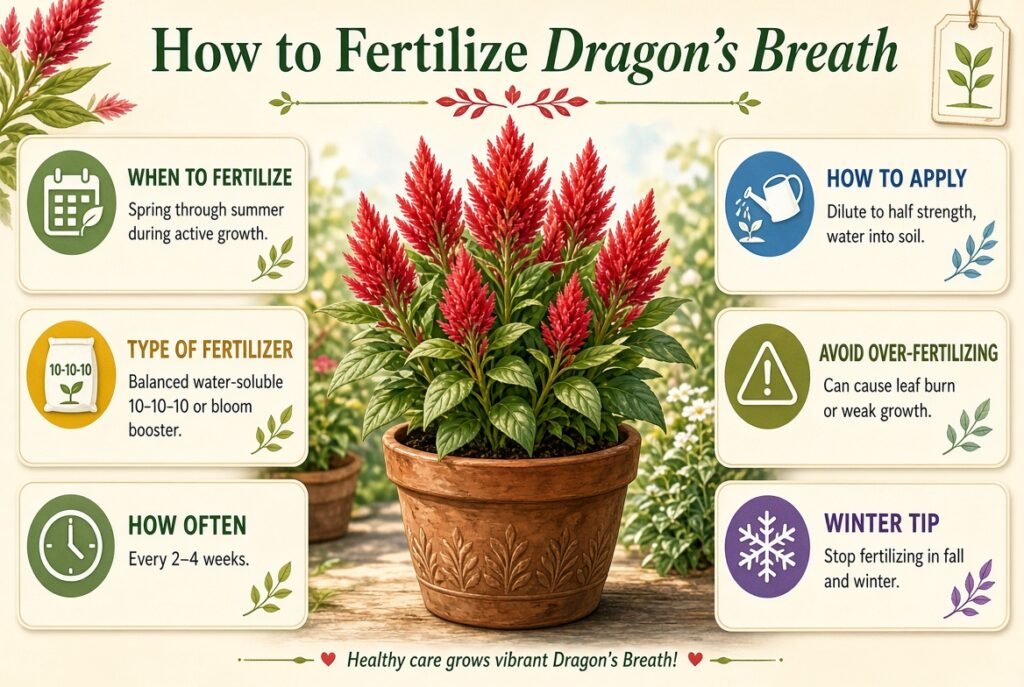
Dragon’s Breath does not require heavy feeding to produce attractive flowers. Excessive fertilizer, especially when not matched to the plant’s needs, may encourage foliage at the expense of a balanced growth habit.
The LSU AgCenter recommends feeding at a reduced rate—around one-third to one-half of the fertilizer label rate—for this cultivar.
lsuagcenter.com
A practical feeding routine
- Start with fertile soil or a quality potting mix.
- If additional feeding is needed, choose a balanced fertilizer suitable for flowering annuals.
- Follow the product label and use a conservative rate appropriate for celosia.
- Avoid applying fertilizer to severely dry soil.
- Stop or reduce feeding if growth slows at the end of the season.
Container plants may need more frequent nutrient replenishment than plants in garden beds because watering can gradually wash nutrients out of the potting mix.
Expert tip: If flowers are small, check sunlight, root crowding, and watering consistency before increasing fertilizer. Nutrients cannot make up for a poor growing location.
7. Does Dragon’s Breath Need Pruning or Deadheading?
Dragon’s Breath generally needs little pruning. Its upright form is naturally attractive, and excessive trimming is unnecessary. Removing faded flowers can keep the plant looking tidy and reduce unwanted seed production. The LSU AgCenter recommends deadheading spent blooms for a cleaner display.
lsuagcenter.com
+1
How to deadhead Dragon’s Breath
- Identify flower plumes that have faded or become unattractive.
- Use clean scissors or pruning snips.
- Cut the flower stem back to a healthy leaf or branching point.
- Remove fallen plant material from the soil surface.
- Continue checking the plant as new flowers develop.
Do not remove healthy flower plumes simply because they are large. These striking blooms are the main ornamental feature of the plant.
If you want to collect seeds, leave some mature flower heads in place until the seeds develop. Otherwise, remove faded blooms to maintain the display.
Image suggestion: A simple deadheading infographic showing a faded red plume being removed with clean garden scissors.
8. How to Grow Dragon’s Breath From Seeds
Dragon’s Breath celosia can be grown from seed, but seedlings need warmth, moisture, and careful handling. Celosia seeds are very small, and young roots can be sensitive to transplanting.
University of Maryland Extension
+1
Step-by-step seed starting
- Start seeds indoors about four weeks before the expected last frost, adjusting for your local climate.
- Sow them in small individual cells or pots to reduce root disturbance.
- Lightly cover the seeds according to the seed packet instructions.
- Keep the growing medium lightly moist and warm.
- Once seedlings emerge, provide strong light to prevent weak, stretched growth.
- Harden seedlings off gradually before moving them outdoors.
- Transplant only when the weather is warm and frost danger has passed.
Why are my seedlings tall and weak?
Seedlings often stretch when they receive too little light after germination. Move them into stronger light and avoid keeping them in a warm but dim location.
Can seeds produce plants identical to the parent?
Not every seed-grown plume celosia will reproduce the parent plant’s exact characteristics. The University of Maryland Extension notes that some celosia types can vary in flower shape and color when grown from seed. If uniformity matters, buy plants from a reliable grower rather than assuming every seedling will be identical.
University of Maryland Extension
Image suggestion: A seed-starting infographic showing tiny celosia seeds, emerging seedlings, strong light, and transplanting after frost.
9. Common Dragon’s Breath Problems and How to Fix Them
Dragon’s Breath is generally considered low-maintenance, but it can still suffer from root problems, pests, or poor growing conditions.
| Problem | Possible cause | What to do |
|---|---|---|
| Yellowing leaves | Overwatering, root stress, or natural aging | Check soil moisture and drainage |
| Wilting despite wet soil | Damaged roots or waterlogged soil | Inspect drainage and roots |
| Weak or stretched growth | Insufficient sunlight | Move to a sunnier location gradually |
| Small or disappointing flower plumes | Low light, root crowding, or inconsistent growing conditions | Check sunlight, spacing, and root health |
| Brown or spotted leaves | Leaf spot or other environmental stress | Avoid prolonged leaf wetness and improve airflow |
| Plant collapses near the soil | Possible stem rot or root disease | Remove affected plants if rot is severe |
| Stunted growth and poor color | Root damage, cold stress, or other growing problems | Inspect roots and review temperature and watering |
Celosia can be affected by root and stem rot, leaf spot, and pests such as aphids and mites. Wet soil and cold conditions are common contributors to plant decline.
North Carolina Extension Gardener Plant Toolbox
+1
What to do if Dragon’s Breath is wilting
First, check whether the soil is dry or wet.
- Dry soil: Water thoroughly and check again after the plant has had time to recover.
- Wet soil: Do not add more water. Check the drainage and inspect roots if the plant continues to decline.
- Wet soil with a soft, collapsing stem: Suspect root or stem rot and remove badly affected plants.
Wilting is a symptom, not a diagnosis. Adding water without checking the soil can make a root problem worse.
10. How to Keep Dragon’s Breath Red and Flowering
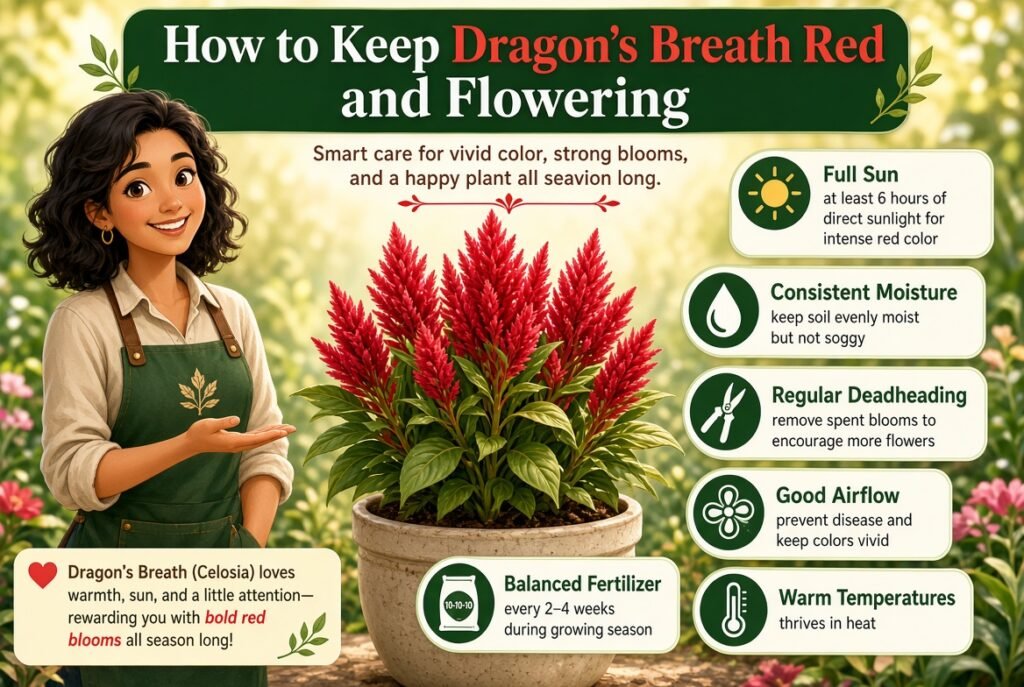
The plant’s rich red flowers and foliage are its biggest attractions. Strong sunlight, warm weather, and suitable growing conditions help it display its characteristic color. The LSU AgCenter notes that its red-green foliage can deepen under hot and humid conditions.
lsuagcenter.com
To maintain a strong display:
- Provide full sun where possible.
- Use well-draining, reasonably fertile soil.
- Water consistently during establishment.
- Avoid prolonged waterlogging.
- Give plants enough space for airflow.
- Remove faded flowers when they no longer look attractive.
Keep in mind that foliage color varies with light, temperature, and the individual plant. A small color difference does not automatically indicate a nutrient deficiency.
11. Can Dragon’s Breath Survive Winter?
Dragon’s Breath is usually grown as a warm-season annual. In most climates, the plant completes its life cycle during one growing season and declines as temperatures fall.
lsuagcenter.com
+1
How to extend its life
- Keep container plants in the warmest suitable location when cold weather arrives.
- Bring potted plants into a bright, protected area before frost if you want to try overwintering them.
- Avoid cold, wet soil.
- Consider collecting seeds from mature flower heads for the following season.
Overwintering is not guaranteed. Even in a mild climate, an annual celosia may decline naturally after flowering. Starting fresh plants next season is often easier than trying to keep an old plant alive indoors.
12. Is Dragon’s Breath Safe for Pets?
Do not assume every ornamental plant is safe simply because it is commonly grown in gardens. The ASPCA lists Celosia spicata as non-toxic to dogs, cats, and horses, but that is a different celosia species from Dragon’s Breath.
ASPCA
+1
If pet safety is important, confirm the exact plant species and consult a veterinarian or trusted poison-control resource before allowing pets to chew it. Avoid treating the safety listing for one species as proof that every plant in the genus has identical effects.
13. Frequently Asked Questions About Dragon’s Breath Plant Care
Is Dragon’s Breath a perennial or an annual?
Dragon’s Breath celosia is generally grown as a warm-season annual. It usually completes its ornamental life cycle in one growing season and does not reliably survive frost.
lsuagcenter.com
+1
How much sunlight does Dragon’s Breath need?
Aim for six to eight hours of direct sunlight daily. Full sun supports sturdy growth, vibrant foliage, and attractive flower plumes.
How often should I water Dragon’s Breath?
Water regularly while the plant establishes itself. Afterward, water when the soil begins to dry, adjusting for rainfall, temperature, and container size.
Why is my Dragon’s Breath turning yellow?
Yellow leaves can result from waterlogged soil, root stress, cold conditions, or natural aging. Check the soil before watering again, and inspect the roots if the plant continues to decline.
Does Dragon’s Breath need deadheading?
Deadheading is optional, but removing faded plumes keeps the plant tidy and may reduce unwanted self-seeding. Leave some mature flower heads if you want to collect seeds.
Can Dragon’s Breath grow in pots?
Yes. It performs well in containers with drainage holes and a sunny location. Choose a pot large enough for its mature size, and monitor moisture because containers can dry quickly in hot weather.
Why is my Dragon’s Breath not flowering?
Insufficient sunlight is one possible reason. Check whether the plant receives enough direct sun, whether its roots are crowded, and whether cold weather has slowed growth.
Can I grow Dragon’s Breath indoors?
You can try growing it indoors in a very bright, sunny location, but it is primarily an outdoor ornamental. Limited indoor light may reduce flowering and weaken its growth.
How tall does Dragon’s Breath grow?
The LSU AgCenter reports a typical height of around 2 feet and a spread of 15–18 inches. Growth can vary with the growing environment and cultivar.
lsuagcenter.com
Can I save Dragon’s Breath seeds?
Yes. Allow some flower heads to mature and dry, then collect the seeds and store them in a labeled, dry container. Seed-grown plants may not always match the parent exactly.
Conclusion
Successful Dragon’s Breath plant care depends on three essentials: full sun, warm weather, and well-draining soil. Water young plants consistently, avoid keeping roots wet, and use fertilizer conservatively. Remove faded flower plumes when needed, and collect seeds if you want to grow more plants next season.
If your plant starts wilting or turning yellow, check soil moisture and drainage before making changes. These simple habits help Dragon’s Breath produce its vivid red plumes and colorful foliage throughout the warm growing season.