Quick Answer
To care for a spider plant, place it in bright, indirect light and water when the top inch of soil feels dry. Use a loose potting mix in a container with drainage holes, feed lightly during active growth and repot when thick roots crowd the pot. Trim damaged leaves and propagate mature plantlets once they develop roots.
Why Spider Plants Are Easy but Not Indestructible
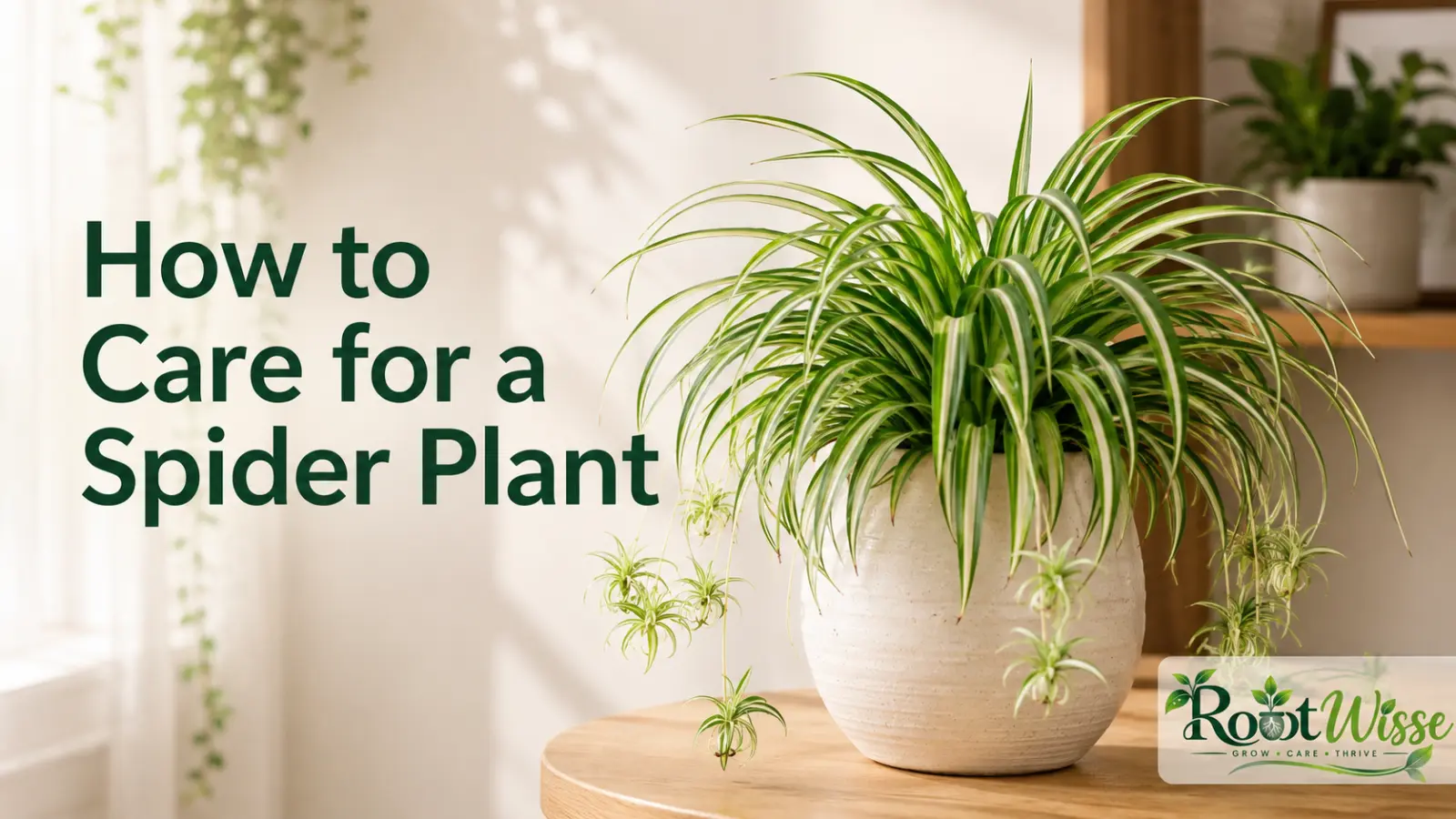
Spider plants (Chlorophytum comosum) have arching leaves and thick, water-storing roots. Mature plants produce small white flowers and plantlets called spiderettes.
They tolerate low light, irregular watering and crowded roots, yet may develop faded stripes or dry tips. Learning how to care for a spider plant means distinguishing survival from healthy growth.
Spider Plant Care at a Glance
| Care factor | Best conditions |
| Botanical name | Chlorophytum comosum |
| Light | Bright to moderate indirect light |
| Water | When the top inch of soil feels dry |
| Soil | Loose, well-draining houseplant mix |
| Temperature | About 60–80°F (16–27°C) |
| Humidity | Average household humidity or slightly higher |
| Fertilizer | Half-strength balanced feed every 4–6 weeks in active growth |
| Repotting | When roots fill the pot or disrupt watering |
| Propagation | Rooted plantlets, division or young plantlets in soil/water |
| Main problems | Brown tips, yellow leaves, root rot and faded variegation |
Choose the Right Light
The best spider plant light requirements are bright, indirect light. Try an east-facing window or a position back from a south- or west-facing window. Soften intense sun with a sheer curtain.
Direct sun can scorch leaves, while shade slows growth and weakens variegation. Green varieties tolerate lower light better than white-striped cultivars.
Pale patches on the window side suggest excess sun. Slow growth, leaning leaves and fading stripes suggest insufficient light. Change exposure gradually.
Rotate the pot a quarter turn every week or two so the rosette develops evenly. If natural light is limited, a full-spectrum grow light can supplement it.
Image suggestion: A three-part comparison showing healthy indirect-light growth, sun-scorched leaves and faded low-light variegation.
Water According to the Soil, Not the Calendar
For correct spider plant watering, test the top inch of mix. If dry, water until excess drains, then empty the saucer or cover pot.
Weekly watering is only a checkpoint. Summer plants dry faster than those in cool winter conditions. South Dakota State University recommends letting the soil dry between waterings. SDSU Extension
Fleshy roots tolerate brief dryness better than saturation. Avoid daily splashes; soak the root ball, then let the upper soil dry.
Underwatering causes folded leaves, dry soil and crispy edges. Wet soil, yellow leaves, sour odor or soft roots indicate overwatering. If damp-soil wilting occurs, inspect the roots.
Water Quality and Brown Leaf Tips
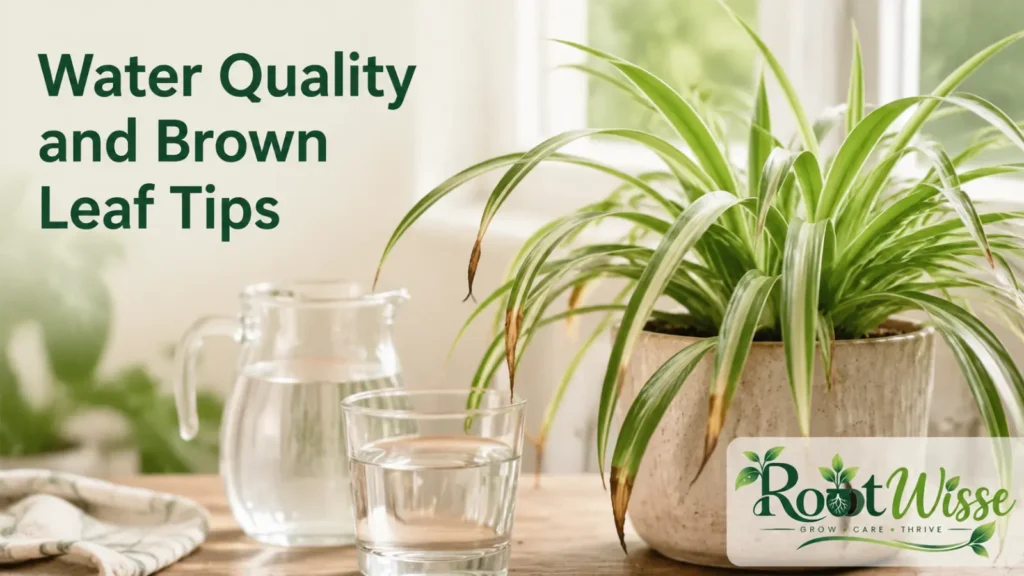
Spider plant brown tips are usually cosmetic. Causes include water stress, dry air, fertilizer salts, intense sun and tap-water minerals. The Royal Horticultural Society suggests rainwater or filtered water when water quality contributes to tip burn. Royal Horticultural Society
Check conditions before choosing a fix:
- Very dry soil: water more consistently.
- Standing runoff: improve drainage.
- White mineral crust: flush the soil and reduce fertilizer.
- Window-facing damage: reduce direct sun.
- Damage beside a heater: relocate the plant.
Trim brown tissue with clean scissors, following the leaf’s pointed shape. Avoid cutting deeply into healthy tissue.
Use Airy Soil and a Draining Pot
Good spider plant soil retains moisture while admitting air. Use indoor potting mix, adding perlite, pumice or fine bark if it stays wet too long.
Choose a pot with drainage. Slight root restriction is fine, but thick roots may eventually displace soil or crack the container.
Move up only one or two inches; excess soil in a large pot dries slowly and encourages rot.
Temperature, Humidity and Feeding
For spider plant care indoors, maintain about 60–80°F (16–27°C) and avoid cold glass, drafts and heaters. Average humidity is usually sufficient.
Apply spider plant fertilizer at half strength every four to six weeks during active growth. Reduce winter feeding and fertilize only moist soil.
Overfeeding burns roots and may reduce plantlets, according to NC State Extension.
Repotting a Spider Plant
Consider repotting a spider plant when roots emerge, lift the crown or prevent the mix from retaining water. Spring or early summer is ideal.
- Water lightly a day before repotting.
- Slide the root ball out and loosen the outer roots gently.
- Cut away only black, mushy or clearly dead roots with sterile scissors.
- Set the plant at its previous depth in a slightly larger draining pot.
- Fill around it with fresh mix without packing it tightly.
- Water thoroughly and let the excess drain.
Keep it in stable, indirect light afterward and delay fertilizer while roots recover.
How to Propagate Spider Plant Babies
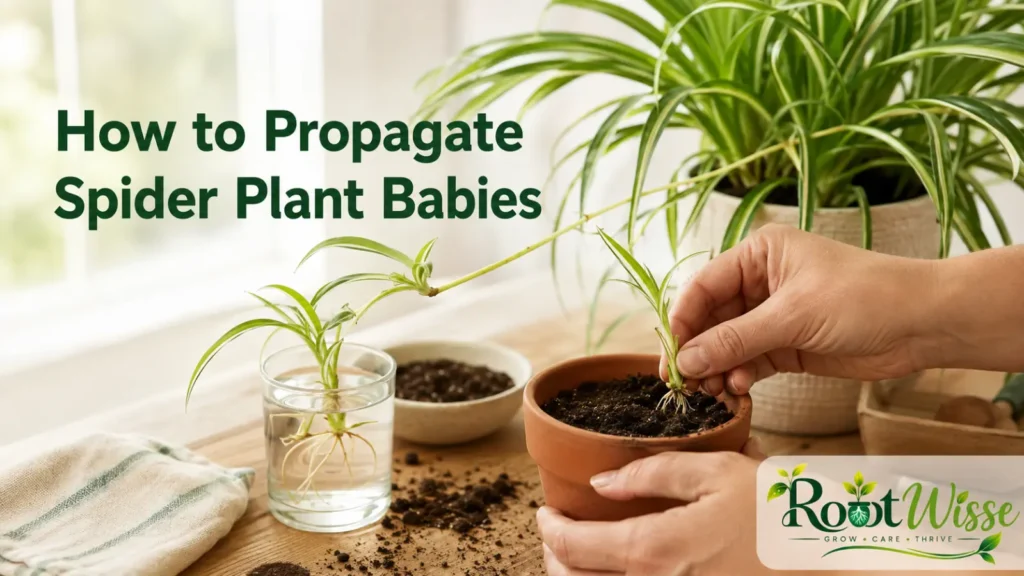
Spider plant propagation is easiest when spider plant babies have several leaves and visible roots.
Rooting directly in soil
Press the base of an attached plantlet onto moist mix. Once it resists a gentle tug and grows, cut the runner.
Alternatively, remove a developed baby and plant its base shallowly. Keep it lightly moist while establishing.
Rooting in water
Suspend only the plantlet’s base in clean water, keeping leaves dry. Transfer it to soil after several roots form.
Large parent plants may also be divided into separately rooted crowns.
Image suggestion: Step-by-step diagram showing where to cut a runner and how deeply to plant a spiderette.
Troubleshooting Common Spider Plant Problems
| Symptom | Likely cause | Practical response |
| Brown tips | Water stress, salts, dry air or harsh sun | Correct the cause and trim damage |
| Yellow, soft leaves | Overwatering or poor drainage | Let soil dry and inspect roots |
| Pale or scorched patches | Direct sunlight | Move to bright indirect light |
| Faded white stripes | Insufficient light | Increase filtered light gradually |
| No babies | Young plant, low light, excess fertilizer or oversized pot | Improve light, feed less and be patient |
| Wilting in wet soil | Root damage | Remove rot and repot in fresh mix |
| Sticky leaves or cottony clusters | Scale or mealybugs | Isolate and treat promptly |
| Crowded, thirsty plant | Root-bound condition | Move up one pot size |
Inspect leaf bases and undersides regularly for spider mites, mealybugs, scale and aphids. Isolate an affected plant. Remove minor infestations manually and use insecticidal soap or another houseplant product according to its label. Recheck weekly because one treatment may not catch every life stage.
Common Mistakes to Avoid
- Watering on the same weekday: soil moisture changes with the season.
- Interpreting tolerance as preference: a spider plant may survive shade but grow better in brighter indirect light.
- Overpotting: a large volume of wet soil can suffocate a small root system.
- Feeding to force babies: maturity, good light and slight root restriction matter more.
- Misting instead of watering: wet leaves do not hydrate the roots.
- Changing everything at once: diagnose light, moisture and roots before repotting, feeding and relocating simultaneously.
Frequently Asked Questions
How often should I water a spider plant?
Check weekly, but water only when the top inch of soil is dry. Frequency changes with light, temperature, pot size and season.
Can spider plants grow in low light?
They tolerate lower light, but growth slows and variegated leaves may fade. Bright, indirect light produces stronger growth.
Why is my spider plant not producing babies?
It may be immature, receiving insufficient light, overfertilized or growing in an oversized pot. Healthy, slightly root-bound mature plants usually produce more runners.
Should I cut the babies off?
You may leave them attached for a cascading display or remove mature plantlets for propagation. Numerous babies can eventually draw energy and water from the parent.
Are spider plants safe for cats and dogs?
Spider plants are generally regarded as non-toxic to cats and dogs, although chewing any plant may cause stomach upset. Keep the pot out of reach if a pet repeatedly eats it.
Should I mist a spider plant?
Routine misting is unnecessary. Use a room humidifier if the air is extremely dry, and focus on correct root-zone watering.
Conclusion
Knowing how to care for a spider plant comes down to balance: bright light without scorching sun, evenly managed moisture without soggy soil, and enough root space without an oversizedpot. Check the soil before watering, feed lightly and treat brown tips as clues rather than a disaster. With stable conditions, the plant will reward you with arching foliage, fresh runners and generations of easy-to-root spiderettes.
Related internal-link opportunities: houseplant watering guide, causes of brown leaf tips, pet-safe indoor plants, repotting root-bound plants and beginner propagation methods.