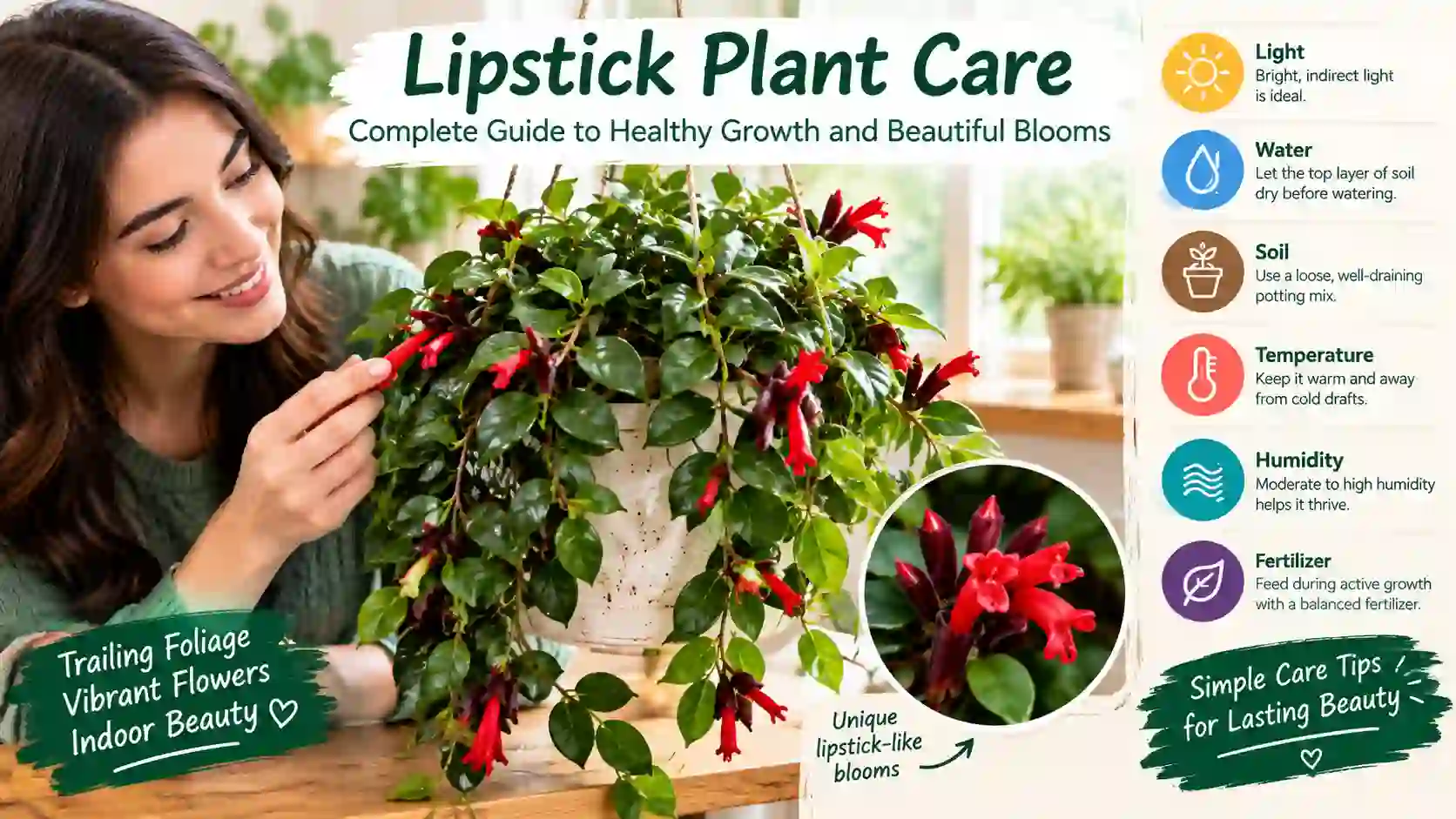
Lipstick plants (Aeschynanthus species) grow best in bright, indirect light, warm temperatures, and humid conditions. Use a loose, well-draining potting mix, and water when the top layer of soil begins to dry. Avoid soggy roots, cold drafts, and harsh direct sunlight. With consistent care, a lipstick plant can produce trailing stems and distinctive red, lipstick-like flowers.
The lipstick plant is a tropical houseplant known for its glossy leaves, trailing stems, and unusual flowers. Its red blooms emerge from dark, tube-shaped buds that resemble lipstick cases.
Although it can look delicate, this plant can grow well indoors when its basic needs are met. The main challenges are usually providing enough light, avoiding waterlogged soil, and creating conditions that support flowering.
This guide explains how to care for a lipstick plant, how to encourage blooms, and how to solve common problems such as yellow leaves, bare stems, and flower loss.


5
1. What Is a Lipstick Plant?
The lipstick plant belongs to the genus Aeschynanthus in the Gesneriaceae family. Aeschynanthus radicans is one commonly grown species. It is a tropical, evergreen, trailing plant native to parts of Southeast Asia.
North Carolina Extension Gardener Plant Toolbox
+1
In nature, lipstick plants are epiphytes. They can grow on trees rather than rooting in dense ground soil. This helps explain why their roots need air as well as moisture.
Key characteristics
- Growth habit: Trailing or cascading stems.
- Leaves: Usually glossy, fleshy, and green.
- Flowers: Often red or orange tubular blooms, depending on the species or cultivar.
- Best display: Hanging baskets, elevated planters, or shelves where stems can cascade.
- Difficulty: Usually manageable for beginners who can provide bright filtered light and careful watering.
Important: “Lipstick plant” can refer to several Aeschynanthus species and cultivars. Their exact care needs may vary, so check the plant label when available.
Image suggestion: Add a labeled botanical image showing the trailing stems, glossy leaves, and lipstick-like flowers.
2. Lipstick Plant Care at a Glance
|
Care factor
|
What to provide
|
| — | — |
|
Light
|
Bright, indirect or filtered light
|
|
Water
|
Water thoroughly, then allow the upper soil to begin drying
|
|
Soil
|
Loose, airy, moisture-retentive but well-draining mix
|
|
Temperature
|
Warm, stable indoor conditions
|
|
Humidity
|
Moderate to high humidity with good air movement
|
|
Fertilizer
|
Diluted balanced or suitable flowering-houseplant fertilizer during active growth
|
|
Pruning
|
Trim long or weak stems to encourage a fuller shape
|
|
Repotting
|
Repot when crowded or when the mix no longer drains well
|
|
Display
|
Hanging basket or pot with drainage holes
|
These recommendations reflect the plant’s preference for filtered light, warmth, humidity, and well-drained growing media.
North Carolina Extension Gardener Plant Toolbox
+2
3. How Much Light Does a Lipstick Plant Need?
Light strongly affects both growth and flowering. A lipstick plant in dim conditions may survive but produce fewer flowers and long, sparse stems.
Ideal lighting
Place your plant in a bright room where it receives plenty of indirect light. An east-facing window can work well. A bright west- or south-facing window may also suit it if a sheer curtain filters intense sun.
Avoid prolonged exposure to harsh midday sunlight. Strong direct rays can scorch leaves, especially when the plant has not been acclimated.
Signs of unsuitable light
- Too little light: Slow growth, long gaps between leaves, or few flowers.
- Too much direct sun: Bleached, brown, or scorched patches.
- Uneven light: Stems may grow more strongly toward the window.
Practical tip
Rotate the pot a little every week or two so different sides receive light. If your room is dim, a suitable grow light can supplement natural daylight.
Image suggestion: Show a lipstick plant beside a bright window with a curtain filtering sunlight, plus a small inset comparing healthy leaves with sun-scorched leaves.
4. How to Water a Lipstick Plant
Lipstick plants need moisture, but their roots should not remain in saturated soil. Overwatering is especially risky when the pot has poor drainage or the growing mix stays compacted.
A reliable watering method
- Check the top layer of potting mix with your finger.
- If the surface has begun to dry, check slightly deeper before watering.
- Water evenly until excess water drains through the pot.
- Empty any saucer or outer pot that collects runoff.
- Check the soil again before watering next time.
Do not follow a rigid calendar without checking the plant. A basket in a warm, bright room may dry much faster than a plant in a cool, dim room.
Adjust watering with the seasons
During active growth, the plant may use water more quickly. In winter or other periods of slower growth, the mix often takes longer to dry, so watering may need to be reduced. The RHS also advises watering more sparingly in winter.
lipstick plant
+1
Common watering mistakes
- Watering again while the soil is still wet.
- Letting the root ball become bone-dry repeatedly.
- Leaving the pot standing in water.
- Using a dense mix that stays soggy for too long.
Practical observation: If the leaves look limp, do not automatically add water. Check the soil first. Wilting can occur from both dry roots and roots damaged by excess moisture.
5. Choose the Right Soil and Pot
Because lipstick plants have epiphytic growth habits, they benefit from a growing medium that holds some moisture while allowing air to reach the roots.
North Carolina Extension Gardener Plant Toolbox
+1
What makes a suitable potting mix?
Choose a loose, well-draining houseplant mix. A blend containing materials such as fine orchid bark, perlite, and a moisture-retentive base can help balance airflow and water retention.
The exact recipe matters less than the result: the mix should not collapse into a dense, waterlogged mass after repeated watering.
Choosing a pot
Use a container with drainage holes. A hanging basket can display the trailing stems beautifully, but it may dry faster than a heavier pot.
Avoid moving a small plant into a much larger container. Excess soil around a small root system can stay wet for too long.
Image suggestion: Create a simple cross-section illustration of a lipstick plant pot, labeling the airy mix, roots, drainage holes, and water flow.
6. Temperature and Humidity
Lipstick plants prefer warm conditions and appreciate humidity. They also need reasonable air circulation; persistently stagnant, damp conditions can encourage fungal problems.
North Carolina Extension Gardener Plant Toolbox
+1
Temperature
Keep the plant in a warm indoor location with stable temperatures. Protect it from cold drafts, chilly windows, and sudden temperature changes.
NC State Extension notes that temperatures below 50°F (10°C) can cause leaf drop in Aeschynanthus radicans.
North Carolina Extension Gardener Plant Toolbox
+1
Humidity
If indoor air is dry, try one of these approaches:
- Use a room humidifier.
- Group plants together while leaving space for airflow.
- Keep the plant away from heating and air-conditioning vents.
Misting is not a dependable way to maintain humidity for long periods. If you mist, avoid leaving foliage constantly wet, especially where air circulation is poor.
Seasonal adjustment
Some lipstick plants benefit from a slightly cooler, drier rest during winter, which may help support later flowering. Avoid interpreting this as a need for cold exposure: the plant remains a tropical houseplant and should be protected from chilling.
North Carolina Extension Gardener Plant Toolbox
+1
7. How to Fertilize a Lipstick Plant
Fertilizer supports new leaves and stems, but excess feeding can damage roots or lead to weak growth. It also cannot compensate for poor lighting.
Feeding recommendations
- Feed during active growth, generally in spring and summer.
- Use a balanced liquid houseplant fertilizer diluted according to its label.
- A half-strength application is a cautious starting point for many liquid feeds.
- Reduce or pause feeding when growth slows in winter.
- Avoid fertilizing a plant that is severely wilted, waterlogged, or otherwise stressed.
The Royal Horticultural Society recommends a half-strength general liquid feed monthly from mid-spring to late summer for Aeschynanthus radicans.
lipstick plant
+1
Practical tip: If you notice a white crust on the soil or pot rim, or brown leaf tips after feeding, pause fertilizer and review the dose and watering routine. Mineral buildup may be contributing.
8. How to Encourage a Lipstick Plant to Bloom
A lipstick plant can grow attractive foliage without producing many flowers. Blooming usually depends on a combination of adequate light, healthy roots, suitable temperatures, and mature growth.


5
Improve the conditions in this order
- Check the light first. Move the plant to a brighter spot with filtered light if it is growing in shade.
- Review watering. Keep the mix from staying soggy, but do not let the root ball repeatedly dry out completely.
- Check root health. A plant with damaged roots may struggle to support flowers.
- Feed moderately during active growth. Avoid heavy doses intended to force blooming.
- Give the plant time. A young cutting or recently stressed plant may need to establish itself before flowering.
Does a lipstick plant need a cool rest?
Some Aeschynanthus varieties may benefit from a somewhat cooler and drier winter period. However, needs can differ by species and growing conditions. Keep the plant safely warm and reduce watering in response to slower soil drying rather than imposing a sudden temperature drop.
North Carolina Extension Gardener Plant Toolbox
+1
Should you prune before or after flowering?
Prune to shape the plant and encourage branching. Avoid cutting off developing flower buds if you want to enjoy the current bloom cycle. After flowering, you can trim excessively long or weak stems to maintain a fuller form.
Image suggestion: Use a three-stage graphic: healthy leafy growth, flower buds forming, and open red blooms.
9. Pruning and Maintaining a Full Shape
Lipstick plants naturally develop trailing stems. Pruning helps control their length and can encourage side shoots, giving the plant a fuller appearance.
How to prune
- Use clean, sharp scissors or pruning shears.
- Remove dead, damaged, or weak growth first.
- Shorten overly long stems just above a healthy leaf node.
- Avoid removing too much foliage at once.
- Give the plant suitable light and care while it produces new growth.
The RHS recommends trimming weak or overly long shoots as needed. NC State Extension also describes pruning after flowering as a way to encourage new growth.
lipstick plant
+1
Keep the plant tidy
Remove fallen leaves from the potting mix and inspect the stems regularly. Good hygiene and airflow can help reduce the risk of fungal issues.
10. How to Repot a Lipstick Plant
Repot when the plant is crowded, roots are emerging from drainage holes, or the potting mix has broken down and no longer drains properly. Repotting every year is not automatically necessary.
Repotting steps
- Choose a pot only modestly larger than the existing root ball.
- Make sure it has drainage holes.
- Gently loosen the plant from its container.
- Inspect the roots and remove any clearly dead or rotten sections with clean tools.
- Place the plant at the same general depth in fresh, airy potting mix.
- Water carefully and let excess water drain away.
- Keep it in bright, indirect light while it adjusts.
Avoid excessive root disturbance unless there is a clear reason. If the plant is healthy and the mix still drains well, leaving it in its current pot may be preferable to unnecessary repotting.
Image suggestion: Show a step-by-step repotting sequence with the old pot, root inspection, fresh mix, and finished plant.
11. How to Propagate a Lipstick Plant
Stem cuttings are a practical way to create new lipstick plants. Spring is a useful time to propagate when the plant is entering active growth.
North Carolina Extension Gardener Plant Toolbox
+2
Propagation using stem cuttings

![エスキナンサス:育て方を徹底解説!初心者でも安心[And Plants] | Nippon Gardening](https://images.openai.com/static-rsc-4/7Mh_H9B_StEhBC2gwlwl90C9wilYK9RdW--dIexI3zXIJE1IC_njgptuPMgVNrxSpOFkYCLHrm5cpC1vb3mFu01IHEJ2PCsiib-GIGfji_5uDutgpUG8gK5T9hXBi019SJxmeCMmYxj6QzqzVp74FsksOd_dBWxLAgoMMg9nY4Y?purpose=inline)

5
- Select a healthy, non-flowering stem.
- Cut a section with several nodes using clean scissors.
- Remove leaves from the lower portion that will be placed in the medium.
- Insert the lower stem into a small container of lightly moist, airy propagation medium.
- Place it in a warm spot with bright, indirect light.
- Keep the medium lightly moist, not saturated.
- Check for resistance from developing roots before moving the cutting into a regular pot.
A propagation cover can help retain humidity, but provide some ventilation. Excess condensation and constantly wet conditions can encourage rot. Extension guidance describes stem cuttings in a moist coir-and-perlite or similar medium, kept warm and out of direct sun.
Ask Extension
+1
Practical tip: Take more than one cutting if the parent plant is healthy and has enough growth. Not every cutting will root, and several cuttings planted together can eventually create a fuller-looking pot.
12. Common Lipstick Plant Problems and How to Fix Them
A change in leaves or flowers is a clue, not a diagnosis by itself. Check the soil, light, temperature, and roots before changing several care factors at once.
|
Symptom
|
Possible cause
|
What to do
|
| — | — | — |
|
Yellow leaves
|
Overwatering, poor drainage, or stress
|
Check soil moisture and drainage; inspect roots if the mix stays wet
|
|
Limp or wrinkled leaves
|
Dry root ball, root damage, or heat stress
|
Check the mix before watering; move away from intense heat
|
|
Brown, crispy patches
|
Harsh sun, dry air, or inconsistent watering
|
Filter direct sun and review watering conditions
|
|
Long, sparse stems
|
Insufficient light or limited branching
|
Increase bright indirect light and prune selectively
|
|
Few or no flowers
|
Low light, immature growth, or unsuitable growing conditions
|
Improve filtered light and review root health, feeding, and seasonal care
|
|
Buds or flowers dropping
|
Sudden environmental changes, watering stress, or low light
|
Keep conditions stable and check soil moisture
|
|
Leaf drop
|
Cold drafts, watering problems, or other stress
|
Check temperature, soil, and recent changes
|
|
Sticky leaves or visible insects
|
Possible pest infestation
|
Inspect leaf undersides and stems; isolate the plant if pests are present
|
NC State Extension identifies aphids, mealybugs, and mites among possible pests, and notes that leaf spot and Botrytis blight can occur. It recommends avoiding wet foliage and contact between leaves and potting medium to help reduce fungal problems.
North Carolina Extension Gardener Plant Toolbox
+1
A simple troubleshooting rule
Change one major factor at a time when possible. For example, if the plant is in dim light and the soil stays wet for many days, improve the light and drainage rather than adding fertilizer to force growth.
That makes it easier to see which change helps.
13. Seasonal Lipstick Plant Care
A simple seasonal routine can help you avoid watering and feeding mistakes as conditions change.
|
Season
|
Care priorities
|
| — | — |
|
Spring
|
Resume regular growth care, check whether repotting is needed, and take cuttings if desired
|
|
Summer
|
Provide bright filtered light, monitor drying more often, and feed moderately during active growth
|
|
Autumn
|
Watch for slower growth and adjust watering as the mix takes longer to dry
|
|
Winter
|
Protect from cold drafts, reduce watering as growth slows, and avoid unnecessary fertilizer
|
The plant’s exact seasonal rhythm depends on your indoor temperature, light, and cultivar. Treat the calendar as a guide and respond to the plant’s actual growth.
14. Frequently Asked Questions
Is a lipstick plant easy to care for?
It can be manageable for beginners when given bright indirect light, warm conditions, and a well-draining potting mix. Careful watering is particularly important.
How often should I water a lipstick plant?
There is no universal weekly schedule. Check the soil and water when the upper layer has begun to dry, then allow excess water to drain. Water less frequently when growth slows or the mix dries slowly.
Why is my lipstick plant not flowering?
Insufficient light is one possible reason. Also review the plant’s maturity, root health, watering, fertilizer routine, and whether its growing conditions have changed.
Can lipstick plants grow in hanging baskets?
Yes. Their trailing growth makes them well suited to hanging baskets and elevated containers. Make sure the basket or pot drains freely.
Can I grow a lipstick plant outdoors?
It may be grown outdoors in warm conditions with filtered or dappled light, but it is not frost-hardy. Bring it inside before temperatures become too cold.
North Carolina Extension Gardener Plant Toolbox
+1
Should I mist my lipstick plant?
Misting is not a reliable way to maintain humidity. A humidifier or suitable room placement can provide more consistent humidity. Maintain airflow and avoid keeping the foliage persistently wet.
Why are the leaves falling off?
Leaf drop can follow cold drafts, improper watering, or other environmental stress. Check the soil moisture, drainage, temperature, and any recent changes in placement.
Can I grow a lipstick plant from a cutting?
Yes. Stem cuttings are a common propagation method. Use healthy stems, a lightly moist propagation medium, warmth, and bright indirect light.
North Carolina Extension Gardener Plant Toolbox
+1
Does a lipstick plant need direct sunlight?
It generally prefers bright, filtered light rather than prolonged harsh direct sun. Gentle morning sun may be tolerated in some settings, but watch for signs of scorching.
What is the best soil for a lipstick plant?
Use a loose, airy mix that retains some moisture but drains well. Avoid dense soil that remains saturated around the roots.
15. Related Plant Care Topics
Readers who are learning about flowering and trailing houseplants may also find these topics useful:
- Aloe plant care: Light, watering, and soil requirements for succulents.
- Jade plant care: How to manage watering and light for a fleshy-leaved plant.
- Palm plant care: Indoor light, humidity, and common leaf problems.
- Pilea plant care: Growing attractive foliage and maintaining healthy roots.
Conclusion
Successful lipstick plant care comes down to a few consistent habits: provide bright indirect light, use an airy potting mix, water according to soil moisture, and protect the plant from cold drafts. Moderate feeding and thoughtful pruning can support healthy trailing growth, while suitable light and stable conditions help encourage flowering.
If your plant is struggling, begin by checking its light, soil moisture, and drainage. Correcting those basics is usually more useful than adding extra fertilizer or making several changes at once.