
Quick Answer
Cilantro (Coriandrum sativum) grows best in cool weather (50–85°F), full sun to partial shade, and consistently moist, well-draining soil. It has a short lifespan by nature — typically 3–4 weeks of harvestable leaves before it bolts (flowers) and goes to seed, especially in heat. Success depends less on avoiding mistakes and more on working with its fast life cycle: sow small batches every 2–3 weeks for a continuous supply.
Why Cilantro Frustrates So Many Home Gardeners
Cilantro has a reputation problem. More than almost any other kitchen herb, people report growing it once, watching it bolt within weeks, and giving up — convinced they did something wrong.
Here’s the part most guides skip: bolting isn’t usually a mistake. Cilantro is genetically wired to complete its life cycle fast, especially once temperatures climb. It’s not like basil or parsley, which you can nurse along for months with the right care. Cilantro is more like a sprint than a marathon, and gardeners who treat it like a marathon end up disappointed.
Once you understand this, cilantro care shifts from “how do I keep this alive forever” to “how do I manage a fast-cycling plant so I always have some ready.” That reframing is the single biggest factor in growing cilantro successfully, and it’s what this guide is built around.
Image Suggestion: Side-by-side comparison of leafy, harvestable cilantro versus bolted cilantro with tall flower stalks and feathery seed-stage leaves.
Understanding the Cilantro Life Cycle (Why This Changes Everything)
Cilantro moves through its life cycle in roughly 6–8 weeks total, but only the first 3–4 weeks produce the broad, flavorful leaves people cook with. After that, it bolts — sending up a tall central stem, producing feathery leaves, then flowers, then coriander seeds.
Bolting is triggered primarily by two things:
- Heat. Once temperatures consistently exceed 75–80°F, cilantro accelerates toward flowering, often within days.
- Day length and plant maturity. Longer daylight hours and simple plant age also push it toward seed production, even in mild temperatures.
Why this matters practically: if you plant one batch of cilantro and expect months of harvests, you’re working against the plant’s biology. Experienced growers plant in succession instead — sowing a new small batch every 2–3 weeks — so that as one planting bolts, another is just reaching peak harvest.
Common mistake: Treating a bolted plant as a failure and pulling it out immediately. Bolted cilantro still has value — the flowers attract beneficial pollinators, and the seeds it eventually produces are coriander, a completely different (and useful) spice.
Light Requirements
- Cooler climates or spring/fall growing: Full sun (6+ hours) produces the fullest, most flavorful growth.
- Warmer climates or summer growing: Partial shade or afternoon shade slows bolting by keeping the plant and soil cooler.
Practical tip: If you’re growing cilantro in a hot climate, position it where it gets morning sun and afternoon shade — east-facing spots against a wall or fence work well. This single placement choice can extend your harvest window by a week or more compared to full all-day sun exposure.
Soil and Watering
Cilantro has shallow roots and no drought tolerance to speak of, which makes consistent moisture more important than it is for many other herbs.
Soil:
- Well-draining, loose soil rich in organic matter.
- Slightly acidic to neutral pH (6.2–6.8) is ideal, though cilantro tolerates a reasonably wide range.
Watering:
- Keep soil consistently moist — not soggy, not dry — especially in the first few weeks after sowing.
- Water at the base of the plant rather than overhead, which reduces fungal disease risk on the leaves.
- In containers, check soil moisture daily during warm weather, since shallow pots dry out fast.
Why this matters: Inconsistent watering — alternating between drought stress and heavy watering — is one of the most common triggers for premature bolting, right alongside heat. Beginners often assume cilantro is a low-water herb because it’s sometimes marketed as “drought-tolerant” once mature; in practice, that tolerance is minimal and inconsistent watering shortens your harvest window rather than toughening the plant.
Temperature: The Factor That Controls Everything Else
| Temperature Range | Effect on Cilantro |
|---|---|
| 50–75°F (10–24°C) | Ideal — steady leaf growth, slow to bolt |
| 75–85°F (24–29°C) | Growth continues but bolting risk rises |
| Above 85°F (29°C) | Rapid bolting, often within days |
| Below 50°F (10°C) | Growth slows significantly; light frost tolerated but hard frost damages plants |
Cilantro genuinely prefers cool weather, which is why it’s often grown as a spring and fall crop in warmer regions rather than a summer one. In mild climates, it can even be grown through winter.
Expert insight: If you live somewhere with hot summers, don’t fight the season. Plant cilantro in early spring and again in early fall, and treat summer as an off-season for this particular herb — or grow it in a shaded, cooler microclimate instead of forcing it through peak heat.
Growing From Seed vs. Transplants
Cilantro is one of the few herbs where starting from seed is usually the better choice, not just the cheaper one.
Why seed usually wins: Cilantro has a taproot that doesn’t transplant well. Seedlings started in trays and moved to the garden often experience transplant shock that stunts growth or accelerates bolting.
How to sow directly:
- Sow seeds ¼–½ inch deep, spaced about 2 inches apart, directly in the garden bed or final container.
- Keep soil consistently moist until germination, which typically takes 7–10 days.
- Thin seedlings to about 4–6 inches apart once they have their first true leaves.
If you must transplant: Use biodegradable pots that can go directly into the soil, minimizing root disturbance.
Container Growing
Cilantro grows well in containers, which is often the more practical option for succession planting since you can stagger multiple pots in different stages.
- Choose a pot at least 6–8 inches deep to accommodate the taproot.
- Ensure drainage holes — cilantro in waterlogged containers develops root rot quickly.
- Group 3–4 pots at different growth stages so you always have leaves ready while others are still developing.
Practical tip: A row of small pots sown one week apart is one of the most reliable ways to solve the “I only get cilantro for two weeks” complaint that beginners commonly run into.
Harvesting Cilantro Correctly
How you harvest directly affects how long the plant keeps producing usable leaves.
- Begin harvesting once the plant has several sets of true leaves, usually 3–4 weeks after sowing.
- Cut outer, mature leaves and stems first, leaving the inner, younger growth to continue developing.
- Harvest no more than a third of the plant at a time to avoid stressing it.
- Cut stems near the base rather than plucking individual leaflets, which encourages bushier regrowth.
Common mistake: Harvesting only the top leaves and leaving the plant otherwise untouched. This doesn’t encourage the plant to produce more — cilantro doesn’t regenerate the way herbs like basil do once it starts maturing, so regular, moderate harvesting from the whole plant extends usability more effectively.
Troubleshooting Common Problems
Plant bolted almost immediately after sprouting:
Usually heat or a heat wave right after germination. Choose a cooler planting window next time, or provide afternoon shade.
Leaves turning yellow:
Most often overwatering and poor drainage, though it can also indicate nitrogen deficiency in poor soil. Check that water isn’t pooling around roots before assuming a nutrient problem.
Leggy, sparse growth:
Usually insufficient light. Cilantro grown indoors near a dim window often stretches and thins out; move it somewhere brighter or supplement with a grow light.
Weak, thin seedlings that flop over:
Typically a sign of overcrowding. Thin seedlings more aggressively — crowded cilantro competes for light and nutrients, weakening all the plants involved.
No germination at all:
Cilantro seeds (which are technically the dried fruit) germinate better after light crushing to expose the seed inside, and they need consistent moisture during the 7–10 day germination window. Seeds allowed to dry out even briefly during this period often fail entirely.
Fertilizing
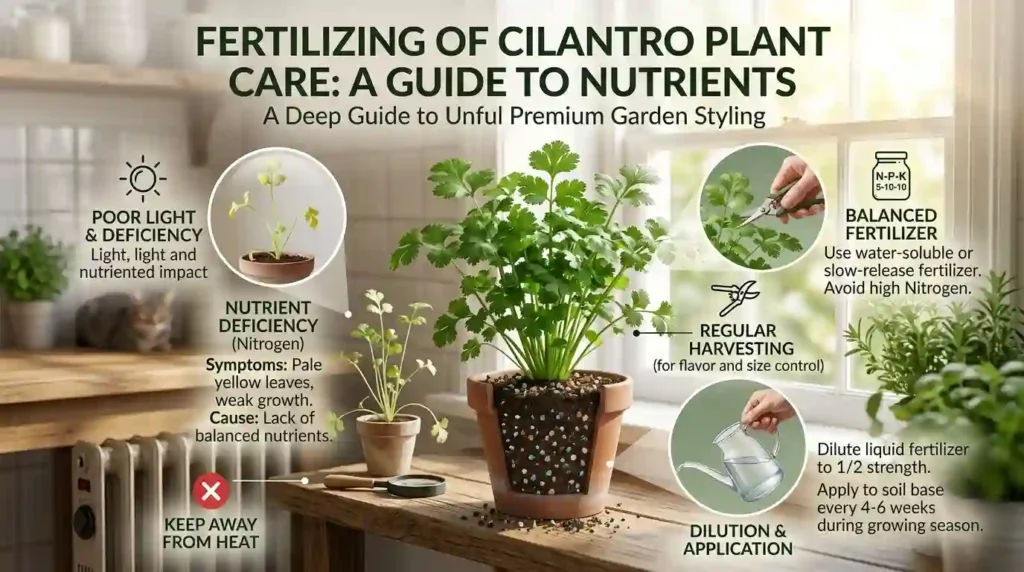
Cilantro is a light feeder and generally doesn’t need heavy fertilization, especially given its short lifespan.
- A balanced, diluted liquid fertilizer once during the growing cycle is usually sufficient.
- Over-fertilizing, particularly with high-nitrogen formulas, can push rapid leafy growth that bolts even faster in some cases.
- In rich, organic garden soil, many growers skip fertilizer entirely with good results.
Letting Cilantro Go to Seed (On Purpose)
Once you understand cilantro’s cycle, letting some plants bolt intentionally becomes a strategy rather than a failure.
- Coriander seeds: The seeds produced after flowering are coriander, a completely different culinary spice used whole or ground in cooking.
- Self-seeding: If left in place, dropped seeds often germinate on their own the following season, giving you free plants with no extra effort.
- Pollinator support: Cilantro flowers attract beneficial insects, including pollinators and predatory insects that help control garden pests.
Advanced strategy: Dedicate a portion of your cilantro planting specifically to bolt and go to seed while harvesting leaves from a separate, younger batch. This way you get both fresh leaves and a coriander seed harvest from the same growing season.
Frequently Asked Questions
Why does my cilantro keep bolting so fast?
Heat and plant maturity are the two biggest triggers. Even in mild weather, cilantro naturally moves toward flowering within a matter of weeks — succession planting every 2–3 weeks is the most reliable fix.
Can cilantro be grown indoors year-round?
Yes, with a sunny window or grow light and cool room temperatures, though indoor plants still bolt eventually. Indoor growing is best paired with succession planting, just like outdoors.
Is cilantro the same plant as coriander?
Yes. Cilantro refers to the leaves and stems, while coriander refers to the dried seeds of the same plant (Coriandrum sativum). In some regions, particularly outside North America, the whole plant is called coriander.
How do I stop cilantro from tasting soapy?
This isn’t a care issue — it’s genetic. A percentage of people carry a gene variant that makes cilantro taste like soap due to their sensitivity to certain aldehyde compounds in the leaves. No growing method changes this.
How much cilantro should I plant for regular cooking use?
For a household that cooks with cilantro a few times a week, sowing a small row or 2–3 containers every 2–3 weeks maintains a steady supply without excess waste from bolted, unused plants.
Conclusion
Cilantro care succeeds or fails based on one core idea: this is a fast, cool-season herb, not a slow-growing perennial you tend indefinitely. Keep soil consistently moist, provide full sun in cool weather or afternoon shade in heat, and — most importantly — plant in small succession batches every 2–3 weeks rather than expecting one planting to last all season.
Once you stop fighting cilantro’s natural bolting tendency and start planning around it, growing this herb goes from a recurring frustration to a reliable, low-effort part of your kitchen garden.
Related topics readers may want to explore next: how to harvest and store coriander seeds, succession planting for fast-growing herbs, and companion planting for cilantro and other cool-season crops.