Quick Answer
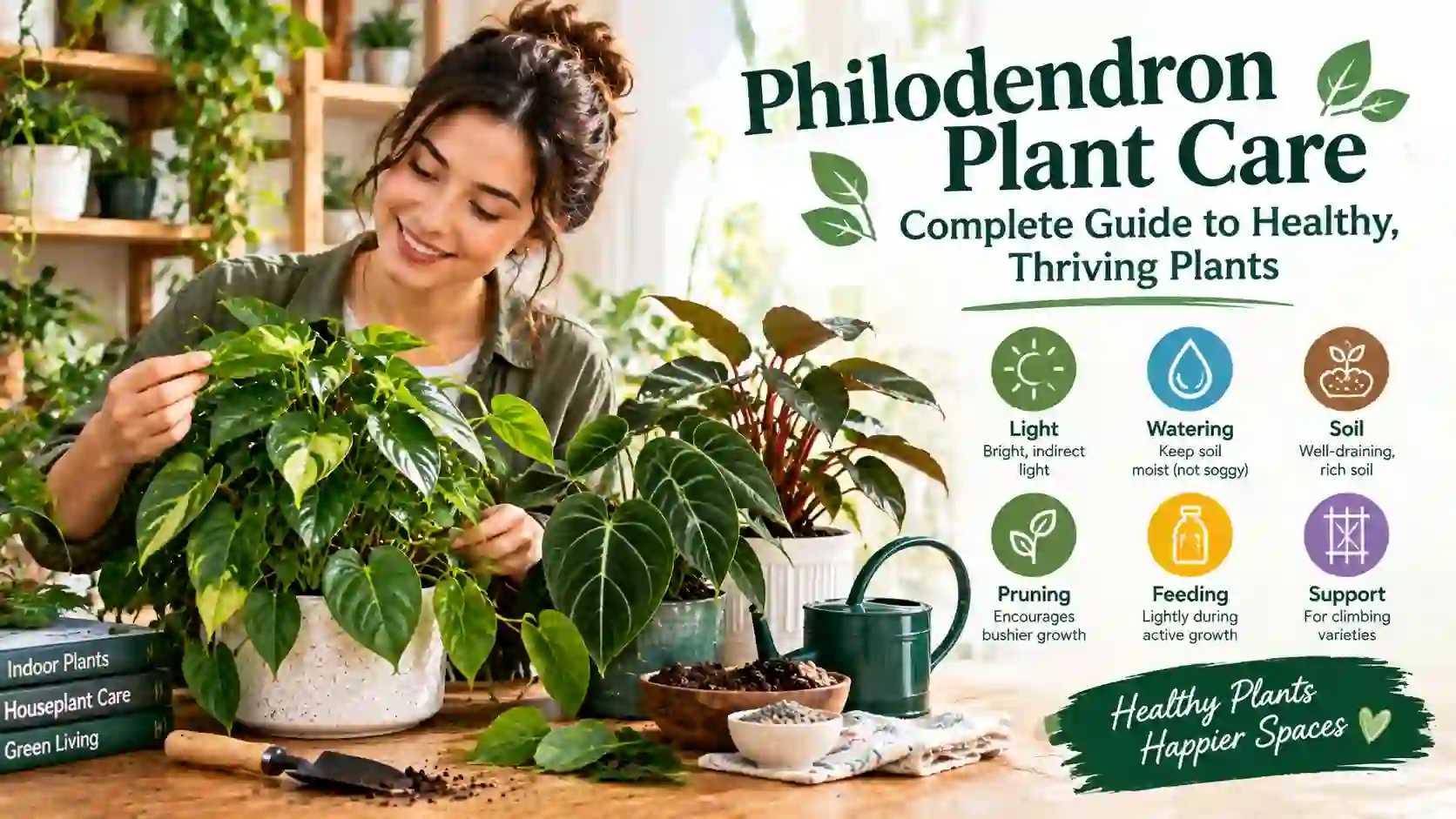
Philodendrons thrive in bright, indirect light, warm temperatures, and a well-draining potting mix. Water when the top portion of the soil begins to dry, and use a pot with drainage holes. Most indoor varieties appreciate moderate humidity and light feeding during active growth. Because philodendrons include both climbing and self-heading types, provide a moss pole or support for climbers and enough room for upright varieties to spread.
Introduction
Philodendrons are popular houseplants because they offer striking foliage without demanding constant attention. Some trail from hanging baskets, others climb supports, and upright varieties create a bold, leafy display.
Still, philodendron plant care can become confusing when advice treats every variety the same. A heartleaf philodendron and a large upright hybrid may share basic needs, but they differ in space, support, and growth habits.
RHS
+1
This guide explains how to care for philodendrons indoors, how to recognize common problems, and how to adjust your routine through the seasons. It also covers propagation, repotting, leaf damage, and safety around pets and children.
1. Understand Your Philodendron’s Growth Habit


6
Before choosing a pot or support, identify how your philodendron grows. The genus includes climbing vines, trailing plants, and self-heading types. Some species also creep along the soil rather than climbing vertically.
RHS
+1
|
Growth habit
|
What it looks like
|
Care consideration
|
| — | — | — |
|
Climbing or trailing
|
Stems extend outward with leaves spaced along them
|
Train upward on a support or let the stems trail
|
|
Self-heading
|
Leaves emerge in a compact cluster from a central base
|
Allow room for the plant to widen; a pole is usually unnecessary
|
|
Creeping
|
Stems grow horizontally across the surface
|
Use a wide, stable pot rather than a narrow, tall one
|
Why this matters: A climbing philodendron may look sparse when left unsupported, while a creeping type can become cramped in a narrow container. Matching the setup to the growth habit makes maintenance easier and helps the plant develop naturally.
2. Philodendron Care Requirements at a Glance

|
Care factor
|
General recommendation
|
| — | — |
|
Light
|
Bright, indirect light; some types tolerate lower light
|
|
Water
|
Water when the upper soil layer has dried; avoid saturated soil
|
|
Soil
|
Moisture-retentive but well-draining, airy potting mix
|
|
Temperature
|
Warm indoor conditions; protect from cold drafts
|
|
Humidity
|
Moderate humidity is usually workable; higher humidity can benefit some varieties
|
|
Fertilizer
|
Feed lightly during active growth, following the label
|
|
Repotting
|
Repot when roots crowd the pot or the mix no longer drains well
|
|
Pruning
|
Remove damaged leaves and trim vines to control shape
|
|
Support
|
Provide a pole or trellis for climbing varieties
|
|
Safety
|
Toxic if chewed or eaten; sap may irritate skin or eyes
|
The Royal Horticultural Society and Iowa State University Extension both recommend indirect light, careful watering, and well-drained soil for philodendrons. Iowa State also notes that ordinary home humidity is often tolerated.
RHS
+1
3. Light: Bright and Indirect Is a Reliable Starting Point

Most philodendrons prefer bright, indirect or filtered light. Some heartleaf types tolerate dimmer rooms, but low light can slow growth and produce longer spaces between leaves. Brightly colored varieties often need better light to maintain strong growth and attractive foliage.
Yard and Garden
+1
Where should you place a philodendron?
- Near an east-facing window with gentle morning light.
- A few feet back from a bright south- or west-facing window.
- Behind a sheer curtain if direct sun is too intense.
- Under a suitable grow light if the room has limited daylight.
Signs the light is not right
|
Plant symptom
|
What it may indicate
|
| — | — |
|
Long stems with widely spaced leaves
|
Light may be too low
|
|
Smaller new leaves or slow growth
|
Light may be insufficient, though other factors can contribute
|
|
Pale, bleached, or crispy patches on the sun-facing side
|
Direct sun may be too intense
|
|
Variegation becoming less noticeable
|
The plant may need brighter indirect light, depending on the cultivar
|
Move plants gradually when changing their light conditions. A sudden move from a dim corner to strong direct sun can damage leaves.
Practical tip: Wipe dust from broad leaves with a soft, damp cloth. Dust can reduce the amount of light reaching the leaf surface, and cleaning also gives you a chance to inspect for pests.
RHS
+1
4. Watering: Check the Soil Instead of Following a Calendar
Philodendrons prefer soil that retains some moisture but does not stay saturated. Watering too frequently can leave roots short of oxygen and increase the risk of root rot. Iowa State recommends watering when the top of the soil is dry and avoiding standing water in saucers.
Yard and Garden
+1
A simple watering method
- Feel the top few centimetres of potting mix.
- If that layer has dried, water the soil evenly.
- Continue until excess water runs from the drainage holes.
- Empty the saucer or decorative outer pot.
- Check the soil again before watering next time.
Do not wait for the entire root ball to become bone-dry, especially with thin-leaved varieties. At the same time, avoid keeping the mix wet day after day.
Adjust watering to conditions
- Warm, bright months: Check moisture more often because the plant may use water faster.
- Cooler or darker months: Let the mix dry more between waterings as growth and water use slow.
- Recently repotted plants: Check carefully; fresh mix and a larger pot can change how quickly moisture is lost.
- Plants in low light: Be especially cautious because their soil may remain wet for longer.
Common mistake: Treating drooping leaves as an automatic signal to water. If the soil is already wet, additional water may worsen the problem. Check moisture and drainage first.
5. Choose an Airy, Well-Draining Potting Mix
Philodendron roots need both moisture and air. A dense mix that stays soaked can create problems, while an overly coarse mix may dry too quickly for the plant’s needs. The RHS recommends a moisture-retentive but well-drained compost.
RHS
+1
What should the potting mix contain?
For many indoor philodendrons, start with a quality houseplant potting mix. If it stays wet for too long, improve its structure with ingredients such as perlite, pumice, or fine orchid bark.
A practical blend might contain:
- Houseplant potting mix to hold moisture and provide a growing base.
- Perlite or pumice to increase air space and drainage.
- Fine orchid bark to create a looser structure, especially for climbing aroids.
You do not need to use an exact formula for every species. The right balance depends on the pot, indoor conditions, and how quickly the mix dries.
Choose a pot with drainage
Use a container with drainage holes. A decorative pot without holes can hold excess water around the roots, even if the plant is watered carefully.
If you prefer a decorative outer pot, keep the plant in a draining nursery pot and remove it when watering. Let it drain before returning it.
Image suggestion: A labeled potting-mix diagram showing houseplant mix, perlite, bark, drainage holes, and the root zone.
6. Temperature and Humidity
Philodendrons generally prefer warm indoor conditions. The RHS advises keeping them at typical room temperatures of at least 15°C (59°F) and away from cold drafts and hot radiators. Iowa State reports that many philodendrons tolerate normal household humidity, although they grow well with higher humidity.
RHS
+1
Temperature tips
- Keep plants away from air-conditioning blasts and cold drafts.
- Avoid placing foliage directly against a cold window in winter.
- Keep plants away from heaters that blow hot, dry air.
- Protect outdoor philodendrons from cold snaps and frost.
Should you increase humidity?
If the air is very dry, some varieties may develop brown edges or less vigorous new growth. You can try grouping plants together or using a room humidifier.
Humidity is only one part of care, however. Raising humidity will not fix soggy soil, poor light, or damaged roots. Maintain airflow and avoid leaving foliage persistently wet.
7. Fertilizing: Feed During Active Growth
Philodendrons benefit from moderate feeding while they are actively producing leaves. Iowa State recommends a balanced, all-purpose fertilizer used lightly during spring and summer.
Yard and Garden
+1
How to fertilize
- Choose a balanced houseplant fertilizer.
- Follow the label for dilution and frequency.
- Apply it to appropriately moist soil rather than a severely dry root ball.
- Reduce feeding when growth slows in cooler, darker conditions.
- If the plant shows signs of stress, investigate watering, light, and roots before adding fertilizer.
Too much fertilizer can cause salt buildup and damage roots or leaf edges. More fertilizer does not automatically mean larger leaves or faster growth.
Expert tip: If your philodendron is growing slowly, first check whether it receives enough light and whether its roots are healthy. Fertilizer cannot compensate for poor growing conditions.
8. Support, Pruning, and Shaping

Climbing philodendrons can be trained up a moss pole, coir pole, or sturdy trellis. Their aerial roots may attach to a suitable support, helping the plant grow vertically. Other varieties are naturally upright and need space rather than a climbing structure.
RHS
+1
How to support a climbing philodendron
- Place the support in the pot without damaging the main root mass.
- Loosely secure the stem with soft plant ties.
- Attach the stem, not the leaf stalks, to avoid restricting or damaging growth.
- Guide new growth toward the support as it develops.
- Check ties occasionally and loosen them as stems thicken.
A moss pole can be kept slightly moist if you want aerial roots to attach, but it should not become a constantly dripping source of moisture around the plant.
How to prune
Pruning helps manage size, remove damaged growth, and encourage branching in some vining types.
- Use clean, sharp scissors or pruning shears.
- Remove dead or badly damaged leaves near their base.
- Shorten long vines just above a node if you want to control length.
- Keep healthy cuttings if you plan to propagate the plant.
- Avoid removing too much foliage at once from a weak plant.
Image suggestion: A step-by-step illustration showing a climbing philodendron attached to a pole, a cut above a node, and a trimmed vine beginning to branch.
9. Repotting: When and How to Move Your Plant
Philodendrons do not need constant repotting. Iowa State recommends moving them into fresh potting soil and a container one size larger when they become overcrowded or the soil dries too quickly to keep up with normal watering.
Yard and Garden
+1
Signs it may need repotting
- Roots are circling densely around the root ball.
- Roots emerge from drainage holes.
- Water runs through very quickly because little mix remains.
- The plant dries out unusually fast despite suitable conditions.
- Growth has slowed and the root system is crowded.
A root emerging from one drainage hole does not automatically mean the plant needs a much larger pot. Look at the overall root ball and how the plant is growing.
Repotting steps
- Choose a pot with drainage holes, only modestly larger than the current one.
- Slide the plant out gently and inspect the roots.
- Remove loose, exhausted mix without aggressively tearing healthy roots.
- Trim any clearly mushy or rotten roots with clean tools.
- Set the plant at its previous soil depth and fill around it with fresh mix.
- Water enough to settle the mix, then allow excess water to drain.
After repotting, keep the plant in suitable indirect light and avoid heavy fertilizing until it resumes active growth.
10. Propagating Philodendrons
Many climbing philodendrons can be propagated from stem cuttings. A cutting needs a node because new roots and shoots develop from the stem’s growth points. A leaf without a node usually cannot produce a complete new plant.
ivy-leaved philodendron
+1

Propagation in water
- Select a healthy vine with at least one visible node.
- Cut just below the node using clean scissors.
- Remove any leaf that would sit underwater.
- Place the node in clean water while keeping the leaf above the surface.
- Set it in bright, indirect light.
- Refresh the water when it becomes cloudy and watch for root development.
- Transfer the cutting to potting mix once it has a useful root system.
Propagation in potting mix
You can also place the node directly into a lightly moist, airy propagation mix. Keep it warm and provide bright indirect light. The mix should stay lightly moist but not waterlogged.
Important distinction: Methods that work well for vining philodendrons may not suit every self-heading variety. Check the growth habit and propagation guidance for your particular plant.
11. Common Philodendron Problems and How to Fix Them
A change in leaf color or shape is a clue, not a diagnosis. Check the soil, roots, light, and recent changes in the plant’s environment before deciding what caused the symptom.
|
Problem
|
Possible cause
|
What to check or do
|
| — | — | — |
|
Yellowing leaves
|
Overwatering, poor drainage, stress, or natural aging
|
Check soil moisture and drainage; inspect roots if several leaves yellow quickly
|
|
Brown, crispy edges
|
Dry air, inconsistent watering, salt buildup, or intense light
|
Review watering, fertilizer use, and sun exposure
|
|
Long, bare stems
|
Insufficient light or a naturally trailing growth habit
|
Move to brighter indirect light and prune selectively if needed
|
|
Small new leaves
|
Low light, lack of support in some climbers, root crowding, or other stress
|
Check light, support, roots, and growing conditions
|
|
Drooping leaves
|
Dry soil, waterlogged roots, heat, or recent environmental change
|
Check the soil before watering and assess the plant’s location
|
|
Pale or scorched patches
|
Excessive direct sun or other environmental stress
|
Move out of harsh sun and acclimate gradually
|
|
Slow growth
|
Seasonal slowdown, low light, crowded roots, or unsuitable conditions
|
Review the whole care routine rather than adding fertilizer immediately
|
|
Sticky residue or visible insects
|
Possible sap-feeding pests
|
Inspect leaf undersides, stems, and new growth; isolate if pests are present
|
The RHS notes that philodendrons can become leggy and produce fewer, smaller leaves when light is inadequate. It also warns that saturated compost can lead to root rot.
RHS
+1
What to do about pests
Common houseplant pests may include mealybugs, scale insects, and spider mites. Check especially around leaf joints, along stems, and on the undersides of leaves.
money plant
+1
If you find pests:
- Separate the affected plant from nearby houseplants.
- Remove small numbers of insects manually where practical.
- Rinse or wipe foliage if suitable for the variety and infestation.
- Use a treatment labeled for the specific pest and plant, following all instructions.
- Reinspect regularly, since pests can return after an initial treatment.
Avoid spraying a stressed plant with multiple products at once. Identify the pest first and follow the treatment label.
12. Seasonal Philodendron Care
Indoor philodendrons respond to changes in daylight, temperature, and growth rate. Rather than following a strict seasonal schedule, use the plant’s growth and soil moisture to guide your routine.
|
Season
|
Care priorities
|
| — | — |
|
Spring
|
Resume feeding as active growth returns; inspect roots and repot if needed
|
|
Summer
|
Check soil more frequently; protect leaves from harsh direct sun and extreme heat
|
|
Autumn
|
Reduce fertilizer as growth slows; check for pests before moving plants indoors
|
|
Winter
|
Water less often if the mix dries slowly; protect plants from cold drafts and heating vents
|
Some varieties continue growing through much of the year in warm, bright rooms. Others slow noticeably during darker months. Adjust watering and feeding to the plant’s actual activity rather than assuming every philodendron follows the same timetable.
13. Philodendron Safety Around Children and Pets
Philodendrons are considered harmful if eaten, and their sap may irritate skin or eyes. The RHS recommends keeping them out of reach of children and pets and wearing gloves when handling them.
RHS
+1
For safer handling:
- Place plants where children and pets cannot chew the leaves.
- Wash your hands after pruning or repotting.
- Avoid touching your eyes while handling cut stems.
- Clean tools and surfaces after working with the plant.
- If a person or animal chews or swallows part of the plant, contact a medical professional, veterinarian, or poison advice service for guidance.
Do not assume a plant is safe simply because it is a common houseplant.
14. Frequently Asked Questions
Are philodendrons easy to care for?
Many common indoor philodendrons are relatively forgiving when given indirect light, suitable watering, and a well-draining mix. Their needs vary by species and growth habit, so identifying your variety helps you provide better care.
RHS
+1
How often should I water my philodendron?
There is no reliable schedule for every home. Check the top layer of soil and water when it begins to dry, then let excess water drain. Water less frequently when the plant grows slowly or the soil stays wet for longer.
Can philodendrons grow in low light?
Some heartleaf philodendrons tolerate lower light, but growth may slow and stems may become leggy. Bright, indirect light is generally a better target for healthy, compact growth.
Yard and Garden
+1
Why are my philodendron leaves turning yellow?
Yellow leaves can result from overwatering, poor drainage, environmental stress, or natural aging. Check the soil and roots, especially if several leaves turn yellow within a short period.
Should I use a moss pole for my philodendron?
A moss pole or trellis can help climbing varieties grow vertically. Trailing types can also be grown in hanging pots, while self-heading philodendrons generally do not need climbing support.
RHS
+1
When should I repot a philodendron?
Repot when the roots are crowded, the mix has deteriorated, or the plant dries out unusually quickly. Choose a pot only modestly larger than the root ball and make sure it has drainage holes.
Yard and Garden
Can I propagate a philodendron from a leaf?
A leaf alone usually cannot grow into a complete new philodendron. For common vining varieties, take a stem cutting that includes a node, where new roots and shoots can develop.
Are philodendrons toxic to cats and dogs?
Philodendrons are harmful if chewed or eaten. Keep them away from pets, and contact a veterinarian or animal poison advice service if ingestion occurs.
RHS
+1
Why is my philodendron growing long stems with few leaves?
This can happen when a plant receives too little light, although some varieties naturally trail. Move it gradually to brighter indirect light and prune selectively if you want a fuller shape. Climbing varieties may also benefit from suitable support.
15. Related Plant Care Guides
Readers who want to expand their indoor gardening knowledge may also find these topics useful:
- Monstera Plant Care: Learn about light, watering, support, and fenestrated leaves.
- Pothos Plant Care: Explore care for another popular trailing houseplant and how to distinguish it from a heartleaf philodendron.
- Aloe Plant Care: Understand the different watering needs of a succulent.
- Palm Plant Care: Learn how to care for tropical foliage plants indoors.
- How to Propagate Houseplants: Review cutting, rooting, and transplanting techniques.
Internal linking tip: Link these topics only when the corresponding articles are available on your website.
Conclusion
Good philodendron plant care starts with understanding your particular plant. Provide bright, indirect light, water according to soil moisture, and use a potting mix that drains while retaining some moisture.
Then adapt the setup to its growth habit. Give climbers support or room to trail, allow self-heading varieties to spread, and repot only when the roots or growing mix indicate a need. If leaves turn yellow, brown, or droop, investigate light, moisture, drainage, and pests before making several changes at once.
With consistent care and small adjustments, many philodendrons can remain attractive, healthy houseplants for years.