Quick Answer
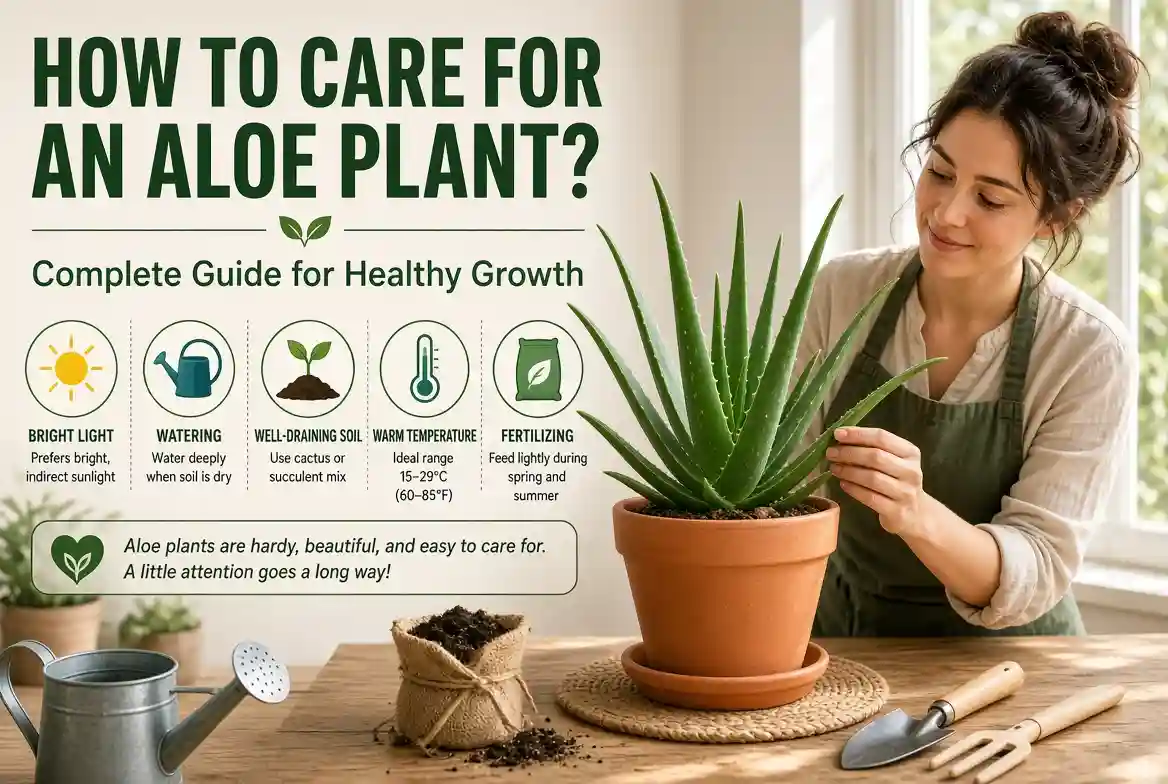
To care for an aloe plant, provide bright light, well-draining soil, and a pot with drainage holes. Water deeply only when the soil has dried out completely or nearly completely. Keep the plant warm, avoid standing water, and reduce watering during winter. Aloe vera grows best when its roots stay relatively dry between waterings and its leaves receive plenty of light.
Introduction
Aloe plants are popular houseplants because they have attractive, fleshy leaves and require relatively little maintenance. However, even a hardy aloe can struggle when its growing conditions are unsuitable.
The most common beginner mistake is watering too often. Aloe stores water in its leaves, so constantly wet soil can damage its roots.
Understanding how to care for an aloe plant helps you prevent root rot, encourage healthy new leaves, and keep your plant looking strong throughout the year.
This guide covers the essentials, from choosing the right location and soil to watering, repotting, propagation, and solving common aloe plant problems.
1. Identify Your Aloe Plant


6
Before changing your care routine, identify which aloe you have. Different species can have different sizes, leaf shapes, and growing requirements.
The most common indoor variety is Aloe vera, also known as Aloe barbadensis miller. It has thick, pointed, fleshy leaves with small teeth along the edges.
SDSU Extension
+1
Other varieties include compact ornamental aloes, such as lace aloe and tiger tooth aloe.
Why identification matters: A compact ornamental aloe may naturally stay smaller than a mature aloe vera. Do not assume that every aloe should develop long, broad leaves.
2. Give Your Aloe Plant the Right Amount of Light

Aloe plants need plenty of light to grow strong leaves and maintain a compact shape.
For indoor aloe vera, choose a bright window with several hours of good natural light. Bright indirect light is a useful starting point, while some plants can gradually adapt to direct sunlight.
SDSU Extension
+2
Where should you place an aloe plant?
- South- or west-facing window: Often provides strong light, depending on your location and window.
- East-facing window: Can provide gentler morning sunlight.
- Bright room: Suitable if the plant receives enough natural light throughout the day.
- Grow light: An option when natural light is insufficient.
How to recognize a lighting problem
|
What you notice
|
Possible explanation
|
| — | — |
|
Long, weak, stretched leaves
|
Insufficient light
|
|
Drooping or poorly formed growth
|
Light may be inadequate, or another care issue may be present
|
|
Brown or scorched patches
|
Sunburn or excessive sudden exposure
|
|
Uneven growth toward a window
|
Light is coming mainly from one direction
|
These symptoms can overlap with watering or temperature problems, so check the whole growing environment before deciding on a cause.
SDSU Extension
+2
Practical tip: If your aloe has been indoors in a dim room, increase its sunlight gradually. Moving it straight into intense outdoor sun can scorch its leaves.
Gardening Solutions
+1
3. Water Your Aloe Plant Properly

Watering correctly is one of the most important parts of aloe plant care.
Aloe stores water in its fleshy leaves. It therefore tolerates dry conditions better than constantly wet soil. Overwatering can cause root rot, especially when the pot drains poorly.
Penn State Extension
+2
Step-by-step watering method
- Check the soil with your finger or a moisture meter.
- Make sure the soil has dried thoroughly before watering again.
- Water the soil evenly until excess water runs through the drainage holes.
- Empty the saucer or outer pot.
- Wait until the soil dries again before the next watering.
Do not water simply because a certain number of days has passed.
How often should you water aloe vera?
There is no single schedule that works for every home. Pot size, soil, temperature, light, and season all affect how quickly the soil dries.
As a rough starting point, indoor aloe may need water every few weeks. Always check the soil first, and water less often during winter when growth slows.
SDSU Extension
+2
Overwatering versus underwatering

Possible overwatering signs
- Yellowing or soft leaves
- Mushy tissue near the base
- Soil that stays wet for a long time
- Dark, damaged roots or stem tissue
Check drainage and root health before watering again.

Possible underwatering signs
- Wrinkled or puckered leaves
- Thinner-looking foliage
- Leaves losing their usual firmness
If the soil is completely dry, water thoroughly and allow it to drain.
These signs are clues, not definitive diagnoses. For example, limp leaves can also result from cold damage or root problems.
SDSU Extension
+2
4. Choose Well-Draining Soil

Aloe needs a growing medium that drains freely rather than holding excess moisture around its roots.
A commercial cactus or succulent potting mix is a convenient choice. You can also improve a suitable potting medium with coarse mineral materials, such as perlite or pumice, to increase drainage.
Penn State Extension
+1
What to avoid
- Dense garden soil in a container
- Soil that remains soggy for days
- Containers without drainage
- A mix that compacts heavily around the roots
Practical tip: If your aloe’s soil stays wet long after watering, investigate the mix, pot, and growing conditions. Do not try to solve poor drainage by watering even less while leaving the underlying problem unchanged.
5. Select a Suitable Pot

Choose a sturdy pot with drainage holes. Terracotta is a useful option because its porous sides can help the growing medium dry more readily.
Aloe generally does not need an oversized container. Choose a pot that accommodates the roots without leaving a large volume of unused, moisture-holding soil.
Gardening Solutions
+2
If you prefer a decorative planter without drainage, keep the aloe in a separate draining nursery pot inside it. Remove the inner pot for watering and let it drain before returning it.
6. Maintain Suitable Temperature and Humidity
Aloe vera prefers warm conditions and does not tolerate frost. Typical indoor temperatures are generally suitable, but protect the plant from cold drafts and sudden temperature drops.
SDSU Extension
+2
Aloe does not need high humidity or regular misting. Normal household air is usually adequate.
SDSU Extension
If you move your aloe outdoors during warm weather:
- Introduce it to outdoor light gradually.
- Protect it from heavy rain that keeps the soil wet.
- Bring it inside before cold or frost threatens.
- Avoid placing it immediately in harsh midday sun.
These steps help prevent sunburn, cold injury, and prolonged wet conditions.
Gardening Solutions
+2
7. Fertilize Sparingly During Active Growth

Aloe vera is not a heavy feeder. It can grow in relatively nutrient-poor conditions, so frequent or concentrated fertilizer is unnecessary.
A practical approach is to use a cactus or succulent fertilizer at a reduced strength during active growth, following the product label. Some extension guidance recommends only occasional feeding.
University of Houston
+2
Remember: Fertilizer will not fix root rot, poor light, or waterlogged soil. Correct those problems first.
8. Repot Your Aloe When Needed

Repotting gives crowded roots more room and provides an opportunity to replace old or poorly draining soil.
Consider repotting when:
- Roots are densely crowded.
- The plant has become unstable in its container.
- The growing medium has broken down or drains poorly.
- Offsets are crowding the mother plant.
Choose a pot only modestly larger than the root system. A container that is far too large can retain more moisture than the plant uses.
Penn State Extension
+1
Repotting steps
- Let the soil dry enough to handle easily.
- Gently remove the plant from its pot.
- Inspect the roots and remove dead or rotting material with clean tools.
- Place the aloe in fresh, well-draining succulent mix.
- Keep the base of the leaves above the soil surface.
- Allow any damaged roots time to settle before resuming normal watering.
Avoid burying the leaf crown, as trapped moisture around the base can encourage rot.
9. Propagate Aloe From Offsets

Mature aloe plants often produce small offshoots called pups around the base. These can be separated and grown into individual plants.
Extension
+2
How to separate aloe pups
- Wait until an offset is large enough to handle and, ideally, has some roots of its own.
- Remove the plant carefully from its pot if necessary.
- Separate the pup from the mother plant with clean tools.
- Let any fresh wounds dry and callus before planting.
- Place the pup in a small pot with drainage and succulent mix.
- Water cautiously while it establishes roots.
A pup without roots may take longer to establish. Avoid keeping its soil constantly wet in an attempt to speed up growth.
Image Suggestion: A three-step propagation infographic showing a mature aloe, a separated pup, and a newly potted young aloe.
10. Maintain and Clean Your Aloe Plant
Aloe does not require frequent pruning, but occasional maintenance keeps it tidy and makes problems easier to spot.
- Remove completely dead or badly damaged outer leaves with clean, sharp scissors.
- Wipe dust from the leaves using a soft, damp cloth.
- Inspect the leaf bases and undersides for pests.
- Remove fallen plant material from the soil surface.
Do not remove healthy leaves unnecessarily. They store water and help the plant support new growth.
11. Troubleshoot Common Aloe Plant Problems
Aloe problems often have overlapping symptoms. Use the following table as a starting point rather than treating each symptom as proof of one specific cause.
|
Problem
|
Possible causes
|
What to check or do
|
| — | — | — |
|
Yellow leaves
|
Excess moisture, poor drainage, or other stress
|
Check soil moisture, drainage, and roots
|
|
Brown leaf tips
|
Sun stress, dryness, or environmental stress
|
Review recent sunlight changes and watering
|
|
Thin or curled leaves
|
Underwatering, root trouble, or stress
|
Check soil and inspect roots if needed
|
|
Soft, mushy base
|
Possible rot from persistent moisture
|
Remove the plant from wet soil and inspect damaged tissue
|
|
Long, weak growth
|
Insufficient light
|
Move gradually to a brighter location
|
|
White cotton-like clusters
|
Possible mealybugs
|
Inspect leaf joints and isolate the plant if pests are present
|
|
Brown or scorched patches
|
Excessive sudden sunlight or damage
|
Reduce harsh exposure and acclimate gradually
|
Aloe can be affected by mealybugs, aphids, scale, leaf spots, and other problems. Early inspection makes it easier to identify an issue before it spreads.
North Carolina Extension Gardener Plant Toolbox
+2
What to do if your aloe is rotting
If the base is soft or the roots are dark and deteriorating:
- Stop watering while you assess the plant.
- Remove it carefully from the pot.
- Inspect the roots and stem.
- With clean tools, remove clearly rotten tissue if healthy tissue remains.
- Repot any salvageable healthy portion in fresh, well-draining mix.
- Correct the drainage and watering conditions before resuming care.
Severe rot may not be reversible. If no healthy tissue remains, the plant may not recover.
12. Adjust Aloe Care Throughout the Year
Aloe’s water needs change with its growing conditions. Seasonal adjustments are especially important for plants kept indoors near windows or outdoors during warm months.

Spring
Check for new growth, resume watering as the soil dries, and consider light feeding if the plant is actively growing.

Summer
Monitor soil more often during hot weather. Acclimate the plant before moving it outdoors, and protect it from intense sudden sun and prolonged rain.
Autumn
As light and growth decrease, check the soil before watering and reduce feeding if growth slows.

Winter
Keep the plant warm and bright. Water less frequently when the soil dries more slowly, and protect it from cold drafts.
These seasonal adjustments follow extension recommendations to reduce watering during aloe’s slower winter period and protect it from cold.
SDSU Extension
+2
13. Is Aloe Vera Safe for Pets?
Aloe vera is not considered safe for pets to eat. The ASPCA lists aloe as toxic to dogs, cats, and horses; ingestion can cause symptoms such as vomiting, lethargy, and diarrhea. Keep the plant out of reach and contact a veterinarian if a pet eats it.
North Carolina Extension Gardener Plant Toolbox
Also, do not assume that every aloe product or raw leaf preparation is safe to eat or apply. The plant contains different substances in its inner gel and outer leaf tissues, and home remedies should not replace appropriate medical advice.
Frequently Asked Questions About Aloe Plant Care
How often should I water my aloe plant?
Water when the soil has dried completely or nearly completely, then let excess water drain away. Indoor aloe often needs watering every few weeks, but conditions determine the actual frequency.
SDSU Extension
+1
Does aloe vera need direct sunlight?
Aloe vera needs plenty of bright light. Some plants tolerate direct sun, but introduce them gradually to avoid leaf scorch. Bright indirect light is a useful starting point indoors.
SDSU Extension
+1
Why is my aloe plant turning brown?
Brown leaves or patches may result from intense sunlight, cold exposure, watering problems, or damaged tissue. Check whether the affected areas are dry and crispy or soft and mushy. Those differences can help guide your next steps.
Can aloe vera grow indoors?
Yes. Aloe vera grows well indoors when it receives enough light, suitable temperatures, and well-draining soil. A bright windowsill is often a practical location.
Extension
+1
Should I mist my aloe plant?
No special misting routine is needed. Aloe does not require extra humidity under typical household conditions.
SDSU Extension
What is the best soil for aloe vera?
Use a fast-draining cactus or succulent potting mix. You can improve drainage further with suitable materials such as perlite or pumice.
Penn State Extension
+1
How do I make my aloe plant grow faster?
Provide strong light, appropriate watering, suitable soil, and enough room for healthy roots. Avoid excessive fertilizer or frequent repotting, which will not compensate for poor growing conditions.
Why is my aloe plant leaning over?
Leaning can result from uneven light, weak growth, an unstable root system, or a top-heavy plant. Rotate the pot periodically and check whether the roots and soil are supporting the plant properly.
Can I grow aloe vera outdoors?
Yes, in suitable warm climates. Protect it from frost, acclimate it gradually to stronger sunlight, and use soil that drains freely.
Gardening Solutions
+1
Are aloe plants safe for cats and dogs?
No. The ASPCA lists aloe vera as toxic to cats, dogs, and horses. Ingestion can cause vomiting, lethargy, and diarrhea. Keep it away from pets and contact a veterinarian if ingestion occurs.
ASPCA
Conclusion: Keep Your Aloe Healthy With Simple, Consistent Care
Knowing how to care for an aloe plant comes down to giving it the right environment and avoiding unnecessary attention.
Remember these essential rules:
- Provide plenty of bright light.
- Use fast-draining succulent soil.
- Choose a pot with drainage holes.
- Water thoroughly, but let the soil dry between waterings.
- Reduce watering during slower winter growth.
- Protect the plant from frost and sudden environmental changes.
- Inspect leaves and roots when problems appear.
The most useful habit is to check the soil before watering. Aloe stores water in its leaves, so constantly wet roots can do more harm than an occasional dry spell.
With suitable light, careful watering, and good drainage, your aloe can remain a healthy and attractive houseplant for years.