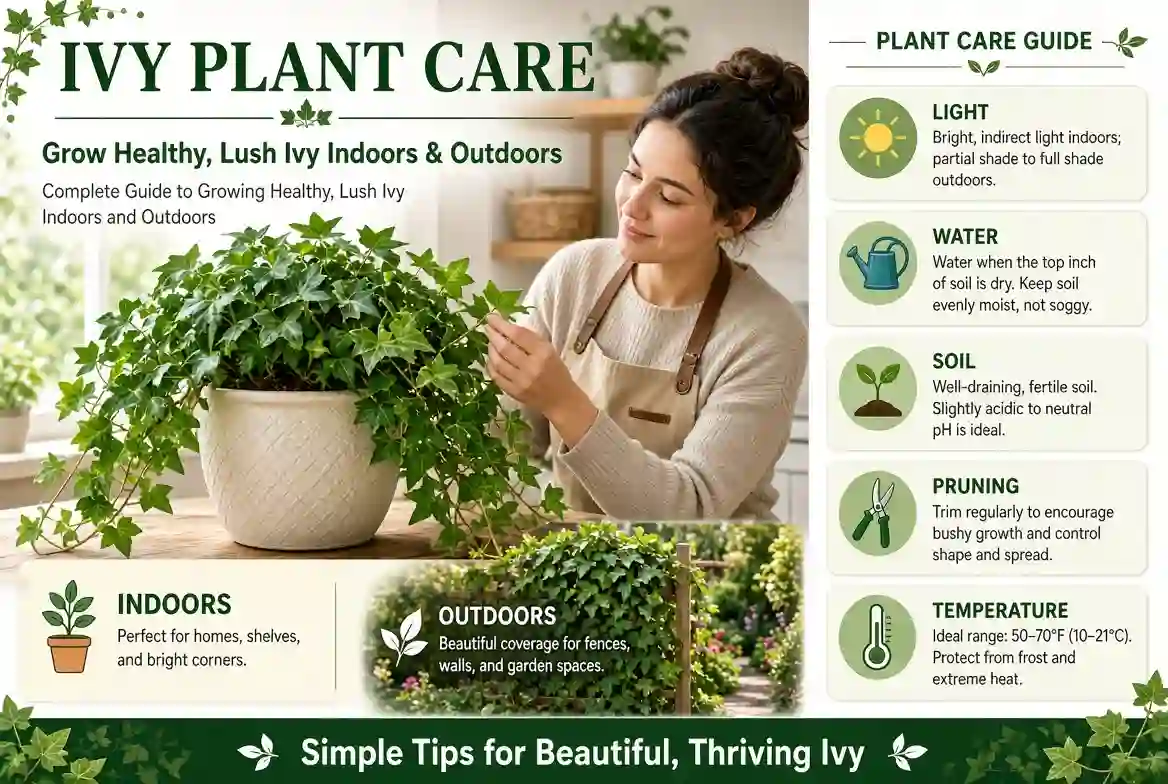
Ivy plant care involves providing bright, indirect light, well-draining soil, and consistent moisture without waterlogging the roots. Most common ivy varieties grow well in moderate temperatures and benefit from regular pruning to encourage fuller growth. Water when the top layer of soil begins to dry, provide good air circulation, and inspect leaves regularly for pests. Adjust care according to your ivy variety and growing environment.
Ivy is a popular plant for hanging baskets, shelves, garden walls, and ground cover. Its trailing stems and attractive foliage can make almost any space feel greener.
However, keeping ivy healthy isn’t always as simple as watering it occasionally. Indoor ivy can develop brown leaves, dry edges, yellow foliage, or long, sparse stems when its growing conditions aren’t right.
Outdoor ivy faces different challenges, including harsh sunlight, temperature changes, and excessive moisture. Some varieties also grow aggressively and need regular maintenance.
Understanding the basics of ivy plant care helps you avoid these problems and enjoy healthier, fuller growth.
This guide explains how to choose the right location, water correctly, maintain healthy soil, prune your plant, and troubleshoot common problems. You’ll also learn how indoor and outdoor ivy care differ.
1. Understand Which Ivy Plant You Have


4
Before changing your care routine, identify your ivy. Different plants share the name “ivy,” but they don’t all have the same growing requirements.
|
Ivy type
|
Identifying features
|
Important care notes
|
| — | — | — |
|
English ivy (Hedera helix)
|
Small, lobed leaves and trailing or climbing stems
|
Prefers bright indirect light indoors and careful watering.
|
|
Algerian ivy (Hedera canariensis)
|
Larger, often glossy green leaves
|
Needs suitable light, drainage, and room for its vigorous growth.
|
|
Persian ivy (Hedera colchica)
|
Large, leathery leaves
|
Useful for climbing and ground cover where locally appropriate.
|
|
Boston ivy (Parthenocissus tricuspidata)
|
Three-lobed leaves that often turn red in autumn
|
A deciduous vine, not a true Hedera ivy.
|
|
Swedish ivy (Plectranthus species)
|
Rounded, scalloped leaves on trailing stems
|
A different plant with its own watering and light preferences.
|
Plant identification and growth characteristics are described by Clemson Extension, NC State Extension, and UF/IFAS.
Home & Garden Information Center
+2
A useful distinction: English ivy and other Hedera species are true ivies. Pothos is sometimes called devil’s ivy, but it belongs to a different plant group and should not automatically receive the same care routine.
This guide focuses mainly on true ivy, especially English ivy, while noting where care may differ.
2. Ivy Plant Care at a Glance
Use this quick reference to check whether your plant’s environment meets its basic needs.

Light
Bright, indirect light is a reliable indoor starting point. Protect foliage from harsh direct sun.

Water
Water thoroughly when the surface layer begins to dry. Empty excess water from the saucer.

Soil
Choose a loose, well-draining houseplant mix and a pot with drainage holes.

Pruning
Trim long or bare stems to manage the shape and encourage branching.

Temperature
English ivy generally prefers cool to moderate conditions rather than intense heat.
These are starting points, not a rigid schedule. Pot size, indoor temperature, light levels, and the particular ivy variety all affect how quickly the soil dries.
Home & Garden Information Center
+2
3. How Much Light Does Ivy Need?

Light affects the color, density, and overall growth of your ivy.
Most indoor English ivy varieties grow well in bright, indirect light. They can tolerate lower light, but growth may become slower and less compact.
Best indoor locations
- Near an east-facing window with gentle morning light.
- Near a bright north-facing window.
- A short distance from a sunny south- or west-facing window, where sunlight is filtered.
- Under a suitable grow light when natural light is limited.
Avoid placing indoor ivy where strong afternoon sun directly hits the leaves for extended periods. Sudden exposure to intense sunlight can scorch foliage.
What if your ivy has variegated leaves?
Variegated ivy has leaves with cream, white, yellow, or silver markings.
These varieties generally need sufficient light to maintain their decorative patterns. In excessively dim conditions, new growth may become greener and less colorful.
If your variegated ivy is losing its markings, gradually move it to a brighter location with filtered light. Avoid moving it directly into harsh sunlight.
Can ivy grow in low light?
Yes, but low light is not the same as no light.
A plant in a dim corner may survive while producing long stems with widely spaced leaves. If you want compact, attractive growth, provide more usable light.
Expert tip: When ivy becomes leggy, check the light before applying fertilizer. Extra fertilizer cannot compensate for insufficient light.
Home & Garden Information Center
+2
4. How to Water Ivy Correctly

Watering is one of the most important parts of ivy plant care. Both prolonged dryness and constantly wet soil can damage the plant.
English ivy prefers moisture without waterlogged roots. The safest approach is to check the soil rather than follow a fixed watering calendar.
Step-by-step watering method

Step 1: Check the soil
Feel the top half-inch to inch of soil. If it has begun to dry, check whether the deeper root zone still feels wet.

Step 2: Water evenly
Slowly water the soil until excess water begins draining from the bottom of the pot.

Step 3: Let excess water escape
Empty the saucer or decorative outer pot. Don’t leave the roots standing in collected water.

Step 4: Check again before watering
Allow the appropriate surface layer to dry before repeating the process. Don’t water automatically every day.
Clemson Extension recommends thorough watering followed by allowing the soil to dry to the touch before watering again. It also warns that poorly draining soil and excessive watering can cause root rot.
Home & Garden Information Center
+1
How often should you water ivy?
There is no universal number of days.
Your ivy may need more frequent watering when:
- The weather is warm and the plant is actively growing.
- The pot is small or the roots fill much of the container.
- The plant receives brighter light.
- Air movement increases moisture loss.
It may need less frequent watering during cooler, darker periods when growth slows.
Practical example: If the soil is still damp two days after watering, don’t add more water simply because your usual watering day has arrived. Check the soil and drainage first.
Signs of watering problems
|
Symptom
|
Possible cause
|
What to check
|
| — | — | — |
|
Yellowing leaves and persistently wet soil
|
Overwatering or poor drainage
|
Check drainage holes, soil condition, and roots.
|
|
Dry, crispy leaves and very dry soil
|
Underwatering or excessive heat
|
Check root-ball moisture and the plant’s location.
|
|
Drooping leaves
|
Either too much or too little water
|
Inspect the soil before deciding what to do.
|
|
Dark, soft roots or a sour smell
|
Possible root rot
|
Examine the roots and remove damaged tissue if necessary.
|
A drooping plant does not always need water. Adding water to already saturated soil can make the problem worse.
5. Choose the Right Soil and Pot

Ivy needs soil that retains some moisture while allowing excess water and air to move through the root zone.
A standard, quality houseplant potting mix is a reasonable choice for indoor English ivy. If your mix stays wet for too long, improve its structure with an appropriate drainage amendment, such as perlite.
What makes a suitable pot?
Look for these features:
- Drainage holes at the bottom.
- Enough space for the roots without an unnecessarily oversized container.
- A stable base for trailing or climbing growth.
- A size that suits the root system rather than the length of the vines.
When repotting, move up only modestly in pot size. Clemson Extension recommends a new pot no more than about one inch larger in diameter when repotting English ivy. An oversized pot can hold excess moisture around the roots.
Home & Garden Information Center
+1
When should you repot ivy?
Consider repotting when:
- Roots emerge through the drainage holes.
- The root ball becomes tightly crowded.
- Water runs through the pot unusually quickly because the root ball is densely packed.
- The plant dries out much faster than it previously did, despite similar conditions.
- The potting mix has broken down or no longer drains properly.
Repotting is not necessary just because the plant has long vines. A trailing plant can become large while its root system remains comfortable in its existing container.
Image suggestion: A simple diagram showing a healthy root ball in a properly sized pot beside an oversized pot with soil that stays wet.
6. Temperature and Humidity for Healthy Ivy
English ivy generally grows well in cool to moderate indoor conditions. Clemson Extension gives daytime temperatures of approximately 50–70°F (10–21°C) as a suitable range, with slightly cooler nights.
Home & Garden Information Center
+1
Temperature tips
- Keep indoor ivy away from heating vents that blow hot, dry air.
- Avoid sudden temperature changes and cold drafts.
- Protect outdoor containers from conditions beyond the variety’s cold tolerance.
- During hot weather, move container-grown ivy away from harsh afternoon sunlight.
Does ivy need high humidity?
Ivy can tolerate ordinary indoor humidity, but warm, dry conditions can make spider mite problems more likely.
If your home is particularly dry:
- Keep the plant away from radiators and hot air outlets.
- Group plants together while allowing enough space for air circulation.
- Consider a room humidifier if the surrounding air is consistently very dry.
- Inspect the undersides of leaves regularly for fine webbing or tiny moving pests.
Misting is not a substitute for appropriate light, watering, or temperature. Avoid keeping foliage constantly wet, especially where air circulation is poor.
Source: Clemson Extension’s indoor English ivy care guidance.
Home & Garden Information Center
+1
7. Fertilizing Ivy for Stronger Growth

Fertilizer supplies nutrients that support new leaves and stems. However, more fertilizer does not automatically mean a fuller or healthier plant.
For indoor English ivy, Clemson Extension recommends feeding monthly during active growth with a foliage houseplant fertilizer, following its label directions. Avoid feeding when growth stops during periods of heat or cool conditions.
Home & Garden Information Center
+1
A practical feeding routine
- Check whether the plant is actively producing new growth.
- Choose a balanced fertilizer labeled for foliage houseplants.
- Follow the product’s dilution and application instructions.
- Apply it to appropriately moist soil rather than severely dry roots.
- Reduce or stop feeding when growth slows.
Signs you may be overfertilizing
- Brown leaf tips or margins.
- A crust of fertilizer salts on the soil surface.
- Weak growth despite repeated feeding.
- Roots becoming stressed in soil with accumulated salts.
If you suspect excess fertilizer, stop feeding and review your watering and drainage. For a heavily affected plant, replacing the potting mix may be appropriate.
Important: Do not fertilize a severely wilted or potentially root-rotted plant as a quick fix. Correct the underlying problem first.
8. How to Prune Ivy for Fuller Growth

Pruning helps control ivy’s size, remove damaged growth, and create a more compact appearance.
Without occasional trimming, indoor ivy may develop long stems with sparse leaves. Shortening selected stems can encourage branching and help the plant look fuller.
How to prune ivy step by step

1. Identify the stems to trim
Look for bare sections, damaged leaves, overly long runners, and stems that disrupt the plant’s shape.

2. Make clean cuts
Use clean, sharp scissors. Cut just above a healthy leaf node when shortening a stem.

3. Shape gradually
Trim selected stems rather than removing too much foliage at once. Give the plant time to respond.

4. Save healthy cuttings
Use suitable healthy stem sections to propagate new plants if you want to fill out the pot.
Illinois Extension recommends pinching shoot tips frequently to encourage bushier growth. Clemson Extension also explains that ivy can be trained and pruned to maintain a desired size and shape.
Illinois
+1
When is the best time to prune?
For indoor ivy, light trimming can be done when needed, provided the plant is healthy and actively growing.
For outdoor ivy, timing depends on the local climate and the plant’s growth cycle. Avoid severe pruning during extreme heat, freezing conditions, or when the plant is already under stress.
Wear gloves if ivy sap irritates your skin, and wash your hands after handling the plant.
9. How to Propagate Ivy from Cuttings

Propagating ivy is a practical way to create new plants or make an existing container look fuller.
English ivy can be propagated using healthy stem or tip cuttings. Many types root readily in water, while soil propagation is another option.
Home & Garden Information Center
+1
Propagation in water

Step 1: Select a healthy stem
Choose a firm, healthy section with several leaves and visible nodes. Avoid diseased or badly damaged growth.

Step 2: Prepare the cutting
Make a clean cut below a node. Remove any leaves that would sit underwater.
Step 3: Place it in water
Keep the node submerged and the remaining leaves above the water. Place the container in bright, indirect light.

Step 4: Monitor root development
Keep the water clean and watch for healthy roots. Rooting time varies with temperature, light, and the cutting.
Step 5: Transfer to potting mix
Once the cutting has a useful root system, plant it carefully in a small pot with drainage.
Propagation in soil
You can also place a prepared cutting directly into a moist, well-draining propagation mix.
- Keep the mix lightly moist, not saturated.
- Provide bright, indirect light.
- Avoid strong sun and excessive heat.
- Check for new growth rather than repeatedly pulling the cutting from the soil.
Fullness tip: Several rooted cuttings can be planted around the edge of one suitable pot to create a fuller-looking display. Make sure the container has enough room for the combined root systems.
10. Indoor Ivy Plant Care vs. Outdoor Ivy Plant Care


6
Ivy grown indoors and outdoors faces different challenges. Indoor plants depend on the light and temperature of your home, while outdoor plants experience weather, seasonal changes, and more space to spread.
|
Care factor
|
Indoor ivy
|
Outdoor ivy
|
| — | — | — |
|
Light
|
Bright, indirect light is a good starting point.
|
Conditions vary by species; many true ivies tolerate shade or partial shade.
|
|
Water
|
Check the potting mix and water when appropriate.
|
Consider rainfall, soil drainage, and dry spells.
|
|
Soil
|
Use a suitable, well-draining potting mix.
|
Match the species to local soil and drainage conditions.
|
|
Pruning
|
Trim to control trailing stems and encourage branching.
|
Regularly manage climbing or spreading growth.
|
|
Weather
|
Protect from heating vents, harsh sun, and cold drafts.
|
Check local hardiness and protect plants when necessary.
|
|
Main concern
|
Poor light, watering mistakes, and indoor pests.
|
Uncontrolled spread, unsuitable climate, and local invasive-plant restrictions.
|
Important outdoor planting warning
English ivy is invasive in some regions. It can spread beyond garden boundaries, climb trees, and affect surrounding vegetation.
Clemson Extension identifies English ivy as invasive in South Carolina and advises against planting it outdoors there. The Morton Arboretum also notes that it can grow aggressively and is considered invasive in some areas.
Home & Garden Information Center
+1
Before planting ivy in the ground:
- Check your local invasive-plant lists and extension recommendations.
- Confirm that the particular species is suitable for your area.
- Consider a container if you want to control its spread.
- Keep climbing growth away from trees and structures where it could cause problems.
A plant that behaves well in one climate may become difficult to manage in another.
11. Common Ivy Plant Problems and How to Fix Them


6
When ivy starts looking unhealthy, avoid changing everything at once. Inspect the leaves, soil, roots, and growing environment to identify the most likely cause.
Yellow leaves
Possible causes: Overwatering, poor drainage, insufficient light, or normal aging of older leaves.
What to do:
- Check whether the soil remains wet for long periods.
- Make sure the pot drains freely.
- Review the amount of light the plant receives.
- Remove individual leaves that have completely died.
If many leaves turn yellow while the soil stays wet, investigate the roots rather than simply adding fertilizer.
Brown, crispy leaf edges
Possible causes: Prolonged dryness, heat stress, harsh direct sunlight, or other environmental stress.
What to do:
- Check the root ball, not just the surface soil.
- Move the plant away from intense afternoon sun if necessary.
- Keep it away from hot air vents.
- Water thoroughly when the soil reaches the appropriate dryness.
Brown edges do not always mean the plant needs more water. Check the soil before watering.
Long stems with widely spaced leaves
Possible cause: Insufficient light is a common reason for leggy indoor growth.
What to do:
- Move the plant to a brighter location with indirect light.
- Trim excessively long stems.
- Pinch or prune growing tips to encourage branching.
- Rotate the pot periodically if growth is uneven.
Drooping or wilting foliage
Possible causes: Dry soil, waterlogged roots, root damage, or environmental stress.
What to do:
- Feel the soil before watering.
- If the soil is dry, water thoroughly and allow excess water to drain.
- If the soil is saturated, stop watering and investigate drainage and root health.
- Check whether the plant has recently experienced intense heat or a sudden change in conditions.
Leaves falling off
Possible causes: Watering stress, abrupt environmental changes, pest damage, or unhealthy roots.
What to do:
- Inspect the plant carefully, including the undersides of leaves.
- Review recent changes in light, temperature, and watering.
- Remove dead foliage.
- Correct the underlying problem before applying fertilizer or other treatments.
Spider mites and other pests
Spider mites are a particularly important concern for indoor ivy. Aphids, mealybugs, scale insects, and whiteflies can also affect houseplants.
Home & Garden Information Center
+1
Inspect for:
- Fine webbing and tiny specks associated with spider mites.
- Clusters of small insects on new growth.
- White, cottony deposits associated with mealybugs.
- Sticky residue or unusual leaf discoloration.
If you find pests, isolate the affected plant from other houseplants. Remove heavily infested sections when practical, wash the foliage gently, and use a treatment labeled for the pest and plant if needed.
Follow all product directions, and test any foliar treatment on a small area first.
A simple ivy troubleshooting checklist
Check whether the soil is too wet or too dry.
Inspect the drainage holes and root zone.
Review light exposure and recent temperature changes.
Look closely at leaf undersides and stems for pests.
Make one appropriate change and monitor the plant’s response.
0 of 5 checks completed
12. Seasonal Ivy Care
Your ivy’s needs change as light levels and temperatures shift throughout the year. Adjust your routine according to actual growing conditions rather than the calendar alone.

Spring
- Watch for new growth and gradually resume feeding if the plant is actively growing.
- Repot if the roots have outgrown the container.
- Prune long stems to shape the plant.
- Increase watering only as the soil begins drying more quickly.

Summer
- Protect indoor plants from intense sunlight and hot windows.
- Check soil moisture more frequently during warm weather.
- Watch carefully for spider mites in hot, dry conditions.
- Avoid heavy pruning when the plant is already heat-stressed.

Autumn
- Reduce watering when the soil takes longer to dry.
- Bring container-grown plants inside before temperatures become unsuitable.
- Inspect plants for pests before moving them indoors.
- Reduce fertilizer as active growth slows.

Winter
- Provide the brightest suitable indirect light available.
- Water less often when growth and soil drying slow down.
- Avoid cold drafts and hot heating vents.
- Hold off on routine feeding if the plant is not actively growing.
Home & Garden Information Center
+2
13. Ivy Plant Safety: Pets, Children, and Outdoor Areas

Plant placement matters as much as appearance.
English ivy is toxic if eaten and can cause adverse reactions in pets and people. Its sap can also irritate the skin of some individuals. Keep the plant out of reach of children and pets, and wear gloves if handling it causes irritation.
Potting Journal
+1
For safer handling:
- Place ivy where pets and young children cannot chew its leaves.
- Wash your hands after pruning or handling damaged stems.
- Keep cuttings and fallen leaves away from curious animals.
- Avoid planting potentially invasive ivy where it can escape into natural areas.
- If ingestion or a significant reaction occurs, contact an appropriate medical or veterinary professional for advice.
If you want a trailing plant for a pet-accessible area, research a non-toxic alternative and verify its safety for your particular animal.
14. How to Make Ivy Fuller, Greener, and More Attractive

A fuller ivy plant usually comes from several consistent habits rather than one special product.
Give the plant enough light
Insufficient light can produce long stems with fewer leaves. Provide suitable indirect light to support more compact growth.
Prune strategically
Shorten selected stems above healthy nodes. This helps manage the plant’s shape and can encourage branching.
Add rooted cuttings
If your ivy has healthy, long stems, propagate several cuttings and plant them around the container once they have developed suitable roots.
Keep watering consistent
Avoid repeatedly allowing the plant to become severely dry, then soaking it while the roots remain stressed.
Avoid excessive fertilizer
Overfeeding does not correct poor lighting, unhealthy roots, or inadequate drainage. Follow the label and feed according to active growth.
Rotate the pot
If the plant receives light mainly from one direction, turn the pot occasionally so different sides receive exposure. This can help maintain a more balanced appearance.
The key principle: Fuller ivy requires healthy roots, adequate light, and active growing tips. Pruning and propagation can improve its shape, but they work best when the underlying conditions are suitable.
15. Frequently Asked Questions About Ivy Plant Care
Is ivy easy to care for indoors?
Yes, many ivy varieties can grow indoors when their light, watering, and drainage needs are met. English ivy may need extra attention in warm, dry rooms because spider mites can become a problem.
How often should I water my ivy plant?
Water when the appropriate upper layer of soil begins to dry. The exact interval depends on light, temperature, pot size, and soil drainage. Always check the soil before watering.
Does ivy need direct sunlight?
Most indoor English ivy grows well in bright, indirect light. Strong direct sunlight can scorch indoor foliage, while very low light can lead to sparse growth and reduced variegation.
Why is my ivy turning yellow?
Yellow leaves can result from overwatering, poor drainage, insufficient light, or normal aging. Check the soil and roots before deciding how to correct the problem.
How do I make my ivy grow faster?
Provide suitable light, healthy roots, well-draining soil, and consistent moisture. Feed modestly during active growth if needed. Growth also depends on the variety and growing conditions.
How do I make ivy bushier?
Trim long stems above healthy nodes to encourage branching. You can also root healthy cuttings and plant them around the pot to create a fuller display.
Can ivy grow in water?
Healthy ivy cuttings can root in water. However, a cutting rooting in water is different from maintaining a mature plant in water indefinitely. For long-term growth, use a suitable growing medium and provide appropriate care.
Can ivy grow in a bathroom?
It may grow in a bright bathroom with suitable temperatures and air circulation. A dark bathroom without adequate natural or artificial light is unlikely to support healthy growth over time.
Should I mist my ivy plant?
Misting is not essential for most indoor ivy. If the air is very dry, address the surrounding humidity and temperature instead of relying on repeated misting.
Is English ivy safe for cats and dogs?
No. English ivy is toxic if ingested by pets. Keep it out of their reach and seek veterinary advice if your pet eats part of the plant.
Can I grow English ivy outdoors?
It can grow outdoors in suitable climates, but English ivy is invasive in some regions. Check local restrictions and recommendations before planting it in the ground.
When should I repot my ivy?
Repot when roots become crowded, emerge through drainage holes, or the potting mix no longer drains properly. Choose a container only modestly larger than the existing root ball.
Why does my ivy have brown leaf tips?
Brown tips may indicate prolonged dryness, heat stress, harsh sunlight, or other growing problems. Inspect the soil and location before increasing watering.
Can I prune ivy during winter?
Light indoor pruning may be possible if the plant remains healthy, but growth is often slower in winter. Avoid heavy pruning when the plant is stressed or not actively growing.
Is ivy the same as pothos?
No. English ivy belongs to the genus Hedera. Pothos, sometimes called devil’s ivy, belongs to a different genus and has different care characteristics.
Conclusion: Keep Your Ivy Healthy With Consistent Care
Successful ivy plant care starts with understanding your plant and giving it the right growing environment.
Remember these essential practices:
- Provide bright, indirect light for healthy indoor growth.
- Water according to soil moisture rather than a fixed schedule.
- Use well-draining soil and a pot with drainage holes.
- Prune long stems to manage growth and encourage branching.
- Inspect leaves regularly for pests, especially spider mites.
- Check local guidance before planting English ivy outdoors.
You don’t need an elaborate routine to grow attractive ivy. Start by checking its light, soil moisture, and root health. Make small adjustments, observe how the plant responds, and maintain the conditions that support healthy growth.
With the right balance of light, water, drainage, and occasional pruning, your ivy can develop attractive foliage and graceful trailing stems.