Wandering Jew plants are popular for their colorful foliage, fast growth, and easy propagation. Their trailing stems work well in hanging baskets, shelf planters, and mixed indoor displays. Depending on the species or cultivar, their leaves may feature purple, green, silver, pink, or cream markings.
The challenge is that fast-growing stems can become thin and bare if the plant receives too little light or goes too long without pruning. Meanwhile, frequent watering can keep the roots too wet and cause leaves to yellow or stems to soften.
The key is to balance light, moisture, and regular trimming. Once you understand these three factors, keeping your plant attractive becomes much easier.
A quick naming note: “Wandering Jew” is an older common name that can refer to several Tradescantia plants. Many gardeners now use names such as wandering dude, inch plant, or the plant’s botanical name. This article focuses mainly on Tradescantia zebrina and similar trailing Tradescantia varieties. Care can vary slightly by species.
Quick Answer:
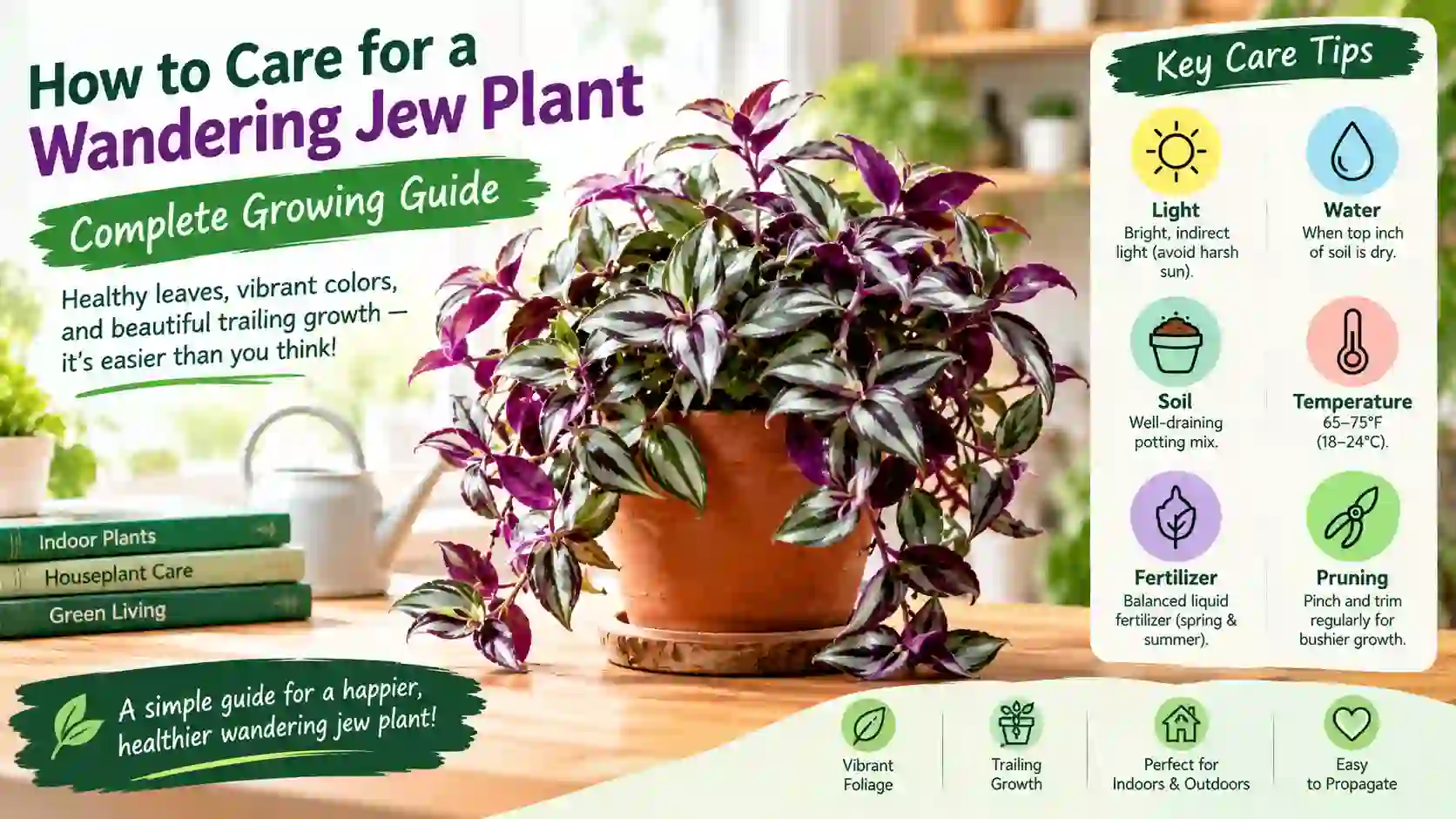
To care for a wandering Jew plant, grow it in bright, indirect light, use loose, well-draining potting soil, and water when the top inch of soil feels dry. Keep it in a warm room with moderate to high humidity, and use a pot with drainage holes. Pinch back growing tips regularly to encourage fuller growth. Avoid soggy soil and harsh afternoon sunlight, which can damage the roots and leaves
1. Understand the Basic Care Requirements
Before changing your watering schedule or buying plant food, establish the right growing conditions. Wandering Jew plants are adaptable, but they look their best when their roots receive enough air, their foliage gets good light, and their stems are trimmed regularly.
| Care factor | What your plant needs | Why it matters |
|---|---|---|
| Light | Bright, indirect light | Maintains colorful leaves and compact growth |
| Water | Water when the top inch of soil dries | Prevents prolonged dryness and waterlogged roots |
| Soil | Loose, well-draining potting mix | Allows excess water to escape |
| Temperature | About 65–75°F (18–24°C) is a useful target | Supports steady growth |
| Humidity | Average indoor humidity is often adequate | Higher humidity can help prevent crispy edges |
| Fertilizer | Balanced liquid fertilizer during active growth | Supports new leaves and stems |
| Pruning | Pinch or trim long stems regularly | Encourages a fuller, bushier plant |
| Pot | Container with drainage holes | Reduces the risk of root rot |
These recommendations are consistent with guidance from university horticulture resources for Tradescantia zebrina.
Wisconsin Horticulture
+1
2. Give Your Wandering Jew Plant the Right Light
Light is one of the most important factors in keeping a wandering Jew plant colorful and compact. Although it tolerates some lower-light conditions, prolonged dimness often leads to faded foliage and long, bare stems.

Add to Favorites
How much sunlight does it need?
Aim for bright, indirect light for much of the day. A spot near an east-facing window is often suitable. A bright south- or west-facing window can also work if a sheer curtain filters intense sunlight.
Look for these signs:
- Healthy growth: Leaves show clear purple, green, and silver markings.
- Too little light: Stems stretch toward the window, spaces between leaves increase, and lower leaves fall.
- Too much direct sun: Leaves develop bleached patches, dry brown areas, or scorched edges.
A little gentle morning sunlight can help strengthen the plant’s color. However, intense afternoon sun through glass may damage the foliage, particularly if the plant has not been acclimated.
What if your home has low natural light?
Move the plant closer to a bright window or use a grow light. Keep the light at the distance recommended by its manufacturer, and adjust gradually rather than suddenly exposing the plant to intense light.
Expert tip: Rotate the pot a quarter turn every week or two. This helps prevent the plant from growing heavily toward one side.
Image suggestion: Create a 16:9 infographic showing a healthy wandering Jew plant in bright indirect light, a leggy plant in low light, and scorched leaves under harsh direct sunlight.
3. Water Correctly Without Causing Root Rot
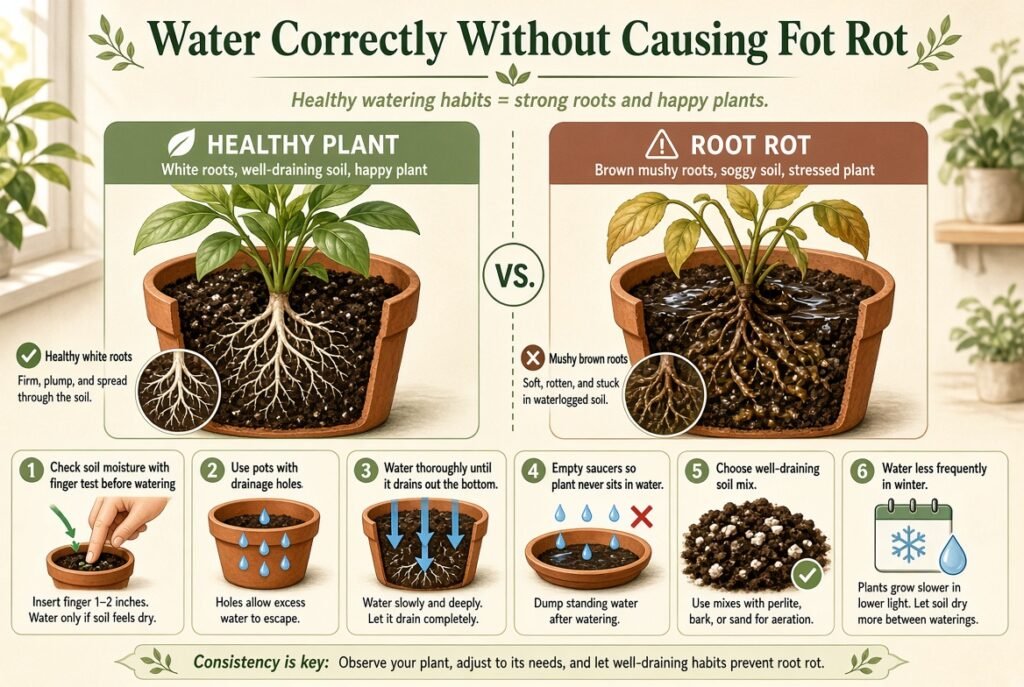
Wandering Jew plants have fleshy stems and leaves, but they still need regular moisture during active growth. Their roots also need oxygen, so constantly wet soil can cause serious problems.
When should you water a wandering Jew plant?
Check the soil instead of following a fixed calendar.
- Insert your finger about one inch into the soil.
- If the top inch feels dry, check whether the soil below is still slightly moist.
- If the surface is dry and the pot is becoming lighter, water thoroughly.
- Let excess water drain through the bottom holes.
- Empty any saucer or decorative outer pot that collects water.
If the soil is still wet, wait and check again later. The exact interval depends on light, temperature, pot size, soil mix, and the season.
How much water does it need?
Apply enough water to moisten the root ball evenly, allowing excess water to drain out. Avoid giving the plant frequent tiny sips that wet only the soil surface.
A plant in a warm, bright room may dry quickly. One in a cool room or a large plastic pot may stay wet for much longer.
How often should you water it?
Use these conditions as a starting point rather than a strict schedule.
| Growing conditions | Watering approach |
|---|---|
| Warm weather and active growth | Check the soil more frequently |
| Cool weather or slower growth | Allow more time between waterings |
| Small pot in bright light | Expect the soil to dry sooner |
| Large pot or dense soil | Check carefully for lingering moisture |
| Outdoors in hot, dry weather | Monitor more often, especially in containers |
University extension guidance also recommends letting the soil dry between waterings and reducing watering during slower winter growth.
Wisconsin Horticulture
+1
Common mistake: Yellow leaves do not automatically mean the plant needs water. If the soil is already wet, adding more water can make the problem worse.
Image suggestion: A step-by-step watering infographic showing a finger testing soil, thorough watering, drainage from a pot, and soil drying before the next watering.
4. Choose Well-Draining Soil and a Suitable Pot
The right potting mix helps you manage moisture without leaving the roots sitting in water. Wandering Jew plants generally do well in a quality indoor potting mix that drains freely.
What soil is best for wandering Jew plants?
A practical mix can contain:
- Two parts quality indoor potting mix.
- One part perlite or pumice to improve aeration.
- Optional fine orchid bark if your existing mix stays dense or compacted.
You do not need a complicated recipe. The goal is soil that holds some moisture but does not remain soggy for days.
Avoid heavy garden soil in indoor pots. It can compact, drain poorly, and make watering harder to manage.
Which pot should you use?
Choose a pot with drainage holes. Plastic pots retain moisture longer, while unglazed terracotta generally dries faster.
Select a container only slightly larger than the root ball. An oversized pot contains more unused soil, which may stay wet after watering.
Practical tip: If your plant repeatedly develops soft stems and yellow leaves despite careful watering, inspect the drainage and soil structure before buying fertilizer.
Image suggestion: A labeled cross-section infographic showing a wandering Jew plant in a drainage-hole pot, airy potting mix, healthy roots, and excess water escaping.
5. Maintain Suitable Temperature and Humidity
Wandering Jew plants prefer warm conditions and generally adapt well to typical indoor temperatures. A comfortable target is around 65–75°F (18–24°C).
Protect it from temperature stress
Keep the plant away from:
- Cold drafts from frequently opened doors or windows.
- Air-conditioning vents blowing directly onto the leaves.
- Hot air from heaters.
- Sudden temperature changes.
- Freezing outdoor conditions.
If you move the plant outdoors during warm weather, introduce it gradually to brighter light and bring it back inside before cold conditions threaten it.
Does a wandering Jew plant need high humidity?
Not necessarily. Average household humidity is often sufficient, although very dry air may contribute to crispy leaf edges.
If your indoor air is particularly dry, try placing a humidifier nearby or grouping plants together while maintaining good airflow. Avoid leaving the foliage constantly wet or crowded.
Misting is not a reliable long-term humidity solution because its effect is brief.
Expert tip: Check both moisture and light before blaming low humidity for brown leaf edges. Dry soil, intense sunlight, and damaged roots can produce similar symptoms.
Image suggestion: A cozy indoor plant-care scene with a wandering Jew plant near a humidifier, a thermometer, and icons for warmth, humidity, and airflow.
6. Fertilize for Healthy, Colorful Growth
Wandering Jew plants grow quickly when conditions are favorable. A modest supply of nutrients supports new leaves and stems, but excessive fertilizer can damage roots and leave mineral salts in the soil.
How often should you fertilize it?
During spring and summer, apply a balanced liquid houseplant fertilizer at the label’s recommended rate. If your plant grows slowly indoors, fertilize less often.
During winter, reduce or pause feeding if growth slows substantially.
How to fertilize safely
- Check that the plant is reasonably healthy and the soil drains well.
- Follow the fertilizer label rather than assuming a stronger dose is better.
- Avoid applying fertilizer to severely dry soil.
- Do not fertilize a plant with suspected root rot until you address the root problem.
- If a crust of fertilizer salts develops, consider flushing the potting mix with clean water when drainage is good.
Fertilizer cannot compensate for poor lighting. If the stems are stretched and the leaves are losing their color, improve the light before increasing feeding.
Image suggestion: A clean gardening infographic showing balanced liquid fertilizer, a watering can, healthy new growth, and a seasonal spring-to-winter feeding guide.
7. Prune Your Plant to Encourage Fuller Growth
Pruning is essential if you want a lush hanging plant instead of a few long stems with bare sections.
Wandering Jew plants naturally trail and spread. Their stems can become leggy over time, especially in lower light. Regular pinching encourages branching, while strategic trimming removes weak growth and improves the overall shape.
Wisconsin Horticulture
+1
How to prune a wandering Jew plant

Add to Favorites
- Use clean, sharp scissors or pruning snips.
- Identify a healthy stem with several leaves.
- Cut just above a leaf node, where leaves or roots emerge from the stem.
- Remove long, bare, damaged, or crowded stems.
- Pinch the tips of healthy new growth to encourage branching.
Avoid removing too much foliage at once if the plant is already weak. Correct its light and watering conditions first, then prune in stages.
What should you do with the cuttings?
Do not throw away healthy cuttings. They can be rooted and planted back into the same pot to create a fuller appearance.
Wear gloves if your skin is sensitive, and wash your hands after handling cut stems. The plant’s sap may irritate susceptible skin.
Wisconsin Horticulture
+1
Expert tip: A pot may look sparse because its stems are naturally spreading outward. Planting several rooted cuttings around the soil surface often creates a fuller look faster than waiting for one long stem to branch.
Image suggestion: A before-and-after infographic showing a leggy wandering Jew plant, a stem being trimmed above a node, and a dense plant after pruning.
8. Propagate Wandering Jew Plants From Stem Cuttings
One of the easiest ways to improve an older wandering Jew plant is to grow new plants from its healthy stems. You can also use cuttings to fill empty areas in the original pot.
University horticulture guidance confirms that Tradescantia zebrina roots readily in water or moist potting soil, usually without rooting hormone.
Wisconsin Horticulture
+1
Method 1: Root cuttings in water

Add to Favorites
- Cut a healthy stem several inches long, including at least two or three nodes.
- Remove leaves from the part of the stem that will sit underwater.
- Place the exposed nodes in a clean glass of water.
- Keep the glass in bright, indirect light.
- Refresh the water when it becomes cloudy and monitor the developing roots.
- When the roots are established, transfer the cutting into a small pot with well-draining soil.
Avoid submerging the leaves because they can decay in the water.
Method 2: Root cuttings directly in soil
- Prepare a small pot filled with lightly moist potting mix.
- Cut healthy stems with several nodes.
- Remove the leaves from the lowest node or two.
- Insert the exposed nodes into the soil.
- Firm the mix gently around the stems.
- Keep the mix lightly moist, not saturated, while roots develop.
A clear plastic cover is usually unnecessary in a reasonably humid home. If you use one, allow ventilation to reduce the risk of fungal problems.
How can you make the original plant look fuller?
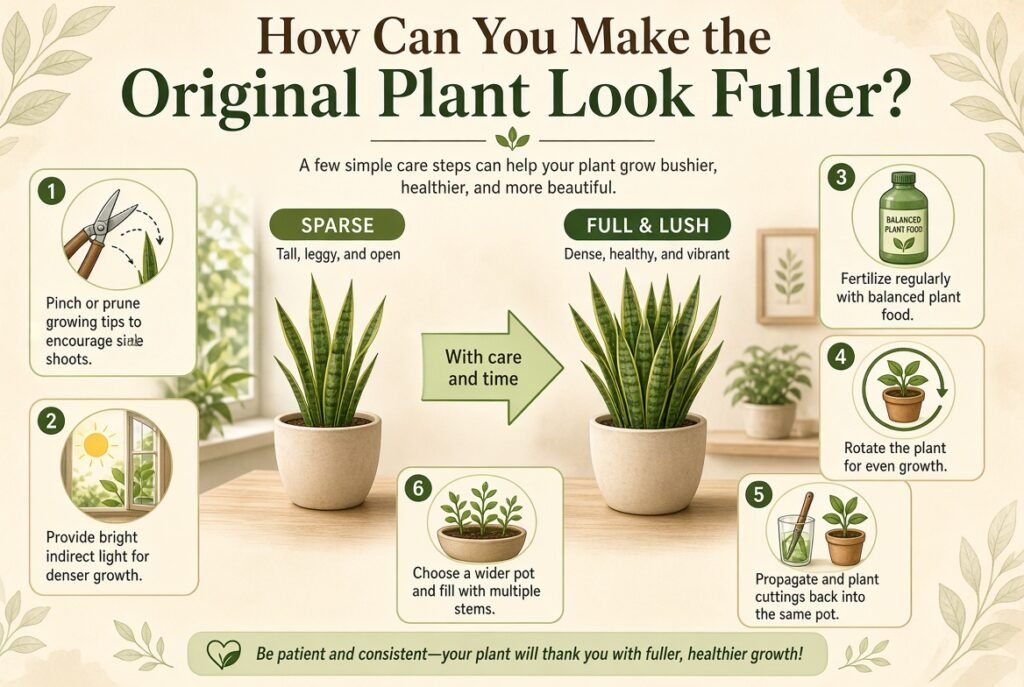
Take several cuttings and place them around the edges of the parent plant’s pot. Bury at least one node from each cutting so it can root. Keep the soil lightly moist until the cuttings establish.
This technique fills empty spaces more effectively than simply allowing a few existing stems to grow longer.
Image suggestion: A 16:9 propagation infographic comparing water propagation with direct soil propagation, including labeled stem nodes and newly rooted cuttings.
9. Repot When the Plant Needs More Space
Wandering Jew plants do not need frequent repotting if their roots have enough room and the soil drains properly.
Consider repotting when:
- Roots emerge from the drainage holes.
- The root ball fills most of the container.
- Water runs through the pot unusually quickly because roots occupy most of the space.
- The potting mix has become compacted or drains poorly.
- The plant dries out unusually fast despite suitable growing conditions.
How to repot it safely
- Choose a pot with drainage holes, only one size larger than the current container.
- Gently remove the plant and inspect the roots.
- Trim away roots that are black, mushy, or badly decayed with clean tools.
- Place the plant in fresh, well-draining potting mix.
- Water enough to settle the soil and allow excess water to drain.
- Return it to bright, indirect light and monitor its moisture needs.
If the roots are healthy but the plant is simply leggy, pruning and propagation may be more useful than repotting.
Overlooked tip: An old plant can benefit from fresh cuttings even when its roots are healthy. Wandering Jew stems sometimes lose leaves near their bases as they age, so refreshing the pot can improve its appearance.
Image suggestion: A step-by-step repotting infographic showing root inspection, a slightly larger pot, fresh airy soil, and the finished plant.
10. Adjust Care Through the Seasons
Your wandering Jew plant may need different attention as light, temperature, and growth change throughout the year.
| Season | What to do |
|---|---|
| Spring | Resume regular feeding as growth increases; prune leggy stems and take cuttings. |
| Summer | Check soil more often in warm, bright conditions. Protect leaves from harsh afternoon sun. |
| Autumn | Watch for slower drying and reduce watering if growth declines. |
| Winter | Provide the brightest available indirect light, protect against cold drafts, and reduce feeding when growth slows. |
What if your plant grows slowly in winter?
First, check whether it is receiving enough light. Shorter days can slow growth even when indoor temperatures remain comfortable.
Avoid trying to force growth with extra fertilizer or frequent watering. When the plant uses less water, its soil can remain wet longer. That increases the risk of root problems.
If you use grow lights, follow the manufacturer’s distance recommendations and provide a consistent daily light period.
Image suggestion: A four-panel seasonal care infographic showing spring pruning, summer watering, autumn monitoring, and winter bright-window placement.
11. Troubleshoot Common Wandering Jew Plant Problems
When a wandering Jew plant looks unhealthy, examine the whole plant before changing its care. Leaf color, stem texture, soil moisture, and the location of damaged leaves can help you identify the likely cause.
Wandering Jew plant leaves turning yellow

Add to Favorites
Likely causes: Overwatering, poorly draining soil, insufficient light, or normal aging of older leaves.
What to do:
- Check the soil several inches below the surface if possible.
- If it is soggy, allow it to dry appropriately and inspect drainage.
- If the soil smells unpleasant or the stems are soft, inspect the roots for rot.
- Move the plant to brighter indirect light if it has been kept in a dark corner.
- Remove leaves that are fully yellow and unlikely to recover.
One yellow lower leaf does not always signal a serious problem. Widespread yellowing combined with wet soil is more concerning.
Wandering Jew plant leaves turning brown
Brown leaves can result from dry soil, harsh sunlight, low humidity, or root damage.
Check the pattern of damage:
- Crispy tips and edges: Review watering consistency and humidity.
- Bleached or scorched patches: Reduce exposure to harsh direct sunlight.
- Brown leaves with wet, unhealthy stems: Investigate root or stem rot.
- Small scattered spots: Look for pests, damaged foliage, or possible leaf disease.
Remove badly damaged leaves and correct the underlying condition. Brown tissue will not turn green again, but healthy new growth can replace it.
Wandering Jew plant becoming leggy
Long stems with large gaps between leaves usually indicate insufficient light, although natural growth and lack of pruning can contribute.
Solution: Move the plant to brighter indirect light, trim the longest stems, and root healthy cuttings to fill the pot. Do not rely on fertilizer to fix leggy growth.
Wandering Jew plant losing its purple color
The purple and silver markings may fade when light levels are too low. Some variation also occurs between cultivars and growing conditions.
Solution: Gradually increase the amount of bright, indirect light. Avoid immediately placing an indoor plant in intense outdoor sunshine, which can scorch the leaves.
Wandering Jew plant wilting
Wilting can indicate dry soil, damaged roots, or severe heat stress. Both underwatering and overwatering can leave the plant limp.
Solution: Feel the soil before watering. If it is dry, water thoroughly and let it drain. If it is wet, check the roots and drainage instead of adding more water.
Wandering Jew plant stems turning soft or black
Soft, dark stems often suggest rot, particularly when the soil remains wet.
Solution: Remove affected stems with clean scissors. Inspect the roots and discard severely decayed material. If healthy stem sections remain, take cuttings from them and propagate a replacement plant in fresh, well-draining soil.
Quick troubleshooting table
| Symptom | Likely cause | First action |
|---|---|---|
| Yellow leaves and wet soil | Overwatering or poor drainage | Check roots and drainage |
| Dry, crispy leaf edges | Inconsistent moisture, dry air, or sun stress | Check soil and light |
| Long, bare stems | Insufficient light or lack of pruning | Improve light and trim |
| Faded purple markings | Insufficient light or cultivar variation | Assess light and new growth |
| Limp stems with dry soil | Underwatering | Water thoroughly and drain |
| Soft, dark stems | Possible rot | Remove damaged sections and inspect roots |
| Fine webbing or stippled leaves | Possible spider mites | Inspect leaf undersides closely |
Image suggestion: A diagnostic infographic comparing healthy wandering Jew foliage with yellow leaves, brown tips, leggy stems, faded purple markings, and soft stems.
12. Identify and Manage Common Pests
Wandering Jew plants can attract several common houseplant pests. Regular inspections help you catch infestations before they spread.
University extension guidance identifies aphids, mealybugs, scale insects, whiteflies, and spider mites as potential pests of Tradescantia zebrina.
North Carolina Extension Gardener Plant Toolbox
+1
Common pests and their warning signs
- Spider mites: Fine webbing, pale speckles, or leaves that look dusty and faded.
- Mealybugs: Small, white, cotton-like clusters around leaf joints and stems.
- Aphids: Small insects clustered around tender new growth.
- Scale insects: Fixed, shell-like bumps on stems or leaves.
- Whiteflies: Tiny white insects that flutter up when disturbed.
What should you do if you find pests?
- Isolate the affected plant from nearby houseplants.
- Inspect leaf undersides, stem joints, and new growth.
- Remove a small infestation manually or rinse the foliage gently.
- Use an insecticidal soap labeled for indoor plants if needed, following its directions.
- Repeat inspections and treatments as directed on the product label.
Test any treatment on a small area first. Some foliage can be sensitive to sprays, especially in direct sunlight or hot conditions.
Good airflow, clean foliage, and routine inspection help prevent minor pest problems from becoming major infestations.
Image suggestion: A plant-care infographic showing spider mites, mealybugs, aphids, and scale insects with magnified visual examples and simple treatment steps.
13. Is a Wandering Jew Plant Safe for Pets?
Use caution if you have cats, dogs, or other pets that chew plants. Some Tradescantia species can cause irritation, and the exact risk depends on the species.
The ASPCA lists Tradescantia fluminensis, also called variegated inch plant, as toxic to dogs, cats, and horses, with dermatitis listed as a clinical sign. Related species may also irritate skin, so do not assume every plant sold under the wandering Jew name has identical effects.
ASPCA
+1
For safer handling:
- Keep the plant out of reach of curious pets.
- Wear gloves if your skin is sensitive.
- Wash your hands after pruning or handling broken stems.
- Prevent children and pets from chewing the leaves.
- Contact a veterinarian if your pet eats the plant and develops symptoms.
If you are unsure which Tradescantia species you own, identify it by its botanical name before making a pet-safety decision.
14. Common Mistakes to Avoid
Even though wandering Jew plants are relatively easy to grow, a few habits can prevent them from reaching their full potential.
1. Watering on a fixed schedule. Soil dries at different rates depending on the weather, pot, and growing conditions. Check the soil before watering.
2. Keeping the plant in a dark corner. The plant may survive, but its stems can become stretched and its colorful markings may fade.
3. Using a pot without drainage holes. Excess water can accumulate around the roots and contribute to rot.
4. Applying too much fertilizer. Extra nutrients will not fix poor light, damaged roots, or compacted soil.
5. Never pruning the stems. Long stems may become sparse near the base. Regular trimming helps maintain a fuller shape.
6. Moving the plant into direct sunlight too quickly. Sudden exposure to strong sunlight can scorch foliage that developed indoors.
7. Throwing away healthy cuttings. Rooting cuttings and planting them back into the pot is an easy way to refresh a thin-looking plant.
8. Ignoring early pest signs. Small infestations are easier to manage than pests that have spread to neighboring plants.
15. Frequently Asked Questions
How often should I water a wandering Jew plant?
Water when the top inch of soil feels dry, checking the moisture below the surface as well. Water thoroughly and let excess water drain. The interval may range from a few days to longer than a week, depending on the conditions.
Does a wandering Jew plant need direct sunlight?
It generally performs well in bright, indirect light. Gentle morning sunlight may help maintain strong colors, but intense afternoon sunlight can scorch the leaves. Introduce brighter conditions gradually.
Why is my wandering Jew plant losing leaves?
Leaf loss can result from insufficient light, overwatering, underwatering, temperature stress, or aging stems. Check soil moisture first, then assess light and stem health.
How do I make a wandering Jew plant bushier?
Pinch the growing tips, trim long stems, and plant healthy rooted cuttings around the edges of the pot. Also provide sufficient bright, indirect light so new growth stays compact.
Can wandering Jew plants grow in water permanently?
Stem cuttings can root and grow in water, but long-term growth depends on adequate light, clean water, and appropriate nutrient availability. If you want a traditional, easy-to-maintain houseplant, growing it in well-draining potting mix is a practical option.
Can I grow a wandering Jew plant outdoors?
Yes, in suitable warm conditions. Choose a sheltered location with filtered sunlight or partial shade, and acclimate the plant gradually. Bring it indoors before cold weather threatens it, because many popular trailing Tradescantia varieties are not frost-hardy.
Why are my wandering Jew plant’s leaves turning green?
Insufficient light is a common reason colorful foliage becomes less vibrant. Move the plant gradually to a brighter location and observe the new growth. Older leaves may not regain their original markings.
Should I mist my wandering Jew plant?
Misting is not necessary in most homes and provides only a temporary increase in moisture around the leaves. If the air is very dry, a humidifier is a more consistent option.
What is the best soil for a wandering Jew plant?
Use a quality indoor potting mix amended with perlite or pumice if it retains too much water. The mix should hold some moisture while allowing excess water to drain freely.
Is wandering Jew the same as wandering dude?
These are common names used for plants in the Tradescantia genus, particularly trailing varieties. The names may refer to different species, so check the botanical name when exact care or toxicity information matters.
16. Related Plant-Care Guides to Explore
If you are building a healthy indoor garden, these related topics can help you solve other common houseplant problems:
- How to Care for a Spider Plant: Learn about watering, light, and growing healthy plantlets.
- How to Care for a Philodendron: Understand trailing growth, pruning, and propagation.
- How to Care for a Snake Plant: Learn how to prevent overwatering and root rot.
- How to Care for a Pilea Plant: Explore light, soil, watering, and propagation.
- How to Fix Yellow Leaves on Indoor Plants: Compare common causes and identify the right solution.
- How to Propagate Houseplants: Learn practical methods for growing new plants from cuttings.
These are natural internal-link opportunities for a plant-care website such as RootWisse. Link to each guide when the corresponding article is available.
Conclusion
Learning how to care for a wandering Jew plant comes down to a few consistent habits: provide bright, indirect light, water according to soil moisture, use a well-draining potting mix, and prune regularly.
If your plant becomes leggy, improve its lighting and trim the longest stems. If the leaves turn yellow while the soil stays wet, investigate drainage and root health before watering again. For a fuller display, root healthy cuttings and plant them back into the same pot.
With these simple adjustments, your wandering Jew plant can maintain its colorful foliage and produce attractive trailing growth throughout the growing season.