Quick Answer
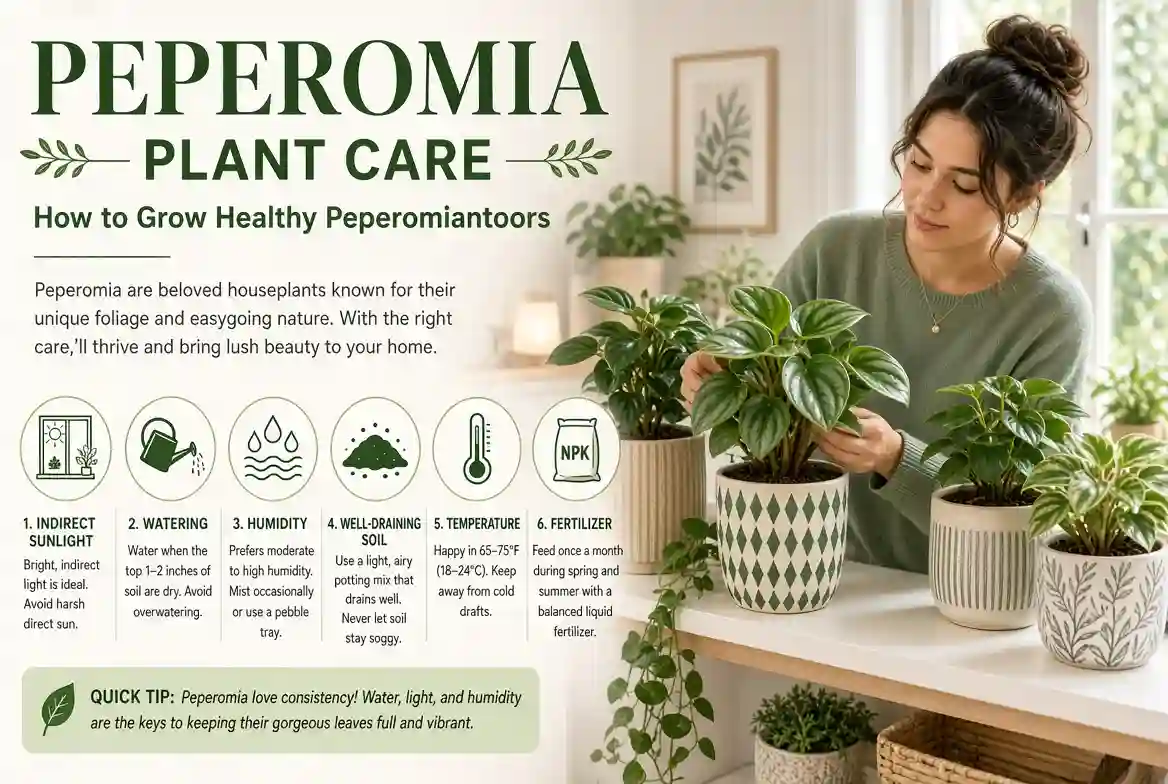
Peperomia plant care is relatively easy because these compact houseplants tolerate some neglect. Give peperomia bright, indirect light, an airy well-draining potting mix, and water only after the soil has partly dried. Keep the plant warm and away from cold drafts. Most peperomias handle normal household humidity well, while light feeding during active growth supports healthy foliage.
Introduction
Peperomia is a popular houseplant genus known for thick leaves, compact growth, and unusual textures and patterns. There are more than 1,000 species, so their shapes can look surprisingly different.
You may know Watermelon Peperomia, Baby Rubber Plant, Ripple Peperomia, Raindrop Peperomia, or trailing varieties such as String of Turtles.
Although peperomias are considered easy-care plants, they have one weakness: too much water.
Their fleshy leaves and stems can store moisture. That means you should not treat them like plants that need constantly damp soil. Understanding this simple difference can prevent many common problems.
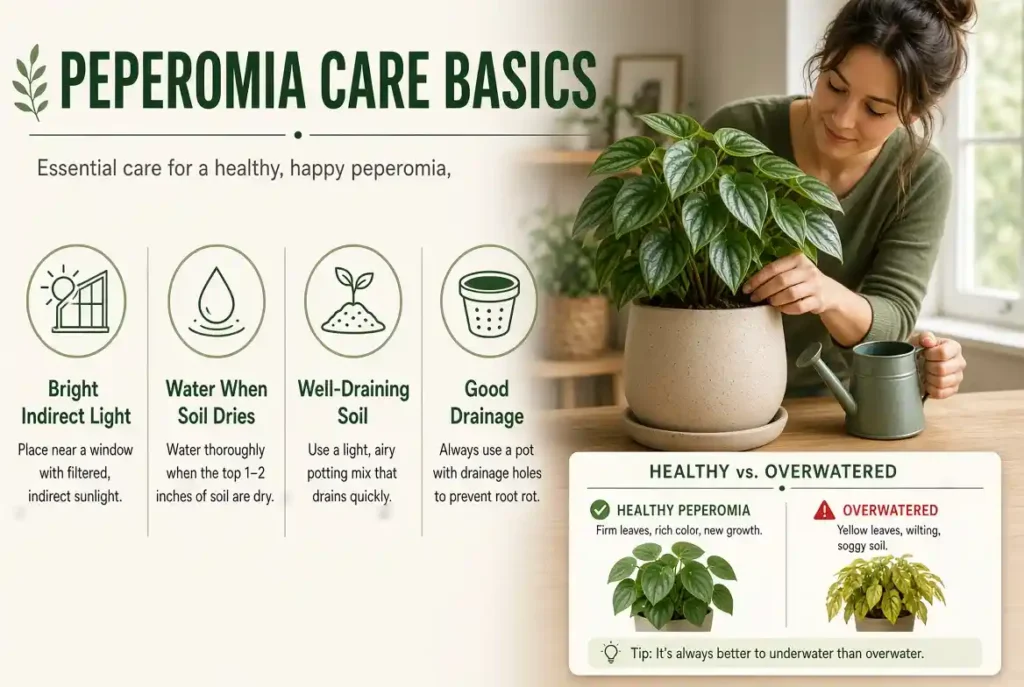
Peperomia Plant Care at a Glance
| Care Factor | What Peperomia Needs |
| Light | Bright, indirect light |
| Water | Allow soil to partly dry |
| Soil | Airy and well-draining |
| Humidity | Average household humidity is usually fine |
| Temperature | About 18 to 30°C |
| Fertilizer | Light feeding during active growth |
| Pruning | Remove damaged and leggy growth |
| Pot | Drainage holes are essential |
| Propagation | Stem or leaf cuttings, depending on type |
The exact needs can vary between species, especially because the genus contains plants adapted to different environments.
Image Suggestion: A labeled peperomia care chart showing light, water, soil, temperature, humidity, and fertilizer.
How Much Light Does Peperomia Need?
Peperomia grows best in bright, indirect light.
An east or west-facing window can work well. A south-facing window may also work if the plant is protected from strong direct sunlight.
Too much direct summer sun can scorch the leaves. On the other hand, very low light can produce slow, weak, or stretched growth.
Signs your peperomia needs more light
- Stems become unusually long.
- New leaves are smaller than older ones.
- Growth becomes sparse.
- Variegated leaves lose some of their pattern.
- The plant stops producing new growth.
Do not immediately move a shaded peperomia into harsh sunlight. Increase light gradually to reduce the risk of leaf scorch.
Practical tip: If the plant is healthy but growing slowly, try moving it closer to a bright window before changing its fertilizer or watering routine.
How Often Should You Water Peperomia?
Watering is where many peperomia owners go wrong.
Instead of watering on a fixed schedule, check the soil first. Allow the potting mix to partially dry before watering again. The RHS specifically recommends allowing the top few centimeters of compost to dry and warns that persistent moisture can cause root rot.
When it is time to water:
- Check the soil with your finger.
- If the upper layer has dried, water thoroughly.
- Allow excess water to drain from the pot.
- Empty standing water from the saucer.
- Wait until the soil partly dries again.
Your plant may need water more frequently during hot, bright weather and less during winter.
Avoid following advice such as “water every seven days” without checking the soil. Indoor temperature, pot size, light, soil, and humidity all change how quickly a plant dries.
How do you know if peperomia is overwatered?
Watch for:
- Yellowing leaves
- Soft or mushy stems
- Sudden leaf drop
- A sour-smelling potting mix
- Soil that remains wet for many days
Overwatering can damage roots even when the plant initially looks healthy.
Image Suggestion: Healthy peperomia beside an overwatered plant showing yellow leaves and soft stems.
What Is the Best Soil for Peperomia?
Peperomia needs well-draining, airy soil.
A dense mix that stays wet for a long time can reduce air around the roots and increase the risk of root problems. Clemson Extension recommends a well-drained houseplant potting mix and notes that adding perlite can improve drainage.
A simple approach is to use:
- Quality indoor potting mix
- Perlite for extra drainage
- Some coarse material such as bark if the mix feels too dense
The goal is not to make the soil bone dry immediately. It should hold enough moisture for the roots while allowing excess water and air to move through the pot.
Choosing the Right Peperomia Pot
The pot matters almost as much as the soil.
Always choose a container with drainage holes. A decorative pot without drainage can trap water around the roots.
Peperomia generally does not need a huge container. A pot that is only slightly larger than the existing root system is often easier to manage.
An oversized pot can hold a large amount of wet soil around a relatively small root system. This makes it easier to overwater the plant.
When repotting, move up gradually rather than placing a small peperomia directly into a very large pot.
Image Suggestion: Comparison of an appropriately sized peperomia pot versus an oversized pot.
Does Peperomia Need High Humidity?
Not necessarily.
Most peperomias can adapt to normal household humidity, although many species appreciate moderately humid conditions.
You usually do not need to create a tropical greenhouse inside your home.
If your air is very dry, especially during heating or air-conditioning periods, you can:
- Group plants together.
- Use a humidifier.
- Place the plant in a naturally humid room with suitable light.
- Keep it away from hot or cold air vents.
Avoid assuming that frequent misting will solve every humidity problem. Stable environmental conditions are generally more useful than constantly wetting the leaves.
Best Temperature for Peperomia
Peperomia prefers warm indoor conditions. The RHS gives approximately 18 to 30°C as a suitable range for many peperomias.
Keep the plant away from:
- Cold drafts
- Very cold windows
- Air-conditioning vents
- Heating vents
- Sudden temperature changes
A plant can suffer even when the average room temperature seems comfortable if it sits directly beside a cold draft or heat source.
How to Fertilize Peperomia
Peperomia does not need heavy feeding.
During active growth, a diluted houseplant fertilizer can support healthy foliage. The RHS recommends half-strength liquid fertilizer during the growing season, while Clemson Extension also recommends feeding during active spring and summer growth.
Avoid using extra fertilizer simply because growth appears slow.
First check:
- Light
- Root health
- Watering
- Soil drainage
- Temperature
If these conditions are poor, fertilizer will not fix the underlying problem.
Pruning Peperomia
Pruning is mainly used to maintain shape and remove damaged growth.
Cut away:
- Dead leaves
- Damaged stems
- Yellow or unhealthy growth
- Very long, bare stems
If your peperomia becomes leggy, trimming the elongated stems can encourage a more compact appearance.
Use clean, sharp scissors and avoid removing large amounts of healthy foliage at once.
How to Propagate Peperomia
Peperomia is one of the more rewarding houseplants to propagate.
Depending on the species, you can use stem cuttings or leaf cuttings. The easiest method varies between peperomia types.
Stem cutting method
- Select a healthy stem.
- Cut below a suitable node.
- Remove unnecessary lower leaves.
- Place the cutting in water or a suitable free-draining rooting medium.
- Keep it warm and provide bright, indirect light.
- Plant it into a small container after sufficient roots develop.
Spring and summer are generally good times for propagation because plants are actively growing.
Image Suggestion: Step-by-step infographic showing how to take and root a peperomia stem cutting.
Why Are My Peperomia Leaves Dropping?
Leaf drop can have several causes, but watering problems should be investigated first.
If leaves are soft and yellow
The plant may be staying too wet. Check the roots and soil before watering again.
If leaves are dry and shriveled
The plant may need water, particularly if the soil has become extremely dry.
If healthy leaves suddenly fall
Check for:
- Recent overwatering
- Temperature changes
- Cold drafts
- Root damage
- Sudden changes in light
Do not diagnose the problem from one symptom alone. Look at the soil, roots, environment, and recent care changes together.
Why Are My Peperomia Leaves Turning Yellow?
Yellow leaves are often associated with excessive moisture, especially when several leaves begin yellowing and the soil remains wet.
Check whether:
- The pot has drainage holes.
- The soil is drying between waterings.
- The container is too large.
- Water is sitting in the saucer.
- The roots appear healthy.
If the soil is consistently wet, correcting the watering environment is more important than adding fertilizer.
Why Is My Peperomia Drooping?
Drooping can happen because of either too much or too little water.
Check the soil before doing anything.
Dry soil + drooping: The plant may need water.
Wet soil + drooping: Overwatering or root damage may be the problem.
This is why watering based only on leaf appearance can be misleading.
Common Peperomia Care Mistakes
1. Watering on a schedule
A weekly routine may work in one room and fail in another. Check the soil instead.
2. Using a huge pot
More soil means more moisture around the roots. Choose a container appropriate for the plant’s size.
3. Giving harsh direct sunlight
Bright light is useful, but intense summer sun can scorch foliage.
4. Using heavy soil
Poorly draining soil makes overwatering much easier.
5. Fertilizing a stressed plant
Fix light, water, soil, and root problems first.
6. Ignoring cold drafts
Peperomia prefers warm, stable conditions.
7. Assuming every peperomia behaves identically
The genus is large, and individual species can have different preferences.
Popular Peperomia Types
Different varieties can have very different appearances.
| Type | Common Feature |
| Watermelon Peperomia | Silver and green striped leaves |
| Ripple Peperomia | Deeply textured leaves |
| Baby Rubber Plant | Thick, smooth foliage |
| Raindrop Peperomia | Large, teardrop-shaped leaves |
| String of Turtles | Small patterned leaves on trailing stems |
Regardless of variety, start with the basic principles of bright indirect light, careful watering, and excellent drainage.
Internal Linking Opportunity: Link this section to separate guides about Watermelon Peperomia care, String of Turtles care, and Ripple Peperomia care when those articles are available.
Frequently Asked Questions
Is peperomia easy to care for?
Yes. Peperomia is generally considered an adaptable, low-maintenance houseplant. Its biggest care issue is usually excessive moisture.
Does peperomia like direct sunlight?
Most peperomias prefer bright, indirect light. Strong direct summer sunlight can scorch their leaves.
Should I mist my peperomia?
Misting is not essential for most homes. Peperomia can adapt to normal household humidity, although it appreciates moderately humid conditions.
How often should I water peperomia?
There is no reliable universal schedule. Check the soil and water when the upper portion has partly dried.
Can peperomia grow in low light?
It can tolerate lower light, but growth may become slower and less compact. Brighter indirect light generally produces better growth.
Does peperomia need fertilizer?
It benefits from light feeding during active growth, but excessive fertilizer is unnecessary.
Can I propagate peperomia from a leaf?
Some peperomia types can be propagated from leaf cuttings, while stem cuttings are also commonly used. The best method depends on the species.
Why is my peperomia losing leaves?
Overwatering, underwatering, temperature stress, poor roots, and sudden environmental changes can all cause leaf loss. Check the soil and growing conditions before changing your routine.
Conclusion
Successful peperomia plant care is less about constant attention and more about avoiding the wrong conditions.
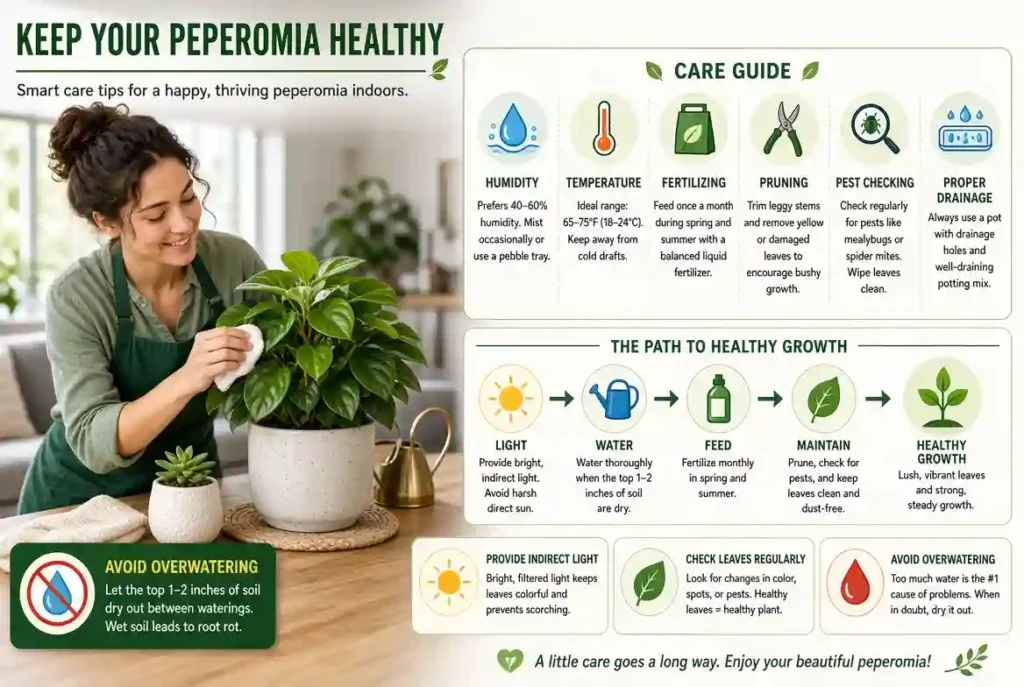
Give your plant bright indirect light, an airy potting mix, and a container with drainage holes. Let the soil partly dry before watering again, and avoid keeping the roots continuously wet.
The most useful habit is simple: check the plant and its soil before you act. Peperomia is forgiving, but it performs best when you work with its natural ability to store moisture rather than treating it like a plant that needs frequent watering.