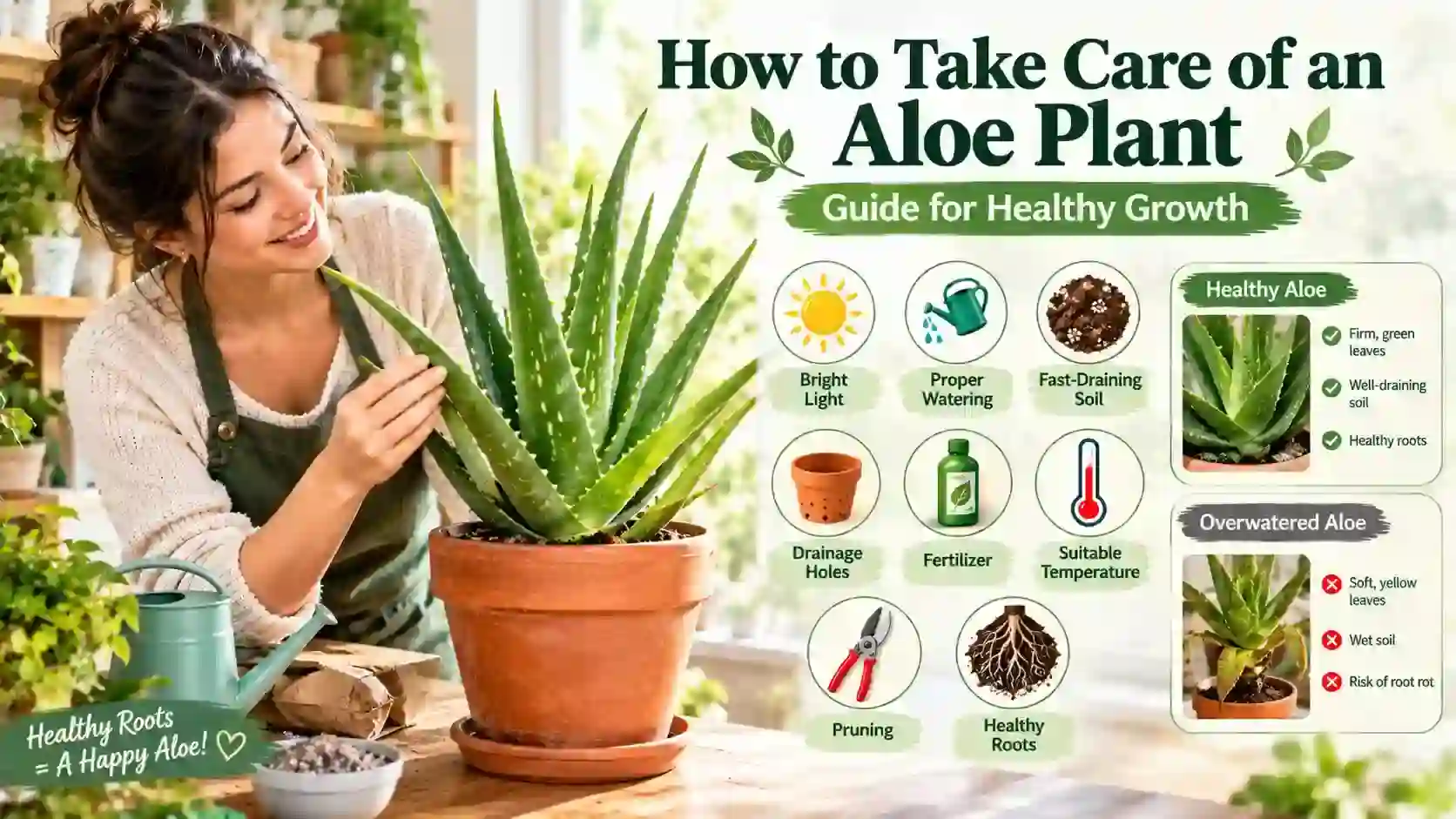
To take care of an aloe plant, give it bright light, fast-draining soil, and deep but infrequent watering. Let the soil dry thoroughly before watering again. Use a pot with drainage holes and avoid leaving the roots in standing water. Aloe prefers warm conditions and low humidity. During active growth, feed lightly and repot when the plant becomes root-bound.
Learning how to take care of an aloe plant is easier when you understand one basic rule.
Aloe plants prefer conditions that are much drier than many common houseplants.
The most common mistake is watering too often. Aloe stores water inside its thick, fleshy leaves. Its roots also need air around them.
Wet soil that stays damp for too long can lead to root problems.
Light matters just as much. An aloe kept in a dark room may become stretched, weak, or pale.
The good news is that aloe is forgiving when its basic needs are met.
With the right light, soil, pot, and watering routine, you can grow a healthy aloe for years.
This guide explains exactly what your plant needs. It also covers common problems, seasonal care, propagation, and signs that something is wrong.
Understanding Your Aloe Plant
Aloe is a group of succulent plants known for fleshy leaves arranged in rosettes.
Aloe vera is one of the most commonly grown species indoors. The RHS describes it as an evergreen succulent that forms a rosette of fleshy leaves. It can reach roughly 0.5 to 1 metre in height and spread under suitable conditions.
Aloe naturally handles periods of dryness.
Its thick leaves act as water-storage organs.
This explains why aloe usually prefers being slightly too dry rather than constantly wet.
What makes aloe different from tropical houseplants?
Many tropical plants enjoy consistently moist soil and higher humidity.
Aloe does not.
It generally performs better with:
- Bright light
- Excellent drainage
- Dry periods between watering
- Moderate indoor temperatures
- Low to average humidity
- Limited fertilizer
- Good airflow
The RHS specifically recommends well-drained growing conditions and full sun for Aloe vera.
Image Suggestion: A labeled botanical infographic showing an Aloe vera rosette, fleshy leaves, roots, drainage holes, and sunlight requirements.
Aloe Plant Care at a Glance
| Care Factor | Best Practice |
|---|---|
| Light | Bright light with several hours of sun when acclimated |
| Water | Water thoroughly, then allow soil to dry |
| Soil | Fast-draining cactus or succulent mix |
| Pot | Drainage hole required |
| Humidity | Average indoor humidity is usually sufficient |
| Temperature | Warm conditions; protect from frost |
| Fertilizer | Light feeding during active growth |
| Repotting | When root-bound or soil drainage declines |
| Pruning | Remove dead or damaged leaves |
| Propagation | Separate healthy offsets |
| Main Problem | Overwatering and poor drainage |
The exact watering schedule depends on your light, temperature, pot size, soil, and season.
That is why a fixed calendar such as “water every seven days” often causes problems.
1. Give Your Aloe Plenty of Light
Light is one of the most important parts of aloe plant care.
Aloe vera naturally grows in bright conditions. The RHS lists it as a full-sun plant.
Indoors, a bright south- or west-facing window can work well.
However, there is an important detail.
An aloe that has been growing in low light can suffer leaf stress if suddenly moved into intense direct sun.
How to introduce stronger sunlight
If your aloe has been sitting in indirect light:
- Move it closer to a bright window.
- Give it stronger light for short periods.
- Increase sun exposure gradually.
- Watch the leaves for bleaching or scorching.
- Keep the plant in its new position once it adapts.
Sudden changes can be harder on indoor-grown plants.
Signs your aloe needs more light
Look for:
- Long gaps between leaves
- Leaning growth
- Pale green leaves
- Thin new leaves
- A rosette that loses its compact shape
- Growth stretching toward a window
Aloe cannot produce strong, compact growth in a dark corner.
Can aloe grow in low light?
It may survive for a while.
That does not mean it will thrive.
If your home has limited natural light, place the plant in the brightest available location.
Image Suggestion: Realistic 16:9 infographic showing an aloe near a bright window, with arrows explaining strong light, stretched growth, and gradual sun acclimation.
2. Water Your Aloe the Right Way
Watering is where most aloe-care problems begin.
The safest approach is simple:
Check the soil before watering.
Do not water because a certain number of days has passed.
Aloe prefers a thorough watering followed by a dry period. The RHS also advises watering aloe sparingly and allowing the compost to dry.
How to water an aloe plant
Follow these steps:
- Check the soil several centimetres below the surface.
- Make sure the potting mix is dry.
- Water thoroughly.
- Allow excess water to drain from the bottom.
- Empty water collected in the saucer.
- Wait until the soil dries again before watering.
Do not give your aloe a small splash every few days.
Small, frequent watering can keep parts of the root zone damp for too long.
Why deep watering works better
A thorough watering wets the root zone evenly.
Allowing the soil to dry afterward gives the roots a chance to receive air.
This wet-dry cycle better matches the needs of a drought-adapted succulent.
The RHS generally recommends watering plants thoroughly rather than following a rigid routine.
3. How Often Should You Water an Aloe Plant?
There is no universal watering schedule.
Your aloe may need water every couple of weeks during active growth.
Another plant may need water less often.
The difference depends on:
- Pot size
- Soil composition
- Indoor temperature
- Sun exposure
- Air movement
- Season
- Root health
A better rule than counting days
Water when the soil is thoroughly dry.
During cooler, darker months, aloe usually needs much less water.
The RHS recommends very sparse watering during winter for aloes.
Signs your aloe may need water
Possible signs include:
- Leaves becoming less firm
- Leaves looking thinner
- Slight wrinkling
- Dry potting mix
- The pot feeling unusually light
However, wrinkled leaves do not always mean underwatering.
Root damage can also prevent a plant from absorbing water properly.
That is why you should check the soil and roots before automatically adding more water.
4. Avoid Overwatering and Root Rot
Overwatering does not simply mean “giving too much water once.”
The bigger problem is often soil staying wet for too long.
Aloe roots need oxygen.
Poor drainage can reduce oxygen around the roots and create conditions that encourage root problems.
Warning signs of overwatering
Watch for:
- Yellowing leaves
- Soft leaves
- Mushy lower leaves
- Brown or black areas
- A collapsing center
- Persistent wet soil
- A sour or unpleasant soil smell
- Roots that appear brown and mushy
One yellow leaf does not automatically mean root rot.
Look at the entire plant and check the soil before diagnosing the problem.
What to do if you suspect root rot
Remove the aloe carefully from its pot.
Inspect the roots.
Healthy roots should not be mushy or severely decomposed.
If damaged roots are present:
- Remove the affected roots with clean scissors.
- Remove excessively wet soil.
- Allow damaged areas to dry appropriately.
- Repot into fresh, fast-draining mix.
- Use a container with drainage holes.
- Avoid immediate repeated watering.
Severe root damage may require more aggressive intervention.
5. Choose Fast-Draining Soil
Aloe needs soil that drains quickly.
Ordinary garden soil can stay wet inside a container.
That creates a poor environment for a succulent.
The RHS recommends cactus compost or good-quality compost amended with sharp sand or grit for aloes.
A practical indoor option is a quality cactus or succulent potting mix.
You can improve drainage further by incorporating suitable mineral material such as horticultural grit or coarse sand.
What good aloe soil should do
The potting mix should:
- Drain excess water quickly
- Provide some structure for roots
- Avoid becoming compacted
- Dry within a reasonable period
- Hold enough moisture for roots to absorb water
What to avoid
Avoid heavy mixes that remain wet for many days.
Also avoid choosing soil simply because it is labeled “premium.”
The drainage characteristics matter more than marketing language.
Image Suggestion: Split infographic comparing compact, water-retentive soil with loose, fast-draining succulent soil.
6. Choose a Pot With Drainage Holes
A drainage hole is not optional for healthy aloe.
It gives excess water somewhere to escape.
A decorative container without drainage can trap water around the roots.
Should you use a large pot?
Usually, no.
A pot that is dramatically larger than the root system can hold excess moisture for longer.
Choose a container that gives the roots enough room without creating a huge volume of unused wet soil.
Terracotta vs plastic pots
Both can work.
Terracotta is porous and can help the soil dry faster.
Plastic retains moisture longer.
If you frequently overwater, terracotta may be more forgiving.
If your environment is very dry and your aloe dries too quickly, plastic can slow moisture loss.
The best choice depends on your growing conditions.
7. Keep Humidity Moderate
Aloe does not need a humid environment.
In fact, excessively humid conditions combined with wet soil can create problems.
The RHS notes that aloes dislike humid atmospheres.
You generally do not need:
- Regular misting
- A humidifier
- Pebble trays
- A steamy bathroom
A normal indoor environment is often suitable.
Why you should avoid routine misting
Misting does not solve a plant’s root-level watering needs.
It can also leave moisture around foliage and the plant’s center.
For aloe, focus on healthy roots and properly drying soil instead.
8. Maintain a Warm Temperature
Aloe prefers warm growing conditions.
Protect it from freezing temperatures and cold drafts.
The RHS states that aloe cannot withstand freezing conditions.
Indoor plants are usually easy to protect.
Avoid placing aloe directly beside:
- Very cold windows
- Frequently opened exterior doors
- Air-conditioning vents
- Heating vents
- Drafty areas
Extreme temperature changes can stress the plant.
A stable indoor location with good light is usually better.
9. How to Fertilize an Aloe Plant
Aloe does not need heavy feeding.
Too much fertilizer can cause unnecessary salt buildup and encourage weak or unbalanced growth.
The RHS recommends light feeding during the growing season. One RHS guide suggests monthly feeding from April through September, while another recommends limited feeding twice during the growing season.
For a home grower, the important principle is moderation.
A practical fertilizer routine
During active growth:
- Use a balanced or succulent-appropriate fertilizer.
- Dilute it according to the product directions.
- Consider using a weaker solution rather than heavy feeding.
- Feed only when the plant is actively growing.
- Reduce or stop feeding during winter.
Do not fertilize a severely stressed or recently repotted aloe.
Let the plant establish first.
10. Prune Aloe Only When Necessary
Aloe usually does not need regular pruning.
Its natural rosette shape is part of its appeal.
You can remove:
- Completely dead leaves
- Severely damaged leaves
- Diseased-looking tissue
- Old leaves that have naturally dried
Use a clean, sharp cutting tool.
Cut damaged leaves as close to the base as practical without injuring healthy tissue.
Should you cut healthy aloe leaves?
Avoid removing healthy leaves simply to make the plant smaller.
Every healthy leaf contributes to photosynthesis and energy storage.
Remove leaves when there is a clear reason.
11. How to Repot an Aloe Plant
You do not need to repot aloe every year.
Repot when:
- Roots fill the container
- Water runs through unusually quickly
- The plant becomes unstable
- The soil breaks down
- Drainage becomes poor
- Offsets crowd the pot
- The plant has clearly outgrown its container
The RHS recommends repotting aloe every few years or when it becomes root-bound.
Step-by-step repotting
Step 1: Choose a suitable pot
Select a container with drainage holes.
Step 2: Prepare fresh soil
Use a fast-draining succulent or cactus mix.
Step 3: Remove the plant carefully
Support the base rather than pulling hard on the leaves.
Step 4: Inspect the roots
Look for damaged, dead, or mushy roots.
Step 5: Place the aloe at the correct depth
Do not bury the central rosette deeper than it was previously growing.
Step 6: Fill around the roots
Add fresh mix and gently settle it.
Step 7: Allow the plant to settle
Avoid creating a constantly wet environment after repotting.
A slightly snug container is often preferable to an oversized one.
Image Suggestion: Step-by-step aloe repotting infographic showing root inspection, fresh succulent soil, drainage holes, and correct planting depth.
12. How to Propagate an Aloe Plant
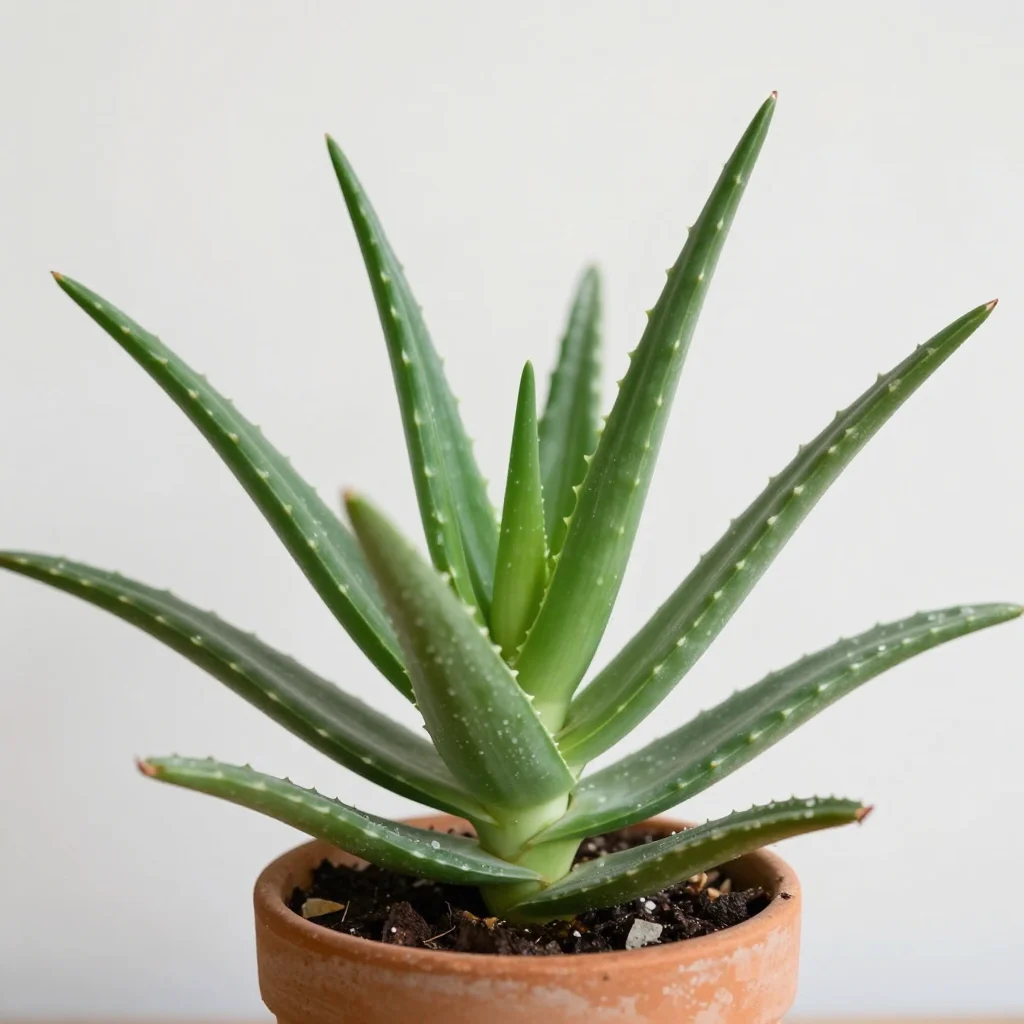
Aloe can produce offsets, sometimes called pups, around the base of a mature plant.
These offsets provide an easy way to create new plants.
Propagating aloe from offsets
- Wait until the offset has developed its own roots.
- Remove the plant from the pot if necessary.
- Separate the offset carefully from the mother plant.
- Use a clean knife if it does not separate easily.
- Allow damaged cut areas to dry appropriately.
- Plant the offset in well-draining succulent soil.
- Keep it in bright light.
- Avoid excessive watering while it establishes.
Not every offset needs to be removed.
Leaving some pups attached can create a fuller cluster.
13. Why Are My Aloe Leaves Turning Yellow?
Yellow leaves can have several causes.
The most common issue is excessive moisture.
Check the following:
- Is the soil still wet?
- Does the pot have drainage holes?
- Is the pot oversized?
- Are you watering on a fixed schedule?
- Is the plant receiving enough light?
- Are multiple leaves changing color?
If lower leaves are yellow and soft
Overwatering is a strong possibility.
Inspect the soil and roots.
If one old lower leaf turns yellow
It may simply be natural aging.
Aloe periodically sheds older leaves.
Do not diagnose a serious problem from one leaf alone.
14. Why Are My Aloe Leaves Turning Brown?
Brown leaves can result from several different stresses.
Possible causes include:
- Intense sudden sunlight
- Heat stress
- Physical damage
- Severe dryness
- Root problems
- Poor water quality in some situations
Look at where the browning occurs.
Brown patches after moving outdoors
The plant may have experienced sudden sun exposure.
Gradually acclimate indoor-grown aloe to stronger outdoor sunlight.
Brown, mushy tissue
This is more concerning.
Check the roots and soil for excessive moisture.
15. Why Is My Aloe Plant Getting Thin or Leggy?
Leggy aloe usually indicates insufficient light.
A healthy aloe should maintain a relatively compact rosette.
If the leaves spread widely or the plant leans toward a window, light may be inadequate.
How to fix leggy growth
Move the aloe gradually toward a brighter location.
Do not expect stretched leaves to shrink back.
New growth is the better indicator.
If the new leaves become thicker and more compact, your lighting conditions are improving.
16. Why Are My Aloe Leaves Soft?
Soft leaves can indicate either too much water or severe dehydration.
That sounds confusing, but the soil provides an important clue.
Soft leaves + wet soil
Think about overwatering and root damage.
Soft or thin leaves + completely dry soil
The plant may be dehydrated.
Soft leaves + damaged roots
The roots may no longer be able to absorb water effectively.
This is why adding more water without checking the roots can make the situation worse.
17. Why Is My Aloe Plant Leaning?
Aloe can lean because of uneven light or weak growth.
If it constantly faces one direction, rotate the pot periodically.
However, severe leaning can indicate inadequate light.
Move the plant to a brighter location gradually.
Do not force the plant upright with heavy watering.
Water does not correct a light problem.
18. Common Aloe Plant Pests
Aloe is generally a low-maintenance plant, but pests can still appear.
Potential pests include:
- Mealybugs
- Scale insects
- Spider mites
The RHS lists scale insects and mealybugs among pests that can affect aloe.
What to check
Inspect:
- Leaf bases
- Leaf undersides
- The center of the rosette
- Areas where leaves overlap
- New growth
Early detection makes pest management easier.
If you find pests, isolate the affected plant from other houseplants.
Then identify the pest before choosing a treatment.
19. Aloe Plant Care Through the Seasons
Aloe does not have identical needs throughout the year.
Spring
Growth usually increases as light levels improve.
This is a good time to:
- Check the roots
- Repot if necessary
- Begin light fertilization
- Increase watering gradually
Summer
Aloe may use more water when temperatures and light increase.
Still, check the soil before watering.
Do not assume hot weather means daily watering.
Autumn
Growth often slows as light decreases.
Start reducing fertilizer.
Monitor soil moisture more carefully.
Winter
Aloe usually needs much less water.
Keep it in the brightest available location.
Protect it from frost and very cold conditions.
The RHS recommends very sparse winter watering for aloes.
Image Suggestion: Four-panel seasonal aloe care infographic showing spring growth, summer sunlight, autumn transition, and winter reduced watering.
20. Outdoor Aloe Care
Aloe can grow outdoors in suitable climates.
However, outdoor conditions can be much more intense than indoor conditions.
Consider:
- Sun intensity
- Rainfall
- Drainage
- Temperature
- Frost risk
- Wind
- Humidity
An aloe moved from a shaded indoor position into full outdoor sun can scorch.
Acclimate it gradually.
Rain is also important
Outdoor aloe can receive far more water from storms than an indoor plant receives from a watering can.
If heavy rain is common, excellent drainage becomes even more important.
Do not place aloe where rainwater regularly pools.
21. Can You Grow Aloe in a Bathroom?
Aloe can survive in many indoor locations, but a humid bathroom is usually not the ideal choice.
Aloe prefers bright light and does not require high humidity.
If your bathroom has a sunny window and good ventilation, it may work.
If it is dark and constantly humid, choose another location.
22. Can Aloe Grow in Artificial Light?
Yes, aloe can grow under suitable artificial lighting.
This can help when natural light is inadequate.
Place the plant under a suitable plant light and monitor its growth.
If the leaves remain thin and stretched, the plant may need stronger or more consistent light.
Artificial lighting can be especially useful during dark winters or in rooms with few windows.
23. Aloe Plant Care Mistakes to Avoid
Some mistakes appear harmless but create long-term problems.
Mistake 1: Watering on a schedule
A calendar cannot account for changing light and temperature.
Better approach: Check soil moisture first.
Mistake 2: Using a pot without drainage
Water has nowhere to escape.
Better approach: Always use drainage holes.
Mistake 3: Keeping aloe in a dark corner
The plant may survive but become stretched.
Better approach: Give it much brighter light.
Mistake 4: Using heavy garden soil
Dense soil can retain too much moisture.
Better approach: Use fast-draining succulent soil.
Mistake 5: Misting constantly
Aloe does not need tropical humidity.
Better approach: Keep the foliage dry and focus on healthy roots.
Mistake 6: Fertilizing too heavily
More fertilizer does not automatically mean faster growth.
Better approach: Feed lightly during active growth.
Mistake 7: Moving directly from shade into strong sun
Sudden exposure can stress the leaves.
Better approach: Acclimate gradually.
Mistake 8: Treating every yellow leaf as an emergency
Older leaves can naturally decline.
Better approach: Look for patterns across the whole plant.
24. A Simple Aloe Plant Care Routine
You do not need to spend hours caring for aloe.
Use this simple routine.
Weekly
Check:
- Soil moisture
- Leaf firmness
- New growth
- Signs of pests
- Light exposure
Do not automatically water.
Monthly
Check:
- Drainage
- Root crowding
- Pest activity
- Leaf discoloration
- Overall plant shape
During active growth, consider whether the plant needs light feeding.
Every Few Months
Evaluate:
- Whether the plant is receiving enough light
- Whether the soil is draining properly
- Whether the pot still fits the root system
- Whether offsets need separating
This approach is more reliable than following a rigid watering calendar.
25. Aloe Plant Troubleshooting Chart
| Problem | Likely Causes | What to Check |
|---|---|---|
| Yellow leaves | Overwatering, natural aging | Soil and lower leaves |
| Soft leaves | Excess moisture or dehydration | Soil and roots |
| Brown patches | Sun stress, damage, watering issues | Recent location changes |
| Wrinkled leaves | Dry soil or damaged roots | Soil moisture and roots |
| Leggy growth | Low light | Window and light exposure |
| Leaning plant | Uneven or weak light | Direction of growth |
| Mushy base | Severe moisture stress | Roots and stem base |
| Slow growth | Low light, cool conditions, poor roots | Growing environment |
| Pests | Mealybugs, scale, mites | Leaf bases and undersides |
| Root rot | Poor drainage, prolonged wet soil | Root color and texture |
The key is to diagnose the pattern, not one symptom.
For example, wrinkled leaves plus completely dry soil suggests a different problem than wrinkled leaves plus saturated soil.
26. How to Make an Aloe Plant Healthier
If your aloe looks unhealthy, avoid changing everything at once.
Start with the fundamentals.
Step 1: Check the light
Move it to a brighter position if necessary.
Step 2: Check the soil
Make sure it drains quickly.
Step 3: Check the roots
Look for signs of rot if the plant is soft or repeatedly declining.
Step 4: Check the pot
Confirm that excess water can escape.
Step 5: Adjust watering
Water based on soil dryness rather than a fixed schedule.
Step 6: Wait for new growth
Do not expect damaged leaves to become perfect again.
Healthy new growth is the clearest sign that your care routine is improving.
27. Should You Cut Off Damaged Aloe Leaves?
Only remove leaves when there is a good reason.
A completely dead or severely damaged leaf can be removed.
A leaf with a small cosmetic blemish can usually remain.
Removing healthy tissue does not make the plant healthier.
When pruning:
- Use clean tools.
- Avoid tearing leaves.
- Cut damaged leaves near the base.
- Do not damage the central growing point.
If the center of the plant is healthy, allow it to produce new leaves.
28. Can Aloe Plants Flower Indoors?
Aloe can produce flowers under suitable conditions.
The RHS notes that Aloe vera produces tubular flowers on tall flower stems.
Mature plants with strong light and good growing conditions have a better chance of flowering.
Do not force flowering with excessive fertilizer.
Instead, focus on:
- Strong light
- Healthy roots
- Proper watering
- Good drainage
- Appropriate seasonal growth
A healthy plant should come first.
Flowers are a bonus.
29. Is Aloe Safe Around Pets?
This is an important consideration for homes with cats and dogs.
The ASPCA lists Aloe vera as toxic to dogs and cats. Reported clinical signs include vomiting, diarrhea, and lethargy.
Keep aloe where pets cannot chew or ingest it.
Do not assume that because aloe gel is used in some human products, the entire plant is safe for pets.
If a pet has eaten aloe, contact a veterinarian or an appropriate animal poison-control service for guidance.
Image Suggestion: Pet-safety infographic showing an aloe plant placed safely away from a curious cat and dog, with a clear “Keep Out of Reach” message.
30. Aloe Plant Care for Beginners: The 5 Rules That Matter Most
If you are new to aloe, remember these five rules:
- Give it plenty of light.
- Use fast-draining soil.
- Always use a pot with drainage holes.
- Let the soil dry before watering again.
- Protect it from freezing temperatures.
These five habits prevent many common aloe-care problems.
You do not need a complicated routine.
You need the right growing environment.
Frequently Asked Questions About Aloe Plant Care
How often should I water an aloe plant?
Water when the soil has dried thoroughly. The exact timing depends on light, temperature, pot size, and soil. Reduce watering during cooler, darker periods.
Does aloe need direct sunlight?
Aloe benefits from strong light and can grow in full sun when acclimated. If the plant has been growing indoors in weaker light, introduce direct sunlight gradually.
Why are my aloe leaves turning yellow?
Overwatering is a common cause, especially when several leaves become yellow and the soil remains wet. Older lower leaves can also naturally yellow.
Should I mist my aloe plant?
Usually, no. Aloe does not require high humidity, and routine misting is unnecessary.
What is the best soil for aloe?
Use a fast-draining cactus or succulent mix. Adding suitable grit or coarse mineral material can improve drainage.
Does aloe need a drainage hole?
Yes. A drainage hole allows excess water to escape and greatly reduces the risk of constantly wet roots.
Can aloe grow indoors?
Yes. Aloe can make an excellent indoor plant when it receives strong light and grows in well-draining soil.
Why is my aloe plant getting floppy?
Floppy leaves can result from overwatering, root damage, severe dehydration, or other stress. Check the soil and roots before deciding how to treat it.
Why is my aloe growing sideways?
Uneven or insufficient light is a common reason. Move the plant toward stronger light and rotate the container periodically.
Can I grow aloe outside?
Yes, if your climate provides suitable warmth and drainage. Protect aloe from freezing temperatures and excessive rainfall.
When should I repot my aloe?
Repot when the plant becomes root-bound, the soil drains poorly, or the container is no longer suitable. There is no need to repot simply because another year has passed.
How do I propagate aloe?
Aloe is commonly propagated from offsets that develop around the base of mature plants. Separate healthy offsets and grow them in fast-draining soil.
Can I use aloe gel directly from the plant?
Aloe products and plant material are not interchangeable. Do not assume raw plant material is safe for ingestion or every skin application. For medicinal or dietary use, follow appropriate medical and product guidance.
Why is my aloe not growing?
Insufficient light, poor roots, cold conditions, unsuitable soil, or seasonal dormancy can slow growth. Check the growing environment before adding more fertilizer.
Related Topics for Internal Linking
If you are building a complete plant-care resource, these related topics can naturally support this article:
- How to Take Care of a Snake Plant
- Jade Plant Care Guide
- How to Care for a Spider Plant
- Aloe Vera Plant Benefits and Uses
- How to Repot Succulents
- Best Soil for Succulents
- How Often Should You Water Succulents?
- How to Propagate Succulents
- Common Causes of Root Rot in Houseplants
These topics can help readers continue learning without interrupting the main aloe-care guide.
Conclusion
The secret to successful aloe plant care is not complicated.
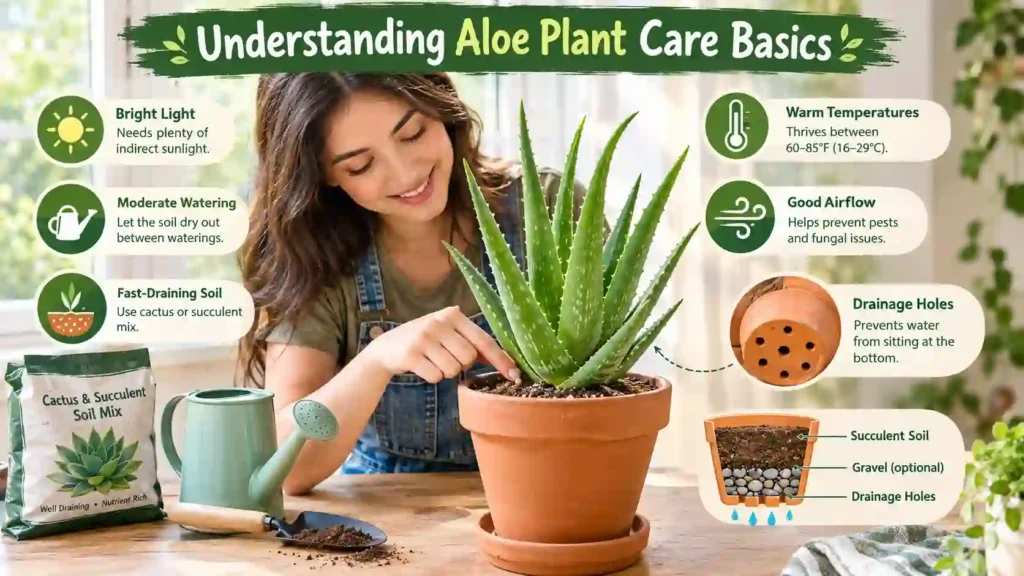
Give your aloe strong light, excellent drainage, dry periods between watering, and protection from freezing temperatures.
Most problems begin when aloe is treated like a thirsty tropical houseplant.
Instead, think like a succulent grower.
Check the soil before watering. Use a pot that drains freely. Watch how the leaves respond to changes in light and moisture. Adjust your routine as the seasons change.
If your aloe develops yellow, soft, wrinkled, or brown leaves, do not immediately add more water or fertilizer.
First, investigate the roots, soil, light, and recent changes in its environment.
Once you understand those signals, how to take care of an aloe plant becomes much easier.
A healthy aloe does not require constant attention. It needs the right conditions and a consistent, observant care routine.