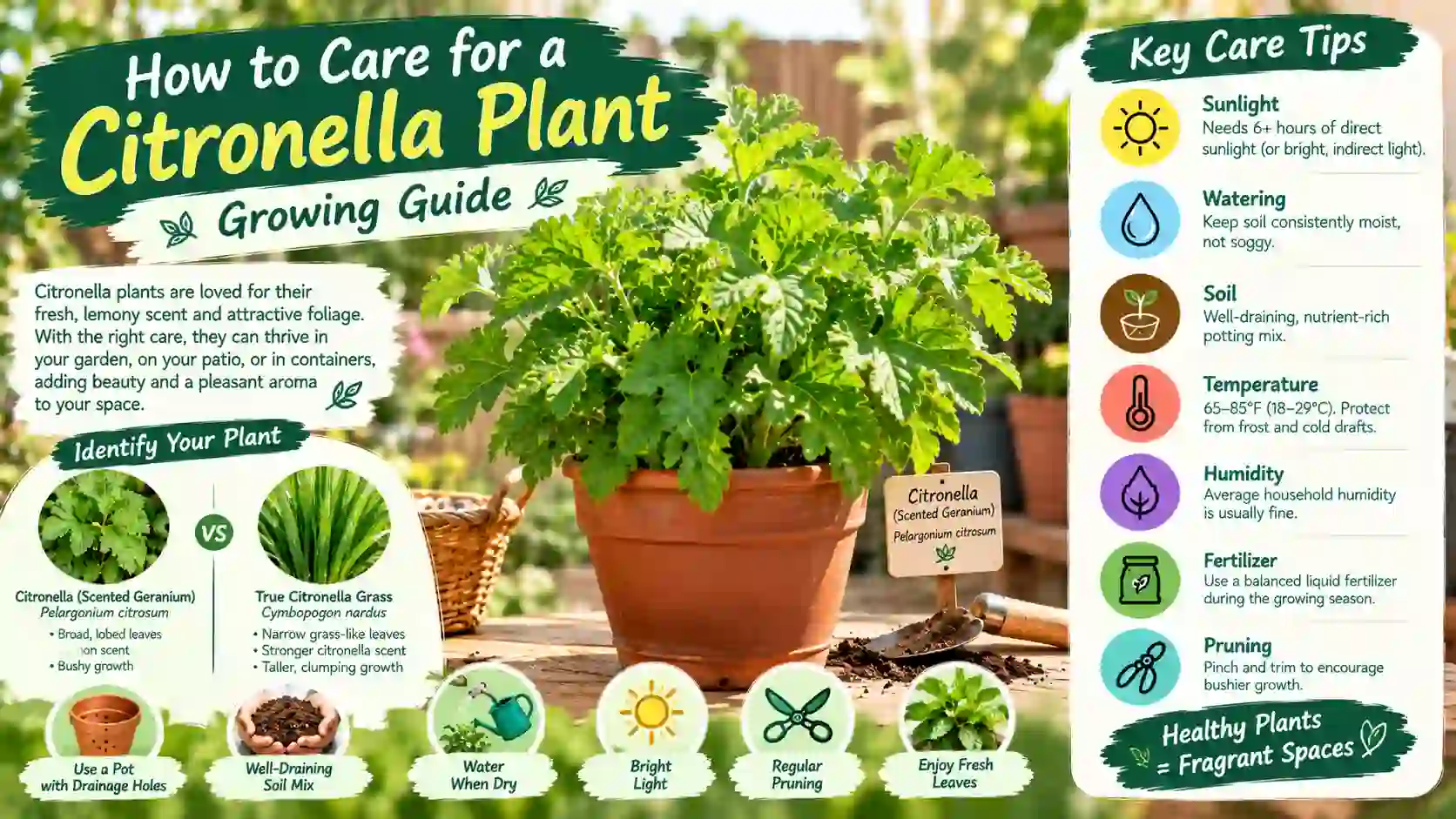
Citronella plants are popular on patios, balconies, and sunny windowsills because of their fresh, lemon-like fragrance. Many gardeners buy them hoping to enjoy aromatic foliage and keep mosquitoes away.
However, knowing how to care for a citronella plant starts with understanding which plant you own. The name is used for two different plants: a scented geranium with soft, lobed leaves and a tall grass grown for its aromatic oil.
Both can thrive with the right conditions, but incorrect watering, insufficient light, poor drainage, and cold weather can quickly weaken them. This guide explains how to identify your plant, maintain healthy growth, troubleshoot common problems, and understand what citronella can realistically do for mosquito control.
Quick Answer:
To care for a citronella plant, give it plenty of sunlight, well-draining soil, and regular watering when the top inch of soil feels dry. Pinch back growing tips to encourage bushier growth, feed lightly during the growing season, and protect the plant from cold temperatures. First, identify your plant: the common “citronella plant” is usually a scented geranium, while true citronella is a tall tropical grass. Their care needs differ.
geranium ‘Citronella’
+2
1. Identify Your Citronella Plant First


6
Before changing your care routine, compare your plant with the two common types sold under the name citronella.

Citronella-scented geranium
Often labeled “citronella plant” or “mosquito plant”
This bushy plant has broad, lobed leaves and a strong citrus scent when the foliage is rubbed. It is commonly grown in containers and needs bright light, well-draining soil, and protection from frost.

True citronella grass
Cymbopogon nardus or related citronella grass
This plant forms a large clump of long, narrow grass blades. It prefers warmth, sun, moisture, and room to grow. It may become quite large, so allow space for its mature size.
The scented geranium is botanically different from true citronella grass. Commercial citronella oil is obtained from citronella grass, not simply from any plant with a lemon-like smell.
UC Agriculture and Natural Resources
+2
The care instructions below focus mainly on the scented geranium commonly sold as a citronella or mosquito plant. A separate section explains how to care for true citronella grass.
Image suggestion: A labeled comparison infographic showing the bushy, lobed-leaf geranium beside tall, narrow-leaf citronella grass.
2. How Much Sunlight Does a Citronella Plant Need?

The citronella-scented geranium grows best in a bright location with several hours of direct sunlight. Around six hours of sun is a useful starting point, although afternoon shade can help in very hot climates.
geranium ‘Citronella’
+1
Best locations
- Outdoors: A sunny patio, balcony, or garden spot with good airflow.
- Indoors: A bright window that receives substantial natural light.
- In hot weather: Morning sun followed by light afternoon shade if leaves scorch.
- During winter: The brightest available window, supplemented with a grow light if necessary.
Signs your plant needs a light adjustment
| Symptom | Possible cause | What to do |
|---|---|---|
| Long, weak stems | Too little light | Move it to a brighter location gradually |
| Sparse foliage | Insufficient light or lack of pruning | Improve light and pinch growing tips |
| Scorched or bleached leaves | Intense sun or sudden exposure | Provide temporary afternoon shade |
| Slow growth indoors | Low light or cool conditions | Improve light and check temperature |
Practical tip: If you move a plant from indoors to a sunny patio, introduce direct sunlight gradually over several days. A sudden change can scorch leaves even when the plant ultimately prefers a sunny position.
Image suggestion: A sunlight infographic showing a citronella geranium in gentle morning sun, bright filtered light, and harsh midday sun.
3. How Often Should You Water a Citronella Plant?
Citronella-scented geraniums prefer moderate moisture and good drainage. They can tolerate some drying between waterings, but prolonged drought during hot weather can cause wilting and leaf loss. Constantly wet soil can damage roots.
North Carolina Extension Gardener Plant Toolbox
+1
The best watering method
- Press your finger about one inch into the soil.
- If the soil feels damp, wait before watering.
- If the top layer feels dry, water slowly around the root zone.
- Continue until excess water drains from the pot.
- Empty the saucer so the roots do not sit in standing water.
Use this as a starting point, not a rigid schedule. A plant in a small pot under hot outdoor conditions may need water much more often than one indoors during winter.
How to recognize watering problems
| Symptom | Possible explanation | Recommended action |
|---|---|---|
| Drooping leaves with dry soil | Underwatering or heat stress | Water thoroughly and reassess the location |
| Yellow leaves and wet soil | Overwatering or poor drainage | Let the soil dry appropriately and inspect drainage |
| Soft, dark stems near the soil | Possible stem or root rot | Remove affected growth and inspect the roots |
| Dry, brown leaf edges | Water stress, hot sun, or dry conditions | Check soil moisture and protect from excessive heat |
A useful rule: Do not water just because the leaves look droopy. Both dry roots and waterlogged roots can cause wilting. Check the soil first.
Image suggestion: A watering infographic showing a finger checking soil, water flowing through drainage holes, and a pot sitting in a dry saucer.
4. Choose Well-Draining Soil and the Right Pot
The scented geranium needs a growing medium that lets excess water escape. Heavy garden soil can compact in containers, reducing airflow around roots.
A practical potting mix
Use a quality container potting mix. If it holds water for too long, blend in perlite or pumice to improve drainage.
Choose a pot with:
- Drainage holes in the bottom.
- Enough room for the existing root ball and some new growth.
- A stable base if the plant will sit outdoors in wind.
- A saucer that can be emptied after watering.
Avoid placing a small plant in an excessively large pot. The extra soil can remain wet long after the roots have used the available moisture.
Should you grow citronella in the ground?
You can plant a scented geranium in a suitable garden bed where the climate allows it. However, a container makes it easier to move the plant indoors before cold weather and control its growing conditions.
True citronella grass needs more space. University of California Agriculture and Natural Resources notes that it can grow approximately 5–6 feet tall and 3–4 feet wide.
UC Agriculture and Natural Resources
+1
5. Temperature and Humidity Requirements
The scented geranium is a tender plant, so cold weather matters more than many beginners expect. It can grow outdoors during warm weather, but freezing temperatures can seriously damage or kill it.
- Warm weather: Keep it in a sunny, sheltered location with good airflow.
- Cold weather: Move container-grown plants into a bright, frost-free space before freezing conditions arrive.
- Indoor humidity: Ordinary household humidity is generally suitable.
- Air circulation: Avoid cramped, stagnant corners where pests and disease can become harder to manage.
The Royal Horticultural Society recommends keeping this cultivar in frost-free, well-lit conditions over winter.
geranium ‘Citronella’
+1
In hot climates, protect the plant from extreme afternoon heat if leaves scorch or the pot dries unusually quickly. In cooler climates, prioritize warmth and light as temperatures fall.
6. How to Fertilize a Citronella Plant
Citronella-scented geraniums do not need heavy feeding. Too much fertilizer can encourage soft growth and cause salt buildup in the potting mix.
A simple feeding routine
- Feed during active growth, usually in spring and summer.
- Use a balanced liquid fertilizer suitable for container plants.
- Follow the product label and avoid applying a stronger mixture than recommended.
- Reduce feeding when growth slows during cooler, darker periods.
- If the soil develops a white crust or leaf tips begin to burn, review fertilizer use and water quality.
Plants growing in fresh, nutrient-containing potting mix may need little additional fertilizer initially. Follow the plant’s growth rather than feeding automatically every week.
Expert tip: If the plant is leggy, improve its light and prune it before increasing fertilizer. Nutrients cannot compensate for insufficient sunlight.
7. How to Prune a Citronella Plant for Bushier Growth

Pruning helps the plant develop a more compact shape instead of producing a few long, sparse stems. It also lets you remove damaged growth and keep the plant manageable in a pot.
Step-by-step pruning
- Inspect the plant and identify long, weak, or overcrowded stems.
- Use clean, sharp scissors or pruning snips.
- Trim just above a leaf node to encourage branching.
- Remove dead leaves and spent flowers.
- Avoid removing too much foliage at once, especially when the plant is stressed.
The RHS recommends trimming as required and removing spent flowers.
geranium ‘Citronella’
How to fix a leggy plant
If the stems are stretched and the leaves are widely spaced, the plant may need more light. Move it to a brighter spot gradually, then trim the longest stems.
Do not prune heavily while the plant is already struggling with root rot, extreme heat, or a major change in environment. Correct the underlying stress first.
Image suggestion: A pruning infographic showing a long stem, a cut above a leaf node, and the new side shoots that can develop.
8. How to Propagate a Citronella Plant From Cuttings
Propagation allows you to grow new plants from healthy stems. The RHS recommends softwood cuttings for scented-leaved pelargoniums.
geranium ‘Citronella’

Propagation steps
- Select a healthy, non-flowering stem with several leaves.
- Cut a short section with clean scissors, making the cut just below a node.
- Remove the leaves from the lower part of the cutting.
- Insert the stem into a small pot containing lightly moist, free-draining propagation mix.
- Place the pot in bright, indirect light in a warm location.
- Keep the mix lightly moist, not saturated.
- Once the cutting develops roots and begins producing new growth, care for it like an established plant.
Avoid placing a fresh cutting in intense sun while it is developing roots. It has limited ability to replace water lost through its leaves.
When is the best time to propagate?
Spring and periods of active growth are convenient times. You can also take cuttings in late summer or autumn, provided you have a suitable warm, bright place for them to establish.
Image suggestion: A step-by-step propagation graphic showing a healthy stem, a cut below a node, the cutting in potting mix, and a rooted young plant.
9. Common Citronella Plant Problems and Solutions
Most problems become easier to solve when you check the soil, light, and stem condition together instead of treating each leaf symptom separately.
| Problem | Likely cause | Solution |
|---|---|---|
| Yellow leaves | Excess moisture, aging leaves, or root stress | Check drainage and soil moisture |
| Brown, crispy leaves | Heat stress, dry soil, or sun scorch | Check watering and adjust sunlight |
| Long, weak stems | Insufficient light | Move to a brighter location and prune |
| Soft, dark stems | Possible rot | Remove affected growth and inspect roots |
| Few flowers | Insufficient light or unsuitable growing conditions | Improve light and review general care |
| Whiteflies or aphids | Pest infestation | Isolate the plant and treat pests promptly |
| Cottony clusters on stems | Possible mealybugs | Remove visible pests and use an appropriate labeled treatment |
Pelargoniums can be affected by aphids, whiteflies, spider mites, mealybugs, and certain fungal or bacterial diseases. Regularly checking leaf undersides and stem joints helps catch problems early.
geranium ‘Citronella’
+1
How to investigate possible root rot
If the plant continues to wilt despite wet soil, or its lower stems become soft, check the roots.
- Slide the root ball carefully out of its container.
- Look for dark, mushy roots rather than firm, healthy roots.
- Trim rotten portions using clean tools.
- Repot the remaining healthy plant in fresh, well-draining mix.
- Water carefully and ensure the pot drains freely.
If most of the root system has deteriorated, taking healthy stem cuttings may be the best way to preserve the plant.
10. How to Care for Citronella Grass
If your plant has long, narrow grass blades rather than lobed geranium leaves, use a different care routine.

True citronella grass is a tropical, clump-forming grass. It needs warmth, adequate sunlight, consistent moisture during active growth, and enough space to develop.
- Light: Provide a sunny location, adjusting for extreme heat.
- Water: Water regularly during active growth, keeping the soil moist but not waterlogged.
- Soil: Use fertile, well-draining soil.
- Space: Allow room for a large clump to spread and mature.
- Cold protection: Protect it from frost and prolonged cold.
- Maintenance: Remove dead blades and divide crowded clumps when appropriate.
True citronella grass can become several feet tall and wide, so a small windowsill pot may not be suitable long term.
UC Agriculture and Natural Resources
+1
11. Does a Citronella Plant Really Repel Mosquitoes?
This is an important point because many plants are sold under the name “mosquito plant.”
Growing a citronella-scented geranium nearby is not a reliable way to keep mosquitoes away. Its leaves release a lemon-like fragrance when brushed or crushed, but that scent does not provide dependable protection simply because the plant is sitting on a patio. University of California Agriculture and Natural Resources explains that the geranium variety has not proved effective as a mosquito repellent.
UC Agriculture and Natural Resources
True citronella grass contains oil used in some commercial insect-repellent products. However, the presence of a living plant does not mean it provides the same protection as a tested repellent formulation.
For more reliable mosquito control:
- Remove standing water where mosquitoes can breed.
- Use an appropriate, registered insect repellent according to its label.
- Repair screens and use physical barriers where practical.
- Do not apply concentrated essential oils directly to skin without checking their safety instructions.
Grow the plant for its attractive foliage and fragrance, but do not rely on it as your only mosquito-control measure.
12. Is the Citronella Plant Toxic to Pets?
Use caution if you have cats, dogs, or children who may chew the leaves. North Carolina State Extension identifies pelargoniums as plants with low-severity poisoning characteristics, including possible digestive upset after ingestion. Skin irritation can also occur in sensitive people.
North Carolina Extension Gardener Plant Toolbox
Keep the plant out of reach of pets, wash your hands after pruning if the sap irritates your skin, and do not assume the leaves are safe to eat or use in homemade remedies.
If a pet eats the plant and becomes unwell, contact a veterinarian for advice.
13. Seasonal Citronella Plant Care
| Season | What to focus on |
|---|---|
| Spring | Resume active-growth care, prune weak stems, and repot if needed |
| Summer | Monitor soil more often, provide suitable sunlight, and trim overgrowth |
| Autumn | Reduce feeding as growth slows and prepare to protect the plant from cold |
| Winter | Keep the scented geranium frost-free, provide strong light, and water sparingly if growth slows |
For gardeners in warm climates, the plant may remain outdoors for much of the year. In cooler regions, bring container-grown scented geraniums inside before frost.
geranium ‘Citronella’
+1
14. Frequently Asked Questions
How often should I water a citronella plant?
Check the top inch of soil and water when it feels dry. Water thoroughly, then allow the pot to drain. Temperature, sunlight, soil, and pot size determine how quickly the plant needs water again.
Can I grow a citronella plant indoors?
Yes. Place the scented geranium near a bright window and use a well-draining potting mix. Insufficient light can lead to weak, stretched growth.
Does a citronella plant need full sun?
The scented geranium generally prefers full sun. In very hot weather, afternoon shade may help prevent leaf scorch.
Why is my citronella plant dying?
Common causes include waterlogged soil, poor drainage, insufficient light, cold damage, and pests. Check the soil and roots first, then inspect the stems and leaf undersides.
Can citronella survive winter?
The scented geranium is a tender plant and should be protected from frost. Move it into a bright, frost-free location before freezing weather arrives.
How do I make my citronella plant bushier?
Pinch growing tips or trim long stems just above leaf nodes. Also ensure the plant receives enough sunlight to support compact growth.
Can I grow citronella in a pot?
Yes. A pot with drainage holes is a practical option for the scented geranium. True citronella grass also grows in containers, but it needs more room as it matures.
When should I fertilize a citronella plant?
Feed lightly during active growth in spring and summer. Reduce feeding when growth slows, and follow the fertilizer label to avoid overapplication.
Is citronella grass the same as lemongrass?
No. They are related grasses, but they are different plants with different uses. Check the botanical name on the plant label before assuming it is citronella grass or culinary lemongrass.
Conclusion:
Learning how to care for a citronella plant starts with identifying the plant correctly. The common scented geranium needs bright light, moderate watering, well-draining soil, occasional pruning, and protection from frost. True citronella grass needs more room and a slightly different watering and growing routine.
Check the soil before watering, avoid leaving roots in standing water, and give the plant enough light to grow strongly. If you bought citronella to repel mosquitoes, remember that the living plant is not a dependable substitute for proven mosquito-control methods.