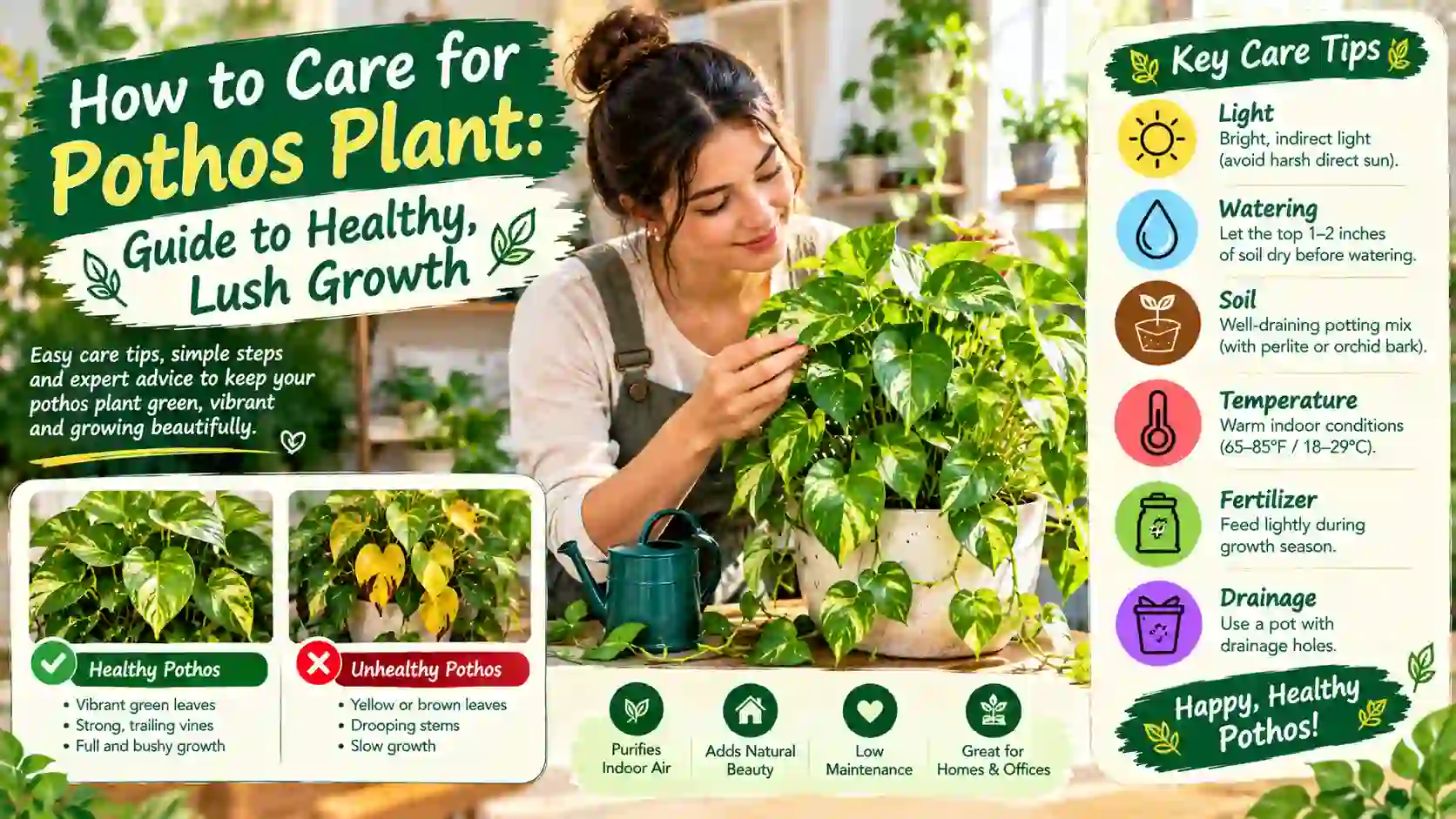
Pothos is one of the most popular houseplants for beginners because it grows attractive trailing vines and adapts to many indoor environments. Its heart-shaped leaves look beautiful on shelves, hanging baskets, desks, and plant stands.
However, an easy-care plant is not an impossible-to-kill plant. Yellow leaves, drooping vines, brown tips, and slow growth can all signal that something in its environment needs attention.
Learning how to care for a pothos plant means understanding a few simple things: how much light it receives, when its soil needs water, whether its roots have enough space, and how to encourage healthy new growth.
Quick Answer:
To care for a pothos plant, place it in bright, indirect light, use well-draining potting soil, and water when the top 1–2 inches of soil feel dry. Keep it in a warm room with moderate humidity, and feed lightly during active growth. Trim long vines to encourage fuller growth, and always use a pot with drainage holes. Pothos tolerates lower light, but brighter indirect light usually supports stronger growth and better leaf variegation.
1. Understand Your Pothos Plant

Pothos (Epipremnum aureum) is a tropical climbing vine commonly grown as a houseplant. It produces aerial roots along its stems, which help it climb surfaces in its natural environment.
Indoors, pothos can trail from hanging baskets or climb a moss pole. Its care requirements are generally straightforward, but different varieties may respond differently to light.
Popular pothos varieties
| Variety | Appearance | Care consideration |
|---|---|---|
| Golden pothos | Green leaves with yellow-gold patches | Adaptable and generally forgiving |
| Marble Queen | Green leaves with creamy-white marbling | Needs brighter indirect light to maintain strong variegation |
| Jade pothos | Mostly solid green leaves | Often tolerates lower light better than highly variegated types |
| Neon pothos | Bright chartreuse or lime-green leaves | Bright indirect light helps maintain vivid color |
| N’Joy pothos | Smaller leaves with distinct white and green sections | Avoid deep shade if you want to preserve variegation |
Practical tip: If a variegated pothos starts producing mostly green leaves, it may need more indirect light. Increase light gradually rather than moving it immediately into harsh direct sunshine.
2. Choose the Right Light for Healthy Leaves

Light influences how quickly pothos grows, how large its leaves become, and how clearly its variegated patterns appear.
How much light does pothos need?
Pothos usually grows best in bright, indirect light. A location near an east-facing window or a few feet from a bright window with filtered sunlight often works well.
It can survive in lower light, but growth may become slower and stems may grow farther apart. Variegated varieties may also lose some of their contrasting colors.
| Light condition | Likely effect on pothos |
|---|---|
| Bright, indirect light | Strong growth and attractive leaf color |
| Medium indirect light | Steady but often slower growth |
| Low light | Slower growth and reduced variegation |
| Harsh direct afternoon sun | Risk of scorched or faded leaves |
Can pothos grow without direct sunlight?
Yes. Pothos does not require direct sun to grow indoors. It needs enough ambient light for photosynthesis, however, so a room that appears bright to people may still be too dim for a plant.
If your pothos has long bare sections between leaves, move it closer to a suitable window or use a grow light.
Where should you place pothos indoors?
Good locations include:
- A shelf near a bright window.
- A hanging basket in a well-lit room.
- A desk with strong indirect daylight.
- A moss pole near a window where the plant can climb.
Avoid placing the plant where cold drafts, hot air from heaters, or intense midday sun repeatedly hit the leaves.
Image suggestion: A light-level infographic comparing bright indirect light, low light, and harsh direct sunlight for pothos.
3. Water Pothos the Right Way

Pothos stores some moisture in its fleshy stems and leaves, so it does not need constantly wet soil. The goal is to water thoroughly, then allow the growing medium to dry partially before watering again.
North Carolina Extension Gardener Plant Toolbox
+1
How often should you water pothos?
There is no universal watering schedule. A pothos in a small pot near a sunny window may dry much faster than one growing in a large pot in a cooler room.
Use this guide as a starting point:
| Condition | Watering approach |
|---|---|
| Spring and summer | Check the soil regularly as growth increases |
| Autumn and winter | Water less often if growth and evaporation slow |
| Small pot or bright room | Check moisture more frequently |
| Large pot or low-light room | Allow more time for the soil to dry |
| Hot, dry weather | Monitor for faster moisture loss |
Step-by-step watering method
- Insert your finger about 1–2 inches into the soil.
- If the upper layer feels dry, check slightly deeper to make sure the root zone is not still saturated.
- When watering is needed, pour water evenly over the soil surface.
- Let excess water drain completely from the bottom.
- Empty the saucer or outer pot so the roots do not sit in standing water.
Do not give the plant tiny amounts of water every day. In most cases, a thorough watering followed by an appropriate drying period encourages healthier roots.
How can you tell if pothos needs water?
A slightly drooping plant with dry soil may need watering. However, drooping can also result from root damage or excessively wet soil.
Important: Always check the soil before watering a wilted pothos. If the soil is wet, adding more water may worsen the problem.
4. Choose Soil That Protects Pothos Roots
Pothos needs a potting medium that holds some moisture without remaining saturated. Dense, compacted soil can restrict airflow and make root rot more likely.
What is the best soil for pothos?
A quality indoor potting mix with good drainage is usually suitable. If your mix stays wet for too long, improve its structure with materials such as perlite or pumice.
A simple starting mix is:
- 2 parts general-purpose indoor potting mix
- 1 part perlite or pumice
Adjust the proportions to suit your environment and the mix you already have. A warm, bright room may dry more quickly than a cool, dim room.
Which pot should you use?
Choose a pot with drainage holes. Plastic pots retain moisture longer, while unglazed terracotta tends to dry faster.
Neither material is automatically better. Match the pot to your watering habits and environment.
When repotting, choose a container only one size larger than the current root ball. A very large pot can hold excess wet soil around a small root system.
Image suggestion: A labeled diagram showing pothos roots in airy potting mix, perlite, and a container with drainage holes.
5. Maintain Comfortable Temperature and Humidity
Pothos is a tropical plant that generally grows well in ordinary indoor temperatures. It appreciates warmth and moderate humidity but usually adapts to typical household conditions.
North Carolina Extension Gardener Plant Toolbox
+1
Ideal temperature
Aim for a comfortable room temperature of approximately 18–29°C (65–85°F). Avoid placing pothos near cold drafts, air-conditioning outlets, or heating vents.
Sudden temperature changes can cause stress and brown patches, particularly when a plant has been growing vigorously.
Does pothos need high humidity?
Pothos can tolerate average household humidity. Higher humidity may support larger, healthier-looking leaves, but you do not need to mist it every day.
If the air is very dry, consider using a room humidifier. Keep enough space between plants for air circulation, and avoid leaving foliage wet for long periods.
Pothos care in hot climates
In hot regions, including parts of Pakistan, indoor conditions can change quickly when sunlight heats windows or air-conditioning runs for long periods.
To keep pothos comfortable:
- Use bright, filtered light rather than harsh midday sun.
- Check soil moisture more often during hot weather.
- Keep leaves away from direct air-conditioning airflow.
- Avoid moving the plant abruptly between very different temperatures.
- Watch for dry leaf edges if the air is especially hot or dry.
6. Fertilize Pothos Without Overfeeding
Fertilizer supports new leaves and vine growth, but more is not always better. Pothos can grow well without heavy feeding, especially when its potting mix contains nutrients.
When should you fertilize pothos?
Feed during active growth, usually in spring and summer. Use a balanced houseplant fertilizer diluted according to the product label.
Reduce or stop feeding when growth slows in cooler, darker months. Avoid fertilizing a plant that is severely wilted, has damaged roots, or has recently been repotted into fresh, nutrient-rich soil.
Signs of fertilizer problems
Excess fertilizer can cause brown leaf tips, damaged roots, and a buildup of salts in the potting mix. If you suspect overfertilizing, stop feeding and review the label and watering routine.
If the pot has good drainage and the roots are healthy, flushing the mix with clean water may help remove excess soluble salts. Allow all excess water to drain away.
Expert tip: If pothos growth is slow, check light levels first. Fertilizer cannot compensate for a plant that receives too little light.
7. Prune Pothos for Fuller, Bushier Growth

Pothos naturally produces trailing vines. Over time, the plant may become long and sparse, particularly when light is limited or older leaves have fallen off.
Pruning encourages a tidier shape and gives you cuttings to propagate.
How to prune pothos
- Inspect the vines and identify long, bare, or damaged sections.
- Use clean, sharp scissors or pruning shears.
- Cut just above a leaf node, where a leaf and aerial root emerge from the stem.
- Remove dead or yellow leaves if they do not recover.
- Rotate the pot occasionally so all sides receive suitable light.
New growth may develop from nodes below the cut, although the exact response depends on the plant’s condition.
How do you make pothos look fuller?
A useful trick is to root healthy cuttings and plant them back into the same pot once they have developed roots. This creates more growing points and can make the container look fuller than simply letting one or two vines grow longer.
Improving light also helps prevent the new growth from becoming stretched and sparse.
Image suggestion: A before-and-after infographic showing a long, sparse pothos vine, the correct pruning point, and a fuller plant with rooted cuttings.
8. How to Repot Pothos
Pothos does not need frequent repotting, but it eventually outgrows its container or uses up the structure of its potting mix.
Signs your pothos needs repotting
- Roots are emerging through the drainage holes.
- The root ball is tightly packed with little soil remaining.
- Water runs through the pot unusually quickly because the mix has become difficult to rewet.
- The plant dries out much faster than it used to.
- Growth slows despite suitable light, watering, and feeding.
Roots emerging from a drainage hole alone do not always mean urgent repotting is necessary. Check the whole root ball and the plant’s overall condition.
Repotting steps
- Select a pot with drainage holes, one size larger than the current container.
- Slide the plant out carefully and inspect the roots.
- Trim away roots that are clearly dead or mushy using clean tools.
- Add fresh, well-draining potting mix.
- Position the plant at the same depth as before and fill around the roots.
- Water thoroughly and let excess water drain away.
- Return the plant to bright, indirect light while it adjusts.
Avoid fertilizing heavily immediately after repotting. Give the plant time to settle into its new container.
9. Propagate Pothos from Stem Cuttings

One reason pothos is so popular is that it is easy to propagate from stem cuttings. You can grow new plants for your home or add rooted cuttings to an existing pot.
How to propagate pothos in water
- Choose a healthy vine with several leaves.
- Cut a section that includes at least one node. A node is the small point on the stem where a leaf and aerial root may emerge.
- Remove any leaves that would sit underwater.
- Place the node in a clean glass of water, keeping the leaves above the surface.
- Put the glass in bright, indirect light.
- Replace the water when it becomes cloudy and refill it as needed.
- Once the roots have developed enough to handle planting, transfer the cutting to moist potting mix.
Rooting time varies with warmth, light, and the condition of the cutting. Avoid judging success by a fixed number of days.
Can pothos grow in water permanently?
Yes, pothos can grow in water for extended periods, provided the setup is maintained properly. However, water-grown plants need suitable nutrient management if they are to remain healthy over time.
If you want a conventional potted plant, transfer the cutting into soil after it develops a healthy root system.
Can you propagate pothos directly in soil?
Yes. Insert a cutting with at least one node into moist, well-draining potting mix. Keep it lightly moist while roots develop, but do not saturate the soil.
Image suggestion: A step-by-step propagation infographic showing a pothos stem, a clearly marked node, water-rooted cuttings, and a newly potted plant.
10. Troubleshooting Common Pothos Problems

When a pothos plant looks unhealthy, avoid changing every part of its care at once. Start with the soil moisture, lighting, and roots, then consider pests or nutrient problems.
| Symptom | Possible cause | What to do |
|---|---|---|
| Yellow leaves | Overwatering, natural aging, or root stress | Check soil moisture and drainage; remove fully yellow leaves |
| Brown, crispy edges | Dry soil, low humidity, salt buildup, or sun damage | Check watering, inspect light exposure, and review fertilizer use |
| Soft, drooping leaves | Underwatering or damaged roots | Check whether the soil is dry or wet before watering |
| Long vines with few leaves | Insufficient light or older growth | Increase suitable light and prune sparse sections |
| Loss of variegation | Light levels are too low for the variety | Move gradually to brighter indirect light |
| Black or mushy stems | Possible rot from prolonged wetness | Inspect roots, remove damaged tissue, and correct drainage |
| Tiny insects or webbing | Possible pest infestation | Inspect leaf undersides and isolate the plant if needed |
| Slow growth | Low light, root crowding, seasonal slowdown, or poor growing conditions | Check light, roots, temperature, and watering before feeding |
Why are my pothos leaves turning yellow?
Yellow leaves have several possible causes, but consistently wet soil is an important one to investigate.
Check the soil several centimeters below the surface. If it remains wet for many days, review the pot’s drainage, soil structure, and watering frequency.
One older leaf turning yellow occasionally may simply be natural aging. Widespread yellowing, especially alongside a wet potting mix or soft stems, deserves closer attention.
North Carolina Extension Gardener Plant Toolbox
+1
Why is my pothos drooping?
A drooping pothos may be thirsty, but it may also have roots damaged by overwatering.
- Dry soil and limp leaves: Water thoroughly and allow excess water to drain.
- Wet soil and drooping leaves: Hold off watering and investigate drainage and root health.
- Drooping after a move: Check temperature, light, and recent environmental changes.
A wilted plant does not automatically need more water. Checking the soil first is the most useful diagnostic step.
Why are my pothos leaves turning brown?
Brown tips or patches can develop from inconsistent watering, excessive fertilizer salts, low humidity, direct sunlight, or cold stress.
Look at the pattern. Crispy edges may point toward dryness or salt buildup, while isolated bleached patches on the window-facing side may suggest sun damage. Correct the likely cause before trimming damaged tissue.
How do you treat pests on pothos?
Common houseplant pests include mealybugs, scale insects, and spider mites. Inspect stems, leaf joints, and the undersides of leaves.
For a small infestation:
- Separate the plant from other houseplants.
- Remove visible pests using an appropriate method.
- Clean the leaves and inspect nearby plants.
- If needed, use a product labeled for the specific pest and houseplant, following all label directions.
- Repeat inspections because some pests return after the first treatment.
11. Seasonal Pothos Care
Pothos does not usually have a dramatic winter dormancy indoors, but its growth can slow when light and temperatures decrease.
| Season | Recommended care |
|---|---|
| Spring | Check whether the plant needs repotting, resume regular feeding if growth increases, and prune long vines |
| Summer | Monitor soil moisture more often in warm rooms and protect leaves from harsh direct sun |
| Autumn | Reduce fertilizer as growth slows and inspect the plant for pests |
| Winter | Water less frequently when the soil dries slowly, keep the plant away from cold drafts, and provide adequate light |
In hot climates, indoor air-conditioning can create a different problem from outdoor heat. A plant near a cold air outlet may experience temperature stress even when the room feels comfortable.
Practical approach: Let the plant’s growth and soil moisture guide your routine. The calendar is a useful reminder, not a substitute for checking the plant.
12. Is Pothos Safe for Pets and Children?
Pothos is toxic if chewed or ingested by cats and dogs. It contains insoluble calcium oxalate crystals that can irritate the mouth and digestive tract. Signs may include oral pain, drooling, vomiting, and difficulty swallowing.
ASPCA
+1
Keep trailing vines and fallen leaves out of reach of pets and young children. Hanging the plant higher may help, but it is not a guarantee if a pet can reach dangling stems or fallen foliage.
If a pet chews or eats pothos, contact a veterinarian for guidance, especially if symptoms develop. Seek urgent veterinary care for breathing difficulty or significant trouble swallowing.
When pruning or propagating the plant, wash your hands afterward and keep cuttings away from curious animals.
13. Common Pothos Care Mistakes to Avoid
Small changes in routine can make a significant difference to the plant’s health.
- Watering too frequently: Allow the top layer of soil to dry before watering again.
- Using a pot without drainage: Excess water can collect around the roots.
- Keeping pothos in very dark corners: It may survive, but growth and variegation can suffer.
- Exposing leaves to harsh direct sun: Strong sunlight can scorch foliage.
- Fertilizing to fix every problem: Poor light and root damage cannot be corrected with fertilizer.
- Repotting into a pot that is far too large: Excess soil can remain wet around the roots.
- Ignoring leaf undersides: Pests can develop unnoticed.
- Expecting every leaf to remain forever: Older leaves naturally age and may drop as the plant grows.
The most reliable care routine is simple: check light, feel the soil, inspect new growth, and make one adjustment at a time.
Frequently Asked Questions About Pothos Care
1. How often should I water my pothos plant?
Water when the top 1–2 inches of soil feel dry and the deeper root zone is not saturated. The interval depends on light, temperature, pot size, and soil type, so checking moisture is more reliable than following a fixed weekly schedule.
2. Is pothos a good indoor plant for beginners?
Yes. Pothos tolerates a range of indoor conditions and is relatively easy to propagate. Beginners will get the best results by providing indirect light, well-draining soil, and careful watering.
3. Can pothos grow in low light?
Yes, pothos can survive in lower light than many houseplants, but it generally grows more slowly. Variegated varieties may also develop greener leaves. Bright, indirect light is better for strong growth.
4. Why is my pothos growing long vines but not many leaves?
Low light, sparse growth habits, and older vines can contribute to a leggy appearance. Improve the light and prune long, bare sections. Rooting healthy cuttings and planting them back into the pot can help create a fuller display.
5. Should I mist my pothos plant?
Usually, no. Pothos can grow in normal household humidity without daily misting. If the air is very dry, a humidifier may be more useful than misting, which raises humidity only briefly.
6. What is the best fertilizer for pothos?
A balanced liquid houseplant fertilizer is suitable for most potted pothos. Use it according to the label during active growth and avoid overfeeding. Healthy plants in nutrient-rich potting mix may need little additional fertilizer.
7. Can pothos live in a bathroom?
Yes, if the bathroom receives enough natural or artificial light and has reasonable airflow. Humidity can be beneficial, but a dark bathroom without suitable grow lighting may not support healthy growth.
8. How do I make pothos leaves bigger?
Provide adequate light, consistent but not excessive watering, healthy roots, and room to climb. In nature, mature climbing pothos can develop much larger leaves, but ordinary indoor trailing plants often retain smaller juvenile foliage.
9. When should I repot my pothos?
Repot when the root system becomes crowded, the potting mix deteriorates, or the plant dries out unusually quickly. Choose a container only one size larger and make sure it has drainage holes.
10. Can I grow pothos from a single leaf?
A leaf without a stem node generally will not produce a new vine. Choose a cutting that includes at least one node, because that is where new roots and shoots can develop.
11. Is pothos toxic to cats and dogs?
Yes. Pothos contains insoluble calcium oxalate crystals that can cause mouth irritation, drooling, vomiting, and swallowing discomfort if chewed or ingested. Keep it out of pets’ reach.
ASPCA
+1
12. Can pothos grow outdoors?
Pothos can grow outdoors in suitable warm, frost-free conditions with filtered light and good drainage. Protect it from cold temperatures and harsh direct sunlight, and check whether it is considered invasive in your area before planting it outdoors.
Conclusion:
Learning how to care for a pothos plant does not require a complicated schedule or expensive products. The most important steps are to provide bright, indirect light, water only when the soil has dried appropriately, use a well-draining potting mix, and prune vines when they become sparse.
If your plant develops yellow leaves, brown tips, or drooping stems, check the soil and roots before changing your watering routine. Small, targeted adjustments are usually more useful than adding more water or fertilizer.
With consistent care, pothos can produce attractive trailing vines for shelves, hanging baskets, and indoor plant displays. Remember to keep the plant away from pets that may chew its leaves, and use healthy stem cuttings to grow new plants whenever you want a fuller arrangement.