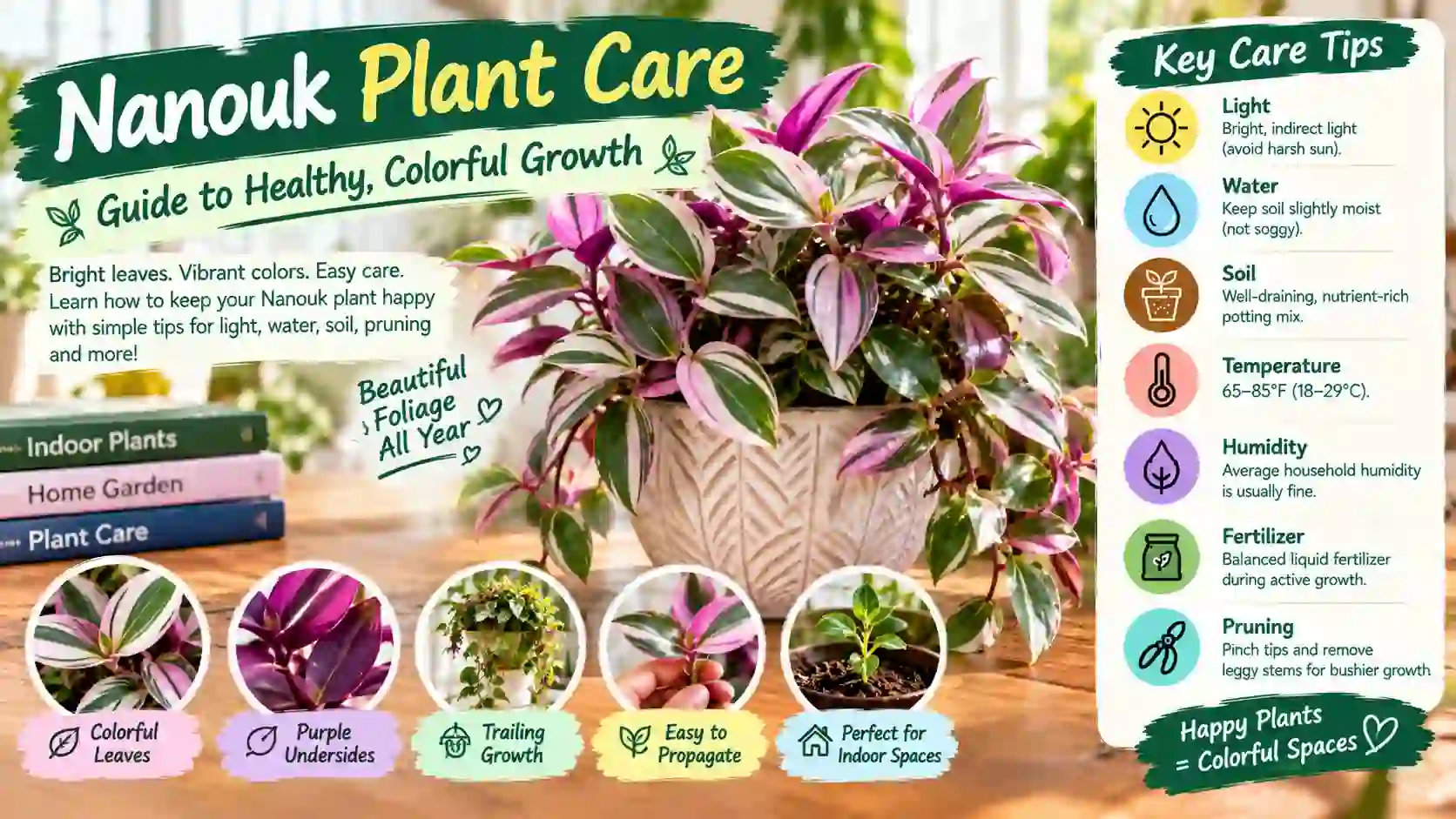
The Nanouk plant is a striking houseplant known for its thick stems and beautiful pink, green, cream, and purple-striped leaves. It adds color to shelves, desks, windowsills, and hanging planters without requiring complicated care.
Its botanical name is commonly written as Tradescantia albiflora ‘Nanouk’. You may also see it sold as Tradescantia Nanouk or Fantasy Venice. It is a cultivated variety of Tradescantia grown mainly for its decorative foliage.
flowering inch plant ‘Nanouk’
+1
Although Nanouk is often considered beginner-friendly, it can develop brown leaf tips, faded colors, bare stems, or soft, rotting growth when its growing conditions are unsuitable.
The key is to balance light and moisture. Give it enough light to preserve its colorful stripes, but avoid keeping its roots constantly wet.
Quick Answer:
Nanouk plant care is easiest when you provide bright, indirect light, well-draining soil, and careful watering. This colorful Tradescantia has pink, cream, green, and purple foliage that looks best in a bright room away from harsh afternoon sun. Water when the top inch of soil feels dry, use a pot with drainage holes, and pinch back long stems to encourage fuller growth.
flowering inch plant ‘Nanouk’
+1
1. Understanding the Nanouk Plant


10
Nanouk is a trailing, evergreen houseplant in the spiderwort family, Commelinaceae. Its fleshy stems and broad, striped leaves make it especially attractive in decorative pots.
What makes Nanouk special?
- Colorful foliage: Pink and cream stripes contrast with green leaves and purple undersides.
- Trailing growth: Stems can spill over pot edges as the plant matures.
- Easy propagation: Healthy stem cuttings can produce roots without much effort.
- Compact growth potential: Regular pinching helps maintain a fuller shape.
- Indoor versatility: It grows well in bright rooms, on suitable windowsills, and in hanging baskets.
One important detail: Nanouk’s pink coloring is not guaranteed to remain equally vivid in every room. Light levels, plant maturity, and the health of new growth all influence its appearance.
Image suggestion: A labeled botanical infographic identifying Nanouk’s pink stripes, purple leaf undersides, fleshy stems, and trailing growth.
2. How Much Light Does a Nanouk Plant Need?

Nanouk grows best in bright, indirect light. Gentle morning sunshine can be beneficial, but strong afternoon sun through glass may scorch its leaves.
flowering inch plant ‘Nanouk’
+1
Best locations for Nanouk
- Near an east-facing window with gentle morning sunlight.
- A few feet from a bright south- or west-facing window, depending on intensity.
- In a bright room with filtered daylight.
- Under a suitable grow light if natural light is limited.
In very hot climates, use a sheer curtain or move the plant slightly farther from the window during intense afternoon sun.
How to recognize light problems
| Symptom | Possible cause | What to do |
|---|---|---|
| Long, stretched stems | Insufficient light | Move to a brighter location gradually |
| Less vivid pink coloring | Often insufficient light | Increase bright, indirect light |
| Bleached or crispy patches | Excessive direct sunlight | Filter the sun or move the plant |
| Slow, weak growth | Low light or other growing problems | Review light, watering, and roots |
Expert tip: Rotate the pot a quarter turn every week or two. This helps the plant receive light more evenly and reduces one-sided growth.
Do not move a plant from a dim room straight into strong sunlight. Increase exposure gradually to reduce leaf scorch.
3. How to Water a Nanouk Plant Correctly
Watering is one of the most important parts of Nanouk plant care. Its stems and leaves are somewhat fleshy, but that does not mean it should be left in dry soil for long periods or kept constantly wet.
When should you water Nanouk?
Check the soil rather than following a fixed calendar. As a starting point, water when the top inch of potting mix feels dry. A small pot in a warm, bright room may dry much faster than a larger pot in a cool room.
Step-by-step watering method
- Touch the top inch of soil with your finger.
- If it is still damp, wait and check again later.
- If it feels dry, water the soil evenly until excess water drains from the bottom.
- Empty the saucer or decorative outer pot so the roots do not sit in water.
- Check the soil more frequently during warm, bright weather and less often in winter.
The Royal Horticultural Society recommends moderate watering during active growth and reduced watering in winter.
flowering inch plant ‘Nanouk’
+1
Signs of watering problems
Brown, crispy leaf edges
The soil may be drying too much between waterings, or the plant may be stressed by heat or direct sun. Check soil moisture before increasing watering.

Soft stems and persistently wet soil
These can indicate overwatering or root rot. Check the drainage and roots rather than adding more water.

Firm leaves and steady new growth
These are encouraging signs that the plant is coping well with its current routine. Continue checking the soil instead of watering automatically.
Image suggestion: A three-panel infographic comparing an underwatered Nanouk, an overwatered Nanouk, and a healthy plant.
4. Best Soil and Pot for Nanouk
Nanouk needs soil that retains some moisture but allows excess water to escape. Dense, waterlogged soil deprives roots of oxygen and increases the risk of rot.
Recommended potting mix
A practical mix for indoor Nanouk includes:
- Two parts quality indoor potting mix.
- One part perlite or pumice for better drainage.
- Optional fine orchid bark if your mix stays wet for too long.
Mix ratios are flexible. The goal is an airy medium that holds enough water for the roots without becoming soggy.
Choosing the right pot
Select a container with drainage holes. A pot that is only slightly larger than the root ball is usually safer than a very large container because excess soil can remain wet for too long.
Avoid planting Nanouk in a decorative pot without drainage unless you use it as an outer cover for a separate draining nursery pot.
Practical tip: If the soil remains wet for many days, check drainage, light, room temperature, and pot size before changing the watering schedule. Waterlogged soil is not always caused by watering too frequently; compacted mix can be part of the problem.
Image suggestion: An educational diagram showing Nanouk roots in airy potting mix, perlite, and a container with drainage holes.
5. Ideal Temperature and Humidity
Nanouk generally grows well in comfortable indoor temperatures. Avoid sudden temperature changes, cold drafts, and intense heat from radiators or air-conditioning vents.
| Condition | Practical recommendation |
|---|---|
| Temperature | Aim for ordinary warm indoor conditions, around 18–27°C (65–80°F) |
| Humidity | Average household humidity is usually adequate |
| Cold protection | Keep away from cold windows and chilly drafts |
| Air circulation | Provide gentle airflow without placing the plant in a strong draft |
The RHS recommends a sheltered position and filtered light for this cultivar.
flowering inch plant ‘Nanouk’
+1
If your home becomes very dry, especially during heating or hot weather, brown edges and spider mites may become more likely. A humidifier can help if the air is consistently dry, but avoid leaving the foliage wet for long periods.
6. How to Fertilize Nanouk for Healthy Growth
Nanouk does not need heavy feeding. Too much fertilizer can cause salt buildup in the potting mix and damage leaf tips.
A simple feeding routine
- Feed during active growth, usually spring and summer.
- Use a balanced liquid houseplant fertilizer diluted according to its label.
- Apply it to appropriately moist soil rather than to a completely dry root ball.
- Reduce or stop feeding when growth slows in winter.
- If you notice a crust of fertilizer salts on the soil, review your feeding routine and flush the mix with clean water if drainage is good.
The RHS recommends liquid feeding about monthly during active growth.
flowering inch plant ‘Nanouk’
+1
Avoid this mistake: Do not increase fertilizer simply because the plant is losing its pink color. Faded variegation is more often a reason to review light exposure than to add nutrients.
7. How to Prune Nanouk and Make It Bushier

Nanouk often grows long stems that eventually look sparse near the pot. This is not necessarily a sign that the plant is unhealthy. Regular pruning helps encourage branching and keeps the display compact.
How to prune Nanouk
- Choose a long or leggy stem.
- Use clean, sharp scissors to cut just above a healthy node.
- Pinch or trim growing tips to encourage side shoots.
- Remove damaged, yellow, or rotting leaves.
- Keep healthy cuttings for propagation and replant them in the same pot if you want a fuller appearance.
What if the plant has bare stems?
Moving a plant into better light may improve future growth, but bare sections do not always fill in again. Trim healthy tips and root them to create new growth near the soil surface.
What if a stem becomes plain green?
Nanouk is valued for its variegated foliage. If a shoot produces only plain green leaves, remove it if you want to preserve the plant’s colorful appearance. The RHS specifically recommends removing plain green shoots from variegated cultivars.
flowering inch plant ‘Nanouk’
+1
Image suggestion: A step-by-step pruning infographic with a stem node, a clean cut, and several replanted cuttings.
8. How to Propagate Nanouk From Cuttings
Propagation is one of the easiest ways to refresh a thin Nanouk or grow another plant. Tradescantia stems root readily from cuttings.
North Carolina Extension Gardener Plant Toolbox
+1

Method A: Root cuttings in water
- Select a healthy stem with several leaves and at least one or two nodes.
- Cut just below a node with clean scissors.
- Remove leaves from the portion that will sit underwater.
- Place the cutting in a clean glass of water, keeping leaves above the surface.
- Set it in bright, indirect light.
- Refresh the water when it becomes cloudy or dirty.
- Once roots are established, pot the cutting in a well-draining mix.
Method B: Root cuttings directly in soil
- Take a healthy cutting with at least one node.
- Remove leaves from the lower portion of the stem.
- Insert the node into lightly moist potting mix.
- Keep the pot warm and in bright, indirect light.
- Maintain light moisture while roots develop, without saturating the soil.
- Check for new growth as the cutting establishes itself.
How to make the original pot look fuller
Instead of keeping every cutting in a separate container, root several healthy cuttings and plant them around the original plant. This fills empty spaces and creates a more balanced display.
Do not pull cuttings out every day to check for roots. Give them time to establish, and avoid repeatedly disturbing the stems.
Image suggestion: A two-panel propagation infographic comparing water rooting and soil rooting.
9. Common Nanouk Plant Problems and How to Fix Them
When Nanouk starts looking unhealthy, examine its newest leaves, stem firmness, and soil moisture together. A single symptom rarely tells the whole story.
| Problem | Likely causes | What to do |
|---|---|---|
| Brown leaf tips | Dry soil, strong sun, or low humidity | Check soil moisture and reduce harsh sun |
| Yellowing leaves | Excess moisture, aging leaves, or root stress | Check drainage and inspect roots if the problem spreads |
| Soft or mushy stems | Persistent wet soil or stem rot | Remove damaged growth and check the roots |
| Long, bare stems | Low light or lack of pruning | Increase indirect light and trim healthy stems |
| Faded pink stripes | Insufficient light or changes in new growth | Move to a brighter spot gradually |
| Crispy, bleached patches | Sun scorch | Filter direct sun and protect leaves |
| Fine webbing or speckled leaves | Possible spider mites | Isolate the plant and inspect leaf undersides |
| Cottony clusters | Possible mealybugs | Isolate the plant and treat the pests promptly |
Root rot can occur when Tradescantia soil remains too wet, while aphids and spider mites can also affect these plants.
North Carolina Extension Gardener Plant Toolbox
+1
How to check for root rot
If the soil stays wet and stems soften near the base:
- Remove the plant carefully from its pot.
- Look for roots that are dark, mushy, or unpleasant-smelling.
- Trim rotten roots and stems with clean tools.
- Repot healthy remaining growth in fresh, airy potting mix.
- Water carefully and allow excess water to drain.
If the base is badly rotted but healthy tips remain, propagating those tips may be the most reliable way to save the plant.
10. Seasonal Nanouk Plant Care
Nanouk’s needs change with the amount of light and warmth it receives. Adjust care to the plant’s growth rather than following a rigid monthly schedule.

Spring
As new growth resumes, review the soil, resume light feeding, prune leggy stems, and repot if the roots have outgrown the container.
Summer
Check soil more often because warmth and brighter light can speed drying. Protect the leaves from intense afternoon sun and trim overlong stems.

Autumn
Growth may slow as daylight decreases. Reduce fertilizer when active growth fades and avoid watering by summer habits.

Winter
Keep it warm and away from cold drafts. Water less often if the soil takes longer to dry, and provide brighter indirect light when possible.
11. Is Nanouk Toxic to Cats, Dogs, or People?
It is safest to keep Nanouk out of reach of pets and small children. The RHS notes that this cultivar can cause skin irritation, and North Carolina State Extension reports that related Tradescantia fluminensis plants can irritate skin and may be harmful if ingested. The ASPCA also lists T. fluminensis as toxic to cats and dogs. These sources concern Nanouk or closely related Tradescantia plants, so avoid assuming the plant is pet-safe.
flowering inch plant ‘Nanouk’
+2
- Wear gloves if the sap irritates your skin.
- Wash your hands after pruning or handling damaged stems.
- Keep fallen leaves and cuttings away from curious pets.
- If a pet eats the plant and develops symptoms, contact a veterinarian for advice.
12. Common Mistakes to Avoid
Even a healthy Nanouk can decline if a few small problems become routine.
- Watering on a fixed schedule: Check soil moisture before watering. Indoor conditions change how quickly the pot dries.
- Keeping the plant in dim light: Low light can lead to stretched stems and less colorful new foliage.
- Using a pot without drainage: Excess water can accumulate around the roots.
- Applying too much fertilizer: Heavy feeding can damage leaf tips and cause salt buildup.
- Ignoring bare stems: Pruning and replanting healthy cuttings can restore a fuller appearance.
- Moving the plant into harsh sunlight suddenly: Acclimate it gradually to brighter conditions.
- Repotting into an oversized container: Too much unused wet soil increases the risk of root problems.
- Mistaking every yellow leaf for a watering problem: Older leaves naturally age, so look for patterns and inspect the soil before changing care.
13. Frequently Asked Questions About Nanouk Plant Care
How often should I water my Nanouk plant?
Water when the top inch of soil feels dry, then water thoroughly and let excess drain. The exact interval depends on light, temperature, pot size, and soil composition.
Does Nanouk need direct sunlight?
No. Bright, indirect light is best. Gentle morning sun may be suitable, but strong afternoon sunlight can scorch the leaves.
Why is my Nanouk losing its pink color?
Insufficient light is a common reason for less vivid variegation. Move it to a brighter location with filtered light and monitor the color of new growth.
Can Nanouk grow indoors?
Yes. Nanouk is commonly grown indoors in bright, indirect light. A windowsill, bright shelf, or hanging planter can work well if the plant receives enough light and the pot drains properly.
How do I make my Nanouk plant bushier?
Pinch or trim the growing tips above healthy nodes. Root the healthy cuttings and plant them back into the pot to fill empty spaces.
Can I propagate Nanouk in water?
Yes. Place a healthy stem cutting with at least one node in clean water, keeping its leaves above the waterline. Once roots develop, transfer it to potting mix if desired.
Why does my Nanouk have brown leaf tips?
Possible causes include dry soil, excessive direct sunlight, low humidity, or root stress. Check the soil and light exposure before changing several care conditions at once.
Should I mist my Nanouk plant?
Routine misting is unnecessary. It does not reliably raise humidity for long, and keeping foliage wet for extended periods is best avoided. Focus on suitable light, watering, and airflow.
When should I repot Nanouk?
Repot when roots emerge from drainage holes, the root ball becomes crowded, or the potting mix stops draining well. Spring is a convenient time, and moving up just one pot size is usually sufficient.
Is Nanouk safe for cats and dogs?
Do not assume it is pet-safe. Related Tradescantia plants are listed as toxic to cats and dogs by the ASPCA, and handling the sap may irritate skin. Keep the plant out of reach and consult a veterinarian if your pet eats it.
ASPCA
+1
Conclusion
Successful Nanouk plant care comes down to a few consistent habits: provide bright, indirect light, let the top layer of soil dry before watering, use a well-draining potting mix, and prune long stems to encourage fuller growth.
If your plant looks leggy or loses its pink stripes, review the light before adding fertilizer. If stems become soft and the soil stays wet, investigate drainage and root health.
With the right conditions and occasional pruning, Nanouk can maintain its attractive foliage and provide healthy cuttings for future plants.