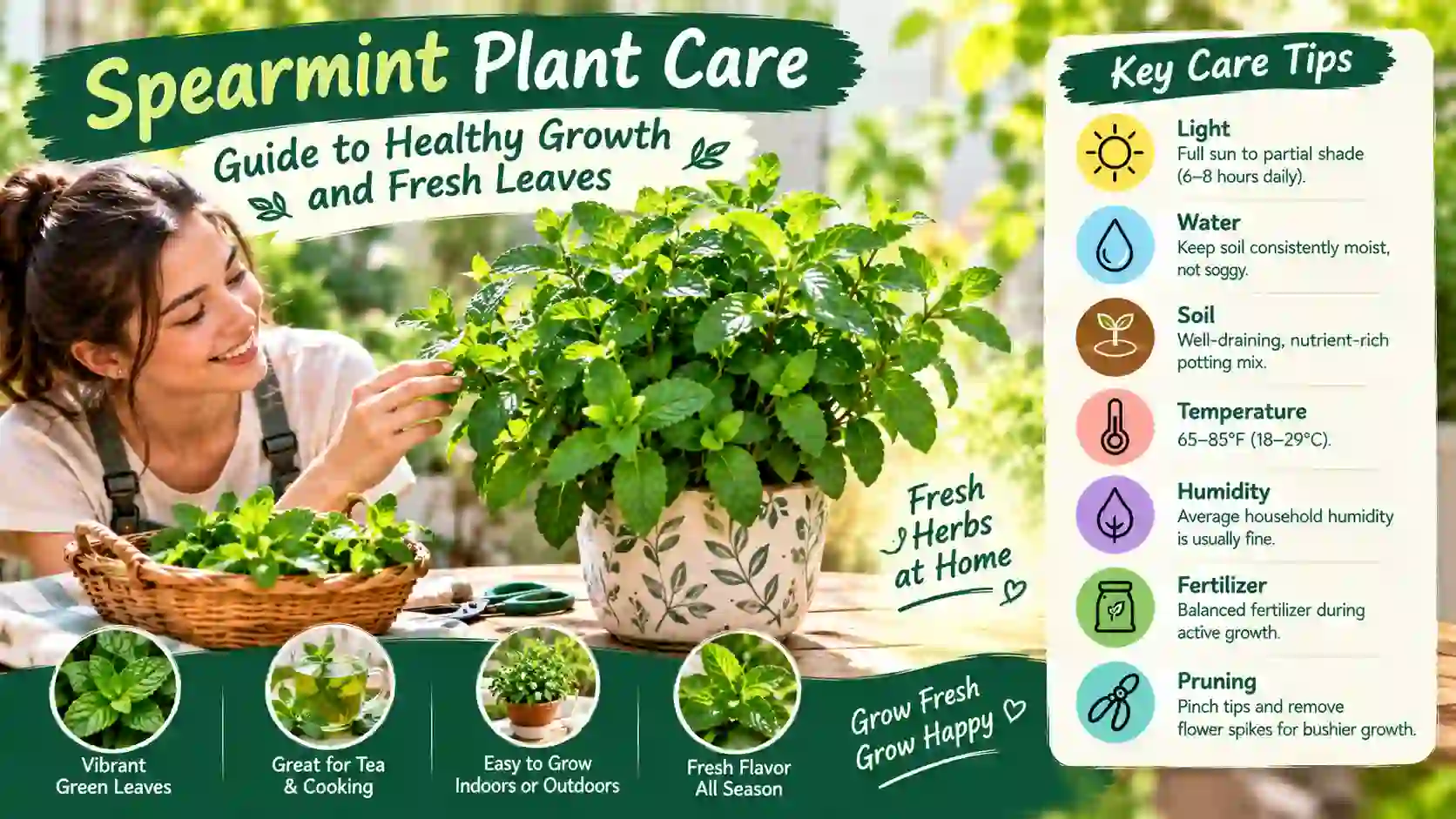
Spearmint is one of the most rewarding herbs to grow at home. Its fresh, sweet aroma makes it useful for tea, salads, chutneys, desserts, and many everyday recipes. It can thrive in garden beds, pots, balcony planters, and sunny kitchen gardens.
However, successful spearmint plant care involves more than watering it occasionally. Mint grows quickly under favorable conditions, but it can become invasive in garden beds, develop yellow leaves in soggy soil, or produce thin stems when it lacks enough light.
The good news is that spearmint is forgiving when you understand its growth habits. Give it consistent moisture, suitable light, and regular trimming, and it can provide fresh leaves throughout much of the growing season.
This guide explains how to plant spearmint, choose the right location, water and fertilize it, encourage fuller growth, harvest flavorful leaves, and solve common problems.
Quick Answer:
For healthy spearmint plant care, grow spearmint (Mentha spicata) in full sun to partial shade, with moist, well-draining soil and regular watering. Give it room to spread, or grow it in a container to control its vigorous roots. Pinch growing tips to encourage bushier growth, harvest leaves regularly, and remove flower spikes if you want to encourage leafy growth. In hot weather, afternoon shade helps prevent wilting and leaf scorch.
1. Understand Spearmint Before You Plant It


7
Spearmint (Mentha spicata) is a fragrant, herbaceous perennial in the mint family, Lamiaceae. It produces green, toothed leaves with a sweet, refreshing aroma and can return year after year in suitable conditions.
It is popular for mint tea, lemonade, chutneys, salads, sauces, and garnishes. Its flavor is generally milder and less sharply mentholated than peppermint.
Yard and Garden
+1
The most important thing to understand is its spreading habit. Spearmint grows through underground stems called rhizomes. These stems can travel beyond the original planting area and produce new shoots.
That makes spearmint productive but potentially invasive in a garden bed.
Best choice for most home gardeners: Grow spearmint in a container with drainage holes. You can harvest fresh leaves conveniently without letting its roots spread through nearby beds.
2. Choose the Right Sunlight and Growing Location
Spearmint grows in full sun or partial shade. The best location depends on your climate, especially how hot the afternoons become.
How much sunlight does spearmint need?
- Full sun: Often produces vigorous growth and abundant foliage in mild conditions.
- Partial shade: Useful in hot climates because it protects leaves from intense afternoon heat.
- Deep shade: Usually produces weaker, stretched growth and fewer harvestable leaves.
The University of Maryland Extension recommends full sun to partial shade for spearmint. Iowa State University Extension also notes that mint can develop brown leaf edges when heat and dry soil combine.
University of Maryland Extension
+1
Where should you place spearmint?

Balcony or patio
A bright location with morning sun and some afternoon protection works well in hot weather. Check container moisture frequently because pots can dry quickly.

Outdoor garden
Choose a spot with sunlight and moisture-retentive soil. Keep the roots contained so the plant does not spread into neighboring herbs or vegetables.

Indoor windowsill
Use the brightest suitable window available. If stems become thin and weak, increase light gradually or consider a grow light designed for plants.
Practical tip for hot climates: If spearmint wilts every afternoon despite moist soil, move the pot out of harsh afternoon sun. If it recovers in the evening, heat stress may be contributing.
Image suggestion: A 16:9 infographic comparing spearmint in full sun, partial shade, and insufficient light.
3. Use Moist, Well-Draining Soil
Spearmint likes soil that retains some moisture but does not remain waterlogged. The aim is to keep the roots hydrated while allowing excess water to drain.
What soil is best for spearmint?
For pots, use a quality multipurpose potting mix that holds moisture without becoming dense. A small amount of perlite or another suitable aeration ingredient can help improve drainage if the mix stays too wet.
For garden beds, improve very compact soil with organic matter and correct drainage problems before planting.
Good spearmint soil should:
- Hold enough water to prevent rapid drying.
- Drain excess water after irrigation.
- Allow air to reach the roots.
- Support steady growth without becoming muddy or compacted.
Iowa State University Extension recommends moist, well-drained soil rich in organic matter for mint.
Yard and Garden
How to choose a container

Choose a pot that has drainage holes and enough room for the plant to spread. A moderately wide container is convenient because spearmint grows outward through new shoots.
A container around 8–12 inches (20–30 cm) wide is a reasonable starting point for one young plant, although a larger established plant may need more space.
Avoid placing the growing pot directly into a decorative container that collects water. Empty any excess water after watering.
Can you plant spearmint directly in the ground?
Yes, but plan for its spreading roots. Consider keeping it in a large container or a dedicated raised bed where its growth can be monitored.
Burying a container in the garden can help restrict underground spread, but mint may escape over the rim or through drainage openings. Above-ground pots provide more reliable containment.
RHS Guide
+1
4. Water Spearmint Correctly
Spearmint generally prefers evenly moist soil, especially while it is actively growing. However, moist soil is not the same as constantly saturated soil.
Both underwatering and poor drainage can cause wilting, so check the soil before reaching for the watering can.
How often should you water spearmint?
There is no single schedule that suits every plant. Container size, weather, sunlight, soil composition, and root development all affect watering needs.
| Condition | Recommended response |
|---|---|
| Top layer of soil is starting to dry | Check a little deeper; water if the root zone is becoming dry |
| Soil is still moist | Wait and check again later |
| Pot dries quickly in hot weather | Check moisture more frequently |
| Soil remains soggy for days | Check drainage and reduce unnecessary watering |
| Leaves wilt while soil is dry | Water thoroughly and reassess the location |
| Leaves wilt while soil is wet | Investigate drainage, root health, and heat stress |
Step-by-step watering method

Step 1: Check the soil
Feel the top layer and check slightly deeper. Do not let the entire root zone dry out for extended periods.

Step 2: Water evenly
Pour water over the soil around the roots until it drains from the bottom. Avoid relying on a tiny splash that wets only the surface.

Step 3: Let the water drain
Empty the saucer so the roots do not remain submerged.

Step 4: Monitor the plant
Check again as the soil begins to dry. Adjust your routine when the weather becomes hotter, cooler, or wetter.
Container-grown mint usually needs more frequent moisture checks than mint growing in the ground.
RHS Guide
+1
Common mistake: Watering a wilted plant automatically. If the soil is already wet, more water can make the problem worse. Check the root zone first.
Image suggestion: A step-by-step spearmint watering infographic with soil checking, thorough watering, drainage, and healthy leaves.
5. Fertilize Spearmint Without Reducing Leaf Quality
Spearmint does not usually require heavy feeding. A healthy plant growing in fertile potting mix or garden soil may need little additional fertilizer.
Container-grown plants have less soil available, however, so nutrients can become depleted over time.
How to fertilize spearmint
- Start with a quality potting mix or soil enriched with mature compost.
- If container growth becomes weak, use a balanced fertilizer according to its label.
- Apply fertilizer during active growth rather than automatically feeding all year.
- Avoid excessive nitrogen, which can encourage soft, leafy growth and create unnecessary fertilizer buildup.
- Do not fertilize a severely stressed plant until you have checked its water and root conditions.
For culinary herbs, more fertilizer does not necessarily mean better flavor. Healthy roots, suitable light, regular harvesting, and balanced nutrition matter more than forcing rapid growth.
Expert tip: If your spearmint is growing well and producing flavorful leaves, do not add fertilizer simply because the calendar says it is time.
Image suggestion: A clean gardening infographic showing mature compost, a small amount of balanced fertilizer, and healthy spearmint foliage.
6. Prune Spearmint to Encourage Bushy Growth
Spearmint naturally produces upright stems and spreading shoots. If you leave it untrimmed, stems may become tall, flowering may begin, and the plant can look less compact.
Regular pinching and harvesting encourage branching and provide a steady supply of tender leaves.
Yard and Garden
+1
How to prune spearmint
- Identify a healthy stem with several pairs of leaves.
- Use clean scissors to cut just above a leaf pair or node.
- Pinch growing tips when the plant has established enough foliage to recover.
- Remove dead, damaged, or diseased leaves as you notice them.
- Check around the pot for stems that have rooted outside the intended growing area.
New shoots can develop from nodes below a cut, helping the plant become fuller. Avoid cutting a small or recently transplanted plant back too severely before it has established strong growth.
What should you do when spearmint flowers?
Spearmint produces small flowers in spikes, often during warm weather. The flowers can attract pollinators, so removing every flower is not necessary.
If your main goal is leafy growth, pinch off developing flower spikes before they open. If you want to support pollinators, allow some flowers to bloom while continuing to harvest healthy stems.
After flowering, an overgrown plant can be cut back to encourage fresh growth, provided you leave healthy growth points and the plant is growing in suitable conditions.
Image suggestion: A pruning infographic showing where to cut spearmint stems, how to pinch the tips, and the fuller growth that can follow.
7. Propagate Spearmint for More Plants
Spearmint is easy to multiply from stem cuttings or by dividing an established plant. These methods are useful when you want another pot, a larger herb collection, or a replacement for an aging plant.
Method 1: Grow spearmint from stem cuttings

1. Take a healthy cutting
Cut a non-flowering stem below a leaf node. Remove leaves from the lower part that will sit in water or potting mix.

2. Start the roots
Place the lower nodes in clean water, or insert the cutting into moist potting mix. Keep it in bright, indirect light.

3. Wait for roots to develop
Refresh the water when it becomes cloudy. In potting mix, keep the medium moist but not waterlogged.

4. Plant and establish
Transfer water-rooted cuttings to potting mix once they have a useful root system. Keep them evenly moist while they adapt.
Stem cuttings are generally more reliable than seed when you want a new plant with the same characteristics as the parent. Mint cuttings can root readily in water.
RHS Guide
+1
Method 2: Divide an established plant
Division is useful when a pot has become overcrowded or the center of the plant has weakened.
- Remove the plant carefully from its container.
- Separate a section that has healthy roots and shoots.
- Discard dead or rotting material.
- Replant each healthy division in fresh potting mix.
- Water thoroughly and protect the divisions from harsh sun while they settle.
Many mint plants benefit from occasional division and repotting as they become crowded.
RHS Guide
+1
Can you grow spearmint from seed?
Yes. Sow seeds in a suitable seed-starting medium and follow the packet instructions for depth, spacing, and temperature. Keep the medium evenly moist while the seedlings establish.
Seedlings can vary, so cuttings or division are often preferable when you want to preserve the flavor and growth characteristics of a particular spearmint plant.
8. Harvest Spearmint for the Best Flavor
Harvesting is not just the reward for growing spearmint. It is also part of its care routine.
Regularly cutting healthy stems encourages fresh shoots and helps prevent the plant from becoming tall and sparse. Young shoot tips are especially useful for cooking and drinks.
RHS Guide
+1
When should you harvest spearmint?
You can pick individual leaves whenever the plant is established and has enough growth to spare. For a larger harvest, cut healthy leafy stems before or as flower buds begin to develop.
For drying, harvesting near the start of flowering is a useful general guideline because mint’s aromatic oil content can be favorable at this stage. Exact flavor varies with growing conditions and the plant’s maturity.
How to harvest without weakening the plant
- Use clean scissors rather than tearing stems repeatedly.
- Cut healthy shoot tips above a leaf node.
- Avoid removing nearly all the foliage in one session.
- Leave enough leaves and stems for the plant to continue growing.
- Harvest more frequently during vigorous growth and less heavily when growth slows.
How to store fresh spearmint
For short-term use, place freshly cut stems in a glass with a little water or wrap the leaves loosely and refrigerate them. Keep the leaves clean and avoid storing them wet in a sealed container, where they may deteriorate quickly.
For longer storage, spearmint can be dried in a warm, dark, well-ventilated location or frozen for later use. Freezing often preserves fresh mint flavor better than drying.
RHS Guide
+1
Image suggestion: A harvest infographic featuring fresh spearmint sprigs, clean scissors, a glass of mint tea, and a small jar of dried leaves.
9. Troubleshoot Common Spearmint Problems
Spearmint is vigorous, but it can still struggle when light, moisture, or airflow is unsuitable. The pattern of damage often gives better clues than a single leaf.


7
Spearmint problem-solving guide
| Symptom | Possible cause | What to check or do |
|---|---|---|
| Yellow leaves | Excess moisture, poor drainage, nutrient shortage, or older leaves | Check soil and roots before adding fertilizer |
| Brown, crispy edges | Heat, dry soil, or strong afternoon sun | Check moisture and provide shade during extreme heat |
| Wilting leaves | Dry soil, heat stress, or damaged roots | Check soil moisture before watering |
| Long, weak stems | Insufficient light or lack of pruning | Increase light gradually and pinch growing tips |
| Small or slow-growing leaves | Crowded roots, low light, or poor growing conditions | Inspect the roots and reassess light and soil |
| White powder on leaves | Possible powdery mildew | Improve airflow, avoid prolonged leaf wetness, and remove badly affected material |
| Orange-brown spots | Possible mint rust | Inspect the undersides of leaves and remove affected material |
| Holes or distorted leaves | Chewing insects or sap-feeding pests | Inspect stems and both sides of the leaves |
Mint can be affected by pests such as aphids and spider mites, as well as diseases including mint rust.
University of Delaware
+1
Why is my spearmint turning yellow?
Start by checking whether the soil remains wet long after watering. Soggy soil can damage roots and prevent them from absorbing water and nutrients effectively.
If the soil is wet and the stems look weak, improve drainage and inspect the roots if needed. If the soil is dry, water thoroughly and check whether the pot is drying too quickly in heat.
Do not assume that every yellow leaf indicates a fertilizer deficiency. Correct the growing conditions before adding nutrients.
Why is my spearmint wilting even though the soil is wet?
This is a particularly important warning sign. Wet soil does not guarantee that damaged roots can absorb water properly.
Check whether the pot drains freely. If the soil smells sour or roots are dark and soft, root damage may be involved. Remove badly damaged roots and repot into fresh, well-draining mix when necessary.
If the soil is moist and roots appear healthy, move the plant away from intense afternoon heat and monitor whether it recovers.
How do you prevent mint rust?
Mint rust is a fungal disease that can produce orange, reddish-brown, or dark pustules, often on leaf undersides.
- Inspect new plants before placing them near healthy herbs.
- Remove affected leaves and dispose of heavily infected material appropriately.
- Avoid overcrowding plants.
- Water the soil rather than repeatedly wetting the foliage.
- Clean tools after handling infected material.
If the plant is badly affected, replacing it with healthy material may be more practical than trying to save every stem.
10. Adjust Spearmint Care to the Season
Spearmint is a perennial in many climates, but its growth rate changes with temperature, daylight, and moisture. A routine that works in mild spring weather may not work during a hot summer.

Spring: Encourage new growth
Remove dead stems, divide crowded plants if needed, and begin harvesting as fresh shoots develop. Increase watering only as the soil begins drying more quickly.

Summer: Protect moisture and foliage
Check containers frequently during hot weather. Provide afternoon shade if leaves scorch or wilt, and harvest regularly to maintain compact growth.

Late summer and autumn: Manage flowering
Harvest healthy leaves, remove flower spikes if you prefer leafy growth, and cut away dead or damaged stems. Reduce watering only when the soil dries more slowly.

Winter: Avoid unnecessary disturbance
In cold climates, outdoor spearmint may die back above ground and regrow in spring. Container roots are more exposed to temperature extremes, so protect the pot when severe cold is expected.
In warm climates, spearmint may continue growing for much of the year. During particularly hot weather, light afternoon shade and careful moisture management may be more important than winter protection.
11. Common Spearmint Plant Care Mistakes
Avoid these common mistakes to keep your herb productive and easy to manage.
- Planting directly into an unrestricted garden bed: Underground runners may spread into nearby plants. Use a container if you want controlled growth.
- Letting the soil dry completely for long periods: Spearmint generally performs better with consistent moisture.
- Keeping roots constantly waterlogged: Moist soil still needs adequate drainage.
- Growing in deep shade: Low light can produce weak, stretched stems.
- Overfertilizing: Excess nutrients are not a substitute for proper light, water, and soil.
- Never pruning the plant: Regular harvesting and pinching help maintain fuller growth.
- Removing too much foliage at once: Leave sufficient healthy growth for recovery.
- Ignoring overcrowded pots: Divide or repot plants when their roots and shoots become congested.
- Leaving diseased leaves in place: Remove affected material and improve airflow when fungal problems appear.
- Assuming all mint varieties are identical: Spearmint, peppermint, and other mints differ in flavor, growth habits, and some growing preferences.
The most useful habit is to inspect your spearmint regularly. Check the soil, look at the undersides of leaves, and notice whether new shoots look healthy. Small adjustments are easier than recovering a severely stressed plant.
12. Frequently Asked Questions About Spearmint Plant Care
How much sunlight does spearmint need?
Spearmint grows well in full sun to partial shade. In hot climates, morning sun with afternoon shade can help protect leaves from heat stress.
University of Maryland Extension
+1
How often should I water spearmint?
Water when the soil begins drying, adjusting for weather, pot size, and growing conditions. Container-grown spearmint may need more frequent checks during hot weather, but the soil should not remain waterlogged.
Can spearmint grow indoors?
Yes. Grow it near a bright window or use a suitable grow light. Indoor spearmint needs enough light to prevent weak, stretched stems and a pot that drains freely.
Does spearmint come back every year?
Spearmint is a perennial and can regrow each year in suitable climates. In colder conditions, its above-ground growth may die back during winter before new shoots emerge.
Can I grow spearmint in a pot?
Yes. A container is one of the best ways to grow spearmint because it restricts the spread of its underground stems. Choose a pot with drainage holes and check its moisture regularly.
How do I make my spearmint plant bushier?
Pinch or cut stem tips just above leaf nodes, and harvest regularly. This encourages branching and fresh shoots. Give the plant adequate light and avoid removing too much foliage at once.
Why is my spearmint plant dying?
Common causes include prolonged dry soil, waterlogged roots, extreme heat, insufficient light, and pests or diseases. Check the soil first, then inspect the roots and leaves before deciding how to treat the plant.
Should I remove spearmint flowers?
Remove developing flower spikes if your priority is continued leafy growth. However, allowing some flowers to bloom can benefit pollinators, so you do not need to remove every flower.
Can spearmint grow in water?
Stem cuttings can root in water, making propagation easy. For long-term growth, provide a suitable growing environment and appropriate nutrients; growing a mature plant permanently in water requires different care from growing it in soil.
What is the difference between spearmint and peppermint?
Spearmint (Mentha spicata) generally has a sweeter, milder mint flavor. Peppermint (Mentha × piperita) typically has a stronger cooling sensation because of its higher menthol content. Both can spread vigorously and are often easiest to manage in containers.
Yard and Garden
+1
When is the best time to harvest spearmint?
You can harvest established plants throughout the growing season. Pick young shoot tips for fresh use, and consider cutting stems just before or as flower buds develop when harvesting a larger quantity for drying.
University of Maryland Extension
+1
Conclusion:
Successful spearmint plant care starts with four essentials: suitable sunlight, consistently moist but well-drained soil, regular harvesting, and controlled root growth.
Grow spearmint in a container if you want to prevent it from spreading through the garden. Check the soil before watering, protect the leaves from extreme afternoon heat, and pinch growing tips to encourage fresh, bushy growth.
If your plant develops yellow leaves, wilts, or stops growing, inspect the soil and roots before adding fertilizer or water. Understanding the cause will help you correct the problem without creating another.
With these simple habits, you can enjoy fresh spearmint for tea, cooking, and garnishing throughout much of the growing season.

Heading: Spearmint Plant Care: Complete Guide to Healthy Growth and Fresh Leaves

Compare full sun, partial shade, and deep shade, highlighting the importance of protecting leaves during intense afternoon heat.

Show a stem cutting, roots developing in water, and the rooted cutting being planted into a pot.