Heather plants are valued for their fine evergreen or semi-evergreen foliage, compact growth, and flowers in shades of pink, purple, white, and occasionally red. They can brighten rock gardens, borders, slopes, containers, and heath-style landscapes when their growing conditions are suitable.
The challenge with heather plant care is that these plants are not suited to every garden. Some struggle in alkaline soil, others suffer when their roots remain wet, and poorly timed pruning can leave bare patches that take a long time to recover.
The first step is identifying which heather you have. Common heather (Calluna vulgaris) and many true heathers in the genus Erica share similar needs, but their flowering seasons and cold tolerance can differ.
This guide explains how to choose a location, prepare the soil, water and prune correctly, encourage flowering, grow heather in containers, and diagnose common problems.
Quick Answer:
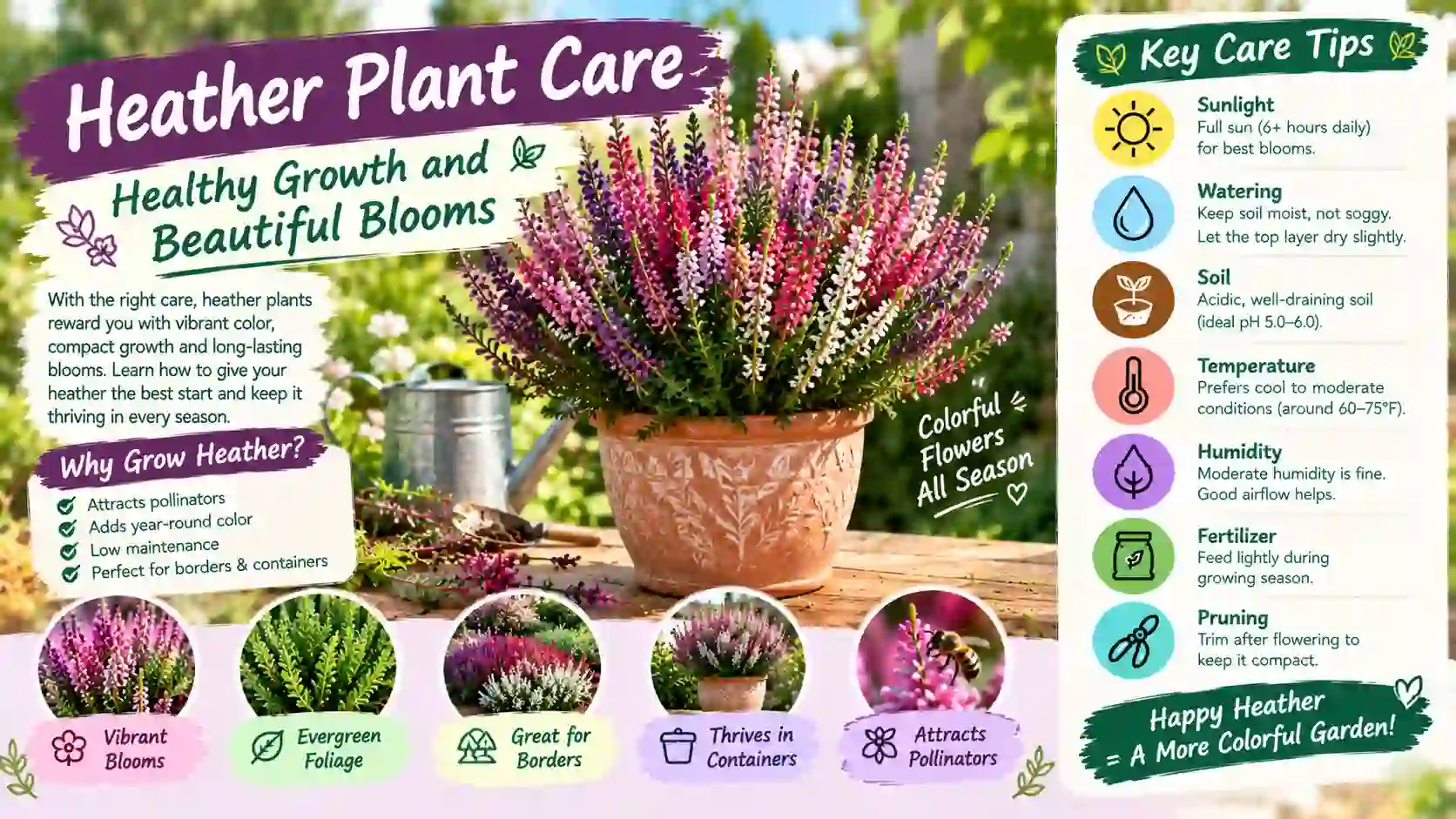
Heather plants grow best in full sun, acidic, well-drained soil, and cool to moderate conditions. Water newly planted heather regularly until its roots establish, then keep the soil evenly moist without making it waterlogged. Avoid lime-rich soil and heavy pruning into old, leafless wood.
Choose the right type for your climate: winter-flowering heather (Erica carnea) tolerates colder conditions, while many Calluna vulgaris varieties prefer acidic soil and good drainage. With the right site and light pruning, heather can form a colorful, low-growing garden display.
1. Know Which Heather Plant You Are Growing


9
“Heather” commonly refers to two groups of related but distinct plants. Knowing which one you have helps you choose the right location and understand its flowering season.
| Feature | Common heather | Winter heath |
|---|---|---|
| Botanical name | Calluna vulgaris | Often Erica carnea |
| Typical flowering | Late summer into autumn, depending on cultivar | Winter into early spring, depending on climate and cultivar |
| Foliage | Small, scale-like leaves | Usually fine, needle-like leaves |
| Soil preference | Acidic, well-drained soil | Many varieties tolerate a broader soil range, including some near-neutral soils |
| Main garden use | Heath gardens, borders, ground cover | Winter color, rock gardens, slopes |
Other Erica species have different needs, so do not assume every plant sold as heather tolerates the same soil conditions.
Practical tip: Check the plant label before changing the soil. If the label says Calluna vulgaris, prioritize acidic conditions. If it identifies an Erica species, check that species’ specific requirements.
2. Choose the Best Location and Sunlight
Heather usually flowers best in a bright, open location. Light helps maintain compact growth and encourages abundant blooms.
How much sunlight does heather need?
Most garden heathers perform best in full sun, generally around six or more hours of direct sunlight daily. Some benefit from light afternoon shade in very hot climates, particularly when growing in containers.
- Full sun: Usually supports compact growth and better flowering.
- Partial shade: May work for some varieties, but flowering can be reduced.
- Deep shade: Often produces weak, sparse growth and fewer blooms.
Protect heather from extreme heat
Heather is not one single species with identical climate needs. Many varieties thrive in cool or temperate conditions and can struggle in prolonged heat, especially when the soil dries out or roots become overheated.
In hot regions, choose a heat-tolerant cultivar suitable for your climate, provide morning sun with some afternoon protection if needed, and keep the root zone cool with an appropriate mulch. A cool-climate variety may not thrive outdoors through a very hot summer, even with careful watering.
Image suggestion: A 16:9 infographic showing healthy, compact heather in full sun beside a sparse, stretched plant growing in deep shade.
3. Prepare the Right Soil for Heather
Soil is often the deciding factor between a thriving heather plant and one that gradually yellows or declines. Many heathers are adapted to acidic, low-nutrient soils and do not perform well in lime-rich ground.
What soil is best for heather?
For Calluna vulgaris, aim for acidic soil, ideally around pH 5.5. The soil should drain freely while retaining enough moisture to support the fine root system.
RHS
+1
A suitable growing medium should be:
- Acidic: Test the soil rather than guessing its pH.
- Well-drained: Roots need oxygen and can rot in waterlogged ground.
- Low to moderately fertile: Excessive feeding is rarely necessary.
- Rich in suitable organic matter: Composted pine bark or leaf mould can help improve soil structure.
What if your garden soil is alkaline?
Do not assume every heather will thrive after adding a little compost. If the soil is strongly alkaline, Calluna may struggle to absorb certain nutrients even when those nutrients are present.
You have two practical options:
- Choose a heather species or cultivar that tolerates your soil conditions.
- Grow an acid-loving variety in a container filled with peat-free ericaceous compost.
Container growing is often more reliable than repeatedly trying to change the pH of an entire garden bed. Some Erica species tolerate neutral or alkaline soil better than Calluna, but check the exact plant label.
RHS
+1
How to test soil pH
Use a garden soil pH test kit and follow its instructions. Test soil from the intended planting area rather than relying on a single reading from a different part of the garden.
If the soil is unsuitable, choose another planting location or use a container. Avoid applying garden lime around acid-loving heathers because lime raises soil pH.
Image suggestion: A soil infographic showing acidic soil, a pH testing kit, well-drained ground, and a heather plant growing in an ericaceous potting mix.
4. How to Plant Heather Correctly


10
Planting correctly gives heather the best chance of establishing without root stress.
When should you plant heather?
Spring is a good time to plant heather because the roots have time to establish during the growing season. Autumn planting can also work in suitable climates, provided the soil is not waterlogged or frozen.
RHS
+1
In regions with very hot summers, avoid planting during extreme heat. Choose a cooler period when you can keep the root ball consistently moist while it establishes.
Step-by-step planting guide
- Prepare the location. Choose a sunny site with suitable soil acidity and good drainage.
- Water the nursery plant. Moisten the root ball before removing it from its pot.
- Dig a suitable hole. Make it about as deep as the root ball and wider than the roots.
- Position the plant. Set the top of the root ball level with the surrounding soil. Planting too deeply can encourage stem problems.
- Backfill and firm gently. Fill around the roots without compacting the soil excessively.
- Water thoroughly. Moisten the root zone and allow excess water to drain.
- Add a suitable mulch. A light layer of composted pine bark or leaf mould can help conserve moisture. Keep it away from the plant’s central stems.
How far apart should heather plants be?
Spacing depends on the mature width of the variety and the effect you want. For a continuous ground-cover display, plants can be placed closer together than they would be as individual specimens.
Check the plant label for its expected spread. Allow enough room for neighboring plants to develop without creating a dense, poorly ventilated mass.
Practical example: If you want a colorful border, plant several varieties with overlapping flowering seasons. This can extend the display beyond the flowering period of one cultivar.
Image suggestion: A 16:9 step-by-step planting infographic showing hole preparation, correct planting depth, watering, and spacing.
5. How to Water Heather Plants
Heather needs reliable moisture while establishing, but its roots should never sit in saturated soil. Watering correctly is particularly important for container-grown plants, which can dry out much faster than garden beds.
How often should you water heather?
There is no universal weekly schedule. Frequency depends on weather, soil, pot size, and the species you grow.
| Situation | Watering approach |
|---|---|
| Newly planted in the ground | Check frequently and water whenever the root zone begins to dry |
| Established garden plant | Water during prolonged dry spells if the soil becomes dry |
| Container-grown heather | Check soil moisture regularly, especially during warm weather |
| Cool, rainy conditions | Water less often and make sure the roots are not waterlogged |
| Hot, dry weather | Check more frequently and water deeply when needed |
Newly planted heather needs regular watering until its roots establish. Established plants in suitable ground can become relatively drought tolerant, but container plants still need regular monitoring.
RHS
+1
The best way to water
- Check the soil near the root zone.
- Water when the soil is beginning to dry rather than waiting for the entire root ball to become bone-dry.
- Apply water slowly so it reaches the roots.
- Allow excess water to drain freely.
- Check again before watering next time.
Do not rely only on the soil surface. The top can look dry while the lower part of a container remains wet.
Signs of too much or too little water
- Dry, brittle foliage with dry soil: The plant may need more water.
- Yellowing foliage and persistently wet soil: Check for poor drainage and possible root damage.
- Sudden decline after heavy rain: Waterlogged roots may be the problem.
- Wilting in a small pot during hot weather: The root ball may be drying too quickly.
Expert tip: If a container feels unusually heavy several days after watering, inspect the drainage and soil mix before adding more water.
6. Fertilizing Heather Without Damaging It
Heather is adapted to relatively nutrient-poor environments. Too much fertilizer can encourage soft, excessive growth instead of a compact plant with healthy foliage and flowers.
Does heather need fertilizer?
Heather growing in suitable acidic soil often needs little or no additional fertilizer. A light mulch of appropriate organic matter may be enough. Container-grown plants may need feeding because nutrients become depleted in a limited volume of compost.
RHS
+1
How to fertilize heather
- Use a fertilizer formulated for acid-loving plants when feeding is necessary.
- Follow the label rate rather than assuming more fertilizer means more flowers.
- Feed during active growth, usually in spring, according to the plant’s needs and local climate.
- Avoid feeding a stressed plant with dry roots or suspected root rot.
- Do not apply fertilizer repeatedly to a plant already growing well in fertile soil.
If the leaves turn yellow, check the soil pH and drainage before adding fertilizer. Yellow foliage can result from unsuitable soil, waterlogged roots, or other stress—not simply a lack of nutrients.
Image suggestion: A clean gardening infographic showing a heather plant, an acid-loving plant fertilizer, and a warning against overfeeding.
7. How and When to Prune Heather


6
Pruning helps heather stay compact and attractive. However, timing and cutting depth matter because many common heathers do not reliably produce new growth from old, bare wood.
When should you prune heather?
For summer- and autumn-flowering Calluna, trim the faded flower stems after flowering. For winter-flowering heathers, prune after their flowers fade, usually in spring.
The exact timing varies by species and cultivar, so use the plant’s flowering period as your guide.
RHS
+1
How to prune heather step by step
- Wait until flowering finishes. This helps you avoid removing developing flowers.
- Use clean, sharp shears. Remove the faded flower spikes and a small amount of the leafy growth beneath them.
- Keep the plant’s shape. Trim lightly and evenly rather than cutting deeply into the shrub.
- Leave green growth intact. Avoid cutting back into thick, leafless stems because many heathers struggle to regenerate there.
- Inspect the plant afterward. Remove dead or damaged pieces and check that the center remains healthy.
What if your heather has become woody?
An older plant may develop bare stems and sparse growth. Hard pruning is unlikely to restore many common Calluna varieties once the woody framework has lost its leafy growth.
Instead, consider replacing a severely straggly plant or propagating a young replacement from a suitable healthy shoot. Tree heathers can respond differently, so identify the species before attempting a major renovation.
RHS
+1
Common mistake: Cutting all the stems down to the ground in the hope that new shoots will appear. This can leave a plant unable to recover.
Image suggestion: A 16:9 before-and-after infographic comparing correctly trimmed heather with over-pruned heather cut into bare wood.
8. Growing Heather in Pots and Containers
Container growing is an excellent option when garden soil is alkaline, heavy, or poorly drained. It also allows you to move the plant if the weather becomes unsuitable.
Choose the right container
Use a pot with unobstructed drainage holes. Choose a size that accommodates the root ball and allows some room for growth without leaving a large volume of wet compost around a small plant.
A wide container can work well for low-growing heathers, especially when combining compatible varieties.
Use the correct potting mix
For Calluna vulgaris, use peat-free ericaceous compost or another suitable acidic growing medium. Standard multipurpose compost may not provide the acidity these plants need over time.
RHS
+1
Container care checklist
- Check moisture more often in warm weather.
- Water thoroughly when the growing medium begins to dry.
- Empty any saucer that collects excess water.
- Provide good light and adequate airflow.
- Feed only when needed, following the fertilizer label.
- Refresh or repot when the compost has broken down or roots have filled the container.
Heather can grow well in pots, but containers dry out and experience temperature changes faster than garden soil. During hot spells, check the plant daily rather than assuming yesterday’s watering is still sufficient.
Can heather grow indoors?
Most hardy garden heathers are better suited to outdoor conditions than to a typical heated room. Warm indoor air, limited sunlight, and inconsistent watering can shorten their useful life as houseplants.
If you buy heather as a seasonal decorative plant, keep it in the brightest cool location available and monitor its moisture closely. For long-term growth, an outdoor container is generally the better choice when the climate suits the variety.
Image suggestion: A 16:9 container-care infographic featuring heather in a wide pot, acidic compost, drainage holes, and sunlight.
9. Seasonal Heather Plant Care
Heather’s flowering season depends on its species and cultivar. Planning care around its growth cycle helps protect blooms and prevents poorly timed pruning.
| Season | Main care tasks |
|---|---|
| Spring | Plant or transplant when conditions are suitable; prune winter-flowering types after bloom; check soil pH if foliage is yellow |
| Summer | Monitor moisture, especially in containers; enjoy flowering Calluna varieties as they begin to bloom |
| Autumn | Plant in suitable climates; enjoy many late-season heathers; avoid waterlogged soil |
| Winter | Enjoy winter-flowering Erica varieties; ensure pots drain freely and do not sit in standing water |
Caring for heather during hot weather
If your summers are hot, heat management may be more important than fertilizer. A variety adapted to cool climates can decline in sustained heat and humidity.
- Check soil moisture during hot, dry periods.
- Use a suitable mulch to help moderate soil temperature.
- Avoid waterlogged compost while trying to cool the roots.
- Provide some afternoon shade if the cultivar tolerates it and intense sun is causing stress.
- Select varieties suited to the local climate before planting a large border.
Calluna vulgaris can struggle in hot, humid regions, so it is important to check local suitability rather than assume all heathers are heat tolerant.
North Carolina Extension Gardener Plant Toolbox
+1
Caring for heather in winter
Many hardy heathers tolerate cold weather well, but container roots are more exposed to temperature changes than roots in the ground. Keep pots draining properly and protect vulnerable containers if severe cold is expected for the chosen variety.
Do not move outdoor heather into a warm room simply because it is winter. Many hardy types are adapted to seasonal outdoor conditions.
10. Common Heather Plant Problems and How to Fix Them
Heather problems are easier to solve when you identify the cause before treating the symptoms. Yellow leaves, for example, can indicate unsuitable soil, waterlogged roots, or environmental stress.

Yellow leaves
Possible causes: Alkaline soil, excessive moisture, root damage, or normal aging of older foliage.
What to do: Test the soil pH, check drainage, and inspect the roots if the plant is declining. Do not automatically add fertilizer.

Brown, dry, or dying stems
Possible causes: Drought stress, root problems, unsuitable climate, or an aging plant.
What to do: Check whether the root zone is dry or saturated. If only a few stems are dead, remove them carefully. If the whole plant is declining, investigate the growing conditions before pruning.

Leggy growth and bare centers
Possible causes: Insufficient light, missed annual trimming, or natural aging.
What to do: Improve light where possible and trim future growth lightly after flowering. Replace plants that have become extensively bare and woody.

Few or no flowers
Possible causes: Too much shade, inappropriate pruning, plant stress, or a flowering season that has not yet arrived.
What to do: Confirm the species and flowering period. Provide suitable light and avoid cutting off developing flower stems.
Why is my heather dying even though I water it?
Watering more frequently does not always help. If the soil is already saturated, extra water can reduce oxygen around the roots and contribute to root damage.
Check the soil several inches below the surface. If it stays wet, improve drainage or consider moving the plant to a better site. If the root ball is dry and water runs straight down the sides of the pot, water slowly so the compost can absorb moisture.
Why does my heather look healthy but stop growing?
Slow growth can be normal for compact, low-growing varieties. However, unsuitable soil pH, low light, severe heat, or root restrictions can also limit growth.
Check the plant’s expected mature size before assuming it needs more fertilizer. A naturally dwarf variety may remain small even when healthy.
11. Heather Pests and Diseases
Heathers are generally low-maintenance, but poor growing conditions can make them more vulnerable to problems.
Watch for:
- Root rot: Often associated with persistently wet soil and poor drainage.
- Fungal problems: May develop when foliage stays damp or airflow is poor.
- Aphids and other sap-feeding insects: Inspect young shoots and the undersides of foliage.
- General decline: May result from unsuitable soil pH, extreme heat, or poor root conditions rather than a pest.
How to keep heather healthy
- Start with a variety suited to your soil and climate.
- Provide adequate light and good drainage.
- Avoid unnecessary fertilizer.
- Space plants according to their mature spread.
- Inspect foliage and stems regularly.
- Remove clearly diseased material with clean tools.
Do not apply a pesticide or fungicide without identifying the likely problem. Incorrect treatments may damage the plant and will not correct unsuitable soil or watering conditions.
Image suggestion: A 16:9 troubleshooting infographic comparing healthy heather with symptoms of waterlogging, drought stress, and sparse growth.
12. How to Propagate Heather
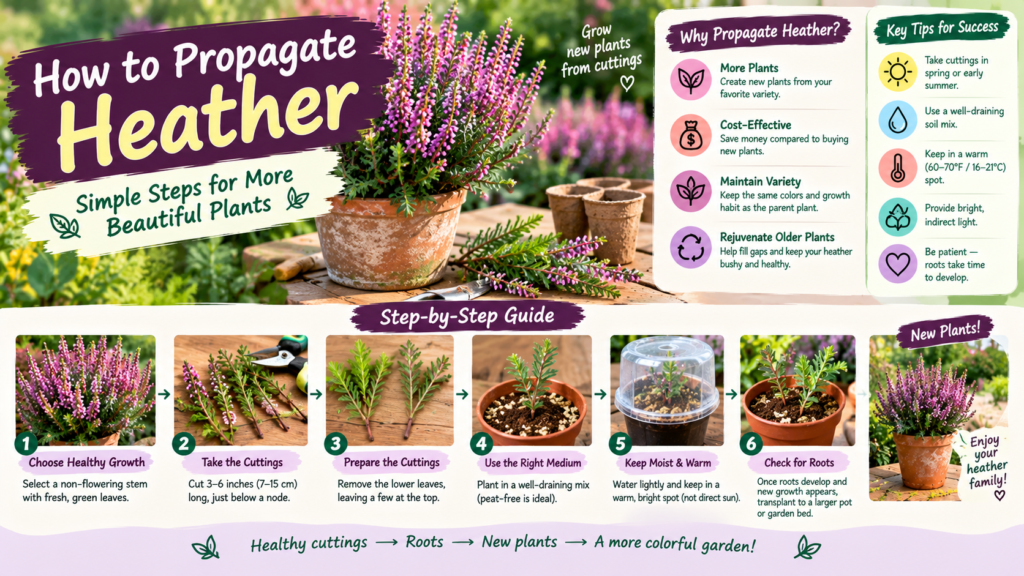
You can grow additional heather plants from suitable cuttings or by layering. Propagation is useful when you want more plants of a favorite variety, although success depends on the species and timing.
Propagating heather from cuttings
- Select healthy growth. Choose a vigorous, pest-free shoot from the current season or suitable semi-ripe growth.
- Prepare the cutting. Use clean scissors and remove the lower leaves without stripping away all the foliage.
- Use a suitable medium. Place the cutting in a clean, well-drained propagation mix appropriate for the plant.
- Maintain gentle moisture. Keep the medium lightly moist rather than saturated.
- Provide suitable conditions. Use bright indirect light and protect the cutting from drying winds or intense heat while roots develop.
- Check for establishment. Once roots have developed and new growth appears, gradually acclimate the young plant before moving it to its permanent position.
The best cutting time differs between Calluna, Erica, and other heather relatives. Follow species-specific propagation guidance rather than treating every heather the same way.
RHS
+1
Can heather grow from seed?
Yes, some heathers can be grown from seed, but propagation can be slow and seedlings may not reproduce the exact characteristics of a named cultivar. For a particular flower color or growth habit, cuttings are often the more reliable choice.
13. Common Heather Plant Care Mistakes to Avoid
Avoid these mistakes to keep heather healthy over the long term:
- Planting Calluna in strongly alkaline soil: Check the soil pH first or use an acidic container mix.
- Growing it in deep shade: Low light can reduce flowering and create sparse growth.
- Keeping the roots constantly wet: Good drainage is essential.
- Allowing container compost to dry out completely for long periods: Check moisture frequently, especially in summer.
- Overfeeding: Excess fertilizer is rarely the answer to poor growth.
- Pruning into old, leafless wood: Many common heathers do not recover well from severe cutting.
- Ignoring the species label: Different heathers vary in soil tolerance, flowering season, and climate suitability.
- Planting a cool-climate cultivar in extreme heat: Choose plants that can handle local temperatures.
- Assuming every brown plant needs more water: First determine whether the root zone is dry, saturated, or damaged.
The most important lesson is to match the plant to the environment. A suitable variety in the right soil usually requires much less intervention than a poorly matched plant that needs constant correction.
Frequently Asked Questions About Heather Plant Care
1. Is heather easy to care for?
Yes, when the variety suits the climate and soil. Most established heathers need little feeding, good drainage, suitable light, and light pruning after flowering.
2. Does heather need full sun?
Most heathers flower best in full sun, although some tolerate light shade. Deep shade generally reduces flowering and can lead to weak growth.
3. Does heather need acidic soil?
Many types, especially Calluna vulgaris, prefer acidic soil. Some Erica species tolerate neutral or more alkaline conditions, so check the exact variety before planting.
4. How often should I water heather?
Water newly planted heather regularly while it establishes. For established plants, water during prolonged dry periods when the soil begins to dry. Container plants need more frequent checks.
5. When should I prune heather?
Prune after flowering. Trim the faded flower stems lightly while leaving leafy growth intact. Avoid cutting common heathers back into old, bare wood.
6. Why is my heather turning brown?
Possible causes include drought, waterlogged roots, unsuitable soil, extreme heat, or natural aging. Check soil moisture and drainage before deciding how to respond.
7. Can heather grow in pots?
Yes. Use a container with drainage holes and suitable compost. Acid-loving Calluna varieties generally need peat-free ericaceous compost, while some Erica varieties tolerate a broader soil range.
8. Does heather flower in winter?
Some do. Winter-flowering heaths, including Erica carnea, can produce flowers in winter and early spring. Many Calluna vulgaris cultivars flower from summer into autumn.
RHS
+1
9. Can heather survive hot weather?
It depends on the species and cultivar. Some heathers struggle in prolonged heat and humidity. Choose a variety suited to your climate, provide appropriate light, and avoid both drought stress and waterlogged soil.
10. Should I fertilize heather every month?
Usually not. Heather in suitable soil often needs little fertilizer. Container plants may benefit from a suitable acid-loving plant feed, applied according to the product label and the plant’s growth.
11. Can I cut back an overgrown heather plant?
Light trimming is generally safer than hard pruning. If a common heather has become extensively woody and bare, replacement or propagation may be more successful than cutting it down severely.
12. Is heather evergreen?
Many common garden heathers are evergreen or retain their foliage through much of the year. Foliage color can change seasonally, and appearance varies by species and cultivar.
Conclusion
Successful heather plant care starts with choosing the right variety for your soil and climate. Give it suitable sunlight, well-drained soil, consistent moisture while establishing, and only modest feeding when necessary.
Remember three key rules: check soil acidity, avoid waterlogged roots, and prune lightly after flowering. These simple habits help heather maintain compact growth and produce attractive flowers year after year.
If your garden soil is unsuitable, a container with the correct growing medium can make all the difference. Choose a variety suited to your local conditions, and your heather will have a much better chance of thriving.