A healthy lawn can improve your home’s curb appeal, create a comfortable outdoor space, and make your property easier to maintain. However, keeping grass green in Plant City, Florida, takes more than regular mowing.
Hot weather, heavy summer rain, sandy soil, weeds, and lawn pests can all affect turf health. A lawn may look healthy after mowing but still have underlying problems caused by poor drainage, irrigation issues, or incorrect fertilization.
Whether you want affordable lawn mowing, professional lawn treatments, or a complete lawn renovation, understanding your options helps you choose the right service.
This guide explains what lawn care services in Plant City typically include, how to compare local providers, what affects pricing, and how to maintain a healthier lawn throughout the year.
Quick Answer:
Lawn care in Plant City, Florida, includes mowing, edging, weed control, fertilization, pest management, irrigation, and seasonal lawn maintenance. The best service depends on your grass type, yard size, budget, and lawn problems. Because Plant City has a warm, humid climate, homeowners should prioritize proper mowing, suitable watering, drainage, and grass-specific treatments rather than relying on fertilizer alone.
What Lawn Care Services Are Available in Plant City?
Not every lawn needs a full-service maintenance plan. Start by identifying the problem you want to solve, then choose the service that addresses it.

Add to Favorites
1. Lawn mowing and edging
Regular mowing keeps grass at a suitable height, while edging creates clean borders around driveways, sidewalks, and garden beds. Ask whether the service includes trimming around trees and blowing clippings off hard surfaces.

Add to Favorites
2. Lawn fertilization
Fertilizer supplies nutrients that support growth and color. A good provider identifies the grass type and follows appropriate application rates instead of applying extra nitrogen simply to make the lawn greener. Florida fertilizer rules may also restrict application timing.
Ask IFAS – Powered by EDIS
+1

Add to Favorites
3. Weed control
Broadleaf weeds, sedges, and grassy weeds require different treatments. Correct identification matters because a product that controls one weed may not work on another and can damage desirable grass if misused.

Add to Favorites
4. Lawn disease and insect treatment
Brown patches, thinning turf, and yellowing grass can have several causes. A professional should inspect the lawn before recommending fungicides or insecticides. Irrigation and mowing mistakes may be the actual problem.

Add to Favorites
5. Irrigation inspection and lawn drainage
Uneven sprinkler coverage, blocked heads, soggy areas, and runoff can leave parts of a lawn stressed. Irrigation adjustments can improve coverage while reducing unnecessary water use.

Add to Favorites
6. Sod installation and lawn renovation
If your lawn has large bare patches or widespread decline, you may need sod replacement, plugs, or targeted repairs rather than repeated routine treatments.
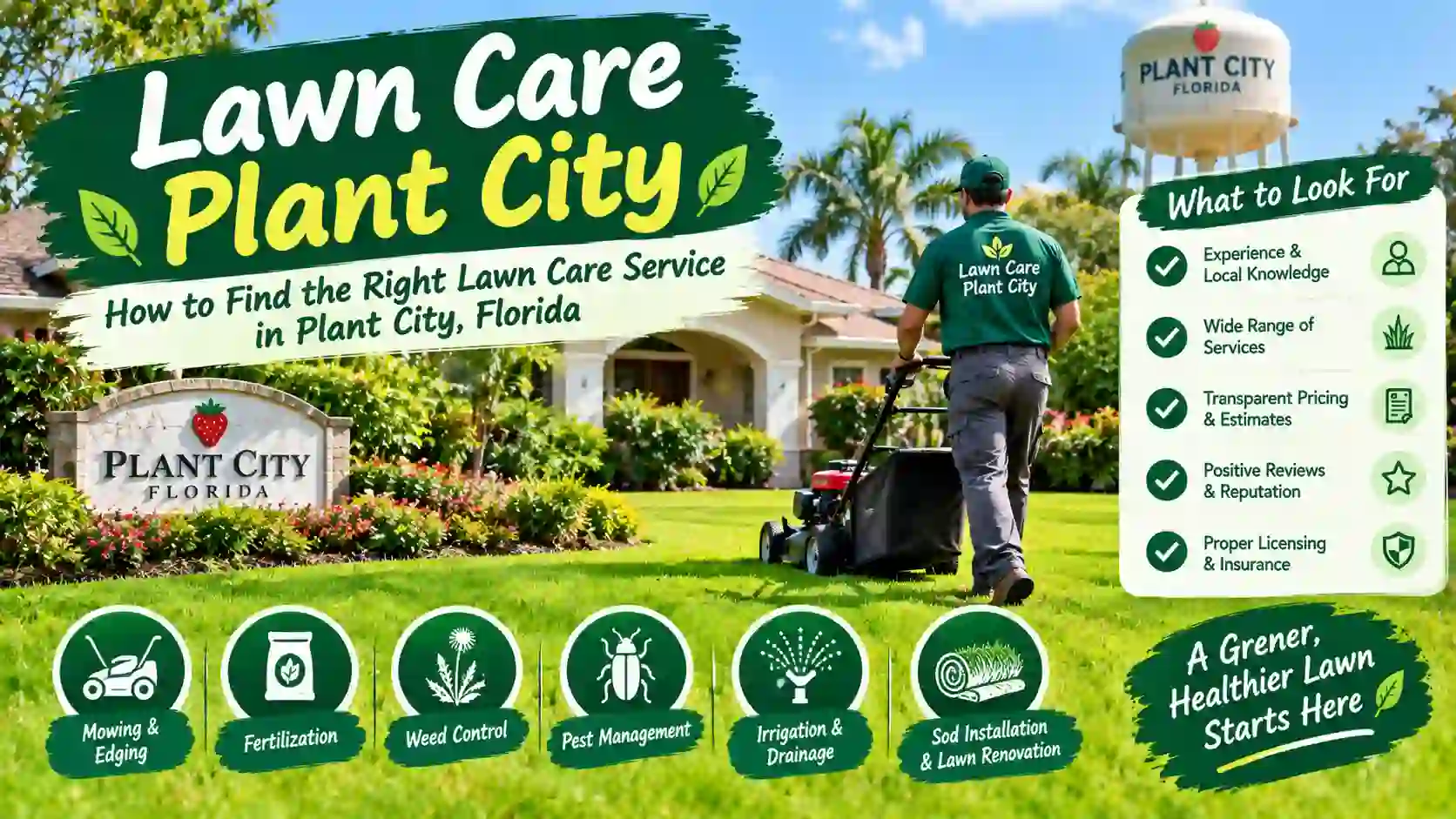
Image suggestion: Create a six-panel infographic showing mowing, fertilizing, weed control, pest treatment, irrigation, and sod installation.
Local Lawn Care Companies in Plant City, Florida
If you are looking for a lawn care company in Plant City, these local options provide a starting point for comparing services. Availability, service areas, and pricing can vary, so confirm details directly before booking.

Add to Favorites
Greenworks Inc.
4944 E Dr Martin Luther King Jr Blvd, Plant City, FL 33566
Listed for lawn care, fertilization, weed control, and related treatments. Its business profile reports a 4.7 rating from 456 reviews.
Birdeye
Phone: (813) 685-5959

Add to Favorites
Your Green Team Tampa
902 W Dr Martin Luther King Jr Blvd, Plant City, FL 33563
A local option to contact about lawn care and treatment services. Its listing reports a 4.4 rating from 1,872 reviews.
Phone: (833) 320-0199

Add to Favorites
Plant It Earth, Inc.
3208 Sydney Rd, Plant City, FL 33566
Its listing reports a 4.4 rating from 1,153 reviews. Contact the company to confirm which lawn maintenance, fertilization, or pest services it currently offers for your address.
Phone: (844) 681-2226

Add to Favorites
All American Lawn & Tree Specialist
2817 Turkey Creek Rd, Plant City, FL 33566
Another local provider to contact about lawn and tree care needs. The business listing reports a 4.1 rating from 48 reviews. Confirm the exact services offered for your property.
Phone: (813) 478-4965

Add to Favorites
Kuzco’s Lawn Service
1917 Casa Montego Pl, Plant City, FL 33567
A local lawn service option with a listed 4.8 rating from 23 reviews. Ask about mowing frequency, edging, cleanup, and recurring maintenance plans.
Phone: (813) 699-2638
These listings are a shortlist, not a guarantee of quality or a ranking of the best companies. Review recent feedback, ask for an itemized quote, and confirm that the provider handles your specific lawn issue. You can also compare additional providers through Angi’s Plant City lawn care directory or Thumbtack’s Plant City lawn care listings.
How Much Does Lawn Care Cost in Plant City?
The price depends on lawn size, grass condition, the services included, and how often the provider visits. A simple mowing appointment and a comprehensive treatment program should not be compared as if they were the same service.
| Service | What affects the price |
|---|---|
| Lawn mowing | Yard size, grass height, obstacles, and visit frequency |
| Edging and trimming | Length of borders, trees, fences, and landscaping |
| Fertilization | Lawn area, product, application rate, and treatment plan |
| Weed control | Weed type, severity, lawn size, and number of visits |
| Pest or disease treatment | Diagnosis, affected area, product, and follow-up needs |
| Sod installation | Area, grass variety, site preparation, and sod delivery |
| Irrigation repair | Faulty components, access, parts, and labor |
How to Get an Accurate Lawn Care Quote
- Measure your lawn. Provide an approximate square footage or property layout.
- Describe the problem. Mention weeds, brown patches, overgrowth, drainage, or insect activity.
- Request itemized pricing. Ask for separate costs for mowing, edging, fertilization, and treatments.
- Clarify the schedule. Find out how often the company visits and whether missed appointments are rescheduled.
- Ask about additional fees. Confirm charges for overgrown grass, cleanup, extra treatments, or disposal.
- Compare the full service. A lower quote may exclude edging, clippings cleanup, or follow-up visits.
One useful rule: ask whether the price covers a one-time visit or an ongoing plan. This prevents unexpected costs after the first appointment.
Best Grass Types for Lawns in Plant City
Plant City is in Central Florida, where warm-season grasses are common. The best choice depends on sunlight, foot traffic, soil, irrigation, and how much maintenance you want to do.

Add to Favorites
St. Augustinegrass
A popular choice for residential lawns because it creates dense coverage and tolerates some shade. It needs appropriate mowing, irrigation, and monitoring for pests and disease. Standard cultivars are generally maintained around 3.5–4 inches.
Ask IFAS – Powered by EDIS

Add to Favorites
Bahiagrass
Worth considering for sunny areas where lower-input maintenance is a priority. It generally forms a less dense, less manicured-looking lawn than St. Augustinegrass.

Add to Favorites
Bermudagrass
Suited to sunny lawns that receive regular mowing. It spreads aggressively and generally needs more frequent mowing than slower-growing turf types.

Add to Favorites
Zoysiagrass
A dense lawn option for homeowners seeking an attractive finish. Establishment, thatch management, and cultivar-specific mowing needs should factor into your decision.
Before replacing your grass: identify your existing variety first. Different grass species need different mowing heights, fertilizer amounts, and weed-control products. The University of Florida’s St. Augustinegrass guide provides detailed care recommendations.
Ask IFAS – Powered by EDIS
A Practical Lawn Care Schedule for Plant City
Florida lawns do not follow the same maintenance schedule as lawns in colder states. Warm-season grass usually grows fastest during warmer months and slows as temperatures drop.
| Season | Lawn care priorities |
|---|---|
| Spring | Inspect winter damage, identify weeds, check irrigation, and plan appropriate fertilization. |
| Summer | Mow regularly, monitor for pests and disease, adjust watering for rainfall, and avoid unnecessary chemical treatments. |
| Fall | Reduce watering as growth slows, address remaining weeds appropriately, and prepare for cooler weather. |
| Winter | Mow less often as needed, avoid forcing growth with unnecessary fertilizer, and monitor for drainage problems. |
The exact schedule depends on grass type, weather, soil, and local fertilizer rules. In Central Florida, University of Florida guidance generally places the start of the growing-season fertilization period around early April, but you should confirm current recommendations and restrictions before applying products.
Ask IFAS – Powered by EDIS
+1
Image suggestion: A four-season lawn care calendar featuring a Florida home, green grass, a mower, sprinkler, and seasonal maintenance icons.
How to Maintain a Healthy Lawn Between Professional Visits
Hiring a lawn care company does not eliminate the need for basic maintenance. A few simple habits can help prevent recurring problems.
1. Mow at the correct height
Avoid cutting the grass extremely short to reduce future mowing. Scalping can weaken turf, expose soil, and increase stress. For standard St. Augustinegrass, UF/IFAS recommends roughly 3.5–4 inches, with different heights for dwarf cultivars. Never remove more than one-third of the leaf blade in a single mowing.
Ask IFAS – Powered by EDIS
2. Water according to the lawn’s needs
Do not run sprinklers automatically every day without considering rainfall. Established grass often needs watering only when it shows signs of moisture stress, such as folded blades, a blue-gray color, or footprints that remain visible.
UF/IFAS recommends applying approximately ½–¾ inch per irrigation event as a general guideline for established lawns, then waiting until signs of drought stress return. Adjust for soil, grass type, weather, and local watering restrictions. Early morning is generally the best time to irrigate.
Ask IFAS – Powered by EDIS
+1
3. Avoid unnecessary fertilizer
More fertilizer does not always mean healthier grass. Excess nitrogen can encourage excessive growth, contribute to thatch, and increase disease risk under some conditions. Use products suited to your grass type and follow current Florida rules.
Ask IFAS – Powered by EDIS
+1
4. Investigate brown patches before treating them
Brown areas can result from drought, irrigation problems, disease, insects, compaction, or mower damage. Take photographs and check the soil and sprinkler coverage before buying treatments.
If the damage spreads, ask a qualified lawn professional to identify the cause before applying pesticides.
5. Keep water and fertilizer away from storm drains
Avoid applying fertilizer before heavy rain, and prevent lawn products from washing off driveways or sidewalks. These precautions help protect local waterways while reducing product waste.
Ask IFAS – Powered by EDIS
+1
How to Choose the Right Lawn Care Company
A reliable provider should explain what your lawn needs and why. Do not judge a company solely by its advertising or the promise of instant green grass.
Use these questions when requesting estimates:
- Does the company regularly serve my specific Plant City neighborhood?
- Does the quote include mowing, edging, trimming, and cleanup?
- Will the company identify my grass type before recommending treatments?
- Are fertilization and weed control included, or billed separately?
- Does it inspect lawns for pests and disease before recommending pesticides?
- Can it explain its treatment schedule and expected results?
- Are additional charges disclosed before work begins?
- Does it provide written estimates and clear service terms?
- If pesticides are used, does the company hold the applicable Florida licenses?
- How does it handle rain delays, missed visits, and customer complaints?
For pesticide applications, ask which license or certification applies to the specific service. Florida requirements depend on the work being performed. You can check with the Florida Department of Agriculture and Consumer Services for relevant licensing information.
Warning signs to watch for
Be cautious if a provider:
- Promises to eliminate every lawn problem in one visit.
- Recommends fertilizer without considering grass type or application restrictions.
- Cannot explain the products it intends to use.
- Offers vague pricing or refuses to describe what the service includes.
- Recommends pesticide treatments without identifying a likely pest or explaining the reason.
A professional lawn care plan should be based on your property’s actual needs, not a one-size-fits-all treatment package.
Common Lawn Care Problems in Plant City
| Problem | Possible causes | Practical next step |
|---|---|---|
| Brown or dry patches | Drought, uneven irrigation, disease, or insects | Check moisture and sprinkler coverage; inspect the damaged grass. |
| Yellowing grass | Nutrient issues, waterlogging, root damage, or other stress | Check soil moisture and drainage before applying fertilizer. |
| Weeds spreading quickly | Thin turf, unsuitable mowing, or excessive moisture | Identify the weeds and improve underlying lawn conditions. |
| Mushy or persistently wet areas | Poor drainage, leaks, or excessive irrigation | Check sprinkler heads and investigate drainage. |
| Grass growing too quickly | Seasonal growth or excessive nitrogen | Review mowing frequency and fertilizer use. |
| Bare spots | Heavy traffic, shade, pests, disease, or poor establishment | Identify the cause before reseeding, plugging, or installing sod. |
The most effective treatment addresses the underlying cause. Applying more fertilizer to a waterlogged lawn, for example, will not correct poor drainage.
Frequently Asked Questions
How much does lawn care cost in Plant City, Florida?
Prices vary with lawn size, grass height, service frequency, and the work required. Mowing, fertilization, weed control, and sod installation are priced differently. Request written, itemized quotes from at least two or three providers.
How often should a lawn be mowed in Plant City?
Many lawns need more frequent mowing during active warm-season growth and less during cooler periods. The right interval depends on the grass variety, rainfall, sunlight, and growth rate. Avoid removing more than one-third of the leaf blade at a time.
What is the best grass for Plant City, Florida?
St. Augustinegrass is a common residential choice, while bahiagrass, bermudagrass, and zoysiagrass may suit different properties. Consider shade, foot traffic, maintenance requirements, and irrigation before choosing a variety.
When should I fertilize my lawn in Plant City?
Fertilize during the appropriate active-growth period for your grass and follow current Florida and local restrictions. Central Florida recommendations commonly begin around early April, but weather and applicable rules can change the timing.
Ask IFAS – Powered by EDIS
+1
Why is my Florida lawn turning brown even though I water it?
Possible causes include uneven sprinkler coverage, poor drainage, fungal disease, insect damage, or mowing stress. Check the soil and irrigation system first. If the damage continues to spread, seek a professional diagnosis instead of adding water or chemicals blindly.
Is professional lawn care worth the cost?
It can be worthwhile if you need regular mowing, reliable maintenance, accurate pest identification, or help managing recurring problems. Compare the total service package with the time and equipment you would need to maintain the lawn yourself.
Do lawn care companies in Plant City offer free estimates?
Some providers advertise free estimates, while others may charge for inspections or specialized diagnostic work. Confirm the policy before arranging a visit and ask whether the estimate includes all requested services.
How do I find affordable lawn care near me in Plant City?
Compare local companies based on the same lawn size and service list. Ask about recurring maintenance plans, minimum visit charges, and optional treatments. The cheapest initial quote may not be the best value if essential services are excluded.
Conclusion
Finding the right lawn care in Plant City starts with understanding your grass, soil, irrigation, and maintenance goals. Regular mowing, appropriate watering, careful fertilization, and early diagnosis of lawn problems can prevent many common issues.
If you plan to hire a professional, compare local providers, request itemized estimates, and ask how they will address your lawn’s specific needs. A practical, consistent maintenance plan is usually more effective than relying on quick fixes or unnecessary treatments.
For additional guidance, explore the University of Florida’s Florida lawn watering recommendations and lawn care best practices.