
Quick Answer
For successful purple heart plant care, give Tradescantia pallida very bright light, water when the top 1–2 inches of soil feel dry, and use a loose, fast-draining potting mix. Pinch the stems regularly to keep growth full. Too little light causes green, leggy foliage, while consistently wet soil can lead to root rot.
Purple Heart Plant Care at a Glance
| Care factor | Best conditions |
| Botanical name | Tradescantia pallida, commonly ‘Purpurea’ |
| Light | Bright light indoors; full sun to partial shade outdoors |
| Water | When the top 1–2 inches of soil are dry |
| Soil | Loose, well-draining potting mix |
| Temperature | 60–80°F (16–27°C) |
| Humidity | Average household humidity |
| Fertilizer | Half-strength balanced feed every 4–6 weeks in active growth |
| Pruning | Pinch regularly to encourage branching |
| Propagation | Stem cuttings in soil or water |
| Main problems | Green foliage, leggy growth, overwatering and brittle stems |
Understanding the Purple Heart Plant
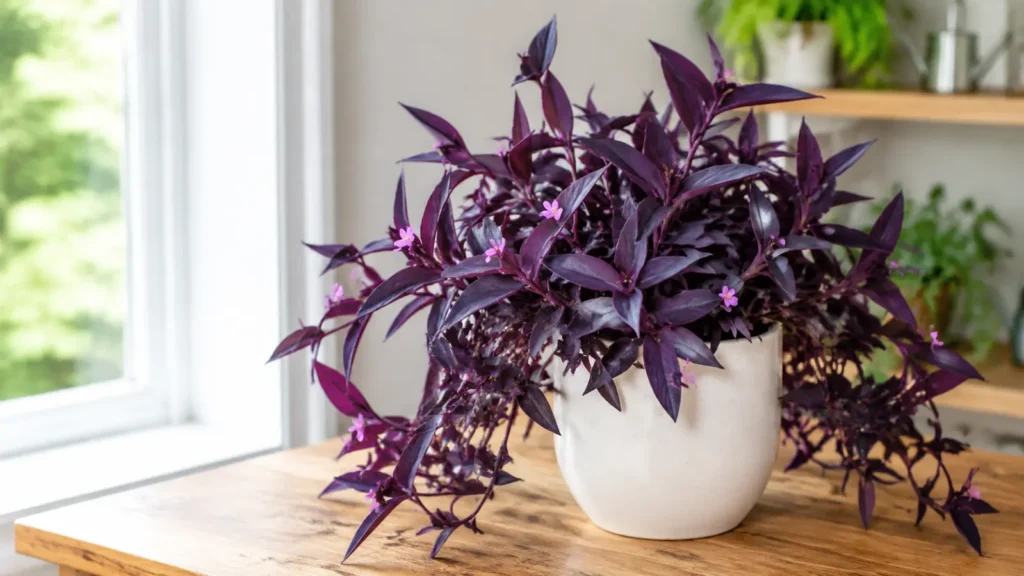
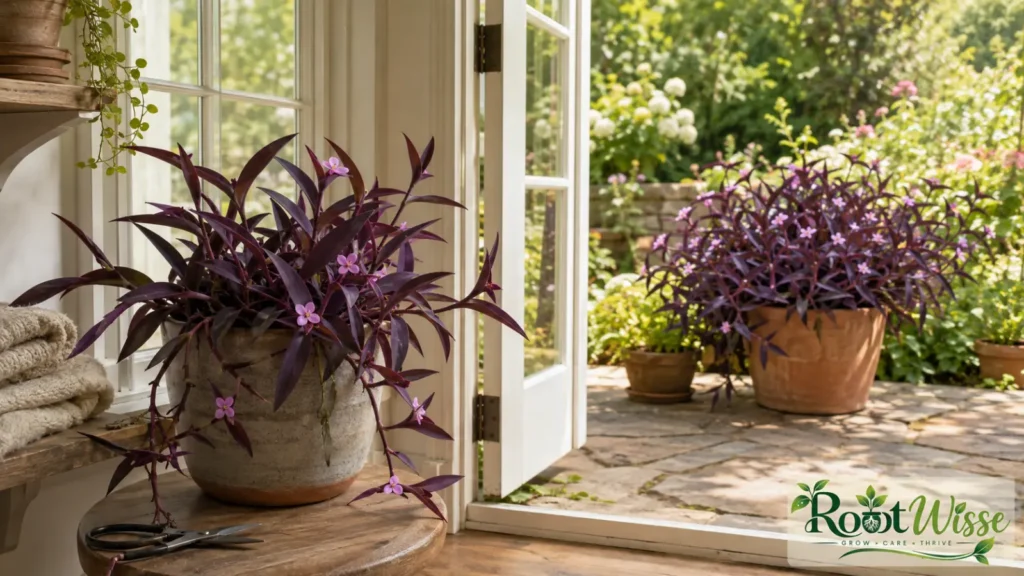
Purple heart, also called purple queen, is a fast-growing member of the spiderwort family. The form most commonly sold is Tradescantia pallida ‘Purpurea’, valued for its long violet leaves and small three-petaled pink flowers.
It grows as a trailing houseplant, hanging-basket plant, seasonal container specimen or outdoor ground cover. Although forgiving, it may become thin, green and bare without strong light and frequent pruning.
Light Requirements for Rich Purple Color
Light has the greatest effect on foliage color. Strong light encourages compact stems and deep purple pigmentation; shade produces greener leaves and wider spaces between nodes.
For purple heart plant care indoors, place the pot beside a bright east-, south- or west-facing window. Several hours of gentle direct sun are beneficial. If natural light is limited, use a full-spectrum grow light for approximately 12–14 hours daily, following the manufacturer’s distance recommendation.
Acclimate a plant from a dim room to direct sun over 7–14 days, beginning with morning light. Rotate the pot weekly for even growth.
Outdoors, full sun usually creates the richest purple color. Partial afternoon shade may help in extremely hot, dry climates. Some greenish foliage in shade is a normal response, not necessarily a disease.
Image suggestion: Compare a compact, sun-grown stem with a green, stretched stem grown in low light.
Purple Heart Plant Watering
Water according to soil moisture rather than following a fixed calendar:
- Push a finger 1–2 inches into the potting mix.
- If that layer feels dry, water the entire root ball.
- Let excess water drain from the pot.
- Empty the saucer or decorative cover pot.
- Wait until the upper soil dries again.
A sunny plant may need frequent watering in summer, while the same pot can remain damp much longer in winter. Containers also dry faster than garden soil.
Drooping leaves, crispy edges and shrinking soil indicate severe dryness. Water slowly in several passes if the root ball repels water.
Yellow or translucent leaves, mushy stems, a sour smell and wilting in wet soil suggest overwatering or root rot. Remove decayed roots, repot the healthy plant in fresh soil and correct the drainage. If most roots have rotted, take healthy stem cuttings instead of trying to save the original root system.
Soil, Pot and Fertilizer
The main purple heart plant soil requirement is fast drainage. Try two parts houseplant mix, one part perlite or pumice, and one part fine orchid bark. It should retain some moisture without becoming dense.
Always use a container with drainage holes. Choose one only 1–2 inches wider than the root ball. Oversized pots retain unused water and increase the risk of rot. Terracotta dries relatively quickly, while glazed ceramic and plastic hold moisture longer.
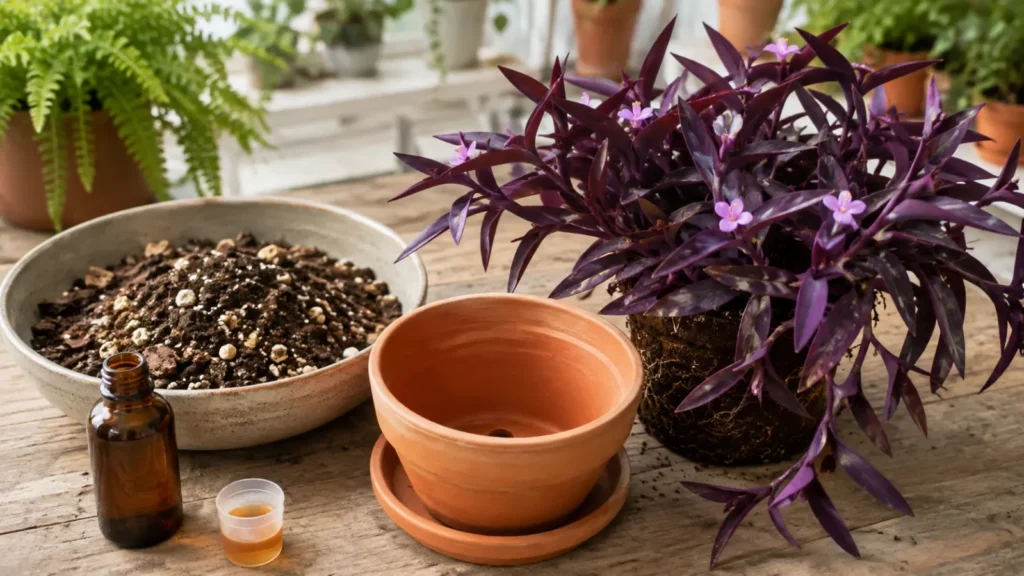
During spring and summer, apply balanced liquid fertilizer at half strength every four to six weeks to moist soil. Reduce feeding when winter growth slows. Brown tips, mineral crust and soft growth may signal excess fertilizer; flush the mix with clean water.
Temperature and Humidity
Indoor temperatures of 60–80°F (16–27°C) suit this plant. Avoid frost, cold windows, drafts and heating vents. Average household humidity is adequate; routine misting is unnecessary.
Pruning Purple Heart for Fuller Growth
Purple heart naturally trails and eventually becomes sparse unless trimmed. Each cut just above a leaf node can stimulate branching below it.
Use clean scissors to remove long or damaged stems. Pinch tips every few weeks during active growth. Root healthy cuttings around the pot’s edge to fill a bare center.
The succulent stems break easily, so support them while cutting. Wear gloves if you have sensitive skin because the sap may cause irritation.
Purple Heart Plant Propagation
Propagation is simple because roots develop readily at stem nodes.
- Cut a healthy 3–6-inch stem immediately below a node.
- Remove leaves from the lower one or two nodes.
- Keep several leaves at the top.
- Root the bare node in soil or water.
For soil propagation, insert the node into moist, well-draining mix in bright, indirect light. Keep it slightly moist until new growth appears. Combine several cuttings for fullness.
For water propagation, submerge a bare node but keep leaves above water. Replace cloudy water and transfer the cutting to soil after roots develop. Stem cuttings are more reliable than detached leaves because growth forms from nodes.
Image suggestion: Show the correct cutting point, a bare node and the planting depth.
Why Is My Purple Heart Plant Turning Green?
Insufficient light is the usual reason a purple heart plant is turning green. Gradually move it closer to a bright window or improve its grow light, then assess the color of new growth. Older green leaves may not become fully purple again.
Winter light, an unrotated pot and overly rich fertilizer can also reduce color. Do not deliberately drought-stress the plant; lack of water does not replace adequate light.
Common Purple Heart Plant Problems
| Symptom | Likely cause | Solution |
| Green foliage | Insufficient light | Increase light gradually |
| Long gaps between leaves | Low light or lack of pruning | Improve light and cut above nodes |
| Yellow, soft leaves | Wet soil or poor drainage | Let soil dry and inspect roots |
| Brown, crispy edges | Dryness, heat or fertilizer salts | Check moisture and flush excess salts |
| Pale, bleached patches | Sudden strong sun | Move to gentler light and acclimate |
| Bare growth at the base | Aging stems | Prune and replant rooted tips |
| Black, mushy stems | Rot | Remove decay and save healthy cuttings |
| Distorted new leaves | Possible pests | Inspect and isolate the plant |
Aphids, spider mites, mealybugs and scale occasionally attack purple heart. Check leaf undersides, stem joints and new growth. Isolate an affected plant, rinse off minor infestations and use insecticidal soap according to its label if needed.
Indoor, Outdoor and Seasonal Care
Move plants outside gradually, starting in bright shade. Before bringing them inside, inspect for pests and act before frost. In cold climates, overwinter cuttings indoors.
Prune and resume feeding in spring. Check moisture often in summer. Take backup cuttings in autumn. Reduce winter watering and add a grow light if stems stretch.
Safety Around Pets and Children
Keep it away from pets and children who may chew it. Ingestion may irritate the mouth or stomach, while sap can irritate skin. Seek professional advice after ingestion or a reaction.
Frequently Asked Questions
Is purple heart easy to care for?
Yes. It grows quickly, tolerates brief dryness and roots readily from cuttings. Bright light, drainage and regular pruning are its main needs.
Does purple heart need direct sunlight?
Strong light produces the best color. Gentle indoor sun is useful, while outdoor plants can often take full sun. Always acclimate plants gradually.
How often should I water it?
Water when the top 1–2 inches of soil feel dry. The timing varies with temperature, light, season, soil and pot size.
Can purple heart grow in low light?
It may survive, but it usually turns greener and becomes leggy. Low light is unsuitable for compact, richly colored growth.
How do I make it bushy?
Pinch growing tips, cut long stems just above nodes and root several cuttings in the same pot.
Why do the stems break?
The stems are naturally succulent and brittle. Handle them gently and use healthy broken sections as propagation cuttings.
Does purple heart return every year?
It is perennial in warm, frost-free climates. In colder areas, grow it as an annual or bring it indoors before frost.
Final Care Strategy
Reliable purple heart plant care rests on four priorities: abundant light, controlled watering, fast-draining soil and regular pruning. Increase sunlight gradually, water only after the upper soil dries, and never leave the pot standing in runoff. When growth becomes long or bare, prune and replant the tips. This simple renewal cycle keeps Tradescantia pallida dense, vigorous and vividly purple.