
Quick Answer
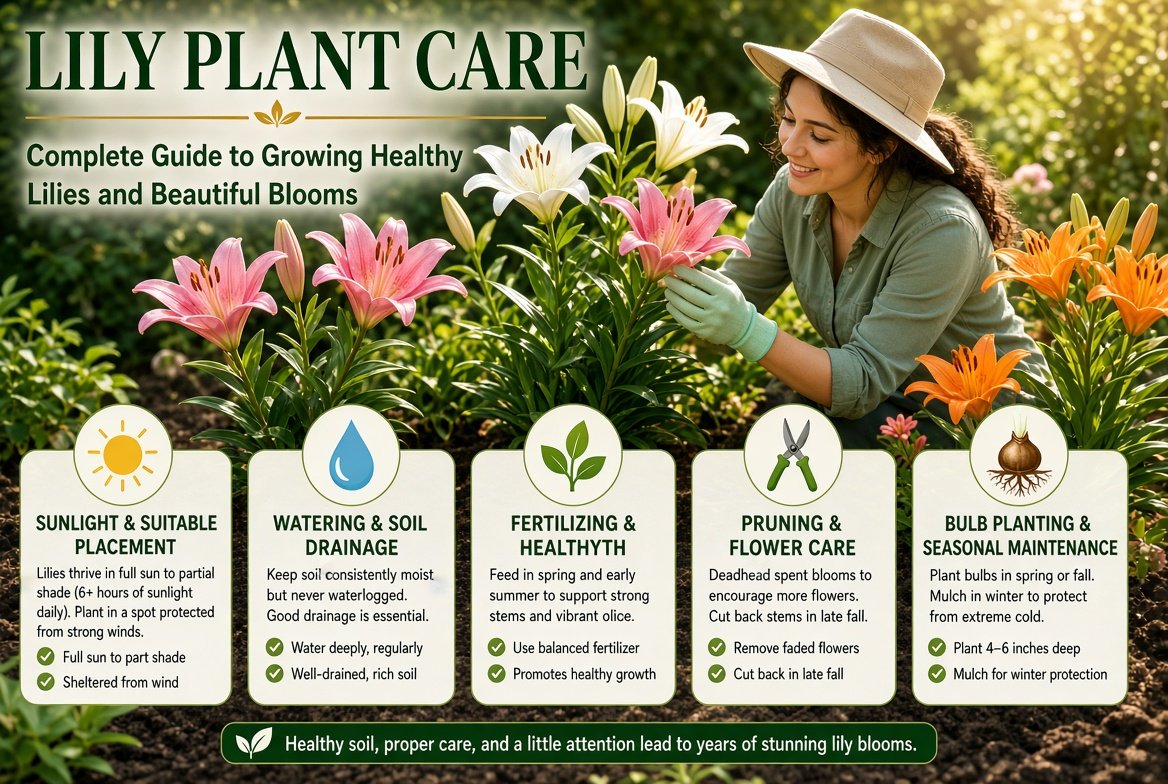
Lilies grow best in well-drained, fertile soil and a location with plenty of sunlight. Most garden lilies prefer around six hours of sun, with cooler soil around their roots. Water deeply when the soil begins to dry, and avoid waterlogged conditions that can rot bulbs. Plant bulbs at the depth recommended for their type, feed during active growth, and remove faded flowers while leaving healthy foliage to nourish the bulb.
Search intent and scope
The keyword “lily plant care” usually signals a practical growing guide: readers want to know how to plant lilies, keep them healthy, encourage blooms, and solve common problems.
One important distinction: this article focuses on true lilies in the genus Lilium, which grow from bulbs. Peace lilies (Spathiphyllum) are different plants and need a different care routine.
1. What Are True Lilies?


4
True lilies belong to the genus Lilium. They grow from bulbs and produce upright stems with narrow leaves and showy flowers. Depending on the variety, blooms may be trumpet-shaped, bowl-shaped, or have petals that curve backward. Some are strongly scented, while others have little fragrance.
RHS Plant Guide
+1
Common types of garden lilies
|
Lily type
|
Typical features
|
Growing considerations
|
| — | — | — |
|
Asiatic hybrids
|
Bright colors, often unscented flowers
|
Generally adaptable; many prefer slightly alkaline soil
|
|
Oriental hybrids
|
Large, often fragrant flowers
|
Usually prefer acidic soil
|
|
Trumpet lilies
|
Long, trumpet-shaped, often fragrant flowers
|
Grow in many soil types with good drainage
|
|
Martagon lilies
|
Smaller, downward-facing flowers with recurved petals
|
Prefer humus-rich soil and light shade
|
|
Longiflorum hybrids
|
Elegant, trumpet-shaped flowers
|
Usually grow in well-drained soil; protect tender varieties from harsh conditions
|
These groups do not all have identical preferences. Check the bulb label for the cultivar’s soil, planting depth, and hardiness requirements before planting.
RHS Growing Guide
+1
Important naming note: Peace lilies (Spathiphyllum), calla lilies (Zantedeschia), and daylilies (Hemerocallis) are not true lilies in the genus Lilium. Their care and toxicity profiles differ.
2. Lily Plant Care at a Glance

|
Care need
|
General guidance
|
| — | — |
|
Sunlight
|
Full sun or light shade; many varieties flower best with plenty of light
|
|
Root conditions
|
Keep roots cool with nearby low-growing plants or a suitable mulch
|
|
Soil
|
Fertile, moisture-retentive, well-drained soil
|
|
Water
|
Keep soil from drying out during active growth, but avoid waterlogging
|
|
Planting
|
Usually autumn or spring; follow the variety’s planting instructions
|
|
Fertilizer
|
Feed during growth as appropriate for the soil and growing method
|
|
Deadheading
|
Remove faded flowers, but keep healthy leaves until they die back naturally
|
|
Support
|
Stake tall stems in exposed or windy locations
|
|
Main risks
|
Bulb rot in wet soil, pests such as lily beetles, and serious toxicity to cats
|
The RHS recommends moist, well-drained soil and a sunny or lightly shaded position for many lilies. It also emphasizes that heavy, waterlogged soil can cause bulbs to rot.
RHS Plant Guide
+1
3. Choosing the Right Location and Sunlight

Most garden lilies grow well in full sun or light shade. Many flower best when their stems receive good light while the soil around the bulbs remains relatively cool. Deep shade can lead to weak growth and fewer flowers.
RHS Plant Guide
+1
How to choose a planting spot
- Look for a place with plenty of daylight and protection from strong winds.
- Avoid areas where rainwater collects or soil stays saturated.
- Use low-growing plants around lilies to shade the soil without smothering their stems.
- Give tall varieties enough room and support to prevent wind damage.
- Check the needs of your specific lily group, especially martagon and other varieties that prefer partial shade.
Why root shade helps
Lilies need light for healthy stems and flowering, but their bulbs and roots dislike persistently hot, dry soil. Low-growing companions or a light mulch can help moderate soil conditions while allowing the lily stems to receive sunlight.
Practical tip: If your lilies lean strongly toward one side, they may be reaching for more light or responding to wind. Consider a brighter, more sheltered location next season.
4. Soil and Drainage: Prevent Bulb Rot
Lilies need soil that holds enough moisture for growth but drains freely after rain or watering. Heavy, compacted soil that stays wet can cause bulbs to rot. The RHS recommends improving soil where needed or growing lilies in containers when garden drainage is unsuitable.
RHS Growing Guide
+1
Improving garden soil
If your soil is heavy:
- Loosen the planting area rather than digging only a small, isolated hole.
- Incorporate suitable organic matter, such as leaf mould or well-rotted compost.
- Improve drainage where possible; a raised bed can help if the site remains wet.
- Avoid planting bulbs in low spots that collect water.
Do not assume adding a little grit to one planting hole will solve badly drained clay. Water may still collect inside the hole. Improving a broader area or choosing a raised bed is often more effective.
Soil acidity varies by lily type
Many lilies prefer neutral to slightly acidic soil, but some groups differ. Oriental lilies generally favor acidic conditions, while many Asiatic hybrids tolerate or prefer slightly alkaline soil. Check the requirements of your variety before adjusting soil pH.
RHS Growing Guide
+1
Image suggestion: A soil comparison showing well-drained, crumbly soil beside compacted, waterlogged soil, with a lily bulb in each.
5. When and How to Plant Lily Bulbs

Lilies are commonly planted in autumn or spring. Plant bulbs soon after purchase because they can dry out during storage. Autumn planting gives many varieties time to establish roots before the next growing season.
RHS Growing Guide
+1
Step-by-step planting guide
- Choose healthy bulbs. Select firm bulbs without obvious soft, rotten, or badly damaged areas.
- Prepare the soil. Make sure it is fertile and drains well.
- Find the top and bottom. Position the basal plate and roots downward, with the pointed tip facing up.
- Set the planting depth. Follow the instructions for your lily type. Bulb-rooting habits differ, so one depth does not suit every lily.
- Space bulbs appropriately. Allow room for mature plants and airflow.
- Backfill gently. Cover the bulbs with soil without compacting it excessively.
- Water to settle the soil. Avoid saturating the planting area.
The RHS gives different depth guidance for basal-rooting and stem-rooting lilies. If you do not know the type, use the bulb’s supplied planting instructions rather than guessing.
RHS Growing Guide
+1
Should you plant lilies in groups?
Planting several bulbs together can create a fuller display, especially in a border or container. However, overcrowding can reduce airflow and make watering and pest inspections more difficult. Use the spacing recommended for the variety and container size.
6. Watering Lilies Correctly
Lilies need adequate moisture during active growth, but their bulbs should not sit in waterlogged soil. The RHS advises keeping container compost moist and watering more regularly as shoots develop. In-ground lilies may need additional water during prolonged dry periods.
RHS Growing Guide
+1
A practical watering routine
- Check the soil around the root zone rather than judging only by the surface.
- Water deeply during dry spells when the soil is becoming dry.
- Let excess water drain away, especially in containers.
- Avoid frequent shallow sprinkling that wets the surface but leaves deeper roots dry.
- Continue watering after flowering while foliage remains green and active.
Watering by growing situation
|
Situation
|
What to do
|
| — | — |
|
Lily in a garden border
|
Water during prolonged dry weather, especially while buds and flowers develop
|
|
Lily in a container
|
Check moisture more often because pots dry faster
|
|
Cool, rainy weather
|
Avoid adding water when the soil is already moist
|
|
After flowering
|
Maintain suitable moisture until foliage begins to yellow naturally
|
Common mistake: Cutting back watering immediately after flowers fade. The leaves continue producing energy that helps replenish the bulb for future growth. Keep the plant watered as needed while the foliage remains healthy.
7. Fertilizing Lilies for Strong Stems and Flowers
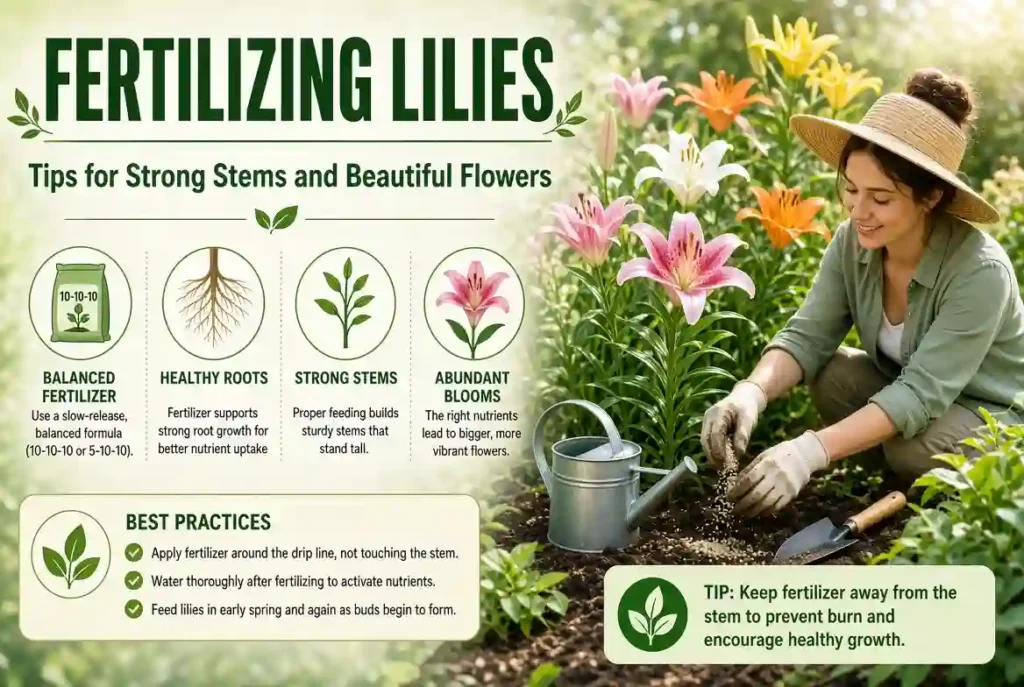
Lilies benefit from fertile soil and appropriate feeding during the growing season. Container-grown lilies may need more regular feeding because nutrients are limited in the potting mix. The RHS recommends a high-potassium liquid feed for lilies in containers during growth.
RHS Growing Guide
+1
How to feed
- Start with healthy soil enriched with suitable organic matter.
- For containers, use a fertilizer labeled for flowering plants and follow its directions.
- Feed during active growth rather than when the plant is dormant.
- Avoid excessive nitrogen, which can encourage leafy growth at the expense of balanced flowering.
- Do not apply fertilizer to very dry soil or a plant with suspected root rot.
If a lily has healthy leaves but few flowers, check sunlight, bulb maturity, planting depth, and growing conditions before increasing fertilizer. Feeding cannot make up for a poorly placed or unhealthy bulb.
8. Staking and Protecting Tall Lily Stems
Some lilies grow tall and carry heavy flowers. Strong winds or rain can bend or break their stems, especially in exposed gardens. The RHS recommends staking lilies that need support and advises placing stakes before planting to reduce the risk of damaging bulbs.
RHS Growing Guide
+1
How to stake lilies safely
- Place a stake near the bulb when planting, or carefully position one without forcing it through the root zone.
- Use soft plant ties or garden twine.
- Tie the stem loosely so it can move slightly.
- Add support higher up if the plant becomes top-heavy.
- Check ties as the stem grows and loosen them if needed.
A sheltered planting location can reduce the need for staking. Compact varieties may stand upright without support, while tall hybrids often benefit from it.
Image suggestion: A tall flowering lily supported by a slim stake and loose, soft ties.
9. Deadheading and Pruning After Flowering
Removing faded flowers keeps lilies looking tidy and prevents the plant from putting unnecessary energy into seed production. However, the green leaves and stems should remain until they naturally yellow and die back.
RHS Growing Guide
+1
What to remove
- Cut off faded flowers below the flower head.
- Avoid cutting healthy leaves just because the flowers have finished.
- Remove yellowing or dead foliage once it has naturally died back.
- Cut dead stems near ground level at the end of the season.
Why should you leave the foliage?
The leaves continue photosynthesizing after flowering. This helps replenish the bulb and supports future growth. Removing green foliage too early can weaken the plant and reduce its performance in the next season.
Practical tip: If you grow lilies for cut flowers, avoid removing too much of the stem and foliage. Leave enough healthy leaves to support the bulb.
10. Growing Lilies in Containers

Lilies can grow successfully in pots, making them useful for patios, balconies, and gardens with unsuitable soil. Choose a deep container with good drainage, especially for tall varieties.
RHS Advice
+1
Container setup
- Pot: Choose a stable container with drainage holes and enough depth for the bulb and roots.
- Compost: Use a quality potting compost suited to the lily type.
- Drainage: Ensure excess water can escape; do not leave the pot standing in a full saucer.
- Position: Place it in sun or light shade according to the variety.
- Support: Stake tall lilies and shelter the pot from strong winds.
- Water: Check the compost regularly, especially during warm weather.
After flowering
Continue watering and feeding as appropriate while the leaves remain green. When foliage dies down, follow the variety’s guidance for overwintering and repotting. In suitable climates, many lily bulbs can remain in large containers, but protection from winter waterlogging may be needed.
RHS Advice
+1
11. Seasonal Lily Plant Care
|
Season
|
Main tasks
|
| — | — |
|
Autumn
|
Plant bulbs where suitable; remove dead stems and review container drainage
|
|
Winter
|
Protect containers from prolonged waterlogging and provide any variety-specific cold protection
|
|
Spring
|
Watch for new shoots, protect emerging growth, and begin feeding as appropriate
|
|
Summer
|
Monitor moisture, support tall stems, inspect for pests, and deadhead faded flowers
|
Lilies vary in hardiness and flowering time. Use the bulb label or cultivar information to adjust this schedule for your climate and variety.
RHS Growing Guide
+1
12. Common Lily Problems and How to Solve Them
Lily problems can come from pests, disease, poor drainage, or unsuitable growing conditions. Inspect the whole plant and its growing environment before treating it.
|
Symptom
|
Possible cause
|
Practical response
|
| — | — | — |
|
Bulb or stem base rots
|
Waterlogged soil or poor drainage
|
Improve drainage and remove badly rotted material
|
|
Leaves have holes or ragged edges
|
Chewing pests, including beetles or slugs
|
Inspect leaves and stems, especially underneath leaves
|
|
Buds become damaged or fail to open
|
Pest feeding, environmental stress, or plant weakness
|
Check for insects and review watering, light, and weather exposure
|
|
Stems lean or bend
|
Strong wind, heavy blooms, or insufficient light
|
Stake the stem and consider a more sheltered, brighter position
|
|
Few flowers
|
Poor light, crowded bulbs, unsuitable conditions, or premature foliage removal
|
Review site, spacing, care, and whether the bulb has had time to establish
|
|
Leaves develop spots or decay
|
Possible fungal disease or persistent wet conditions
|
Remove affected debris, improve airflow, and avoid wetting foliage unnecessarily
|
Lilies can be affected by lily leaf beetles, aphids, slugs, and fungal problems. The RHS and university extension resources recommend monitoring plants and responding to the specific problem rather than treating symptoms blindly.
RHS Growing Guide
+2
Lily leaf beetles
Lily leaf beetles are bright red adults that feed on lily leaves and flowers. Their larvae can also cause extensive damage. University of New Hampshire Extension recommends regular inspection because both stages can feed heavily on susceptible plants.
Extension
+1
To manage an infestation:
- Inspect stems, leaves, and the undersides of leaves frequently during the growing season.
- Remove visible beetles, larvae, and eggs where practical.
- Dispose of pests appropriately rather than leaving them beside the plant.
- If damage is extensive, seek locally appropriate pest-management advice and follow any product label carefully.
13. Lily Safety: A Critical Warning for Cat Owners
Lilies can be deadly to cats
True lilies (Lilium) and daylilies (Hemerocallis) can cause severe kidney injury in cats. All parts of the plant may be dangerous, including leaves, flowers, pollen, and water from a vase. Keep these lilies out of homes and gardens accessible to cats. If a cat may have had contact with one, seek veterinary care immediately—even if it seems well.
FDA
+1
This warning is not interchangeable across every plant with “lily” in its common name. Peace lilies and calla lilies are not true Lilium lilies, but they can still cause harm if chewed. Identify plants by their botanical names when checking safety.
FDA
14. Frequently Asked Questions
How much sunlight do lilies need?
Many true lilies grow best in full sun or light shade. Some varieties, including martagon lilies, prefer lighter shade. Check the needs of your specific lily type.
RHS Plant Guide
+1
How often should I water lilies?
Water when the soil around the roots begins to dry, especially during active growth and prolonged dry weather. Container-grown lilies usually need more frequent checks than lilies planted in the ground. Avoid waterlogged soil.
When is the best time to plant lily bulbs?
Autumn and spring are common planting times. Plant bulbs promptly after purchase and follow the instructions for the variety you have.
RHS Growing Guide
+1
Should I cut lilies back after flowering?
Remove faded flower heads, but leave healthy stems and leaves until they yellow and die naturally. The foliage helps replenish the bulb for the next growing season.
RHS Growing Guide
+1
Can lilies grow in pots?
Yes. Use a deep, stable container with drainage holes and suitable potting compost. Keep the compost moist but not waterlogged, and stake tall varieties if necessary.
RHS Advice
Why are my lilies not flowering?
Possible reasons include insufficient light, crowded bulbs, unsuitable soil or moisture, damage from pests, or foliage being cut back too early in the previous season. Check these conditions before applying extra fertilizer.
Do lilies come back every year?
Many garden lilies are perennial bulbs and can return in suitable conditions. Their long-term performance depends on the variety, climate, drainage, and how well the foliage is allowed to mature after flowering.
RHS Plant Guide
+1
Are lilies poisonous to cats?
Yes. True lilies and daylilies can cause life-threatening kidney injury in cats. Even pollen or water from a vase can be hazardous. Keep them away from cats and seek immediate veterinary help after possible exposure.
FDA
+1
15. Related Gardening Guides
Readers interested in flowering plants and seasonal garden care may also enjoy:
- Gardenia Plant Care: Learn about growing fragrant flowers and managing soil, light, and moisture.
- Lantana Plant Care: Explore care for a colorful flowering plant in warm conditions.
- Shrimp Plant Care: Discover how to grow a tropical ornamental with distinctive flower bracts.
- Philodendron Plant Care: Learn about watering, light, and support for popular foliage plants.
- How to Care for an Aloe Plant: Understand the different needs of a drought-tolerant succulent.
Internal linking suggestion: Link only to related articles that are published on your website.
Conclusion
Successful lily plant care depends on giving the bulbs the conditions they need to grow and replenish themselves. Choose a suitable location, provide fertile and well-drained soil, and keep moisture steady without allowing the roots to become waterlogged.
Plant bulbs at the correct depth for their type, support tall stems when needed, and remove faded flowers without cutting away healthy foliage too soon. Check plants regularly for pests, and adjust watering and feeding to the season and growing conditions.
Most importantly, remember that true lilies are extremely dangerous to cats. Keep them away from cats and seek urgent veterinary help if exposure may have occurred.