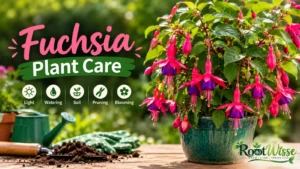
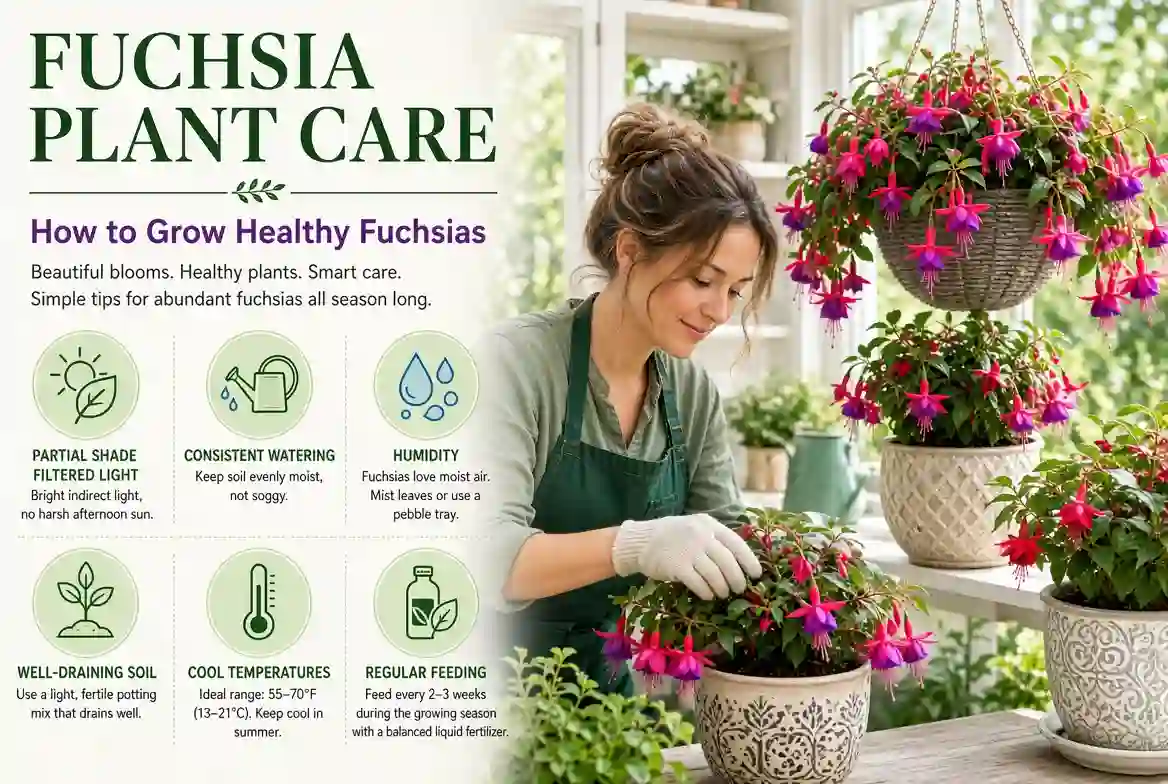
Fuchsia plant care becomes much easier when you understand light, water, soil, feeding, and temperature. Fuchsias are known for their elegant hanging flowers and colorful blooms. They grow well in containers, hanging baskets, patios, and garden borders. However, they can struggle in extreme heat, dry soil, or poor drainage. Many beginners also treat every fuchsia variety the same.
That can lead to weak growth, leaf loss, or fewer flowers. Some fuchsias are hardy, while others need winter protection. Your local climate also changes the best care routine. This guide explains how to grow fuchsias successfully from planting through winter. You will also learn how to fix common problems and encourage more flowers. The goal is simple: healthy roots, strong foliage, and a longer-lasting flower display.
⭐ Quick Answer (for Google Snippet)
Fuchsia plant care requires bright filtered light, moist but well-drained soil, regular feeding, and protection from extreme heat. Pinching young shoots encourages bushier growth and more flowering stems. Tender varieties need frost protection, while hardy varieties can survive suitable outdoor winters. (HGTV)
Example: Place a container fuchsia in bright morning light, protect it from harsh afternoon sun, and keep its soil evenly moist.
🌱 Meaning of Fuchsia Plant
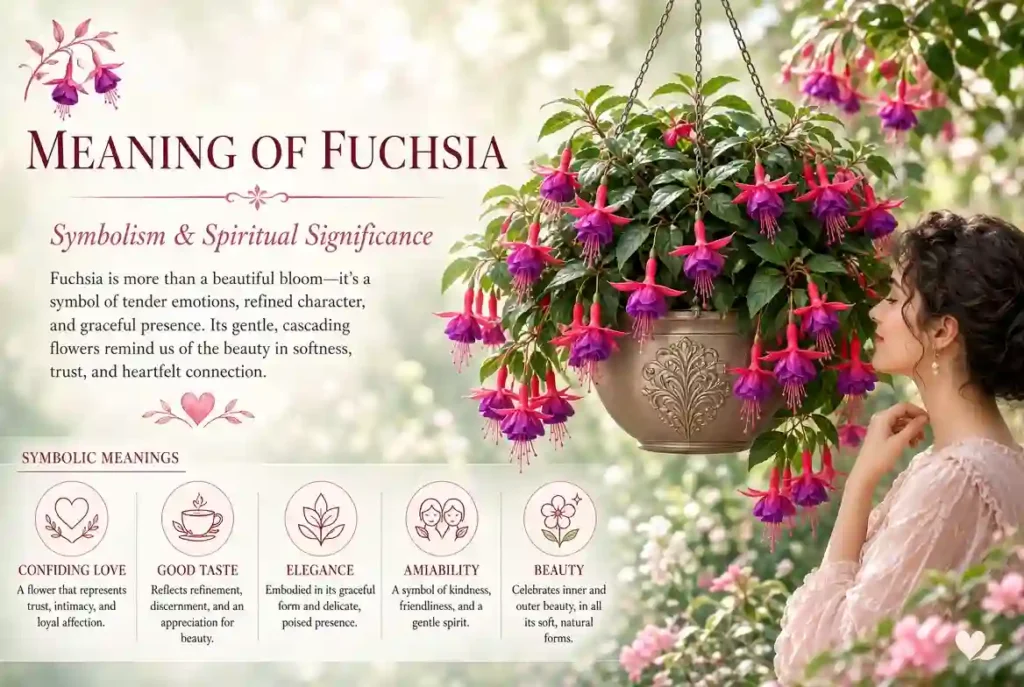
A fuchsia plant is a flowering plant from the genus Fuchsia. Many varieties produce pendulous flowers with colorful sepals and petals.
Fuchsias can grow as:
- Upright shrubs
- Compact container plants
- Trailing plants
- Hanging-basket plants
- Hardy garden shrubs
The genus includes more than 100 species, with many hybrids available for gardeners. (Gardenia)
Examples
Example 1:
The fuchsia plant has colorful, hanging flowers.
Example 2:
She grows a trailing fuchsia in a hanging basket.
💧 Meaning of Fuchsia Plant Care
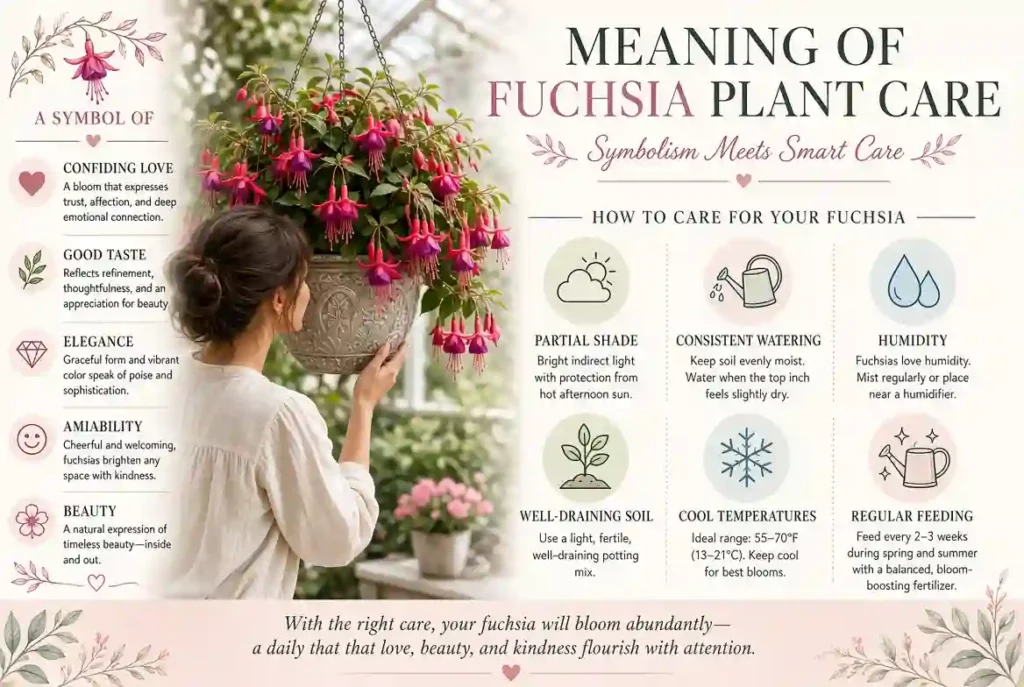
Fuchsia plant care means providing the conditions a fuchsia needs for healthy growth and flowering.
This includes:
- Correct lighting
- Proper watering
- Well-drained soil
- Regular feeding
- Pruning and pinching
- Pest monitoring
- Seasonal protection
Examples
Example 1:
Good fuchsia plant care helps the plant produce more healthy flowers.
📊 Key Differences Table
| Feature | Fuchsia Plant | Fuchsia Plant Care |
|---|---|---|
| Meaning | The flowering plant | Methods for growing the plant |
| Tone | Descriptive | Practical and instructional |
| Usage | Plant identification and information | Gardening advice and solutions |
| Popularity | Broad plant topic | Strong problem-solving search intent |
🌿 Origin & History of Fuchsia
The genus Fuchsia includes plants native to regions including Central and South America, with some species also occurring elsewhere. Gardeners later developed many hybrids with different flower colors, shapes, and growth habits. (HGTV)
Fuchsias became especially popular as container and hanging-basket plants because of their distinctive flowers.
Common related terms include:
- Fuchsia flower
- Fuchsia plant
- Hardy fuchsia
- Trailing fuchsia
- Bush fuchsia
- Fuchsia hanging basket
- Fuchsia care guide
British English vs American English Spelling
The plant name fuchsia is spelled the same in British and American English.
The word does not normally change to a different regional spelling.
Only related gardening terms may vary by region.
🇬🇧 British vs 🇺🇸 American English
| Term | British English | American English |
|---|---|---|
| Plant name | Fuchsia | Fuchsia |
| Gardening | Fuchsia plant care | Fuchsia plant care |
| Container | Pot/container | Pot/container |
| Fertilizer | Fertiliser | Fertilizer |
☀️ When to Use “Fuchsia Plant”
Use fuchsia plant when discussing the plant itself.
Examples
- “The fuchsia plant has beautiful hanging flowers.”
- “I bought a new fuchsia plant for my patio.”
- “This fuchsia plant grows well in a container.”
- “Hardy fuchsia plants can survive suitable winters.”
Use this phrase when the reader wants information about the plant’s appearance, types, growth, or characteristics.
💦 When to Use “Fuchsia Plant Care”
Use fuchsia plant care when discussing how to grow and maintain fuchsias.
Examples
- “Fuchsia plant care requires consistent moisture.”
This phrase has stronger how-to and problem-solving intent.
⚠️ Common Mistakes in Fuchsia Plant Care
1. Giving Too Much Direct Afternoon Sun
❌ Incorrect approach: Leave a fuchsia in intense afternoon sun all day.
✅ Better approach: Provide bright light with protection from harsh afternoon heat.
Fuchsias generally prefer bright light with afternoon protection in many climates. Cool regions can support more sunlight. (HGTV)
2. Letting the Soil Become Completely Dry
❌ Incorrect: Water only when the plant starts severely wilting.
✅ Better: Check the soil regularly and maintain consistent moisture.
Container fuchsias can dry quickly during warm weather. (HGTV)
3. Keeping the Roots Permanently Wet
❌ Incorrect: Keep the pot sitting in water.
✅ Better: Use well-drained soil and a container with drainage holes.
Fuchsias need moisture, but soggy conditions can damage their roots.
4. Skipping Pinching
❌ Incorrect: Allow every young shoot to grow straight upward.
✅ Better: Pinch growing tips while the plant is developing.
Pinching encourages branching. More branches can create more potential flowering sites. (HGTV)
5. Treating Every Fuchsia as Hardy
❌ Incorrect: Leave every fuchsia outdoors through freezing weather.
✅ Better: Identify the variety before winter arrives.
Tender fuchsias need frost protection, while some hardy varieties can remain outdoors in suitable climates. (HGTV)
🧠 Easy Trick to Remember Fuchsia Plant Care
Remember the “FUCHSIA” care formula:
F — Filtered light
U — Use consistent moisture
C — Choose draining soil
H — Heat protection
S — Shape with pinching
I — Inspect for pests
A — Adjust care by season
This simple checklist covers most of the important daily care decisions.
🌸 Everyday Life Examples
1. Fuchsia Plant Care in a Hanging Basket
Hanging baskets can dry faster than large garden beds.
Check the soil frequently during warm weather.
Primary keyword: fuchsia plant care
2. Fuchsia Plant Care During Hot Weather
High temperatures can reduce flowering in many fuchsia varieties.
Move container plants away from intense afternoon heat when necessary. (HGTV)
Primary keyword: fuchsia plant care
3. Fuchsia Plant Care for More Flowers
Pinch young growing tips before flowering begins.
This encourages branching and can create more flowering stems. (HGTV)
Primary keyword: fuchsia plant care
4. Fuchsia Plant Care in Winter
Tender fuchsias need protection from freezing temperatures.
Hardy varieties may survive outdoors in suitable conditions.
Primary keyword: fuchsia plant care
🌱 How to Grow Fuchsias Successfully
Choose the Right Location
Start by selecting the correct location.
Fuchsias generally perform well with bright light and protection from intense afternoon heat. Cool climates may allow more direct sun. (HGTV)
Look for a location with:
- Morning sunlight
- Afternoon shade
- Protection from strong winds
- Good air circulation
- Easy access for watering
Use Moist but Well-Drained Soil
Fuchsias dislike extremes.
Completely dry soil stresses the plant. Constantly saturated soil creates another problem.
Use a quality container mix that drains well. For garden beds, improve heavy soil with suitable organic matter.
A practical test is simple.
Push your finger into the growing medium before watering. Do not rely only on a calendar.
Water According to Conditions
Container plants usually need closer monitoring than established garden plants.
Check your fuchsia when:
- Weather becomes hotter
- The plant is flowering heavily
- The pot feels unusually light
- Leaves begin to droop
- Wind increases evaporation
Avoid both extremes.
Too dry: wilting and flower loss can occur.
Too wet: roots may suffer from poor aeration.
Feed During Active Growth
Fuchsias benefit from regular feeding during active growth.
Container plants depend heavily on the nutrients available in their limited growing medium.
Use a balanced fertilizer according to its label. Avoid applying excessive fertilizer to compensate for poor light or damaged roots.
Regular feeding is especially useful when plants are growing rapidly and flowering heavily. (HGTV)
Pinch Young Plants
Pinching is one of the easiest ways to create a fuller fuchsia.
When young shoots grow, remove their tips before flower buds form.
This encourages side branches.
More branches can produce more flowering points.
Keep in mind that repeated pinching delays flowering because the plant needs time to develop new shoots.
Remove Spent Flowers
Remove faded flowers if you want to keep the plant tidy.
You can also remove developing fruits when your goal is continued flowering.
Fuchsia plants can produce berry-like fruits after flowering. (HGTV)
Image Suggestion: Create a 16:9 infographic showing a fuchsia before and after deadheading.
🐛 Common Fuchsia Problems
Fuchsia Has Leaves but No Flowers
Possible causes include:
- Too much shade
- Excessive heat
- Poor nutrition
- Incorrect pruning
- Water stress
Check light and temperature first.
Adding more fertilizer will not solve every flowering problem.
Fuchsia Leaves Are Turning Yellow
Yellow leaves can have several causes.
Check:
- Soil moisture
- Drainage
- Light levels
- Root condition
- Feeding routine
- Pest activity
Avoid diagnosing the problem from leaf color alone.
Fuchsia Is Wilting
First check the soil.
If it is dry, water thoroughly.
If the soil is already wet, do not add more water. Investigate root problems, heat stress, or poor drainage.
Fuchsia Buds Are Dropping
Sudden environmental changes can cause flower and bud problems.
Look at:
- Temperature
- Watering
- Light
- Root health
- Recent relocation
Fuchsias generally perform better when growing conditions remain stable.
❄️ Hardy vs Tender Fuchsia
This distinction matters greatly for successful fuchsia plant care.
| Feature | Hardy Fuchsia | Tender Fuchsia |
|---|---|---|
| Winter tolerance | Higher | Lower |
| Outdoor wintering | Possible in suitable climates | Usually needs protection |
| Common use | Borders and shrubs | Containers and baskets |
| Pruning | Often done in spring | Depends on overwintering method |
| Frost protection | Cultivar-dependent | Usually essential |
Some hardy cultivars can survive cold winters, while tender varieties require frost-free protection. Always check the cultivar before deciding on winter care. (HGTV)
🏡 Fuchsia Plant Care for Containers
Containers are excellent for fuchsias.
They also make seasonal management easier.
Container care checklist
- Use drainage holes.
- Choose a quality potting mix.
- Avoid oversized pots.
- Check moisture frequently.
- Protect pots from excessive heat.
- Feed during active growth.
- Move tender plants before frost.
Containers can heat up quickly in direct sunlight. Shading the container itself can sometimes help protect the root zone.
🌡️ Fuchsia Plant Care in Hot Climates
Hot weather creates a special challenge.
Many fuchsias prefer cooler conditions. Some stop flowering when temperatures become excessively high. (HGTV)
If your climate is hot:
- Give morning light.
- Provide afternoon shade.
- Keep the root zone consistently moist.
- Avoid dark pots sitting in intense sunlight.
- Check hanging baskets more often.
- Improve air circulation.
- Avoid sudden changes in location.
A fuchsia that wilts every afternoon may be experiencing heat stress rather than simply needing more fertilizer.
📈 Google Trends & Usage Data: USA, UK, AUS, IND, PAK
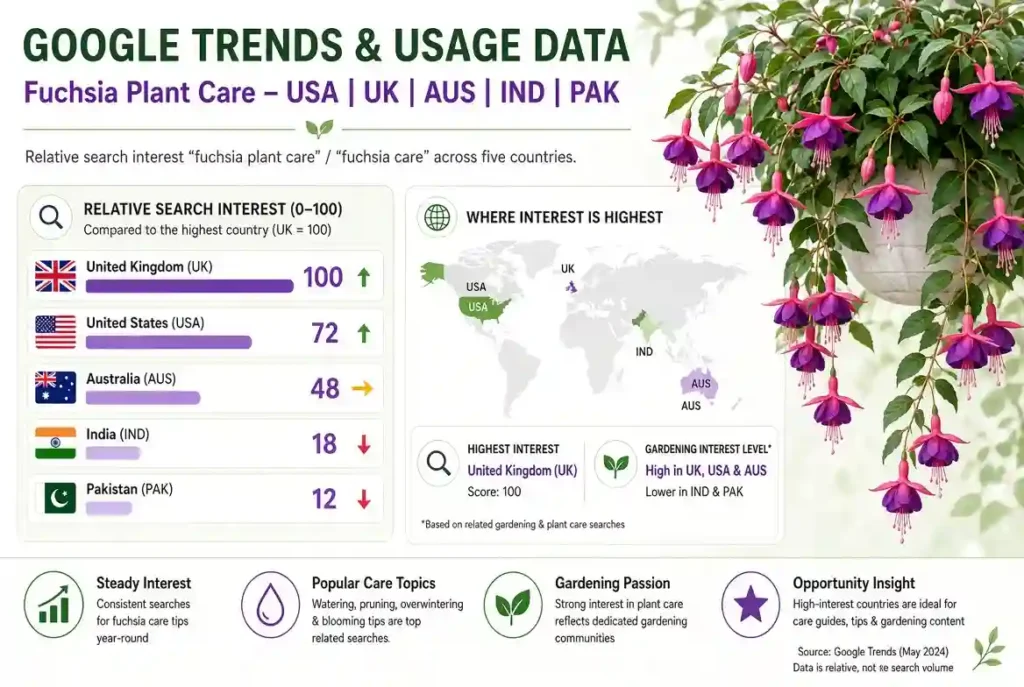
Google Trends reports relative search interest, not absolute search volume. Interest can also change by season and location.
For fuchsia topics, searches are closely connected with gardening seasons and flowering periods.
The UK has a particularly strong gardening connection with hardy and container fuchsias, while interest varies by climate elsewhere.
For USA, Australia, India, and Pakistan, local climate can strongly affect when gardeners search for care advice.
Keyword Variations Comparison
| Keyword Variation | Main Intent | Likely User Need |
|---|---|---|
| fuchsia plant care | Informational | Complete care guide |
| how to care for fuchsia | Informational | Step-by-step instructions |
| how to grow fuchsia | Informational | Growing guidance |
| fuchsia care indoors | Informational | Indoor growing |
| fuchsia plant care in pots | Informational | Container care |
| how to keep fuchsia blooming | Problem-solving | More flowers |
| fuchsia winter care | Seasonal | Winter protection |
SEO Insight: The primary keyword has broad informational intent. Long-tail variations help capture readers with specific problems.
🔎 Related Keywords
Use these naturally throughout supporting content:
- How to care for fuchsia
- How to grow fuchsia
- How to keep fuchsia blooming
- Fuchsia watering requirements
- Fuchsia winter care
🌺 Final Verdict
“Fuchsia plant care” is the strongest phrase when your article covers the complete process of growing and maintaining fuchsias.
Use “fuchsia plant” when identifying or describing the plant.
For SEO, the best approach is not choosing one phrase repeatedly. Use the primary keyword naturally and support it with specific long-tail questions.
❓ FAQ’s
Is “fuchsia plant care” correct?
Yes. “Fuchsia plant care” is a natural phrase for articles and searches about growing and maintaining fuchsia plants.
What is the difference between “fuchsia plant” and “fuchsia plant care”?
“Fuchsia plant” identifies the plant. “Fuchsia plant care” describes the methods used to grow and maintain it.
Which is more common, “fuchsia plant” or “fuchsia plant care”?
They serve different purposes. “Fuchsia plant” is broader, while “fuchsia plant care” targets readers looking for practical gardening instructions.
Is “fuchsia plant care” suitable for formal writing?
Yes. It works well in gardening guides, horticultural articles, plant-care instructions, and educational content.
Why is there confusion about fuchsia plant care?
The confusion usually comes from different fuchsia varieties having different needs. Hardy and tender types can require different winter strategies.
📝 Conclusion
Fuchsia plant care becomes simple when you focus on the plant’s basic needs. Give fuchsias bright light without excessive heat. Keep their soil moist but well drained. Feed actively growing plants according to their needs. Pinch young shoots to encourage branching and remove faded flowers when useful. Most importantly, identify whether your fuchsia is hardy or tender before winter.
Container plants also need closer attention because their soil can dry quickly. Avoid treating every problem with more water or fertilizer. Instead, inspect the plant, roots, soil, light, and temperature together. With consistent care and the right location, fuchsias can produce strong growth and beautiful flowers throughout their growing season.