Quick Answer
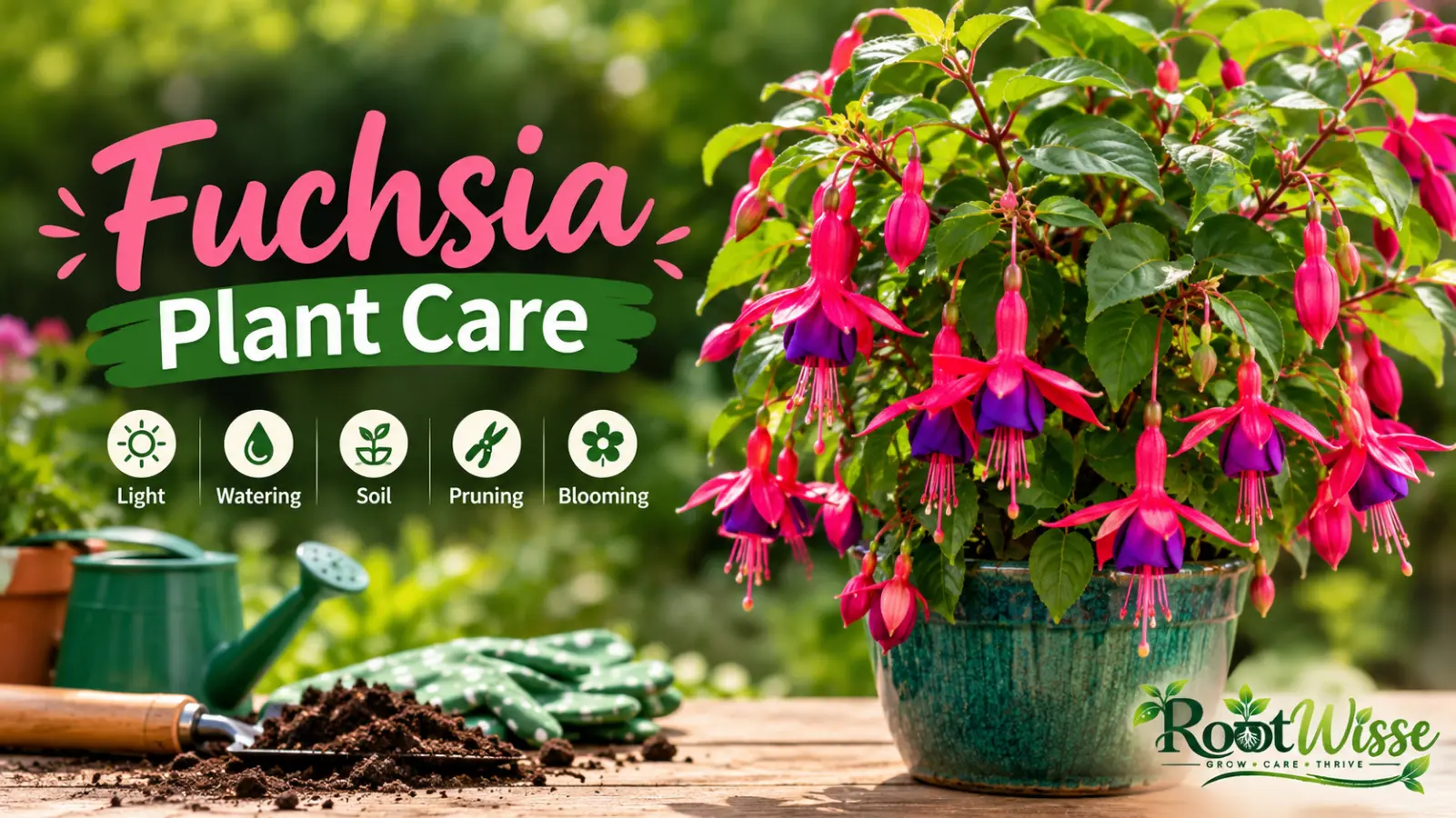
Fuchsia plant care is easiest when you provide bright, filtered light, consistently moist but well-drained soil, moderate humidity, and protection from intense heat. Fuchsias prefer cooler conditions than many flowering plants. Feed regularly during active growth, pinch young stems to encourage branching, and remove faded flowers to support continued blooming. Container-grown fuchsias need especially careful watering because their roots can dry quickly.
Introduction
Fuchsia plants are loved for their dramatic, dangling flowers. Their colorful blooms can make hanging baskets, containers, and shaded patios look spectacular.
Yet fuchsias can be a little demanding compared with drought-tolerant flowering plants. They dislike drying out completely, but they also struggle when their roots stay saturated. Hot afternoon sun can cause stress, while too little light can reduce flowering.
That is why successful fuchsia plant care is mostly about balance.
Give the plant enough light without exposing it to harsh heat. Keep the soil evenly moist without making it soggy. Feed it during active growth, and prune it at the right time.
Once these conditions become routine, fuchsia becomes much easier to manage.
Fuchsia Plant Care at a Glance
| Care Need | Ideal Condition |
| Light | Bright, filtered or partial light |
| Soil | Moisture-retentive but well-draining |
| Water | Keep soil evenly moist |
| Temperature | Cool to moderate conditions |
| Humidity | Moderate to high |
| Fertilizer | Regular feeding during growth |
| Pruning | Pinch and prune to encourage branching |
| Pot | Container with drainage holes |
| Flowering | Best with suitable light and cooler conditions |
Fuchsia species and cultivars vary, so their exact tolerance for sun, cold, and heat can differ.
Image Suggestion: A labeled fuchsia plant care infographic showing ideal light, watering, temperature, humidity, fertilizer, and pruning.
How Much Light Does Fuchsia Need?
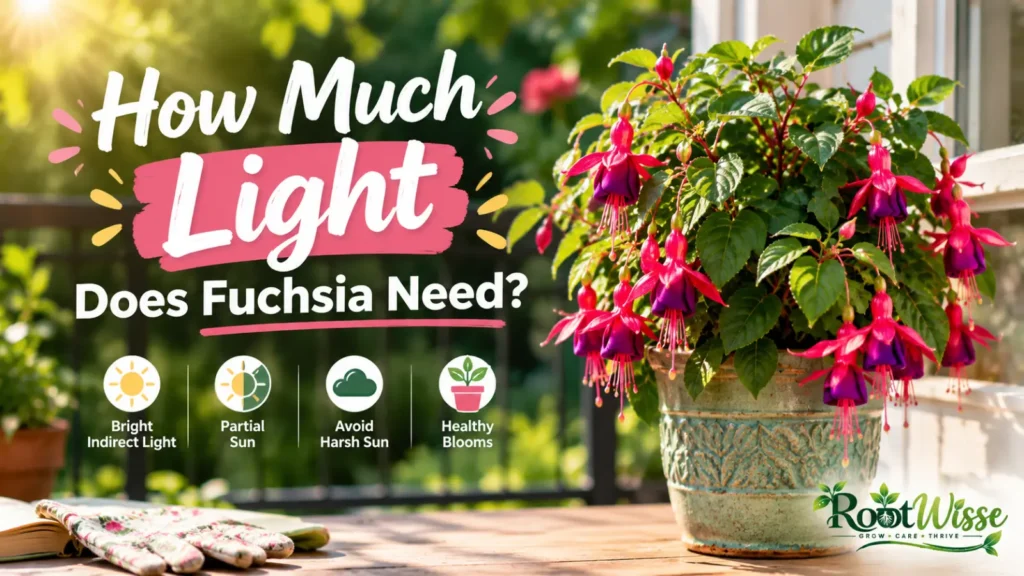
Fuchsias generally prefer bright indirect light or partial shade, especially in areas with hot summers.
Morning sunlight is often easier for them to handle than strong afternoon sun. A location with bright light and protection from intense midday heat can encourage flowering without excessive leaf stress.
Too little light can create another problem. The plant may produce long, weak stems and fewer flowers.
A good location might be:
- An east-facing window
- A bright shaded patio
- A covered balcony
- A location receiving morning sun and afternoon shade
If your climate is cool and mild, some fuchsias can tolerate more sunlight. In hot climates, afternoon shade becomes much more important.
Practical tip: If your fuchsia looks healthy but produces plenty of leaves and very few flowers, check its light exposure before adding more fertilizer.
How Often Should You Water Fuchsia?
Fuchsias prefer soil that stays evenly moist but not waterlogged.
This is particularly important for plants growing in hanging baskets and small containers. Their soil can dry surprisingly fast on warm or windy days.
Check the soil regularly by touching the surface and feeling slightly deeper into the pot.
Water when the mix is beginning to dry, then water thoroughly until excess moisture drains from the bottom.
Avoid both extremes:
Too dry: Leaves may wilt, flowers may drop, and growth can slow.
Too wet: Roots may suffer from poor oxygen levels and root diseases.
Do not automatically water every day. Weather, container size, soil composition, plant size, and light exposure all affect how quickly the soil dries.
A useful watering routine
- Check the soil.
- Water thoroughly when it starts drying.
- Let excess water drain.
- Empty water collected beneath the pot.
- Check again before the next watering.
During very hot weather, container fuchsias may need checking twice a day.
What Is the Best Soil for Fuchsia?
The ideal fuchsia soil holds enough moisture to prevent rapid drying while still allowing excess water to drain away.
A quality multipurpose potting mix can work well for container plants. Adding materials that improve drainage and aeration can be useful if the mix feels heavy.
Avoid compacted soil because it can stay wet around the roots while becoming difficult for air to reach them.
For garden beds, choose a location with good drainage and incorporate organic matter if the soil is poor.
The goal is simple: moist roots with access to air.
Image Suggestion: Cross-section illustration of a fuchsia pot showing healthy roots in airy, well-draining soil.
Does Fuchsia Need High Humidity?
Fuchsias appreciate moderate humidity, particularly when the surrounding air is hot and dry.
However, high humidity combined with poor airflow can encourage fungal problems.
If indoor air is very dry, a humidifier can help. Grouping plants together can also create a slightly more humid environment.
Avoid keeping the foliage constantly wet. Good airflow around the plant is just as important as humidity.
For outdoor fuchsias, placing the plant somewhere sheltered but ventilated can provide a useful balance.
Best Temperature for Fuchsia
Temperature is one of the most important parts of fuchsia plant care.
Fuchsias generally prefer cooler growing conditions than many summer bedding plants. Excessive heat can cause wilting, flower loss, and poor growth.
When temperatures become very high:
- Move container plants into afternoon shade.
- Protect them from hot reflected heat.
- Check soil moisture more frequently.
- Improve airflow.
- Avoid allowing the root ball to become completely dry.
Different fuchsia varieties have different levels of cold tolerance. Some can overwinter outdoors in mild climates, while others need protection.
Always check the hardiness of your specific cultivar rather than assuming every fuchsia behaves the same way.
How to Fertilize Fuchsia Plants
Fuchsias are active growers and can benefit from regular feeding during the growing season.
A balanced liquid fertilizer used according to its label can support new foliage and flowering. Container plants often need more regular feeding because nutrients can be washed out during frequent watering.
Do not increase fertilizer simply because flowering is poor.
If a fuchsia is not blooming, first investigate:
- Light
- Temperature
- Watering
- Pruning
- Root health
Excessive fertilizer can encourage lush foliage without solving the actual problem.
How to Prune Fuchsia
Pruning helps fuchsias stay compact and encourages branching.
Young plants benefit from pinching the growing tips. This encourages side shoots, which can create a fuller plant with more potential flowering points.
For established plants, remove:
- Dead stems
- Damaged growth
- Weak branches
- Crowded shoots
- Unwanted leggy growth
Avoid cutting randomly. Look for healthy nodes and make clean cuts just above them when shaping the plant.
Why does pruning improve flowering?
Fuchsia flowers develop on new growth in many commonly grown types. Encouraging more branching can therefore create more flowering sites.
However, timing matters. Heavy pruning at the wrong time can remove developing growth and temporarily reduce flowers.
Image Suggestion: Before-and-after image showing a leggy fuchsia and a compact plant after correct pruning.
How to Deadhead Fuchsia
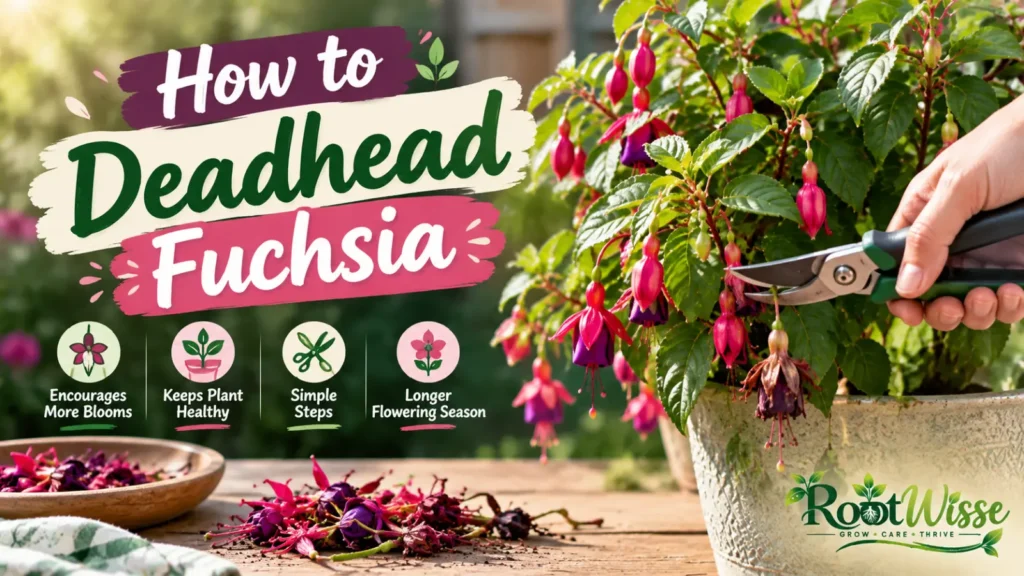
Removing faded flowers keeps the plant looking tidy and can encourage continued flowering.
When a flower fades, remove the spent bloom and any developing fruit if your goal is to keep the plant focused on producing flowers.
Deadheading is particularly useful for container fuchsias because it prevents the plant from spending unnecessary energy on seed development.
Regular inspection also gives you a chance to notice pests or disease before they become serious.
Why Is My Fuchsia Not Blooming?
A fuchsia that grows leaves but produces few flowers usually has an environmental or care issue.
Common causes include:
Too much shade: The plant may not receive enough light to flower well.
Excessive heat: High temperatures can interrupt flowering.
Incorrect pruning: Removing too much developing growth can reduce flowers.
Poor nutrition: Severe nutrient shortages can affect growth.
Water stress: Repeated wilting can weaken the plant.
Root problems: Damaged roots cannot support healthy flowering.
Before changing several things at once, identify the most obvious problem and correct it.
This makes it much easier to understand what your plant actually needs.
Why Are Fuchsia Leaves Turning Yellow?
Yellow leaves can occur for several reasons.
If the soil remains wet for long periods, overwatering or poor drainage should be your first concern.
If the soil is very dry, underwatering may be responsible.
Other possibilities include:
- Natural aging of older leaves
- Nutrient problems
- Temperature stress
- Root damage
- Pest activity
Look at the whole plant rather than diagnosing the issue from leaf color alone.
Why Is My Fuchsia Wilting?
Wilting does not always mean the plant needs more water.
Check the soil first.
If the soil is dry, water thoroughly and monitor the plant.
If the soil is already wet, adding more water can make the problem worse. Root damage, excessive heat, or poor airflow may be involved.
Fuchsias can wilt during very hot weather even when soil moisture is adequate because heat increases water loss from the foliage.
Move container plants away from intense afternoon heat if necessary.
Growing Fuchsia in Hanging Baskets
Fuchsias are especially attractive in hanging baskets because their flowers and branches naturally cascade.
However, hanging baskets dry faster than many regular containers.
Use a quality potting mix and make sure the basket drains freely.
During warm weather, check the basket frequently. A container that feels light and has dry soil may need immediate watering.
Do not place a hanging basket directly against a hot wall or in harsh afternoon sun unless the variety is known to tolerate those conditions.
Image Suggestion: Full hanging basket of flowering fuchsia placed in bright shade.
Fuchsia Winter Care
Winter care depends on whether your fuchsia is hardy in your climate.
In colder areas, container fuchsias may need to be moved into a protected location before freezing weather arrives.
Reduce watering when growth slows, but do not allow the root system to become completely dry for long periods.
If the plant enters dormancy, it may naturally lose leaves. This does not automatically mean the plant is dead.
Avoid placing dormant plants next to strong heating vents. Cool, protected conditions are usually more suitable than hot, dry indoor air.
For outdoor plants, use the hardiness information for the specific variety to determine whether winter protection is necessary.
How to Propagate Fuchsia
Fuchsias are commonly propagated from stem cuttings.
Spring and early summer are useful times because plants are actively producing new growth.
Simple propagation method
- Select a healthy, non-flowering shoot.
- Take a clean cutting below a leaf node.
- Remove the lower leaves.
- Place the cutting into a moist, well-draining rooting medium.
- Keep it warm and humid.
- Provide bright, indirect light.
- Wait for roots and new growth to develop.
Avoid keeping the rooting medium saturated. Cuttings need moisture, but excessive water can cause them to rot.
Internal Linking Opportunity: Add a related article about “How to Propagate Fuchsia From Cuttings” here.
Common Fuchsia Pests
Fuchsias can attract pests such as aphids, whiteflies, thrips, and spider mites.
Check new growth and the undersides of leaves regularly.
Early signs can include:
- Sticky residue
- Distorted new leaves
- Tiny insects
- Fine webbing
- Speckled foliage
A small pest population is much easier to manage than a widespread infestation.
Remove heavily affected leaves when appropriate and improve plant care. Healthy plants are generally better able to tolerate minor pest pressure.
8 Common Fuchsia Care Mistakes
1. Letting the soil dry completely
Fuchsias can react badly to repeated severe drying.
2. Keeping the soil constantly wet
Moisture is important, but saturated soil can damage roots.
3. Giving intense afternoon sun in hot climates
Strong heat can cause serious stress.
4. Using a pot without drainage
Water must have somewhere to escape.
5. Ignoring air circulation
Crowded, damp foliage creates a better environment for disease.
6. Overfertilizing
More fertilizer does not automatically mean more flowers.
7. Skipping pruning
Untrimmed plants can become weak and leggy.
8. Treating every fuchsia variety the same
Cultivars differ in heat tolerance, cold tolerance, growth habit, and flowering behavior.
Frequently Asked Questions
Does fuchsia like sun or shade?
Fuchsias generally prefer bright filtered light or partial shade. Morning sun is often suitable, while harsh afternoon sun can be stressful in hot climates.
How often should I water a fuchsia?
Water when the soil begins to dry, then water thoroughly. Container plants may need more frequent checks during warm weather.
Can fuchsia grow indoors?
Yes. Choose a bright location with filtered light, good airflow, and stable temperatures. Avoid placing it next to heating or cooling vents.
Why is my fuchsia dropping flowers?
Heat stress, water stress, poor light, sudden environmental changes, or other growing problems can cause flower drop. Check the plant’s overall conditions.
How do I make my fuchsia bloom more?
Provide suitable light, keep moisture consistent, feed during active growth, and pinch or prune appropriately to encourage branching.
Can fuchsia survive winter?
Some fuchsias can survive mild winters, while others require protection. Cold tolerance depends on the variety and local climate.
Should I deadhead fuchsias?
Yes. Removing faded flowers can keep the plant attractive and encourage continued flowering.
Can fuchsia grow in a hanging basket?
Yes. Fuchsias are excellent hanging-basket plants, but baskets can dry quickly, so monitor soil moisture carefully.
What is the best fertilizer for fuchsia?
A balanced fertilizer applied according to its label can work well during active growth. Avoid excessive feeding, especially when poor flowering is caused by light or temperature problems.
Conclusion
Successful fuchsia plant care comes down to maintaining the right balance between light, moisture, temperature, nutrition, and airflow.
Give your fuchsia bright filtered light rather than automatically placing it in harsh full sun. Keep the soil consistently moist but never waterlogged. During active growth, regular feeding and careful pruning can help maintain a fuller plant with more flowering shoots.
If the plant suddenly wilts, do not immediately add water. Check the soil first. If it is already wet, investigate heat, roots, and drainage instead.
For gardeners in hot climates, temperature management can be just as important as watering. For gardeners in cold areas, winter protection may determine whether the plant returns the following season.
Once you understand these patterns, fuchsia becomes far easier to grow. The goal is not constant attention. It is creating stable conditions that allow the plant to grow, branch, and flower naturally.
Discover More:
Succulent Plant Care: A Practical Guide to Healthy Indoor Plants
How to Care for a Spider Plant: A Complete Indoor Growing Guide