Quick Answer
Successful succulent plant care depends on bright light, fast-draining soil and thorough but infrequent watering. Let the potting mix dry completely, then soak the root ball and allow all excess water to escape. Use a pot with drainage holes, protect the plant from sudden temperature changes and adjust care to the species, season and conditions in your home.
Why Succulents Need a Different Care Routine
Succulents store water in fleshy leaves, stems or roots. This helps them survive dry periods, but not permanent drought or wet soil. A common mistake is watering again while the root zone is still damp.
There is no universal schedule for how to care for succulents. Aloe, Haworthia, Echeveria and jade plants come from different habitats. Observe the plant and soil rather than obeying a calendar.
Succulent Care at a Glance
| Care factor | Practical recommendation |
| Light | Usually 4–6 hours of bright light; increase direct sun gradually |
| Water | Soak only after the soil has dried throughout |
| Soil | Gritty, airy and quick-draining |
| Pot | Drainage hole required; only slightly larger than the roots |
| Temperature | About 60–80°F (16–27°C) for most common indoor types |
| Fertilizer | Diluted, low-frequency feeding during active growth |
| Main risks | Overwatering, inadequate light, dense soil and cold damage |
Get the Light Right
Most succulent light requirements are higher than those of typical houseplants. Sun-loving varieties often suit a south- or west-facing window, while Haworthia tolerates gentler light. Leaning, faded color and long gaps between leaves indicate etiolation.
Move the plant closer to a window or use a grow light for roughly 12–16 hours, following its distance guidance.
Acclimate a shade-grown plant to direct sun over one or two weeks. White, tan or brown patches on the exposed side indicate permanent scorch.
Rotate containers a quarter turn every week for balanced growth. Wipe dusty leaves gently so they can use the available light.
Image suggestion: Healthy compact rosette beside an etiolated rosette with labeled leaf spacing.
How Often to Water Succulents
The answer to how often to water succulents is: when the soil has dried completely. That might take 10–14 days in warm, bright conditions or several weeks in a cool room. Iowa State Extension notes that two to three weeks is common indoors, but conditions change the interval. Iowa State University Extension
Use the soak-and-dry method:
- Push a wooden skewer deep into the soil or feel through the drainage hole.
- If the lower mix remains cool or damp, wait.
- When it is dry, water slowly until the entire root ball is wet.
- Let water flow freely from the drainage holes.
- Empty the saucer or decorative outer pot.
Do not give frequent spoonfuls. Montana State University recommends saturating dry soil rather than watering often in small amounts. Montana State University Extension
Water less often during cool, low-light periods because the plant grows slowly and the soil takes longer to dry. Recently rooted cuttings may need slightly more consistent moisture, but they should never sit in saturated mix.
Best Soil and Pots for Succulents
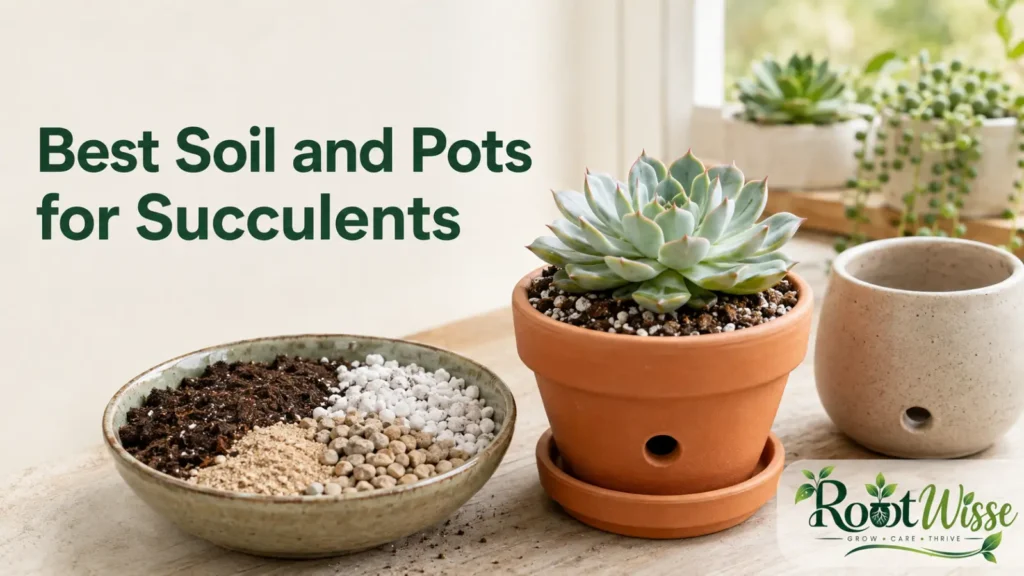
The best soil for succulents absorbs some moisture, then drains quickly. Improve one part potting or cactus mix with roughly one part pumice, perlite or coarse mineral grit. Humid rooms may need more mineral material.
Avoid fine sand, which can compact and reduce air spaces. Never use ordinary garden soil in an indoor pot; it may drain poorly and introduce pests.
The best pots for succulents have drainage holes and are slightly wider than the roots. Terracotta dries quickly; plastic and glazed ceramic retain moisture longer.
Do not rely on a gravel layer to fix a pot without drainage. Water can still collect around the roots. Keep a nursery pot inside the decorative container instead, removing it for watering.
Temperature, Humidity and Fertilizer
Most indoor succulents prefer 60–80°F (16–27°C). Avoid freezing windows, vents and drafts. Household humidity is usually adequate; misting is unnecessary.
Use succulent fertilizer lightly. During active growth, apply balanced houseplant fertilizer at one-quarter to one-half strength every four to six weeks. Check the species because some grow in cooler seasons.
Do not feed a newly repotted, dormant or root-damaged plant. Fertilizer cannot correct poor light or rot. White crust on the soil, burned leaf margins or stalled growth may indicate salt buildup; flush the mix with clean water.
Repotting Without Damaging the Plant
Repot when roots crowd the pot, soil stays wet too long or the plant becomes unstable.
- Let the soil dry.
- Support the plant and slide it from the pot.
- Remove compacted mix and inspect the roots.
- Cut away black, mushy roots with sterile scissors.
- Replant at the original depth in dry, gritty soil.
- Wait several days before watering if roots were broken or trimmed.
Use gloves and folded paper to handle spiny plants without crushing them.
How to Propagate Succulents
The method for how to propagate succulents depends on the plant. Echeveria may grow from whole leaves, jade from leaves or stems, and Aloe from offsets. Not every species reproduces from a leaf.
For a leaf cutting, remove the whole leaf without tearing its base. Let it callus, then place it on dry mix in bright indirect light. Water lightly after roots form.
For a stem cutting, remove the lower leaves, let the wound callus and insert it into gritty mix. Separate rooted offsets during repotting.
Image suggestion: Three-panel diagram showing a complete leaf base, a callused stem cutting and a rooted offset.
Diagnosing Common Succulent Plant Problems
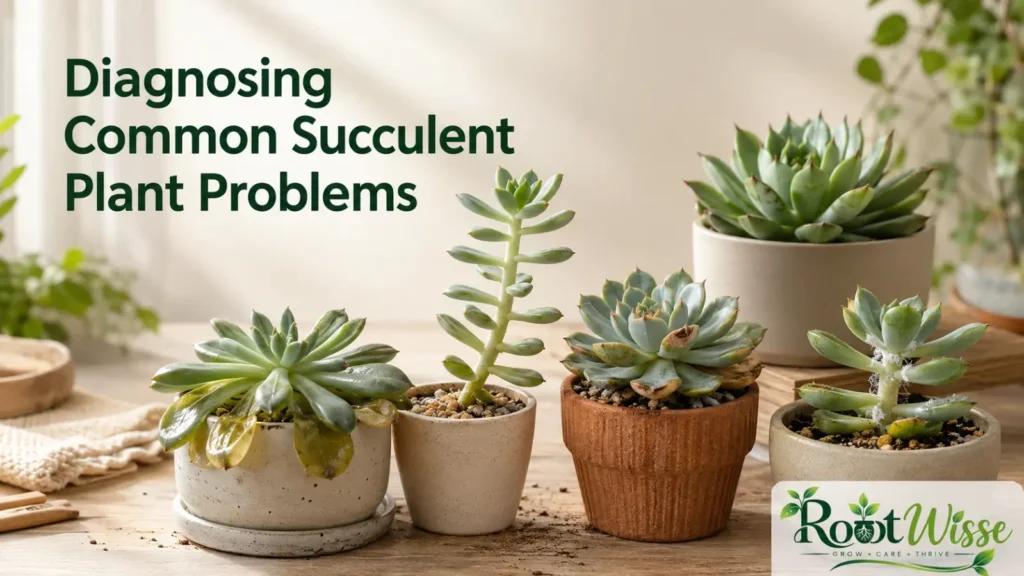
| Symptom | Likely cause | What to do |
| Soft, translucent leaves | Too much water | Stop watering and inspect roots |
| Black stem or roots | Advanced rot | Remove decay; propagate healthy tissue |
| Wrinkled, flexible leaves | Usually thirst | Confirm dry soil, then soak thoroughly |
| Tall, pale growth | Insufficient light | Increase light gradually |
| Bleached patches | Sunburn | Reduce intense exposure |
| Sticky cotton-like clusters | Mealybugs | Isolate and treat promptly |
| Lower leaves drying slowly | Often normal aging | Remove only when fully dry |
An overwatered succulent has yellow, soft or translucent tissue in damp soil. Remove it, trim rot and repot healthy tissue in dry mix. Save severe cases through propagation.
An underwatered plant typically has thinner, wrinkled leaves and dry soil. Water deeply, then reassess after a day or two. Persistent shriveling after watering may signal dead roots rather than thirst.
Mealybugs hide between leaves and around roots. Isolate affected plants, remove visible insects and use an appropriately labeled treatment. Inspect new purchases before placing them near a collection.
Five Mistakes That Cause Most Failures
- Watering weekly without checking the soil: drying speed changes throughout the year.
- Keeping plants in a dark room: “low maintenance” does not mean low light.
- Using a large pot: excess soil stays wet longer than a small root system can use it.
- Buying by appearance alone: identify the species because care and toxicity vary.
- Treating every wrinkle as thirst: soft leaves in wet soil point to root damage.
Frequently Asked Questions
Do succulents need direct sunlight?
Many prefer several hours of sun, but others need bright indirect light. Introduce direct sun gradually and research the species.
Can succulents survive in low light?
Some tolerate moderate light, but most lose color or stretch in dim rooms. A grow light is usually the best solution.
Should I mist succulents?
No. Established plants benefit more from deep root-zone watering followed by complete drying. Misting does not replace proper watering.
Why are leaves falling off my succulent?
Occasional dry lower leaves are normal. Numerous soft leaves suggest excess moisture, while widespread shriveled leaves can indicate drought or damaged roots.
Can I use regular potting soil?
Regular mix alone often retains too much moisture. Amend it generously with pumice, perlite or another coarse mineral component.
Are succulents safe for pets?
Safety varies. Echeveria is generally considered pet-friendly, while Aloe, Kalanchoe, jade and Euphorbia species may be harmful. Verify the botanical name before placing a plant within reach.
Conclusion
Good succulent plant care is less about neglect than correct timing. Provide ample light, wait until the entire root zone dries, water thoroughly and use gritty soil in a draining pot. Read the leaves together with the soil: wrinkles in dry mix usually mean thirst, while softness in wet mix warns of rot. Once those signals become familiar, succulent care becomes simple, responsive and far more reliable.
Related internal-link opportunities: guides to cactus soil, grow-light selection, succulent propagation, root-rot treatment and pet-safe houseplants.