Quick Answer
For healthy palm plant care, give your palm the right amount of light, water it according to its soil and growing conditions, and use a well-draining potting mix. Most indoor palms prefer bright, indirect light and evenly moist—but not waterlogged—soil. Keep them away from harsh drafts, avoid excessive fertilizer, and check their leaves regularly for pests. The exact routine depends on the palm species, so identify your plant before making major care changes.
Introduction
Palm plants bring a relaxed, tropical feel to homes, offices, patios, and gardens. But their care needs can vary considerably. A parlor palm may tolerate lower light, while a majesty palm often needs much brighter conditions and more consistent moisture.
If your palm has brown tips, yellow leaves, drooping fronds, or slow growth, it can be difficult to know what went wrong. These symptoms may come from watering problems, unsuitable light, low humidity, mineral buildup, pests, or natural aging.
This guide explains how to care for indoor and outdoor palms, recognize common problems, and adjust your routine to the plant you actually own. You’ll also learn which warning signs deserve attention—and which are normal parts of palm growth.
1. Identify Your Palm Before Changing Its Care
“Palm” describes a large family of plants, not one plant with identical needs. Some palms tolerate shade, while others struggle without strong light. Some prefer consistently moist soil; others need the surface to dry between waterings.


5
Here are a few common palms you may encounter as houseplants:
|
Palm
|
General care needs
|
| — | — |
|
Areca palm (Dypsis lutescens)
|
Bright, indirect light; regular watering; appreciates humidity
|
|
Parlor palm (Chamaedorea elegans)
|
Tolerates lower light; prefers evenly moist soil without waterlogging
|
|
Kentia palm (Howea forsteriana)
|
Relatively adaptable; tolerates lower light than many palms
|
|
Lady palm (Rhapis excelsa)
|
Indirect light or shade; well-draining soil; moderate watering
|
|
Majesty palm (Ravenea rivularis)
|
Needs abundant filtered light and more consistent moisture than many indoor palms
|
These are general guidelines, not substitutes for species-specific care. Penn State Extension notes that palms differ in their light, moisture, and humidity preferences.
Penn State Extension
+3
Practical tip: Keep the nursery label or take a clear photo of the plant when you buy it. Correct identification makes it much easier to diagnose yellowing, brown tips, and slow growth.
2. Give Your Palm the Right Light
Light affects how much energy a palm can produce for new growth. Too little light may lead to weak, stretched growth and sparse foliage. Too much direct sun can scorch leaves, especially when a plant has been growing indoors.

Where should you place an indoor palm?
For many popular houseplant palms:
- Choose a bright room with filtered or indirect daylight.
- Try a position near an east-facing window, or a little back from a brighter south- or west-facing window.
- Keep the leaves away from intense afternoon sun through glass unless you know your species tolerates it.
- Avoid leaving a shade-adapted palm in a dark corner simply because it survives there.
Parlor, kentia, and lady palms can tolerate lower light than many other palms. Areca and majesty palms generally need brighter conditions to maintain healthy growth.
Penn State Extension
+3
Signs the light may be wrong
|
What you notice
|
Possible explanation
|
| — | — |
|
New growth is weak or sparse
|
The plant may need more light
|
|
Leaves develop bleached or crispy patches on the window side
|
Sun scorch may be occurring
|
|
The palm leans strongly toward the window
|
It may be reaching for light
|
|
Growth slows during darker months
|
Seasonal changes in light may be contributing
|
Expert tip: If you move a palm outdoors for warm weather, introduce it to the new light gradually. A sudden move from a dim room into direct sun can damage foliage.
3. Water According to Soil Moisture—not a Calendar
Overwatering is a common cause of trouble for indoor palms. Roots need both water and oxygen. When the potting mix remains saturated, roots can become damaged and may begin to rot. On the other hand, allowing a moisture-loving palm to dry out repeatedly can cause stress and brown leaf tips.

A reliable watering routine
- Check the soil. Feel the top layer with your finger. For many indoor palms, watering is appropriate when the surface has started to dry, but the root zone is not bone-dry.
- Water thoroughly. Pour water evenly over the soil until some drains from the bottom.
- Let excess water escape. Empty the saucer or decorative outer pot so the roots do not sit in standing water.
- Check again before the next watering. Do not water automatically because a certain number of days has passed.
Penn State Extension recommends keeping many palms moist but not waterlogged, while allowing the surface to dry slightly between waterings. Clemson Extension also identifies poor drainage and overly frequent watering as common contributors to root rot.
Penn State Extension
+1
How often should you water a palm?
There is no universal weekly schedule. The interval changes with:
- Palm species and size
- Pot size and drainage
- Soil composition
- Room temperature and light
- Season and growth rate
- Whether the plant is indoors or outside
A palm in a warm, bright room may use water faster than the same plant in a cool, dim room. Check the soil each time rather than relying on a fixed schedule.
Important: A dry surface does not always mean the entire root ball is dry. For a large pot, check a little below the surface as well.
4. Choose Soil and a Pot That Drain Properly
Palm roots need a growing medium that holds some moisture while allowing excess water and air to move through it. Dense, compacted soil can stay wet too long, especially indoors.

What kind of soil is best for palms?
Use a quality indoor potting mix that drains freely. If your mix stays soggy after watering, consider improving its structure with suitable aerating ingredients such as perlite, pumice, or bark.
Avoid garden soil in indoor containers unless it has been specifically prepared for container use. It may compact and drain poorly in a pot.
Choose a pot with drainage holes
A suitable container should:
- Have open drainage holes.
- Be large enough to hold the roots without excessive unused soil.
- Remain stable enough to support the palm.
- Allow water to drain rather than collect at the bottom.
A decorative pot without drainage can be used as an outer cover, but keep the palm in a draining nursery pot inside it. Remove the inner pot for watering or empty the outer container afterward.
Why pot size matters: A very large pot holds more wet soil than a small root system can use. That can prolong wet conditions and increase the risk of root problems.
5. Maintain Suitable Temperature and Humidity
Most commonly grown tropical indoor palms prefer warm, reasonably stable conditions. Cold drafts, heating vents, and sudden temperature changes can stress their foliage. Dry indoor air may also contribute to brown leaf tips, although watering, salts, and light can cause similar symptoms.
Penn State Extension
+3

Practical ways to reduce environmental stress
- Keep palms away from direct blasts of air-conditioning or heating.
- Avoid placing them against cold windows during chilly weather.
- Maintain stable room conditions where possible.
- If the air is persistently dry, consider a room humidifier.
- Grouping plants may create a slightly more humid local environment, but do not crowd them so tightly that airflow is restricted.
Misting can wet the leaves temporarily, but it does not reliably maintain room humidity. If dry air is a recurring problem, a humidifier is generally a more controllable approach. Penn State Extension discusses humidifiers and other ways to manage indoor humidity.
Penn State Extension
+1
6. Feed Your Palm Carefully
Palms need nutrients to support roots, stems, and foliage. However, more fertilizer does not mean faster or healthier growth. Excess fertilizer can damage roots and contribute to brown leaf tips or margins.
Home & Garden Information Center
+2
How to fertilize an indoor palm
- Use a fertilizer labeled for palms or a suitable balanced houseplant fertilizer.
- Follow the product label and avoid applying more than directed.
- Feed mainly during active growth, usually in spring and summer for indoor palms.
- Reduce or pause feeding when growth slows in cooler, darker months.
- Avoid fertilizing a severely stressed, dry, or waterlogged plant until you have addressed the underlying problem.
Newly repotted palms may not need immediate feeding if the fresh potting mix already contains nutrients. Check the mix and fertilizer instructions before adding more.
A useful rule: If the plant is declining, do not assume it needs fertilizer. Check light, roots, watering, and pests first.
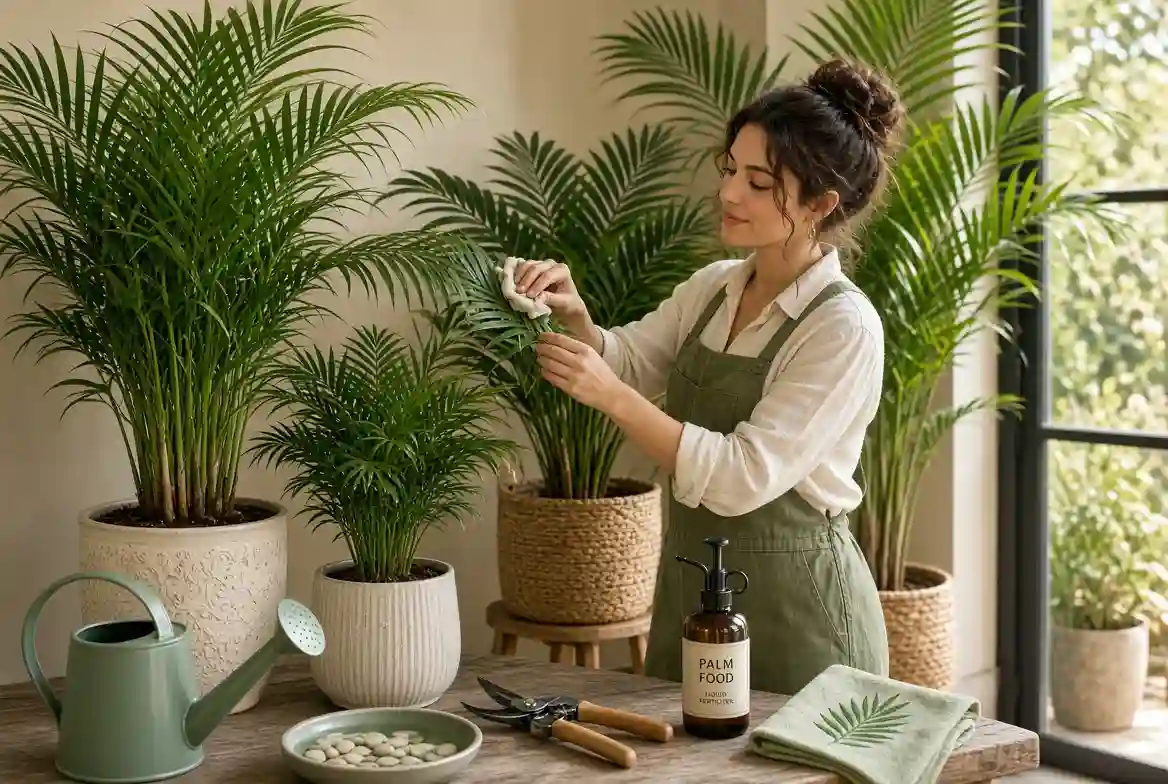
7. Prune and Clean Fronds Without Harming the Palm
Pruning can improve a palm’s appearance, but removing healthy fronds reduces the plant’s ability to make energy. Palms also have a growing point that should be protected.

What to remove
- Fully brown, dead fronds can be cut off near their base.
- Remove badly damaged material with clean, sharp pruning shears.
- If only the tips are brown, trim the dead portion while leaving a narrow brown margin.
- Do not cut into green tissue just to make the leaf look perfectly shaped.
Avoid removing green fronds simply because they are older or less attractive. Also, do not cut the central spear or growing point; damage there can seriously affect the palm.
Penn State Extension advises trimming dead leaves without cutting into healthy green tissue and notes that lower-leaf browning can be part of normal aging.
Penn State Extension
+1
8. Repot Only When It Is Needed
Palms often grow more slowly than many leafy houseplants and may remain in the same container for an extended period. Repotting too often can disturb their roots unnecessarily.

Signs your palm may need repotting
- Roots are densely packed and emerging from drainage holes.
- The root ball dries unusually quickly despite appropriate watering.
- The potting mix has broken down or drains poorly.
- The plant has become unstable or the container is no longer suitable.
How to repot with less stress
- Choose a pot only modestly larger than the existing root ball, with drainage holes.
- Use fresh, free-draining potting mix.
- Handle the roots gently and avoid unnecessary root cutting.
- Keep the palm at approximately the same planting depth.
- Water appropriately after repotting and allow excess water to drain.
Many palms dislike having their roots disturbed. Penn State Extension recommends careful repotting and notes that palms can prefer being somewhat snug in their containers.
Penn State Extension
+2
9. Diagnose Brown Tips, Yellow Leaves, and Other Problems
A single symptom rarely proves one specific cause. Brown tips, for example, can result from dry air, inconsistent watering, fertilizer salts, unsuitable water, excessive sunlight, or drafts. Look at the whole plant and its recent care history before changing several things at once.
UC IPM
+2

Palm plant troubleshooting chart
|
Symptom
|
Possible causes
|
What to check or do
|
| — | — | — |
|
Brown, crispy tips
|
Dry air, irregular watering, salt buildup, excess fertilizer, drafts, or sun stress
|
Check soil moisture, recent feeding, water quality, and plant placement
|
|
Yellowing lower fronds
|
Natural aging, watering stress, poor roots, insufficient light, or nutrient issues
|
Determine whether only the oldest leaves are affected; inspect soil and light
|
|
Several leaves turning yellow
|
Overwatering, underwatering, poor drainage, pests, or other stress
|
Check moisture deeper in the pot, drainage, roots, and leaf undersides
|
|
Brown or bleached patches
|
Sun scorch, chilling, or other environmental damage
|
Review recent moves and exposure to direct sun or cold
|
|
Drooping or wilting
|
Soil too dry, roots damaged by excess moisture, or environmental stress
|
Check the root zone before watering again
|
|
Fine webbing or stippled leaves
|
Possible spider mites
|
Inspect leaf undersides and isolate the plant if pests are present
|
|
Sticky residue or small fixed bumps
|
Possible scale insects or other sap-feeding pests
|
Examine stems and leaf undersides closely
|
These are diagnostic clues, not guaranteed diagnoses. UC IPM emphasizes that houseplant symptoms can have several causes and recommends examining plants for pests and environmental damage.
UC IPM
+2
What to do about brown leaf tips
- Check whether the soil is staying wet for too long or drying excessively.
- Review recent fertilizer use and look for a crust of mineral salts on the soil or pot.
- Check whether direct sun, heat, or cold drafts reach the foliage.
- Inspect the leaves for mites, scale, or other pests.
- Correct the likely cause, then trim only the dead tissue if you want to improve the appearance.
Brown tissue will not turn green again. The goal is to prevent additional damage and support healthy new growth.
10. Check for Common Palm Pests
Indoor palms can be affected by spider mites, scale insects, and mealybugs. Pests may be easy to miss because they hide on leaf undersides, along veins, or around stems.

A simple inspection routine
- Look underneath the leaflets and along the midribs.
- Check stems and the bases of fronds for small bumps or cottony clusters.
- Watch for stippling, yellow specks, sticky residue, or fine webbing.
- Isolate an affected plant from nearby houseplants while you investigate.
- For a confirmed pest, use an appropriate treatment labeled for that plant and pest, following the label carefully.
A gentle rinse or wiping may help remove some pests, but severe or recurring infestations may need repeated treatment. Clemson Extension identifies scale, mealybugs, and mites among pests that can affect indoor palms.
Home & Garden Information Center
+1
11. Adjust Care for Outdoor Palms and Seasonal Changes
Outdoor palms experience stronger sunlight, wind, rain, and temperature changes than indoor plants. A palm that thrives in a sheltered patio may struggle in exposed afternoon sun or during cold weather.

Outdoor palm care basics
- Light: Match exposure to the species. Do not assume every palm wants full sun.
- Water: Newly planted palms generally need closer moisture monitoring while establishing. Established palms vary in drought tolerance.
- Drainage: Avoid planting in persistently waterlogged ground.
- Weather: Protect tender palms from cold conditions outside their tolerance.
- Acclimation: Gradually introduce indoor palms to outdoor light and wind rather than moving them straight into harsh conditions.
Seasonal adjustments
|
Season or condition
|
Care adjustment
|
| — | — |
|
Spring
|
Check for new growth, refresh care routines, and resume feeding if appropriate
|
|
Hot weather
|
Monitor pots more often because they may dry faster; protect shade-loving palms from scorching sun
|
|
Autumn
|
Watch for slower growth and reduce feeding as needed
|
|
Winter
|
Water less often when the plant uses less moisture, but do not let moisture-loving species become severely dry
|
|
Cold snap
|
Move tender container palms to a protected place and follow species-specific temperature guidance
|
The Royal Horticultural Society advises protecting tender palms from unsuitable cold and avoiding excess water in containers. Exact cold tolerance varies greatly by species.
RHS Advice
+1
12. A Simple Weekly Palm Care Routine
You do not need to fuss over your palm every day. A short, consistent inspection helps you notice changes before they become serious.
Your palm care checklist
Check the soil moisture before watering.
Look for yellowing, browning, drooping, or unusual spots.
Inspect leaf undersides and stems for pests.
Make sure the pot drains and no water remains in its saucer.
Check whether the palm is receiving suitable light.
Remove only fully dead or badly damaged fronds when needed.
0 of 6 completedReset checklist
Use this as an inspection routine, not a command to water every week. Your palm’s soil and environment should determine when it actually needs water.
13. Common Palm Plant Care Mistakes to Avoid
Small care errors can build up over time. These are some of the most useful habits to avoid:
- Watering on a fixed schedule: Soil dries at different rates. Check before watering.
- Leaving water in the outer pot: Standing water can deprive roots of oxygen.
- Putting every palm in direct sunlight: Some indoor palms prefer filtered light or shade.
- Keeping a palm in a dark corner indefinitely: Survival in low light does not necessarily mean healthy growth.
- Fertilizing a struggling plant without checking the cause: Extra nutrients may worsen salt stress.
- Cutting off green fronds: Healthy foliage still contributes energy to the plant.
- Repotting too frequently: Unnecessary root disturbance can stress a palm.
- Ignoring pests until the plant looks severely damaged: Regular checks make infestations easier to notice.
14. Frequently Asked Questions About Palm Plant Care
How often should I water an indoor palm plant?
Water when the soil has reached the appropriate dryness for your palm species. Many indoor palms prefer the surface to dry slightly while the root zone remains lightly moist. Check the soil rather than following a universal weekly schedule.
Why are the tips of my palm leaves turning brown?
Brown tips may be caused by dry air, inconsistent watering, excess fertilizer or mineral salts, drafts, or too much direct sun. Check the soil, room conditions, and recent care changes before choosing a remedy.
UC IPM
+1
Should I cut brown leaves off my palm?
Remove fully brown, dead fronds with clean tools. If only the tips are brown, you can trim the dead portions while leaving a narrow margin. Avoid cutting healthy green tissue or the central growing point.
Penn State Extension
+1
Do palm plants need direct sunlight?
Not all palms do. Many indoor species prefer bright, indirect light, while some outdoor palms can tolerate or require stronger sun. Identify your palm and increase light gradually if you move it.
Why is my palm turning yellow?
Yellowing can indicate normal aging of older lower fronds, but it may also reflect watering problems, poor drainage, inadequate light, pests, or nutrient issues. If several leaves yellow at once, inspect the soil and plant carefully rather than assuming it needs fertilizer.
What is the best soil for palm plants?
Use a well-draining potting mix suited to container plants. It should retain some moisture without remaining saturated. A pot with drainage holes is essential for most potted palms.
Can I keep a palm plant in a bedroom?
Yes, if the room provides suitable light, temperature, and space for the species. Avoid placing it in a dark location or directly beside heating and cooling vents.
Why is my palm not growing?
Growth may slow because of low light, cooler temperatures, seasonal changes, root problems, or the palm’s naturally slow growth rate. Check the growing conditions and remember that some species grow slowly even when healthy.
Should I mist my palm plant?
Misting may briefly wet the leaves, but it does not reliably maintain humidity. If dry air is contributing to problems, consider a humidifier and review watering, light, and draft exposure as well.
Penn State Extension
+1
When should I repot my palm?
Repot when the roots are crowded, the potting mix has deteriorated, drainage is poor, or the container no longer supports the plant. Choose a modestly larger pot and disturb the roots as little as possible.
Conclusion: Keep Palm Care Consistent, Not Complicated
Successful palm plant care comes down to understanding your particular species and giving it conditions that suit its needs. Start with the right light, check soil moisture before watering, provide good drainage, and protect the plant from unsuitable temperatures and harsh drafts.
When problems appear, investigate before making several changes at once. Brown tips, yellow leaves, and drooping fronds can have different causes, so use the plant’s symptoms and growing conditions together.
Your next step: Identify your palm, check its light and drainage, and begin a simple weekly inspection routine. These habits will help you catch problems early and support healthier growth over time.