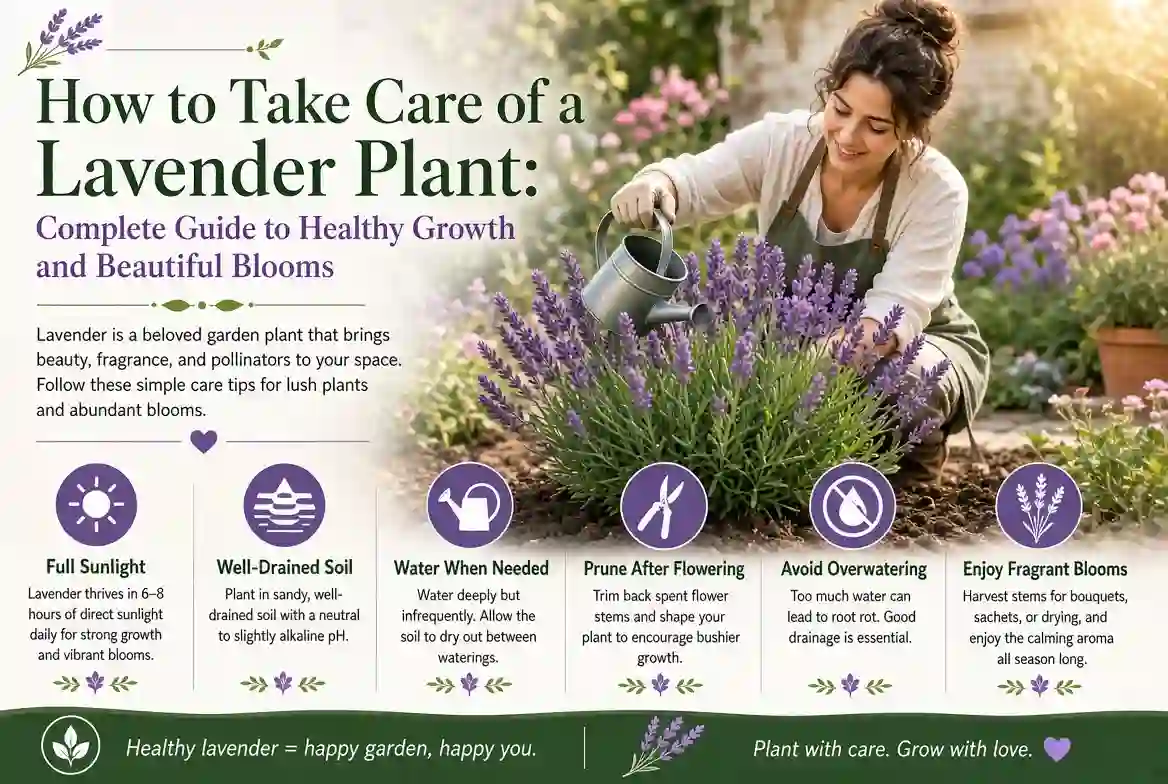
To take care of a lavender plant, give it at least 6–8 hours of direct sunlight daily, well-draining soil, and a pot or garden location that never stays waterlogged. Water young plants while they establish, then water established plants when the soil has dried. Prune lightly after flowering, avoid excessive fertilizer, and choose a lavender variety suited to your climate.
Lavender is loved for its fragrant flowers, silvery-green foliage, and ability to attract pollinators. It can grow beautifully in garden beds, containers, and sunny patios—but it does not thrive when treated like a thirsty, shade-loving plant.
The most common lavender-care problems often begin with too much water, heavy soil, insufficient sunlight, or pruning into old woody stems. These mistakes can leave plants weak, leggy, or reluctant to flower.
This guide explains how to take care of a lavender plant from planting and watering to pruning, seasonal care, and troubleshooting. Whether you are growing lavender indoors, outdoors, or in a pot, you will learn how to create conditions that support healthy growth and fragrant blooms.
4. Choose Soil and a Pot That Prevent Root Problems
Lavender needs excellent drainage. Roots that remain in wet soil are vulnerable to root and crown rot, particularly in humid conditions or during cool, rainy weather.
Illinois
+2
Best soil for lavender
Lavender generally performs well in loose, well-drained sandy or loamy soil. It tolerates relatively low soil fertility and does not need rich, heavily amended soil.
If your garden has heavy clay:
- Grow lavender in a raised bed or on a suitable mound to improve drainage.
- Consider a container with a free-draining potting mix.
- Avoid planting in a low spot where rainwater collects.
- Do not add amendments blindly; improve the soil structure and drainage based on your conditions.
Lavender often prefers neutral to slightly alkaline soil, but drainage is usually the more urgent concern. Check local soil conditions before adding lime or other pH-changing materials.
UC IPM
+2
Growing lavender in a pot

Container growing can be useful when garden soil drains poorly or when you need to move a less cold-hardy variety for winter protection.
Choose a pot that:
- Has drainage holes at the bottom.
- Is large enough for the plant’s roots and mature size.
- Is made from a material and weight suitable for your climate and plant stability.
- Contains a free-draining potting mix rather than dense garden soil.
Terracotta can help the mix dry more quickly, but it may also need more frequent moisture checks in hot, dry weather. Plastic pots retain moisture longer, so monitor them carefully.
Common mistake: A decorative pot without drainage can trap water around the roots. If you want to use one, keep the lavender in a separate draining pot and empty any collected water.
Image suggestion: Compare lavender growing in a raised bed, heavy wet clay, and a container with drainage holes.
5. Prune Lavender Without Cutting Away Its Future Growth
Pruning helps lavender stay compact, encourages branching, and reduces the chance of becoming open and woody. But cutting too deeply into old wood can damage the plant, because many lavender plants do not reliably produce new shoots from bare woody stems.
University of Maryland Extension
+2
When should you prune lavender?
Timing depends on the type of lavender and your climate:
- After flowering: Lightly trim spent flower stems and shape the plant while avoiding severe cuts into old wood.
- In spring: Wait until new growth begins and winter damage is easier to identify. Remove dead material and shape the living growth.
- Before winter: Avoid severe late-season pruning, especially where plants face cold weather. Follow advice for your variety and region.
Extension guidance differs on the best pruning window, reflecting climate and lavender type. In cold areas, spring pruning after new growth appears can help you distinguish living stems from winter damage.
Ask Extension
+2
How to prune step by step
- Use clean, sharp shears.
- Remove spent flower stalks and dead or damaged growth.
- Trim the soft, leafy growth to shape the plant into a compact mound.
- Leave healthy green growth below the cut.
- Avoid cutting far down into leafless, old woody stems.
- If the plant is very woody or split open, prune conservatively rather than trying to reshape it all at once.


5
Practical observation: If lavender has become woody and sparse, a drastic haircut may not restore it. Taking gentle annual steps is usually safer than removing most of the plant in one session.
6. Feed Sparingly—Lavender Does Not Need Rich Soil
Lavender is adapted to relatively lean growing conditions. Heavy feeding, particularly with nitrogen-rich fertilizer, can encourage leafy growth at the expense of flowers and may make plants less compact. Established plants often need little or no fertilizer when they grow in suitable soil.
UC IPM
+2
For practical care:
- Start with suitable soil and good sunlight rather than fertilizer.
- Do not routinely feed a healthy, established plant just because other garden plants receive fertilizer.
- If growth is poor, first check drainage, light, root health, and whether the variety suits your climate.
- Use fertilizer only when there is a clear need, and follow the product label.
7. Help Lavender Survive Winter and Seasonal Changes
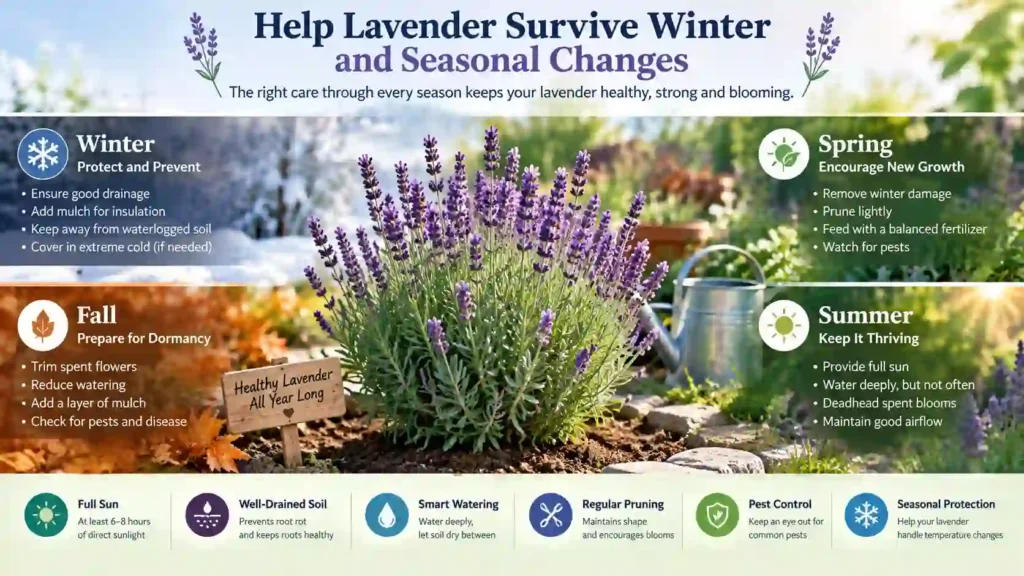
Lavender’s winter hardiness varies by species and cultivar. Some types tolerate colder conditions, while others need protection from frost. Wet winter soil can be especially damaging, even for varieties that tolerate low temperatures.
Illinois
+2
Outdoor lavender in winter
- Confirm that your variety is suited to your local climate.
- Keep drainage excellent and avoid wet, sheltered pockets.
- Do not cut the plant back severely in autumn in cold regions.
- Where appropriate, use a light winter covering recommended for your area, while avoiding a persistently damp crown.
Potted lavender in winter
Containers expose roots to colder temperatures than surrounding garden soil. Depending on the variety and local winter conditions, a potted plant may need a sheltered, cool location or other protection. It still needs light and occasional moisture, but generally less water while dormant.
Ask Extension
+1
Key point: Do not assume bringing lavender into a warm, dim room is the best way to overwinter it. Many types need strong light and seasonal conditions; follow guidance for the specific lavender and climate.
8. Harvest Lavender Flowers at the Right Stage
Lavender flowers can be harvested for dried arrangements, sachets, and other uses. For drying, many growers cut flower stems when the buds are colored and only a few florets have opened. This helps preserve the shape and fragrance of the flower spikes.
UC IPM
+2
Simple harvesting steps
- Harvest on a dry day after surface moisture has evaporated.
- Cut flower stems with clean shears.
- Avoid cutting deeply into old, leafless wood.
- Gather stems into small bundles.
- Hang them in a dry, well-ventilated place away from strong direct sunlight.
If you are harvesting for culinary use, make sure the plant has been grown without unsuitable pesticides or other contaminants, and confirm that the variety and intended use are appropriate.
Image suggestion: Lavender flower stems being harvested into a small bundle, with a close-up showing buds just beginning to open.
9. Grow Lavender Indoors—With Realistic Expectations
Lavender is naturally a sun-loving outdoor plant. Keeping it indoors can be challenging because windows may not provide enough light, and indoor air can be still or humid compared with the plant’s preferred growing conditions. Extension advice for overwintering lavender indoors emphasizes strong light and good air circulation, while warning against overwatering.
Ask Extension
+2
If you want to try growing lavender indoors:
- Choose the brightest available window, ideally with several hours of direct sun.
- Use a pot with drainage and a free-draining mix.
- Keep it away from cold drafts and hot air vents.
- Allow the soil to dry appropriately between waterings.
- Provide good air movement without exposing the plant to damaging drafts.
- Consider a suitable grow light if natural light is inadequate.
If the plant becomes stretched, weak, or fails to flower, insufficient light may be part of the problem. A sunny outdoor position is often more suitable when your climate and variety allow it.
10. Prevent Pests and Diseases
Lavender can experience problems such as spittlebugs, aphids, whiteflies, spider mites, and root or crown rot. Good site selection, drainage, spacing, and watering practices help reduce several common issues.
University of Delaware
+2
What to look for
- Spittlebugs: Frothy, spit-like foam on stems.
- Aphids or whiteflies: Small insects clustered on tender growth or the undersides of leaves.
- Spider mites: Fine webbing and stippled or faded foliage.
- Root or crown rot: Declining growth, wilting despite wet soil, or dark, damaged tissue near the base.
What to do
- Inspect the plant and identify the likely cause before treating it.
- Remove badly damaged material where appropriate.
- Improve airflow and correct drainage or watering problems.
- For pests, use a treatment labeled for the pest and plant, following its directions.
- Seek local extension advice if the plant continues to decline or the cause is unclear.
Avoid treating every brown leaf as a disease. Poor drainage, unsuitable climate, and environmental stress can produce similar symptoms.
11. Troubleshoot Common Lavender Problems


6
|
Problem
|
Possible cause
|
Practical response
|
| — | — | — |
|
Lavender wilts while soil is wet
|
Poor drainage or root damage
|
Check the soil and roots; improve drainage before adding more water
|
|
Leaves yellow or plant declines
|
Excess moisture, poor drainage, or other stress
|
Check watering, soil, airflow, and recent weather
|
|
Few or no flowers
|
Insufficient sunlight, excessive fertilizer, immature plant, or unsuitable growing conditions
|
Improve sunlight, avoid unnecessary feeding, and confirm variety suitability
|
|
Plant becomes leggy
|
Too little light or lack of regular shaping
|
Provide more sun and prune appropriately without cutting into bare old wood
|
|
Center splits or plant becomes woody
|
Aging growth or inadequate pruning over time
|
Use gentle annual pruning; avoid a severe cut into old wood
|
|
Plant struggles after winter
|
Variety may be insufficiently hardy or soil may have stayed wet
|
Assess live growth in spring, remove dead stems, and review winter drainage and protection
|
|
Gray or damaged foliage
|
Environmental stress, pests, or disease may be involved
|
Inspect closely and address the specific cause rather than treating blindly
|
Lavender needs full sun and well-drained soil, and wet conditions can shorten its life. Regular but careful pruning helps maintain shape, while severe cuts into old wood can be risky.
Illinois
+2
12. Propagate Lavender
Lavender can be grown from seed or cuttings. Cuttings are often preferred when you want a new plant that closely resembles the parent, while seed-grown plants may vary.
Illinois
+1
Propagation from cuttings
- Select healthy, non-flowering shoots.
- Take cuttings with clean tools.
- Remove the lower leaves.
- Insert the prepared cuttings into a suitable propagation medium.
- Keep the medium lightly moist, not saturated.
- Provide bright light without harsh exposure while the cuttings establish.
- Once rooted and growing, gradually acclimate the young plants to their final conditions.
Success depends on the lavender type, the condition of the cutting, and the growing environment. Avoid keeping cuttings waterlogged, as excess moisture can encourage rot.
Image suggestion: A propagation sequence showing a lavender stem cutting, prepared lower stem, and rooted young plant in a small pot.
13. Frequently Asked Questions
How often should I water a lavender plant?
Water based on the soil and weather rather than a fixed schedule. Newly planted lavender needs more consistent moisture while establishing. Once established, it is drought-tolerant, but prolonged heat and dry conditions may still require watering. Let the soil drain well between waterings.
UC Agriculture and Natural Resources
+1
Does lavender need full sun?
Yes. Lavender grows best in full sun, generally receiving at least six hours of direct sunlight daily. Around six to eight hours is a useful target for many garden varieties. Too little light can lead to weak growth and fewer flowers.
UC IPM
+1
Can lavender grow in pots?
Yes. Lavender can grow in containers if the pot has drainage and the growing mix drains freely. Containers are also useful when garden soil is heavy or when a tender variety needs winter protection.
University of Delaware
+1
Why is my lavender plant dying?
Common causes include poorly drained soil, overwatering, insufficient sunlight, unsuitable climate, and root or crown rot. Check the soil moisture and drainage first, then examine the plant for pests or damaged roots.
UC IPM
+1
Should I cut back lavender after flowering?
Lightly trimming spent flower stems and shaping the plant after flowering can help maintain its form. Avoid cutting deeply into leafless old wood. In colder climates, spring pruning after new growth appears may be safer for assessing winter damage.
University of Maryland Extension
+1
Does lavender need fertilizer?
Usually, established lavender growing in suitable soil needs little or no fertilizer. Excessive feeding can encourage leafy growth and may reduce flowering or weaken the plant’s compact shape. Check growing conditions before deciding that fertilizer is needed.
UC IPM
+1
Can lavender survive winter outdoors?
That depends on the species or cultivar, your local climate, and soil drainage. Some varieties tolerate cold winters, while others need protection. Wet soil during winter can be especially damaging, so choose a suitable variety and avoid waterlogged conditions.
Illinois
+1
Can I grow lavender indoors all year?
It can be difficult to keep lavender thriving indoors because it needs strong light and good airflow. A very sunny window or grow light may help, but many lavender plants perform better outdoors when conditions are suitable.
Ask Extension
+1
When should I harvest lavender flowers?
For dried flower stems, harvest when the buds are colored and only a few florets have opened. Cut on a dry day and avoid cutting into old woody growth.
UC IPM
+1
Conclusion
The secret to healthy lavender is not constant attention. It is giving the plant the conditions it prefers: plenty of sunlight, excellent drainage, careful watering, and light, regular pruning.
Start by choosing a variety suited to your climate. Plant it in a sunny location where water does not collect, and avoid overfeeding or cutting into bare woody stems. If your lavender begins to struggle, check its soil and growing conditions before adding water or fertilizer.
With the right variety and a well-chosen growing spot, lavender can reward you with fragrant foliage, colorful blooms, and a beautiful presence in your garden or patio.