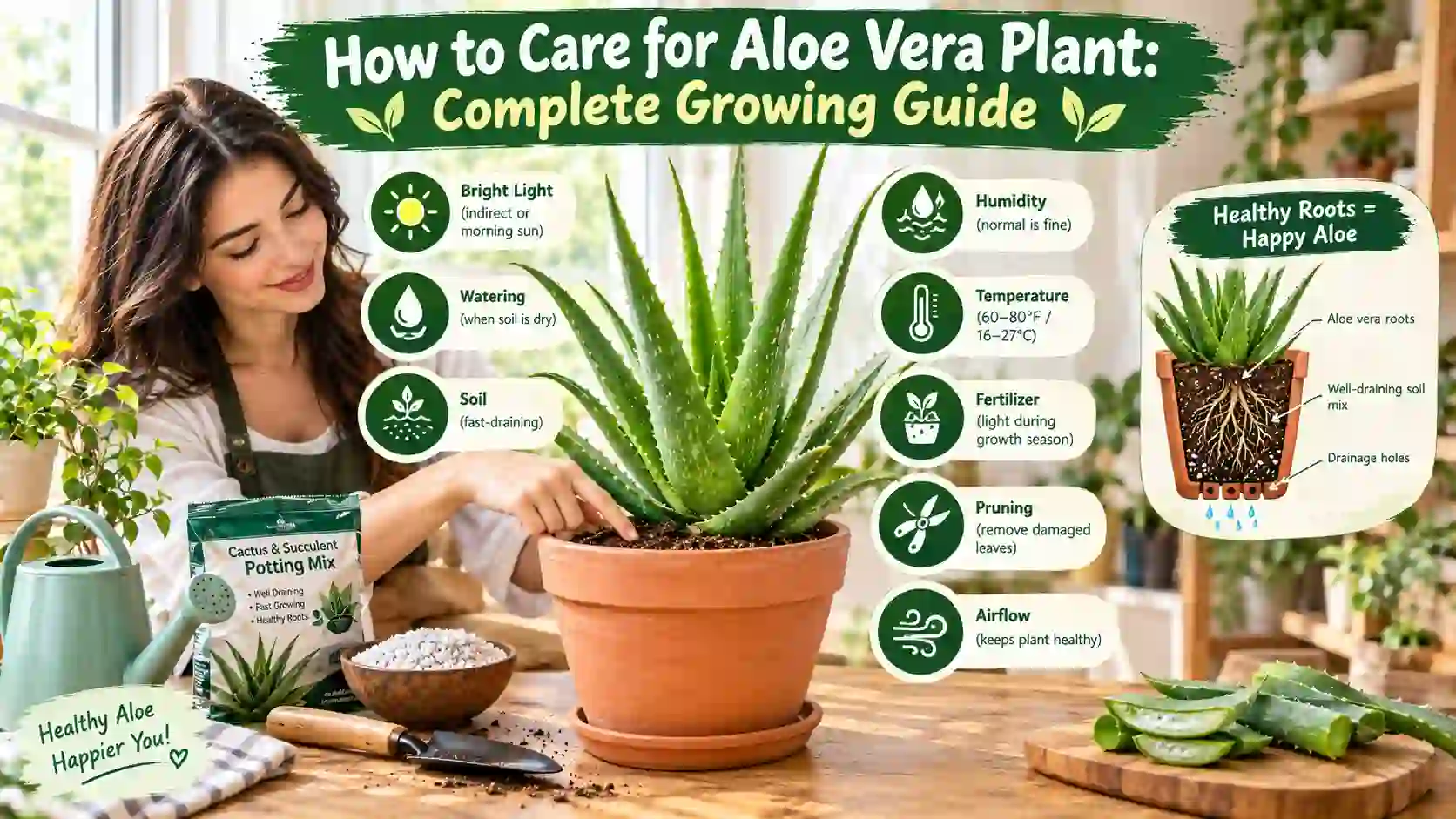
To care for an aloe vera plant, provide bright indirect light or gentle direct sunlight, fast-draining soil, and a pot with drainage holes. Water deeply only when the soil has dried out, then let excess water drain completely. Keep aloe warm, avoid standing water, and fertilize lightly during active growth. Healthy aloe leaves should feel firm and upright, not soft or mushy.
Aloe vera is one of the easiest succulents to grow, but it still has a few important care requirements.
The biggest mistake is usually watering too often. Aloe stores water inside its thick leaves, so it handles dry conditions much better than constantly wet soil.
Light also matters. An aloe placed in a dark corner may become thin and stretched. An aloe receiving too much intense sun too quickly can develop brown or reddish patches.
The good news is that aloe vera usually tells you when something is wrong. Soft leaves, yellowing, brown tips, leaning growth, and slow growth can all point toward different care problems.
This guide explains how to care for aloe vera plant from planting and watering to repotting, propagation, troubleshooting, and long-term maintenance.
Understanding Aloe Vera Before You Start
Aloe vera (Aloe barbadensis Miller) is a succulent with thick, fleshy leaves designed to store water.
Its natural adaptations explain much of its care.
The plant prefers:
- Bright light
- Dry periods between watering
- Porous, well-draining soil
- Good airflow
- Warm temperatures
- A container that drains quickly
Aloe vera does not need constant moisture to stay healthy.
In fact, keeping the roots wet for long periods can reduce oxygen around the roots and encourage root rot.
Practical observation: If an aloe looks thirsty, beginners often reach for the watering can immediately. Check the soil first. Drooping leaves can also result from root damage caused by previous overwatering.
Image Suggestion
A botanical diagram showing aloe vera leaves, roots, soil, drainage holes, and water-storage tissues.
How Much Light Does Aloe Vera Need?
Aloe vera grows best in bright light.
A sunny windowsill, bright conservatory, greenhouse, or sheltered outdoor location can work well.
However, suddenly moving an aloe from low light into intense afternoon sun can cause leaf damage.
Ideal indoor placement
Good locations include:
- A bright south-facing window with some protection from harsh midday sun
- A bright east-facing window
- A bright west-facing window with filtered afternoon light
- A few feet from a very sunny window
A north-facing window may work in some locations, but growth can become slower if the light is weak.
How to recognize insufficient light
An aloe receiving too little light may develop:
- Long, stretched growth
- Thin leaves
- Wide gaps between leaves
- Pale green coloration
- Leaning toward the window
This stretched growth is called etiolation.
Moving the plant closer to a bright window can help new growth become more compact.
However, previously stretched leaves usually will not return to their original compact shape.
How to recognize excessive sun
Too much intense sunlight, especially after a sudden change, can cause:
- Brown patches
- Reddish or bronze coloration
- Dry leaf surfaces
- Scorched areas
This does not always mean the plant needs less light permanently.
Often, the problem is a sudden transition.
Best practice
Increase sunlight gradually.
Move an indoor aloe closer to a sunny window over several days rather than placing it immediately under intense midday sunlight.
Image Suggestion
A comparison infographic showing aloe vera in low light, ideal bright light, and excessive direct sunlight.
How Often Should You Water Aloe Vera?
There is no perfect watering schedule for every aloe vera plant.
The correct frequency depends on:
- Pot size
- Soil type
- Temperature
- Humidity
- Light exposure
- Season
- Root health
Instead of watering on a fixed calendar, check the soil.
Allow the soil to dry substantially before watering again.
A simple watering method
- Insert your finger several inches into the soil.
- Check whether the soil still feels damp.
- If it is dry, prepare to water.
- Water thoroughly until excess water exits the drainage holes.
- Empty the saucer afterward.
- Wait until the soil dries again before watering.
A small amount of water every few days is usually less useful than a thorough watering followed by a proper drying period.
Why overwatering causes problems
Aloe roots need oxygen as well as moisture.
Constantly wet soil can create poor root conditions. Damaged roots may stop functioning properly, causing the leaves to become soft or discolored.
This creates a confusing situation.
A plant can have wet soil but still look dehydrated because damaged roots cannot absorb water effectively.
Seasonal watering
Aloe often needs more frequent watering during active growth in warm, bright conditions.
During cooler or darker periods, growth slows and the plant usually uses less water.
Do not automatically water because a certain number of days has passed.
Check the soil and plant condition first.
Image Suggestion
Show the correct watering cycle: dry soil → thorough watering → drainage → dry period.
The Best Soil for Aloe Vera
Aloe vera needs soil that drains quickly.
Standard garden soil or moisture-retaining indoor potting soil can remain wet for too long.
A suitable aloe mix should contain materials that improve drainage and air spaces.
Good options include
- Cactus and succulent potting mix
- Commercial succulent soil
- Potting mix amended with perlite
- Potting mix combined with coarse mineral materials
The goal is not simply to make soil “dry.”
The goal is to create a mixture that holds enough moisture for the roots while allowing excess water to move away quickly.
What poor soil looks like
Avoid soil that:
- Stays wet for many days
- Becomes compacted
- Drains extremely slowly
- Forms a dense muddy layer
- Has poor airflow around the roots
An important drainage misconception
Adding rocks to the bottom of a pot does not automatically improve drainage.
A better solution is to use an appropriate soil mix throughout the root zone and choose a container with drainage holes.
Image Suggestion
Side-by-side visual comparing compact, water-retentive soil with a loose, well-draining succulent mix.
Choosing the Right Pot for Aloe Vera
The container is almost as important as the soil.
Always choose a pot with at least one functional drainage hole.
Terracotta is especially useful because it is porous and can help the growing medium dry more quickly.
Plastic pots can also work well. However, they may retain moisture longer depending on the environment and soil mix.
Choose the pot size carefully
Do not automatically move a small aloe into a huge container.
An oversized pot contains more soil around the roots. That soil can remain wet for longer after watering.
Choose a container that gives the root system some room to grow without leaving a large amount of unused wet soil.
When should you repot?
Repot when:
- Roots are tightly crowded
- The plant has become unstable
- Offsets are filling the container
- Soil has broken down
- Water drains unusually slowly
- The container is damaged
- The plant repeatedly dries out or stays wet for unusual periods
Image Suggestion
An illustrated repotting sequence showing aloe vera being moved from a small pot into a slightly larger terracotta container.
How to Plant or Repot Aloe Vera
Repotting aloe vera is straightforward when you avoid excessive watering afterward.
Step 1: Prepare the container
Choose a clean pot with drainage holes.
Step 2: Prepare the soil
Use a fast-draining cactus or succulent mix.
Step 3: Remove the plant carefully
Gently loosen the plant from its existing container.
Avoid pulling aggressively on the leaves.
Step 4: Inspect the roots
Healthy roots should generally feel firm.
Dark, mushy, or foul-smelling roots may indicate rot.
Remove clearly damaged portions using clean tools.
Step 5: Position the aloe
Place the plant so the base of the leaves sits around the same level as before.
Do not bury the crown deeply.
Step 6: Add soil
Fill around the roots without tightly compressing the mix.
Step 7: Let the plant settle
Avoid creating a constantly wet environment around freshly disturbed roots.
If the roots were damaged during repotting, giving the plant some time before heavy watering can reduce stress.
What Temperature Does Aloe Vera Need?
Aloe vera prefers warm conditions.
A general comfortable range for indoor growth is around 60–80°F (16–27°C).
Protect the plant from:
- Frost
- Freezing temperatures
- Cold drafts
- Sudden temperature changes
- Prolonged exposure to cold, wet conditions
Warm temperatures combined with strong light usually encourage active growth.
Cold temperatures can slow growth considerably.
Outdoor aloe care
In warm climates, aloe can grow outdoors year-round.
In colder climates, bring container-grown aloe indoors before frost or freezing weather arrives.
Important: Cold plus wet soil can be especially stressful for aloe roots.
Does Aloe Vera Need Humidity?
Aloe vera does not require high humidity.
Normal household humidity is often adequate.
Unlike tropical plants, aloe does not need regular misting to stay healthy.
In fact, keeping the foliage constantly wet can create unnecessary problems, particularly where airflow is poor.
Focus more on:
- Bright light
- Dry periods between watering
- Good drainage
- Air circulation
These factors generally matter more than increasing humidity.
How to Fertilize Aloe Vera
Aloe vera is not a heavy feeder.
Too much fertilizer can cause excessive soft growth or contribute to salt buildup in the soil.
During active growth, you can use a balanced fertilizer diluted according to the product instructions.
A succulent fertilizer can also be suitable.
Good fertilizing practices
- Fertilize only when the plant is actively growing.
- Use a diluted application rather than excessive amounts.
- Avoid repeatedly fertilizing dry, stressed, or unhealthy plants.
- Reduce or stop feeding during slow winter growth.
- Follow the fertilizer manufacturer’s dilution instructions.
More fertilizer does not mean faster, healthier growth.
Aloe naturally grows at a moderate pace.
Image Suggestion
An infographic showing diluted fertilizer, active growing season, and a healthy aloe root system.
How to Prune Aloe Vera
Aloe vera usually needs very little pruning.
Remove leaves when they are:
- Completely dead
- Severely damaged
- Rotten
- Broken
- Diseased
Use a clean, sharp blade or pruning scissors.
Cut damaged leaves close to the base without unnecessarily cutting healthy tissue.
What about brown tips?
Do not remove an entire healthy leaf simply because the tip is brown.
You can trim the damaged portion for appearance, but the remaining leaf may continue functioning normally.
Brown tips can result from several factors, including:
- Water stress
- Excessive sunlight
- Physical damage
- Environmental changes
- Root problems
Look at the overall plant before deciding what caused the symptom.
How to Propagate Aloe Vera From Pups
One of the easiest ways to multiply aloe vera is by separating its offsets, commonly called pups.
Pups develop around the base of a mature plant.
How to separate an aloe pup
- Wait until the offset has developed its own roots if possible.
- Remove the plant carefully from the container.
- Locate the connection between the pup and mother plant.
- Separate it using clean hands or a sterile cutting tool.
- Allow damaged cut surfaces to dry if necessary.
- Plant the offset in a small container with well-draining soil.
- Avoid keeping the new plant constantly wet.
Small offsets should not be planted in enormous containers.
A modest pot makes moisture management easier.
Can you grow aloe from a leaf?
Aloe vera is generally much easier to propagate from pups than from leaf cuttings.
A detached leaf may shrivel or rot rather than produce a new plant.
For reliable home propagation, offsets are usually the better choice.
Image Suggestion
Step-by-step infographic showing a mature aloe, developing pup, separation, drying period, and planting.
Why Are My Aloe Vera Leaves Turning Brown?
Brown leaves do not always have the same cause.
Look at where the browning occurs and what the leaves feel like.
| Symptom | Possible Cause | What to Check |
|---|---|---|
| Brown, dry tips | Water stress or environmental stress | Soil moisture and light |
| Brown patches after moving outdoors | Sudden sun exposure | Acclimation |
| Soft brown leaves | Overwatering or root problems | Roots and soil |
| Dry, crispy leaf areas | Excessive heat or intense sun | Light exposure |
| Brown lower leaf that is completely dry | Natural aging | Overall plant health |
Avoid treating every brown leaf with more water.
That can make an overwatering problem worse.
Why Are My Aloe Vera Leaves Turning Yellow?
Yellow leaves often indicate a problem with the plant’s growing conditions.
Common causes include:
- Excessive watering
- Poor drainage
- Insufficient light
- Root damage
- Natural aging of older leaves
If several leaves are turning yellow and the soil remains wet for long periods, inspect the roots and growing medium.
If only an old outer leaf turns yellow and dries naturally while the rest of the plant looks healthy, aging may be responsible.
A useful diagnostic rule
Look at the whole plant, not one leaf.
One aging leaf is very different from widespread yellowing combined with soft foliage and constantly wet soil.
Why Is My Aloe Vera Plant Soft or Mushy?
Soft leaves are one of the more important warning signs.
Healthy aloe leaves should generally feel firm and substantial.
If the leaves become:
- Mushy
- Translucent
- Collapsed
- Dark at the base
- Wet-looking
check for excessive moisture and root or crown problems.
What to do
Remove the plant from its pot and inspect the root system if the problem is severe.
Look for dark, soft, deteriorating roots.
Remove clearly rotten tissue with a clean tool and replace severely compromised wet soil with a fresh, well-draining mix.
Do not continue following the same watering routine that caused the problem.
Why Is My Aloe Vera Plant Drooping?
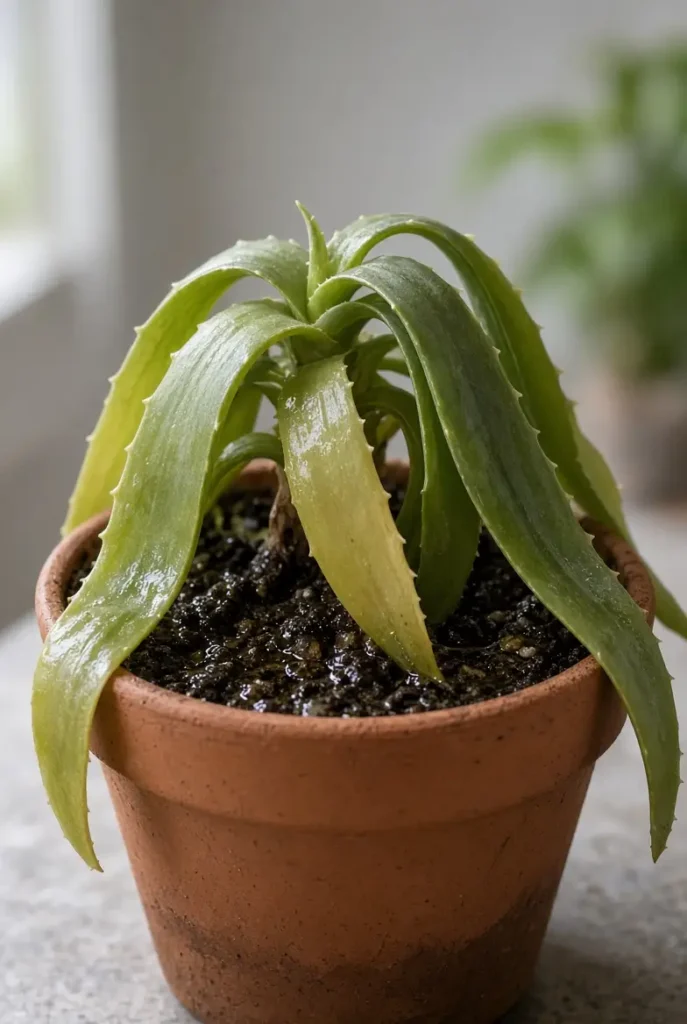
Drooping can have several causes.
Possible explanations include:
Too little water
The leaves may become thinner, less firm, and curled.
Root damage
Overwatering can damage roots, preventing normal water uptake.
Insufficient light
Weak light can produce elongated, less sturdy growth.
Physical imbalance
A large aloe may become top-heavy and lean from its own weight.
Temperature stress
Cold conditions can cause growth and leaf problems.
This is why simply watering a drooping aloe is not always the right solution.
First check the soil, roots, light, and temperature.
Why Are My Aloe Vera Leaves Thin?
Healthy aloe leaves are usually thick because they store water.
Thin leaves can indicate:
- Prolonged drought
- Poor root function
- Insufficient light
- Stress from temperature changes
- Root damage
Check the soil before watering.
If the soil is completely dry and the plant looks dehydrated, provide a thorough watering and allow excess water to drain.
If the soil is wet but the leaves remain thin or soft, investigate the roots instead.
How to Make Aloe Vera Grow Faster
Aloe vera is not naturally a fast-growing houseplant.
You can encourage stronger growth by providing the conditions it actually needs.
Focus on these five factors
1. Give it sufficient light.
Bright light supports compact, sturdy growth.
2. Use fast-draining soil.
Healthy roots support healthy foliage.
3. Water according to soil dryness.
Avoid both prolonged drought and constant moisture.
4. Feed lightly during active growth.
Avoid excessive fertilizer.
5. Give the roots room without overpotting.
A slightly crowded plant can still grow well, while an oversized wet container can create problems.
Trying to force rapid growth through frequent watering or heavy fertilizer often produces worse results.
Aloe Vera Care in Different Seasons
Aloe vera’s water requirements change throughout the year.
Spring
Growth often increases as light and temperatures improve.
Check the soil more frequently, but still allow it to dry between waterings.
This is a good period for:
- Repotting
- Propagation
- Light fertilization
- Moving plants outdoors gradually
Summer
Strong light and warm temperatures can increase water use.
Outdoor plants may dry faster than indoor plants.
Check containers regularly, especially small pots.
Protect indoor aloe from extreme heat through glass if the leaves begin showing scorch.
Autumn
Growth may slow as temperatures and light decrease.
Begin reducing watering frequency based on actual soil moisture.
Winter
Aloe may require significantly less water when growth slows.
Keep it away from freezing temperatures and cold drafts.
Do not continue a summer watering schedule simply because the calendar has changed.
Image Suggestion
A four-panel seasonal aloe vera care infographic showing spring, summer, autumn, and winter conditions.
Common Aloe Vera Care Mistakes
1. Watering on a fixed schedule
Aloe does not know whether it is Tuesday or Saturday.
Water according to soil conditions and environmental factors.
2. Using a pot without drainage
This makes moisture management much harder.
Always prioritize functional drainage.
3. Keeping aloe in a dark room
Aloe needs bright light for strong, compact growth.
4. Moving it directly into harsh sunlight
Sudden exposure can cause leaf scorch.
Acclimate gradually.
5. Using heavy garden soil
Dense soil can stay wet around the roots.
Use a porous succulent mix instead.
6. Choosing an oversized pot
More soil can mean slower drying.
Choose an appropriately sized container.
7. Misting the plant constantly
Aloe does not need tropical-style humidity.
Focus on root health instead.
8. Fertilizing too heavily
More fertilizer is not better.
Aloe has modest nutritional needs.
9. Ignoring soft leaves
Soft, mushy foliage can be an early warning of serious moisture or root problems.
10. Cutting healthy leaves unnecessarily
Prune damaged tissue only when needed.
Healthy leaves contribute to photosynthesis and water storage.
A Simple Aloe Vera Care Routine
You do not need to spend hours caring for aloe vera.
Use this simple routine.
Weekly
Check:
- Soil moisture
- Leaf firmness
- Light exposure
- Signs of pests
- General plant stability
Every few weeks
Look for:
- New growth
- Developing pups
- Brown or yellow leaves
- Soil compaction
- Changes in drainage
During active growth
Consider:
- Light fertilization
- Repotting if necessary
- Propagating healthy offsets
During slow growth
Reduce intervention.
Avoid unnecessary watering and fertilizing.
The best aloe care is often about knowing when to leave the plant alone.
Aloe Vera Care Troubleshooting Chart
| Problem | Likely Causes | First Action |
|---|---|---|
| Soft, mushy leaves | Overwatering or root rot | Check roots and soil |
| Yellow leaves | Excess moisture, poor light, aging | Check soil and light |
| Brown dry tips | Water stress, sun, environmental stress | Inspect growing conditions |
| Thin leaves | Drought or root problems | Check soil and roots |
| Stretched growth | Insufficient light | Move toward brighter light gradually |
| Red or bronze color | Strong light or stress | Check recent light changes |
| Plant leaning | Low light or top-heavy growth | Improve light and stability |
| Slow growth | Low light, cold, or poor roots | Check light and temperature |
| No pups | Plant age, conditions, season | Improve light and growing conditions |
| Soil stays wet | Dense mix or poor drainage | Repot into a faster-draining mix |
Aloe Vera Pests to Watch For
Watch for:
- Mealybugs
- Scale insects
- Aphids
- Spider mites
Inspect the leaf bases and areas where leaves overlap.
Mealybugs can appear as small white, cotton-like clusters.
Scale may look like small bumps attached to the plant.
Early detection makes pest management much easier.
If you find pests, isolate the affected plant from other houseplants while you address the problem.
Should You Keep Aloe Vera Indoors or Outdoors?
Both environments can work.
| Indoor Aloe | Outdoor Aloe |
|---|---|
| Easier temperature control | Usually stronger natural light |
| Protected from frost | More exposure to weather |
| Easier to monitor watering | May dry faster |
| Good for containers | Can grow vigorously in warm climates |
| Less exposure to pests outdoors | Greater exposure to insects and rain |
The most important factor is not whether aloe is indoors or outdoors.
It is whether the location provides appropriate light, drainage, temperature, and watering conditions.
When moving an indoor aloe outside, acclimate it gradually.
Can Aloe Vera Grow in Low Light?
Aloe vera can survive in lower light for a period, but survival is different from healthy growth.
Low light can cause:
- Elongated leaves
- Weak growth
- Leaning
- Reduced compactness
- Slower development
If your aloe is several feet away from a window in a dim room, consider moving it closer to a brighter source.
A grow light can also help when natural light is insufficient.
How Do You Know When Aloe Vera Is Healthy?
A healthy aloe vera plant usually has:
- Firm, fleshy leaves
- Strong green coloration
- Compact growth
- New leaves emerging from the center
- Healthy roots
- Drying soil between waterings
- No persistent mushiness
- No widespread discoloration
Healthy aloe does not need to look perfect.
An occasional damaged leaf or brown tip does not automatically mean the entire plant is unhealthy.
Look for overall patterns rather than isolated imperfections.
Can You Use Aloe Vera Gel From the Plant?
Aloe vera leaves contain a clear inner gel and a yellowish latex layer near the outer leaf.
Although aloe gel is widely used in topical products, homemade preparations require care.
Do not assume that material taken directly from a houseplant is automatically safe to consume.
The yellow latex contains compounds that can cause adverse effects when ingested.
If you are growing aloe primarily for cosmetic or medicinal purposes, use appropriately prepared commercial products and follow their directions rather than experimenting with raw plant material.
Also remember that aloe vera can be harmful if pets chew or ingest the plant.
Keep it away from pets that may nibble on houseplants.
Expert Tips for Better Aloe Vera Growth
Let the soil tell you when to water
Calendar-based watering is convenient but unreliable.
Your home’s temperature, light, pot, and soil all affect drying time.
Rotate the pot
If the plant grows strongly toward one window, rotate the container occasionally.
This can encourage more balanced growth.
Acclimate before increasing sunlight
Aloe likes bright light, but leaves adapted to indoor conditions can scorch when suddenly exposed to intense outdoor sun.
Inspect the base of the plant
Many serious problems begin around the crown or root zone.
If leaves repeatedly become soft, do not only examine the leaves.
Check what is happening below the soil.
Keep the crown above wet soil
Avoid burying the central growing point deeply.
Good airflow and proper planting depth help reduce moisture-related problems.
Do not confuse thirst with root rot
This is one of the most useful aloe-care lessons.
A plant with damaged roots can appear dehydrated even while sitting in wet soil.
Always consider the soil and root condition together.
Frequently Asked Questions
How often should I water an aloe vera plant?
Water when the soil has dried substantially. Water thoroughly, then allow excess water to drain completely. Frequency varies with light, temperature, pot size, soil, and season.
Does aloe vera need direct sunlight?
Aloe vera benefits from bright light and can tolerate direct sunlight when properly acclimated. Avoid suddenly moving a low-light plant into intense midday sun.
Why is my aloe vera turning brown?
Brown areas can result from sun stress, drought, physical damage, or root problems. Examine the texture of the affected leaves and check the soil before changing your care routine.
Why is my aloe vera plant turning yellow?
Overwatering is a common cause, especially when several leaves become yellow and the soil stays wet. Poor light and natural aging can also cause yellowing.
Can aloe vera grow indoors?
Yes. Aloe vera grows well indoors when placed near a bright window and planted in fast-draining soil. Use a container with drainage holes.
What type of soil is best for aloe vera?
Use a fast-draining cactus or succulent mix. Adding materials such as perlite can improve aeration and drainage when appropriate.
Does aloe vera need fertilizer?
Aloe vera needs relatively little fertilizer. A diluted, balanced fertilizer during active growth can support healthy development without encouraging excessive soft growth.
How do I make my aloe vera grow more leaves?
Give it adequate bright light, proper watering, well-draining soil, suitable temperatures, and enough root space. Avoid excessive fertilizer or water in an attempt to speed up growth.
Why is my aloe vera plant drooping?
Drooping may result from dehydration, root damage, insufficient light, temperature stress, or a top-heavy plant. Check soil moisture and root health before watering.
How do I propagate aloe vera?
The easiest method is usually separating rooted pups from a mature plant. Plant each healthy offset in a small container filled with well-draining succulent soil.
Can aloe vera survive winter?
Aloe vera can survive cool conditions better than freezing conditions, but it should be protected from frost and prolonged cold. Indoor plants should be kept away from cold drafts.
Should I mist aloe vera?
Usually, no. Aloe vera does not require frequent misting. Good light, drainage, and appropriate watering are more important.
How long can aloe vera live?
With suitable conditions, aloe vera can remain healthy for many years. Mature plants can continually produce offsets that develop into new plants.
Related Topics Worth Exploring
If you are building a broader indoor plant-care routine, these related topics can help:
- How to care for a snake plant
- How to care for a jade plant
- How to care for a spider plant indoors
- How to care for a jade plant and encourage flowering
- Complete succulent soil guide
- How to identify and treat root rot
- How to propagate succulent plants
- Indoor plant watering guide
These topics are especially useful when aloe vera is part of a larger houseplant collection.
Final Takeaway
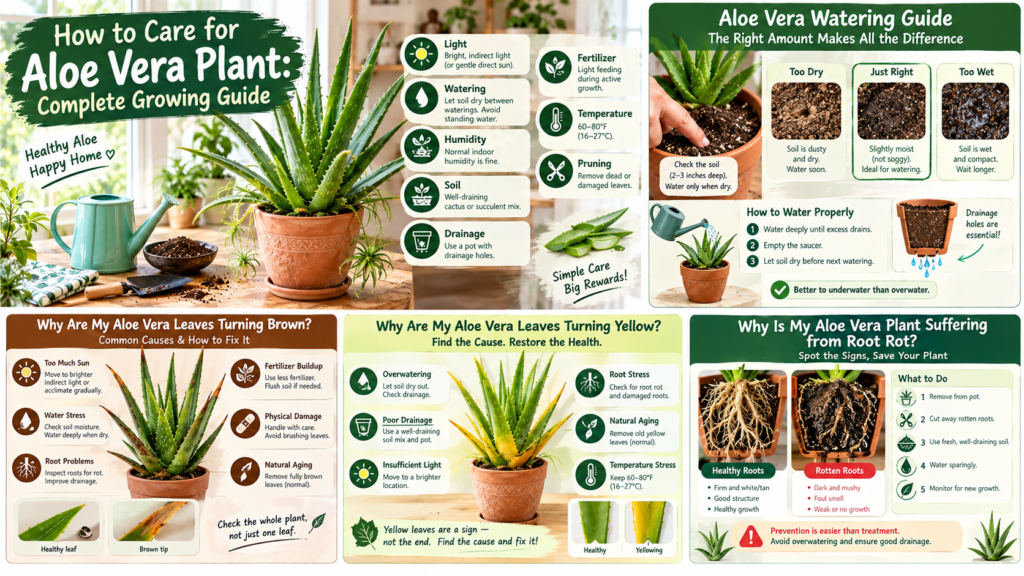
Learning how to care for aloe vera plant is mainly about understanding its natural adaptations.
Give it bright light, fast-draining soil, good drainage, warm conditions, and periods of dryness between thorough waterings. Avoid treating aloe like a tropical houseplant that needs frequent moisture.
When problems appear, inspect the whole growing environment rather than reacting to one symptom. Check the soil, roots, light, temperature, and recent changes in care.
The most important habit is simple: water the plant according to its actual needs, not according to a fixed schedule.
With the right balance of light and dry periods, aloe vera can remain healthy for years and regularly produce new growth and offsets.