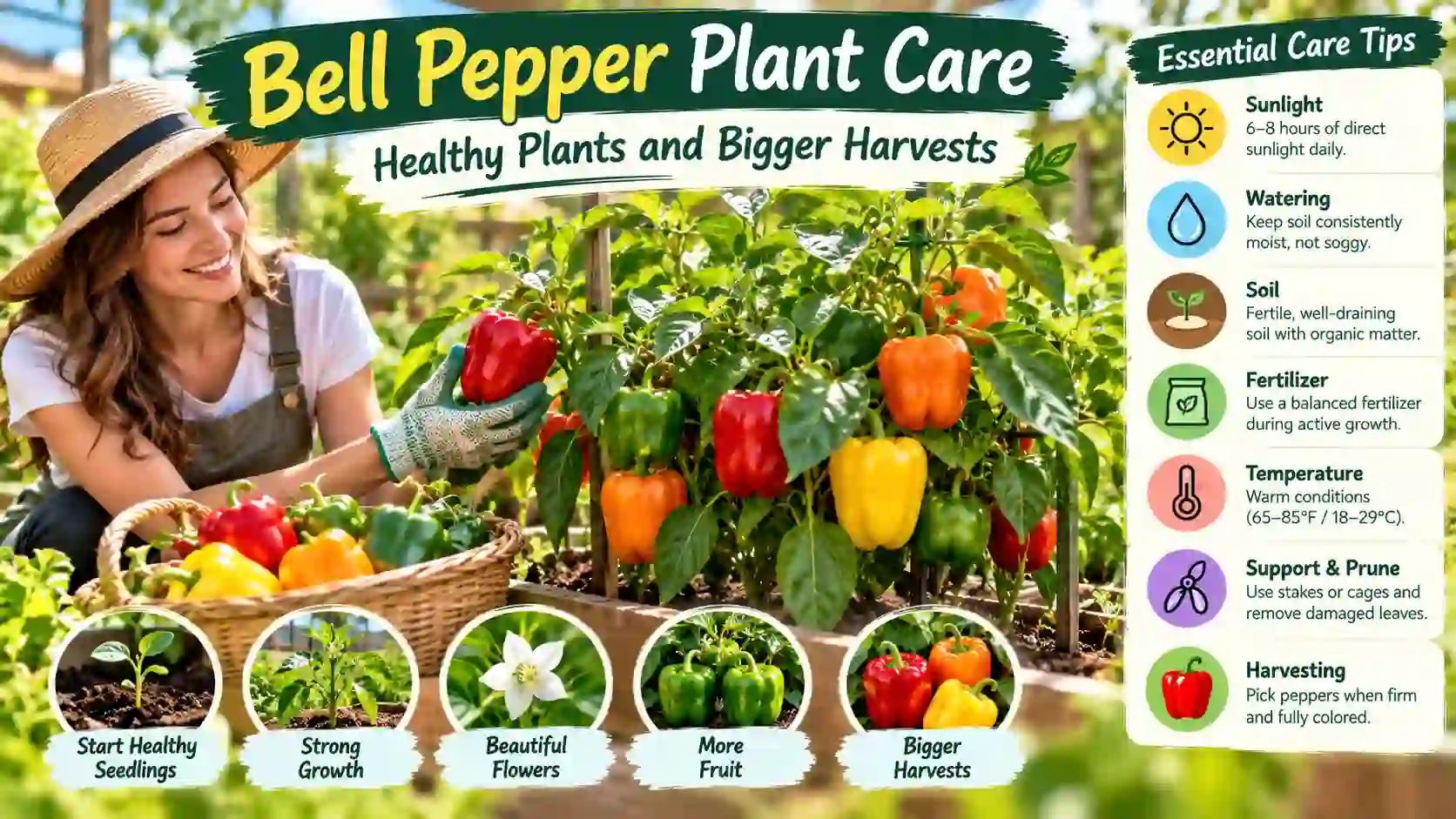
Growing bell peppers at home can be rewarding, whether you have a vegetable garden, raised bed, patio container, or sunny balcony. These plants produce crisp, colorful peppers in green, red, yellow, orange, and other varieties.
However, a healthy-looking pepper plant does not always produce a good harvest. Flowers may fall before setting fruit, leaves may turn yellow, and developing peppers can develop dark patches at their blossom ends.
Most of these problems have understandable causes. Too little sunlight can limit flowering, excessive nitrogen can encourage leafy growth over fruit production, and irregular watering can stress developing peppers.
Successful bell pepper plant care means balancing sunlight, soil moisture, nutrition, temperature, and pollination throughout the growing season. This guide explains how to grow productive plants, care for them in containers or garden beds, and solve common problems before they ruin your harvest.
Quick Answer:
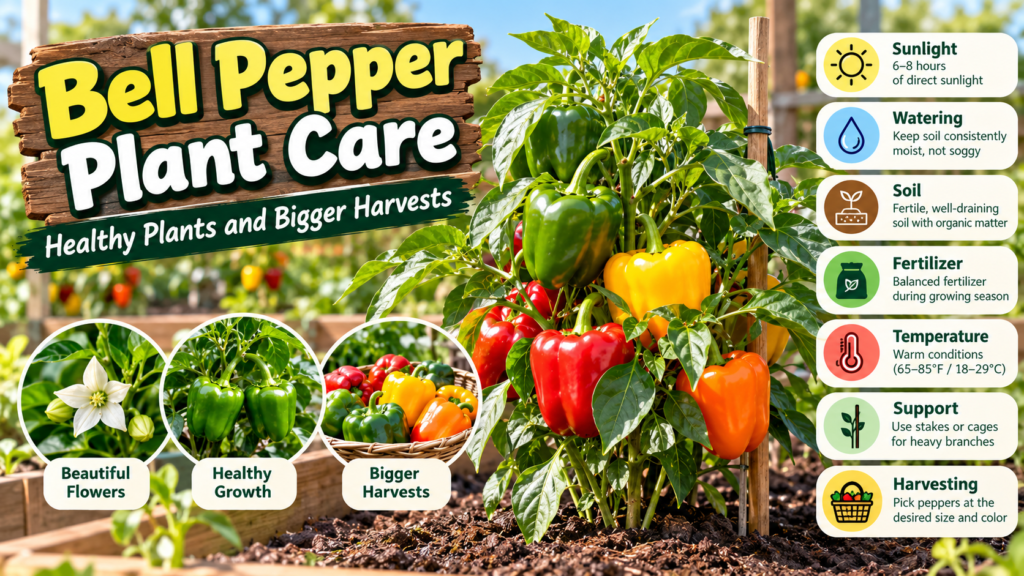
Bell pepper plant care requires at least 6–8 hours of sunlight, fertile and well-draining soil, consistent moisture, and warm growing conditions. Plant peppers after the danger of frost has passed, water deeply when the soil begins to dry, and use a balanced fertilizer without excessive nitrogen. Support heavy branches when fruit develops, and harvest peppers when they reach a suitable size and color. Consistent watering helps prevent blossom-end rot and uneven fruit growth.
1. Choose the Right Bell Pepper Variety

Bell peppers (Capsicum annuum) are warm-season vegetables. Choosing a variety suited to your growing season, available space, and climate can make plant care much easier.
Popular bell pepper colors
- Green peppers: Usually harvested before reaching full color. They often have a fresher, more grassy flavor.
- Red peppers: Fully ripe peppers that develop a sweeter flavor as they mature.
- Yellow and orange peppers: Often have a mild, sweet flavor, depending on the variety.
- Compact varieties: Useful for containers, balconies, and smaller gardens.
- Large-fruited varieties: Need enough growing time, consistent moisture, and often support when carrying heavy fruit.
Most green bell peppers can eventually change color if left on the plant, provided the variety is capable of doing so and conditions allow sufficient ripening. Fully colored peppers usually take longer to mature than green ones.
How to choose a variety
Before buying seeds or seedlings, consider:
- Growing season: Choose a variety that can mature within your local warm season.
- Growing space: Compact plants are often easier to manage in pots.
- Heat tolerance: If summers are very hot, look for varieties recommended for warm climates.
- Disease resistance: Check the seed packet for resistance to diseases common in your area.
- Harvest preference: Decide whether you want green peppers early or fully colored fruit later.
Image suggestion: A 16:9 comparison image showing green, red, yellow, and orange bell peppers growing on healthy plants.
2. Where to Plant Bell Peppers: Sunlight and Location
Bell peppers need plenty of sunlight to support strong growth, flowering, and fruit development.
How much sunlight do bell peppers need?
Aim for 6–8 hours of direct sunlight daily. More light can benefit plants in suitable temperatures, but extreme heat can interfere with flowering and fruit set.
Choose a location that receives morning sunlight and remains well ventilated. In extremely hot climates, some protection from intense late-afternoon sun may help reduce heat stress, especially for container plants.
Peppers are productive in sunny locations with a sufficiently long growing season.
Yard and Garden
+1
Can bell peppers grow in partial shade?
They may survive with less sunlight, but plants often produce fewer flowers and fruits. If your garden receives only a few hours of direct light, choose the sunniest available location.
Avoid planting peppers directly beneath trees or beside structures that block the sun for most of the day.
Why location matters beyond sunlight
Good air circulation helps foliage dry after rain and reduces prolonged leaf wetness. Avoid overcrowding plants, particularly in humid weather.
If you have grown tomatoes, potatoes, eggplants, or peppers in a garden bed recently, consider rotating crops. These plants share several pests and diseases, so changing planting locations can help reduce recurring problems.
UMN Extension
+1
Image suggestion: A 16:9 gardening infographic showing a bell pepper plant in a sunny raised bed, with sunlight hours and spacing illustrated.
3. Best Soil for Bell Pepper Plants
Healthy roots help bell pepper plants absorb water and nutrients. The ideal soil holds enough moisture for steady growth while draining excess water.
What type of soil is best?
Choose fertile, well-draining soil rich in organic matter. A slightly acidic to near-neutral pH is generally suitable; a target around pH 6.0–6.8 is a useful starting point.
Penn State Extension
+1
Avoid soil that stays waterlogged after rain or irrigation. Compacted clay can limit airflow around roots, while very sandy soil may dry out quickly and need more frequent watering.
Improve garden soil before planting
- Remove weeds and debris.
- Loosen the soil without working it when it is excessively wet.
- Incorporate mature compost if the soil needs improved structure or organic matter.
- Use a soil test to identify pH or nutrient problems.
- Prepare a raised bed if the existing ground drains poorly.
Do not add large amounts of fertilizer or lime without understanding what the soil needs. Excess nutrients and unsuitable pH can create new problems rather than improve growth.
Best potting mix for container peppers
For pots, use a quality vegetable potting mix designed for containers. Garden soil alone is often too dense for containers and may drain poorly.
A suitable mix should:
- Hold moisture without remaining saturated.
- Allow oxygen to reach the roots.
- Drain excess water through the pot.
- Support the plant as it develops fruit.
Expert tip: If your pepper plant wilts repeatedly even though you water it, check the root zone. A root-bound plant or a container that dries too quickly may need attention before you change the fertilizer.
4. Growing Bell Peppers in Pots and Containers

Bell peppers can grow well in containers if the pot is large enough, the mix drains properly, and the plant receives adequate sunlight.
What size pot does a bell pepper need?
A container of around 5 gallons (19 liters) per plant is a useful starting point for many bell pepper varieties. Larger varieties may benefit from more space, especially in hot weather when small containers dry quickly.
Choose a pot with several unobstructed drainage holes. A stable, heavier container can also help prevent a fruit-laden plant from tipping over.
How to plant bell peppers in containers
- Fill the container with a suitable potting mix.
- Plant one healthy seedling at approximately the same depth it grew in its nursery pot.
- Water thoroughly so the mix settles around the roots.
- Place the pot in a location receiving ample direct sunlight.
- Check moisture frequently, especially during hot or windy weather.
- Add a stake or cage if the plant begins leaning under the weight of fruit.
Why container peppers need extra attention
Pots have less soil volume than garden beds. They can heat up and dry out quickly, particularly on concrete balconies or near reflective walls.
A plant may need watering more frequently in a small pot than in a raised bed. However, frequent watering should never mean keeping the roots permanently saturated.
Image suggestion: A 16:9 infographic showing the correct pot size, drainage holes, potting mix, and a thriving container-grown bell pepper.
5. When and How to Plant Bell Peppers
Bell peppers are warm-season crops that dislike cold soil and frost. Planting too early can slow growth, even if the weather seems pleasant during the day.
When should you plant bell peppers?
Transplant seedlings outdoors after the risk of frost has passed and the soil has warmed. A soil temperature around 60°F (16°C) or warmer is a useful minimum guide for transplanting, though local recommendations and nighttime temperatures also matter.
Penn State Extension
+1
In frost-free, warm climates, timing depends more on extreme heat and the local growing season than on a last-frost date.
Starting seeds indoors
If you are growing from seed:
- Start seeds in a clean seed-starting mix.
- Keep the medium warm and evenly moist.
- Provide strong light after germination to prevent stretched seedlings.
- Transplant seedlings into larger containers as they develop.
- Harden them off gradually before moving them outdoors.
Hardening off means slowly exposing indoor-grown plants to outdoor light, wind, and temperature changes over several days to one or two weeks.
Transplanting seedlings outdoors
- Water the seedlings before transplanting.
- Choose a calm, mild day or transplant in late afternoon.
- Handle the root ball gently.
- Space plants according to the variety and seed-packet recommendations.
- Water the root zone after planting.
- Protect young plants from sudden cold, intense heat, or strong wind.
Avoid burying the stem much deeper than it grew in its original container unless the specific growing guidance for your variety recommends otherwise.
How far apart should bell pepper plants be?
Many garden recommendations place bell peppers about 18 inches (46 cm) apart, with wider spacing between rows. Exact spacing depends on variety, support systems, and whether you grow in beds or containers.
UMN Extension
+1
Adequate spacing improves access for watering, harvesting, and pest inspection.
6. How to Water Bell Pepper Plants Correctly

Consistent soil moisture is one of the most important parts of bell pepper plant care. Both prolonged dryness and waterlogged roots can reduce growth and fruit quality.
How often should you water bell peppers?
A common garden starting point is about 1 inch (2.5 cm) of water per week, including rainfall, but actual needs vary with temperature, soil type, plant size, and container conditions. Sandy soil and hot weather may require more frequent watering.
Yard and Garden
+1
Use these steps:
- Check the soil several inches below the surface.
- Water when the root zone begins to dry.
- Apply water slowly around the base of the plant.
- Moisten the root zone deeply rather than only wetting the soil surface.
- Let excess water drain freely.
- Check pots more often than garden beds during hot weather.
Should you water bell pepper leaves?
Watering at soil level is generally preferable. It delivers moisture to the roots while keeping foliage drier and reducing soil splash onto the leaves.
Drip irrigation or a soaker hose can make moisture more consistent. Mulch can also reduce evaporation and moderate soil temperature.
What happens if you water too much?
Overwatering can deprive roots of oxygen and encourage root problems. Signs may include yellowing leaves, weak growth, wilting despite wet soil, and declining plant health.
What happens if you water too little?
Underwatering may cause wilting, flower loss, small fruit, and inconsistent development. Repeated drying followed by heavy watering also increases the risk of blossom-end rot.
Practical example: If your pepper plant wilts during a hot afternoon but looks normal by evening, check the soil before adding extra water. If the soil is already wet, heat stress or root problems may be involved.
7. How to Fertilize Bell Pepper Plants for Better Harvests
Bell peppers need nutrients to develop healthy foliage, flowers, and fruit. The goal is steady growth, not the largest possible leaves.
Which fertilizer is best?
A balanced vegetable fertilizer or a product formulated for fruiting vegetables can work well. The best choice depends on the soil’s existing nutrient levels and the product’s formulation.
Follow the label and use a soil test when possible. Too much nitrogen can encourage leafy growth at the expense of flowering and fruit production.
When should you fertilize?
- Before planting: Incorporate compost or fertilizer only as needed based on soil conditions.
- After transplanting: Help seedlings establish with appropriate watering and, if recommended, a suitable starter fertilizer.
- During active growth: Feed according to the product label and the plant’s growth.
- During flowering and fruiting: Avoid excessive nitrogen and maintain balanced nutrition.
- Late in the season: Reduce feeding when growth slows or the plant is nearing the end of its productive period.
Iowa State University Extension provides specific preplant and starter-fertilizer guidance for home-grown peppers, but soil testing and the fertilizer label should guide the rate used in your garden.
Yard and Garden
+1
Signs of fertilizer problems
| Symptom | Possible cause | What to check |
|---|---|---|
| Very leafy plant with few flowers | Excess nitrogen or inadequate light | Fertilizer history and sunlight |
| Pale leaves and weak growth | Nutrient deficiency or root stress | Soil, roots, and feeding history |
| Brown leaf edges | Salt buildup or water stress | Fertilizer rate and moisture |
| Poor fruit development | Heat stress, watering, or nutrition | Temperature, moisture, and nutrient balance |
Expert tip: Do not treat every fruit problem with calcium fertilizer. Blossom-end rot often occurs because the plant cannot move enough calcium into developing fruit under stressful moisture conditions, even when the soil contains calcium.
University of Maryland Extension
+1
Image suggestion: A 16:9 infographic showing a bell pepper plant at the seedling, flowering, and fruiting stages, with simple fertilizer guidance.
8. Why Are My Bell Pepper Flowers Falling Off?
Flower drop is frustrating because the plant may look healthy while producing very little fruit. Temperature is one of the first factors to investigate.
Bell peppers generally set fruit best under moderate temperatures. Prolonged heat, cold nights, water stress, and other environmental conditions can cause flowers to abort before fruit develops. Iowa State University Extension notes that flower drop can occur when daytime temperatures exceed about 85°F (29°C) or nighttime temperatures fall below about 60°F (16°C), although responses vary by variety and conditions.
Yard and Garden
+1
Common causes of flower drop
- Extreme heat: High temperatures can interfere with pollen function and fruit set.
- Cold nights: Cool conditions can disrupt flowering and fruit development.
- Irregular watering: Repeated drying and saturation stress the plant.
- Excess nitrogen: The plant may produce abundant leaves but fewer flowers.
- Insufficient sunlight: The plant may not have enough energy to support fruiting.
- Transplant stress: Recently moved seedlings may need time to establish.
How to encourage fruit production
- Maintain steady soil moisture.
- Provide enough sunlight without exposing the plant to extreme heat unnecessarily.
- Avoid excessive nitrogen fertilizer.
- Protect young plants from cold nights.
- Allow recently transplanted seedlings time to recover.
- Check whether flowers drop during a heat wave or other sudden weather change.
Bell pepper flowers are usually self-pollinating, so a second pepper plant is not generally required. Outdoor airflow and normal plant movement often help pollen transfer. If growing indoors, gently tapping flowering stems may help distribute pollen, but it will not overcome unsuitable temperatures.
Image suggestion: A 16:9 infographic comparing healthy pepper flowers developing into fruit with flowers dropping during heat stress.
9. How to Support Bell Pepper Plants
Many bell pepper plants grow upright without assistance. However, large fruit, strong winds, or heavy branches can cause stems to bend or break.
When should you stake a pepper plant?
Add support when the plant is young enough that you can install it without damaging the roots. A stake or small tomato cage can support the main stem and heavy branches.
- Place stakes carefully outside the main root zone.
- Use soft plant ties rather than thin wire.
- Leave room for stems to thicken.
- Secure heavy branches loosely.
- Inspect ties regularly as the plant grows.
Support is particularly useful for large-fruited varieties and container plants exposed to wind.
Should you prune bell pepper plants?
Heavy pruning is not usually necessary for a productive home garden. Removing damaged leaves and crowded, diseased growth can improve access and airflow, but removing too much foliage reduces the plant’s ability to produce energy.
Do not strip healthy leaves simply to expose the fruit. Foliage helps protect peppers from intense sunlight.
10. Bell Pepper Plant Care in Hot Weather
Heat can be one of the biggest challenges for bell pepper growers. A plant may grow well early in the season, then stop setting fruit when temperatures become excessive.
Signs of heat stress
- Flowers fall before forming fruit.
- Leaves wilt during the hottest part of the day.
- Developing peppers show pale or bleached patches.
- Container soil dries very quickly.
- Fruit growth slows during prolonged hot weather.
How to protect bell peppers from heat
Water consistently. Check the root zone more frequently during hot weather, especially in containers.
Mulch the soil. A suitable organic mulch can reduce evaporation and help stabilize soil temperature. Keep it slightly away from the main stem.
Use temporary afternoon shade when necessary. In extreme heat, light shade during the hottest hours may reduce stress. Avoid shading the plant all day.
Avoid heavy fertilizing during stress. Excess fertilizer does not solve heat-related flower drop and may increase stress.
Protect the roots in containers. Dark pots in direct sunlight can become very hot. Move them away from heat-reflecting walls or use a larger, insulated outer container without blocking drainage.
Can bell peppers grow in tropical climates?
Yes, but timing and heat management matter. In very hot regions, growing during a milder season may produce better flowering and fruit set than planting during the most intense summer heat.
If temperatures regularly exceed the range suitable for flowering, choose heat-adapted varieties and protect plants from extreme afternoon conditions. A little shade can help with heat stress, but too little sunlight can reduce yield.
11. When and How to Harvest Bell Peppers

Harvesting at the right time helps you enjoy better flavor and encourages you to monitor the plant’s health throughout the season.
When are bell peppers ready to pick?
Bell peppers can usually be harvested when they reach a useful size and are firm, even while still green. If you prefer red, yellow, or orange fruit, leave the peppers on the plant until they develop their mature color.
Fully colored peppers generally take longer to ripen and may have a sweeter flavor than green ones.
How to harvest without damaging the plant
- Check the variety’s expected fruit size and maturity.
- Hold the pepper gently.
- Use clean scissors or pruning shears to cut the stem.
- Avoid twisting or pulling hard, which can break branches.
- Harvest regularly as peppers reach your preferred size and color.
Should you leave green peppers on the plant?
You can leave healthy green peppers to mature further if you want their final color and flavor. However, ripening takes additional time, and the plant may be carrying several developing fruits at once.
Harvesting some mature green peppers can be useful when the plant is heavily loaded and you want to use them in cooking.
How should you store harvested peppers?
Keep harvested peppers dry and refrigerate them for short-term storage. Avoid washing them until you are ready to use them, unless you can dry them thoroughly afterward.
Image suggestion: A 16:9 harvest infographic showing green peppers beside fully colored red, yellow, and orange peppers.
12. Common Bell Pepper Plant Problems and Solutions

Not every pepper problem is caused by a disease. Watering, temperature, nutrition, pests, and physical damage can create similar symptoms. Look at the whole plant and the pattern of damage before choosing a treatment.
Yellow leaves
Yellow leaves may indicate overwatering, poor drainage, nutrient problems, or natural aging.
What to do: Check soil moisture, examine drainage, and look at whether yellowing begins on older or newer leaves. Do not automatically add fertilizer without checking the root conditions.
Blossom-end rot
Blossom-end rot appears as a dark, sunken, leathery patch at the blossom end of a developing pepper. It is a physiological disorder linked to insufficient calcium reaching the affected fruit tissue. Uneven moisture, root stress, and excessive nitrogen can contribute.
University of Maryland Extension
+2
What to do:
- Remove affected fruit.
- Keep soil moisture more consistent.
- Mulch to reduce rapid drying.
- Avoid excessive fertilizer.
- Test the soil before adding calcium amendments.
Adding calcium without checking the soil may not solve the problem. The plant may already have sufficient calcium but be unable to transport it to the developing fruit.
Sunscald on peppers
Sunscald can produce pale, bleached, or damaged patches on fruit exposed to intense sunlight, particularly when foliage has been removed or the plant is stressed.
What to do: Maintain healthy foliage and avoid unnecessary pruning. Support branches without exposing all the fruit to direct, intense sun.
Small peppers
Small fruit can result from heat stress, insufficient sunlight, poor pollination, limited root space, or heavy competition among developing fruit.
What to do: Review the plant’s light, temperature, watering, and container size. Harvest ripe or usable fruit regularly and avoid excessive nitrogen.
Leaf spots and wilting
Leaf spots can arise from fungal or bacterial diseases, while wilting may reflect root problems, pests, or water stress.
What to do:
- Avoid prolonged wetness on leaves.
- Water near the soil surface.
- Provide adequate spacing and airflow.
- Remove badly diseased material where appropriate.
- Avoid moving soil or tools from affected plants to healthy ones.
- Seek a local extension or plant-diagnostic service if symptoms spread rapidly.
Bell pepper troubleshooting table
| Problem | Likely cause | Recommended action |
|---|---|---|
| Flowers fall off | Heat, cold nights, water stress | Stabilize moisture and review temperatures |
| Leaves turn yellow | Overwatering, nutrient stress, aging | Check soil and roots |
| Black patch on fruit bottom | Blossom-end rot | Maintain even moisture and review nutrition |
| Pale patch on exposed fruit | Possible sunscald | Retain foliage and reduce plant stress |
| Plant grows leaves but few peppers | Excess nitrogen or insufficient light | Adjust fertilizer and improve sunlight |
| Wilting in wet soil | Root damage or poor drainage | Inspect roots and improve drainage |
| Fruit remains small | Heat, limited light, or root restrictions | Review conditions and plant load |
| Holes or damaged leaves | Insects or other pests | Inspect both sides of leaves and identify the pest |
13. Common Bell Pepper Plant Care Mistakes
Avoid these mistakes to help your plants produce a healthier harvest.
- Planting too early: Cold soil can delay establishment. Wait until conditions are warm enough.
- Growing in deep shade: Peppers need substantial sunlight to produce well.
- Watering lightly every day: Shallow watering can leave deeper roots dry. Water the root zone thoroughly, then adjust the interval to soil conditions.
- Allowing repeated drought stress: Large swings in soil moisture can damage developing fruit.
- Using too much nitrogen: Excess nitrogen may encourage leafy growth at the expense of flowering.
- Adding calcium without testing: Blossom-end rot is not always caused by a shortage of calcium in the soil.
- Overpruning foliage: Removing too many leaves can expose fruit to sunscald.
- Ignoring container size: Small pots dry quickly and limit root development.
- Planting too close together: Crowding can reduce airflow and make watering and harvesting difficult.
- Failing to check pests: Early inspection makes pest problems easier to manage.
The most effective routine is often the simplest: inspect the leaves and fruit, check soil moisture, and make adjustments before the plant becomes severely stressed.
14. Frequently Asked Questions About Bell Pepper Plant Care
How much sunlight do bell pepper plants need?
Most bell peppers grow best with about 6–8 hours of direct sunlight daily. In extreme heat, some afternoon protection may help, but too much shade can reduce flowering and fruit production.
How often should I water a bell pepper plant?
Water when the root zone begins to dry, then soak the soil thoroughly. Many garden peppers use around an inch of water per week, but hot weather, sandy soil, and containers can increase watering needs.
Yard and Garden
+1
What is the best fertilizer for bell peppers?
Use a balanced vegetable fertilizer or a product suitable for fruiting vegetables. Follow the label and consider a soil test. Avoid excessive nitrogen, which can promote leaves at the expense of fruit.
Why is my bell pepper plant flowering but not producing peppers?
High temperatures, cold nights, water stress, insufficient sunlight, or excess nitrogen can cause flowers to drop or fail to set fruit. Check temperature and moisture first.
Why are my bell peppers turning black on the bottom?
A dark, sunken patch at the blossom end often indicates blossom-end rot. Maintain even soil moisture, avoid excessive nitrogen, and test the soil before adding calcium.
University of Maryland Extension
+1
Can bell peppers grow in pots?
Yes. Use a large container with drainage holes, quality potting mix, and a sunny location. A container of around five gallons per plant is a useful starting point for many varieties.
Should I remove the first flowers from my bell pepper plant?
It is not necessary for every plant. Some gardeners remove early flowers from small transplants to encourage establishment, but a healthy, well-grown seedling can often be allowed to flower naturally. Prioritize root establishment, light, and consistent watering.
Do bell peppers need two plants to produce fruit?
No. Bell peppers are generally self-pollinating, so one healthy plant can produce fruit. Suitable temperatures and healthy flowers remain important for successful fruit set.
How long does a bell pepper plant take to produce fruit?
Timing varies by variety, growing conditions, and whether you start from seed or buy transplants. Seed-grown plants require time to germinate and develop before fruiting. Check the seed packet for days to maturity, which usually refers to a specified stage of growth or harvest.
Why are my bell peppers small?
Small peppers may result from heat, limited sunlight, inadequate root space, inconsistent watering, or too many developing fruits competing for resources. Review growing conditions before adding fertilizer.
Can I grow bell peppers in hot weather?
Yes, but prolonged extreme heat can reduce flowering and fruit set. Maintain consistent moisture, mulch the soil, and consider temporary afternoon shade during the hottest periods.
When should I harvest bell peppers?
Harvest when fruit reaches a useful size and feels firm. You can pick many varieties while green or leave them on the plant to develop their mature red, yellow, or orange color.
15. Related Vegetable Gardening Guides
If you are growing bell peppers, these related topics can help you manage a productive vegetable garden:
- Tomato Plant Care: Learn about watering, feeding, pruning, and common fruit problems.
- Chili Pepper Plant Care: Explore the growing requirements of hot peppers.
- Eggplant Plant Care: Learn how to support another warm-season vegetable.
- Jalapeño Plant Care: Discover how to grow and harvest productive pepper plants.
- Container Vegetable Gardening: Find practical ways to grow vegetables on balconies, patios, and other small spaces.
Editorial note: Add internal links only when these related articles are available on your website.
Conclusion: Grow Healthy Bell Pepper Plants and Enjoy a Better Harvest
Successful bell pepper plant care starts with a sunny location, fertile and well-draining soil, warm growing conditions, and consistent moisture. Feed plants appropriately, avoid excessive nitrogen, and protect developing fruit from extreme heat and sunscald.
When problems appear, examine the soil, leaves, flowers, and fruit before deciding what to change. A dark patch on a pepper may need a different response than yellow leaves or flowers that fall during a heat wave.
With steady care and timely harvesting, you can grow productive bell pepper plants in garden beds, raised beds, or containers and enjoy fresh peppers throughout the growing season.