The yucca cane is a popular indoor plant known for its sturdy woody trunks, sword-shaped green leaves, and upright architectural appearance. It can add a bold, tropical touch to living rooms, offices, and bright entryways without demanding constant attention.
However, even a hardy yucca can develop yellow leaves, brown tips, soft trunks, or drooping foliage when its growing conditions are unsuitable. The most common mistake is watering too often, especially when the plant sits in a large pot or a room with limited sunlight.
Successful yucca cane plant care depends on understanding how this drought-tolerant plant uses water, responds to light, and grows in containers. This guide explains how to choose the right location, water correctly, maintain healthy roots, prune damaged growth, and solve common problems.
Quick Answer:
Yucca cane plant care is simple when you provide bright light, well-draining soil, and careful watering. The yucca cane (Yucca gigantea, also sold as Yucca elephantipes) grows best near a sunny window and prefers its soil to dry between waterings. Use a pot with drainage holes, avoid soggy soil, and fertilize lightly during active growth. Its thick woody canes store moisture, making it more tolerant of occasional dryness than frequent overwatering.
1. Understanding the Yucca Cane Plant

The yucca cane, commonly called the spineless yucca or giant yucca, is a tropical plant valued for its thick trunks and dramatic, sword-shaped leaves. Its botanical name is Yucca gigantea. Older references often use Yucca elephantipes.
North Carolina Extension Gardener Plant Toolbox
+1
Despite its tree-like appearance, a potted yucca is relatively easy to maintain when its roots receive enough air and its leaves receive adequate light.
Key characteristics
- Botanical name: Yucca gigantea
- Common names: Yucca cane, spineless yucca, giant yucca
- Growth habit: Upright, woody canes topped with rosettes of long leaves
- Main attraction: Architectural shape and evergreen foliage
- Indoor use: Floor plant for bright rooms, offices, and spacious corners
- Growth rate: Usually slow to moderate indoors, depending on light and growing conditions
The term spineless refers to the softer leaf tips of this species compared with many other yuccas. The leaves can still be firm and pointed, so avoid placing the plant where people might brush against it.
Yucca cane versus other yucca plants
Not every yucca has the same size, leaf shape, or cold tolerance. The indoor yucca cane is generally Yucca gigantea, while outdoor species may have much sharper leaves and different growing requirements.
Identify your plant before applying outdoor-care advice. Recommendations for a hardy garden yucca should not automatically be used for a tropical indoor yucca cane.
North Carolina Extension Gardener Plant Toolbox
+1
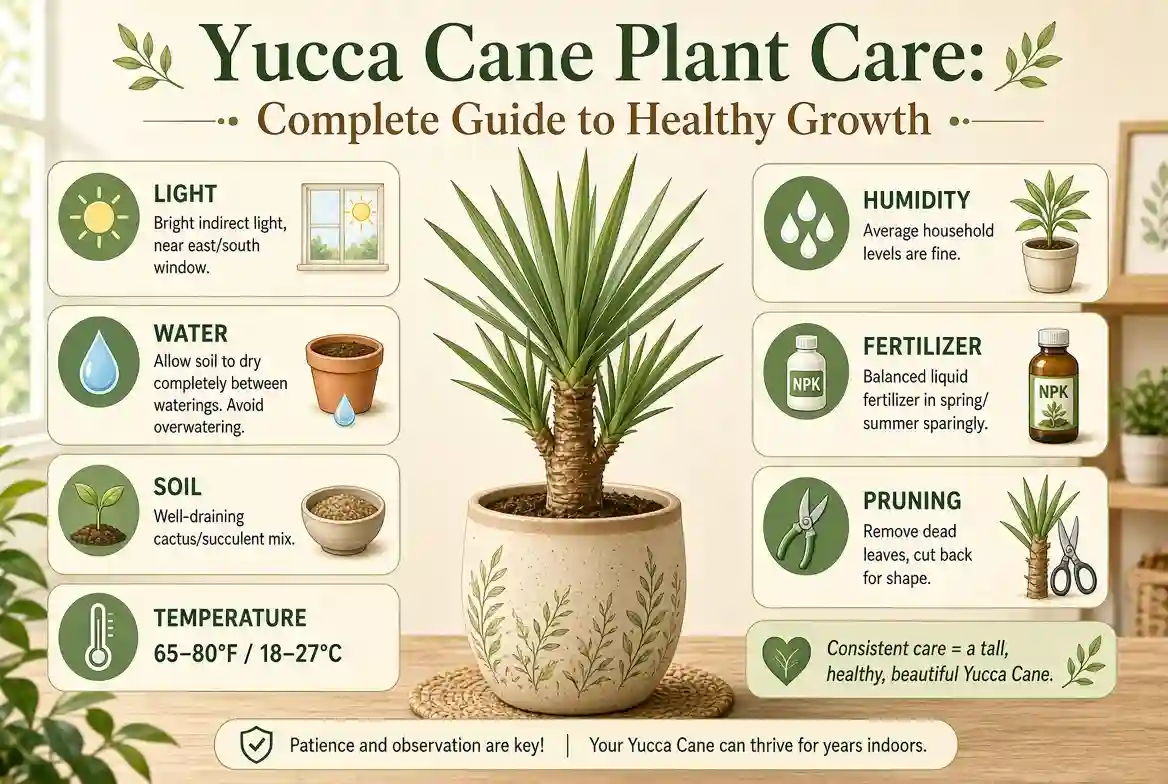
2. Yucca Cane Plant Care at a Glance
| Care factor | Best practice |
|---|---|
| Light | Bright light; some direct sun is usually beneficial after gradual acclimation |
| Water | Water thoroughly, then allow the soil to dry considerably |
| Soil | Loose, gritty, well-draining potting mix |
| Pot | Container with unobstructed drainage holes |
| Temperature | Warm, stable indoor conditions |
| Humidity | Average household humidity is generally suitable |
| Fertilizer | Balanced houseplant fertilizer during active growth |
| Pruning | Remove dead leaves and manage damaged or overgrown canes |
| Repotting | When roots become crowded or the potting mix deteriorates |
| Propagation | Cane cuttings or basal shoots |
| Main risk | Overwatering and root rot |
These recommendations are based on horticultural guidance for Yucca gigantea and indoor yucca care.
North Carolina Extension Gardener Plant Toolbox
+2
3. How Much Light Does a Yucca Cane Need?

Light is one of the most important factors in growing a strong yucca cane. This plant naturally favors bright conditions and generally handles stronger light better than many low-light tropical houseplants.
Best location for your yucca cane
Place it near a bright window where it receives plenty of daylight. A sunny south- or west-facing window may work well, although the intensity of sunlight depends on your location, season, and window.
Good locations include:
- Beside a bright window with several hours of sunlight.
- Near an east-facing window with gentle morning sun.
- In a bright living room with unobstructed daylight.
- On a sunny patio during warm weather, after gradually acclimating the plant.
North Carolina State University Extension notes that giant yucca prefers full sun outdoors and grows well as a houseplant in a well-lit area.
North Carolina Extension Gardener Plant Toolbox
+1
Can a yucca cane grow in low light?
It may survive in lower light for a while, but growth often becomes slower and less robust. Soil also dries more slowly when the plant receives little light, increasing the risk of overwatering.
If your yucca is in a dim corner, move it closer to a window gradually. Sudden exposure to strong sunlight can scorch leaves that have adapted to lower light.
Signs your yucca needs more light
- New growth appears weak or unusually narrow.
- The plant leans strongly toward a window.
- Growth slows despite healthy roots and appropriate watering.
- The soil remains wet for much longer than expected.
Brown patches on the sun-facing side, by contrast, may indicate sudden exposure to intense direct sunlight.
Expert tip: Rotate the pot occasionally so all sides receive light. If the plant is very tall, make sure its upper leaves also have access to daylight.
Image suggestion: A 16:9 infographic comparing a healthy yucca in bright light with a stretched yucca in a dim corner.
4. How to Water a Yucca Cane Correctly

The most important watering rule is simple: let the soil dry considerably between waterings, and never leave the roots sitting in water.
Yucca canes tolerate dry conditions because their thick trunks and foliage are adapted to conserve moisture. Their roots still need water, however, and a plant that is neglected for too long can develop dry leaf tips and declining foliage.
How to tell when your yucca needs water
Do not rely on a fixed weekly schedule. Check the soil first.
- Insert a finger several inches into the soil, or use a clean wooden skewer to check deeper moisture.
- If the mix still feels damp, wait before watering.
- When the soil has dried considerably, water slowly and evenly across the surface.
- Allow excess water to drain through the bottom of the pot.
- Empty the saucer or decorative outer pot so water does not collect around the roots.
For a large floor plant, a moisture meter can help you assess the root zone, but compare its readings with the actual soil condition. Meter readings vary with soil composition and placement.
Extension guidance recommends allowing the soil to dry between waterings and warns that excessive moisture can lead to root rot.
North Carolina Extension Gardener Plant Toolbox
+2
How often should you water a yucca cane?
The interval depends on the pot size, soil mix, temperature, light, and season. A plant in a bright, warm room may need water much sooner than one in a cool, dim space.
Use these general adjustments:
- Spring and summer: Check the soil regularly as growth and water use may increase.
- Autumn: Water less often if growth slows.
- Winter: Allow the soil to dry more fully between waterings when light levels and growth decline.
- After repotting: Pay close attention to the new soil mix because its drainage and water retention may differ.
Underwatering versus overwatering
| Symptom | Possible cause | What to do |
|---|---|---|
| Dry, curled, or crispy leaf tips with very dry soil | Underwatering or dry root ball | Water thoroughly and review the drying interval |
| Yellowing leaves and persistently wet soil | Overwatering or poor drainage | Pause watering and inspect the root zone |
| Soft, darkened cane base | Possible rot | Inspect roots and stem tissue promptly |
| Drooping leaves with damp soil | Root stress or another environmental problem | Do not add water until the cause is clearer |
| A few lower leaves turning yellow | Natural aging or growing stress | Check whether the change is limited or spreading |
A common mistake is watering a drooping yucca immediately. If the soil is already wet, additional water can worsen root damage. Check moisture first.
Image suggestion: A 16:9 comparison infographic showing dry soil, properly watered yucca soil, and waterlogged soil with a damaged root system.
5. What Is the Best Soil for a Yucca Cane?
Yucca cane roots need oxygen as well as moisture. Dense soil that remains wet for too long can deprive roots of air and encourage rot.
A good potting mix should drain freely, contain air pockets, and resist becoming compacted. North Carolina State University Extension recommends a highly draining medium for container-grown giant yucca.
North Carolina Extension Gardener Plant Toolbox
+1
A practical yucca cane potting mix
For a container plant, start with:
- 1 part quality indoor potting mix.
- 1 part perlite or pumice.
- 1 part coarse horticultural sand or fine orchid bark.
This is a practical starting blend, not a mandatory recipe. If your existing mix already drains rapidly, you may not need all these ingredients. Avoid fine construction sand, which can compact the mix rather than improve drainage.
How to check whether the soil drains well
After watering, excess water should leave the pot through its drainage holes. The mix should not remain heavy and saturated for days.
If the soil stays wet for too long, check:
- Whether the pot has drainage holes.
- Whether the container is much larger than the root ball.
- Whether the mix contains excessive peat or fine material.
- Whether the plant receives enough light and warmth.
Choosing the right pot
Use a stable pot with drainage holes. A heavy ceramic pot can help support a tall yucca, while a lightweight nursery pot makes root inspection easier.
Do not move a small root system into an enormous container simply to make the plant look proportionate. The unused soil can retain moisture long after the roots have taken up what they need.
Image suggestion: A 16:9 soil infographic showing perlite, potting mix, coarse aerating material, and a yucca cane in a draining pot.
6. Temperature and Humidity Requirements
Yucca cane is well suited to typical indoor conditions. It does not need the high humidity required by many tropical foliage plants, but it does benefit from warmth and stability.
Ideal indoor conditions
Aim for a comfortably warm room and protect the plant from sudden cold exposure. A temperature range around 65–85°F (18–29°C) is a reasonable indoor target; avoid treating it as a strict threshold.
Ask Extension
+1
Keep the plant away from:
- Cold drafts from open windows.
- Air-conditioning outlets that blow directly onto foliage.
- Heating vents that repeatedly blast hot air.
- Outdoor temperatures that approach freezing.
If you move your yucca outdoors for summer, introduce it to direct sunlight gradually. Bring it back inside before cold conditions damage the foliage or trunk.
Does a yucca cane need high humidity?
No. Average indoor humidity is usually adequate. You generally do not need to mist the leaves or buy a humidifier specifically for this plant.
If leaf tips turn brown, investigate watering, salt buildup, light exposure, and root health before assuming low humidity is responsible.
Expert tip: Stable conditions and good drainage are more important than repeatedly misting a yucca cane.
7. How to Fertilize a Yucca Cane
Yucca canes grow relatively slowly indoors, so they usually need less fertilizer than fast-growing tropical houseplants. Feeding can support healthy new growth, but too much fertilizer can cause salt buildup and damage roots.
Best fertilizer for yucca cane
Choose a balanced liquid houseplant fertilizer or a suitable foliage-plant fertilizer. Follow the label’s dilution instructions rather than assuming that a stronger mixture will produce faster growth.
How to fertilize step by step
- Feed during active growth. Spring and summer are generally the most suitable seasons.
- Check the soil first. Avoid fertilizing a severely dry, water-stressed, or waterlogged plant.
- Use the recommended dilution. If the product is concentrated, measure it carefully.
- Apply evenly. Distribute the diluted fertilizer over the soil rather than pouring it onto the trunk.
- Reduce feeding when growth slows. Little or no fertilizer is usually needed during a cool, low-light period.
- Watch for salt buildup. A crust on the soil surface or recurring brown tips may indicate excess fertilizer salts.
When should you avoid fertilizing?
Hold off if the plant has root rot, has recently been severely stressed, or is adjusting after major root disturbance. Address the underlying problem first.
A yucca that is not growing may simply need more light, not more nutrients. Fertilizer cannot compensate for poor lighting or damaged roots.
Ask Extension
+1
Image suggestion: A 16:9 infographic showing a yucca cane being fed with diluted liquid fertilizer, with separate spring–summer and autumn–winter feeding guidance.
8. How to Prune a Yucca Cane

Pruning keeps your yucca looking tidy and allows you to remove damaged growth. It also helps you inspect the plant for pests or problems near the trunk.
Removing dead or damaged leaves
Use clean, sharp scissors or pruning shears. Cut completely dead leaves close to the trunk without cutting into the trunk itself.
Avoid pulling hard on leaves that are still firmly attached. This can tear the trunk’s surface and leave unnecessary wounds.
What if the yucca cane becomes too tall?
A yucca cane can grow into a substantial plant. If it becomes too tall for your room, it may be possible to shorten a healthy cane during active growth.
However, cutting the main trunk is a significant pruning step, not a routine trim. New shoots may develop below the cut, but their number and placement are not guaranteed.
Before making a major cut:
- Check that the cane is healthy and firm.
- Use a clean, sharp cutting tool.
- Decide whether you want to retain the original top as a cutting.
- Keep the plant warm and in bright light afterward.
- Avoid keeping the soil constantly wet while the plant recovers.
If you are unsure, remove dead foliage first and consider whether moving the plant to a space with more vertical clearance would solve the problem.
Should you remove lower leaves?
Older lower leaves naturally yellow and die as the yucca develops a more tree-like shape. Remove them once they are fully dead, but do not strip away healthy green leaves simply to expose the trunk.
Expert tip: Always inspect the trunk base during pruning. A firm, healthy trunk is reassuring; soft, darkened tissue deserves immediate attention.
9. How to Repot a Yucca Cane
Yucca canes do not need frequent repotting. Moving them into a new pot too often can disturb roots and increase the amount of soil that stays wet.
Signs that repotting may be necessary
- Roots densely fill the container.
- Roots emerge from several drainage holes.
- The potting mix has become compacted or drains poorly.
- Water passes through unusually quickly because little soil remains.
- The plant becomes unstable because the container is too small for its size.
One root emerging from a drainage hole does not automatically mean the plant needs a new pot. Consider the overall root system and how well the plant is growing.
How to repot safely
- Choose a pot only slightly larger than the current root ball.
- Prepare a fresh, free-draining potting mix.
- Gently remove the plant from its container, supporting the root ball and trunk.
- Inspect the roots and trim any clearly rotten sections with clean tools.
- Position the plant at approximately its previous soil depth.
- Fill around the roots without tightly compressing the mix.
- Water appropriately and let excess water drain.
A tall yucca can be heavy and awkward to handle. If the plant is large, have someone help stabilize the trunk and container to avoid damaging the roots or injuring yourself.
Important: Repotting a plant with root rot is not just a matter of using a bigger pot. Remove decayed roots, replace saturated soil, and correct the watering or drainage problem that caused the damage.
10. How to Propagate a Yucca Cane

Yucca cane can be propagated through stem or cane cuttings. Established plants may also produce basal shoots that can sometimes be separated and grown independently.
North Carolina Extension Gardener Plant Toolbox
+1
Propagation from cane sections is more involved than taking a typical soft-stem houseplant cutting. Each section needs suitable growing conditions and careful moisture management.
Method 1: Propagating from a cane cutting
- Select a healthy, firm section of cane.
- Use a clean, sharp pruning saw or suitable cutting tool.
- Keep track of the cutting’s original orientation so you know which end was uppermost.
- Allow the cut surface to dry and callus as appropriate for the cutting’s condition.
- Place the section in a free-draining propagation medium in a warm location.
- Keep the medium lightly moist at most, not saturated.
- Monitor for new roots and shoots without repeatedly pulling the cutting out.
Cane sections may take time to establish. Some may fail, especially if they are damaged, kept too wet, or exposed to cold conditions.
Method 2: Rooting the leafy top
If you prune a healthy leafy crown from a suitable cane, the top may be rooted as a separate plant.
- Retain enough healthy stem below the leaves for planting.
- Allow the cut end to dry as appropriate before planting.
- Use a well-draining medium and a pot with drainage holes.
- Place it in bright light without immediately exposing it to intense sunlight.
- Water sparingly while roots develop.
Do not expect the original cane to remain unchanged after its top is removed. New shoots may emerge below the cut, but results vary.
Method 3: Separating basal shoots
Some yucca canes develop new shoots near the base. A shoot with its own roots has a better chance of establishing independently than a small shoot with no root system.
Separate shoots carefully and pot them in a draining mix. Avoid damaging the parent plant unnecessarily.
Image suggestion: A 16:9 propagation infographic showing a leafy yucca crown, a cane section, and a rooted basal shoot.
11. Why Is My Yucca Cane Dying? Troubleshooting Common Problems

A struggling yucca does not always need more water or fertilizer. The best solution depends on whether the problem starts in the roots, leaves, trunk, or growing environment.
Yellow leaves
Yellowing may result from overwatering, poor drainage, low light, or normal aging of older lower leaves.
What to do:
- Check how wet the soil is several inches below the surface.
- Make sure the pot drains freely.
- Assess whether the plant receives adequate light.
- Look at where yellowing occurs and how quickly it spreads.
If only an occasional lower leaf yellows while the rest of the plant remains healthy, natural aging may be responsible. If multiple leaves turn yellow while the soil stays wet, investigate the roots.
Brown leaf tips
Brown tips can develop from inconsistent watering, fertilizer salts, physical damage, or other root and environmental stress.
What to do:
- Check soil moisture and drainage.
- Review how much fertilizer you use.
- Look for a crust of mineral salts on the soil.
- Trim only the brown tissue if you want a neater appearance.
Brown tips will not turn green again. Focus on preventing new damage rather than trying to reverse old damage.
Drooping leaves
Some older leaves naturally arch downward, so drooping alone does not always mean the plant is unhealthy.
If the entire crown suddenly droops, check soil moisture, root health, and recent temperature changes. Dry soil may indicate underwatering, while wet soil can point to damaged roots.
Soft or wrinkled trunk
A soft, dark, or collapsing trunk is more concerning than a few dry leaves. It can indicate decay, particularly when the soil remains wet.
What to do:
- Remove the plant from its decorative outer pot, if applicable.
- Check whether water is trapped beneath the nursery pot.
- Inspect the trunk base and roots.
- If rot is present, remove affected material where feasible and repot any salvageable healthy section in fresh, well-draining mix.
- Keep the plant warm and avoid excessive watering while it recovers.
A severely rotted trunk may not be recoverable. Do not assume that adding fertilizer or watering more frequently will repair damaged tissue.
Slow growth
Yucca canes often grow slowly indoors, particularly in low light or during cooler months. Slow growth alone is not proof of a problem.
Check light exposure, root crowding, temperature, and the season before changing the care routine. If the plant remains firm and its leaves look healthy, patience may be the best response.
Pest problems
Yucca canes may occasionally develop scale insects, mealybugs, or aphids. Inspect the undersides of leaves, leaf bases, and trunk surfaces.
North Carolina Extension Gardener Plant Toolbox
+1
Isolate affected plants, remove visible pests where practical, and use a treatment labeled for the specific pest and indoor plant. Follow the label instructions and test sprays on a small area first.
Yucca cane troubleshooting table
| Symptom | Possible cause | First action |
|---|---|---|
| Yellow lower leaves | Natural aging or watering stress | Check whether the problem is limited or spreading |
| Several yellow leaves with wet soil | Overwatering or root damage | Check drainage and roots |
| Brown leaf tips | Watering inconsistency or salt buildup | Review moisture and fertilizer |
| Soft trunk | Possible rot | Inspect trunk base and roots |
| Leaning growth | Uneven light or unstable pot | Improve light distribution and support |
| White or cotton-like clusters | Possible mealybugs | Isolate and inspect the plant |
| Small brown bumps on stems | Possible scale insects | Confirm pests and treat appropriately |
Expert tip: Change one major factor at a time whenever possible. If you simultaneously repot, fertilize, move, and heavily prune a stressed plant, it becomes difficult to tell which intervention helped.
12. Yucca Cane Care Through the Seasons
Your yucca’s water and nutrient needs change with the amount of light and warmth it receives. Adjust your routine according to growth rather than following a strict calendar.
| Season | Recommended care |
|---|---|
| Spring | Check for root crowding, resume feeding if growth starts, and remove dead leaves |
| Summer | Provide bright light, monitor soil moisture, and protect from extreme heat |
| Autumn | Reduce fertilizer as growth slows and check soil before watering |
| Winter | Water less frequently when drying slows, maintain suitable light, and protect from cold drafts |
Caring for yucca cane in hot climates
In hot weather, a sunny window can become much hotter than the surrounding room. Strong sunlight is generally beneficial once the plant has acclimated, but intense heat behind glass can damage foliage.
- Introduce direct sunlight gradually.
- Keep the plant away from hot air-conditioning exhaust or heat sources.
- Check the root zone rather than watering automatically every few days.
- Ensure the container drains freely after watering.
Caring for yucca cane in cooler climates
During winter, reduced daylight and cooler soil often slow water use. Allow the soil to dry more fully between waterings and keep the plant away from cold windows and drafts.
Avoid placing a yucca in a dark room simply because the temperature is stable. Adequate light remains important throughout the year.
13. Is Yucca Cane Toxic to Cats and Dogs?
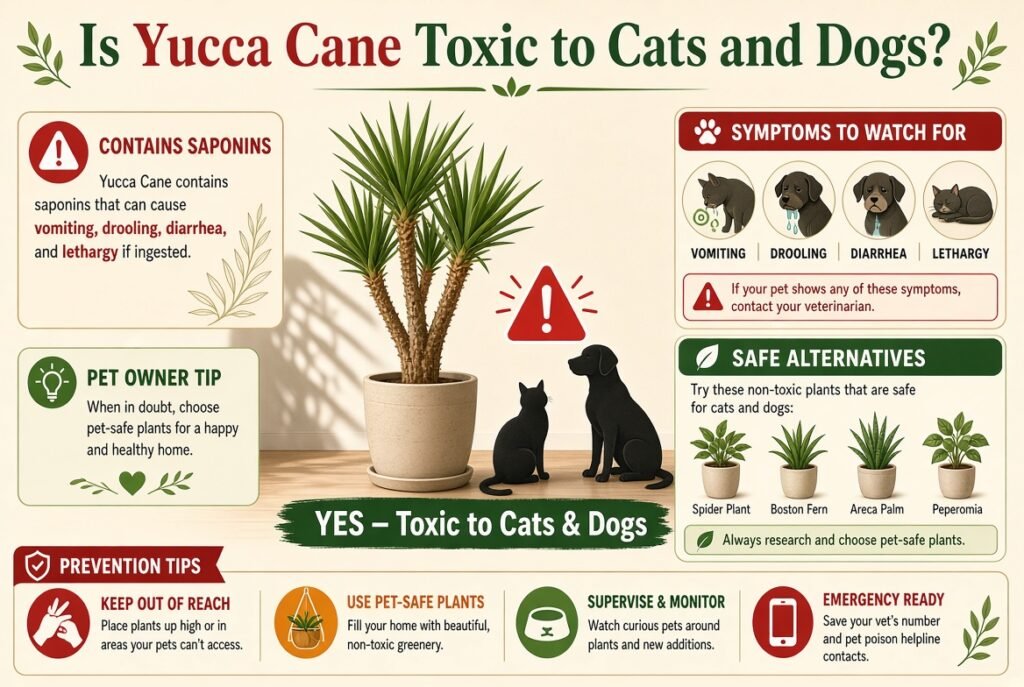
Yes. Yucca plants are considered toxic to cats and dogs if eaten. The ASPCA identifies saponins as the toxic compounds and lists vomiting among the possible signs in dogs and cats.
ASPCA
+1
To reduce risk:
- Place the plant where pets cannot chew its leaves.
- Remove fallen foliage promptly.
- Avoid assuming that a plant is safe because it is commonly sold as a houseplant.
- Contact a veterinarian if your pet eats the plant and develops symptoms.
The common name “spineless yucca” does not mean the leaves are harmless. Their firm, pointed shape can also cause physical irritation.
14. Common Yucca Cane Care Mistakes to Avoid
Even though yucca cane is relatively low-maintenance, several mistakes can cause gradual decline.
- Watering too often: Let the soil dry considerably between waterings.
- Using dense soil: Improve drainage with an appropriate potting mix.
- Keeping it in deep shade: Provide a brighter location to support healthy growth.
- Choosing a pot that is too large: Match the container to the root system.
- Fertilizing a stressed plant: Correct the underlying growing problem first.
- Ignoring a soft trunk: Investigate possible rot promptly.
- Moving it into strong sun suddenly: Acclimate it gradually to prevent leaf scorch.
- Confusing normal leaf aging with disease: A few older lower leaves may die naturally.
- Overwatering after repotting: Fresh soil can retain moisture differently from the old mix.
The most useful habit is to check the soil before watering and examine the plant regularly. These two simple steps can prevent many common yucca problems.
15. Frequently Asked Questions About Yucca Cane Plant Care
Is yucca cane easy to care for indoors?
Yes. Yucca cane is a relatively low-maintenance indoor plant when it receives bright light, well-draining soil, and careful watering. It is especially suitable for people who prefer plants that do not require frequent watering.
How often should I water a yucca cane?
Water when the soil has dried considerably. The exact interval depends on light, temperature, pot size, and soil composition. Check the soil instead of relying on a fixed weekly schedule.
Can yucca cane grow in low light?
It can tolerate less light for a time, but bright conditions are generally better. Low light can slow growth and cause the soil to remain wet longer, increasing the risk of root problems.
Should I cut brown leaves off my yucca cane?
You can remove fully dead or badly damaged leaves using clean scissors or pruning shears. If only the tips are brown, trimming the damaged portion is optional. Leave healthy green tissue intact.
Why is my yucca cane trunk soft?
A soft or collapsing trunk can indicate rot, often associated with excessive moisture. Inspect the roots and trunk base, remove decayed tissue where feasible, and correct the drainage problem.
Does yucca cane need misting?
No. Average indoor humidity is usually sufficient. Misting is not necessary for routine care and does not reliably increase room humidity.
How tall can a yucca cane grow indoors?
Its eventual size depends on the variety, age, light, container, and growing conditions. Indoor yuccas can become substantial floor plants over time, so allow room for the trunk and leaf crown to expand.
When should I repot my yucca cane?
Repot when roots become crowded, the potting mix deteriorates, or drainage becomes problematic. Choose a container only modestly larger than the existing root ball.
Can I grow a yucca cane outdoors?
Yes, in suitable warm climates. Giant yucca grows well in bright conditions and well-drained soil, but it is sensitive to cold and freezing temperatures. Acclimate an indoor plant gradually before exposing it to strong outdoor sunlight.
North Carolina Extension Gardener Plant Toolbox
+1
How do I make my yucca cane grow faster?
Provide adequate light, healthy roots, appropriate watering, and moderate feeding during active growth. Growth is naturally slow to moderate indoors, so excessive fertilizer or watering will not reliably speed it up.
Is yucca cane the same as cassava?
No. Yucca cane is a Yucca species grown as an ornamental plant. Cassava, also known as yuca, is Manihot esculenta, a different plant. The similar names can cause confusion.
16. Related Plant Care Guides
If you’re building an indoor plant collection, these related topics may also be useful:
- Snake Plant Care: Learn about another drought-tolerant houseplant and its watering needs.
- Dracaena Plant Care: Explore care for popular upright foliage plants.
- Aloe Vera Plant Care: Understand light, drainage, and watering for a succulent.
- Agave Plant Care: Compare the growing requirements of another architectural, drought-tolerant plant.
- Ficus Plant Care: Learn how to maintain healthy foliage on larger indoor plants.
Editorial note: Add internal links to these topics only if the corresponding articles are published on your website.
Conclusion:
Successful yucca cane plant care does not require a complicated routine. Give your plant plenty of bright light, use a loose and well-draining potting mix, and allow the soil to dry considerably between waterings.
Watch for changes in the leaves and trunk, especially widespread yellowing, persistent wilting, or soft tissue near the soil line. These symptoms deserve investigation rather than automatic watering or fertilizing.
With a suitable location, careful watering, and occasional pruning, your yucca cane can remain a striking, long-lasting feature in your home.