
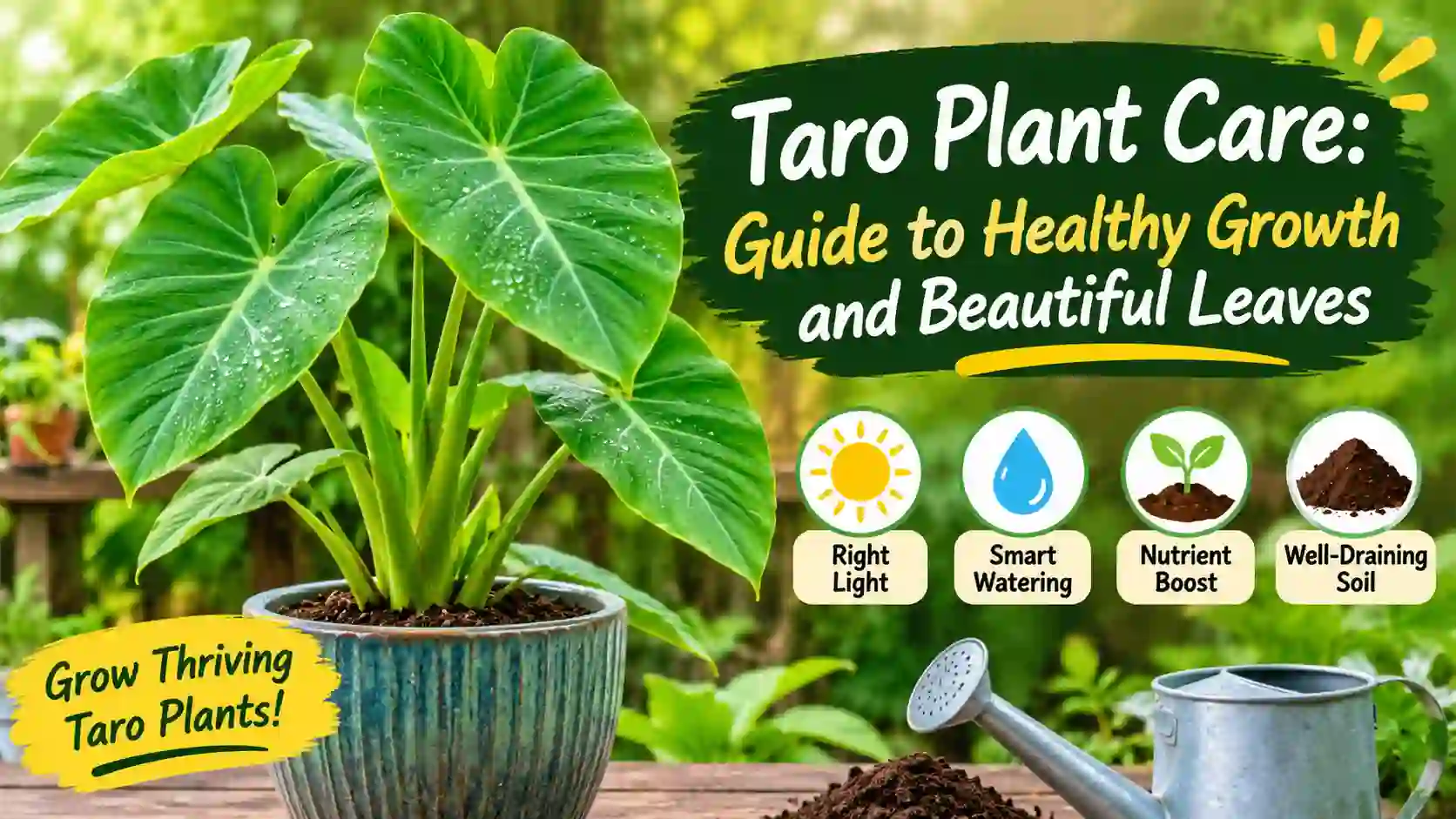
Taro plants are loved for their dramatic, heart-shaped leaves and tropical appearance. Their large green foliage can transform an ordinary garden, patio, or bright indoor space into a lush, tropical retreat.
However, growing a healthy taro plant requires more than regular watering. Too much direct sunlight can scorch its leaves, dry soil can cause wilting, and poor growing conditions can slow its development.
Understanding taro plant care helps you prevent these problems before they become serious. Whether you are growing ornamental elephant-ear foliage or cultivating taro for its edible corms, the right balance of moisture, warmth, nutrients, and light makes a significant difference.
This guide explains how to choose the right location, prepare suitable soil, water correctly, fertilize, propagate, and troubleshoot common taro plant problems. You will also learn how to adapt your care routine to indoor containers, outdoor gardens, and different seasons.
Quick Answer:
Taro plant care involves providing bright, indirect light to partial shade, consistently moist soil, warm temperatures, and high humidity. Taro (Colocasia esculenta) grows best in rich, fertile soil that retains moisture while allowing excess water to drain. Water regularly, feed during active growth, and protect the plant from cold temperatures. You can grow taro in containers, garden beds, or suitable wet areas. Always handle the plant carefully because its raw tissues contain irritating calcium oxalate crystals.
Understanding the Taro Plant


8
Taro (Colocasia esculenta) is a tropical perennial grown for its large leaves and edible underground corms. It belongs to the arum family, Araceae, and is closely associated with tropical and subtropical gardens.
Its foliage gives the plant an architectural appearance, making it attractive for garden borders, containers, patios, and water-garden settings.
Before choosing a care routine, understand that taro can grow differently depending on its variety and purpose.
- Ornamental taro: Often grown for its impressive foliage, including green, purple, or dark-leaved cultivars.
- Edible taro: Cultivated primarily for its underground corms and sometimes its leaves, depending on the variety and local culinary practices.
- Container-grown taro: Suitable for patios and protected spaces where you can control moisture and temperature.
- Garden-grown taro: Best for warm locations with fertile soil and a reliable water supply.
Taro is not the same as every plant called elephant ear. Alocasia and other related plants can look similar but have different growing requirements. Confirm the botanical name before applying care advice. The Royal Horticultural Society identifies Colocasia esculenta as a moisture-loving, tender perennial suited to partial shade.
taro
+1
1. Choose the Right Light for Healthy Taro Leaves

Light influences leaf size, stem strength, and the speed of new growth. Taro generally performs best in bright, filtered light or partial shade, although some established plants tolerate more sunlight when moisture is adequate.
Best light conditions
- Bright indirect light: Excellent for indoor taro near a bright window.
- Partial shade: Suitable for gardens that receive morning sun and afternoon shade.
- Gentle morning sunlight: Can encourage vigorous growth without exposing leaves to intense afternoon heat.
- Strong afternoon sunlight: May scorch leaves, especially in hot climates or when the soil dries quickly.
In hot regions, such as much of Pakistan during summer, protect container-grown taro from harsh afternoon sun. A location beneath a light shade structure can help maintain attractive foliage.
How to tell if your taro receives the wrong amount of light
| Symptom | Possible cause | What to do |
|---|---|---|
| Brown, crispy patches | Intense direct sunlight or dry conditions | Move to partial shade and check soil moisture |
| Long, weak leaf stalks | Insufficient light | Gradually move to a brighter location |
| Slow leaf production | Low light, cold conditions, or poor nutrition | Check all three factors |
| Pale or bleached areas | Sun scorch or another stress | Review recent changes in light exposure |
Expert tip: Do not move a taro plant from a shaded room straight into intense outdoor sunlight. Acclimate it gradually over several days to reduce leaf damage.
Image suggestion: Create a three-panel infographic comparing taro in bright indirect light, partial shade, and harsh afternoon sun.
2. Use Rich, Moisture-Retentive Soil
Taro needs soil that holds enough water to support its large leaves. However, container-grown plants also need an appropriate balance of aeration and drainage to prevent unhealthy roots.
The best soil depends partly on where you grow the plant.
Recommended soil for taro
For a container, use a fertile, moisture-retentive potting mix containing:
- Quality potting compost or loamy soil.
- Mature organic matter to support nutrient availability.
- A moderate amount of perlite, pumice, or another suitable material if the mix becomes compacted.
Avoid heavy, compacted soil that remains airless for long periods in a small pot. Equally, avoid extremely sandy mixes that dry out within hours during hot weather.
Outdoor taro can grow in consistently wet soil, and some cultivation systems use flooded conditions. Those conditions are not necessary for every ornamental plant.
What soil pH is best?
Taro generally tolerates mildly acidic to neutral soil. If growth remains poor despite suitable watering and feeding, consider testing the soil before making major adjustments.
How to prepare a container
- Choose a sturdy pot with sufficient space for the roots and developing corm.
- Use a fresh, nutrient-rich potting mix.
- Keep the growing point near the soil surface rather than burying the stem deeply.
- Water thoroughly after planting.
- Place the pot in a warm location with suitable light.
Important distinction: A plant grown for edible corm production may benefit from different soil moisture management than a decorative indoor specimen. Match your setup to the growing purpose.
3. Water Taro Correctly

Watering is one of the most important parts of taro plant care. Its large leaves lose moisture quickly, especially in warm weather, so the plant can become thirsty faster than many common houseplants.
At the same time, continuously saturated, poorly aerated container soil can damage roots.
How often should you water taro?
There is no universal watering schedule. The frequency depends on temperature, humidity, sunlight, pot size, soil composition, and active growth.
Use these guidelines:
- During warm, active growth: Check the soil frequently and water whenever the surface begins to dry.
- During hot weather: Inspect the plant daily, particularly if it grows in a small container.
- During cool weather: Reduce watering as growth slows and evaporation decreases.
- During dormancy: Keep the root zone from becoming excessively wet, and water much less frequently.
Step-by-step watering method

Step 1: Check the soil
Feel the upper layer of soil and assess moisture below the surface. Do not water automatically just because it is a particular day of the week.

Step 2: Water the root zone
Water evenly around the base so the root ball becomes moist. Avoid relying on a small splash that wets only the surface.

Step 3: Check drainage
For container plants in a free-draining mix, allow excess water to escape. Empty standing water from the saucer unless you are deliberately maintaining a suitable aquatic growing setup.

Step 4: Monitor the response
Check leaf firmness and soil moisture over the following day. Adjust the next watering according to conditions rather than repeating the same amount blindly.
Can taro grow in water?
Yes. Taro is adapted to wet growing environments, and some varieties are cultivated in flooded fields. However, a potted ornamental plant in ordinary potting soil should not automatically be treated like an aquatic plant.
If you want to grow taro in water or a pond margin, choose a suitable growing method and cultivar. For standard indoor containers, maintain consistent moisture while providing the root environment your potting mix requires.
Signs of watering problems
| Problem | Likely explanation | Practical response |
|---|---|---|
| Drooping leaves and dry soil | Underwatering | Water thoroughly and monitor recovery |
| Yellowing leaves with soggy soil | Possible root stress or overwatering | Check roots, drainage, and soil condition |
| Brown leaf edges | Dry air, inconsistent moisture, or mineral buildup | Review humidity, watering, and water quality |
| Soft, dark stem base | Possible rot | Inspect the corm and roots promptly |
A drooping leaf does not always mean the plant needs water. Check the soil first, especially if it has rained recently or the container feels unusually heavy.
Image suggestion: A four-step taro watering infographic showing soil checking, watering, drainage, and moisture monitoring.
4. Maintain Warm Temperatures and High Humidity
Taro is a tropical plant that grows most actively in warm conditions. Cold weather can slow growth, damage leaves, and trigger dormancy.
Ideal temperature range
A practical target for actively growing taro is approximately 20–30°C (68–86°F), although tolerance varies by cultivar and growing conditions.
Try to maintain:
- Warm daytime conditions.
- Protection from cold drafts.
- A sheltered location away from strong, drying winds.
- Consistent warmth during sprouting and early growth.
Keep container plants protected when temperatures fall below approximately 15°C (59°F). This is a cautious management guideline, not a universal damage threshold for every taro variety.
How to improve humidity indoors
Taro’s large leaves can lose moisture rapidly in dry air. If your indoor environment is dry, consider the following options:
- Use a room humidifier near the plant.
- Group tropical plants together without crowding them.
- Keep the plant away from air-conditioning vents and heaters.
- Monitor leaf edges and soil moisture during hot, dry periods.
Misting may briefly wet the foliage, but it does not provide dependable, lasting humidity. A humidifier is generally a more consistent option.
Practical tip: If your taro grows well outdoors but struggles indoors, the problem may be a combination of weaker light, lower humidity, and limited root space rather than a lack of fertilizer.
5. Fertilize Taro for Large, Healthy Leaves

Taro produces substantial foliage during active growth, so it benefits from a steady supply of nutrients. Nitrogen supports leafy growth, while phosphorus, potassium, and other essential nutrients contribute to overall plant health.
Which fertilizer should you use?
A balanced liquid fertilizer or a fertilizer formulated for foliage plants is a reasonable choice for ornamental taro.
For a plant grown primarily for leaves, a fertilizer with adequate nitrogen can support vigorous foliage. Avoid applying excessive nitrogen because it can encourage soft growth and increase salt buildup.
Recommended feeding routine
- Begin feeding when the plant is actively producing new leaves.
- Apply a suitable fertilizer according to its label.
- Feed regularly during the growing season, adjusting frequency to the product and growth rate.
- Avoid fertilizing dry, stressed, or potentially rotting roots.
- Reduce or stop feeding when growth slows significantly.
For many container-grown plants, feeding every two to four weeks during active growth can be a reasonable starting point with a liquid fertilizer, provided the product label supports that frequency.
The RHS recommends regular liquid feeding for taro during active growth.
taro
+1
Signs that fertilization may be needed
- Older leaves gradually turn pale despite appropriate watering.
- New growth remains unusually small.
- The plant grows slowly despite adequate light and warmth.
- The potting mix has been in use for a long time and contains few available nutrients.
These signs are not proof of nutrient deficiency. Root damage, inadequate light, cold temperatures, and incorrect watering can produce similar symptoms.
6. Grow Taro in Pots, Indoors, or Outdoors

Growing taro indoors
Choose a bright location with filtered light, a warm room, and adequate humidity. Use a stable container and inspect the soil regularly because indoor pots can stay wet longer than outdoor pots.

Growing taro outdoors
Select a sheltered garden location with partial shade or suitable sunlight. Keep the soil consistently moist and protect leaves from strong winds, which can tear their broad surfaces.

Growing taro in wet areas
Suitable taro cultivars can grow in moist garden beds and some aquatic settings. Match the cultivar and growing method to the available water, soil, and climate.
What size pot does taro need?
Choose a container that provides enough room for the corm, roots, and expanding foliage. A pot around 30–40 cm (12–16 inches) wide may suit a young or medium-sized specimen, but larger varieties will need more space.
A wider, heavier pot can also reduce the risk of tipping as the plant develops large leaves.
Always consider the mature size of the cultivar. A compact ornamental selection and a vigorous garden taro may need very different containers.
Should you grow taro in a pot without drainage holes?
For ordinary potting soil, a container with drainage holes is generally the safer choice. A decorative outer pot can be used, provided you remove excess water after watering.
Water-grown taro is a different growing system and requires appropriate conditions. Simply placing a conventional pot in standing water can create problems if the plant, soil, and container are not suited to it.
7. How to Propagate Taro
Taro is commonly propagated from corms, cormels, or suitable divisions. Propagation from these plant parts is generally more reliable than trying to grow a new plant from a leaf cutting.
Propagation from a corm or cormel

Follow these steps to establish a new plant:
- Select a healthy corm or cormel from a suitable, correctly identified plant.
- Choose a warm location with bright, indirect light.
- Fill a container with a fertile, moisture-retentive potting mix.
- Position the planting material according to its growth points and the supplier’s guidance.
- Keep the soil evenly moist without allowing a poorly drained container to remain waterlogged.
- Maintain warmth while the plant develops roots and shoots.
- Increase watering as active foliage growth begins.
Germination and sprouting times vary with the planting material, temperature, and cultivar. Avoid repeatedly digging up the corm to check its progress.
Can you propagate taro from a leaf?
A detached leaf alone is not a reliable method for producing a complete taro plant. Use suitable corms or established divisions instead.
When is the best time to propagate taro?
Warm spring weather is a practical time in climates with cool winters. In tropical climates, propagation can be timed to favorable warm conditions and reliable moisture.
The RHS lists division as a propagation method for Colocasia esculenta.
taro
+1
8. Pruning and Routine Maintenance
Taro does not usually need extensive pruning. Its main maintenance task is removing damaged foliage and keeping the plant clean.
When should you remove a leaf?
Remove leaves that are completely yellow, badly damaged, or dead. Use clean, sharp pruning shears and cut the leaf stalk near its base without injuring the main growing point.
Do not remove every imperfect leaf. Green leaves still contribute energy to the plant, even when they have minor cosmetic damage.
Keep the leaves clean
Dust and debris can accumulate on broad leaves, particularly indoors.
- Wipe leaves gently with a damp, soft cloth when needed.
- Avoid harsh cleaners and leaf-shine products.
- Inspect the undersides of leaves for pests.
- Remove badly damaged foliage that may harbor disease.
Do taro plants need repotting?
Repot when the roots or corm outgrow the available space, the pot dries unusually quickly, or growth declines because the root system is crowded.
Choose a container only moderately larger than the existing one. Excessively large pots can retain more moisture than the roots can use, especially indoors during cooler weather.
9. Common Taro Plant Problems and How to Fix Them

Even a well-maintained taro plant may develop leaf damage or slow growth. The most useful troubleshooting method is to look at the whole plant, inspect the soil, and consider recent changes in temperature, light, and watering.
Why are my taro plant leaves turning yellow?
Yellow leaves can result from overwatering, underwatering, nutrient deficiency, insufficient light, or normal aging.
How to fix it:
- Check whether the soil is constantly wet or completely dry.
- Inspect the roots if several leaves turn yellow rapidly.
- Review the plant’s recent light exposure.
- Feed only if the plant is actively growing and nutrient deficiency is plausible.
- Remove fully yellow leaves once the underlying problem is addressed.
One older leaf turning yellow while new leaves remain healthy is less concerning than several leaves yellowing at once.
Why are taro leaves turning brown?
Brown edges or patches may develop because of intense sunlight, dry air, inconsistent watering, or salt accumulation from fertilizer.
Move sun-damaged plants to gentler light, improve humidity where practical, and maintain consistent soil moisture. If fertilizer has been applied too frequently, review the label and consider replacing heavily salt-affected potting mix.
Why is my taro plant drooping?
Drooping can indicate dry soil, heat stress, root damage, or cold exposure.
Check the soil before watering. If it is dry, water thoroughly. If it is wet and smells unpleasant, inspect the roots and corm for rot instead of adding more water.
Why is my taro plant not growing?
Slow growth is often associated with one or more of these conditions:
- Insufficient light.
- Cool temperatures.
- Nutrient-poor soil.
- Root congestion.
- Dormancy or seasonal slowdown.
Correct the limiting factor before increasing fertilizer. Extra nutrients will not compensate for cold soil or inadequate light.
Why are the leaves curling?
Curling can occur when leaves lose water faster than roots can replace it. Heat, low humidity, inconsistent watering, or pest activity may contribute.
Inspect the undersides of leaves for spider mites, aphids, and other pests. Also check the soil and review any recent environmental changes.
What does taro root rot look like?
Possible signs include a soft or darkened corm, unpleasant-smelling soil, weakened leaf stalks, and persistent yellowing or wilting.
If you suspect rot:
- Remove the plant carefully from its container.
- Inspect the roots and corm.
- Remove clearly rotten tissue using a clean tool, if healthy tissue remains.
- Discard badly rotted planting material.
- Replant any viable material in fresh, appropriate soil and a clean container.
Avoid treating every yellow leaf as root rot. A closer inspection is more reliable than making changes based on leaf color alone.
10. Taro Plant Pests and Disease Prevention
Taro is generally vigorous in suitable conditions, but indoor and container-grown plants can attract common foliage pests.
| Pest | Signs to look for | What to do |
|---|---|---|
| Spider mites | Fine webbing, stippling, pale leaves | Isolate the plant, rinse foliage, and use an appropriate labeled treatment if needed |
| Aphids | Small insects clustered on new growth | Rinse them away or use a suitable insecticidal soap |
| Whiteflies | Small white insects flying from leaves | Inspect leaf undersides and use appropriate pest control |
| Slugs and snails | Irregular holes and damaged leaf edges | Inspect the garden at night and reduce hiding places |
The RHS identifies spider mites, aphids, and whiteflies among pests that may affect taro grown under protected conditions.
taro
+1
How to prevent pest problems
- Inspect new plants before placing them near established plants.
- Check the undersides of leaves every week.
- Avoid overcrowding containers.
- Remove dead foliage and plant debris.
- Keep watering and feeding appropriate for the plant’s growth rate.
Always follow the product label when using a pesticide, especially if the plant is grown near edible crops.
11. Seasonal Taro Plant Care
Taro’s needs change with temperature and growth rate. A routine that works in warm summer weather may keep the soil too wet during a cool period.

Spring: Encourage new growth
Start or resume regular feeding as new leaves appear. Repot crowded plants, propagate healthy corms, and gradually introduce outdoor plants to stronger light.

Summer: Maintain moisture
Check pots more frequently during hot weather. Protect foliage from harsh afternoon sun and wind, and continue feeding while growth remains vigorous.

Autumn: Prepare for cooler weather
Monitor night temperatures, reduce fertilizer as growth slows, and bring container plants into protection before cold conditions damage them.

Winter: Adjust care
Keep plants warm if maintaining active foliage. If the plant becomes dormant, reduce watering considerably and protect any stored corm from frost and excess moisture.
Can taro survive winter?
Taro is frost-sensitive. In climates with cold winters, the foliage may die back, and the plant may not survive outdoors in frozen soil.
Depending on the cultivar and local climate, you can protect the plant in a warm indoor location or lift and store a dormant corm using a suitable method.
Do not assume every taro plant must be kept completely dry throughout winter. The correct approach depends on whether it remains actively growing or enters dormancy.
12. Important Safety Tips for Taro Plants
Taro requires special care if you grow it around children or pets. Raw taro tissues contain needle-like calcium oxalate crystals that can cause irritation and pain if chewed or swallowed.
The Royal Horticultural Society classifies taro as harmful if eaten and notes its potential to irritate skin and eyes.
taro
+1
Follow these precautions:
- Wear gloves when cutting, dividing, or handling damaged plant tissues.
- Wash your hands after gardening.
- Keep plant parts away from children and pets that may chew them.
- Avoid touching your eyes while handling the plant.
- Clean tools after pruning or dividing corms.
Is taro edible?
Some Colocasia esculenta cultivars are grown as food. However, raw taro is not safe to eat. Proper preparation and thorough cooking are essential to reduce the irritating calcium oxalate crystals.
Do not assume an ornamental elephant-ear plant is safe to eat simply because it resembles a food crop. Confirm its identity and suitability for consumption before preparing any part of it.
13. Quick Taro Plant Care Checklist
Use this checklist to review your plant’s growing conditions.
Your care checklist
0 of 8
Provide bright, filtered light or partial shade
Protect leaves from harsh afternoon sun.
Keep the soil consistently moist
Adjust watering to temperature and growth.
Use fertile, moisture-retentive soil
Ensure the mix suits the container or growing system.
Maintain warm conditions
Protect the plant from cold and frost.
Feed during active growth
Follow the fertilizer label and avoid excess.
Inspect leaves and roots regularly
Check for pests, yellowing, and soft or rotten tissue.
Adjust care during dormancy
Reduce watering when growth slows substantially.
Handle the plant safely
Avoid raw plant contact with the mouth and eyes.
Reset checklist
Image Opportunities for This Article
For a professional gardening blog, use original images that explain care decisions rather than adding decorative pictures to every section.

Featured image — Taro Plant Care
Show a healthy taro plant with large green leaves in a stylish pot, soft natural light, and a clean botanical background.
Placement: Below the H1. Suggested format: 16:9, 1600 × 900 px.

Light requirements infographic
Compare bright filtered light, partial shade, and scorched foliage. Use simple icons to clarify the differences.
Placement: Light requirements section.
Watering and root health
Illustrate moist soil, correct watering, drainage, and warning signs of root rot.
Placement: Watering and troubleshooting sections.

Propagation guide
Show a healthy corm, emerging shoots, roots, and a newly planted container.
Placement: Propagation section.
Frequently Asked Questions About Taro Plant Care
1. Is taro easy to grow?
Yes. Taro can be straightforward to grow when it receives warmth, adequate light, fertile soil, and consistent moisture. Container-grown plants need closer attention because pots can dry out quickly or remain wet too long.
2. Does taro prefer sun or shade?
Taro generally prefers partial shade or bright filtered light. Some varieties tolerate more sun when the soil remains moist, but intense afternoon sunlight can scorch the leaves in hot weather.
3. How often should I water my taro plant?
Water whenever the soil begins to dry at the surface, adjusting the frequency to weather, pot size, and growth. Check the soil before watering rather than following a rigid daily schedule.
4. Can I grow taro indoors?
Yes. Place it near a bright window with filtered light, maintain warm temperatures, and provide sufficient humidity. A large container may be necessary for vigorous varieties.
5. Why are my taro leaves turning yellow?
Yellow leaves may indicate excessive moisture, dry soil, insufficient light, nutrient problems, or normal aging. Check soil conditions and inspect the roots if several leaves yellow rapidly.
6. Why is my taro plant drooping after watering?
If the soil is already wet, drooping may indicate root stress rather than thirst. Check for poor drainage, a soft corm, or unpleasant-smelling soil before adding more water.
7. What is the best fertilizer for taro?
A balanced liquid fertilizer suitable for foliage plants is a practical choice. Apply it according to the label during active growth, and avoid overfeeding or fertilizing stressed roots.
8. Can taro grow in standing water?
Some taro cultivars are adapted to flooded cultivation. However, ordinary potted ornamental taro should not automatically be kept in standing water. Match the water conditions to the cultivar and growing system.
9. How do I propagate a taro plant?
Propagate taro using healthy corms, cormels, or suitable divisions. Plant them in warm conditions with appropriate moisture and allow the shoots to establish without repeatedly disturbing them.
10. Does taro die back in winter?
In cooler climates, taro may lose its leaves or become dormant. Protect it from frost and adjust watering according to whether it remains actively growing or has entered dormancy.
11. Is taro toxic to cats and dogs?
Taro contains calcium oxalate crystals that can cause painful irritation if chewed or swallowed. Keep the plant away from pets, and contact a veterinarian promptly if a pet eats it or develops symptoms.
12. Can I eat the leaves from my ornamental taro plant?
Do not assume ornamental taro is suitable for consumption. Only use correctly identified, food-suitable taro varieties, and prepare them properly. Raw plant tissues can cause significant irritation.
Conclusion
Successful taro plant care comes down to maintaining the right balance of moisture, warmth, light, and nutrition. Give your plant bright filtered light or partial shade, fertile soil, and regular access to water. Protect it from cold temperatures, feed it during active growth, and inspect its leaves and roots when problems appear.
The most common mistake is treating every drooping or yellowing leaf as a signal to add more water. Check the soil first, because both dryness and root damage can cause similar symptoms.
With a suitable growing environment and a routine that changes with the seasons, taro can develop impressive foliage and become a striking feature in your home or garden.