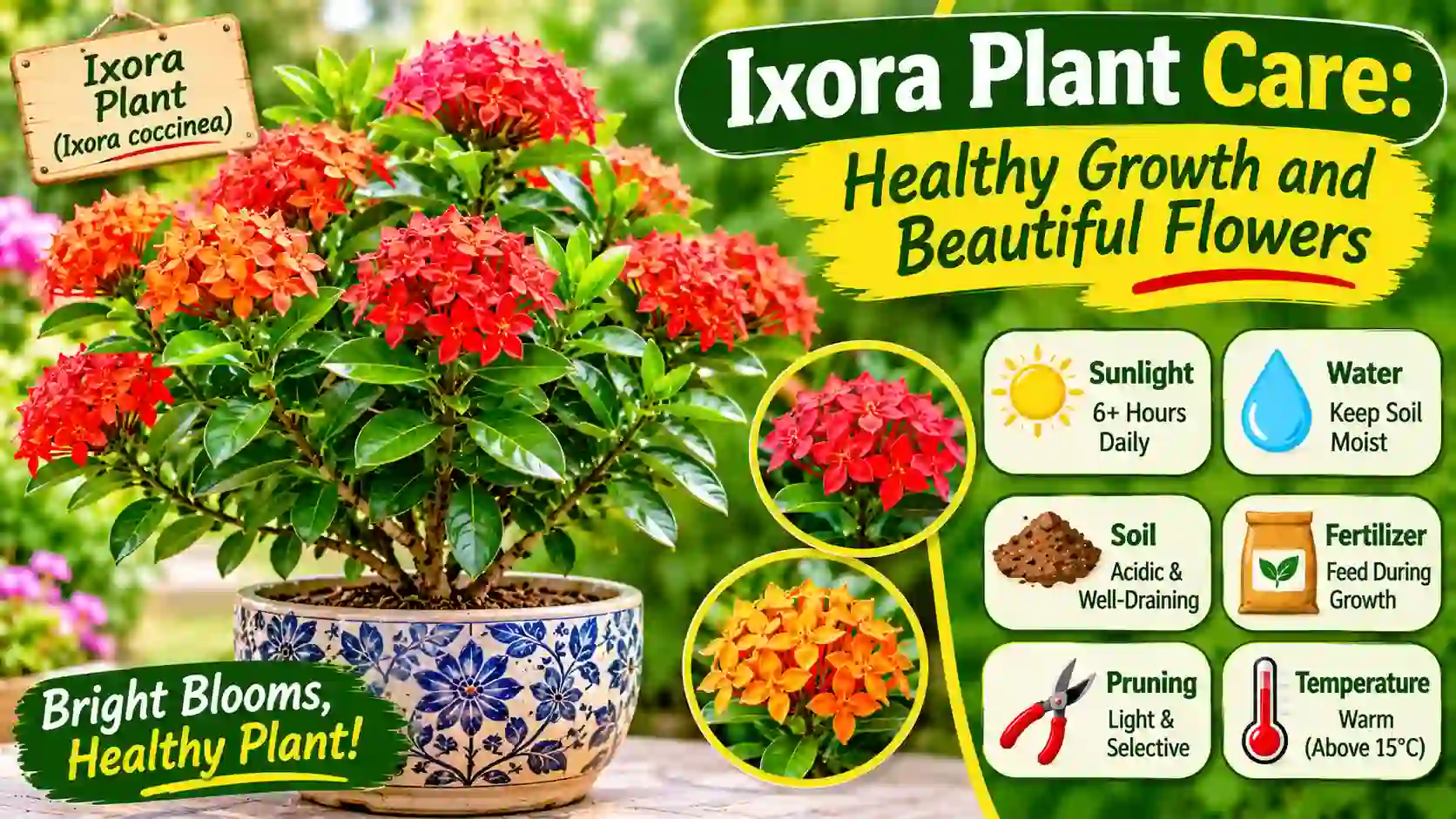
Ixora is a beautiful flowering shrub known for its dense clusters of small, colorful flowers. Its blooms appear in shades of red, orange, pink, yellow, and white. The glossy green leaves provide an attractive background throughout the growing season.
Gardeners often grow ixora as a landscape shrub, flowering hedge, border plant, or container specimen. It can produce impressive flowers for months when its growing conditions are suitable.
However, ixora can become frustrating when its leaves turn yellow, flower buds fail to open, or the plant produces plenty of foliage but very few blooms.
The secret to successful ixora plant care is understanding its preference for warmth, sunlight, moisture, and acidic soil. In particular, soil pH can make a significant difference. Alkaline soil may prevent ixora from absorbing essential nutrients, even when fertilizer is available.
This guide explains how to grow healthy ixora plants, encourage more flowers, maintain attractive foliage, and solve common growing problems.
Quick Answer:
Successful ixora plant care requires warm temperatures, bright sunlight, consistently moist but well-drained acidic soil, and regular feeding during active growth. Grow ixora in a sunny garden or bright location where it receives around six hours of sunlight. Water when the upper soil begins to dry, avoid alkaline soil, and prune lightly after flowering. These conditions encourage healthy foliage and abundant clusters of colorful blooms.
Understand the Ixora Plant and Its Growing Habits
Ixora (Ixora coccinea) is an evergreen flowering shrub belonging to the Rubiaceae family. It is native to tropical Asia and is commonly known as jungle geranium, flame of the woods, and jungle flame.
Despite its common name, ixora is not a true geranium. It belongs to a different botanical family.
The plant develops dense branching stems, glossy oval leaves, and rounded clusters of small tubular flowers.
Why do gardeners love ixora?
- Colorful flowers: Its flower clusters create bright displays in gardens and containers.
- Evergreen foliage: Its leaves remain attractive in suitable warm climates.
- Compact growth: Many varieties develop naturally dense, rounded shapes.
- Hedge potential: Regular light pruning can create an attractive flowering border.
- Container suitability: Compact and dwarf varieties can grow successfully in large pots.
- Pollinator interest: Its flowers can attract butterflies and other visiting insects.
Popular ixora varieties
| Variety or type | Flower color or appearance | Growing appeal |
|---|---|---|
| Red Ixora | Bright red clusters | Classic tropical garden color |
| Orange Ixora | Orange to reddish-orange flowers | Warm, vibrant displays |
| Pink Ixora | Pink or rose-colored clusters | Soft ornamental appearance |
| Yellow Ixora | Yellow flowers | Bright contrast with green foliage |
| White Ixora | White flower clusters | Light, elegant garden displays |
| Dwarf Ixora | Compact growth habit | Suitable for containers and low borders |
Varieties such as ‘Nora Grant’, ‘Maui’, ‘Fraseri’, and ‘Singapore Yellow’ offer different flower colors and growth characteristics.
Practical tip: When buying ixora, choose a plant with several healthy branches, firm green leaves, and no obvious insect damage. A well-branched young plant can develop into a fuller shrub.
Image suggestion: A colorful comparison of red, orange, pink, yellow, and white ixora varieties.
Choose the Right Sunlight for More Flowers
Sunlight plays a major role in ixora flowering. A plant receiving insufficient light may produce healthy-looking leaves but very few flower clusters.
For the best flowering, provide approximately six hours of direct sunlight daily when the plant has adapted to the conditions.
Ixora can tolerate partial shade, but flowering may become less abundant.
What is the best location for ixora?
Choose a location that receives:
- Morning sunlight.
- Several hours of direct sunlight.
- Good air circulation.
- Protection from harsh environmental conditions when necessary.
An open garden bed, sunny patio, or bright terrace can be suitable.
Can ixora grow in full sun?
Yes. Ixora generally performs well in full sun in warm climates.
However, newly purchased plants may need gradual acclimation. A shrub grown under nursery shade can develop scorched leaves when moved immediately into intense sunlight.
Introduce stronger sunlight gradually over one or two weeks.
Signs your ixora needs more sunlight
- Long, weak branches.
- Fewer flower clusters.
- Slow or uneven growth.
- Sparse foliage.
- Flower buds developing poorly.
What if the afternoon sun is extremely hot?
In very hot locations, especially around walls and paved surfaces, afternoon heat can increase stress and water loss.
If the leaves show scorching or the soil dries excessively quickly, consider providing light afternoon shade while maintaining strong morning sunlight.
Expert tip: Do not move an established ixora into deep shade simply because it experiences a few hot afternoons. First check soil moisture, drainage, and heat exposure.
Image suggestion: Ixora growing in a sunny garden with sunlight icons and examples of flowering growth in full sun versus sparse growth in shade.
Use Acidic, Well-Draining Soil
Soil quality is one of the most important parts of ixora plant care.
Ixora prefers moist, organically rich, well-drained soil with an acidic pH. A practical target is approximately 5.5 to 6.5.
In alkaline soil, ixora can struggle to absorb iron and manganese. This can cause chlorosis, a condition where leaf tissue becomes yellow because the plant cannot produce enough chlorophyll.
What is the best soil for ixora?
Use soil that holds enough moisture for healthy growth but does not remain waterlogged.
A suitable garden soil should contain:
- Organic matter or mature compost.
- A well-draining soil structure.
- Enough moisture retention for the roots.
- An acidic to slightly acidic pH.
A practical potting mix for ixora
For container growing, use this starting mixture:
| Ingredient | Proportion | Purpose |
|---|---|---|
| Quality potting mix | 40% | Provides structure and organic matter |
| Mature compost or leaf mold | 25% | Adds organic matter |
| Coco coir or similar moisture-retaining material | 15% | Helps maintain moisture |
| Perlite or pumice | 20% | Improves aeration and drainage |
These proportions are a starting point, not a universal formula. Adjust the mixture according to your local materials and how quickly the pot dries.
Check the finished mix’s pH. Avoid adding lime or other alkaline amendments unless a soil test indicates they are necessary.
Why does soil pH matter so much?
A plant can show iron deficiency even when the soil contains iron. This happens because high soil pH can make certain nutrients less available to the roots.
The result may be pale yellow new leaves with green veins.
Before adding several fertilizers, test the soil pH. Correcting the growing medium is often more effective than repeatedly feeding a plant that cannot absorb its nutrients.
Expert tip: Avoid planting ixora directly beside fresh concrete, lime-treated surfaces, or areas where construction materials regularly enter the soil. These conditions may increase alkalinity.
Image suggestion: A labeled ixora soil infographic showing acidic soil, mature compost, moisture retention, and drainage materials.
Water Ixora Correctly
Ixora likes consistent moisture, especially during active growth and flowering. However, it does not tolerate constantly waterlogged roots.
The goal is to maintain evenly moist soil while allowing excess water to drain away.
How often should you water ixora?
There is no single watering schedule for every plant.
Watering frequency depends on:
- Temperature.
- Sunlight exposure.
- Rainfall.
- Soil texture.
- Pot size.
- Whether the plant grows in a container or garden bed.
Container-grown ixora may need more frequent checks than established garden shrubs.
How to water ixora step by step
- Check the upper soil before watering.
- Water when the surface begins to dry.
- Apply water around the root zone.
- Water deeply enough to moisten the root area.
- Allow excess water to drain away.
- Check the soil again before watering next time.
Avoid watering automatically every day unless the actual growing conditions require it.
Signs of underwatering
- Drooping leaves.
- Dry soil.
- Wilting during hot afternoons.
- Buds dropping before opening.
- Dry or crispy leaf edges.
Signs of overwatering
- Yellowing leaves.
- Soft or declining stems.
- Soil that remains wet for long periods.
- Poor growth despite regular watering.
- Root deterioration.
If the soil stays wet, do not respond by adding more water. Check drainage and inspect the roots if the plant continues declining.
Watering ixora in different seasons
| Season | Watering approach |
|---|---|
| Spring | Maintain consistent moisture as growth increases |
| Summer | Check soil more frequently during hot weather |
| Autumn | Adjust watering as temperatures begin to fall |
| Winter | Water less often if growth slows and soil dries slowly |
Practical tip: A thick layer of organic mulch can help garden-grown ixora retain moisture. Keep mulch slightly away from the main stems to reduce the risk of stem problems.
Image suggestion: A step-by-step watering illustration showing soil checking, deep watering, drainage, and mulching.
Maintain Warm Temperatures and Suitable Humidity
Ixora is a tropical shrub that prefers warm growing conditions.
Cold temperatures can slow its growth, damage leaves, and reduce flowering. Prolonged frost can severely injure or kill the plant.
What temperature is best for ixora?
Warm conditions are ideal. Protect the plant when temperatures approach the lower limits it can tolerate.
Many ixora varieties are best suited to frost-free or nearly frost-free climates. Their performance can vary depending on the cultivar and how well the plant is established.
Does ixora need high humidity?
Ixora generally appreciates the humidity found in tropical and subtropical environments.
However, it does not need daily misting. Good airflow and healthy root conditions are more useful than repeatedly spraying the leaves.
How to protect ixora from cold weather
- Grow it in a sheltered location.
- Use containers that can be moved when necessary.
- Protect the roots with organic mulch.
- Move potted plants to a protected bright location during cold spells.
- Avoid exposing the plant to freezing temperatures.
Expert tip: If you live in a region with cool winters, container growing gives you more control over the plant’s location.
Image suggestion: A healthy ixora in a warm sunny garden alongside a protected potted ixora during cooler weather.
Fertilize Ixora for Healthy Leaves and Abundant Blooms
Ixora benefits from regular feeding during active growth. However, using the wrong fertilizer can create more problems than it solves.
A suitable fertilizer for acid-loving flowering plants can provide essential nutrients and support healthy foliage and flowers.
Which fertilizer is best for ixora?
Choose a fertilizer formulated for acid-loving plants, such as products intended for azaleas and similar shrubs.
A suitable product may contain:
- Nitrogen for leaf and stem development.
- Phosphorus for general plant development.
- Potassium for overall plant health.
- Iron and manganese for healthy foliage.
The exact nutrient balance should depend on the product label and your soil conditions.
When should you fertilize ixora?
Feed during active growth, generally in spring and summer in warm climates.
In cooler conditions, reduce feeding when growth slows. Avoid heavy fertilization when the plant is stressed, newly transplanted, or suffering from root problems.
How to fertilize ixora correctly
- Choose a fertilizer suitable for acid-loving flowering shrubs.
- Read the product label carefully.
- Apply the recommended amount around the root zone.
- Keep concentrated fertilizer away from the main stems.
- Water as directed by the product instructions.
- Observe the new growth before applying another dose.
Can too much fertilizer harm ixora?
Yes. Excess fertilizer can cause salt buildup, root injury, and weak growth.
Too much nitrogen may encourage leaves and stems at the expense of flowers.
Expert tip: If your ixora has yellow new leaves, do not immediately assume it needs more general fertilizer. Check soil pH and consider iron or manganese availability first.
Image suggestion: A gardener applying acid-loving plant fertilizer around a healthy flowering ixora shrub.
Understand Why Ixora Leaves Turn Yellow
Yellow leaves are among the most common concerns in ixora plant care.
One important cause is iron or manganese deficiency related to alkaline soil. However, watering problems, root damage, and nutrient imbalance can produce similar symptoms.
Yellow leaves with green veins
When young leaves turn yellow while their veins remain green, iron chlorosis is a possible cause.
This often occurs when soil pH is too high.
What to do:
- Check the soil pH.
- Review the soil’s drainage.
- Improve the growing medium if it is unsuitable.
- Use an appropriate chelated iron product when deficiency is confirmed or strongly suspected.
- Follow the product label carefully.
Chelated iron can help make iron more available to the plant, but it does not permanently correct unsuitable soil pH.
Yellow older leaves
Yellowing older leaves may relate to natural aging, excessive moisture, nutrient problems, or root stress.
Check whether the soil is too wet and whether the plant has adequate drainage.
Yellow leaves with brown edges
This can occur with moisture stress, fertilizer salt buildup, or root problems.
Review recent watering and feeding before applying additional products.
Important distinction
| Leaf symptom | Possible explanation |
|---|---|
| Yellow young leaves with green veins | Possible iron chlorosis |
| Yellowing older leaves | Natural aging, root stress, or nutrient imbalance |
| Yellow leaves with wet soil | Possible overwatering |
| Yellow leaves with dry soil | Possible water stress |
| Yellow leaves with black or soft stems | Possible root or stem rot |
Practical tip: Take a photograph of the affected leaves and compare new growth over time. The pattern of yellowing can help you identify whether the problem is spreading or improving.
Image suggestion: Side-by-side comparison of healthy green ixora leaves, iron chlorosis, overwatering damage, and dry leaf edges.
Prune Ixora to Maintain a Compact Shape
Pruning keeps ixora attractive and helps maintain its size.
The shrub naturally develops a dense, branching habit. However, repeated heavy trimming can reduce its flower display.
When should you prune ixora?
Prune lightly after a major flowering period or when the plant needs shaping.
Avoid repeatedly cutting off developing flower clusters.
How to prune ixora
- Remove dead or damaged branches.
- Cut back unusually long or uneven growth.
- Use clean, sharp pruning shears.
- Make cuts above suitable leaf nodes.
- Remove crossing branches when necessary.
- Allow the plant time to develop new growth.
Should you shear ixora into a hedge?
Yes, ixora can be maintained as a hedge. However, frequent shearing removes developing flower buds and may reduce flowering.
If flowers are your priority, use selective pruning rather than repeatedly trimming the entire outer surface.
How to encourage bushier growth
- Provide adequate sunlight.
- Avoid excessive nitrogen fertilizer.
- Prune selectively.
- Maintain consistent soil moisture.
- Allow enough room for natural branching.
Expert tip: If your ixora is already compact and flowering well, do not prune simply to make it smaller. Unnecessary trimming can remove many potential blooms.
Image suggestion: Before-and-after ixora pruning illustration showing an overgrown shrub and a neatly shaped flowering plant.
Grow Ixora Successfully in Pots

Ixora can grow well in containers when the pot, soil, and watering routine are suitable.
Container growing is particularly useful when garden soil is alkaline or drainage is poor.
Choose the right container
Select a pot with:
- Several unobstructed drainage holes.
- Enough space for root development.
- A stable base.
- A size appropriate for the plant.
Avoid choosing an extremely large container for a small plant. Excess soil can remain wet for too long.
Best location for potted ixora
Place the container in a bright location with several hours of sunlight.
If the plant has been growing in shade, introduce stronger light gradually.
Container care tips
- Check soil moisture more frequently during hot weather.
- Use an acidic, well-draining potting mix.
- Empty standing water from the saucer.
- Repot when roots become crowded or the soil deteriorates.
- Feed according to the fertilizer label.
- Protect the pot from prolonged heavy rain.
When should you repot ixora?
Repot when roots fill the container, drainage becomes poor, or the plant becomes unstable.
Choose a slightly larger pot rather than moving it into an unnecessarily large container.
Image suggestion: A compact red ixora growing in a decorative terracotta container on a sunny patio.
Propagate Ixora From Stem Cuttings
Stem cuttings are a practical way to grow new ixora plants.
Propagation works best when you choose healthy, pest-free material and provide suitable warmth and moisture.
How to propagate ixora step by step
- Select a healthy, non-flowering stem.
- Cut a section approximately 4–6 inches long.
- Remove the lower leaves.
- Prepare a clean container with a moist, well-draining propagation mix.
- Insert the lower part of the cutting into the mix.
- Place it in bright indirect light.
- Maintain warmth and moderate moisture.
- Wait for roots to develop before transplanting.
A clear plastic cover can help maintain humidity, but it should not remain sealed without airflow.
How long does ixora take to root?
Rooting time varies with temperature, cutting condition, and growing medium. Avoid repeatedly pulling the cutting to check for roots.
Look for signs of new growth and gently check for resistance once enough time has passed.
Common propagation mistakes
- Using weak or diseased stems.
- Allowing the propagation mix to dry completely.
- Keeping the cutting constantly waterlogged.
- Placing it in harsh direct sunlight.
- Transplanting before roots are established.
Image suggestion: A propagation sequence showing ixora stem selection, cutting preparation, planting, rooting, and new growth.
Encourage More Ixora Flowers
Ixora is grown mainly for its colorful flower clusters. If your plant produces many leaves but few flowers, review its light, soil, and pruning routine.
Why is my ixora not flowering?
Common reasons include:
- Insufficient sunlight.
- Excessive nitrogen fertilizer.
- Heavy pruning at the wrong time.
- Unsuitable soil pH.
- Root damage.
- Temperature stress.
- An immature or recently transplanted plant.
How to encourage better flowering
Provide enough sunlight: Move the plant to a brighter location if it receives too much shade.
Check soil acidity: Correct unsuitable soil conditions before adding more fertilizer.
Avoid excessive nitrogen: Heavy nitrogen feeding can encourage leafy growth instead of abundant flowers.
Prune carefully: Avoid removing developing flower buds.
Maintain consistent moisture: Prevent prolonged drought and waterlogging.
Give the plant time: Recently transplanted ixora may need time to establish its roots before producing a strong display.
How long does ixora bloom?
In suitable tropical and subtropical conditions, ixora can flower over extended periods. Flowering intensity varies by variety, temperature, sunlight, and plant health.
Image suggestion: A mature ixora shrub covered in bright red, orange, and pink flower clusters.
Common Ixora Pests and Diseases
Ixora can experience insect infestations and root-related diseases, particularly when growing conditions are unsuitable.
Inspect the undersides of leaves, new shoots, and branch joints regularly.
Aphids
Aphids are small insects that gather on tender growth and flower buds.
Signs:
- Curled new leaves.
- Sticky honeydew.
- Distorted shoots.
Treatment: Remove small infestations with a gentle water spray or use an appropriate insecticidal soap according to its label.
Scale insects
Scale insects appear as small bumps attached to stems and leaves.
Signs:
- Sticky leaves.
- Weak growth.
- Yellowing foliage.
- Sooty mold developing on honeydew.
Treatment: Remove visible insects where practical and use a suitable labeled treatment if the infestation continues.
Mealybugs
Mealybugs look like small white cottony patches around stems and leaf joints.
Treatment:
- Remove heavily infested plant material when necessary.
- Clean affected areas carefully.
- Isolate potted plants if other plants may become infested.
- Use an appropriate labeled insect treatment.
Spider mites
Spider mites can cause tiny pale spots on leaves and fine webbing.
They are more likely to become troublesome in hot, dry conditions.
Treatment: Inspect the undersides of leaves, improve plant care, and use a suitable labeled treatment if necessary.
Sooty mold
Sooty mold looks like a dark coating on leaves and stems.
It often develops on the honeydew produced by aphids or scale insects.
Treatment: Identify and control the insects first. The mold often becomes less problematic once the honeydew source is removed.
Root rot
Root rot can develop when ixora remains in poorly drained soil.
Prevention:
- Avoid waterlogged soil.
- Improve drainage before planting.
- Use containers with drainage holes.
- Adjust watering to weather conditions.
Image suggestion: An ixora pest identification chart showing aphids, scale insects, mealybugs, spider mites, and sooty mold.
Seasonal Ixora Plant Care
Ixora responds to changes in temperature, sunlight, and rainfall. Adjusting care throughout the year helps maintain steady growth.
Spring care
Spring is a useful time to prepare ixora for active growth.
- Remove damaged branches.
- Check soil drainage.
- Add suitable organic mulch.
- Begin feeding according to the product label.
- Inspect for pests.
- Increase watering as growth develops.
Summer care
Warm weather can support active growth and flowering.
- Check soil moisture regularly.
- Water deeply when needed.
- Protect containers from extreme heat.
- Maintain airflow.
- Watch for pests.
- Avoid excessive fertilizer.
Autumn care
As temperatures begin to fall, growth may slow.
- Reduce fertilizer if growth declines.
- Remove damaged or dead material.
- Inspect the plant for pests.
- Adjust watering according to soil moisture.
- Prepare potted plants for cooler weather.
Winter care
Ixora is sensitive to cold and frost.
- Protect the plant from freezing temperatures.
- Reduce watering if the soil dries more slowly.
- Avoid heavy pruning during stressful conditions.
- Keep potted plants in a bright, sheltered location.
- Avoid unnecessary fertilizer when growth is limited.
Important: Seasonal timing depends on your local climate. In warm regions, ixora may continue growing and flowering through much of the year.
Common Mistakes to Avoid
A few avoidable mistakes can prevent ixora from developing healthy foliage and abundant flowers.
Planting in alkaline soil
Alkaline soil can reduce iron and manganese availability.
Better approach: Check the pH and use suitable acidic soil amendments when needed.
Growing ixora in deep shade
Low light can reduce flower production.
Better approach: Provide a brighter location with suitable direct sunlight.
Watering without checking the soil
Frequent watering can keep the roots constantly wet.
Better approach: Check moisture before watering and maintain good drainage.
Applying too much fertilizer
Excess fertilizer can damage roots and encourage excessive leafy growth.
Better approach: Use an appropriate product at the recommended rate.
Pruning too frequently
Repeated shearing can remove developing flower buds.
Better approach: Prune selectively and avoid unnecessary trimming.
Ignoring yellow leaves
Yellowing can indicate a soil pH or root problem.
Better approach: Examine the pattern of yellowing and check the growing conditions before applying fertilizer.
Choosing a pot without drainage
Excess water can accumulate around the roots.
Better approach: Use a container with proper drainage holes.
Is Ixora Safe for Pets?
According to the ASPCA, Ixora coccinea is listed as non-toxic to dogs and cats. However, this does not mean pets should regularly eat the plant.
Eating unfamiliar plant material can still cause stomach upset in some animals.
Keep garden plants in good condition, avoid using unsuitable pesticides around pets, and contact a veterinarian if an animal develops symptoms after eating plant material.
A Simple Ixora Care Checklist
Use this checklist to review the most important growing conditions.
| Care requirement | What to provide |
|---|---|
| Sunlight | Around six hours of direct sunlight for strong flowering |
| Water | Consistent moisture without waterlogging |
| Soil | Acidic, organically rich, well-draining soil |
| Soil pH | Approximately 5.5–6.5 |
| Fertilizer | Suitable acid-loving plant fertilizer |
| Pruning | Light, selective pruning |
| Temperature | Warm, frost-protected conditions |
| Humidity | Ordinary outdoor humidity in suitable climates; good airflow |
| Repotting | When roots become crowded or soil deteriorates |
| Pest inspection | Regular checks of leaves, stems, and new growth |
These are general guidelines. Adjust them according to the variety, local weather, soil, and whether the plant grows in a pot or garden bed.
Frequently Asked Questions About Ixora Plant Care
1. How much sunlight does an ixora plant need?
Ixora generally grows and flowers best with around six hours of direct sunlight. It can tolerate partial shade, but flowering may become less abundant.
2. How often should I water ixora?
Water when the upper soil begins to dry. During hot weather, check more frequently. Avoid keeping the roots constantly wet.
3. What is the best soil for ixora?
Ixora prefers acidic, organically rich, well-draining soil. A pH around 5.5–6.5 is a useful target for healthy nutrient absorption.
4. Why are my ixora leaves turning yellow?
Yellow leaves may indicate iron or manganese deficiency, especially in alkaline soil. Overwatering and damaged roots can also cause yellowing. Check soil pH and drainage before treating the plant.
5. Why is my ixora not flowering?
Insufficient sunlight, excessive nitrogen, unsuitable soil pH, heavy pruning, and root stress can reduce flowering. Correct these conditions before adding more fertilizer.
6. Which fertilizer is best for ixora?
Use a fertilizer formulated for acid-loving plants, such as an azalea fertilizer. Follow the product label and avoid excessive feeding.
7. Can ixora grow in pots?
Yes. Ixora grows successfully in containers with drainage holes, acidic potting mix, sufficient sunlight, and appropriate watering.
8. Can ixora grow in full sun?
Yes. Full sun generally supports stronger flowering. Acclimate nursery-grown or shade-grown plants gradually to prevent leaf scorch.
9. How do I make ixora bushier?
Provide enough sunlight and prune selected branches lightly. Avoid repeated heavy shearing, which can reduce flowering.
10. When should I prune ixora?
Prune after a flowering period or when the plant needs shaping. Remove dead and damaged branches whenever necessary.
11. Can ixora survive winter?
Ixora prefers warm conditions and is sensitive to frost. Protect it from cold temperatures, especially when grown in containers.
12. How do I propagate ixora?
You can propagate ixora using healthy stem cuttings. Plant callused or prepared cuttings in a suitable propagation mix and provide warmth, humidity, and bright indirect light.
13. Why are my ixora buds falling off?
Bud drop can result from irregular watering, heat stress, insufficient light, root problems, or sudden environmental changes. Check soil moisture and growing conditions.
14. Does ixora need acidic fertilizer?
An acid-loving plant fertilizer is often a suitable choice. However, fertilizer alone cannot correct highly alkaline soil. Check soil pH when yellowing continues.
15. Is ixora an indoor or outdoor plant?
Ixora is primarily an outdoor tropical shrub. It can grow in containers and may be kept indoors temporarily in a bright location, but it generally performs best with suitable outdoor light and airflow.
Conclusion:
Successful ixora plant care depends on providing the conditions this tropical flowering shrub naturally prefers. Give it plenty of sunlight, acidic and well-drained soil, consistent moisture, and suitable fertilizer during active growth.
Pay special attention to soil pH if the leaves turn yellow. In alkaline conditions, ixora may struggle to absorb iron and manganese, even when nutrients are present. Correcting this issue can make a significant difference to foliage health.
Prune selectively, inspect for pests, and protect the plant from cold weather. With these practical habits, ixora can develop into a dense, attractive shrub with beautiful flower clusters.