
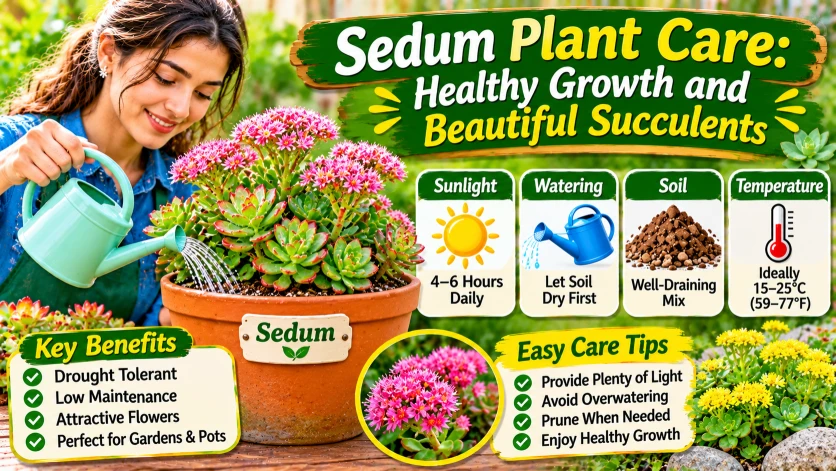
Sedums are popular succulents known for their fleshy leaves, drought tolerance, and attractive flowers. They come in many shapes, sizes, and colors. Some form low-growing ground covers, while others develop upright stems topped with clusters of flowers.
However, sedum plant care is not exactly the same for every variety. A creeping stonecrop growing in a sunny rock garden has different needs from a tall garden sedum or a small succulent kept indoors.
The most common problem is overwatering. Sedum leaves store water, so their roots need time to dry between watering sessions. Too much moisture can cause soft leaves, stem damage, and root rot.
This guide explains how to identify your sedum, provide the right growing conditions, encourage healthy growth, and solve common problems.
Quick Answer:
Sedum plants grow best in bright light, well-draining soil, and containers or garden beds that never stay waterlogged. Most varieties need at least 4–6 hours of sunlight daily and deep watering only after the soil dries. Use a gritty succulent mix, choose a pot with drainage holes, and reduce watering during cool or dormant periods. Adjust care to the variety because creeping stonecrops and upright sedums have different growth habits.
Understand Which Type of Sedum You Are Growing
Sedum is a large group of succulent plants in the Crassulaceae family. They are commonly called stonecrops because many species grow naturally in rocky, dry places.
The genus includes more than 300 species, although some plants formerly classified as Sedum have been moved into other genera, including Hylotelephium. This matters when choosing care instructions. North Carolina Extension Gardener Plant Toolbox+1
| Sedum type | Appearance | Growing habit |
|---|---|---|
| Creeping stonecrop | Small, dense, fleshy leaves | Spreads across soil and rocks |
| Upright stonecrop | Thick stems and broad leaves | Grows in clumps with flower clusters |
| Trailing sedum | Long stems with rounded or pointed leaves | Cascades over hanging pots |
| Rosette-forming sedum | Compact, layered leaf arrangements | Grows in small clusters or mounds |
Popular sedum varieties include:
- Dragon’s Blood Sedum: A low-growing variety with green leaves that can develop red tones.
- Autumn Joy: An upright stonecrop with broad foliage and large flower clusters. It is now commonly classified as Hylotelephium ‘Herbstfreude’.
- Golden Moss Sedum: A spreading ground cover with small leaves and yellow flowers.
- Burro’s Tail: A trailing succulent with thick, bead-like leaves. It is commonly known as Sedum morganianum.
- Blue Spruce Sedum: A creeping variety with narrow, blue-green leaves.
Expert tip: Check the plant label before following a care guide. Upright garden stonecrops can tolerate conditions that would damage a delicate trailing succulent.
How Much Sunlight Does a Sedum Plant Need?
Most sedum varieties grow best in full sun. Many need around 4–6 hours of direct sunlight daily to maintain compact growth and attractive foliage.
However, sunlight needs depend on the species and local climate.
Best lighting conditions
- Outdoor garden: Choose a sunny location with good airflow.
- Indoor growing: Place the plant near a bright south- or east-facing window.
- Balcony growing: Provide strong morning sunlight and observe how the leaves respond.
- Hot climates: Protect sensitive varieties from extreme afternoon heat.
In very hot regions, including parts of Pakistan, intense afternoon sunlight can scorch some sedums. Morning sun with light afternoon shade can be a better arrangement for container-grown plants.
Signs your sedum needs more light
- Stems become unusually long.
- Leaves grow farther apart.
- The plant leans toward the window.
- Foliage loses its compact shape.
- Flowering becomes limited.
This stretching is called etiolation. It happens when a succulent receives insufficient light.
How to improve sunlight exposure
- Move indoor sedums closer to a bright window.
- Increase direct sunlight gradually over one or two weeks.
- Rotate the pot occasionally for balanced growth.
- Avoid suddenly placing a shaded plant in harsh midday sun.
- Provide afternoon protection during extreme heat if leaves show scorching.
Image suggestion: A comparison infographic showing a compact, healthy sedum in bright light beside a stretched sedum suffering from insufficient sunlight.
How to Water a Sedum Plant Correctly
Watering is one of the most important parts of sedum plant care. These succulents store moisture in their fleshy leaves and stems.
They do not need frequent watering like many tropical houseplants.
When should you water sedum?
Water when the soil has dried sufficiently, rather than following a fixed daily schedule.
Use this simple method:
- Insert your finger into the soil.
- Check moisture several inches below the surface.
- If the soil is still damp, wait.
- If the root zone is dry, water thoroughly.
- Let excess water escape through the drainage holes.
Small pots and hot outdoor locations may dry faster than large pots in cooler rooms.
Watering frequency by season
| Season | Watering approach |
|---|---|
| Spring | Water when the soil dries during active growth. |
| Summer | Check more frequently because heat increases evaporation. |
| Autumn | Reduce watering as growth slows. |
| Winter | Water sparingly, especially for dormant outdoor varieties. |
These are seasonal guidelines, not a strict calendar. Soil moisture and growing conditions should determine when you water.
Signs of overwatering
- Leaves become soft or translucent.
- Stems turn mushy.
- Lower leaves fall off unusually.
- Soil remains wet for several days.
- Roots become brown and rotten.
Signs of underwatering
- Leaves become wrinkled.
- Foliage looks thinner than usual.
- Stems lose firmness.
- Growth slows during warm weather.
Important: Do not confuse natural leaf drop with overwatering. Older leaves sometimes dry out as the plant produces new growth.
What Is the Best Soil for Sedum Plants?
Sedums need soil that drains quickly. Their roots can struggle when water remains trapped around them.
Ordinary garden soil may become too compact, particularly in containers.
Recommended soil mix
A practical homemade mix is:
| Ingredient | Amount | Purpose |
|---|---|---|
| Cactus or succulent potting mix | 2 parts | Provides the main growing medium |
| Pumice or perlite | 1 part | Improves drainage and airflow |
| Coarse horticultural grit | 1 part | Creates a more open structure |
Mix everything evenly before planting.
Avoid fine construction sand because it can compact rather than improve drainage.
What soil conditions should you avoid?
- Heavy clay soil that holds water.
- Dense garden soil in small pots.
- Containers without drainage holes.
- Soil that remains soggy after watering.
- Excessively rich mixes that encourage weak growth.
For outdoor beds, improve drainage before planting. Raised beds and sloping rock gardens can help prevent water from collecting around the roots.
Expert tip: A drainage hole is more important than a decorative layer of stones at the bottom of a pot. Stones do not correct poorly draining soil.
5. Best Temperature and Humidity for Sedum
Sedum varieties come from different climates, so their temperature tolerance varies.
Many hardy garden stonecrops tolerate cold winters. Tender trailing varieties may need protection from frost.
Ideal growing conditions
- Warm temperatures during active growth.
- Good ventilation around the foliage.
- Low to moderate humidity for most succulent types.
- Protection from prolonged cold, wet conditions.
- Shelter from extreme heat when necessary.
Sedums generally prefer relatively dry air compared with tropical houseplants.
In humid weather, allow enough space between plants for airflow. Wet foliage and poorly drained soil can increase the risk of fungal and bacterial problems.
Growing sedum in hot climates
If you live in a region with very hot summers:
- Use a pot that drains freely.
- Avoid dark containers that become excessively hot.
- Provide morning sunlight.
- Protect sensitive varieties from intense afternoon exposure.
- Check soil moisture during heat waves.
- Avoid watering repeatedly just because the weather is hot.
A sedum plant may temporarily wrinkle during extreme heat. Check the soil before adding water because heat stress and root problems can look similar.
How to Fertilize Sedum for Healthy Growth
Sedums are generally light feeders. They can grow successfully in relatively poor soil, so heavy fertilizing is rarely necessary.
Too much fertilizer can encourage soft, stretched growth. This may make upright varieties more likely to flop and can reduce the compact appearance of some succulents. National Garden Bureau+1
Best fertilizer choices
- A diluted, balanced liquid fertilizer formulated for succulents.
- A small amount of mature compost for suitable garden varieties.
- A low-strength general-purpose fertilizer when the plant shows active growth.
When should you fertilize?
Spring is usually the best time to feed actively growing sedums.
For container plants, follow the fertilizer label and use a conservative dose. Some garden sedums need no additional fertilizer if the soil is already reasonably fertile.
Avoid fertilizing:
- During winter dormancy.
- When the soil is completely dry.
- When roots are damaged or rotting.
- Immediately after severe heat stress.
How to Prune and Maintain a Sedum Plant
Pruning helps maintain the shape of sedum plants and removes damaged or dead growth.
However, pruning methods depend on the variety.
Pruning upright sedums
- Remove broken or diseased stems.
- Cut away dead growth when new shoots appear in spring.
- Remove spent flower stems if you prefer a tidy appearance.
- Use clean, sharp pruning shears.
- Avoid cutting healthy new shoots unnecessarily.
You can also leave dried flower heads standing through winter. They add garden structure and can provide visual interest.
Pruning creeping sedums
Creeping varieties sometimes spread beyond their intended growing area.
Trim their edges to control growth and remove damaged sections. Avoid cutting deeply into areas without healthy leaves.
Should you deadhead sedum flowers?
Deadheading is optional.
Removing faded flowers improves appearance, but leaving them can provide attractive seedheads. Some gardeners keep upright sedum flower heads through winter and cut them back in spring.
How to Propagate Sedum Plants
Sedums are among the easier succulents to propagate. Depending on the variety, you can grow new plants from stem cuttings, leaf cuttings, offsets, or division.
Method 1: Propagation from stem cuttings
This method works well for many upright and trailing varieties.
Steps:
- Select a healthy, non-flowering stem.
- Cut a section using clean scissors.
- Remove leaves from the lower part.
- Allow the cut end to dry and form a callus if the stem is succulent.
- Place it in a slightly moist, well-draining propagation mix.
- Keep it in bright, indirect light while roots develop.
- Water lightly once the mix begins to dry.
Do not bury too much of the cutting. Excess moisture around the stem can cause it to rot.
Method 2: Propagation from leaves
Some sedum species can produce new plants from individual leaves.
- Gently remove a healthy, mature leaf.
- Make sure the leaf remains intact.
- Allow the broken end to dry.
- Place it on top of a gritty propagation mix.
- Keep it in bright, indirect light.
- Wait for roots and small shoots to appear.
Not every sedum variety roots reliably from leaves. Stem cuttings are usually more dependable.
Method 3: Division
Division is especially useful for established clumping sedums.
- Lift the mature plant carefully.
- Separate a section with healthy roots and shoots.
- Replant each division in suitable soil.
- Water lightly to settle the soil.
- Protect the divisions from harsh sunlight while they establish.
Spring and early autumn are often suitable times for dividing hardy garden varieties. tollbit.gardenersworld.com+1
Expert tip: Do not water fresh cuttings heavily. A cutting without established roots cannot use large amounts of moisture, and wet propagation soil can cause rot.
How to Grow Sedum Indoors
Many compact and trailing sedum varieties grow well indoors when they receive sufficient light.
However, indoor sedums often struggle because of low light and excessive watering.
Choose the right location
Place your plant near a bright window. An east-facing window can provide gentle morning sunlight, while a brighter south-facing window may suit sun-loving varieties.
If natural light is insufficient, use a suitable grow light.
Indoor sedum care routine
- Light: Provide bright light and some direct sunlight when suitable for the variety.
- Water: Allow the growing medium to dry between watering sessions.
- Soil: Use a gritty succulent mix.
- Pot: Choose a container with drainage holes.
- Airflow: Avoid keeping the plant in a constantly damp, poorly ventilated corner.
- Maintenance: Remove dead leaves and inspect for pests.
Why is indoor sedum growing slowly?
Insufficient light is a common reason.
A plant near a shaded window may survive but produce weak, stretched stems. Move it gradually toward brighter conditions and avoid compensating with extra fertilizer.
How to Grow Sedum Outdoors in a Garden

Outdoor sedums are useful for rock gardens, borders, containers, slopes, and ground-cover planting.
Most varieties prefer sunny locations and well-drained soil. Some woodland species, such as Sedum ternatum, tolerate more shade and moisture than typical stonecrops. North Carolina Extension Gardener Plant Toolbox+2
Choose the right planting location
Look for a site with:
- Suitable sunlight for the variety.
- Soil that drains freely after rainfall.
- Enough room for mature spreading.
- Good airflow.
- No regular standing water.
Planting sedum in garden beds
- Remove weeds and loosen the planting area.
- Improve heavy soil with suitable drainage materials.
- Dig a hole slightly wider than the root ball.
- Position the plant at its original soil level.
- Fill around the roots without burying the stems.
- Water lightly to settle the soil.
- Monitor moisture while the plant establishes.
Avoid planting creeping varieties too close to delicate neighboring plants. Some stonecrops spread quickly and can cover nearby ground.
Growing Sedum in Pots and Containers
Container growing is a good choice when garden soil drains poorly or you want to move tender varieties during extreme weather.
Choose a suitable pot
The container should have drainage holes. Terracotta pots are useful because their porous sides allow moisture to evaporate.
Select a pot that comfortably fits the root system. A very large container holds more unused soil, which can remain wet for too long.
Container care tips
- Use a gritty succulent potting mix.
- Never allow water to collect in the saucer.
- Keep the pot in suitable light.
- Repot when roots become crowded.
- Protect tender varieties from prolonged cold and rain.
When should you repot sedum?
Repot when you notice:
- Roots growing through drainage holes.
- The plant becoming unstable.
- Soil drying unusually quickly because the root ball is crowded.
- Poor drainage caused by compacted potting mix.
- A container that is too small for the mature plant.
Spring is often a convenient time to repot actively growing plants.
Common Sedum Plant Problems and How to Fix Them
Sedums are relatively low-maintenance, but incorrect watering, unsuitable light, and poor drainage can cause problems.
The best solution is to identify the underlying cause rather than treating every symptom with additional water or fertilizer.
Why Is My Sedum Turning Yellow?
Yellow leaves can result from overwatering, poor drainage, natural aging, or environmental stress.
What to do:
- Check the soil before watering.
- Inspect the drainage holes.
- Remove severely damaged leaves.
- Check the roots if stems are becoming soft.
- Move the plant to suitable light.
If only a few older leaves near the base turn yellow, the change may be natural.
Why Is My Sedum Plant Turning Brown?
Brown leaves can indicate sunburn, dehydration, physical damage, or root problems.
What to do:
- Check whether the brown areas are dry or soft.
- Protect scorched plants from harsh afternoon sunlight.
- Water when the root zone becomes dry.
- Inspect roots if the base is mushy.
- Remove dead sections with clean tools.
Why Is My Sedum Getting Leggy?
Leggy growth usually means the plant needs more light.
What to do:
- Move the plant toward brighter light gradually.
- Rotate the container periodically.
- Prune stretched stems if appropriate.
- Use healthy cuttings to propagate compact new plants.
Avoid giving excessive fertilizer to fix leggy growth.
Why Is My Sedum Drooping?
Drooping may result from underwatering, overwatering, weak light, or heavy flower heads.
Check the soil first. Dry soil with wrinkled leaves may indicate dehydration. Wet soil with soft stems suggests possible root damage.
For upright varieties, weak or floppy growth may also indicate insufficient sunlight or excessive feeding.
Why Is My Sedum Not Flowering?
Common causes include:
- Insufficient sunlight.
- Immature plants.
- Incorrect seasonal conditions.
- Excessive nitrogen fertilizer.
- Pruning away developing flower stems.
Give the plant suitable light and avoid heavy feeding. Remember that flowering seasons vary by species.
Why Is My Sedum Losing Leaves?
Some leaf loss is normal, especially when older leaves dry out.
However, sudden leaf drop may indicate:
- Overwatering.
- Poor drainage.
- Physical disturbance.
- Extreme temperature changes.
- Pest activity.
Inspect the plant and growing medium before changing the watering routine.
Why Is My Sedum Rotting?
Root and stem rot often develop when soil remains wet for too long.
Recovery steps:
- Remove the plant from soggy soil.
- Inspect the roots and stems.
- Cut away soft, rotten sections using sterilized tools.
- Allow healthy cut surfaces to dry.
- Replant in fresh, dry, well-draining succulent mix.
- Resume watering cautiously after the plant has had time to recover.
If the entire base has become mushy, saving a healthy stem cutting may be more successful than trying to rescue the original roots.
Sedum Pests and Diseases
Sedums are generally trouble-free, but certain pests can damage their leaves and stems.
| Pest or disease | Common signs | Practical response |
|---|---|---|
| Mealybugs | White cotton-like clusters | Remove visible pests and treat with a suitable insecticidal soap. |
| Aphids | Small insects on new growth | Wash off with a gentle stream of water or use an appropriate treatment. |
| Scale insects | Small, hard bumps on stems or leaves | Remove carefully and monitor the plant. |
| Slugs and snails | Irregular holes and damaged leaves | Inspect at night and remove pests. |
| Root rot | Mushy roots and soft stems | Improve drainage and remove rotten tissue. |
| Fungal problems | Discolored or damaged plant tissue | Improve airflow and avoid prolonged wet conditions. |
How to prevent pest problems
- Inspect new plants before adding them to your collection.
- Remove dead leaves around the plant.
- Avoid overcrowding.
- Keep tools clean.
- Check leaf joints and stems regularly.
- Avoid unnecessary pesticide applications.
The RHS notes that different sedum species can have different pest and disease vulnerabilities, including root rot and certain insect pests. biting stonecrop+1
Seasonal Sedum Plant Care
Sedum care changes throughout the year. Temperature, rainfall, sunlight, and growth activity all affect watering and maintenance.
| Season | Main care tasks |
|---|---|
| Spring | Remove dead growth, repot if needed, divide clumps, and resume watering as growth begins. |
| Summer | Provide suitable sunlight, monitor soil moisture, and watch for pests. |
| Autumn | Collect healthy cuttings, divide suitable varieties, and reduce watering as growth slows. |
| Winter | Protect tender varieties from frost and prolonged wet conditions. Reduce watering for dormant plants. |
Spring care
Spring is an excellent time to inspect your sedum after winter.
Remove dead stems and leaves. Divide crowded clumps if necessary. Gradually increase watering as new growth appears.
Summer care
Strong sunlight supports many sedum varieties, but extreme heat can stress container plants.
Check pots more frequently because they dry faster than garden beds. Protect sensitive varieties from intense afternoon sunlight.
Autumn care
Some sedums develop attractive red, bronze, or purple foliage as temperatures change.
Remove damaged growth and prepare tender varieties for colder conditions. Avoid excessive watering as growth slows.
Winter care
Hardy outdoor sedums can survive cold conditions, depending on the species.
Tender varieties may need a sheltered location. The bigger risk for many succulents is cold, wet soil rather than cold temperatures alone.
Image suggestion: A four-panel seasonal infographic showing spring pruning, summer sunlight, autumn foliage colors, and winter protection.
Common Sedum Growing Mistakes to Avoid
Even easy-care succulents can struggle when their growing conditions are unsuitable.
Here are mistakes worth avoiding:
- Watering too frequently: Sedums store moisture in their leaves. Allow the soil to dry appropriately.
- Using heavy soil: Dense soil holds moisture around the roots. Choose a gritty, well-draining mix.
- Ignoring sunlight: Many varieties become stretched when light is insufficient.
- Using pots without drainage: Standing water increases the risk of root rot.
- Applying too much fertilizer: Excess nutrients can encourage weak, unnatural growth.
- Changing light conditions suddenly: Gradually acclimate plants to stronger sunlight.
- Overlooking variety differences: Not every sedum has the same temperature, moisture, or light requirements.
- Keeping saucers full of water: Empty excess water after watering.
- Planting too closely: Crowded plants receive less airflow and may compete for space.
- Watering based on a calendar: Always check the soil before watering.
Expert Tips for Growing Beautiful Sedum Plants
A few simple techniques can make sedum care easier and improve long-term plant health.
- Prioritize drainage: Good drainage prevents many common succulent problems.
- Match the variety to the location: Use creeping types for suitable ground cover and upright types for garden borders.
- Acclimate gradually: Increase sunlight exposure slowly when moving plants outdoors.
- Avoid unnecessary feeding: Most varieties do not need heavy fertilizer.
- Use cuttings wisely: Healthy pruned stems can often become new plants.
- Monitor container moisture: Pots dry differently depending on material, size, and weather.
- Keep the plant clean: Remove dead leaves that collect around the base.
- Check the botanical name: This helps you find advice for the correct species.
One especially useful habit is to observe your sedum before making changes. A wrinkled leaf does not always mean the plant needs water. Check the soil, roots, and growing conditions first.
Frequently Asked Questions About Sedum Plant Care
Is sedum easy to care for?
Yes. Most sedums are easy to grow because they tolerate dry conditions and need relatively little fertilizer. The main requirements are suitable sunlight, well-draining soil, and careful watering.
Does sedum need full sun?
Most varieties prefer full sun or partial sun. However, some tolerate partial shade. In extremely hot climates, afternoon shade can protect sensitive varieties from leaf scorching.
How often should I water a sedum plant?
Water when the growing medium has dried sufficiently. The frequency depends on temperature, pot size, soil, and variety. Avoid following a fixed watering schedule.
Can sedum grow indoors?
Yes. Many compact and trailing varieties grow indoors near bright windows. They need sufficient light, a draining pot, and a succulent-friendly growing medium.
Why are my sedum leaves falling off?
Leaf loss can result from overwatering, underwatering, physical damage, or natural aging. Check the soil and stems to identify the cause.
Does sedum come back every year?
Many garden sedums are perennial plants that return each year. However, some species are annual or short-lived, and tender varieties may not survive cold winters.
Can sedum grow in pots?
Yes. Sedum grows well in containers with drainage holes and gritty potting mix. Avoid oversized pots that hold too much unused wet soil.
What is the best fertilizer for sedum?
A diluted, balanced succulent fertilizer can support active growth when needed. Many sedums grow well without additional fertilizer, especially in suitable garden soil.
Can I propagate sedum from a leaf?
Some varieties produce new plants from individual leaves. However, success depends on the species. Stem cuttings are a more reliable option for many sedums.
Why is my sedum turning red?
Red or bronze coloration can be natural in certain varieties. Strong light and seasonal temperature changes can also intensify these colors. Check for scorching if the leaves develop dry, damaged patches.
Does sedum need pruning?
Sedum benefits from removing dead, damaged, or unwanted growth. Upright varieties can be cut back in spring, while creeping types can be trimmed to control spreading.
Is sedum drought-tolerant?
Yes. Most sedums tolerate drought because their fleshy leaves and stems store water. However, newly planted sedums need suitable moisture while establishing roots.
Is sedum suitable for hot climates like Pakistan?
Some varieties can grow successfully in hot climates. Choose heat-tolerant types, provide excellent drainage, and protect sensitive plants from extreme afternoon heat. Avoid keeping their roots constantly wet.
Does sedum flower?
Yes. Many varieties produce small, star-shaped flowers in white, yellow, pink, or red. Flowering time depends on the species and local growing conditions.
Conclusion:
Successful sedum plant care starts with understanding your variety and providing the right growing conditions. Most sedums need plenty of light, well-draining soil, and less frequent watering than ordinary garden plants.
Pay particular attention to drainage and avoid overwatering. Give indoor plants enough light and protect sensitive varieties from extreme weather.
Whether you grow creeping stonecrop in a rock garden or trailing sedum in a hanging pot, consistent observation makes care easier. Start with the right soil, check moisture before watering, and let your plant grow at its natural pace.