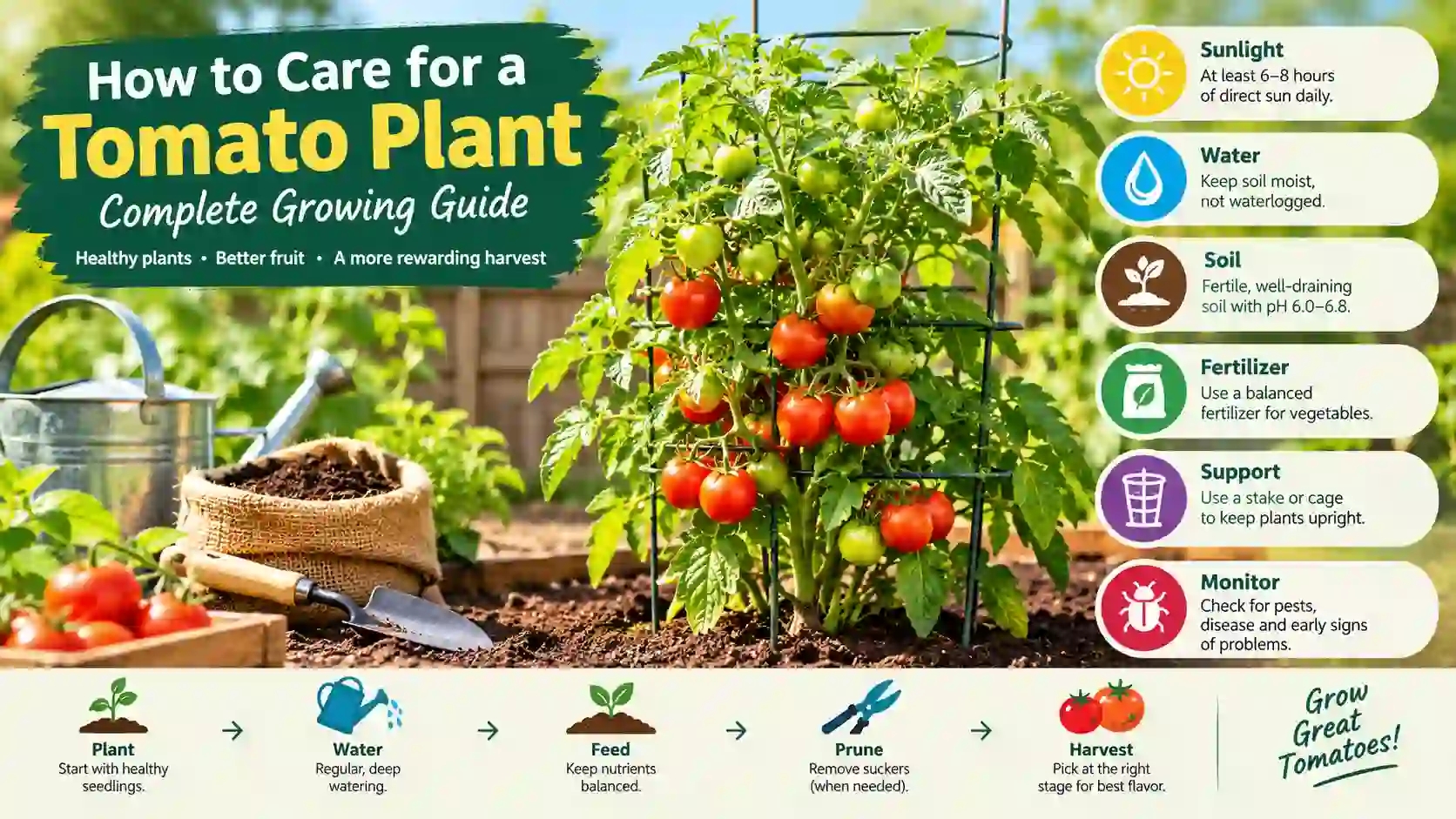
Growing healthy tomato plants starts with the right balance of sunlight, water, soil, and nutrients. Whether you’re growing tomatoes in a garden bed, a raised bed, or a container on your patio, understanding their basic needs helps you produce stronger plants and better fruit.
This guide covers everything from planting and watering to pruning, fertilizing, troubleshooting common problems, and harvesting ripe tomatoes. It also explains how to recognize early warning signs before they affect your harvest.
Quick Answer:
To care for a tomato plant, provide at least 6–8 hours of direct sunlight daily, plant it in fertile, well-draining soil, and water deeply whenever the soil begins to dry. Keep the soil consistently moist without making it waterlogged. Support the stems with a cage or stake, apply a suitable vegetable fertilizer, and monitor leaves and fruit for pests or disease. Harvest tomatoes when they reach their variety’s mature color and desired ripeness.
1. Understand Your Tomato Plant Before You Start
Tomatoes (Solanum lycopersicum) are warm-season plants that grow quickly when their environment meets their needs. However, different varieties require different amounts of space, pruning, and support.
Determinate vs. indeterminate tomatoes

Determinate tomatoes
These plants grow to a more limited size and produce much of their fruit over a concentrated period. They suit containers, small gardens, and gardeners who want a larger harvest at once.
Care tip: Use a sturdy cage and avoid heavy pruning. Removing too much growth can reduce your harvest.

Indeterminate tomatoes
These plants continue growing and producing fruit throughout favorable conditions. They need more vertical space and usually benefit from staking or trellising.
Care tip: Tie stems loosely to their supports and selectively prune unwanted suckers if you want a more manageable plant.
Semi-determinate varieties fall between these two growth habits. Check the seed packet or plant label before deciding how to train your tomato plant.
2. Choose the Right Location and Sunlight
Sunlight affects flowering, fruit development, and the plant’s ability to produce energy. A tomato plant growing in insufficient light may develop long, weak stems and produce fewer fruits.
How much sunlight do tomato plants need?
Tomatoes generally need at least 6–8 hours of direct sunlight daily. Around eight hours or more is often ideal when temperatures remain suitable.
Choose a location that:
- Receives direct morning sunlight and plenty of light throughout the day.
- Has good airflow around the foliage.
- Offers well-drained soil without standing water.
- Provides enough space for mature plants and their supports.
- Allows you to water the root zone easily.
What if your tomato plant gets too much sun?
Tomatoes need sunlight, but intense heat can interfere with flowering and fruit development. In very hot weather, flowers may drop before forming fruit, and exposed tomatoes can develop sunscald.
In hot climates, protect plants from the harshest afternoon heat when necessary. Use breathable shade cloth during extreme heat while preserving adequate light and airflow.
Practical tip: Watch your plant during the hottest part of the day. Slight midday leaf drooping can occur in extreme heat, but persistent wilting may indicate a watering problem or root damage.
Image suggestion: A healthy tomato plant in a sunny garden with sunlight, airflow, and temperature icons.
3. Prepare the Best Soil for Tomato Plants
Healthy roots depend on soil that holds enough moisture while allowing excess water to drain away. Soil that stays saturated can deprive roots of oxygen and encourage root diseases.
Ideal soil conditions
Tomatoes grow best in fertile, well-draining soil rich in organic matter. A slightly acidic soil pH of approximately 6.0–6.8 is suitable for most home gardens.
Before planting:
- Loosen compacted soil to help roots spread.
- Mix in mature compost to improve soil structure.
- Remove weeds and large stones.
- Check drainage after watering.
- Test soil pH if you regularly experience poor growth or nutrient problems.
Avoid adding large amounts of fresh manure or fertilizer without considering the soil’s existing nutrient levels. Excessive nutrients, especially nitrogen, can encourage leafy growth at the expense of flowers and fruit.
Can you use regular garden soil in a pot?
It’s better to use a quality potting mix formulated for containers. Garden soil often becomes compacted in pots and may drain poorly.
For outdoor beds, improve the existing soil rather than replacing it unnecessarily.
4. Plant Your Tomato Seedling Correctly
Proper planting gives tomatoes a strong start and reduces transplant stress.

Step 1: Choose a healthy seedling
Look for a compact plant with sturdy stems, healthy green leaves, and no obvious pests or spots.

Step 2: Plant deeply
Remove the lowest leaves and bury part of the stem, leaving healthy foliage above the soil. Tomato stems can develop additional roots when buried.

Step 3: Water thoroughly
Water the root zone after planting to settle the soil around the roots and reduce transplant stress.

Step 4: Add support early
Install a stake or cage before the plant becomes large. This avoids damaging established roots later.
Plant outdoors only when frost danger has passed and the soil has warmed. If you started your tomatoes indoors, gradually expose them to outdoor conditions over about a week before transplanting.
5. Water Tomato Plants the Right Way
Watering is one of the most important parts of tomato plant care. Both drought and excessive moisture can damage roots, reduce fruit quality, and contribute to blossom-end rot.
How often should you water tomato plants?
There is no single schedule that works for every plant. Watering frequency depends on temperature, rainfall, soil type, container size, and plant maturity.
Use these guidelines as a starting point:
| Growing conditions | Watering approach |
|---|---|
| Garden beds in mild weather | Water deeply when the root zone begins to dry |
| Hot, dry weather | Check soil daily and water as needed |
| Container tomatoes | Check moisture daily; pots may need daily watering in hot weather |
| Flowering and fruiting plants | Maintain consistent moisture to support fruit development |
| Heavy or poorly drained soil | Check moisture before watering again |
Outdoor tomatoes commonly need around 1 inch of water per week from rain and irrigation, sometimes more during hot, dry weather. Container plants often need more frequent attention.
The correct way to water

Water at the base
Direct water toward the soil instead of spraying the leaves. This helps reduce the spread of some fungal and bacterial diseases.

Check below the surface
Feel the soil a few inches down. If it is still moist, wait before watering again unless the plant needs immediate attention.

Apply mulch
Add a layer of clean organic mulch to slow evaporation and help keep soil moisture more consistent.
Morning is usually a good time to water outdoor tomatoes. It allows plants to take up moisture before the hottest part of the day.
Signs of overwatering and underwatering
| Symptom | Possible cause | What to do |
|---|---|---|
| Yellow leaves and consistently wet soil | Overwatering or poor drainage | Check drainage and allow excess moisture to escape |
| Dry, brittle leaves and dry soil | Underwatering or heat stress | Water deeply and reassess soil moisture |
| Wilting despite wet soil | Root damage, disease, or heat stress | Inspect roots and growing conditions |
| Cracked fruit | Fluctuating moisture or heavy rain | Keep moisture more consistent |
| Dark, sunken fruit bottoms | Blossom-end rot associated with calcium transport problems | Stabilize watering and review soil conditions |
A common mistake is watering a wilted plant immediately without checking the soil. If the soil is already wet, adding more water may worsen the problem.
6. Fertilize Tomato Plants for Healthy Growth
Tomato plants need nitrogen, phosphorus, potassium, and several other nutrients. The right fertilizer supports foliage, roots, flowering, and fruit development.
However, more fertilizer does not automatically mean more tomatoes.
When should you fertilize?
- Before planting: Incorporate mature compost or fertilizer according to soil-test recommendations.
- After transplanting: Follow the directions for a suitable transplant fertilizer.
- During early growth: Monitor leaf color and overall vigor before adding more nutrients.
- After fruit begins forming: Apply additional fertilizer if needed, based on the product label and soil fertility.
- During container growing: Monitor nutrient levels more closely because repeated watering can remove nutrients.
University of Maryland Extension recommends additional feeding after the first fruits appear, with further applications depending on plant growth and soil fertility.
Which fertilizer is best for tomatoes?
Use a fertilizer labeled for tomatoes or vegetables. Follow its application instructions instead of assuming every product requires the same dose.
A balanced or fruiting-crop fertilizer may be appropriate, depending on your soil and growing stage. Avoid excessive nitrogen, which can produce lush leaves with relatively few flowers.
Do not add Epsom salts automatically to correct yellow leaves. They supply magnesium, not a universal solution to tomato problems. Use them only when a magnesium deficiency is established.
Expert tip: If your tomato plant is dark green, growing rapidly, and producing very few flowers, review nitrogen use, temperatures, and sunlight before adding more fertilizer.
7. Prune and Support Tomato Plants
Pruning and support help keep plants manageable, improve access to the fruit, and reduce foliage contact with the soil. The right approach depends on the variety.
How to prune tomato plants

Identify suckers
Suckers grow where a leaf branch meets the main stem. On indeterminate varieties, some can be removed to control growth.

Remove selectively
Pinch off small unwanted suckers when they are easy to remove. Avoid stripping away too much healthy foliage.

Secure the main stems
Use soft ties and leave room for the stem to expand. Check ties regularly so they do not cut into the plant.
Should you prune determinate tomatoes?
Usually, heavy pruning is unnecessary. Determinate plants produce fruit on a more limited growth pattern, and removing too many branches can reduce the harvest.
Indeterminate tomatoes generally tolerate selective sucker removal when trained to stakes or trellises. Some gardeners prefer to leave more stems to increase the number of fruiting sites.
Why tomato support matters
Heavy fruit clusters can bend or break branches. A cage, stake, or trellis supports the plant and helps keep leaves and fruit off the ground.
Choose a sturdy support before the plant becomes difficult to handle.
Image suggestion: A comparison of an unsupported tomato plant and a properly pruned, supported tomato plant.
8. Help Tomato Plants Flower and Produce Fruit
A tomato plant can look healthy yet produce few tomatoes. This often happens because of excessive heat, unsuitable growing conditions, or excessive nitrogen.
Tomato flowers generally self-pollinate, but pollen must move within the flower for successful fruit development. Gentle movement from wind or insects usually helps.
Why are flowers falling off without producing tomatoes?
Common reasons include:
- High temperatures: Hot conditions can interfere with pollen function and fruit set.
- Cool nights: Temperatures outside the plant’s preferred range can disrupt flowering.
- Excessive nitrogen: The plant may prioritize leaves and stems over fruit.
- Irregular watering: Water stress can affect flowering and fruit development.
- Insufficient sunlight: Low light can limit energy available for fruit production.
Tomatoes often develop fruit best when daytime temperatures are around 70–80°F (21–27°C), although suitable conditions vary by cultivar and nighttime temperatures also matter.
During prolonged hot weather, keep the root zone evenly moist, maintain healthy foliage, and avoid unnecessary pruning or fertilizing.
Can you hand-pollinate tomato flowers?
Yes. If plants are sheltered from wind and insect activity is low, gently tap a flower cluster or its supporting stem during dry conditions. This can help release pollen.
Repeat occasionally while flowers are open. Hand-pollination cannot overcome severe heat stress or other conditions that prevent healthy fruit set.
9. Grow Tomato Plants in Pots or Containers
Container gardening is useful when you have limited garden space, a balcony, or a sunny patio. The main challenge is that containers dry out faster than garden beds and have less soil available for nutrients.


Choose the right pot size
For most full-sized tomato plants, aim for a container holding at least 5 gallons (about 19 liters), with larger containers often providing more stable moisture. Choose the pot size based on the variety’s mature growth and root requirements.
Your container should have:
- Several unobstructed drainage holes.
- Enough depth and width for the root system.
- A sturdy base that will not tip over under a heavy plant.
- A quality potting mix rather than dense garden soil.
- Room for a stake, cage, or other support.
A simple container-care routine
- Place the pot where it receives plenty of direct sunlight.
- Water thoroughly until excess water drains out.
- Check moisture daily during hot weather.
- Fertilize according to the potting mix and fertilizer instructions.
- Remove dead leaves and inspect for pests.
- Support branches before fruit clusters become heavy.
Do not leave the pot sitting in a saucer full of water. Standing water can reduce oxygen around the roots.
Container-growing tip: If your tomato plant repeatedly wilts in the afternoon, check the soil before assuming it needs a larger amount of water. A small pot may dry out quickly, but a waterlogged pot can also cause wilting.
10. Protect Tomato Plants From Heat and Seasonal Changes
Tomatoes thrive in warm weather, but sustained extreme heat can reduce flowering, fruit set, and fruit quality. In colder climates, frost can damage or kill plants.
Care should change with the season and your local conditions.
| Season or condition | Recommended care |
|---|---|
| Cool spring weather | Wait for suitable temperatures before transplanting |
| Warm growing season | Maintain consistent moisture and check for pests |
| Extreme summer heat | Protect the root zone with mulch and consider temporary afternoon shade |
| Heavy rain | Check drainage and inspect for disease symptoms |
| Cooler autumn weather | Harvest mature fruit before frost threatens the plant |
| Indoor overwintering | Provide adequate light, warmth, and airflow if keeping the plant |
Growing tomatoes in hot climates
In places with very hot summers, the best planting window may differ from that of cooler regions. Tomatoes may perform better during a cooler growing season, depending on local temperatures and the cultivar.
If temperatures rise sharply:
- Water early in the day when the root zone needs moisture.
- Use mulch to reduce soil temperature fluctuations.
- Avoid unnecessary pruning that exposes fruit to direct sunlight.
- Maintain airflow without placing plants in excessively harsh conditions.
- Watch flowers for signs of heat-related drop.
Tomato fruit exposed to intense sunlight can develop sunscald, particularly when foliage has been removed or damaged. Keep enough healthy leaves to shade developing fruit.
11. Identify and Fix Common Tomato Plant Problems
Early diagnosis can prevent small problems from becoming serious. Start by examining the entire plant, checking soil moisture, and looking for patterns in the damage.

Yellow leaves
Possible causes: Overwatering, nutrient deficiencies, poor drainage, or naturally aging lower leaves.
What to do: Check soil moisture and drainage first. Look for whether yellowing affects older leaves, new growth, or the entire plant before changing fertilizer.

Black or brown patches on the bottom of tomatoes
Possible cause: Blossom-end rot, a physiological disorder associated with insufficient calcium reaching developing fruit.
What to do: Keep soil moisture steady, mulch the root zone, and check soil pH and calcium availability. Avoid excessive nitrogen. Adding calcium without addressing moisture problems may not solve it.

Cracked tomatoes
Possible causes: Sudden increases in water availability, heavy rain, and rapid fruit expansion.
What to do: Maintain consistent moisture and harvest ripe or nearly ripe fruit before forecast heavy rain when practical. Choose crack-resistant varieties if this problem recurs.

Curled leaves
Possible causes: Heat, inconsistent watering, heavy pruning, or other environmental stress. Some viral diseases also cause leaf curling.
What to do: Check soil moisture and recent weather. Inspect for insects and unusual yellowing or stunted growth. Do not assume all leaf curling is caused by a virus.

Brown spots on leaves
Possible causes: Fungal or bacterial leaf diseases, among other problems.
What to do: Avoid wetting foliage, improve airflow, remove heavily affected leaves when appropriate, and clean tools. Diagnose the pattern before choosing a treatment.

Lots of leaves but few tomatoes
Possible causes: Excess nitrogen, inadequate sunlight, or temperatures that interfere with flowering.
What to do: Review the fertilizer you’ve applied, check daily sunlight, and monitor temperatures. Do not add more fertilizer until you understand the cause.
Common tomato pests to watch for
Inspect leaves, stems, and fruit regularly for:
- Aphids: Small insects that cluster on tender growth and suck plant sap.
- Whiteflies: Tiny flying insects that gather beneath leaves.
- Tomato hornworms: Large green caterpillars that can quickly strip foliage.
- Spider mites: Tiny pests that may cause stippling, bronzing, and fine webbing in hot, dry conditions.
For small infestations, hand-remove larger caterpillars and wash suitable plants with a gentle stream of water. If using a pest-control product, select one labeled for tomatoes and the specific pest, and follow all safety and harvest instructions.
Avoid spraying indiscriminately while flowers are attracting pollinators.
12. Harvest Tomatoes at the Right Time
Harvesting at the right stage helps you enjoy better flavor and protects fruit from cracking, pests, and weather damage.


How do you know a tomato is ready?
Look for these signs:
- The fruit has reached the expected color for its variety.
- It has developed its normal size and shape.
- The skin has a slight natural sheen.
- The fruit yields slightly to gentle pressure without feeling mushy.
- It separates easily when gently twisted, depending on the variety.
Some tomatoes remain yellow, orange, purple, or green when ripe. Check the variety’s expected mature color instead of relying on redness alone.
Can you pick green tomatoes?
Yes. Mature-green tomatoes can ripen indoors if they have reached a suitable stage of development. Keep them in a warm indoor location away from direct, intense sunlight, and check them regularly.
Harvesting before severe weather can also help reduce losses from cracking or frost.
Harvesting tip: Use clean hands or scissors and avoid pulling hard on the branch. Heavy fruit clusters can break stems that have not been properly supported.
13. Common Mistakes to Avoid When Caring for Tomato Plants
Even experienced gardeners can lose fruit production by overlooking simple care issues.
| Common mistake | Why it causes problems | Better approach |
|---|---|---|
| Watering on a rigid daily schedule | Soil dries at different rates in different conditions | Check root-zone moisture before watering |
| Using a pot without drainage holes | Water accumulates around the roots | Choose a container with clear drainage |
| Adding too much nitrogen | Encourages excessive leafy growth | Use a suitable fertilizer at the recommended rate |
| Pruning every sucker | Removes potential fruiting growth | Prune according to the variety and training method |
| Removing too many leaves | Exposes fruit to sunscald | Preserve enough healthy foliage |
| Ignoring early leaf spots | Some diseases spread under favorable conditions | Inspect plants regularly and act early |
| Planting too closely | Reduces airflow and complicates maintenance | Follow spacing guidance for the variety |
| Applying calcium without diagnosis | May not fix moisture-related blossom-end rot | Check moisture, pH, and soil nutrients first |
One of the most useful habits is to observe your plant before making changes. Yellow leaves do not always mean fertilizer is needed, and wilted leaves do not always mean the soil is dry.
14. A Simple Tomato Plant Care Schedule
Use this schedule as a starting point, adjusting it to your climate, soil, and growing setup.
Daily
Check soil moisture, especially in containers and hot weather. Look for wilting, damaged leaves, pests, and changes in flowering.
Weekly
Inspect leaf undersides, secure new growth to supports, remove fallen diseased material, and assess whether the plant needs water or fertilizer.
During flowering
Watch for blossom drop, maintain steady moisture, and avoid unnecessary nitrogen applications.
During fruit development
Maintain consistent watering, support heavy branches, check for blossom-end rot, and harvest fruit as it ripens.
Frequently Asked Questions About Tomato Plant Care
1. How often should I water a tomato plant?
Water when the root-zone soil begins to dry, adjusting for weather and growing conditions. Garden tomatoes may need around 1 inch of water weekly, while container plants often need more frequent watering during hot weather.
2. Do tomato plants need full sun?
Yes. Most tomato plants need at least 6–8 hours of direct sunlight daily. Adequate light supports strong growth, flowering, and fruit production.
3. Why is my tomato plant growing leaves but no tomatoes?
Excess nitrogen, insufficient sunlight, and unsuitable temperatures can prevent good fruit production. Review your fertilizer use and growing conditions before making changes.
4. Should I remove yellow leaves from tomato plants?
Remove dead or severely diseased leaves when appropriate. If leaves are turning yellow throughout the plant, first investigate watering, drainage, nutrition, and possible disease.
5. What is the best fertilizer for tomato plants?
A fertilizer labeled for tomatoes or vegetables is a good starting point. The ideal formula depends on soil fertility, plant growth, and the growing stage. Avoid excessive nitrogen.
6. Can I grow tomatoes indoors?
Yes, but tomatoes need strong light, adequate root space, and good airflow. A sunny window may not provide enough light for productive growth. A suitable grow light can help.
7. Why are my tomato flowers falling off?
High temperatures, cool nights, water stress, and other environmental conditions can interfere with fruit set. Maintain consistent soil moisture and choose varieties suited to your local climate.
8. How do I prevent blossom-end rot?
Maintain consistent soil moisture, mulch around the plants, and avoid excessive nitrogen. Check soil pH and calcium levels if the problem continues. Blossom-end rot does not always mean the soil lacks calcium.
9. Can tomato plants grow in small pots?
Compact varieties can grow in containers, but most full-sized plants perform better in larger pots. Aim for at least a 5-gallon container for many varieties, with adequate drainage and support.
10. How long does it take for tomatoes to grow?
Many tomato varieties mature approximately 65–90 days after transplanting, although timing varies by cultivar and conditions. Seed-to-harvest time is longer when you start from seed.
Conclusion: Keep Your Tomato Plant Healthy and Productive
Learning how to care for a tomato plant is mostly about maintaining consistent growing conditions and responding to problems early. Give your plant plenty of sunlight, fertile and well-draining soil, steady moisture, suitable nutrients, and proper support.
Pay particular attention to watering during flowering and fruit development. Avoid excessive fertilizer and unnecessary pruning, and inspect the foliage regularly for pests or disease.
Start with these fundamentals, then adjust your routine as the plant grows and the weather changes. With careful observation and consistent care, you can enjoy healthier tomato plants and a more rewarding harvest.