
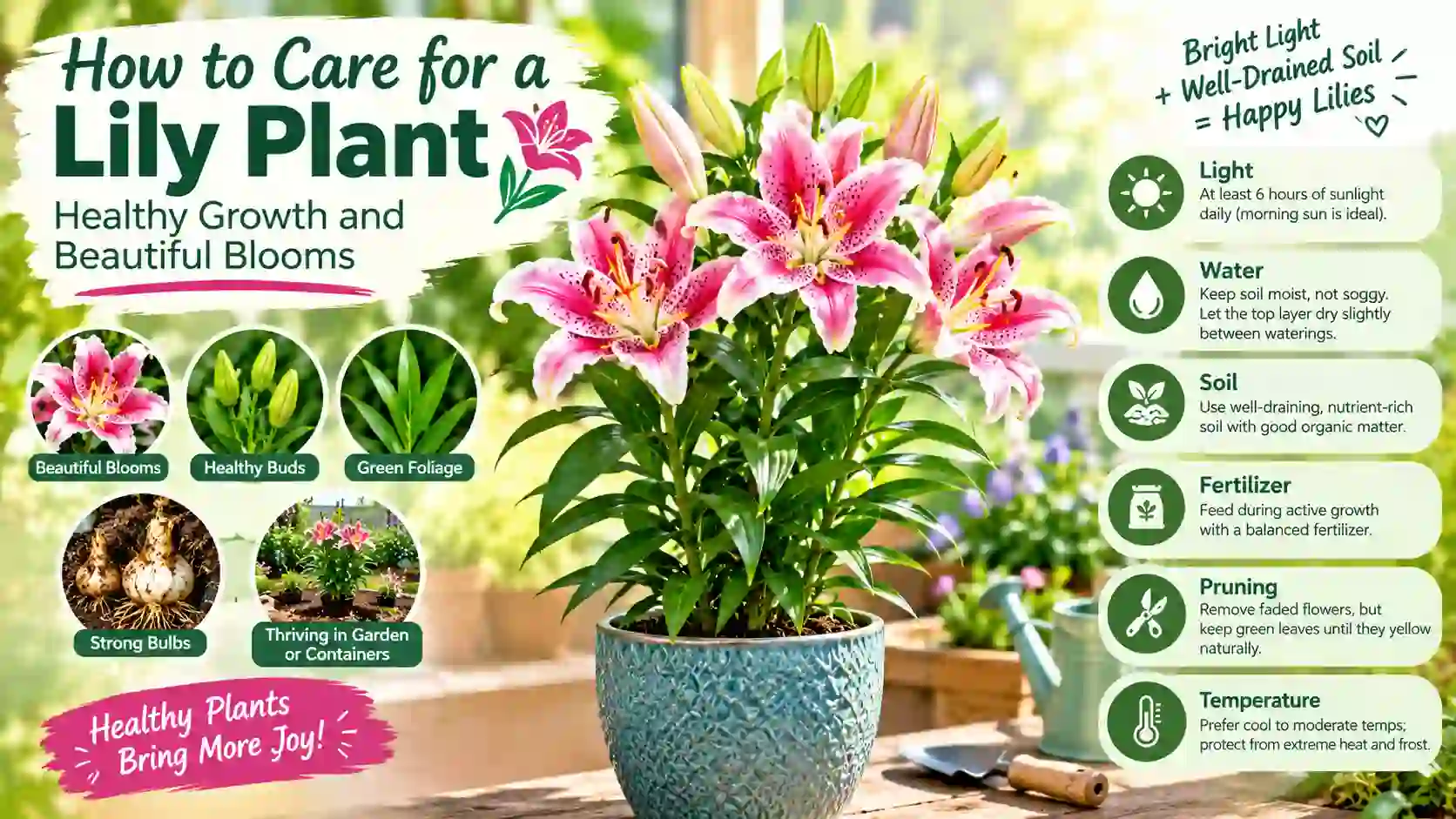
Lilies are popular for their elegant flowers, rich colors, and often delightful fragrance. From classic white Easter lilies to colorful Asiatic and Oriental varieties, these flowering plants can bring beauty to garden beds, patios, and containers.
However, learning how to care for a lily plant involves more than watering it regularly. Too much moisture can damage the bulbs, insufficient sunlight may reduce flowering, and cutting back green leaves too early can weaken the plant for the following season.
The type of lily you grow also matters. True lilies belong to the genus Lilium, while peace lilies (Spathiphyllum) are different plants with different care requirements. Calla lilies and daylilies also have their own growing needs.
This guide focuses mainly on true lilies, including garden and potted varieties. You’ll learn how to choose the right location, water correctly, encourage abundant blooms, troubleshoot common problems, and keep your plant healthy from one growing season to the next.
Quick Answer:
To care for a lily plant, provide bright sunlight, well-draining soil, consistent moisture, and good air circulation. Most true lilies (Lilium species) grow best with about six hours of sunlight daily and soil that stays slightly moist without becoming waterlogged. Plant bulbs at the correct depth, feed during active growth, and remove faded flowers while keeping healthy leaves intact. Adjust care to your lily variety, climate, and whether it grows indoors or outdoors.
1. Identify Your Lily Before You Start


The first step in successful lily care is identifying the plant. Different plants share the name “lily,” but their growing requirements can vary significantly.
| Lily type | Main features | General care |
|---|---|---|
| Asiatic lily | Bright, upright flowers in vivid colors | Sun to partial shade; well-drained soil |
| Oriental lily | Large, often fragrant flowers | Sun to partial shade; moisture-retentive but well-drained soil |
| Easter lily | Large, fragrant, trumpet-shaped white flowers | Bright light, evenly moist soil, and good drainage |
| Peace lily | Glossy leaves and white leaf-like flower structures | Bright indirect light; water when the surface begins to dry |
| Calla lily | Smooth, funnel-shaped flowers | Bright light and moisture needs that vary by growing conditions |
True lilies grow from bulbs, while peace lilies grow from rhizomes and have different watering and light requirements.
Important: This guide focuses on true lilies (Lilium). If your plant has broad, glossy leaves and white spathes rather than tall stems with prominent petals, you may have a peace lily.
2. Choose the Right Light for Healthy Lily Growth

Most true lilies flower best in a sunny location or light partial shade. Their leaves need sufficient light to produce the energy required for flowering and healthy bulb development.
How much sunlight do lilies need?
A location receiving approximately six hours of sunlight is a useful starting point for many garden varieties. However, some lilies tolerate more shade, and hot climates may require protection from intense afternoon sun.
Look for a location where:
- The upper foliage receives plenty of light.
- The roots remain relatively cool.
- Air circulates freely around the stems.
- Tall flower stalks are protected from strong winds.
The Royal Horticultural Society recommends sunny or partially shaded locations, with the roots lightly shaded where possible. Deep shade generally produces weaker growth and fewer flowers.
What if your lily grows indoors?
Place a potted true lily near a bright window or in a sunny, sheltered outdoor location. Indoor light levels can be lower than they appear, especially when a plant sits far from the window.
If the stems stretch toward the light or become weak, move the plant to a brighter position gradually.
Practical tip: If you live somewhere with very hot summers, morning sun and protection from harsh afternoon heat may work better than uninterrupted midday exposure.
Image suggestion: A comparison infographic showing a healthy lily in bright light, a weak lily in deep shade, and a heat-stressed lily in harsh afternoon sun.
3. How to Water a Lily Plant Properly
Watering lilies correctly means keeping the root zone moist without allowing it to remain saturated. Both drought and waterlogged soil can interfere with growth and flowering.
Watering lilies in garden beds
Established lilies planted in suitable garden soil often need little extra water during ordinary weather. Water more deeply during prolonged dry spells, especially when plants are forming buds and flowers.
Follow these steps:
- Check the soil several centimeters below the surface.
- Water slowly if the root zone is becoming dry.
- Direct water toward the soil rather than repeatedly wetting the foliage.
- Let excess moisture drain away naturally.
- Check again during hot, windy weather.
A layer of organic mulch can help retain moisture and keep the roots cooler. Keep the mulch from pressing tightly against the stems.
Watering lilies in pots
Container-grown lilies dry out faster than those in the ground.
- Check the potting mix frequently during active growth.
- Water when the upper few centimeters begin to dry.
- Water thoroughly until excess moisture escapes through the drainage holes.
- Empty any outer container or saucer that collects water.
Do not follow a rigid daily watering schedule. A small pot in a sunny location may need water much sooner than a large pot in cooler weather.
The RHS recommends keeping lilies moist without allowing them to become waterlogged. Container plants need particularly careful monitoring as growth accelerates in spring.
Signs of overwatering and underwatering
| Symptom | Possible cause | What to do |
|---|---|---|
| Yellow leaves and wet soil | Excess moisture or root damage | Check drainage and inspect the roots if decline continues |
| Wilting with dry soil | Underwatering | Water thoroughly and reassess moisture retention |
| Bulb becomes soft or smells unpleasant | Possible bulb rot | Remove affected bulbs and correct drainage |
| Brown leaf edges | Drought, heat, salts, or disease | Check soil, weather exposure, and leaf condition |
| Drooping flowers during extreme heat | Temporary heat stress or moisture shortage | Check the root zone and provide suitable shade if needed |
Expert tip: Wilting does not always mean a plant needs water. If the soil is already wet, adding more water may worsen root damage.
Image suggestion: A watering guide showing the difference between evenly moist soil, dry soil, and waterlogged soil around a lily bulb.
4. The Best Soil for Lily Plants
True lilies need soil that retains enough moisture for steady growth while allowing excess water to drain away.
Heavy clay can remain wet for too long, increasing the risk of bulb rot. Very sandy soil may dry too quickly during hot weather.
Ideal soil conditions
Choose soil that is:
- Well-draining and rich in organic matter.
- Loose enough for roots to develop.
- Moisture-retentive without becoming soggy.
- Appropriate for your lily variety’s preferred soil pH.
Many lilies grow well in slightly acidic to neutral soil, but preferences vary. Oriental lilies generally prefer acidic conditions, while some Asiatic hybrids tolerate or prefer more alkaline soil. Check the requirements of your specific cultivar before making major pH adjustments.
How to improve garden soil
If your soil is heavy, work in suitable organic matter and improve drainage before planting. In persistently wet locations, a raised bed or container may be a better solution than repeatedly amending the same waterlogged spot.
Avoid planting bulbs in depressions where rainwater collects.
Best potting mix for potted lilies
Use a quality, free-draining multipurpose potting mix. If it holds too much water, blend in an appropriate amount of horticultural grit or another drainage-improving material.
Choose a pot with several drainage holes and enough depth for the roots and bulb.
Image suggestion: A soil-preparation infographic comparing healthy, crumbly soil with dense, waterlogged soil around lily bulbs.
5. How to Plant Lily Bulbs Correctly

Correct planting depth helps lily bulbs establish roots and develop strong stems. Planting too shallowly can leave bulbs vulnerable to temperature fluctuations, while planting in poorly drained soil can cause rot.
Step-by-step planting guide
- Choose healthy bulbs. Select firm bulbs without obvious mold, decay, or severe shriveling.
- Select the location. Find a sunny or lightly shaded site with good drainage.
- Prepare the soil. Loosen the soil and incorporate suitable organic matter if needed.
- Position the bulb. Place the basal plate and roots downward, with the growing tip pointing upward.
- Set the planting depth. Follow the requirements of the variety. Many stem-rooting lilies need deeper planting than basal-rooting types.
- Space the bulbs. Leave enough room for mature plants and airflow.
- Backfill and water. Cover the bulbs with soil and water enough to settle the growing medium.
The RHS suggests planting basal-rooting lilies at a depth approximately equal to the bulb’s height and stem-rooting types at roughly two and a half times the bulb’s height. Variety-specific instructions take priority.
When should you plant lily bulbs?
Autumn and spring are common planting periods, depending on your climate, bulb availability, and variety.
Plant bulbs promptly after purchase because lily bulbs can dry out during storage. If you buy a potted flowering lily, keep it in suitable light and moisture conditions while it finishes flowering.
Growing lilies in containers
Choose a deep, stable pot with adequate drainage. Tall varieties may need a heavier container and support to prevent the stems from tipping over.
Avoid placing several large bulbs in a tiny pot. Crowded roots compete for moisture and nutrients, and the foliage may have poor airflow.
Image suggestion: A labeled diagram of lily bulb orientation, planting depth, spacing, and a container with drainage holes.
6. Temperature and Humidity Requirements
Most garden lilies prefer moderate growing conditions, but temperature tolerance varies by species and cultivar.
Cooler root conditions and steady moisture can help lilies grow well, while extreme heat may shorten the flowering period and stress plants.
Caring for lilies in hot climates
In regions with intense summer heat:
- Plant where lilies receive suitable morning sun.
- Use mulch to moderate soil temperature.
- Keep container soil from drying out completely during active growth.
- Avoid leaving pots on heat-reflecting concrete or against hot walls.
- Provide temporary afternoon shade if leaves show heat stress.
Do not assume that every lily needs a cold indoor environment. Many varieties are adapted to outdoor seasonal conditions, and their requirements depend on the cultivar.
Do lilies need high humidity?
Most outdoor lilies do not need special humidity management. Good air circulation is more important than artificially increasing moisture around the leaves.
Avoid tightly enclosing potted lilies or keeping foliage wet for long periods. These conditions can encourage fungal diseases.
Image suggestion: A summer lily-care infographic showing root-zone mulch, morning sunlight, and a sheltered container position.
7. How to Fertilize Lily Plants for Better Blooms
Lilies use nutrients to develop roots, stems, leaves, and flowers. However, adding more fertilizer than necessary will not guarantee more blooms.
Choosing a fertilizer
A balanced garden fertilizer or a suitable flowering-plant fertilizer can support healthy growth. Container-grown lilies may need more regular feeding because nutrients are gradually washed out during watering.
A practical routine is to:
- Prepare garden soil with suitable organic matter before planting.
- Apply a fertilizer appropriate for flowering bulbs as new growth develops, following its label.
- Feed container-grown plants according to the product directions during active growth.
- Avoid applying concentrated fertilizer directly against the bulb or roots.
- Stop or reduce feeding when foliage naturally declines.
The RHS recommends high-potassium liquid fertilizer for lilies grown in containers during the growing season, continuing until the leaves begin to yellow.
Why too much fertilizer can be harmful
Excess fertilizer can cause salt buildup, root injury, and excessive soft growth. Weak stems may also struggle to support large flowers.
If your lily grows lots of leaves but produces few flowers, check light exposure, bulb maturity, planting depth, and variety before increasing fertilizer.
Image suggestion: A simple fertilizer infographic showing healthy lily growth, correct diluted feeding, and fertilizer burn from overapplication.
8. How to Encourage More Lily Flowers

A lily that grows leaves but produces few flowers can be frustrating. Flowering depends on bulb maturity, light, stored energy, moisture, and the plant’s variety.
Five ways to encourage better flowering
1. Provide adequate sunlight. Most lilies need good light to develop strong stems and flowers. Deep shade is a common reason for weak flowering.
2. Maintain steady moisture. Dry soil during active growth can stress the plant, but waterlogged soil damages roots and bulbs.
3. Feed appropriately. Supply nutrients during growth without overfertilizing.
4. Protect the foliage. Green leaves replenish the bulb’s energy after flowering and help support future blooms.
5. Choose the right variety. Some lilies flower earlier, some later, and some produce more flowers per stem than others.
Why does my lily grow leaves but no flowers?
Possible reasons include:
- The bulb is too small or immature.
- The plant receives insufficient light.
- The bulb was damaged by poor drainage.
- The plant’s foliage was cut back too early the previous season.
- The growing conditions are unsuitable for the cultivar.
Correct the underlying issue instead of trying several fertilizers at once. A healthy bulb may need a full growing season to recover.
Should you remove faded lily flowers?
Yes. Remove spent flowers to improve appearance and prevent unnecessary seed production if you do not want to collect seed.
Cut just below the faded flower, but leave the healthy stem and leaves intact.
Image suggestion: A before-and-after illustration showing a flowering lily, a properly deadheaded stem, and foliage left intact for bulb recovery.
9. Pruning and Maintaining Lily Plants
Pruning lilies is straightforward, but timing matters. Removing spent flowers is different from cutting back the entire plant.
What to remove and when
- Faded flowers: Remove them after blooming, cutting below the flower without removing healthy leaves.
- Yellow leaves: Check whether yellowing is seasonal or a symptom of stress before removing them.
- Dead stems: Cut back fully dead stems near soil level after the growing season.
- Damaged foliage: Remove badly damaged or diseased leaves with clean tools when necessary.
Why should you leave green leaves alone?
After flowering, the leaves continue photosynthesis. This process replenishes the bulb’s stored energy, helping the plant grow and flower again in a future season.
Cutting green stems to the ground immediately after flowering can weaken the bulb and reduce subsequent flowering.
Practical tip: If your lily looks untidy after blooming, remove the flower heads and allow the foliage to finish naturally. You can hide fading leaves with nearby plants, provided they do not shade the lily excessively.
10. Growing Lily Plants Indoors and Outdoors
True lilies can grow in containers indoors or outdoors, but each setting presents different challenges.

Indoor lily care
- Place the plant near a bright window.
- Use a pot with drainage holes.
- Check moisture frequently while buds and flowers develop.
- Keep the plant away from hot air vents.
- Remove spent flowers while preserving green foliage.
Best for: People growing purchased flowering lilies in containers.

Outdoor lily care
- Choose a sunny or lightly shaded site.
- Prepare well-drained soil.
- Water during prolonged dry periods.
- Stake tall varieties before strong winds arrive.
- Protect bulbs from prolonged waterlogging.
Best for: Long-term garden displays and returning seasonal blooms.
Can you keep a potted lily after flowering?
Yes. Many potted true lilies can be grown for another season if their bulbs remain healthy.
After flowering, keep watering as needed while the foliage is green. Allow the leaves to die back naturally, then follow the variety’s seasonal requirements.
A commercially forced flowering plant may not rebloom immediately or on the same schedule indoors. Growing it outdoors in suitable conditions may improve its long-term performance.
11. Seasonal Lily Plant Care Calendar
Lily care changes throughout the year. The calendar below applies broadly to many outdoor true lilies in temperate climates; adjust it for your local weather and the variety you grow.
| Season | Main tasks |
|---|---|
| Spring | Watch for new shoots, maintain moisture, apply suitable fertilizer, and protect emerging growth from pests |
| Summer | Support flowering stems, water during dry spells, remove faded flowers, and preserve green leaves |
| Autumn | Plant suitable bulbs, allow foliage to die back, and remove fully dead stems |
| Winter | Avoid waterlogged soil, protect vulnerable containers, and check bulbs for signs of rot |
In warm climates, the planting and flowering seasons may differ from this schedule. Some lilies also require specific winter conditions to flower reliably.
Should lily bulbs be dug up every winter?
Usually not. Many lilies can remain in the ground if the soil drains well and the variety is suited to the local climate.
Consider lifting or relocating bulbs only when drainage, overcrowding, or climate makes it necessary. Handle the bulbs carefully because they can dry out if left exposed for too long.
12. Common Lily Plant Problems and Their Solutions
Most lily problems become easier to manage when you check the plant’s growing conditions before reaching for a treatment.
Yellow leaves
Yellowing can result from natural seasonal decline, overwatering, nutrient problems, or disease.
Solution: Check soil moisture and the pattern of yellowing. Gradual yellowing after flowering may be normal, but widespread yellowing during active growth deserves closer inspection.
Brown leaf tips or patches
Heat, drought, fertilizer salts, and fungal disease can all cause brown foliage.
Solution: Check moisture and fertilizer use. If spots spread or develop unusual markings, remove affected foliage when appropriate and investigate possible disease.
Buds falling before opening
Flower buds may fail because of water stress, extreme temperatures, pest damage, or other growing problems.
Solution: Maintain steady soil moisture, inspect buds for pests, and protect plants from harsh heat and strong winds.
Weak or leaning stems
Lilies growing in inadequate light may stretch, while tall varieties can lean under the weight of their flowers.
Solution: Improve light conditions when possible and provide support before stems become heavily loaded.
Bulb rot
Soft, decaying bulbs often indicate prolonged wetness or disease.
Solution: Improve drainage and remove badly rotted bulbs. Do not replant damaged bulbs in the same wet soil without correcting the underlying problem.
Pests affecting lily plants
Common pests include aphids, slugs, snails, and lily beetles in regions where they occur. Some pests damage foliage, while others attack buds and stems. The RHS also identifies vine weevil larvae as a possible problem for container-grown lilies.
Inspect the undersides of leaves and the growing tips regularly. Remove visible pests by hand where practical, and use a treatment labeled for the identified pest if needed.
Troubleshooting at a glance
| Problem | First thing to check |
|---|---|
| Yellowing leaves | Soil moisture and seasonal timing |
| No flowers | Light, bulb maturity, and foliage health |
| Drooping stems | Water status, sunlight, and need for staking |
| Brown spots | Leaf wetness, heat, pests, and possible disease |
| Soft bulbs | Drainage and signs of rot |
| Buds dropping | Heat, moisture, and pest damage |
Image suggestion: A diagnostic infographic showing lily leaf yellowing, brown spots, drooping stems, failed buds, and bulb rot with a recommended first step for each.
13. How to Propagate Lily Plants
You can propagate true lilies to expand your garden or share plants with other gardeners. The best method depends on the lily species and how quickly you want new plants to develop.
Method 1: Propagation by bulb scales
Many true lilies can grow from individual bulb scales.
- Carefully remove a few healthy outer scales from a mature bulb.
- Place them in a suitable, clean propagation medium according to the species’ requirements.
- Maintain appropriate moisture without allowing the medium to become waterlogged.
- Keep the scales in a suitable environment while small bulblets develop.
- Pot up established bulblets and allow them to grow until they are large enough to flower.
This method requires patience. New plants may need several growing seasons before producing mature flowers.
Method 2: Propagation from bulbils
Some lilies produce small bulbils along their stems or near leaf axils.
- Collect mature bulbils when they are ready to separate.
- Plant them in a suitable potting mix.
- Keep the medium lightly moist while roots and shoots establish.
- Grow them on until they develop into stronger bulbs.
Not all lily varieties produce bulbils.
Method 3: Division of established bulbs
Some lilies form clumps or offsets that can be separated when the plant is dormant or at another suitable stage for that variety.
Separate the bulbs carefully, preserving healthy roots where possible. Replant them promptly at the appropriate depth.
The Royal Horticultural Society recognizes seed, bulbils, and bulb scales as lily propagation methods.
RHS Growing Guide
Image suggestion: A three-panel propagation infographic showing bulb scales, stem bulbils, and mature bulbs being separated and replanted.
14. Are Lily Plants Toxic to Cats and Dogs?
This is one of the most important safety considerations when growing lilies.
True lilies (Lilium) and daylilies (Hemerocallis) can cause life-threatening kidney injury in cats. All parts of these plants, including the flowers, leaves, stems, and pollen, can be dangerous. Even exposure to small amounts may require urgent veterinary attention.
ASPCA
+2
If you have cats, the safest choice is to avoid keeping true lilies and daylilies in your home or garden where cats could access them.
Other plants called lilies have different toxic effects. Peace lilies can irritate the mouth and digestive tract because they contain insoluble calcium oxalates, but they are not the same as true lilies that cause acute kidney injury in cats.
ASPCA
+1
If you suspect your cat has chewed a true lily or contacted its pollen, seek emergency veterinary advice immediately. Do not wait for symptoms to develop.
Frequently Asked Questions
How often should I water a lily plant?
Water when the soil begins to dry near the surface, keeping the root zone evenly moist during active growth. Potted lilies generally need more frequent checks than garden-grown plants. Always avoid waterlogged soil.
Do lilies need full sun or shade?
Most true lilies grow best in full sun or partial shade. Aim for a bright location with good light, but provide some protection from extreme afternoon heat if your climate is very hot.
Can lilies grow indoors?
Yes, many true lilies can grow in containers indoors if they receive enough light and proper drainage. However, some varieties perform better outdoors, and indoor plants may not rebloom reliably without suitable seasonal conditions.
Why are my lily leaves turning yellow?
Yellow leaves can indicate natural seasonal dieback, excessive moisture, drought, nutrient problems, or disease. Check the soil and consider whether flowering has finished before deciding how to respond.
How do I make my lily plant bloom again?
Provide adequate sunlight, maintain steady moisture, feed appropriately during active growth, and preserve healthy foliage after flowering. The bulb needs time to replenish its stored energy before the next flowering cycle.
Should I cut back lilies after flowering?
Remove faded flowers, but keep healthy green stems and leaves. Cut the remaining stems back only after the foliage has naturally yellowed and died.
Can lilies survive winter?
Many garden lilies are winter-hardy, but cold tolerance depends on the variety and local climate. Container-grown bulbs may need extra protection from freezing conditions or prolonged winter rain.
What is the best fertilizer for lilies?
A suitable balanced garden fertilizer or flowering-bulb fertilizer can support growth. Container-grown lilies often benefit from a high-potassium liquid feed during active growth. Always follow the product’s recommended dilution and frequency.
Can lilies grow in pots?
Yes. Choose a sufficiently deep container with drainage holes and quality potting mix. Allow enough space for the bulbs and roots, and provide support for tall varieties when necessary.
How long do lily flowers last?
Individual flowers often last several days, while the overall flowering period can extend longer as additional buds open. Temperature, variety, and growing conditions affect how long the display lasts.
Are peace lilies and true lilies the same plant?
No. True lilies belong to the genus Lilium and grow from bulbs. Peace lilies belong to the genus Spathiphyllum and grow from rhizomes. Their watering, lighting, flowering, and toxicity characteristics differ.
Conclusion
Learning how to care for a lily plant starts with choosing the correct variety and providing the conditions it needs to thrive. Most true lilies reward gardeners with beautiful flowers when they receive sufficient light, consistent moisture, well-draining soil, and appropriate seasonal care.
Remember three essentials: protect the bulb from waterlogged soil, preserve green foliage after flowering, and match care to your lily’s variety and climate. These simple habits help maintain healthy plants and improve the chances of future blooms.
Before changing your watering routine or adding fertilizer, observe the plant carefully. Check its soil, inspect its leaves, and consider its stage of growth. With the right approach, lilies can become a lasting and rewarding part of your garden or container collection.
SEO recommendations
Suggested meta description:
Learn how to care for a lily plant with expert tips on sunlight, watering, soil, fertilizer, pruning, blooming, propagation, and common lily problems.
Suggested featured image: A healthy pink and white lily plant growing in a decorative pot, with bright natural light, lush green foliage, and the title “How to Care for a Lily Plant: Healthy Growth and Beautiful Blooms.”
Suggested internal links:
- How to Grow Lilies from Bulbs
- Best Fertilizers for Flowering Plants
- How to Fix Yellow Leaves on Plants
- How to Improve Soil Drainage
- How to Care for Indoor Flowering Plants
Use these suggestions only where you have relevant published articles on your website.