
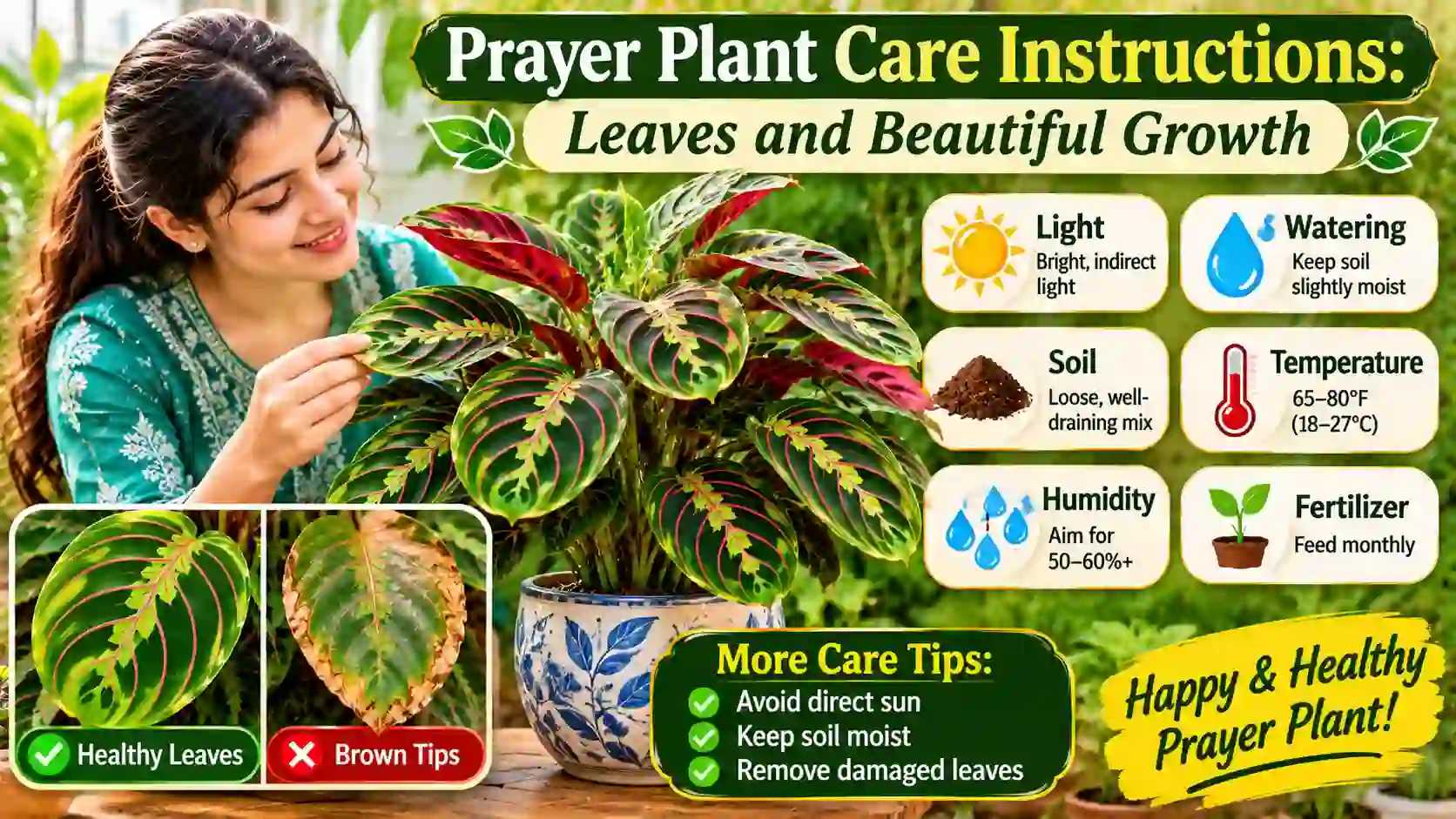
Prayer plants are popular houseplants because of their colorful leaves and fascinating nighttime movement. Their patterned foliage features shades of green, red, pink, and sometimes creamy yellow, depending on the variety.
One of their most interesting characteristics is their daily leaf movement. During the evening, the leaves rise and fold upward, resembling hands joined in prayer. They usually spread out again during the day.
Despite their attractive appearance, prayer plants can be sensitive to unsuitable indoor conditions. Dry air may cause brown leaf edges, direct sunlight can fade their patterns, and incorrect watering can damage their roots.
Following the right prayer plant care instructions helps prevent these problems and supports healthy, attractive foliage.
Whether you are growing your first prayer plant or trying to revive an established one, this guide explains everything you need to know about light, watering, soil, humidity, fertilizing, pruning, propagation, and troubleshooting.
Quick Answer:
Prayer plants (Maranta leuconeura) grow best in bright, indirect light, warm temperatures, and moderately high humidity. Keep the soil consistently moist but never waterlogged. Use a loose, well-draining potting mix, water when the upper layer begins to dry, and feed lightly during active growth. Protect the leaves from direct sunlight, cold drafts, and dry air to maintain their beautiful patterns.
Understand Your Prayer Plant Before Growing It
The prayer plant commonly grown indoors belongs to the species Maranta leuconeura. It is a tropical evergreen perennial native to the forests of Central and South America.
It grows relatively close to the ground and develops spreading stems with beautifully patterned leaves.
Unlike many upright houseplants, prayer plants have a naturally low-growing, spreading habit. This makes them suitable for shelves, plant stands, hanging displays, and decorative containers.
Popular Prayer Plant Varieties
Different varieties offer slightly different leaf patterns and colors.
| Variety | Main Characteristics |
|---|---|
| Red Prayer Plant | Green leaves with red veins and dark markings |
| Lemon Lime | Bright green leaves with lime-colored patterns |
| Maranta kerchoveana | Green leaves with dark oval markings |
| Maranta erythroneura | Green foliage with prominent red veins |
Why Do Prayer Plant Leaves Move?
Prayer plants display a natural movement called nyctinasty.
Their leaves change position in response to the daily light cycle. Small structures at the base of the leaves regulate this movement by changing their water pressure.
Leaves often rise at night and spread during daylight.
This movement is normal and does not mean your plant is wilting.
Image Suggestion: A botanical infographic showing a prayer plant during daytime with open leaves and at nighttime with folded, upright leaves.
Provide the Right Amount of Sunlight
Light plays an important role in maintaining the colorful patterns of prayer plant leaves.
In their natural habitat, prayer plants grow beneath taller tropical vegetation. They receive filtered sunlight rather than intense direct exposure.
For this reason, bright, indirect light is usually the best choice indoors.
Best Lighting Conditions
- Bright indirect light: Supports healthy foliage and attractive leaf patterns.
- Filtered sunlight: Provides gentle illumination without excessive heat.
- Partial shade: Suitable when the location still receives enough ambient light.
- Artificial grow lights: Helpful in rooms with limited natural sunlight.
An east-facing window is often a good location because it provides gentle morning light.
A bright north-facing window may also work, depending on the room’s light levels.
If you use a south- or west-facing window, place the plant farther from the glass or use a sheer curtain.
What Happens When a Prayer Plant Gets Too Much Sun?
Excessive direct sunlight can cause:
- Faded leaf patterns.
- Brown or crispy patches.
- Bleached-looking foliage.
- Dry leaf edges.
- Increased moisture loss.
Move the plant away from intense sunlight if these symptoms appear.
Can Prayer Plants Grow in Low Light?
They can tolerate lower light conditions, but prolonged insufficient light may reduce growth and weaken leaf coloration.
If your plant produces smaller leaves or develops unusually long, weak stems, consider moving it closer to a bright window.
Expert Tip: Do not judge light only by how bright a room looks to your eyes. Human eyes adapt to indoor lighting, while plants still need sufficient usable light for photosynthesis.
Image Suggestion: A sunlight infographic comparing bright indirect light, filtered morning sunlight, and harmful direct afternoon sunlight for prayer plants.
Water Your Prayer Plant the Right Way
Watering is one of the most important parts of successful prayer plant care.
Prayer plants prefer evenly moist soil, but their roots need oxygen. Soil that remains saturated for extended periods can cause root damage and rot.
The goal is to maintain moisture without creating waterlogged conditions.
How Often Should You Water a Prayer Plant?
There is no universal watering schedule.
Frequency depends on:
- Room temperature.
- Humidity.
- Pot size.
- Soil composition.
- Available sunlight.
- Plant growth rate.
As a general starting point, check the upper half-inch to inch of soil regularly. Water when that layer begins to feel dry.
During warm growing periods, the plant may need water more frequently. In cooler months, watering usually becomes less frequent.
Step-by-Step Watering Instructions
- Check the soil with your finger.
- If the upper layer feels slightly dry, prepare to water.
- Pour water evenly over the soil.
- Continue until excess water drains from the bottom.
- Empty the saucer after watering.
- Check the soil again before the next watering.
Avoid leaving the container sitting in standing water.
Should You Use Tap Water?
Prayer plants can be sensitive to mineral buildup and chemicals in some water supplies.
If your plant develops brown leaf tips despite suitable watering and humidity, consider trying:
- Filtered water.
- Rainwater collected safely.
- Low-mineral water suitable for houseplants.
Not every prayer plant reacts badly to tap water. Water quality varies by location.
Signs of Underwatering
- Drooping leaves.
- Curling foliage.
- Dry soil.
- Crispy leaf edges.
- Slower growth.
Signs of Overwatering
- Yellowing leaves.
- Persistently wet soil.
- Soft stems.
- Unpleasant soil odor.
- Dark or mushy roots.
Expert Tip: Curling leaves can indicate both underwatering and other environmental problems. Always check the soil before adding more water.
Image Suggestion: A watering guide showing soil moisture testing, proper watering, drainage, and comparisons between underwatered and overwatered prayer plants.
Choose the Best Soil and Pot for Healthy Roots
Healthy roots are essential for maintaining attractive leaves and consistent growth.
Prayer plants need soil that retains some moisture while allowing excess water to escape.
A dense, compacted potting mix can hold too much water and restrict oxygen around the roots.
What Is the Best Soil for Prayer Plants?
Use a loose, organic-rich potting mixture with good drainage.
A practical homemade mixture can contain:
- 40% quality indoor potting mix.
- 30% coco coir.
- 20% perlite or pumice.
- 10% fine orchid bark.
These proportions are a starting point. Adjust them according to how quickly your growing medium dries.
Why Does Soil Structure Matter?
Moisture retention: Coco coir helps keep the roots from drying too quickly.
Aeration: Perlite creates air spaces within the soil.
Organic matter: Quality potting mix provides a suitable growing environment.
Drainage: Orchid bark and other coarse ingredients help prevent compaction.
Avoid heavy garden soil in indoor containers.
Choosing the Right Pot
Select a container with drainage holes.
The pot should comfortably accommodate the root system without leaving excessive amounts of unused soil around it.
A pot that is too large may remain wet for longer than necessary.
Terracotta can dry faster than plastic, so monitor moisture more frequently when using porous containers.
Image Suggestion: A soil preparation infographic showing potting mix, coco coir, perlite, orchid bark, drainage holes, and healthy prayer plant roots.
Maintain Proper Humidity and Temperature
Prayer plants naturally grow in tropical environments where humidity is generally higher than in many indoor homes.
Dry indoor air can cause their leaf edges to become brown and crispy.
Providing suitable humidity helps maintain healthy foliage and reduces moisture stress.
Ideal Temperature
A comfortable growing range is approximately 65–80°F (18–27°C).
Protect your prayer plant from:
- Cold drafts.
- Sudden temperature changes.
- Air-conditioning vents.
- Direct heat from radiators.
- Temperatures approaching freezing.
Avoid placing the plant beside frequently opened exterior doors during cold weather.
How to Increase Humidity
If indoor air is dry, try these methods:
Use a Humidifier
A room humidifier is one of the most effective ways to increase humidity consistently.
Group Tropical Plants
Placing plants together can create a slightly more humid local environment.
Choose a Suitable Location
Bathrooms with bright natural light may provide favorable humidity.
Use a Pebble Tray Carefully
A shallow tray containing pebbles and water can provide a small local humidity benefit. Keep the pot above the waterline.
Is Misting Necessary?
No. Regular misting is not essential for healthy prayer plant growth.
It provides only a temporary increase in surface moisture and may encourage leaf problems when foliage stays wet without adequate airflow.
Expert Tip: If several leaves develop brown edges, examine humidity, water quality, soil moisture, and fertilizer buildup together. One symptom can have several causes.
Image Suggestion: An indoor prayer plant humidity infographic featuring a humidifier, thermometer, tropical plants, and a bright growing location.
Fertilize Your Prayer Plant for Healthy Foliage

Prayer plants benefit from moderate feeding during active growth.
Fertilizer supplies nutrients needed for leaf development, root function, and general plant health.
However, too much fertilizer can cause salt buildup and damage sensitive roots.
Which Fertilizer Is Best?
Choose a balanced liquid houseplant fertilizer.
A complete fertilizer containing nitrogen, phosphorus, and potassium is suitable when applied according to the manufacturer’s instructions.
You do not need an unusually strong fertilizer to maintain beautiful leaves.
When Should You Fertilize?
- Spring: Begin feeding when active growth resumes.
- Summer: Continue moderate feeding.
- Autumn: Reduce fertilizer as growth slows.
- Winter: Stop or greatly reduce feeding if growth becomes limited.
For many indoor plants, feeding approximately once a month during active growth is a reasonable starting point. Follow the product label and adjust to your plant’s response.
Signs of Fertilizer Problems
| Symptom | Possible Explanation |
|---|---|
| Brown leaf tips | Fertilizer salt buildup |
| Yellow leaves | Nutrient or watering problems |
| Weak growth | Insufficient light or nutrients |
| White crust on soil | Mineral or fertilizer accumulation |
If salt buildup is suspected, flush the potting mix with suitable water and allow excess water to drain completely.
Avoid fertilizing a plant with damaged or rotting roots.
Image Suggestion: A fertilizing infographic showing a healthy prayer plant, balanced liquid fertilizer, and seasonal feeding instructions.
How to Grow a Prayer Plant Indoors Successfully
Prayer plants are particularly popular as indoor houseplants because their colorful foliage adds interest to living rooms, bedrooms, and offices.
However, their environment needs to remain reasonably stable.
Choose the Right Indoor Location
Find a location with bright, indirect light and good air circulation.
Keep the plant away from heating equipment, cold windows, and strong air-conditioning currents.
Select a Suitable Container
Choose a pot with drainage holes and enough room for the roots.
Shallow or moderately deep containers can work, provided they accommodate the root system and allow proper drainage.
Indoor Maintenance Routine
- Check soil moisture regularly.
- Rotate the pot occasionally for balanced light exposure.
- Remove dust with a soft, damp cloth.
- Inspect leaves for pests.
- Remove dead or damaged foliage.
- Monitor humidity during dry weather.
Prayer plants generally prefer stable conditions rather than frequent relocation.
Can Prayer Plants Grow in Bathrooms?
Yes, if the bathroom receives sufficient indirect light.
Bathrooms often have higher humidity, which can benefit tropical plants.
However, a dark bathroom without suitable supplemental lighting is not an ideal permanent location.
Image Suggestion: A realistic indoor gardening scene featuring a healthy prayer plant in a decorative pot near a bright window.
Prune and Clean Your Prayer Plant Properly
Pruning helps maintain an attractive shape and removes damaged foliage.
Prayer plants do not require frequent heavy pruning.
Most maintenance involves removing individual leaves that have become completely yellow, brown, or damaged.
When Should You Prune?
Remove leaves when they are:
- Completely dry.
- Severely damaged.
- Yellowing due to natural aging.
- Affected by serious disease.
- Damaged beyond recovery.
Step-by-Step Pruning
- Clean your pruning scissors.
- Identify dead or severely damaged leaves.
- Follow the leaf stem toward its base.
- Cut the leaf stem close to the soil without damaging nearby growth.
- Remove fallen plant material.
- Check the remaining foliage for pests.
Avoid cutting healthy leaves simply because their edges have small cosmetic imperfections.
How to Keep Prayer Plant Leaves Clean
Large prayer plant leaves collect dust over time.
Dust can interfere with the amount of light reaching the leaf surface.
Gently wipe each leaf using a soft, damp cloth.
Support the leaf underneath to avoid tearing its delicate structure.
Avoid using leaf-shine products.
Image Suggestion: A pruning and cleaning infographic showing damaged leaf removal, clean scissors, and healthy glossy prayer plant foliage.
How to Propagate a Prayer Plant
Prayer plants are commonly propagated through stem cuttings or division, depending on the plant’s growth habit and size.
Stem cuttings are a convenient option for many home growers.
Method 1: Propagation Through Stem Cuttings
Step 1: Select a Healthy Stem
Choose a healthy stem with several leaves.
Step 2: Find a Node
Look for the small joint where a leaf attaches to the stem. Roots develop from suitable nodes.
Step 3: Make a Clean Cut
Use clean scissors to cut below a healthy node.
Step 4: Place the Cutting in Water
Submerge the node while keeping most leaves above the water.
Step 5: Provide Suitable Conditions
Place the cutting in a warm location with bright, indirect light.
Change the water regularly to keep it fresh.
Step 6: Transfer to Soil
Once healthy roots have developed, transfer the cutting into a small pot containing a suitable, moist potting mix.
Keep the soil evenly moist while the new plant establishes itself.
Method 2: Propagation Through Division
Large, established prayer plants can be divided during repotting.
- Carefully remove the plant from its pot.
- Examine the root system.
- Identify naturally separate rooted sections.
- Gently separate suitable sections.
- Place each division in an appropriately sized pot.
- Water lightly and provide warm, indirect light.
Avoid damaging the roots unnecessarily.
Which Propagation Method Is Better?
| Method | Best For | Main Advantage |
|---|---|---|
| Stem cuttings | Smaller plants | Simple and space-efficient |
| Division | Mature plants | Creates established sections |
Expert Tip: Make sure every cutting includes a viable node. A leaf without a suitable stem node will not develop into a new plant.
Image Suggestion: A step-by-step prayer plant propagation infographic showing stem nodes, water propagation, root development, and planting in soil.
Common Prayer Plant Problems and How to Fix Them
Prayer plants often communicate stress through changes in their leaves.
Learning to recognize these symptoms helps you identify problems before the entire plant becomes unhealthy.
Why Are Prayer Plant Leaves Turning Brown?
Brown leaf edges are among the most common complaints.
Possible causes include:
- Low humidity.
- Inconsistent watering.
- Excess fertilizer.
- Mineral buildup.
- Excessive direct sunlight.
Solution: Check soil moisture, review your water quality, and evaluate humidity. Trim completely dead sections with clean scissors.
Why Are Prayer Plant Leaves Turning Yellow?
Yellow leaves can develop because of:
- Overwatering.
- Poor drainage.
- Natural aging.
- Insufficient light.
- Root damage.
Solution: Check the soil and inspect the roots if yellowing continues.
If the soil remains wet and smells unpleasant, investigate possible root rot.
Why Are Prayer Plant Leaves Curling?
Curling leaves can indicate moisture stress or unsuitable environmental conditions.
Common causes include:
- Dry soil.
- Low humidity.
- Excessive heat.
- Root damage.
- Pest activity.
Solution: Check the soil before watering. If it is already moist, examine humidity and inspect the leaves for pests.
Why Is My Prayer Plant Drooping?
Drooping may result from underwatering, overwatering, damaged roots, or sudden temperature changes.
Solution: Identify the underlying problem before changing your watering schedule.
If the soil is dry, water thoroughly. If it is saturated, improve drainage and examine the roots.
Why Is My Prayer Plant Not Moving at Night?
Prayer plant movement can become less noticeable when the plant experiences unsuitable conditions.
Possible factors include insufficient light, stress, or natural variation in movement.
Not every leaf folds at exactly the same time or to the same degree.
Solution: Maintain a stable day-night lighting routine and suitable growing conditions.
Troubleshooting Table
| Problem | Possible Cause | Recommended Action |
|---|---|---|
| Brown leaf edges | Dry air or mineral buildup | Review humidity and water quality |
| Yellow leaves | Overwatering or aging | Check soil and drainage |
| Curling leaves | Moisture or heat stress | Check soil and temperature |
| Drooping foliage | Water stress or root damage | Inspect moisture and roots |
| Faded leaf patterns | Excessive sunlight | Move to filtered light |
| Slow growth | Low light or cool conditions | Improve warmth and light |
| Fine webbing | Spider mites | Inspect and treat foliage |
| Soft roots | Root rot | Remove damaged roots and repot |
Image Suggestion: A prayer plant troubleshooting infographic comparing healthy foliage with brown edges, yellow leaves, curling leaves, and drooping stems.
Pests and Diseases That Affect Prayer Plants
Prayer plants can occasionally attract pests, particularly when grown indoors in dry conditions.
Regular inspections help prevent small infestations from becoming serious.
Spider Mites
Spider mites are tiny pests that feed on leaf tissue.
Symptoms include:
- Fine webbing.
- Small pale spots.
- Dull or dusty-looking foliage.
- Gradual leaf damage.
Treatment: Isolate the affected plant, rinse the foliage carefully, and use an appropriately labeled insecticidal soap if necessary.
Mealybugs
Mealybugs appear as small, white, cotton-like clusters around leaf joints and stems.
They feed on plant sap and weaken new growth.
Treatment: Remove visible pests carefully and treat the plant with a suitable labeled product when necessary.
Fungus Gnats
Fungus gnats are small flying insects commonly associated with consistently wet potting soil.
Their presence may indicate excessive moisture.
Treatment: Allow the upper soil layer to dry appropriately between waterings, improve drainage, and use suitable sticky traps for adult insects.
Root Rot
Root rot is often associated with poor drainage and prolonged waterlogging.
Symptoms include yellowing foliage, soft stems, and dark, mushy roots.
Treatment:
- Remove the plant from its container.
- Inspect the roots.
- Cut away rotten sections using clean tools.
- Remove contaminated soil.
- Repot healthy roots in fresh, well-draining soil.
- Adjust watering practices.
Image Suggestion: A pest identification infographic showing spider mites, mealybugs, fungus gnats, and healthy versus rotten prayer plant roots.
Seasonal Prayer Plant Care Instructions

Prayer plants respond to changes in temperature, light, and indoor humidity.
Adjusting your routine throughout the year helps prevent unnecessary stress.
Spring Care
Spring is a good time to encourage new growth.
- Check whether the plant needs repotting.
- Refresh the growing medium when necessary.
- Begin regular feeding as growth resumes.
- Remove damaged leaves.
- Increase watering gradually as conditions warm.
Summer Care
Summer often brings active growth.
- Protect the plant from direct afternoon sunlight.
- Check soil moisture more frequently.
- Maintain suitable humidity.
- Feed according to the plant’s growth.
- Inspect leaves for pests.
Autumn Care
Growth may slow as daylight decreases.
- Reduce fertilizer applications.
- Adjust watering according to soil moisture.
- Remove dead leaves.
- Check for cold drafts near windows.
Winter Care
Winter can be challenging in homes with dry indoor air or cold windows.
- Reduce watering as growth slows.
- Maintain suitable room temperatures.
- Keep the plant away from cold drafts.
- Avoid placing it beside heating vents.
- Provide adequate indirect light.
- Monitor humidity.
Do not continue summer watering and feeding routines automatically when the plant is growing more slowly.
Image Suggestion: A four-season prayer plant care infographic showing spring growth, summer watering, autumn maintenance, and winter humidity protection.
Common Mistakes to Avoid When Caring for Prayer Plants
Even experienced plant owners can make mistakes when growing prayer plants.
Understanding these problems helps maintain healthier foliage.
1. Placing the Plant in Direct Sunlight
Intense sunlight can damage delicate leaves and fade their patterns. Choose filtered or indirect light.
2. Watering Without Checking the Soil
A fixed watering schedule can lead to overwatering. Check soil moisture before adding water.
3. Using Heavy Garden Soil
Dense soil can restrict drainage and oxygen. Choose a suitable indoor potting mixture.
4. Ignoring Humidity
Very dry indoor air can contribute to brown leaf edges. Improve humidity when necessary.
5. Applying Too Much Fertilizer
Excess fertilizer can cause salt buildup and root stress. Feed moderately during active growth.
6. Using Pots Without Drainage Holes
Standing water increases the risk of root rot. Always select a container that allows excess water to escape.
7. Ignoring the Undersides of Leaves
Pests can hide beneath the foliage. Inspect both sides of leaves regularly.
8. Repotting Too Frequently
Unnecessary repotting can disturb the roots and slow recovery. Repot when the plant becomes crowded or the growing medium deteriorates.
How to Encourage Fuller Growth and Beautiful Prayer Plant Leaves
A healthy prayer plant should produce attractive foliage with clear patterns, strong leaf stems, and steady new growth.
The key is to maintain consistent conditions rather than constantly changing its environment.
Provide Consistent Indirect Light
Adequate light supports healthy leaf development and attractive coloration.
Maintain Balanced Moisture
Avoid allowing the root ball to become completely dry for extended periods. Also prevent prolonged saturation.
Maintain Suitable Humidity
Moderately high humidity helps reduce moisture stress and supports healthy foliage.
Prune Damaged Leaves
Removing completely damaged leaves keeps the plant neat and allows you to monitor new growth.
Feed Moderately
Balanced nutrition supports healthy leaf production during active growing periods.
Rotate the Pot Occasionally
Turn the container slightly every few weeks to encourage balanced growth.
Expert Tip: If your prayer plant is producing new leaves but older leaves occasionally develop small brown tips, do not immediately change everything. Identify whether the problem is limited to older foliage or spreading to new growth before adjusting your care routine.
Frequently Asked Questions About Prayer Plant Care Instructions
Are Prayer Plants Easy to Care For?
Prayer plants are moderately easy to grow when their basic tropical requirements are met. They need indirect light, consistent moisture, suitable humidity, and warm temperatures.
How Often Should I Water a Prayer Plant?
Water when the upper half-inch to inch of soil begins to dry. Check moisture regularly because watering frequency depends on temperature, humidity, pot size, and soil composition.
Do Prayer Plants Need Direct Sunlight?
No. Bright, indirect light is generally best. Strong direct sunlight can scorch the leaves and fade their attractive patterns.
Why Do Prayer Plant Leaves Fold at Night?
Prayer plants display nyctinasty, a natural movement in which leaves change position in response to the daily light cycle. Their leaves commonly rise at night and spread during daylight.
Why Are My Prayer Plant Leaves Turning Brown at the Tips?
Brown tips may result from low humidity, inconsistent watering, fertilizer buildup, or mineral-rich water. Check the growing environment before treating the symptom.
Can Prayer Plants Grow in Water?
Prayer plant stem cuttings can develop roots in water when they include a suitable node. However, mature plants are generally grown in an appropriate potting mixture.
What Is the Best Soil for Prayer Plants?
A loose, moisture-retentive but well-draining indoor potting mixture works well. A combination of potting mix, coco coir, perlite, and fine orchid bark is a useful starting point.
Should I Mist My Prayer Plant?
Misting is not necessary. It provides only temporary surface moisture. A humidifier is generally more effective for maintaining consistent humidity.
How Much Humidity Does a Prayer Plant Need?
Prayer plants generally appreciate moderately high humidity, around 50–60% or higher when practical. They may tolerate lower humidity, but dry air can contribute to brown leaf edges.
When Should I Repot a Prayer Plant?
Repot when roots become crowded, emerge from drainage holes, or the soil structure deteriorates. Spring is often a convenient time because active growth is beginning.
How Do I Make My Prayer Plant Fuller?
Provide bright indirect light, suitable moisture, balanced fertilizer, and adequate space. Remove dead foliage and allow healthy stems to produce new growth.
Are Prayer Plants Safe for Cats and Dogs?
Maranta leuconeura is generally listed as non-toxic to cats and dogs by the ASPCA. However, eating large amounts of any plant material can still cause digestive upset.
Conclusion:
Successful prayer plant care depends on maintaining the right balance of light, moisture, humidity, and temperature.
Provide bright indirect light, use a loose and well-draining potting mix, and water when the upper soil begins to dry. Maintain suitable humidity, feed moderately during active growth, and remove damaged leaves when necessary.
Pay attention to early warning signs such as brown tips, yellow foliage, curling leaves, and drooping stems. These symptoms often reveal problems with the growing environment before serious damage develops.
Most importantly, avoid making several care changes at once. Check the soil, lighting, and humidity first, then make gradual adjustments.
With consistent care, your prayer plant can reward you with beautifully patterned foliage and its fascinating daily leaf movements throughout the year.