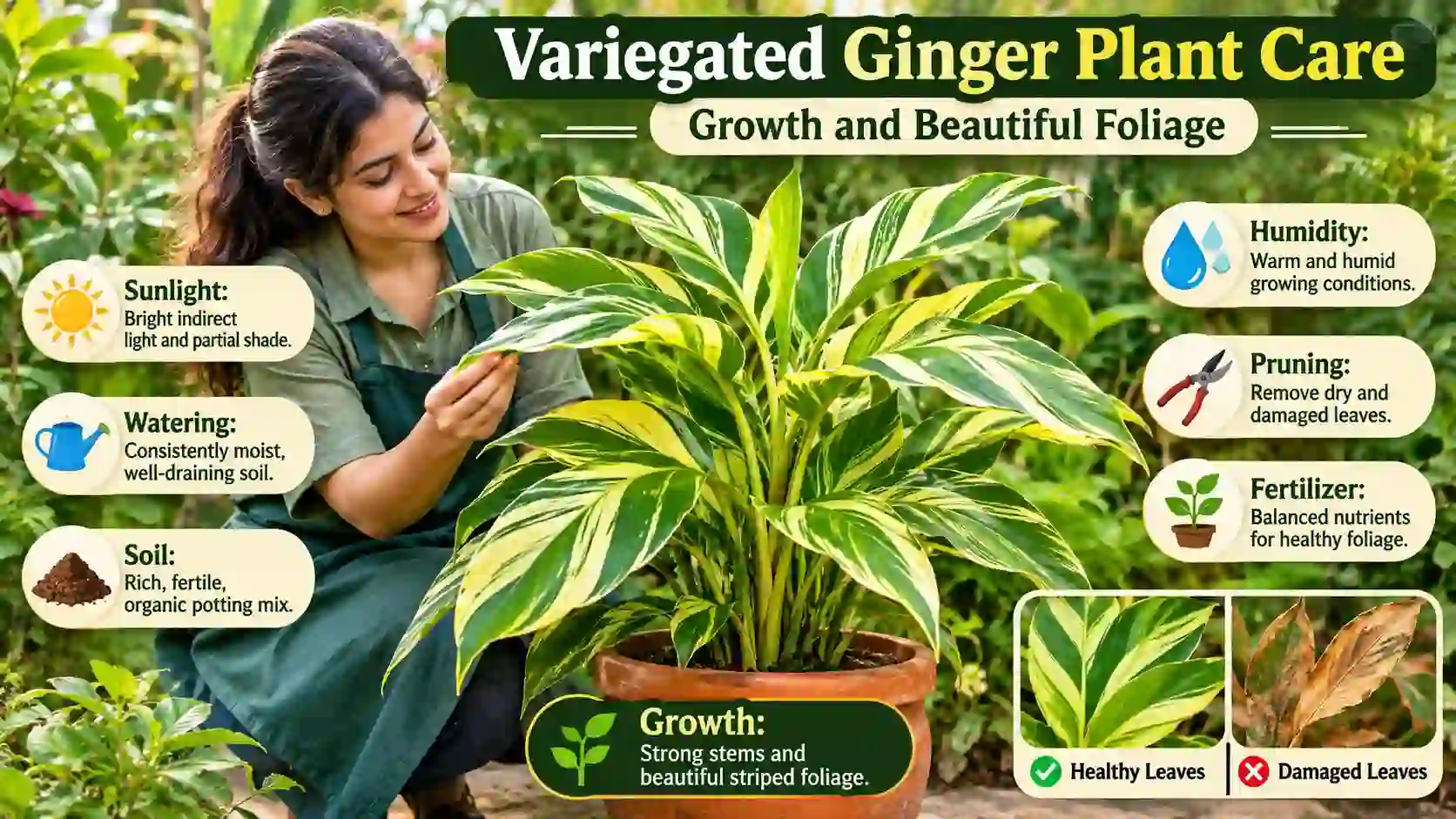
Variegated ginger is a beautiful tropical plant known for its large green leaves decorated with creamy yellow or golden stripes. Its bold foliage adds a refreshing tropical appearance to gardens, patios, and indoor spaces.
However, attractive foliage does not always mean the plant is growing under ideal conditions. Brown leaf edges, yellowing foliage, slow growth, and drooping stems can indicate problems with watering, sunlight, temperature, or soil drainage.
Understanding proper variegated ginger plant care helps you prevent these problems before they become serious.
The plant commonly sold as variegated shell ginger is Alpinia zerumbet ‘Variegata’. It belongs to the ginger family, Zingiberaceae, and grows from thick underground rhizomes.
With suitable conditions, it develops upright leafy stems and can produce beautiful hanging clusters of fragrant, shell-shaped flowers.
Whether you grow it in a garden bed, a patio container, or indoors, this guide explains how to maintain healthy roots, attractive foliage, and steady growth throughout the year.
Quick Answer:
Variegated ginger (Alpinia zerumbet ‘Variegata’) grows best in bright, indirect light or partial shade, fertile soil, and consistent moisture. Water when the top layer of soil begins to dry, but avoid waterlogged roots. Maintain warm temperatures, provide good humidity, and feed regularly during active growth. Prune damaged leaves and divide crowded rhizomes to keep the plant healthy and full.
Understanding the Variegated Ginger Plant
Before choosing a location or watering schedule, understand how this plant naturally grows.
Variegated shell ginger is a tropical and subtropical herbaceous perennial. It develops underground rhizomes that produce new leafy shoots.
Its long, broad leaves feature irregular green and creamy yellow stripes. The amount of yellow variegation can differ between individual leaves.
Mature plants can reach approximately 4–7 feet in favorable conditions, although size depends on the cultivar, climate, and growing environment.
Key Plant Characteristics
| Feature | Description |
|---|---|
| Botanical name | Alpinia zerumbet ‘Variegata’ |
| Common name | Variegated shell ginger |
| Plant family | Zingiberaceae |
| Plant type | Tropical perennial |
| Foliage | Green and creamy yellow |
| Growth habit | Upright, clumping |
| Light | Bright indirect light to partial shade |
| Water | Consistently moist soil |
| Soil | Fertile and well-draining |
| Propagation | Rhizome division |
| Mature height | Approximately 4–7 feet |
One important detail is that variegated ginger is not the same plant as culinary ginger (Zingiber officinale). They belong to the same family but have different growing habits and uses.
Image Suggestion: A realistic botanical identification infographic showing a mature variegated shell ginger plant, striped leaves, underground rhizomes, and its botanical name.
Choose the Right Location and Sunlight
Sunlight has a major influence on leaf color, plant size, and overall appearance.
Variegated ginger prefers bright light with some protection from intense afternoon sunlight. It can tolerate different light conditions, but filtered light generally produces attractive foliage in hot climates.
Best Lighting Conditions
- Morning sunlight: Gentle morning sun supports healthy growth.
- Filtered sunlight: A location beneath a tree or shade structure provides balanced exposure.
- Bright indirect light: Ideal for indoor plants near a bright window.
- Partial shade: Helps prevent leaf scorching during hot weather.
Avoid placing the plant under intense afternoon sunlight for extended periods, especially during summer.
Can Variegated Ginger Grow in Full Sun?
Yes, established plants can tolerate considerable sunlight when properly acclimated and supplied with sufficient moisture.
However, intense sunlight combined with dry soil can scorch the leaves. This often appears as brown patches, crispy edges, or faded yellow sections.
If your plant currently grows in deep shade, gradually introduce more sunlight rather than moving it directly into full sun.
Expert Tip: If the yellow sections develop dry brown patches while the green sections remain relatively healthy, check for excessive direct sunlight and insufficient moisture.
Image Suggestion: A sunlight comparison infographic showing variegated ginger growing in morning sun, partial shade, and excessive afternoon sunlight.
Watering Variegated Ginger Correctly
Watering is one of the most important parts of variegated ginger plant care.
This plant prefers consistently moist soil during active growth. However, moisture-loving does not mean waterlogged.
Excess water can reduce oxygen around the roots and encourage rhizome rot.
How Often Should You Water Variegated Ginger?
Watering frequency depends on temperature, humidity, soil type, pot size, and sunlight.
Use these general guidelines:
| Growing Conditions | Watering Guidance |
|---|---|
| Hot summer weather | Check soil frequently and water when the surface begins drying |
| Mild spring weather | Water when the upper soil starts drying |
| Cool winter weather | Reduce watering as growth slows |
| Indoor conditions | Check soil before watering |
| Newly planted ginger | Keep soil evenly moist while roots establish |
Never follow a fixed watering calendar without checking the soil.
Step-by-Step Watering Method
- Check the upper 1–2 inches of soil with your finger.
- If the soil feels dry, prepare to water.
- Pour water slowly around the root zone.
- Continue until excess water drains through the drainage holes.
- Empty the saucer so the roots do not sit in standing water.
For garden-grown plants, water deeply around the root zone instead of frequently wetting the leaves.
Signs of Underwatering
- Drooping leaves.
- Dry or crispy leaf margins.
- Soil pulling away from the container.
- Slower leaf development.
- Temporary wilting during hot afternoons.
Signs of Overwatering
- Yellowing leaves.
- Soft or weakened stems.
- Soil that remains wet for several days.
- Unpleasant smells from the root zone.
- Soft, dark, or mushy rhizomes.
Expert Tip: Always check the soil before adding water. A drooping plant does not automatically need more water. Root problems can produce similar symptoms.
Image Suggestion: A step-by-step watering infographic showing soil inspection, thorough watering, drainage, and the difference between healthy and overwatered variegated ginger.
Select the Best Soil for Healthy Root Growth
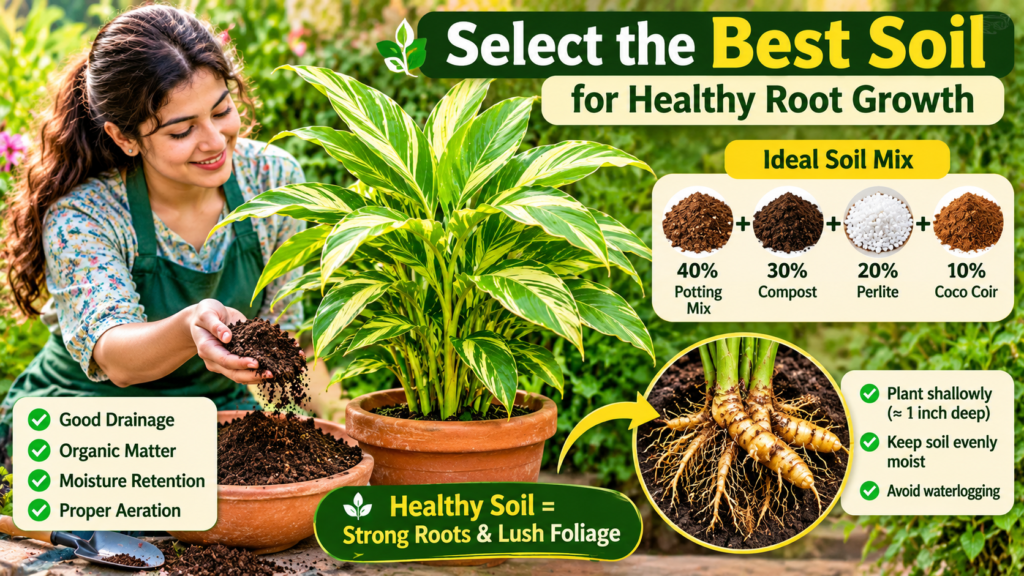
Healthy soil allows variegated ginger to develop strong rhizomes and produce new shoots.
The ideal growing medium holds enough moisture for tropical growth while allowing excess water to drain.
What Type of Soil Does Variegated Ginger Need?
Choose a fertile, organic-rich growing medium with good drainage.
A suitable container mixture can include:
- 40% quality potting mix.
- 30% compost or well-rotted organic matter.
- 20% perlite or pumice.
- 10% coco coir or another moisture-retaining ingredient.
These proportions are a practical starting point, not a strict requirement. Adjust the mixture if it stays too wet or dries too quickly.
Important Soil Characteristics
Good drainage: Prevents water from collecting around the rhizomes.
Organic matter: Improves soil structure and supports steady growth.
Moisture retention: Helps prevent the roots from drying out too quickly.
Aeration: Allows oxygen to reach developing roots.
Avoid heavy garden soil in containers because it can become compacted and restrict drainage.
How to Improve Existing Garden Soil
If your garden soil is heavy or clay-based:
- Loosen the planting area.
- Add mature compost.
- Improve drainage where necessary.
- Avoid planting in locations where water collects after rain.
Do not bury the rhizomes excessively deep. Plant them shallowly, approximately 1 inch below the soil surface when establishing plants from rhizomes.
Image Suggestion: A soil preparation infographic showing potting mix, compost, perlite, drainage holes, and healthy ginger rhizomes.
Maintain the Right Temperature and Humidity
Variegated ginger grows best in warm, humid environments.
Cold temperatures can damage leaves and slow growth. Prolonged freezing conditions can kill aboveground growth and damage the underground rhizomes.
Ideal Temperature
A comfortable growing range is approximately 65–85°F (18–29°C).
Protect the plant from:
- Cold winter winds.
- Sudden temperature changes.
- Frost and freezing temperatures.
- Cold air from air-conditioning vents.
- Extremely hot, dry conditions.
The plant is generally grown outdoors year-round in warm climates. In colder regions, container growing makes it easier to protect the plant.
How to Increase Humidity
If you grow variegated ginger indoors:
- Place it near other tropical plants.
- Use a room humidifier when indoor air is dry.
- Keep it away from heating and cooling vents.
- Provide good air circulation.
Avoid keeping the foliage constantly wet in poorly ventilated conditions.
Important: Brown leaf edges can result from dry air, underwatering, excessive sunlight, or cold exposure. Check the growing conditions before assuming humidity is the only problem.
Image Suggestion: A tropical indoor growing environment featuring variegated ginger with temperature and humidity care indicators.
Fertilize Variegated Ginger for Strong Growth
Variegated ginger benefits from regular feeding during active growth.
Nutrients support the development of new leaves, healthy roots, and vigorous shoots.
However, excessive fertilizer can damage roots and create salt buildup in containers.
Which Fertilizer Is Best?
Use a balanced, complete fertilizer suitable for ornamental foliage plants.
A balanced fertilizer such as 10-10-10 can be used according to its label instructions.
You can also use a suitable slow-release fertilizer for container or garden plants.
When Should You Fertilize?
- Spring: Begin feeding when new shoots appear.
- Summer: Continue feeding during active growth.
- Autumn: Reduce feeding as growth slows.
- Winter: Stop or greatly reduce feeding when the plant is dormant or growing slowly.
For container-grown plants, monthly feeding during active growth is a reasonable starting point if using an appropriate liquid fertilizer. Follow the product label.
Signs of Fertilizer Problems
| Symptom | Possible Cause |
|---|---|
| Brown leaf tips | Excess fertilizer salts |
| Weak growth | Insufficient nutrients or poor roots |
| Yellow leaves | Nutrient deficiency or watering problems |
| White crust on soil | Fertilizer salt accumulation |
Expert Tip: Never fertilize a severely dehydrated plant. Water it appropriately first and allow it to recover.
Image Suggestion: A fertilizing infographic showing a healthy variegated ginger plant, balanced fertilizer, and seasonal feeding guidance.
Growing Variegated Ginger Indoors
Variegated ginger can grow indoors when you provide enough light, space, humidity, and moisture.
However, its large leaves and upright growth make it better suited to spacious indoor environments than small shelves or narrow windowsills.
Choose a Suitable Indoor Location
Place the plant near a bright window where it receives filtered light.
An east-facing window is often a good starting point. A bright south- or west-facing window may also work with protection from harsh direct sunlight.
If natural light is insufficient, use a suitable grow light.
Select the Right Container
Choose a container with:
- Adequate drainage holes.
- Enough depth for rhizome development.
- Space for new shoots.
- A stable base to support the tall foliage.
Avoid oversized pots. Excess soil around a small root system can remain wet for too long.
Indoor Care Tips
- Rotate the container occasionally for balanced growth.
- Check soil moisture regularly.
- Wipe dust from the broad leaves using a damp, soft cloth.
- Maintain suitable humidity.
- Remove dead or damaged foliage.
- Inspect leaf undersides for pests.
Indoor plants may grow more slowly than outdoor plants because light intensity is often lower.
Image Suggestion: A realistic indoor gardening scene showing a healthy variegated ginger plant in a decorative pot beside a bright window.
How to Grow Variegated Ginger Outdoors
Outdoor growing allows variegated ginger to develop into a fuller, more impressive clump.
In warm climates, it can be grown directly in garden beds or large patio containers.
Choose the Right Planting Spot
Select a location with:
- Morning sunlight.
- Partial afternoon shade.
- Fertile, moist soil.
- Good drainage.
- Protection from strong winds.
Large leaves can tear in exposed, windy locations.
Planting Steps
- Select a healthy nursery plant or viable rhizome.
- Prepare a planting hole slightly wider than the root ball.
- Improve the soil with mature compost if necessary.
- Position the plant at approximately its original soil level.
- Backfill gently and water thoroughly.
- Apply a thin layer of organic mulch around the root zone.
Keep mulch away from the base of the stems to reduce excess moisture around the crown.
Growing in Hot Climates
In places with intense summer heat, such as many parts of South Asia, afternoon shade is particularly helpful.
Check soil moisture more frequently during hot, dry periods.
A layer of organic mulch can reduce evaporation and help maintain more consistent soil moisture.
Image Suggestion: A tropical garden featuring mature variegated ginger plants in a partially shaded outdoor landscape.
How to Prune and Maintain Variegated Ginger
Pruning helps maintain an attractive appearance and encourages better airflow around the plant.
Unlike some flowering shrubs, variegated ginger does not need frequent heavy pruning.
Its leaves naturally age and eventually turn yellow or brown.
When Should You Prune?
Remove foliage when it becomes:
- Completely yellow or brown.
- Dry and damaged.
- Broken by wind.
- Diseased or heavily infested.
Proper Pruning Method
- Clean your pruning shears.
- Identify damaged or dead stems.
- Cut unwanted stems close to the soil surface.
- Avoid damaging nearby healthy shoots.
- Remove dead plant material from the container or garden.
Do not remove healthy green leaves simply because they have some yellow variegation. The yellow areas are a natural part of the cultivar’s appearance.
Should You Cut Back the Entire Plant?
Only remove all aboveground stems when they are dead, severely damaged, or when seasonal conditions require cutting back.
In suitable warm climates, healthy stems can remain throughout the year.
Image Suggestion: A pruning guide showing clean removal of damaged ginger leaves and a comparison of healthy and dead foliage.
How to Propagate Variegated Ginger
The most reliable way to propagate variegated shell ginger is through rhizome division.
Rhizomes are thick underground stems that produce roots and new shoots.
Division creates new plants while preserving the characteristics of the parent cultivar.
Best Time to Propagate
Divide established plants during active growth, preferably in warm spring weather.
Avoid dividing plants during cold weather or when they are already stressed.
Step-by-Step Rhizome Division
Step 1: Remove the Plant
Carefully lift the plant from its container or loosen the soil around an established garden clump.
Step 2: Examine the Rhizomes
Look for firm, healthy rhizomes with visible growing points or shoots.
Avoid sections that are soft, rotten, or badly damaged.
Step 3: Separate the Sections
Use a clean, sharp knife or pruning tool to separate suitable rhizome sections.
Each division should have at least one healthy growing point and enough rhizome tissue to support new growth.
Step 4: Prepare the New Containers
Fill suitable containers with a fertile, well-draining potting mixture.
Step 5: Plant the Divisions
Position each section shallowly, with the growing point facing upward.
Cover it with approximately 1 inch of growing medium.
Step 6: Water and Provide Warmth
Water gently and keep the soil lightly moist.
Place the new divisions in a warm location with bright, filtered light.
How Long Does Propagation Take?
The time varies with temperature, rhizome condition, and growing environment.
Healthy divisions may produce new shoots over the following weeks when conditions are favorable.
Do not repeatedly dig up the rhizomes to check for progress.
Image Suggestion: A six-step propagation infographic showing a mature ginger plant being lifted, rhizomes divided, and new plants established in separate pots.
Common Variegated Ginger Plant Problems and Their Solutions
Even relatively easy-care plants can develop problems when growing conditions become unsuitable.
The best approach is to identify the underlying cause instead of treating every symptom with additional water or fertilizer.
Why Are Variegated Ginger Leaves Turning Brown?
Brown leaves can result from several environmental problems.
Common causes include:
- Excessive direct sunlight.
- Dry soil.
- Low humidity.
- Cold temperatures.
- Fertilizer salt buildup.
Solution: Examine the damaged areas and check the soil. Adjust sunlight, watering, and humidity according to the plant’s actual needs.
Brown, crispy edges often suggest moisture stress or environmental damage. Soft brown areas may indicate more serious tissue damage.
Why Are Variegated Ginger Leaves Turning Yellow?
Yellow leaves are not always a sign of disease.
Older leaves naturally turn yellow as the plant replaces them.
However, widespread yellowing can indicate:
- Overwatering.
- Poor drainage.
- Root or rhizome rot.
- Nutrient deficiencies.
- Insufficient light.
Solution: Check the soil moisture and inspect the roots if the plant continues declining.
Do not immediately add fertilizer to a plant with yellow leaves. If damaged roots are responsible, additional fertilizer will not solve the problem.
Why Is My Variegated Ginger Not Growing?
Slow growth can occur when the plant receives insufficient warmth, light, or nutrients.
It can also happen when a recently divided plant is establishing new roots.
Solution:
- Provide suitable bright light.
- Maintain warm conditions.
- Keep the soil evenly moist.
- Feed during active growth.
- Check whether the container has become overcrowded.
Allow recently propagated plants time to establish themselves.
Why Are the Leaves Curling?
Leaf curling is commonly associated with environmental stress.
Possible causes include:
- Underwatering.
- Excessive heat.
- Low humidity.
- Spider mites.
- Root damage.
Solution: Check soil moisture and inspect the undersides of leaves. Look for fine webbing, tiny moving insects, or stippled foliage.
Why Is My Ginger Plant Drooping?
Drooping can result from dry soil, damaged roots, or sudden environmental changes.
Solution: Check soil moisture first. If the soil is dry, water thoroughly. If it is wet and the stems remain weak, inspect the root system for rot.
Troubleshooting Table
| Plant Problem | Likely Cause | Recommended Fix |
|---|---|---|
| Brown leaf edges | Dryness or excess sun | Improve moisture and light conditions |
| Yellow leaves | Overwatering or aging | Check drainage and remove old leaves |
| Drooping stems | Water stress or root damage | Check soil and roots |
| Slow growth | Low light or cool temperatures | Provide warmth and brighter light |
| Curling leaves | Heat, dryness, or pests | Check humidity and foliage |
| Soft rhizomes | Root-zone rot | Remove rotten tissue and improve drainage |
| Pale new growth | Light or nutrient issues | Review growing conditions |
Image Suggestion: A variegated ginger troubleshooting infographic comparing healthy leaves with brown, yellow, curled, and drooping leaves.
Pests and Diseases That Affect Variegated Ginger
Variegated ginger generally has relatively few serious pest problems, but indoor and outdoor plants can occasionally experience infestations.
Common Pests
Spider Mites
Spider mites are tiny pests that feed on leaf tissue. They may cause small pale spots, dull foliage, and fine webbing.
Solution:
- Isolate affected indoor plants.
- Rinse leaves carefully.
- Inspect leaf undersides.
- Use an appropriate insecticidal soap according to its label if necessary.
Aphids
Aphids feed on tender growth and may produce sticky honeydew.
Solution:
- Remove small infestations with a gentle water spray.
- Prune heavily affected growth if necessary.
- Monitor new shoots.
Scale Insects
Scale insects appear as small bumps attached to stems or leaves.
Solution:
- Inspect stems and leaf joints.
- Remove small infestations carefully.
- Use an appropriate labeled treatment for persistent problems.
Common Disease Problems
The most important disease-related concern is rhizome or root rot associated with persistently wet conditions and poor drainage.
Symptoms include soft underground tissue, unpleasant odors, yellowing foliage, and declining shoots.
Remove rotting material using clean tools. Repot or replant healthy sections in fresh, well-draining soil.
Avoid reusing contaminated potting medium.
Image Suggestion: A plant-health infographic identifying spider mites, aphids, scale insects, and rhizome rot on variegated ginger.
Seasonal Variegated Ginger Plant Care

Variegated ginger responds to seasonal changes in temperature, sunlight, and moisture.
Adjusting your care routine throughout the year helps maintain steady growth.
Spring Care
Spring is an excellent time to encourage new growth.
- Remove damaged winter foliage.
- Refresh the top layer of soil.
- Begin regular feeding when growth resumes.
- Divide crowded plants if necessary.
- Increase watering gradually as temperatures rise.
Summer Care
Summer usually brings the strongest growth.
- Check soil moisture frequently.
- Protect plants from extreme afternoon sunlight.
- Maintain adequate humidity.
- Feed during active growth.
- Inspect leaves for pests.
Autumn Care
Growth may gradually slow as temperatures decrease.
- Reduce fertilizer applications.
- Remove dead foliage.
- Check drainage before rainy periods.
- Prepare outdoor plants for colder conditions where necessary.
Winter Care
Winter care depends on your local climate.
In frost-free regions, the plant may continue growing, although more slowly.
In colder regions:
- Move potted plants indoors before frost.
- Reduce watering as growth slows.
- Provide bright light.
- Avoid cold drafts.
- Protect garden rhizomes with suitable winter mulch where appropriate.
Image Suggestion: A four-season care infographic showing spring growth, summer foliage, autumn maintenance, and winter protection.
Common Mistakes to Avoid
Small mistakes can gradually affect the appearance and health of variegated ginger.
Avoid these common problems:
1. Overwatering the Plant
Consistently saturated soil can damage roots and rhizomes. Check moisture before watering.
2. Growing It in Deep Shade
Insufficient light can weaken growth. Provide bright filtered light or partial shade.
3. Exposing It to Harsh Afternoon Sun
Intense sunlight can scorch the broad leaves. Use afternoon protection in hot climates.
4. Using Heavy, Compacted Soil
Poor drainage increases the risk of underground rot. Improve soil structure with suitable organic matter and aerating ingredients.
5. Applying Too Much Fertilizer
Excess nutrients can damage roots and cause brown leaf tips. Follow fertilizer instructions.
6. Choosing a Very Small Pot
Crowded rhizomes restrict growth and may cause the plant to become root-bound. Divide or repot when necessary.
7. Ignoring Early Pest Symptoms
Small pest populations are easier to control than established infestations. Inspect leaf undersides regularly.
8. Expecting Immediate Flowering
Variegated shell ginger is often grown primarily for its foliage. Flowering can depend on maturity, growing conditions, and the survival of older stems.
How to Encourage Fuller Growth and Beautiful Variegated Leaves
A healthy variegated ginger plant should produce strong upright shoots and broad leaves with attractive green and creamy yellow patterns.
To maintain this appearance, focus on consistent growing conditions.
Encourage New Shoots
Healthy rhizomes naturally produce new shoots when temperatures and moisture levels are favorable.
Avoid disturbing the root zone unnecessarily.
Maintain Balanced Light
Provide enough light to support strong growth without exposing the leaves to excessive heat.
Feed During Active Growth
Regular but moderate feeding supports healthy foliage production.
Divide Overcrowded Clumps
When rhizomes become tightly packed, division can create additional growing space.
Remove Damaged Leaves
Pruning old or damaged foliage keeps the plant looking neat and improves airflow.
Maintain Consistent Soil Moisture
Avoid repeated cycles of severe drying followed by excessive watering.
Expert Tip: The best way to maintain attractive variegation is to grow the plant under stable conditions. Fertilizer cannot compensate for poor lighting, damaged roots, or environmental stress.
Image Suggestion: A before-and-after infographic showing a sparse variegated ginger plant and a mature, full plant with lush green and golden foliage.
Frequently Asked Questions About Variegated Ginger Plant Care
Is Variegated Ginger Easy to Grow?
Yes. Variegated shell ginger is relatively easy to grow when provided with warmth, suitable light, fertile soil, and consistent moisture. The biggest challenges are poor drainage, excessive sunlight, and cold exposure.
Does Variegated Ginger Need Full Sun or Shade?
It generally performs well in partial shade or bright filtered light. Morning sunlight is beneficial, while protection from intense afternoon sun helps prevent leaf scorching.
Can Variegated Ginger Grow Indoors?
Yes. It can grow indoors near a bright window with adequate humidity, warmth, and drainage. Because it develops large leaves and spreads through rhizomes, it needs sufficient space.
How Often Should I Water Variegated Ginger?
Water when the upper 1–2 inches of soil begin to dry. Watering frequency changes with temperature, container size, humidity, and growing conditions.
Why Are the Leaves on My Variegated Ginger Turning Brown?
Brown leaves can result from excessive sunlight, dry soil, low humidity, cold exposure, or fertilizer buildup. Examine the leaf damage and growing conditions to identify the actual cause.
Does Variegated Ginger Come Back Every Year?
Yes, in suitable warm climates it grows as a perennial. In colder areas, foliage may die back during winter, while healthy underground rhizomes may survive and produce new shoots in spring.
Can Variegated Ginger Grow in Pots?
Yes. Use a sturdy container with drainage holes and a fertile, well-draining growing mixture. Repot or divide the plant when its rhizomes become overcrowded.
How Do You Propagate Variegated Ginger?
The easiest method is rhizome division. Separate healthy sections with growing points and plant them in warm, moist, well-draining soil.
Does Variegated Ginger Produce Flowers?
Yes. Mature plants can produce drooping clusters of fragrant, shell-shaped flowers. Flowering is influenced by plant maturity, growing conditions, and the survival of older stems.
Why Is My Variegated Ginger Losing Its Yellow Stripes?
Changes in leaf color can occur because of lighting, plant stress, or natural variation between leaves. Check whether the plant is receiving adequate bright light and whether new leaves retain the cultivar’s characteristic variegation.
Is Variegated Ginger Cold Hardy?
It is a tender tropical perennial rather than a plant suited to prolonged freezing conditions. Its hardiness varies with location, soil conditions, and winter protection. Protect container plants from frost.
How Tall Does Variegated Ginger Grow?
Many plants reach approximately 4–7 feet in favorable growing conditions. Their mature size depends on cultivar, climate, available space, and overall care.
Conclusion
Successful variegated ginger plant care starts with the right balance of sunlight, moisture, warmth, and soil drainage.
Give your plant bright filtered light or partial shade, maintain consistently moist but well-draining soil, and provide regular nutrients during active growth.
Watch for early signs of stress, including brown leaf edges, yellowing foliage, and drooping stems. Adjust your care routine according to the season rather than following a fixed watering or fertilizing schedule.
With proper maintenance, variegated shell ginger can become a beautiful focal point in your indoor plant collection, patio, or tropical garden.
Most importantly, remember that healthy roots create healthy foliage. Focus on the growing conditions first, and your plant will have a much better chance of producing strong shoots and beautiful striped leaves year after year.