Eucalyptus plants are known for their aromatic foliage, attractive silvery leaves, and fast growth. Many species can become impressive landscape trees, while smaller forms can be grown in containers with regular pruning.
The biggest challenge is that eucalyptus does not behave like many common indoor tropical plants.
It generally prefers strong light, excellent drainage, fresh airflow, and soil that does not stay saturated. Problems often begin when gardeners treat it like a humidity-loving houseplant and water too frequently.
Understanding where your eucalyptus naturally wants to grow makes care much easier.
Whether you are growing eucalyptus in a garden, patio container, balcony, or bright indoor space, the goal is the same: provide enough light, keep the roots oxygenated, control moisture, and manage its naturally vigorous growth.
Quick Answer:
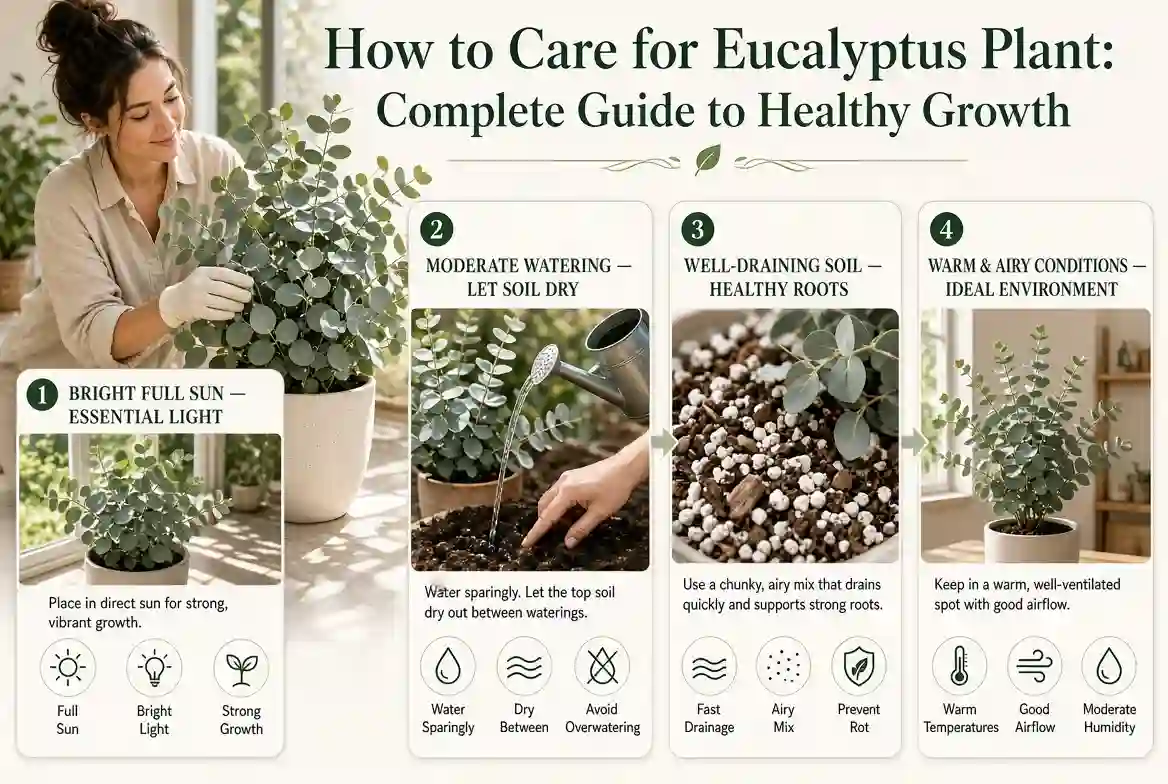
To care for a eucalyptus plant, provide 6–8 hours of strong sunlight, fast-draining soil, and a container with excellent drainage. Water deeply when the upper soil has dried, but avoid keeping the roots constantly wet. Eucalyptus prefers good airflow, moderate feeding, and regular pruning when grown in containers. Choose a species suited to your climate, because eucalyptus plants can become very large outdoors.
What Is a Eucalyptus Plant?
Eucalyptus is a large genus of woody plants in the myrtle family, Myrtaceae. Most species are native to Australia, although eucalyptus is now cultivated in many parts of the world.
There are hundreds of eucalyptus species, and they can differ significantly in:
- Mature size
- Cold tolerance
- Leaf shape
- Growth rate
- Bark appearance
- Water requirements
- Juvenile and mature foliage
- Suitability for containers
Some popular species include Eucalyptus gunnii, Eucalyptus cinerea, Eucalyptus globulus, and Eucalyptus polyanthemos.
This species difference matters.
A eucalyptus sold as a compact patio plant may still have the potential to become a large tree if it is planted outdoors and allowed to grow naturally.
Expert tip: Before planting eucalyptus in the ground, identify the species and check its expected mature size. Choosing a tree based only on its attractive juvenile foliage can create serious space problems later.
Image Suggestion: A botanical comparison showing several eucalyptus species with different leaf shapes, growth habits, and mature sizes.
How Much Sunlight Does Eucalyptus Need?
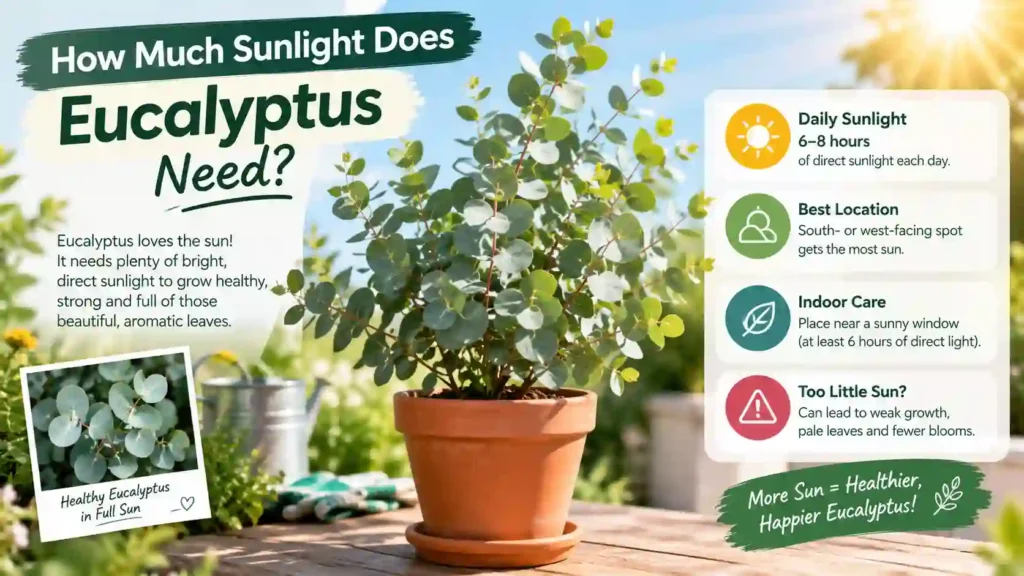
Eucalyptus generally performs best in full sun.
Aim for approximately 6–8 hours of direct sunlight per day when growing a suitable species outdoors or in a bright container location.
Strong light supports:
- Dense foliage
- Strong stems
- Compact growth
- Better leaf color
- Healthy photosynthesis
- More vigorous new growth
Where Should You Place a Potted Eucalyptus?
Choose the brightest location available.
Good options include:
- A sunny patio
- South-facing outdoor position
- Bright balcony
- Sunny porch
- Greenhouse with good ventilation
- Very bright indoor window for suitable small plants
A eucalyptus kept indoors may struggle if the window provides only weak ambient light.
Can Eucalyptus Grow in Low Light?
It may survive temporarily, but low light usually produces weaker growth.
You may notice:
- Longer spaces between leaves
- Thin or weak stems
- Reduced foliage density
- Pale growth
- Slow development
- Increased susceptibility to stress
If your eucalyptus has been growing indoors in low light, move it gradually toward stronger light rather than suddenly placing it in intense afternoon sun.
Expert tip: Sudden changes from shade to intense sunlight can scorch foliage. Acclimate the plant gradually over several days or weeks.
Image Suggestion: Three-panel infographic showing eucalyptus in full sun, partial light, and low light with clear differences in growth quality.
How to Water a Eucalyptus Plant Correctly
Watering is one of the most important parts of eucalyptus plant care.
The correct approach is not to water according to a fixed calendar.
Instead, check the soil and the plant’s growing conditions.
A Reliable Watering Method
- Check the upper portion of the soil.
- If it has dried noticeably, prepare to water.
- Water thoroughly until excess moisture flows from the drainage holes.
- Empty standing water from a saucer.
- Allow the soil to dry again before watering.
The exact interval depends on temperature, sunlight, pot size, soil composition, and whether the plant is indoors or outdoors.
A eucalyptus growing in hot outdoor conditions may need water much more often than one growing indoors during winter.
Should Eucalyptus Soil Stay Moist?
No.
Eucalyptus generally dislikes constantly saturated soil.
Its roots need oxygen as well as water. When soil remains wet for too long, oxygen availability decreases and root problems become more likely.
This is why excellent drainage is more important than simply watering less.
A poorly draining pot can remain wet even when you water infrequently.
Signs Your Eucalyptus Needs Water
Possible signs include:
- Drooping foliage
- Dry, lightweight potting mix
- Curling or stressed leaves
- Premature leaf drop
- Reduced new growth
However, drooping does not automatically mean the plant needs water.
Root damage from excessive moisture can also cause drooping.
Always inspect the soil before watering.
Image Suggestion: Step-by-step watering infographic showing “Check Soil → Water Thoroughly → Drain Completely → Allow Soil to Dry → Repeat.”
How to Tell If You Are Overwatering Eucalyptus
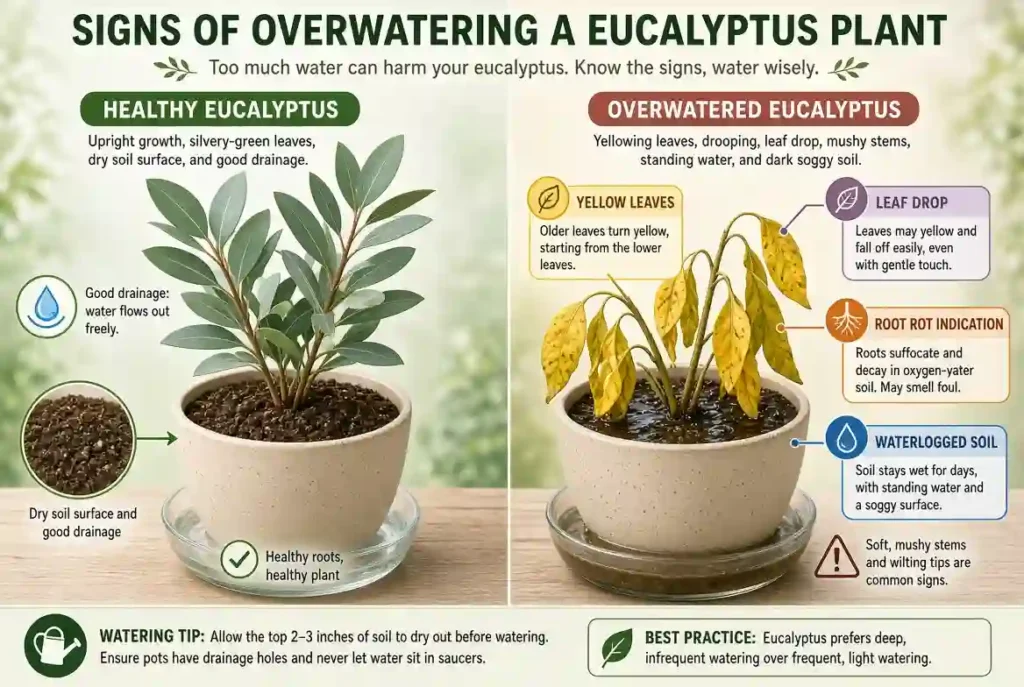
Overwatering is one of the easiest mistakes to make with a container-grown eucalyptus.
A common misconception is that yellow or drooping leaves always mean the plant is thirsty.
They do not.
When roots remain wet for extended periods, they can become stressed and eventually damaged. The plant may then show symptoms that look similar to drought stress.
Possible Signs of Excessive Moisture
- Yellowing leaves
- Persistent drooping
- Slow growth
- Leaf drop
- Soft or unhealthy roots
- Soil that remains wet for many days
- Musty-smelling soil
- Poor overall vigor
The best response is not simply to stop watering for an arbitrary number of days.
Instead, investigate why the soil stays wet.
Check:
- Drainage holes
- Pot size
- Soil texture
- Saucer water
- Light levels
- Air circulation
- Watering frequency
If the plant receives weak light and sits in a large container filled with dense soil, it may stay wet much longer than expected.
What Soil Is Best for Eucalyptus?
Eucalyptus needs a growing medium that drains efficiently.
A suitable container mix should hold enough moisture to support the plant without becoming dense and waterlogged.
Look for characteristics such as:
- Good drainage
- Air-filled pore space
- Moderate moisture retention
- Structural stability
- Good root aeration
Avoid heavy soil that becomes compacted and remains saturated.
Why Drainage Matters
Roots need both water and oxygen.
A highly compacted mix can restrict airflow around the roots. This creates a poor environment even if the plant receives adequate fertilizer and sunlight.
For container growing, an airy, well-draining potting mix is usually a better choice than ordinary heavy garden soil.
Expert tip: Do not try to solve a drainage problem by simply watering less. Improve the growing medium and container drainage first.
Choosing the Right Pot for Eucalyptus
Container selection affects eucalyptus health more than many beginners realize.
Choose a pot with functional drainage holes at the bottom.
The container should be large enough for the root system but not dramatically oversized.
Why Oversized Pots Can Cause Problems
A very large pot holds a larger volume of soil.
If the plant is small, its roots may not use that moisture quickly. The result can be prolonged wetness around the root zone.
A practical approach is to increase pot size gradually as the root system develops.
Good Container Features
Look for:
- Several drainage holes
- A stable base
- Adequate depth for roots
- Strong material that can support a growing plant
- A size appropriate for the current root system
Outdoor containers may also need additional stability because eucalyptus can become top-heavy as it grows.
How to Repot a Eucalyptus Plant
Repot eucalyptus when the root system has substantially filled its current container or when the soil has deteriorated.
Repotting Steps
- Choose a container with good drainage.
- Prepare fresh, well-draining growing medium.
- Remove the plant carefully.
- Inspect the roots.
- Remove obviously damaged or unhealthy material when appropriate.
- Position the plant at approximately the same depth.
- Fill around the root ball with fresh mix.
- Water thoroughly.
- Place the plant in suitable light.
- Monitor it closely while it establishes.
Avoid repeatedly disturbing healthy roots simply because a particular calendar date has arrived.
Root disturbance is best based on the plant’s actual condition.
Image Suggestion: Educational repotting diagram showing a eucalyptus root ball, healthy roots, fresh airy soil, drainage holes, and correct planting depth.
How to Fertilize Eucalyptus
Eucalyptus can grow quickly when conditions are favorable, but more fertilizer does not automatically mean better growth.
Container-grown plants eventually use nutrients from their limited soil volume. Outdoor plants growing in suitable soil may require less frequent feeding.
During active growth, a balanced fertilizer used according to its label can support healthy development.
Good Fertilizer Practices
- Fertilize actively growing plants rather than severely stressed ones.
- Follow the product’s recommended dilution and frequency.
- Avoid excessive fertilizer.
- Water appropriately before or according to the fertilizer instructions.
- Reduce or stop routine feeding during periods of slow growth.
Too much fertilizer can cause salt accumulation and root stress.
Expert tip: If your eucalyptus has poor light, correcting the light problem is usually more important than increasing fertilizer.
Does Eucalyptus Need High Humidity?
Eucalyptus does not generally require the very high humidity levels preferred by many tropical houseplants.
Good airflow is particularly important.
Indoor eucalyptus can struggle when placed in a stagnant, poorly ventilated corner.
Better Indoor Conditions
Aim for:
- Bright light
- Good ventilation
- Moderate humidity
- Stable temperatures
- Proper watering
- Adequate spacing around foliage
Avoid placing the plant directly against a constantly damp wall or in an enclosed area with little air movement.
You usually do not need to mist eucalyptus leaves repeatedly.
Misting does little to solve an underlying humidity or watering problem and can leave foliage wet without addressing the root cause.
What Temperature Does Eucalyptus Need?
Temperature requirements depend heavily on the species.
Some eucalyptus species tolerate cool conditions and moderate frost, while others are considerably more sensitive.
Before leaving a potted eucalyptus outdoors through winter, identify the species and understand its cold tolerance.
Protect Container Plants From Extreme Cold
Container roots are more exposed to temperature changes than roots planted in the ground.
During unusually cold weather:
- Move sensitive plants to a protected location.
- Keep them away from freezing winds.
- Avoid placing them directly against a hot indoor heater.
- Reduce watering when growth slows.
- Maintain adequate light indoors.
Do not assume every eucalyptus species has the same winter tolerance.
How to Prune a Eucalyptus Plant
Pruning is especially useful when eucalyptus is grown in containers.
Without management, many eucalyptus species naturally want to become much larger plants.
Pruning can help maintain:
- A manageable size
- Attractive branching
- Dense juvenile foliage
- Better shape
- Container-friendly growth
Pruning for Shape
Remove:
- Dead branches
- Damaged growth
- Weak or poorly positioned stems
- Excessively crossing branches
Make clean cuts with sharp, sanitized tools.
Avoid removing large amounts of healthy growth at once unless you have a specific reason and understand how the species responds.
Pruning for Juvenile Foliage
Some eucalyptus varieties are grown specifically for their rounded juvenile leaves.
Regular pruning can encourage new juvenile shoots in certain species, but the response depends on the plant and pruning method.
If juvenile foliage is important to you, research the specific eucalyptus species before using aggressive pruning.
Image Suggestion: Before-and-after pruning infographic showing a tall, sparse eucalyptus transformed into a compact, branching container plant.
How to Encourage Bushier Eucalyptus Growth

If your eucalyptus is tall and sparse, examine the growing conditions before pruning.
The most common issues are:
- Insufficient light
- Excessive shade
- Inconsistent watering
- Poor nutrition
- Lack of pruning
- Natural growth habit
A Better Strategy
First improve light and overall plant health.
Then prune strategically to encourage branching.
Do not expect pruning alone to turn a naturally tall eucalyptus into a compact plant.
The species and genetics still determine much of its final shape.
Growing Eucalyptus in a Container vs. in the Ground
| Feature | Container Eucalyptus | Ground-Planted Eucalyptus |
|---|---|---|
| Size control | Easier through pruning | Much harder |
| Watering | Usually needs closer monitoring | Often more stable once established |
| Root space | Limited | Extensive |
| Winter protection | Easier to move | Usually difficult |
| Mature size | Can be restricted | May become very large |
| Repotting | Eventually necessary | Not normally required |
| Drainage | Must be carefully managed | Depends on site |
| Best use | Patio, balcony, small garden | Suitable landscape location |
The most important difference is long-term size.
A eucalyptus that looks small in a nursery container may eventually become a substantial tree.
How to Care for Eucalyptus Indoors
Growing eucalyptus indoors is possible for some smaller or regularly pruned plants, but it can be challenging.
The main limitation is usually light.
A bright room is not necessarily the same as bright plant-growing conditions.
Place the plant near the brightest suitable window and rotate it periodically if growth becomes noticeably one-sided.
Indoor Eucalyptus Care Routine
Check the plant weekly for:
- Soil moisture
- Leaf color
- New growth
- Pests
- Stem strength
- Light exposure
- Drainage
Do not automatically water during every weekly check.
The purpose of the routine is to inspect, not to water on schedule.
How to Care for Eucalyptus Outdoors
Outdoor eucalyptus generally has access to stronger light and better airflow than indoor plants.
Choose a site with:
- Full sun
- Good soil drainage
- Enough room for mature growth
- Protection from unsuitable extreme weather
- Adequate root space
Think About Mature Size Before Planting
This is one of the most important long-term decisions.
Do not plant eucalyptus close to buildings, narrow pathways, or other structures without understanding the mature characteristics of the particular species.
A small nursery plant can change dramatically after several growing seasons.
Expert tip: Plan the planting location around the mature tree, not the size of the plant you bring home.
Eucalyptus Plant Care Through the Seasons
Spring
Spring is often a period of active growth.
Check:
- New shoots
- Soil drainage
- Root health
- Pot size
- Pruning needs
- Fertilizer requirements
Increase watering gradually as temperatures and growth increase.
Summer
Strong sunlight and heat can increase water loss, especially in containers.
Monitor the soil more frequently.
Container eucalyptus may dry rapidly during hot weather, particularly in windy locations.
Do not compensate by keeping the soil constantly wet.
Autumn
Growth may begin slowing depending on the climate.
Reduce routine feeding when the plant is no longer actively growing.
Continue monitoring soil moisture rather than following a summer watering schedule.
Winter
Cold and low light can dramatically reduce water use.
Overwatering becomes easier because the soil may remain wet for longer periods.
Sensitive species may need protection from freezing temperatures.
Common Mistakes
1. Watering on a Fixed Schedule
A calendar cannot account for temperature, sunlight, pot size, or soil type.
Better approach: Check the soil and plant conditions first.
2. Keeping the Soil Constantly Wet
Eucalyptus needs oxygen around its roots.
Better approach: Use well-draining soil and allow appropriate drying between thorough waterings.
3. Growing It in Weak Light
Insufficient light often produces weak, sparse growth.
Better approach: Give eucalyptus as much suitable sunlight as the species can tolerate.
4. Using a Huge Pot
A large container can hold excess moisture around a relatively small root system.
Better approach: Increase container size gradually.
5. Ignoring Mature Size
Some eucalyptus species become very large trees.
Better approach: Research the species before planting permanently.
6. Fertilizing a Stressed Plant
Fertilizer does not fix poor drainage, root damage, or inadequate light.
Better approach: Correct environmental problems first.
7. Moving a Shade-Grown Plant Directly Into Strong Sun
Sudden exposure can scorch foliage.
Better approach: Acclimate gradually.
Why Are Eucalyptus Leaves Turning Yellow?
Yellow leaves can have several causes.
The most important clues are which leaves are yellowing, how quickly the change occurred, and what the soil is doing.
Common Causes
| Symptom | Possible Cause | What to Check |
|---|---|---|
| Yellow leaves + wet soil | Excess moisture | Drainage and watering |
| Yellow leaves + dry soil | Water stress | Root-zone moisture |
| Older leaves yellowing | Natural aging or stress | Overall plant health |
| Widespread yellowing | Environmental stress | Light, roots, water |
| Yellowing + slow growth | Root or nutrient problem | Soil and root condition |
Do not immediately add fertilizer when leaves turn yellow.
First determine whether the plant is actually lacking nutrients.
Why Is My Eucalyptus Dropping Leaves?
Leaf drop can occur after environmental stress.
Common triggers include:
- Sudden relocation
- Light changes
- Overwatering
- Drought
- Temperature stress
- Root problems
- Pest activity
- Normal seasonal behavior in some circumstances
Think about what changed during the previous few weeks.
For example, if a eucalyptus was moved from a sunny outdoor location into a dim room, leaf drop may be related to the sudden reduction in light.
The solution is not necessarily more water.
Why Is My Eucalyptus Turning Brown?
Brown foliage may result from several different problems.
Possible Causes
Dry conditions: Leaves may become crispy or curl.
Excessive sunlight after sudden relocation: Previously shaded foliage may scorch.
Root damage: Damaged roots may prevent proper water uptake.
Low temperatures: Cold-sensitive species may suffer foliage damage.
Salt buildup: Excess fertilizer can damage roots and leaf margins.
Check the entire growing environment instead of treating brown leaves as one single problem.
Why Is My Eucalyptus Not Growing?
Slow growth is not always a sign of disease.
First check whether the plant has:
- Enough sunlight
- Appropriate temperatures
- Healthy roots
- Proper drainage
- Adequate nutrition
- Sufficient growing space
Container eucalyptus may also become root-bound.
If roots have filled the container and growth has slowed, inspect the root system before simply adding more fertilizer.
Eucalyptus Pests to Watch For
Healthy eucalyptus can still experience pest problems.
Depending on growing conditions and region, pests may include:
- Aphids
- Scale insects
- Spider mites
- Mealybugs
- Other sap-feeding insects
Inspect the undersides of leaves and new growth regularly.
Early Signs of Pest Activity
Look for:
- Sticky residue
- Distorted new growth
- Fine webbing
- Small insects
- White cottony material
- Scale-like bumps
- Yellow stippling
Early detection is much easier to manage than a severe infestation.
For minor infestations, physically removing pests and improving plant care may help. More serious problems may require an appropriate treatment labeled for the specific pest and plant.
How to Propagate Eucalyptus
Eucalyptus can be propagated from seed, while some plants can also be propagated through other methods depending on the species and desired result.
Growing From Seed
Seed propagation generally involves:
- Using a clean, well-draining seed-starting medium.
- Sowing seeds according to the requirements of the species.
- Providing suitable warmth and moisture.
- Giving seedlings strong light after emergence.
- Avoiding waterlogged conditions.
- Transplanting carefully as seedlings develop.
Species-specific seed requirements can vary, so identify your eucalyptus before choosing a propagation method.
Expert tip: If your goal is to reproduce a particular mature plant with predictable characteristics, understand that seedlings may not always produce plants identical to the parent.
How to Keep Eucalyptus Healthy and Compact
For container-grown eucalyptus, a simple routine works better than constant intervention.
Weekly
- Inspect leaves.
- Check the soil.
- Look for pests.
- Check new growth.
- Confirm the plant is receiving enough light.
Monthly or During Active Growth
- Review fertilizer needs.
- Check drainage.
- Inspect the container.
- Look for roots emerging from drainage holes.
- Assess whether pruning is needed.
Seasonally
- Adjust watering.
- Reassess light exposure.
- Protect sensitive species from unsuitable temperatures.
- Review the plant’s available growing space.
The key is observation.
Healthy plant care is less about performing the same task every week and more about responding to what the plant is actually showing you.
Advanced Eucalyptus Care Tips
1. Treat Light as the Foundation
If a eucalyptus is struggling indoors, investigate light before adding supplements or fertilizer.
Strong light drives the plant’s ability to produce energy.
2. Watch the Rate at Which Soil Dries
Instead of asking, “How often should I water eucalyptus?” ask:
“How long does my eucalyptus soil take to dry under its current conditions?”
This produces a much more useful watering routine.
3. Consider Airflow When Choosing a Location
A sunny but stagnant corner may not be ideal.
Good airflow helps foliage dry naturally and creates a healthier growing environment.
4. Manage Growth Before It Becomes a Problem
Pruning a manageable container plant is easier than trying to correct several years of uncontrolled growth.
5. Identify the Species
Species identification improves almost every care decision, including:
- Sun tolerance
- Mature size
- Cold tolerance
- Water needs
- Pruning response
- Container suitability
This is one of the most overlooked steps in eucalyptus care.
Eucalyptus Care Troubleshooting Guide
| Problem | Most Likely Areas to Investigate | First Action |
|---|---|---|
| Yellow leaves | Wet roots, watering, nutrition | Check soil moisture |
| Brown leaves | Dryness, sun stress, roots, cold | Inspect recent environmental changes |
| Leaf drop | Watering, light, temperature, relocation | Review recent changes |
| Drooping | Dry soil or root stress | Check soil before watering |
| Sparse growth | Low light or natural habit | Increase suitable light |
| Slow growth | Light, roots, temperature, nutrients | Inspect growing conditions |
| Wet soil for days | Poor drainage or oversized pot | Check pot and soil |
| Sticky leaves | Sap-feeding pests | Inspect foliage closely |
| Fine webbing | Possible spider mites | Inspect undersides of leaves |
| Scorched leaves | Sudden intense sunlight | Acclimate gradually |
Is Eucalyptus Safe Around Pets?
Eucalyptus foliage and concentrated eucalyptus oil can be harmful if ingested, and pets may be particularly sensitive to concentrated preparations.
Keep eucalyptus and eucalyptus-based oils away from pets and children who may chew or ingest plant material.
Do not assume that because eucalyptus is commonly used in household products, the living plant or concentrated oil is automatically safe to consume.
If a pet or person has ingested eucalyptus or a concentrated eucalyptus product, contact an appropriate medical or veterinary professional for advice.
Frequently Asked Questions
How often should I water a eucalyptus plant?
Water when the soil has dried appropriately rather than following a fixed schedule. Water thoroughly and allow excess water to drain completely.
Does eucalyptus need full sun?
Most eucalyptus plants prefer strong sunlight, and many perform best in full sun. Exact tolerance varies by species.
Can eucalyptus grow indoors?
Some eucalyptus plants can be maintained indoors, especially when young or regularly pruned. The biggest challenge is providing enough strong light and adequate airflow.
Why is my eucalyptus losing leaves?
Leaf loss can result from changes in light, watering problems, temperature stress, root damage, pests, or relocation. Check recent environmental changes before treating the symptom.
Can eucalyptus grow in pots?
Yes. Many eucalyptus plants can be grown in containers when provided with strong light, excellent drainage, appropriate watering, and regular size management.
What type of soil does eucalyptus need?
Use a well-draining growing medium that provides good root aeration. Avoid dense soil that remains saturated for long periods.
Should I mist my eucalyptus plant?
Regular misting is generally unnecessary. Focus instead on strong light, proper watering, airflow, and appropriate humidity.
How much sunlight does eucalyptus need?
A general target is around 6–8 hours of strong sunlight, although individual species vary in their tolerance and requirements.
How do I make my eucalyptus bushier?
Provide strong light and use strategic pruning to encourage branching. The plant’s species and natural growth habit will also determine how bushy it can become.
Can I keep eucalyptus outside during winter?
That depends on the species and your local climate. Some eucalyptus tolerate cold better than others. Container plants are generally more vulnerable to freezing temperatures than established plants in the ground.
Why is my eucalyptus turning yellow?
Check the soil first. Persistent wetness, poor drainage, root problems, inadequate light, nutrient issues, and other environmental stresses can cause yellowing.
How fast does eucalyptus grow?
Growth rate varies widely by species and conditions. Many eucalyptus are vigorous growers when provided with strong light, suitable temperatures, adequate water, and sufficient root space.
Related Plant-Care Topics
Readers growing eucalyptus may also benefit from guides about:
- How to improve drainage for container plants
- How to prune woody plants
- How to identify and treat common houseplant pests
- How to prevent root rot from overwatering
- How to acclimate plants to direct sunlight
- How to care for other aromatic foliage plants
- How to grow plants successfully in containers
These topics are natural internal-link opportunities because they address problems that commonly affect eucalyptus growers.
Conclusion
Learning how to care for eucalyptus plant becomes much easier when you stop treating watering as the main task and start thinking about the entire growing environment.
Give eucalyptus the strongest suitable light you can provide. Use fast-draining soil and a container with real drainage. Water deeply when the plant needs it rather than following a rigid calendar. Maintain good airflow, feed during appropriate active-growth periods, and prune strategically when container growth needs control.
Most importantly, identify the eucalyptus species before making long-term decisions.
A small eucalyptus can be surprisingly vigorous. With the right light, drainage, watering habits, and space planning, it can develop into a healthy, attractive plant with distinctive aromatic foliage rather than becoming a cycle of yellow leaves, root problems, and weak growth.
This structure is designed to support featured snippets, People Also Ask queries, troubleshooting searches, and long-tail terms while keeping the advice practical rather than repetitive.