
Quick Answer
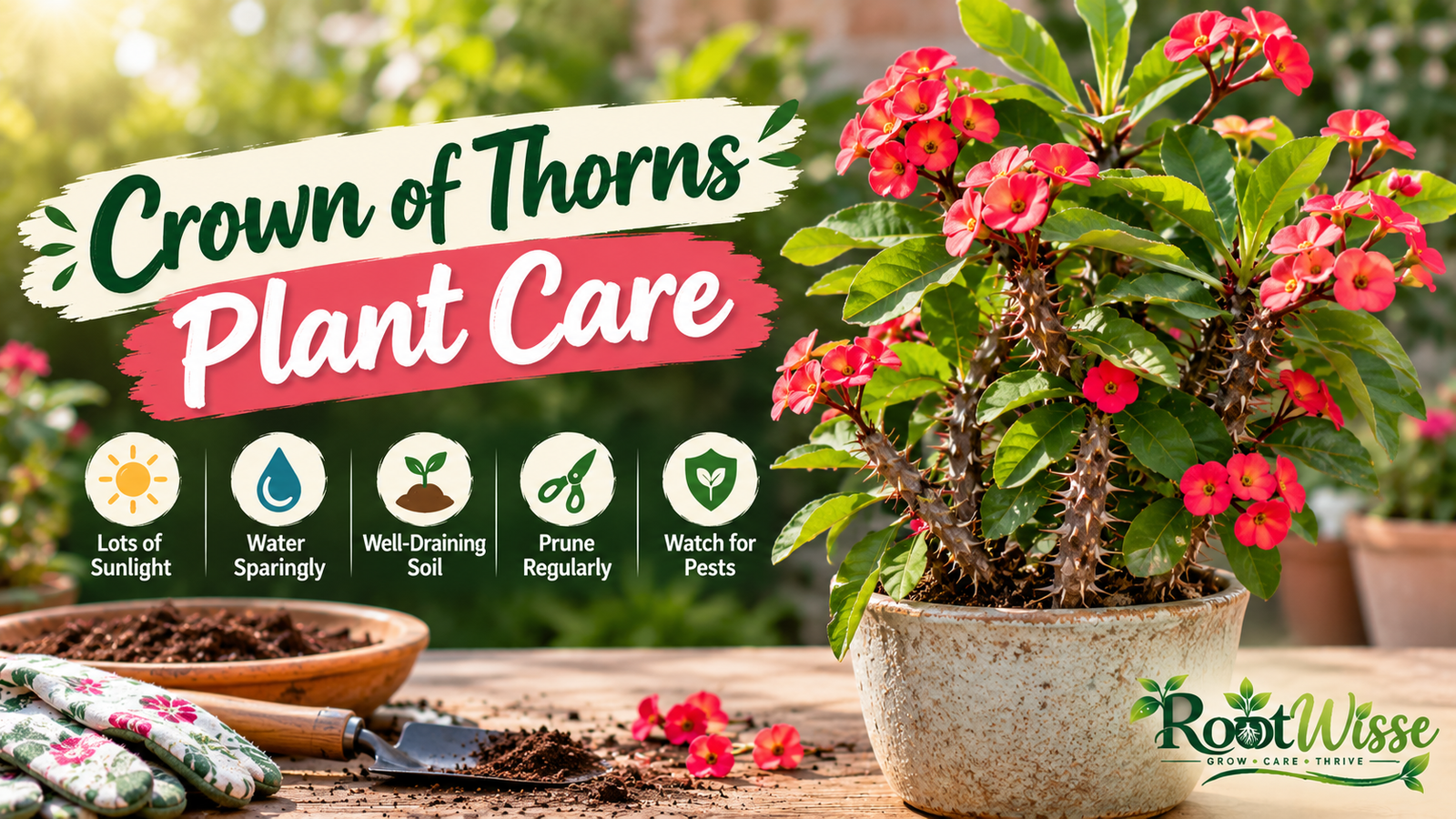
Crown of thorns plant care is fairly easy when you provide plenty of sunlight, fast-draining soil, and careful watering. The plant, Euphorbia milii, is a succulent shrub that stores water in its fleshy stems. Place it in full sun or very bright light, allow the soil to dry between deep waterings, and feed lightly during active growth. Protect it from frost, handle it with gloves, and avoid overwatering.
Introduction
Crown of thorns is a plant that looks tough because it is tough.
Its thorn-covered stems and colorful bracts make it stand out from ordinary houseplants. Yet the plant is surprisingly easy to maintain when its basic needs are understood.
The biggest mistake is treating it like a thirsty tropical plant. Crown of thorns is a succulent from Madagascar, so its stems can store water. It prefers drying between waterings rather than sitting in wet soil.
Light is just as important. A plant placed in a dim corner may survive, but flowering can become disappointing.
With the right balance of sunlight, watering, soil, fertilizer, pruning, and temperature, crown of thorns can remain attractive and flower for long periods.
Crown of Thorns Plant Care at a Glance
| Care Requirement | Best Condition |
| Botanical name | Euphorbia milii |
| Light | Full sun or very bright light |
| Water | Allow soil to dry between waterings |
| Soil | Fast-draining soil |
| Humidity | Low to moderate humidity |
| Temperature | Warm conditions |
| Fertilizer | Light feeding during active growth |
| Pruning | Trim damaged and unwanted growth |
| Propagation | Stem cuttings |
| Pot | Drainage holes required |
| Main problem | Overwatering |
| Safety | Thorny stems and irritating sap |
Image Suggestion: A labeled Crown of Thorns care infographic showing sunlight, watering, soil, fertilizer, pruning, and temperature.
What Is a Crown of Thorns Plant?
Crown of thorns is the common name for Euphorbia milii, a succulent shrub native to Madagascar.
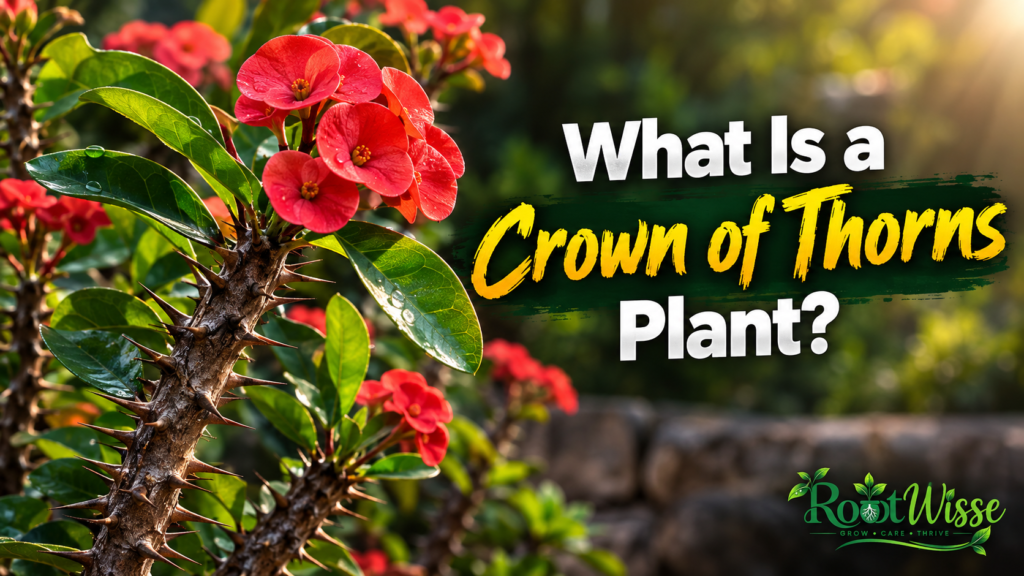
It belongs to the spurge family, Euphorbiaceae, and has fleshy stems covered with sharp spines. The colorful parts that look like flowers are actually modified leaves called bracts. The true flowers are much smaller.
Depending on the cultivar, the bracts may appear red, pink, white, yellow, or other shades.
In warm climates, crown of thorns can grow outdoors as a landscape plant. It can also make an excellent container or indoor plant when given enough light.
How Much Sun Does Crown of Thorns Need?
Bright light is one of the most important crown of thorns care requirements.
For the best flowering, grow it in full sun or a very bright location. North Carolina State Extension classifies it as a full-sun plant, meaning it can receive at least six hours of direct sunlight daily.
Indoor plants usually perform best near a bright, sunny window.
If your plant is not flowering, check the light first.
Insufficient light can cause:
- Fewer flowers
- Long, weak growth
- Sparse foliage
- Stems leaning toward a window
- Reduced overall vigor
However, be careful when moving a plant from indoors to intense outdoor sunlight. Increase exposure gradually to reduce the risk of sunburn.
In extremely hot climates, some midday shade can protect the plant while still providing plenty of useful light.
Image Suggestion: Crown of thorns growing beside a sunny window with colorful blooms.
How Often Should You Water Crown of Thorns?
Crown of thorns prefers a drying period between thorough waterings.
Its thick stems store water, allowing the plant to tolerate dry conditions. The greater danger is usually excessive moisture, especially when the soil drains poorly.
Instead of watering according to a fixed schedule, check the soil.
Follow this simple routine:
- Feel the upper portion of the soil.
- If it has dried, prepare to water.
- Water thoroughly until excess water drains away.
- Empty water sitting beneath the pot.
- Allow the soil to dry again before watering.
During active growth and hot weather, the plant may need water more often.
During cooler or darker periods, watering should usually be reduced.
Can you overwater crown of thorns?
Absolutely.
A common beginner mistake is assuming that wilting always means the plant needs water. A plant with damaged roots can also wilt while sitting in wet soil.
If the soil stays wet for many days, investigate drainage before adding more water.
Best Soil for Crown of Thorns
The ideal crown of thorns soil is loose, gritty, and fast draining.
A cactus or succulent potting mix is a convenient choice for container plants. The RHS recommends a loam-based mix with grit for Euphorbia milii.
Good soil should:
- Drain excess water quickly
- Remain somewhat airy
- Avoid becoming compacted
- Provide enough moisture for the roots
Heavy garden soil can be problematic in containers because it may retain too much water.
If your existing potting mix remains wet for a long time, improve drainage rather than simply watering less frequently.
Image Suggestion: Cross-section illustration of a crown of thorns pot showing airy, well-draining soil and healthy roots.
Choosing the Right Pot
A pot with drainage holes is essential.
Crown of thorns does not need a huge container. A pot that is slightly larger than the root system is usually easier to manage.
Oversized containers can hold excess moisture around the roots. This is especially risky when the plant is small.
Terracotta pots can also be useful because their porous walls allow moisture to escape more readily.
When repotting, move up only one reasonable pot size rather than placing a small plant into a giant container.
Does Crown of Thorns Need High Humidity?
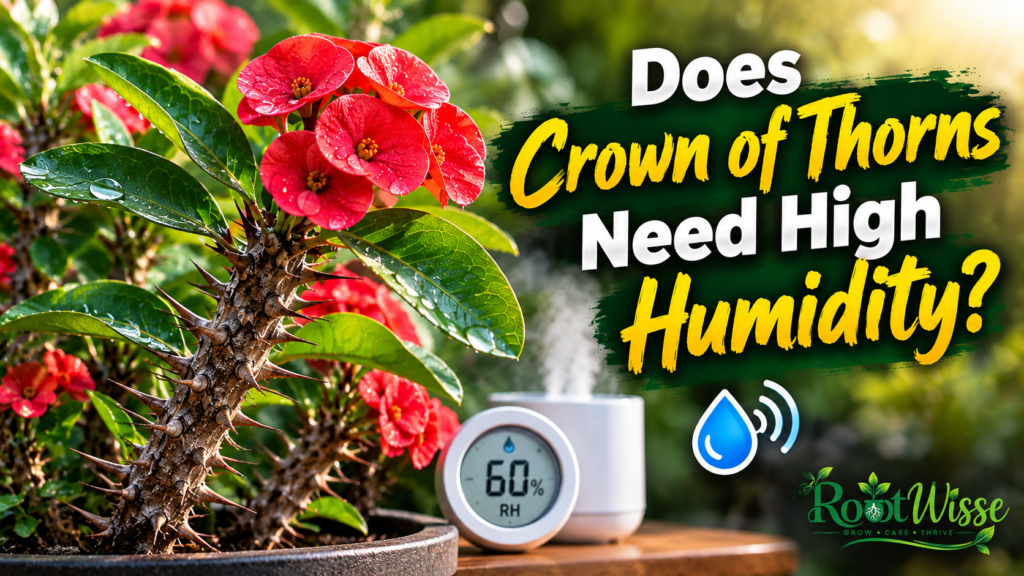
No.
One advantage of this plant is that it generally handles dry indoor air well. It does not require the high humidity needed by many tropical houseplants.
You usually do not need:
- Daily misting
- A pebble tray
- A humidifier
- A closed plant cabinet
Good airflow is more useful than constantly increasing humidity.
In very humid environments, especially when airflow is poor, fungal problems can become more likely.
Best Temperature for Crown of Thorns
Crown of thorns prefers warm conditions and does not tolerate freezing temperatures well.
North Carolina State Extension recommends protecting it from temperatures below about 35°F (1.7°C).
If you grow it outdoors in a warm climate, monitor weather forecasts before cold spells.
Container plants are easier to protect because you can move them into a sheltered area.
During cold weather:
- Reduce watering.
- Keep the plant away from cold drafts.
- Protect it from frost.
- Avoid placing it directly against a freezing window.
- Give it plenty of light if kept indoors.
Do not assume that a temporary cold night is harmless simply because the plant has survived previous cool weather.
How to Fertilize Crown of Thorns
Crown of thorns does not need heavy feeding.
A light application of balanced fertilizer during spring and summer can support active growth. The RHS recommends light feeding with a low-nitrogen liquid fertilizer.
Overfertilizing can produce vigorous, soft growth without improving flowering.
If your plant has plenty of leaves but few flowers, do not automatically increase fertilizer.
Check:
- Light exposure
- Watering
- Temperature
- Root health
- Pruning
These factors often matter more than simply adding nutrients.
How to Prune Crown of Thorns
Pruning helps control the plant’s shape and encourages branching.
You can remove:
- Dead stems
- Damaged growth
- Diseased sections
- Very weak branches
- Stems growing in unwanted directions
Always wear thick gloves when pruning. The spines can cause painful injuries, and the plant produces a milky sap that can irritate skin and eyes.
Use clean, sharp pruning tools and avoid unnecessary handling of the stems.
Expert tip
Do not prune only to make the plant smaller.
Think about where new growth will develop. Strategic cuts can help create a fuller structure and keep the plant easier to manage.
Image Suggestion: Before-and-after illustration showing correct pruning of an overgrown crown of thorns.
How to Make Crown of Thorns Bloom
If your crown of thorns is healthy but refuses to flower, light is the first thing to investigate.
This plant naturally performs well in sunny conditions. Part shade may be tolerated, but flowering can decrease.
To encourage blooms:
- Give it strong light.
- Avoid constant overwatering.
- Feed lightly during active growth.
- Keep temperatures suitable.
- Prune overcrowded growth.
- Avoid excessive nitrogen.
Do not expect fertilizer to compensate for poor lighting.
A sunny windowsill can make a dramatic difference to an indoor plant.
Why Is My Crown of Thorns Losing Leaves?
Some leaf loss is normal.
Crown of thorns can experience cyclical leaf drop, particularly before a resting period.
However, sudden or excessive leaf loss can indicate stress.
Check for:
- Overwatering
- Severe underwatering
- Cold temperatures
- Sudden environmental changes
- Poor light
- Root problems
- Pest activity
Look at the soil before watering again.
If the soil is wet and leaves are dropping, adding more water is unlikely to solve the problem.
Why Are Crown of Thorns Leaves Turning Yellow?
Yellow leaves can have several causes.
The most common care issue to investigate is excessive moisture.
If the soil remains wet, check:
- Pot drainage
- Soil texture
- Container size
- Watering frequency
- Root condition
Older leaves may also naturally yellow and drop.
Do not remove every yellow leaf immediately without understanding why it changed color. A few older leaves can be part of the plant’s normal growth cycle.
Crown of Thorns Pests and Diseases
Crown of thorns is relatively resistant to serious pest problems, but it can still experience issues.
Potential pests include:
- Mealybugs
- Scale
- Thrips
- Mites
Possible diseases include leaf spots, stem rot, root rot, and gray mold.
Inspect the plant regularly, especially around new growth and where stems meet leaves.
Good drainage and airflow are important preventative measures.
If you notice soft, brown, or rotting tissue, act quickly. Remove affected material with clean tools and correct the environmental problem.
How to Propagate Crown of Thorns
Stem cuttings are a practical way to propagate crown of thorns.
Basic propagation steps
- Choose a healthy stem.
- Make a clean cutting with sterile tools.
- Allow the cut surface and sap to dry safely.
- Plant the cutting in a well-draining medium.
- Keep the medium lightly moist rather than saturated.
- Provide warmth and bright light.
- Wait for new roots and growth to develop.
The sap should be handled carefully. North Carolina State Extension recommends allowing the sap to dry before placing a cutting into growing medium.
Internal Linking Opportunity: Add a related guide titled “How to Propagate Crown of Thorns From Cuttings” here.
Growing Crown of Thorns Indoors
Crown of thorns can be an excellent indoor flowering plant if your home has strong natural light.
Place it near your brightest suitable window.
Avoid dark corners, frequently moving it around, and locations directly beside heating or cooling vents.
Indoor care is especially simple when you remember three rules:
More light + less frequent watering + excellent drainage.
Because of its spines, choose a location where people and pets are unlikely to brush against it.
Is Crown of Thorns Toxic?
This is an important part of crown of thorns plant care.
The plant contains irritating milky sap. Contact can irritate the skin and eyes, while ingestion can be harmful. The sharp spines are another obvious hazard.
When pruning or repotting:
- Wear gloves.
- Avoid touching your face.
- Keep the sap away from your eyes.
- Wash your hands after handling.
- Keep the plant away from children and pets.
If sap gets into the eyes or is swallowed, seek appropriate medical or poison-control guidance.
Image Suggestion: Safety infographic showing gloves, thorns, milky sap, and safe placement around children and pets.
7 Common Crown of Thorns Care Mistakes
1. Watering too often
The plant stores water and does not need constantly wet soil.
2. Keeping it in low light
Poor light can reduce flowering and create weak growth.
3. Using heavy soil
Slow drainage increases the risk of root problems.
4. Choosing a huge pot
Extra soil can stay wet for too long.
5. Overfertilizing
More fertilizer does not guarantee more flowers.
6. Moving it suddenly into intense sun
Indoor plants should be acclimated gradually to stronger outdoor light.
7. Handling it without protection
The spines and sap make gloves essential during pruning and repotting.
Frequently Asked Questions
How often should I water a crown of thorns?
Allow the soil to dry between thorough waterings. Water less frequently during cool or dormant periods.
Does crown of thorns need full sun?
Yes. Full sun is generally best for strong growth and flowering. In very hot climates, some midday protection can help prevent heat stress.
Why is my crown of thorns not flowering?
Insufficient light is one of the first things to check. Overwatering, excessive fertilizer, temperature stress, and poor plant health can also reduce flowering.
Can crown of thorns grow indoors?
Yes. It can grow successfully indoors when placed in a bright, sunny location with well-draining soil.
Does crown of thorns need humidity?
No. It tolerates relatively dry indoor air and does not require tropical humidity.
Can crown of thorns survive winter?
It can survive mild winters in suitable climates, but it should be protected from frost and freezing temperatures.
Can I propagate crown of thorns from cuttings?
Yes. Stem cuttings are commonly used for propagation. Allow the cut surface to dry before planting and handle the sap carefully.
Should I prune crown of thorns?
Yes. Pruning can remove damaged growth, control size, and encourage a better shape. Always wear protective gloves.
Why are my crown of thorns leaves turning yellow?
Overwatering and poor drainage are important possibilities. Check the soil and roots before increasing watering or fertilizer.
Conclusion
Successful crown of thorns plant care is surprisingly simple once you understand what this succulent actually wants.
Give it plenty of sunlight, use fast-draining soil, and let the soil dry between deep waterings. Feed lightly during active growth and prune carefully to maintain a healthy shape.
If flowering is poor, check the light before reaching for fertilizer. If leaves turn yellow or fall, investigate watering and root conditions before making major changes.
Most importantly, remember that this is a thorny plant with irritating sap. Gloves are a small but essential part of safe care.
With strong light, sensible watering, good drainage, and suitable temperatures, crown of thorns can remain a colorful and rewarding flowering plant for years.