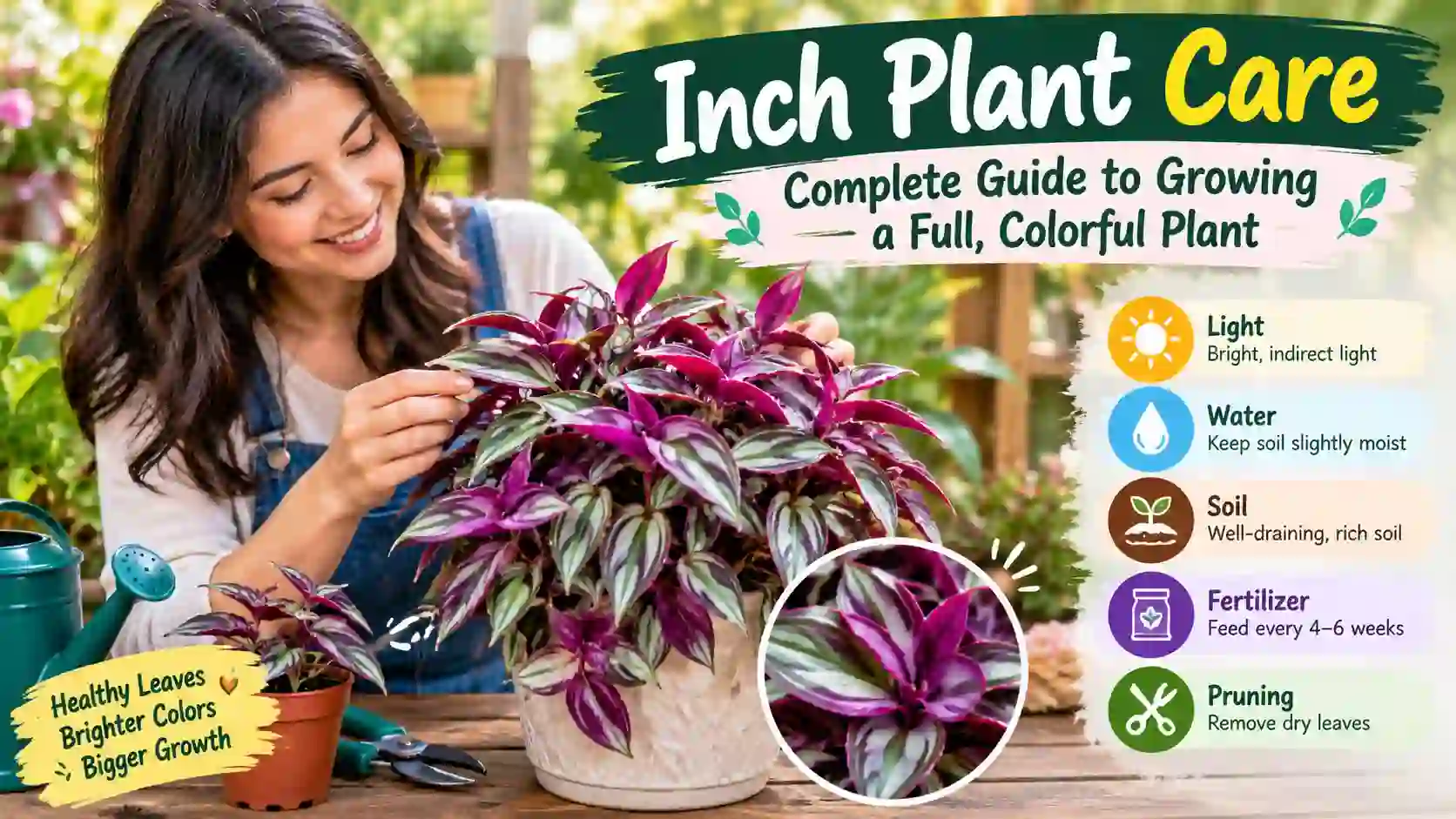
Inch plants (Tradescantia species) grow best in bright, indirect light, well-draining soil, and warm indoor conditions. Water when the top layer of soil begins to dry, and use a pot with drainage holes. Pinch or trim long stems to encourage fuller growth. With enough light and regular pruning, inch plants can develop attractive trailing foliage in hanging baskets, pots, or shelves.
Inch plants are popular houseplants because they grow quickly, trail beautifully, and often display colorful leaves. Depending on the variety, their foliage may feature purple, silver, green, pink, or striped patterns.
Despite their reputation as easy-care plants, inch plants can become leggy, lose color, or develop bare stems when their growing conditions are unsuitable. Overwatering can also cause trouble, especially in dense soil or containers without drainage.
This guide explains how to care for inch plants, encourage thick growth, propagate new plants, and identify common problems before they become severe.
1. Identify Your Inch Plant Before Adjusting Its Care
“Inch plant” is a common name used for several plants in the Tradescantia group. The care advice below focuses mainly on Tradescantia zebrina, a familiar trailing houseplant with striped leaves and purple undersides.
Other species, such as Tradescantia fluminensis, may have greener or differently variegated foliage. Their light tolerance and growth habits can differ.
Wisconsin Horticulture
+2


6
Common inch plant types
|
Type
|
Appearance
|
Care consideration
|
| — | — | — |
|
Tradescantia zebrina
|
Silver or green stripes with purple undersides
|
Bright light helps maintain strong foliage color
|
|
Tradescantia fluminensis
|
Often green or green-and-white foliage
|
Protect variegated forms from harsh afternoon sun
|
|
Tradescantia pallida
|
Long, deep-purple leaves
|
Needs good light to maintain its rich purple color
|
Why identification matters: A plant with pale or faded leaves may need more light, but the right adjustment depends on its variety. Check the plant label or compare its leaf pattern before making major changes.
2. Inch Plant Light Requirements
Inch plants grow well in bright indoor light. Tradescantia zebrina can tolerate some direct sun, but intense sunlight—especially through hot windows—may scorch leaves or wash out their color. Low light can cause stems to stretch and lose lower leaves.
Wisconsin Horticulture
+2
Where should you place an inch plant?
- East-facing window: Often provides useful morning light.
- Bright south- or west-facing window: Use a sheer curtain if the sun is intense.
- Dim corner: Move the plant closer to a bright window or supplement with a grow light.
- Outdoor patio: Choose a protected spot and gradually acclimate the plant to brighter conditions.
Signs your plant needs a lighting adjustment
|
What you notice
|
Possible explanation
|
| — | — |
|
Long stems with large gaps between leaves
|
Light may be too weak
|
|
Faded stripes or less purple coloring
|
The plant may need brighter light
|
|
Dry, pale, or brown patches on the sun-facing side
|
Light may be too intense
|
|
Strong growth toward one side
|
Light is uneven
|
Practical tip: Make lighting changes gradually. A plant moved directly from a dim room into strong sun can suffer leaf scorch even if it eventually needs more light.
Image suggestion: A side-by-side graphic showing an inch plant with compact, colorful growth in bright indirect light and a leggy plant in low light.
3. How to Water an Inch Plant
Inch plants prefer regular moisture during active growth, but they should not sit in soggy soil. Allow the growing medium to dry somewhat between waterings.
Wisconsin Horticulture
+2
A simple watering routine
- Feel the top inch of soil.
- If it has dried, check slightly deeper to see whether the root zone is still wet.
- Water evenly until excess water drains from the bottom.
- Empty the saucer or decorative outer pot.
- Check again before watering next time.
Do not water simply because a certain number of days has passed. A small pot in a bright, warm room may dry faster than a large pot in a cool room.
Watering changes through the year
In spring and summer, active growth and warmer conditions may increase water use. In winter, growth often slows and soil can stay moist for longer, so water less often as needed.
Avoid these watering mistakes
- Keeping the pot constantly wet.
- Letting the root ball become completely dry again and again.
- Leaving runoff trapped in a cachepot.
- Using a pot without drainage holes.
- Treating drooping leaves as proof that the plant needs water without checking the soil.
Expert tip: If the plant wilts while the soil is wet, do not add more water. Check drainage and root condition instead. Waterlogged soil can damage roots and prevent them from taking up water properly.
4. Best Soil and Pots for Inch Plants
A good potting mix holds enough moisture for the roots while allowing excess water to drain. Inch plants are not suited to heavy, compacted soil that remains saturated for long periods. Extension guidance recommends moist but well-drained growing conditions.
North Carolina Extension Gardener Plant Toolbox
+2
Choosing a potting mix
Use a quality indoor potting mix that drains freely. If it feels dense or stays wet for too long, blend in an aerating material such as perlite.
A useful mix should:
- Hold some moisture without becoming waterlogged.
- Allow air to reach the roots.
- Drain excess water after thorough watering.
- Stay loose rather than forming a hard, compacted mass.
Choosing the right container
Select a pot with drainage holes. A container only slightly larger than the root ball is usually easier to manage than an oversized pot filled with excess wet soil.
Hanging baskets and elevated pots work especially well because inch plants have trailing stems. Just remember that smaller hanging containers may dry more quickly.
Image suggestion: An illustrated pot cross-section labeling the inch plant’s roots, airy potting mix, drainage holes, and excess water flow.
5. Temperature and Humidity
Tradescantia zebrina grows well at typical indoor temperatures and tolerates average household humidity. North Carolina Extension gives a preferred temperature range of about 65–75°F (18–24°C).
North Carolina Extension Gardener Plant Toolbox
+1
Temperature tips
- Keep the plant away from cold drafts and sudden temperature changes.
- Avoid placing it directly beside heating or air-conditioning vents.
- If moving it outdoors for summer, wait until frost danger has passed.
- Bring it inside before cold weather can damage it.
Does an inch plant need high humidity?
Usually, average indoor humidity is acceptable for T. zebrina. Extra humidity may help in very dry rooms, but it is not a substitute for proper watering and healthy roots.
If your home is particularly dry, try grouping plants or using a room humidifier. Keep enough space around the foliage for air to circulate.
6. Fertilizing Inch Plants
Inch plants grow quickly when conditions are favorable, so moderate feeding during active growth can support new foliage. Too much fertilizer, however, may contribute to mineral buildup or damage roots.
How to feed your plant
- Use a balanced liquid houseplant fertilizer.
- Follow the product label and consider a diluted dose if the plant is sensitive or recently repotted.
- Feed mainly during active spring and summer growth.
- Reduce or pause feeding when growth slows.
- Avoid fertilizing a plant that is severely stressed or has waterlogged soil.
If the plant is already growing vigorously in fresh potting mix, it may not need frequent feeding. Pale leaves can result from poor light, root trouble, or watering problems—not only a lack of fertilizer.
7. How to Prune an Inch Plant for Fuller Growth
Inch plants can develop long, sparse stems as they grow. Pinching or trimming the tips encourages branching and helps maintain a dense, attractive shape. Extension sources recommend pruning leggy growth and using the cuttings for propagation.
Wisconsin Horticulture
+2


5
Pruning steps
- Use clean, sharp scissors or pruning shears.
- Identify long stems with wide gaps between leaves.
- Cut just above a healthy leaf node.
- Pinch soft growing tips to encourage side shoots.
- Remove dead or badly damaged foliage.
- Use healthy cuttings to fill out the pot.
How to make a sparse plant look fuller
A useful method is to root several healthy cuttings and plant them back into the same container. This creates more growing points and can make a thin plant look fuller while the original stems continue growing.
Avoid removing all the foliage at once. If the plant is already stressed, prune gradually and improve its growing conditions first.
8. How to Propagate an Inch Plant
Inch plants are easy to propagate from stem cuttings. Their stems can develop roots at the nodes, making it possible to create new plants without special equipment.
Wisconsin Horticulture
+3


6
Method A: Root cuttings in water
- Cut a healthy stem section containing several nodes.
- Remove the leaves from the lowest node or two.
- Place the lower stem in room-temperature water, keeping leaves above the waterline.
- Put the container in bright, indirect light.
- Replace the water if it becomes cloudy.
- When the roots are established, pot the cutting into a suitable mix.
The University of Vermont Extension describes water propagation for inch plants and advises keeping leaves out of the water. It notes that rooting times vary, so patience is important.
University of…
Method B: Root cuttings directly in soil
- Prepare a small pot with lightly moist, well-draining mix.
- Take healthy stem cuttings and remove leaves from the buried nodes.
- Insert the bare nodes into the mix.
- Firm the medium gently around the stems.
- Keep the pot warm in bright, indirect light.
- Maintain light moisture without soaking the mix.
Which method should you use?
|
Method
|
Useful when
|
| — | — |
|
Water propagation
|
You want to see roots develop
|
|
Soil propagation
|
You prefer to root cuttings in their eventual growing medium
|
Practical tip: If the parent plant is long and leggy, propagation can serve two purposes: it renews the original plant and provides cuttings to create a fuller container.
9. Repotting an Inch Plant
Repot when the plant becomes crowded, roots emerge from drainage holes, or the potting mix breaks down and drains poorly. A fast-growing plant may need repotting sooner than a slow-growing one, but moving it into a larger pot too early can make watering harder.
Repotting steps
- Choose a pot with drainage holes, only modestly larger than the current one.
- Gently remove the plant from its pot.
- Check the roots and remove any clearly dead or rotten sections with clean tools.
- Loosen severely compacted old mix without tearing apart healthy roots unnecessarily.
- Place the plant in fresh, well-draining potting mix.
- Water lightly and allow excess water to drain.
- Keep it in bright, indirect light while it adjusts.
If the plant is healthy and the mix still drains properly, repotting may not be necessary yet.
Image suggestion: A four-panel illustration showing removal from the old pot, root inspection, placement in fresh mix, and the finished plant.
10. Common Inch Plant Problems and Solutions
Many inch plant problems have overlapping symptoms. Yellow leaves, for example, may relate to excess moisture, poor drainage, or stress. Check the growing conditions before assuming there is one definite cause.
|
Problem
|
Possible cause
|
What to try
|
| — | — | — |
|
Leggy stems
|
Insufficient light or lack of pruning
|
Increase bright indirect light gradually and trim long stems
|
|
Faded leaf color
|
Light may be too weak or too intense
|
Adjust the plant’s position and observe new growth
|
|
Yellow leaves
|
Overwatering, poor drainage, or stress
|
Check soil moisture, drainage, and root health
|
|
Brown or scorched patches
|
Harsh direct sunlight or watering stress
|
Filter intense sun and review watering
|
|
Limp or drooping stems
|
Dry soil, damaged roots, or heat stress
|
Check soil moisture before watering; inspect roots if soil is wet
|
|
Bare lower stems
|
Low light, aging growth, or natural leaf loss
|
Improve light and root healthy cuttings to fill the pot
|
|
Slow growth
|
Low light, cool conditions, or root problems
|
Review light, temperature, and drainage
|
|
Small insects or sticky residue
|
Possible pest infestation
|
Inspect leaf undersides and stems; isolate the plant if pests are present
|
North Carolina Extension lists aphids, mealybugs, scale, whiteflies, and spider mites as potential pests. It also warns that soggy soil can contribute to root and stem rot, while crowded or wet foliage can encourage leaf spot and fungal problems.
North Carolina Extension Gardener Plant Toolbox
+1
A useful troubleshooting sequence
If your plant looks unhealthy, check these in order:
- Soil: Is it soggy, bone-dry, or draining poorly?
- Light: Is the plant receiving enough bright, indirect light?
- Roots: Are they firm and healthy, or dark and mushy?
- Recent changes: Was the plant moved, repotted, or exposed to a temperature shift?
- Pests: Look closely around leaf joints, stem tips, and leaf undersides.
Change one major factor at a time when possible. This makes it easier to identify what is actually helping.
11. Seasonal Inch Plant Care
Your plant’s needs may change as indoor light and temperature shift throughout the year.
|
Season
|
Care focus
|
| — | — |
|
Spring
|
Resume active-growth feeding if needed, prune leggy stems, and propagate cuttings
|
|
Summer
|
Monitor soil more frequently, protect from harsh sun, and acclimate carefully before moving outdoors
|
|
Autumn
|
Watch for slower growth and allow the mix to dry more between waterings if needed
|
|
Winter
|
Provide the brightest suitable indoor light, protect from cold drafts, and reduce watering as growth slows
|
Outdoor inch plants should be brought inside before cold conditions threaten them. Clemson Extension also recommends inspecting plants for pests before bringing them indoors.
Home & Garden Information Center
12. Is an Inch Plant Safe for Pets?
Some Tradescantia species can cause skin irritation or discomfort if chewed. North Carolina Extension notes that T. zebrina has watery sap that may irritate skin.
North Carolina Extension Gardener Plant Toolbox
Keep the plant out of reach of pets and children who may chew or handle it. If a pet eats part of the plant or develops symptoms, contact a veterinarian or an appropriate poison advice service for guidance.
13. Frequently Asked Questions
How often should I water an inch plant?
Water when the upper layer of soil has begun to dry, then let excess water drain away. The exact interval depends on light, temperature, pot size, and the growing medium.
Why is my inch plant getting leggy?
Low light is a common reason for stretched stems and leaf loss along the lower portions. Move the plant to brighter indirect light gradually, then pinch or prune long stems to encourage branching.
Wisconsin Horticulture
+1
Does an inch plant need direct sunlight?
It can tolerate some direct sun, but strong sunlight may scorch leaves or fade their color. Bright, filtered light is a useful indoor target, especially when the plant is not acclimated to direct rays.
North Carolina Extension Gardener Plant Toolbox
+1
Can an inch plant grow in water?
Yes. Stem cuttings can root in water. Keep leaves above the waterline, provide indirect light, and replace cloudy water. Once roots are established, the cuttings can be transferred to potting mix.
University of…
How do I make my inch plant bushier?
Pinch or trim stem tips to encourage branching. You can also root healthy cuttings and plant them back into the same pot to increase the number of stems.
Wisconsin Horticulture
+1
Why are my inch plant’s leaves turning yellow?
Yellowing can have several causes, including excess water, poor drainage, and environmental stress. Check the soil and roots before changing the watering routine.
Can I grow an inch plant outdoors?
Some inch plant types can grow outdoors in suitable warm climates. Protect them from harsh conditions and acclimate them gradually when moving them from indoors. Some species, including T. fluminensis, can spread aggressively outdoors, so check local guidance before planting them in the ground.
Wisconsin Horticulture
+1
When is the best time to propagate an inch plant?
Spring and summer are convenient because the plant is generally growing actively. Healthy cuttings can also root at other times when warmth and light are adequate.
Should I mist my inch plant?
Misting is not essential for T. zebrina, which tolerates average household humidity. Focus first on suitable light, watering, drainage, and airflow.
Why is my inch plant losing its purple color?
Insufficient light may reduce the intensity of its foliage coloring. Increase light gradually and watch the new leaves, while avoiding harsh sun that can scorch the plant.
Wisconsin Horticulture
+1
14. Related Plant Care Guides
If you enjoy growing colorful or trailing houseplants, these related guides may also help:
- Lipstick plant care: Learn how to grow trailing stems and encourage its distinctive red flowers.
- Jade plant care: Explore suitable light, watering, and soil for a succulent houseplant.
- Aloe plant care: Find out how to care for a drought-tolerant plant with fleshy leaves.
- Palm plant care: Learn about indoor light, humidity, and common leaf problems.
- Pilea plant care: Discover how to maintain healthy foliage and propagate new plants.
Conclusion
Successful inch plant care depends on bright, suitable light, well-draining soil, and watering that responds to the plant’s actual needs. Pruning helps prevent sparse growth, while stem cuttings provide an easy way to create fuller containers.
If your plant starts looking tired, check its soil moisture, light, and roots before reaching for fertilizer. Make adjustments gradually and observe how new growth responds.