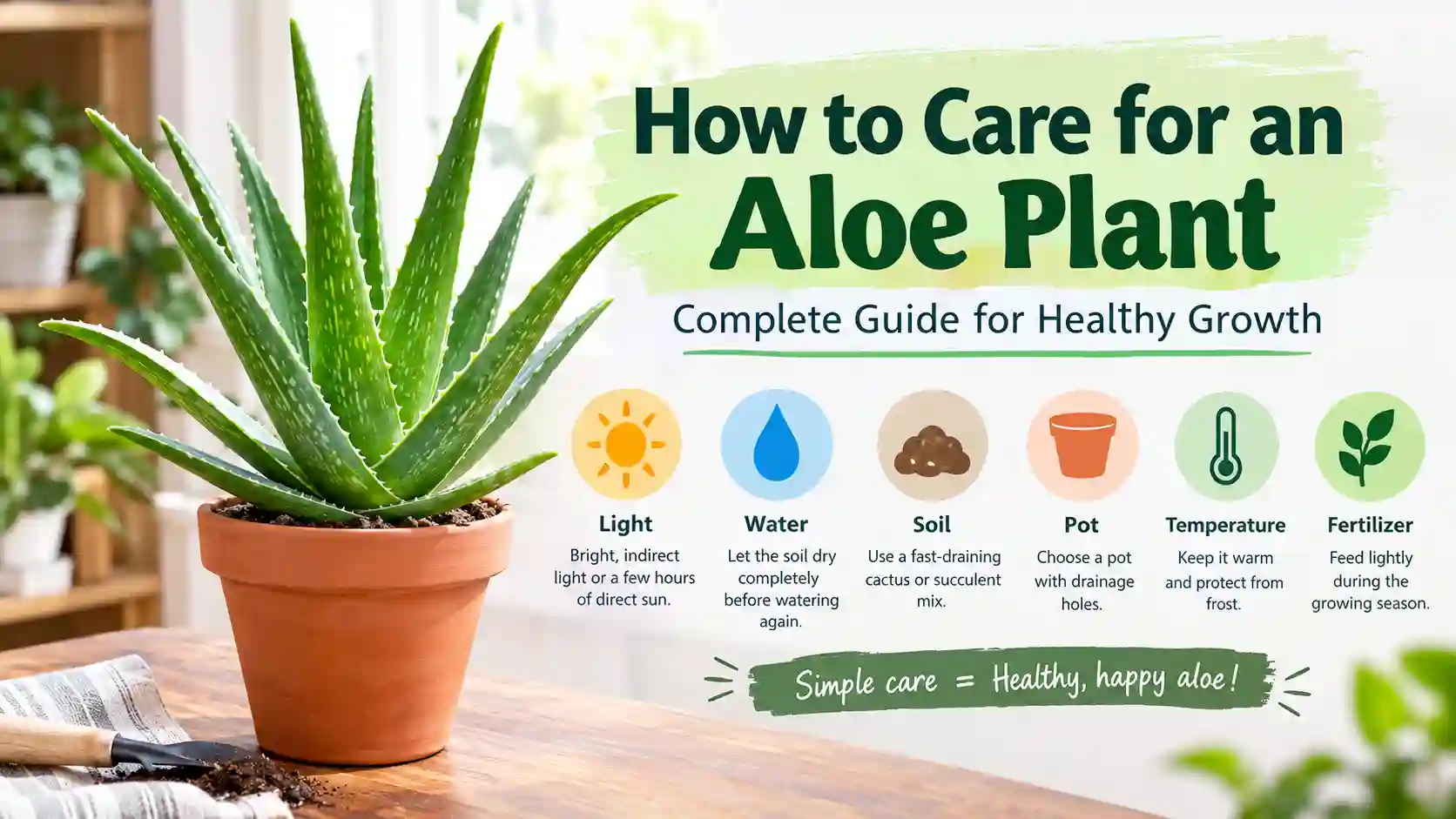
To care for an aloe plant, give it bright light, fast-draining soil, and careful watering. Let the soil dry completely before watering again, and always use a pot with drainage holes. Aloe prefers warm temperatures and moderate indoor humidity. Avoid frequent watering because soggy soil can cause root rot. Rotate the pot occasionally so the plant grows evenly, and repot it when roots become crowded or the soil drains poorly.
Learning how to care for an aloe plant is mostly about understanding what the plant does not need.
Aloe is a drought-adapted succulent. Its thick leaves store water, allowing it to survive periods of dry soil. Problems usually begin when indoor gardeners treat aloe like a tropical houseplant and water it too often.
The right balance is simple: strong light, excellent drainage, thorough but infrequent watering, and a suitable pot.
However, healthy aloe care involves more than a watering schedule. Leaf color, firmness, soil moisture, pot weight, and root condition can tell you what the plant needs. These clues are especially useful when an aloe develops yellow leaves, brown tips, soft leaves, or slow growth.
This guide explains how to care for an aloe plant from planting and watering to lighting, fertilizing, repotting, propagation, and troubleshooting.
Understanding Your Aloe Plant
Most plants sold as aloe houseplants are Aloe vera, a succulent species valued for its fleshy, water-storing leaves.
Aloe naturally grows in environments where rainfall can be irregular and soils drain quickly. Its structure reflects those conditions:
- Thick leaves store water.
- Waxy leaf surfaces reduce moisture loss.
- Shallow roots respond quickly to soil moisture.
- Dense, wet soil can restrict oxygen around the roots.
- Strong light supports compact, sturdy growth.
This explains an important aloe-care principle:
A healthy aloe plant should spend more time drying out than sitting in wet soil.
That does not mean neglecting the plant. It means matching watering to the plant’s ability to store water and the growing environment.
Image Suggestion: Botanical illustration showing an aloe plant’s fleshy leaves, shallow root system, and water-storage structure.
How Much Light Does an Aloe Plant Need?
Aloe plants grow best with bright light and several hours of direct sunlight, provided they are acclimated gradually.
A bright south- or west-facing window can work well indoors. East-facing windows may also provide suitable morning sunlight.
Signs your aloe needs more light
Watch for:
- Long, stretched leaves
- Wide spacing between leaves
- Leaves leaning toward the window
- Pale or less vibrant growth
- A loose, open rosette
Insufficient light often produces a plant that looks stretched rather than compact.
Can aloe get too much sunlight?
Yes.
An aloe moved suddenly from a dim indoor location into intense direct sunlight can develop sun stress. Leaves may become reddish, brownish, or bleached.
The solution is not necessarily to eliminate sunlight. Instead, increase exposure gradually.
For example, move the plant closer to a bright window for increasingly longer periods over several days.
A practical light test
If your aloe is consistently stretching toward one direction, rotate the pot every week or two. This helps distribute available light more evenly.
Image Suggestion: 16:9 infographic comparing an aloe in bright light with a stretched aloe receiving insufficient light.
How to Water an Aloe Plant Correctly
Watering is one of the most important parts of learning how to care for an aloe plant.
The biggest mistake is watering according to the calendar instead of the soil.
The soak-and-dry method
When the soil is completely dry:
- Water the soil thoroughly.
- Allow excess water to drain through the bottom holes.
- Empty any water collected in the saucer.
- Wait until the soil dries completely before watering again.
Do not give the plant a tiny amount of water every few days. Small, frequent watering can keep parts of the root zone damp without properly wetting the entire root ball.
How often should aloe be watered?
There is no universal weekly schedule.
Watering frequency changes with:
- Light intensity
- Temperature
- Pot size
- Soil composition
- Season
- Indoor humidity
- Root health
An aloe in bright light during a warm growing period may dry much faster than one sitting in a cool, dim room.
How to check before watering
Push your finger into the soil several centimeters. For a more reliable check, use a wooden skewer or moisture meter.
Also lift the pot.
A pot that feels noticeably lighter after the soil dries is giving you another useful clue.
Expert tip: When several aloe plants are growing in different pots, do not automatically water them all on the same day. Their soil can dry at different rates.
Image Suggestion: Step-by-step watering infographic showing dry soil → thorough watering → drainage → complete drying.
What Soil Is Best for Aloe?
Aloe needs soil that drains rapidly and does not remain saturated for long periods.
A suitable succulent or cactus potting mix is usually a better starting point than ordinary garden soil.
You can improve drainage by incorporating materials such as:
- Perlite
- Pumice
- Coarse mineral grit
- Other suitable drainage amendments
The exact mixture matters less than the final result: water should move through the root zone rather than remain trapped around the roots.
Why ordinary garden soil can cause problems
Dense soil can stay wet for too long in a container. This reduces air spaces around the roots and increases the risk of root problems.
Aloe does not need nutrient-rich, moisture-retentive soil to thrive.
A simple soil principle
Think about the growing environment:
Fast drainage + adequate airflow around roots = healthier aloe roots.
Avoid creating a mix that becomes dusty and hydrophobic when completely dry, however. The soil should still absorb water evenly when you irrigate.
Choosing the Right Pot for Aloe
A good pot is almost as important as good soil.
Always choose a container with at least one functional drainage hole.
Terracotta vs plastic
Terracotta:
- Breathes through the porous material
- Dries faster
- Can be useful for gardeners who tend to overwater
Plastic:
- Holds moisture longer
- Weighs less
- May work well in bright, warm locations where soil dries quickly
Neither material is automatically better. The best choice depends on how quickly your growing conditions dry the soil.
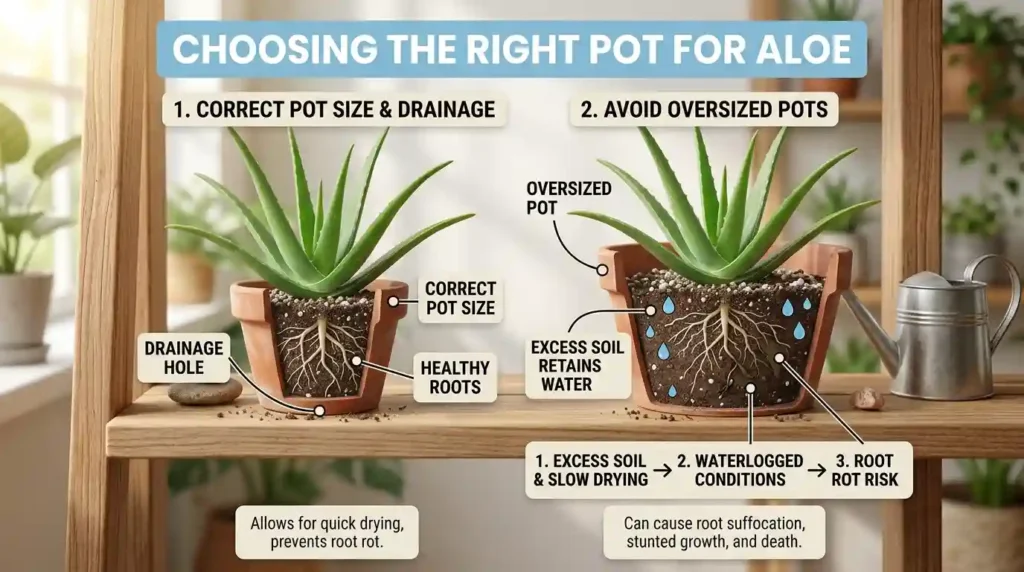
Should an aloe plant be in a large pot?
Usually, avoid dramatically oversized containers.
A huge pot contains more soil around the root system, which can remain wet for longer after watering.
Choose a container only modestly larger than the root ball when repotting.
Image Suggestion: Side-by-side illustration of correctly sized aloe pot versus an oversized container holding too much wet soil.
Temperature and Humidity Requirements
Aloe generally prefers warm conditions and does not require high humidity.
Normal indoor humidity is often adequate.
Keep the plant away from:
- Cold drafts
- Freezing temperatures
- Heating vents
- Strong air-conditioning drafts
- Sudden temperature changes
If your aloe spends summer outdoors, pay attention to nighttime temperatures as the weather cools.
In colder regions, bring container-grown aloe indoors before frost or freezing conditions.
How to Fertilize Aloe
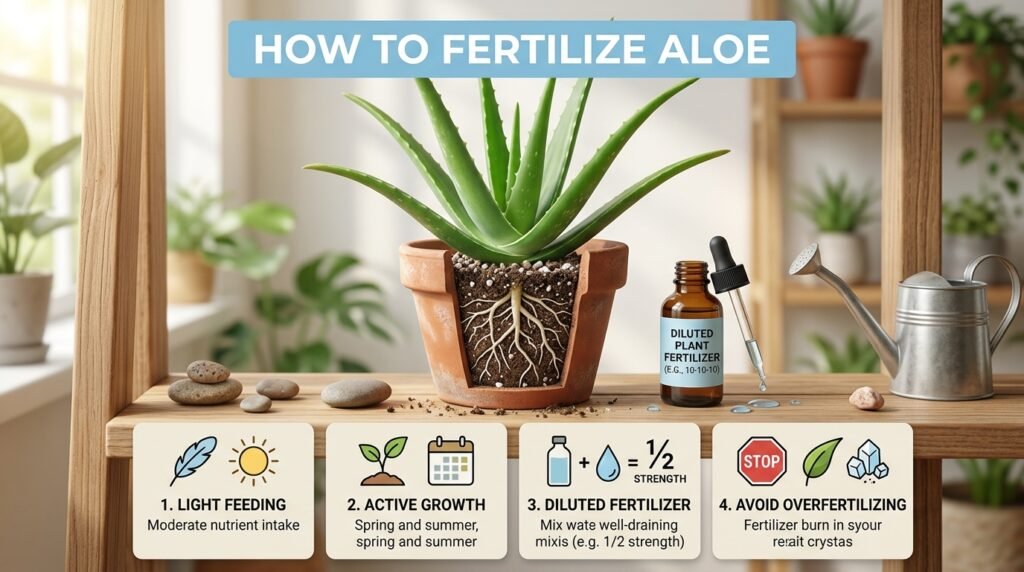
Aloe is not a heavy feeder.
Excess fertilizer can encourage soft, unnatural growth and may damage roots when applied too heavily.
During active growth, you can use a diluted, balanced fertilizer formulated for succulents or houseplants.
Follow the product label rather than assuming more fertilizer produces faster growth.
When not to fertilize
Avoid routine fertilizing when:
- The plant is dormant.
- The soil is extremely dry.
- The plant is severely stressed.
- The roots are damaged.
- You have recently repotted into nutrient-rich commercial soil.
A healthy aloe usually benefits more from proper light, drainage, and watering than from frequent feeding.
When and How to Repot Aloe
Aloe does not need frequent repotting.
Repot when you notice signs such as:
- Roots filling the container
- Poor drainage
- Soil breaking down
- Water running through unusually quickly
- The plant becoming unstable
- Offsets crowding the container
Repotting steps
- Choose a container only slightly larger than the existing one.
- Prepare a fast-draining potting mix.
- Remove the aloe carefully.
- Inspect the roots.
- Remove obviously damaged or rotting material with a clean tool.
- Place the plant at approximately the same depth.
- Fill around the roots with fresh mix.
- Allow the plant to settle before returning to your normal watering routine.
Do not bury the central crown deeply into wet soil.
Image Suggestion: Aloe repotting infographic showing root inspection, drainage hole, fresh succulent mix, and correct planting depth
How to Care for Aloe Pups
Mature aloe plants often produce offsets, commonly called pups.
These small plants develop around the base of the parent plant.
You can leave healthy pups attached if you want a fuller container. Alternatively, separate well-developed offsets for propagation.
Separating an aloe pup
Wait until the offset has developed a reasonable root system when possible.
Then:
- Remove the plant from its container.
- Gently expose the connection between the pup and parent.
- Separate the pup carefully.
- Inspect for roots.
- Allow damaged cuts to dry appropriately before planting if needed.
- Place the pup in a small container with well-draining mix.
- Keep conditions bright but avoid immediately stressing a newly separated plant with extreme sunlight.
Small offsets can be vulnerable to excess moisture, so avoid keeping their soil constantly wet.
Why Are My Aloe Leaves Turning Yellow?
Yellow aloe leaves can have several causes, but excess moisture is one of the first things to investigate.
Check:
- Is the soil still wet several days after watering?
- Does the pot have drainage holes?
- Is the container much larger than the root ball?
- Is the plant receiving enough light?
- Does the soil remain compacted?
Yellow leaves with soft texture
This combination is particularly concerning for overwatering or root problems.
Inspect the roots if the soil stays wet for prolonged periods.
Yellowing older leaves
A single older lower leaf occasionally yellowing and dying naturally is different from widespread yellowing throughout the plant.
Look at the overall pattern rather than reacting to one aging leaf.
Why Is My Aloe Turning Brown?
Brown aloe leaves can result from several different problems.
Brown, crispy leaf tips
Possible causes include:
- Excessive dryness
- Environmental stress
- Strong direct sunlight after sudden exposure
- Salt accumulation
- Physical damage
Brown, soft, or mushy leaves
This is more concerning.
Soft brown tissue combined with wet soil can indicate serious moisture-related stress.
Brown patches after moving outdoors
Sudden exposure to intense sunlight can cause sun stress.
Acclimate the plant gradually rather than moving it directly from a dim room into harsh midday sun.
Why Is My Aloe Plant Getting Soft Leaves?
Soft leaves are a warning sign worth investigating quickly.
Healthy aloe leaves should generally feel firm and substantial.
Softness can occur when the plant has:
- Been overwatered
- Developed root damage
- Experienced severe dehydration
- Suffered cold injury
What to check first
Look at the soil.
Wet soil + soft leaves: investigate overwatering and root problems.
Very dry soil + soft, shriveled leaves: dehydration is more likely.
The difference is important because watering a plant suffering from root rot can make the situation worse.
Aloe Root Rot: Warning Signs and What to Do
Root rot often begins below the soil surface, so the leaves may be the first visible clue.
Potential warning signs include:
- Persistent wet soil
- Soft leaves
- Yellowing
- Brown or collapsing tissue
- Unpleasant-smelling soil
- Dark, damaged roots
If root problems are suspected, remove the plant from its container and inspect the roots.
Healthy roots should not be consistently mushy or decomposing.
Remove damaged roots with a clean cutting tool, replace unsuitable wet soil, and use a clean pot with effective drainage.
The most important long-term correction is not simply removing damaged roots. You must also fix the condition that caused excessive moisture.
Aloe Care Through the Seasons
Your watering routine should change with the environment rather than staying fixed throughout the year.
| Season | Main Care Focus |
|---|---|
| Spring | Increase light and monitor new growth |
| Summer | Watch soil moisture and provide strong light |
| Fall | Gradually reduce watering as growth slows |
| Winter | Water less frequently and protect from cold |
Spring and summer
Aloe may actively grow when temperatures and light levels increase.
Check soil more often, but still wait for appropriate drying before watering.
Fall and winter
Indoor plants may use considerably less water when light levels decline.
A plant that once needed regular watering may suddenly remain wet for much longer.
Important: Reduced watering does not mean watering on an arbitrary winter schedule. Check the actual soil and plant conditions.
Common Aloe Care Mistakes
1. Watering on a fixed schedule
Aloe does not know that it is “watering day.”
Always consider soil moisture and environmental conditions.
2. Using a pot without drainage
This makes moisture control much harder.
3. Keeping aloe in a dark room
Low light can produce stretched growth and slower drying.
4. Using heavy garden soil
Dense soil may retain too much moisture.
5. Moving aloe suddenly into intense sunlight
A sudden environmental change can cause leaf damage.
6. Choosing a pot that is far too large
Extra soil can remain wet around a relatively small root system.
7. Fertilizing too frequently
More fertilizer does not compensate for poor light or poor drainage.
8. Treating every yellow leaf as a watering problem
Look at the entire plant and the soil before changing your routine.
A Simple Aloe Care Routine
For beginners, this routine is easier to follow than memorizing a watering calendar.
Every few days
Check the plant visually.
Look for:
- Leaf firmness
- Color changes
- Pests
- Sun damage
- New growth
Before watering
Check the soil.
If it is still damp, wait.
During watering
Water thoroughly and allow excess water to escape.
Every few weeks
Rotate the pot if growth is leaning toward the light.
Inspect the drainage hole and check whether the soil is compacting.
During active growth
Watch for pups and new leaves.
Adjust watering according to how quickly the soil dries.
Seasonally
Reassess light, temperature, and watering frequency.
This approach is more reliable than following a rigid “water every seven days” rule.
How to Tell What Your Aloe Needs
Your plant can provide useful information if you know what to observe.
| What You See | Possible Cause | What to Check |
|---|---|---|
| Long, stretched leaves | Insufficient light | Move toward brighter light gradually |
| Yellow, soft leaves | Excess moisture | Soil, drainage, roots |
| Wrinkled leaves | Lack of available water | Soil moisture and root health |
| Brown crispy tips | Dryness or environmental stress | Watering, sunlight, salts |
| Brown mushy tissue | Severe moisture stress | Roots and soil |
| Leaning plant | Uneven light or weak growth | Rotate and improve lighting |
| Slow growth | Low light, cool conditions, or seasonal dormancy | Light and temperature |
| Crowded container | Root or pup development | Inspect and repot if needed |
These symptoms are clues, not diagnoses. Look at multiple signs together.
Indoor Aloe vs Outdoor Aloe Care
The same aloe can behave very differently indoors and outdoors.
Indoor aloe
Indoor plants often face:
- Lower light
- Slower soil drying
- Less airflow
- Stable temperatures
- Seasonal changes in window light
Because of this, overwatering is particularly easy.
Outdoor aloe
Outdoor plants may receive:
- Stronger sunlight
- More airflow
- Higher temperatures
- Faster evaporation
- Rainfall
However, outdoor exposure also creates risks from intense sunlight, prolonged rain, and temperature extremes.
Image Suggestion: Split infographic showing indoor aloe beside outdoor aloe with light, water, temperature, and airflow icons.
Can You Grow Aloe Indoors Year-Round?
Yes, aloe can grow successfully indoors when its basic needs are met.
Place it near the brightest suitable window available.
If natural light is inadequate, supplemental grow lighting can help.
The most important indoor-care adjustment is to recognize that lower light usually means slower water use.
This is why an aloe that thrives in a sunny summer window may struggle if moved into a dim corner and given the same amount of water.
How to Encourage Healthy Aloe Growth
The goal should not be to make aloe grow as quickly as possible.
A compact plant with firm leaves and strong roots is more desirable than rapid, stretched growth.
Focus on these priorities:
- Give it strong light.
- Use fast-draining soil.
- Choose a pot with drainage.
- Water thoroughly when the soil is dry.
- Allow excess water to drain.
- Avoid unnecessary fertilizer.
- Protect the plant from freezing temperatures.
- Inspect leaves and soil regularly.
- Repot only when necessary.
- Correct environmental problems before adding products.
This approach reduces many of the common problems associated with indoor aloe.
When Should You Cut Aloe Leaves?
Remove leaves when they are:
- Completely dead
- Severely damaged
- Diseased or rotting
- Creating an obvious safety or appearance issue
Use a clean, sharp cutting tool.
Avoid repeatedly cutting healthy leaves simply to shape the plant. Aloe relies on its leaves for photosynthesis and water storage.
If harvesting aloe for topical use, remember that fresh aloe sap is not automatically suitable for ingestion or every skin application. Follow appropriate safety guidance for the intended use.
Frequently Asked Questions
How often should I water an aloe plant?
Water when the soil has dried thoroughly rather than following a fixed schedule. Brightness, temperature, pot size, soil, and season all affect drying speed.
Does aloe need direct sunlight?
Aloe benefits from strong light and can handle direct sunlight when properly acclimated. Sudden exposure to intense sunlight can cause leaf stress or scorching.
Why is my aloe plant turning yellow?
Overwatering and poor drainage are common causes, especially when several leaves become yellow and soft. Check the soil and roots before watering again.
Why are my aloe leaves wrinkled?
Wrinkled leaves can indicate that the plant is not receiving enough available water. Check whether the soil is completely dry and whether the roots are healthy enough to absorb water.
Can aloe grow in regular potting soil?
It can survive in some regular mixes, but dense moisture-retentive soil is generally less suitable. A well-draining succulent or cactus mix is usually a better choice.
Does aloe need fertilizer?
Aloe needs relatively little fertilizer. During active growth, occasional diluted fertilizer can support growth, but excessive feeding is unnecessary.
Should I mist my aloe plant?
Misting is generally unnecessary. Aloe stores water in its leaves and does not require high humidity to grow well.
Can aloe survive in a bathroom?
It depends on the bathroom’s light and ventilation. A bright bathroom can work, but a dark, consistently humid bathroom is usually unsuitable.
How do I know if my aloe has root rot?
Persistent wet soil, soft leaves, yellowing, and damaged roots can indicate root problems. Inspect the roots if these symptoms occur together.
When should I repot my aloe?
Repot when roots become crowded, drainage deteriorates, the soil breaks down, or the plant becomes unstable. Avoid moving aloe into a dramatically oversized container.
Related Aloe Topics Worth Reading
If you are building a complete aloe-care routine, related topics include:
- How to fertilize aloe vera
- How to propagate aloe vera pups
- How to fix an overwatered aloe plant
- Why aloe vera leaves turn brown
- Why aloe vera leaves turn yellow
- How to repot aloe vera
- How much sunlight does aloe vera need?
- Best soil for aloe vera plants
These topics become especially useful when your plant shows a specific problem that general care cannot explain.
Final Takeaway
The secret to learning how to care for an aloe plant is not complicated. Aloe needs bright light, excellent drainage, dry periods between thorough waterings, and protection from extreme cold.
Pay attention to what the plant and soil are telling you instead of relying on a fixed watering calendar. Firm leaves, healthy new growth, and soil that dries appropriately are better indicators than a routine based solely on the day of the week.
Most aloe problems become easier to prevent when you get three things right from the beginning: light, drainage, and watering. Once those conditions are correct, aloe is a remarkably manageable plant for both beginners and experienced indoor gardeners.