
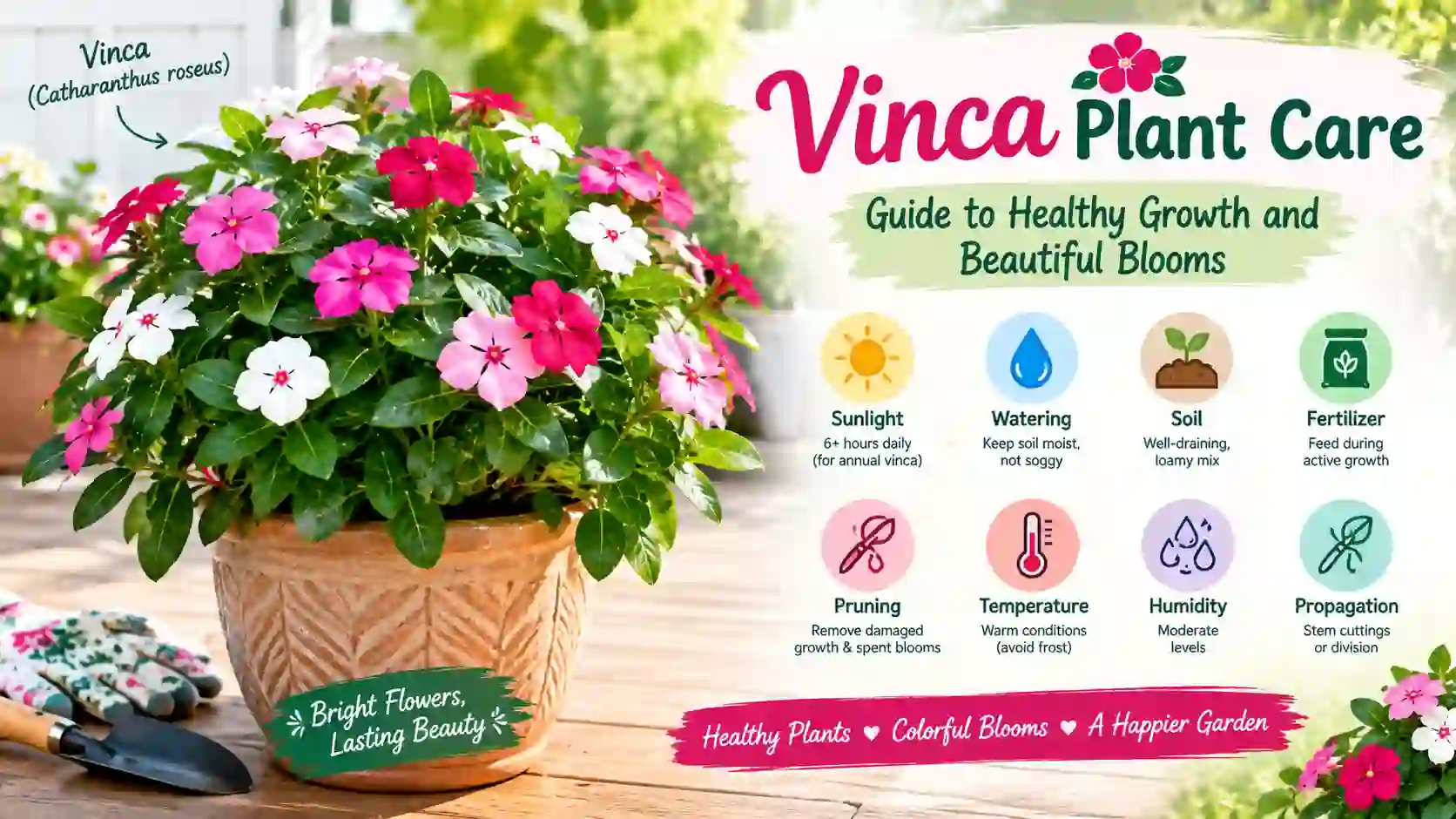
Vinca is a rewarding choice for gardeners who want reliable color without a complicated maintenance routine. Its flowers commonly appear in pink, purple, red, white, and other shades, depending on the variety.
However, not every vinca grows under the same conditions. Annual vinca thrives in warm, sunny locations, while perennial vinca is often grown as a spreading ground cover in shadier areas.
Confusing these plants can lead to poor flowering, yellow leaves, or disappointing growth. Overwatering is another common problem, particularly when gardeners assume flowering plants need constantly moist soil.
The key to successful vinca plant care is to identify your plant first, then match its light, water, soil, and seasonal needs.
Quick Answer:
Vinca plants grow best in warm conditions with plenty of sunlight, well-draining soil, and moderate watering. Give annual vinca (Catharanthus roseus) around 6 or more hours of sunlight daily, water when the soil begins to dry, and avoid waterlogged roots. Perennial vinca (Vinca minor and Vinca major) generally prefers partial shade to full shade and evenly moist, well-drained soil. Choose care based on which type you grow.
1. Understanding the Different Types of Vinca


6
The word “vinca” commonly refers to two different groups of plants. Although they have similar names, their growth habits and care requirements differ.
Annual vinca (Catharanthus roseus)
Annual vinca is also called Madagascar periwinkle. It produces upright or mounding growth with colorful flowers and glossy leaves.
It is commonly grown in warm-season flower beds, containers, and sunny borders. It tolerates heat well once established and generally prefers soil that dries slightly between waterings.
Despite the word “annual,” it is botanically a tender perennial in warm climates. Gardeners in colder regions usually grow it as an annual because frost damages or kills it.
Perennial vinca (Vinca minor and Vinca major)
Perennial vinca is commonly called creeping myrtle or periwinkle. It spreads along the ground and develops trailing stems with green foliage and usually blue-purple flowers, although other cultivars exist.
It is often used as a ground cover under trees or in partially shaded garden areas. It prefers moisture that is reasonably consistent without leaving its roots waterlogged.
Important distinction: Perennial vinca can spread aggressively in suitable climates and may become invasive outside its native range. Check local guidance before planting it near natural areas.
2. Vinca Plant Care at a Glance
| Care factor | Annual vinca | Perennial vinca |
|---|---|---|
| Sunlight | Full sun; tolerates light shade | Partial shade to shade; some cultivars tolerate sun |
| Watering | Allow the upper soil to dry slightly | Keep soil moderately moist without waterlogging |
| Soil | Well-draining, moderately fertile | Well-draining soil with reasonable moisture retention |
| Temperature | Warm conditions; sensitive to frost | Depends on species and local climate |
| Fertilizer | Light feeding during active growth | Usually modest feeding when needed |
| Pruning | Remove damaged growth and spent flowers if desired | Trim spreading stems to control growth |
| Main use | Seasonal beds, borders, and containers | Ground cover and shaded borders |
These recommendations are general starting points. Cultivar, climate, drainage, and growing conditions can change the exact care routine.
3. How Much Sunlight Does Vinca Need?

Sunlight strongly influences flowering, stem strength, and overall plant shape. The ideal amount depends on which vinca you have.
Sunlight for annual vinca
Annual vinca generally performs best with at least 6 hours of direct sunlight daily. Full sun encourages compact growth and abundant flowering in warm conditions.
In very hot climates, some afternoon protection can help reduce stress, particularly for plants growing in small containers. However, too much shade often produces fewer flowers and stretched stems.
Sunlight for perennial vinca
Perennial vinca typically grows well in partial shade or shade. It can tolerate more sun when the soil remains sufficiently moist and temperatures are moderate.
In hot climates, intense afternoon sunlight may scorch leaves or dry the soil too quickly. A location with morning sunlight and afternoon shade can be a good compromise.
Signs your vinca needs a different location
- Few flowers: The plant may not receive enough light, especially if it is annual vinca.
- Long, weak stems: Insufficient light can cause stretched growth.
- Scorched leaves: Strong sun, heat, or dry soil may be responsible.
- Slow growth in deep shade: Some perennial cultivars may benefit from additional filtered light.
Expert tip: Change the plant’s exposure gradually when possible. A sudden move from shade into strong direct sunlight can damage leaves that have not acclimated.
Image suggestion: Create a sunlight infographic comparing annual vinca in full sun with perennial vinca growing under partial shade.
4. How to Water Vinca Plants Correctly

Watering is one of the most important parts of vinca plant care. Both insufficient moisture and waterlogged soil can damage plants, but annual vinca is particularly vulnerable to root problems in poorly drained conditions.
When should you water vinca?
For annual vinca, check the soil before watering. If the upper inch or two feels dry, assess the deeper root zone and water when needed.
Established perennial vinca may need less frequent irrigation outdoors, depending on rainfall and soil conditions. Newly planted ground cover needs more consistent monitoring until its roots establish.
There is no universal watering schedule. A plant in a small pot under hot sunlight may dry much faster than one growing in shaded garden soil.
The correct watering method
- Check soil moisture with your finger before adding water.
- Water near the base of the plant to direct moisture toward the roots.
- For container plants, water thoroughly until excess water escapes through the drainage holes.
- Empty standing water from saucers and let the soil dry to the appropriate level before watering again.
Avoid keeping annual vinca constantly wet. Persistent moisture around the roots can encourage root rot and other diseases.
How to recognize watering problems
| Symptom | Possible cause | What to do |
|---|---|---|
| Wilting with dry soil | Underwatering or heat stress | Water thoroughly and reassess moisture |
| Yellow leaves with wet soil | Overwatering or root damage | Improve drainage and inspect roots if symptoms persist |
| Brown, crispy edges | Dry soil, heat, or salt buildup | Check moisture, exposure, and fertilizer use |
| Soft stems and collapsing growth | Possible root or stem disease | Inspect the affected plant and remove diseased material |
Wilting does not always mean a plant needs water. A plant with damaged roots can wilt even when the soil is wet. Check moisture first instead of automatically adding more water.
5. Best Soil for Healthy Vinca Growth

Vinca needs soil that provides moisture while allowing excess water to drain. Heavy, compacted soil can deprive roots of oxygen and increase the risk of root disease.
Soil requirements for annual vinca
Choose a loose, well-draining potting mix for containers. A quality general-purpose potting mix is often suitable when the pot has drainage holes.
For garden beds, loosen compacted soil and improve drainage before planting. Avoid placing annual vinca in areas where rainwater regularly collects.
Soil requirements for perennial vinca
Perennial vinca tolerates a wider range of garden soils. It often grows well in moderately fertile soil that retains some moisture without remaining saturated.
Although it can tolerate relatively dry conditions after establishment, prolonged drought can slow growth and cause foliage to decline.
Should you use compost?
A modest amount of mature compost can improve soil structure and provide nutrients. Avoid excessive additions that leave containers too dense or keep the root zone wet for too long.
Practical tip: If water remains on the soil surface for a long time or a container stays wet for days, check the mix and drainage before changing your watering frequency.
6. Ideal Temperature and Humidity for Vinca

Annual vinca is a warm-weather flowering plant. It grows actively in warm conditions and performs poorly when exposed to frost or prolonged cold weather.
Temperature needs
- Annual vinca: Plant outdoors after the danger of frost has passed and conditions have warmed.
- Perennial vinca: Cold tolerance varies by species and cultivar. Vinca minor is generally more cold-hardy than tender annual vinca.
In very hot weather, container-grown annual vinca may need closer moisture monitoring because pots heat up and dry out quickly.
Does vinca need high humidity?
Vinca generally does not require special humidity control when grown outdoors in a suitable climate. Good airflow and sensible watering are more important than misting the leaves.
Avoid crowding plants excessively. Dense growth combined with persistently wet foliage can increase the risk of disease.
7. How to Fertilize Vinca for More Flowers

Fertilizer supports leaf growth, root development, and flowering. However, excess fertilizer can encourage leafy growth at the expense of flowers or cause salt buildup around roots.
Best fertilizer routine
For annual vinca:
- Start with reasonably fertile soil.
- Apply a balanced or flowering-plant fertilizer according to the label when needed.
- Feed container plants according to their growth rate and the nutrient content of their potting mix.
- Reduce feeding when growth slows or the weather becomes unsuitable.
For perennial vinca, established plants often need little additional fertilizer. Apply a modest amount only when soil fertility or plant growth indicates a need.
Why is my vinca growing leaves but not flowers?
Too much nitrogen can encourage foliage instead of flowering. Other causes include insufficient sunlight, unsuitable temperatures, and general plant stress.
Before increasing fertilizer, check the light exposure and soil moisture. More fertilizer will not correct poor drainage or a deeply shaded location.
Image suggestion: Create a simple infographic comparing balanced feeding, excessive fertilizer, and healthy flowering vinca.
8. How to Prune Vinca Plants

Pruning helps maintain a neat shape, remove damaged stems, and control spreading growth. The best approach depends on whether you are growing annual or perennial vinca.
Pruning annual vinca
Annual vinca often needs little pruning. If the plant becomes leggy or develops damaged stems, trim it lightly with clean scissors or pruning shears.
Remove dead or diseased material as soon as practical. Most modern annual vinca varieties do not require regular deadheading to keep flowering.
Pruning perennial vinca
Perennial vinca can spread beyond its intended planting area. Trim trailing stems to maintain boundaries and remove damaged foliage.
For established ground cover, selective trimming can help keep paths and nearby plants clear. Check local recommendations before allowing it to spread into natural areas.
Common pruning mistakes
- Cutting back too much healthy growth at once.
- Using dirty tools on diseased plants.
- Pruning without considering the plant’s growth habit.
- Leaving infected plant material among healthy plants.
Expert tip: If a plant is stressed by heat or drought, address the underlying problem before carrying out heavy pruning.
9. How to Propagate Vinca Plants

Propagation lets you grow additional plants from suitable parent material. Annual and perennial vinca can be propagated by different methods, depending on the species and cultivar.
Propagating annual vinca from stem cuttings
- Select a healthy, nonflowering stem from a vigorous plant.
- Use clean scissors to take a cutting with several nodes.
- Remove leaves from the lower portion of the stem.
- Place the lower node in a moist, well-draining propagation medium.
- Keep the cutting warm in bright, indirect light and maintain light moisture without saturating the medium.
- Once roots have developed sufficiently, transplant the cutting into an appropriate potting mix.
Rooting time varies with temperature, plant condition, and growing conditions. Avoid pulling the cutting repeatedly to check for roots.
Propagating perennial vinca
Perennial vinca can spread naturally when its stems root at contact points with the soil. Gardeners can also divide established plants where appropriate.
Division is often a practical method for expanding an existing patch. Replant divisions promptly and water them until their roots establish.
Can vinca grow from seed?
Annual vinca can be grown from seed, although germination and early growth require suitable warmth and moisture. Seed-grown plants may not reproduce every characteristic of a named cultivar.
10. How to Grow Vinca in Pots and Hanging Baskets

Annual vinca works well in containers because it combines attractive flowers with relatively low maintenance. Compact varieties suit pots, while spreading varieties can soften container edges.
Choose the right container
Select a pot with several drainage holes. The container should provide enough space for the root system without holding an unnecessarily large volume of wet soil.
Use a quality potting mix rather than heavy garden soil. Garden soil can compact in containers and restrict drainage.
Container care tips
- Place the pot where the plant receives sufficient sunlight.
- Check soil moisture more often during hot, windy weather.
- Water thoroughly and allow excess water to drain.
- Feed according to the potting mix and fertilizer instructions.
- Remove damaged stems and inspect regularly for pests.
Containers dry faster than garden beds, but that does not mean they need water every day. Check the soil before watering.
Can perennial vinca grow in pots?
Yes. Trailing perennial vinca can grow in containers, provided it receives suitable light, moisture, and drainage. Keep in mind that vigorous stems may spread beyond the pot, and the plant may need protection suited to your local winter climate.
11. Common Vinca Plant Problems and How to Fix Them

Vinca is generally straightforward to grow, but poor growing conditions and plant diseases can still cause problems. Correct identification matters because treating a disease as a watering issue may make the situation worse.
| Problem | Possible cause | Recommended action |
|---|---|---|
| Yellow leaves | Water stress, poor drainage, nutrient issues, or natural aging | Check soil moisture, drainage, and the pattern of affected leaves |
| Wilting despite wet soil | Root damage or root disease | Stop unnecessary watering and inspect roots |
| Few flowers | Too much shade, excess nitrogen, or plant stress | Improve light where suitable and review feeding |
| Brown leaf edges | Drought, heat, salt buildup, or root stress | Check moisture and fertilizer practices |
| Black or rotting stems | Possible stem or root disease | Isolate affected plants and remove diseased material |
| White powdery coating | Possible powdery mildew | Improve airflow and confirm the cause before treatment |
| Chewed leaves | Caterpillars, slugs, or other pests | Inspect leaves and nearby soil for pests |
| Sudden decline across several plants | Possible disease, waterlogging, or environmental stress | Check shared growing conditions and look for disease symptoms |
Why is my vinca wilting even though the soil is wet?
This is an important warning sign. Healthy roots need oxygen, and constantly saturated soil can damage them. Root damage prevents the plant from absorbing water effectively, even when plenty is present.
Check whether the container drains freely. If the plant continues to decline, gently inspect the roots for soft, dark, or foul-smelling tissue.
Remove severely damaged roots with clean tools when appropriate, repot into fresh, well-draining medium if needed, and avoid keeping the remaining root zone saturated.
Why are my vinca leaves turning yellow?
Yellow leaves can result from overwatering, underwatering, nutrient problems, or natural aging. Start by checking the soil rather than immediately applying fertilizer.
If the soil is wet and several leaves are yellowing, investigate drainage and root health. If the soil is dry and the plant is limp, water thoroughly and monitor recovery.
What diseases affect vinca?
Annual vinca can be affected by root rots and fungal or fungal-like diseases, including problems associated with Phytophthora and Pythium. Symptoms vary, and environmental stress can resemble disease.
Use clean tools, avoid waterlogged soil, and do not reuse contaminated potting mix. If a disease is suspected, identify it before applying a treatment.
12. Vinca Plant Care Through the Seasons

Vinca care changes with the weather, especially for annual varieties grown outdoors.
| Season | Care priorities |
|---|---|
| Spring | Plant annual vinca after frost danger passes; prepare well-draining soil |
| Summer | Monitor container moisture, protect from extreme stress, and maintain airflow |
| Autumn | Enjoy remaining blooms while temperatures permit; remove declining annual plants when finished |
| Winter | Protect tender annual vinca from cold; check the hardiness of perennial species in your area |
In tropical and subtropical climates, annual vinca may grow for much longer than it does in colder regions. Heat, humidity, rainfall, and disease pressure can still influence its performance.
Perennial vinca may remain evergreen in mild climates, while colder weather can slow growth or damage foliage depending on the species.
13. Annual Vinca vs. Perennial Vinca: Which Should You Grow?


7
Choose annual vinca if your main goal is colorful seasonal flowers in sunny garden beds, borders, or containers. It is a strong option for warm weather and often flowers for an extended period under suitable conditions.
Choose perennial vinca if you want a spreading ground cover for a shaded or partially shaded location. It is more useful for covering soil than for creating an upright display of large, colorful flowers.
Before planting perennial vinca, consider its spreading habit and potential to become invasive. It is not suitable for every landscape.
The simplest rule: For a sunny flower bed, consider annual vinca. For a shaded ground-cover area, consider a suitable perennial species after checking local planting guidance.
14. Common Mistakes to Avoid When Growing Vinca
Even resilient flowering plants can struggle when basic care is inconsistent. Avoid these mistakes to help your vinca establish strong roots and produce healthy foliage.
- Overwatering: Constantly wet soil can damage roots. Check moisture before watering.
- Planting in heavy soil: Improve drainage instead of trying to manage saturated soil through less frequent watering alone.
- Choosing the wrong location: Annual and perennial vinca have different light preferences.
- Overfertilizing: Excess nutrients can encourage foliage at the expense of flowers.
- Ignoring early disease symptoms: Yellowing, stem rot, and persistent wilting deserve investigation.
- Crowding plants: Leave sufficient space for airflow and growth.
- Planting invasive ground cover without checking: Research local guidance before planting spreading perennial vinca.
One of the most useful habits is to observe the whole plant. A single yellow leaf may be harmless, but widespread yellowing combined with wet soil suggests a problem that needs attention.
15. Frequently Asked Questions About Vinca Plant Care
Does vinca need full sun or shade?
Annual vinca generally prefers full sun, while perennial vinca usually grows best in partial shade to shade. Some varieties tolerate different conditions, so identify your plant before choosing a location.
How often should I water vinca?
Water when the soil moisture indicates the plant needs it. Annual vinca generally benefits from allowing the upper soil to dry slightly, while perennial vinca prefers more consistent moisture without waterlogging.
Does vinca come back every year?
Annual vinca is usually grown as a seasonal plant in regions with cold winters. It may survive for multiple years in frost-free climates. Perennial vinca can return year after year when growing conditions suit the species.
Why is my vinca not flowering?
Insufficient sunlight, excessive nitrogen, unsuitable temperatures, and general plant stress can reduce flowering. Check light and watering conditions before adding more fertilizer.
Can vinca grow in hot weather?
Annual vinca performs well in warm weather and tolerates heat once established. However, extreme heat can still stress container plants and increase their watering needs.
Is vinca drought-tolerant?
Established plants can tolerate some dry periods, but their drought tolerance varies by species and growing conditions. Newly planted vinca needs more consistent moisture while its roots establish.
Should I deadhead vinca flowers?
Most modern annual vinca varieties are self-cleaning and do not require regular deadheading. You can remove damaged flowers and foliage to keep plants tidy.
Can vinca grow indoors?
Annual vinca can be grown indoors temporarily or in a bright sunroom, but it generally flowers best outdoors in suitable sunlight. Perennial vinca can also grow in containers indoors, although its spreading growth habit makes it more commonly used outdoors.
Is vinca toxic to pets?
Yes. Catharanthus roseus contains toxic alkaloids, and perennial Vinca species also present toxicity concerns. Keep plants away from pets and children, and seek veterinary or poison-control advice if ingestion occurs.
How do I make vinca grow faster?
Provide the correct light, well-draining soil, suitable warmth, and consistent moisture. Avoid overfertilizing or keeping the roots constantly wet, as these practices can damage rather than improve growth.
Conclusion:
Successful vinca plant care starts with choosing the right plant for your garden. Annual vinca thrives in warm, sunny conditions and well-draining soil, while perennial vinca is generally better suited to shaded areas and spreading ground cover.
Water according to soil moisture, avoid excessive fertilizer, and monitor your plants for early signs of stress. If your vinca develops yellow leaves or wilts despite wet soil, investigate the roots and drainage before making changes.
With the right location and a consistent care routine, vinca can provide attractive foliage and colorful flowers throughout its growing season. Start with the basics, observe how your plant responds, and adjust your care to suit your local climate.