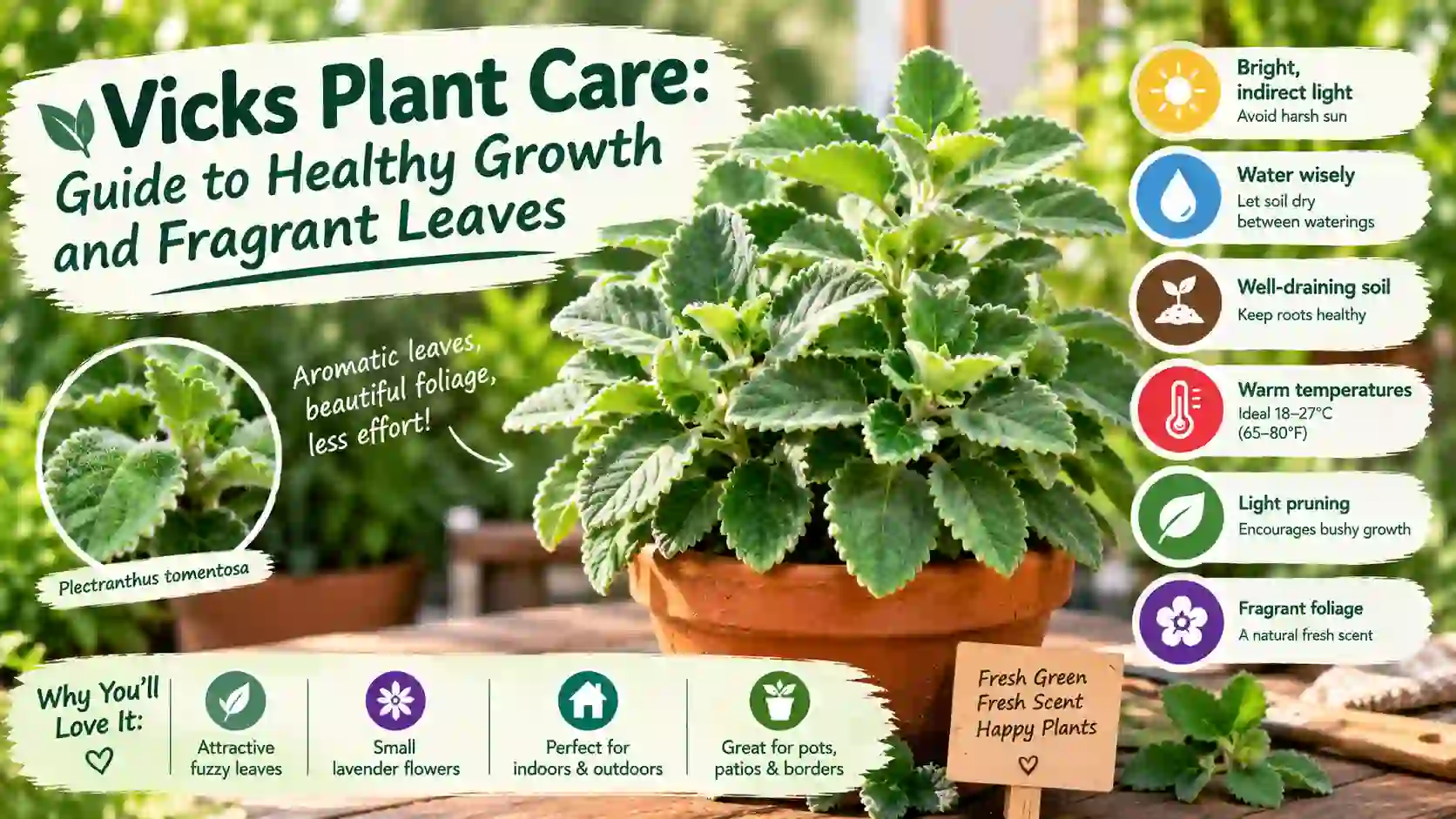
Vicks plant care is straightforward once you understand that this fragrant plant behaves more like a soft succulent than a typical moisture-loving houseplant. Its rounded, velvety leaves release a distinctive menthol-like aroma when gently rubbed, which explains its common name.
Botanically known as Plectranthus tomentosa, the Vicks plant is prized for its unusual foliage, easy propagation, and spreading growth habit. It can brighten a sunny windowsill, patio, balcony, or hanging basket without demanding constant attention.
The biggest challenge is usually watering. Because the leaves are thick and slightly succulent, the plant can tolerate some drying between waterings. Keeping the potting mix wet for too long can damage its roots, especially in cool weather or indoors where evaporation is slower.
This guide explains how to choose the right light, water correctly, prepare suitable soil, maintain a compact shape, propagate new plants, and troubleshoot common problems. It also clarifies an important point: the plant’s familiar scent does not mean it is a proven substitute for commercial vapor rub or medical treatment.
Quick Answer:
Vicks plant (Plectranthus tomentosa) grows best in bright, indirect light, warm temperatures, and well-draining soil. Its thick, fuzzy leaves store some moisture, so let the soil dry between waterings to reduce the risk of root rot. Pinch growing tips to encourage bushier growth, fertilize lightly during active growth, and protect the plant from frost. It also grows well in containers and hanging baskets.
1. What Is a Vicks Plant?

The Vicks plant is an aromatic member of the mint family, Lamiaceae. It is commonly identified as Plectranthus tomentosa, although some references use the name Plectranthus hadiensis var. tomentosus. Its foliage has a soft, hairy texture, and the leaves release a strong camphor-like or menthol-like scent when crushed.
How to identify a Vicks plant
Look for these characteristic features:
- Fuzzy leaves: Rounded or oval green leaves covered with fine hairs.
- Scalloped edges: Leaf margins often have small rounded teeth.
- Aromatic foliage: Rubbing a leaf gently releases a strong medicinal-smelling fragrance.
- Soft, spreading stems: The plant can trail over a pot’s edge or become bushier with pruning.
- Small flowers: Mature plants may produce delicate pale purple or lavender flower spikes under suitable conditions.
Is the Vicks plant the same as Cuban oregano?
No. The names are sometimes confused because several Plectranthus plants have aromatic leaves. Cuban oregano is usually Coleus amboinicus (also known as Plectranthus amboinicus), which has thicker, broader leaves with a different appearance and aroma. The Vicks plant is typically identified as Plectranthus tomentosa.
Correct identification matters because watering needs, leaf texture, and intended uses can differ among related plants.
2. Give Your Vicks Plant the Right Amount of Light

Light determines how compact the plant grows, how much new foliage it produces, and how well it maintains its shape. Vicks plants generally do well in bright, indirect light and can tolerate some direct sun when they are gradually acclimated. In very hot climates, harsh afternoon sun may scorch the leaves.
Best lighting conditions
- Indoors: Place the plant near a bright window with filtered light.
- Outdoors: Choose a bright patio or a spot with partial shade.
- Morning sun: Gentle morning sunlight can support compact growth.
- Harsh afternoon sun: Provide protection if leaves become bleached, dry, or scorched.
- Low light: Avoid dark corners where stems may stretch and growth becomes sparse.
How to recognize a light problem
| What you notice | Possible explanation | What to do |
|---|---|---|
| Long stems with wide gaps between leaves | Insufficient light | Move the plant to a brighter location gradually |
| Pale, scorched patches | Excessive direct sun or heat | Provide filtered light and afternoon shade |
| Slow growth in winter | Reduced light and seasonal slowdown | Give the plant the brightest suitable location |
| Uneven growth toward a window | Light coming from one direction | Rotate the pot occasionally |
Practical tip: If you move a Vicks plant from indoors into outdoor sunlight, do it gradually over several days. A sudden change from filtered indoor light to intense sun can damage the foliage.
Image suggestion: A side-by-side infographic showing a compact Vicks plant in bright filtered light and a stretched plant in a dim corner.
3. Water Carefully to Prevent Root Rot
Watering is one of the most important parts of Vicks plant care. Its fleshy leaves store moisture, so the plant generally needs less frequent watering than plants with thin, delicate foliage.
The safest approach is to water thoroughly, allow excess water to drain, and wait until the potting mix has dried sufficiently before watering again. Texas A&M AgriLife Extension also recommends allowing the soil to dry between waterings.
How to water a Vicks plant step by step

Step 1: Check the soil
Feel the mix a few centimeters below the surface. If it still feels damp, wait. A dry surface alone does not always mean the entire root zone needs water.

Step 2: Water the root zone
Apply water evenly to the soil rather than repeatedly wetting the fuzzy leaves. Water enough to moisten the root ball.

Step 3: Let the pot drain
Allow excess water to escape through the drainage holes. Empty any saucer so the roots do not sit in standing water.

Step 4: Wait before watering again
Let the mix dry between waterings. Check more frequently during warm, bright weather and less frequently during cool, low-light periods.
How often should you water a Vicks plant?
There is no universal watering schedule. A plant in a small terracotta pot may dry quickly, while one in a large plastic pot can stay wet much longer.
| Growing condition | Watering approach |
|---|---|
| Warm spring and summer | Check regularly and water when the mix has dried sufficiently |
| Cool autumn weather | Reduce watering as growth slows |
| Winter indoors | Water less often if light and growth decrease |
| Outdoors in hot, windy weather | Check the root zone more frequently |
| Heavy, water-retentive soil | Correct the soil and drainage instead of simply adjusting the schedule |
Signs of overwatering and underwatering
Overwatering may cause:
- Yellowing leaves.
- Soft or dark stems near the soil.
- A persistently wet potting mix.
- Mushy, brown roots.
- A musty smell from the root zone.
Underwatering may cause:
- Wrinkled or limp leaves.
- Dry, shrinking stems.
- Soil pulling away from the sides of the pot.
- Wilting that improves after appropriate watering.
Do not assume every drooping leaf needs water. When the soil is wet and the plant is wilting, root damage or poor drainage may be the actual problem.
Image suggestion: A watering infographic comparing dry soil, properly watered soil, and a waterlogged root zone.
4. Choose a Fast-Draining Soil Mix
Vicks plants need soil that allows air to reach their roots. A dense mix that stays wet for days increases the risk of root rot, particularly indoors or during cooler months.
A cactus and succulent potting mix is a useful starting point. If it holds too much moisture in your environment, improve drainage with a suitable mineral ingredient such as pumice or perlite.
A practical potting mix
For a simple homemade mix, try:
- 2 parts quality potting mix for structure and modest moisture retention.
- 1 part perlite or pumice to improve aeration and drainage.
Adjust the proportions if your existing potting mix is unusually heavy or your climate is very humid. The goal is a loose mix that wets evenly but does not remain saturated.
Which pot is best?
A pot with drainage holes is essential. Terracotta can be helpful because its porous sides allow the mix to dry more quickly, while plastic pots retain moisture longer.
Choose a container only slightly larger than the root ball. An oversized pot holds more unused soil, which can remain wet long after the roots have taken up the available water.
When should you repot?
Repot when roots crowd the container, the mix breaks down, or water no longer drains properly. Spring or early active growth is generally a convenient time.
After repotting, avoid immediately soaking a plant that has been severely disturbed. Follow the moisture needs of the mix and the condition of the roots, and let damaged areas settle before returning to a normal routine.
5. Maintain Warm Temperatures and Suitable Airflow
Vicks plants are tender to cold and should be protected from frost. Texas A&M AgriLife Extension gives a general preferred range of about 65–80°F (18–27°C).
Temperature guidelines
- Comfortable growth: Aim for ordinary warm indoor conditions.
- Cold weather: Bring outdoor plants inside before temperatures approach damaging levels.
- Frost: Do not leave the plant exposed to freezing conditions.
- Hot weather: Provide some protection from intense afternoon heat, especially in small containers.
In Lahore and other hot-summer regions, a bright shaded patio or a window with filtered light may work better than an exposed west-facing balcony. During cooler months, a sunny, sheltered location can encourage more compact growth.
Airflow is also useful. Keep the plant away from persistently damp, enclosed corners, and avoid placing it directly in strong, drying winds that can break soft stems or dehydrate leaves.
6. Does the Vicks Plant Need High Humidity?
Usually, no special humidity treatment is necessary. Vicks plants are relatively adaptable to ordinary household humidity when watering, light, and drainage are appropriate. They do not need the consistently humid environment preferred by many tropical foliage plants.
Should you mist a Vicks plant?
It is better to avoid routine misting. The fine hairs on the leaves can retain moisture, and repeatedly wet foliage may encourage problems in poorly ventilated conditions. Texas A&M AgriLife Extension advises against misting this plant.
Texas A&M AgriLife Extension Service
Instead:
- Water the soil directly.
- Keep the plant in a well-ventilated position.
- Avoid crowding it among other plants.
- Remove fallen leaves and dead plant material.
- If the leaves are dusty, use a soft, dry brush or gently clean them without leaving the foliage wet for long.
Common mistake: Raising humidity to compensate for dry, damaged leaves can make matters worse if the underlying problem is root rot, harsh sunlight, or poor watering.
7. Fertilize Lightly During Active Growth
Vicks plants do not require heavy feeding. Excess fertilizer can build up in the potting mix and damage roots, especially when the plant grows slowly or receives limited light.
A simple feeding routine
- Begin feeding when the plant shows active new growth.
- Use a balanced houseplant fertilizer or a fertilizer formulated for succulents.
- Dilute it according to the product label; a half-strength solution is a cautious option when the label permits it.
- Apply only as often as needed during active growth.
- Reduce or stop feeding during winter slowdown.
A plant growing in fresh potting mix may not need immediate fertilizer. If growth is weak, check light, root health, and watering before assuming the plant lacks nutrients.
Expert tip: Fertilizer cannot fix root rot. If the plant is declining in constantly wet soil, correct the drainage problem first.
8. Prune Your Vicks Plant for Fuller Growth

Vicks plants can develop long, trailing stems. This is natural, but pruning can help maintain a compact shape and encourage branching.
How to prune correctly
- Use clean, sharp scissors or pruning snips.
- Identify a healthy stem with several leaves.
- Pinch or cut just above a leaf node.
- Remove damaged, yellow, or dead growth.
- Allow the plant to recover in bright, suitable light.
A leaf node is the point where a leaf or branch joins the stem. New growth may develop near this point, giving the plant a fuller appearance.
How often should you prune?
Prune when stems become too long or the plant starts to look sparse. During active growth, occasional pinching is usually more useful than frequent heavy cutting.
Avoid removing too much foliage at once, especially from a weak plant. Healthy leaves help the plant produce the energy it needs to recover.
Should you remove the flowers?
You can remove flower spikes if you prefer to focus on foliage and maintain a compact appearance. Alternatively, allow the plant to bloom if you enjoy its delicate flowers. Flowering does not automatically mean the plant is unhealthy.
Image suggestion: A labeled pruning diagram showing a stem, leaf node, cutting point, and new branching growth.
9. How to Propagate a Vicks Plant From Cuttings
Propagation is one of the easiest ways to grow more Vicks plants. Healthy stem cuttings can develop roots in water or a suitable growing medium, making this a practical option if your existing plant becomes long and leggy.
Propagation in water

- Choose a healthy stem with several leaves.
- Cut a section just below a leaf node using clean scissors.
- Remove leaves from the portion that will sit underwater.
- Place the lower stem in a clean glass of water, keeping the remaining leaves above the surface.
- Set it in bright, indirect light.
- Refresh the water when it becomes cloudy.
- When the cutting has developed several healthy roots, transfer it to a small pot with well-draining mix.
Avoid leaving the cutting in harsh direct sun, which can heat the water and stress the stem.
Propagation directly in soil
You can also place a fresh cutting into a small container of lightly moist, well-draining propagation mix.
- Remove the lower leaves.
- Insert the bare stem into the medium.
- Keep the mix slightly moist, not saturated.
- Provide bright, indirect light and warmth.
- Check gently for resistance or new growth rather than repeatedly pulling the cutting out.
The time required for rooting varies with temperature, light, and the condition of the cutting. Do not assume a cutting has failed simply because it has not produced visible new leaves within a few days.
When is the best time to propagate?
Spring and summer are generally the easiest seasons because the plant is actively growing. You can also try propagation at other times if conditions are warm and bright enough, but rooting may be slower during winter.
Useful tip: If your mature plant is already being pruned to encourage branching, use the healthy cuttings to create new plants. This combines routine maintenance with propagation.
10. Common Vicks Plant Problems and Their Solutions
Most Vicks plant problems come from a mismatch between watering, light, temperature, and soil conditions. Before treating a symptom, check the entire growing environment.

| Problem | Likely cause | What to do |
|---|---|---|
| Yellow leaves | Overwatering, poor drainage, or natural aging | Check soil moisture and inspect roots if yellowing continues |
| Soft or black stems | Possible stem or root rot | Remove damaged tissue where practical and correct wet conditions |
| Wrinkled leaves | Underwatering or damaged roots | Check soil moisture before watering |
| Long, sparse stems | Insufficient light or lack of pruning | Increase suitable light gradually and pinch growing tips |
| Brown, crispy patches | Harsh sun, heat, or severe drying | Adjust the location and check moisture |
| Leaves dropping | Sudden environmental change, cold, or root stress | Stabilize conditions and inspect the root zone |
| White cottony clusters | Possible mealybugs | Isolate the plant and treat the identified pest |
| Fine webbing and stippled leaves | Possible spider mites | Inspect leaf undersides and use an appropriate control |
| Slow growth | Low light, cool conditions, root problems, or seasonal slowdown | Check the plant’s conditions before feeding |
Why is my Vicks plant turning yellow?
Yellow leaves are not always a sign of nutrient deficiency. If the soil stays wet, roots may not receive enough oxygen to function properly. In this case, fertilizer can add stress rather than solve the problem.
Check the following:
- Is the soil still wet several days after watering?
- Does the container have open drainage holes?
- Is the plant growing in a very large pot?
- Are the roots firm or soft and brown?
- Has the plant recently moved into a colder or darker location?
If roots are mushy, trim away clearly rotten sections with clean tools and repot the remaining healthy plant in fresh, free-draining mix. Severe rot may not be reversible.
Why is my Vicks plant losing its scent?
A weak scent may result from differences in the plant, growing conditions, or the intensity of the aroma when leaves are touched. Do not repeatedly crush leaves to test the fragrance; doing so can damage foliage.
First, confirm that the plant is correctly identified. Several similar-looking aromatic Plectranthus species are sold under overlapping common names.
How do I deal with pests?
Inspect new growth and the undersides of leaves. If you find insects, isolate the plant from nearby houseplants and identify the pest before choosing a treatment. A gentle rinse or manual removal may help with a small infestation, but avoid leaving the fuzzy leaves persistently wet.
Use any insecticidal product strictly according to its label and test it on a small area first if the product is suitable for the plant.
11. Is the Vicks Plant Safe for Pets and People?
The Vicks plant’s fragrance resembles a familiar vapor rub, but the plant is not the same as a commercial medicinal product. Its scent alone does not establish that it can treat a cold, clear congestion, relieve pain, or repel insects reliably.
Because safety information can vary among Plectranthus species and sources, do not assume the plant is safe to eat or use as a home remedy.
- Do not eat the leaves or brew them into tea.
- Do not apply crushed leaves or homemade extracts to skin as a treatment.
- Do not inhale steam made with the leaves as a substitute for medical care.
- Keep the plant away from children and pets who might chew it.
- If a child or pet ingests the plant and develops symptoms, contact a qualified medical professional or veterinarian for advice.
If you grow the plant for its aroma, enjoy it as an ornamental foliage plant and avoid unverified medicinal claims.
12. Seasonal Vicks Plant Care Calendar
Vicks plants respond to changes in light, temperature, and growth rate. Adjust care to the season instead of following the same watering and feeding routine all year.
| Season | Main priorities |
|---|---|
| Spring | Resume feeding if active growth begins; prune and propagate as needed |
| Summer | Provide bright light, monitor soil moisture, and protect from extreme afternoon heat |
| Autumn | Reduce feeding as growth slows and prepare outdoor plants for cooler weather |
| Winter | Protect from cold, provide the brightest suitable light, and water less often when growth slows |
In a warm climate, outdoor growing may be possible for much of the year, but extreme heat and heavy rain still matter. In regions with cold winters, growing the plant in a portable container makes it easier to protect from frost.
Vicks plant care checklist
Vicks plant care routine
0 of 6 complete
Check soil before watering
Wait until the mix has dried sufficiently.
Confirm light is suitable
Provide bright light and protect from harsh sun.
Empty standing water
Keep drainage holes clear and saucers empty.
Inspect leaves and stems
Look for pests, yellowing, and soft spots.
Pinch or prune when needed
Encourage branching without removing too much foliage.
Adjust care to the season
Reduce watering and feeding during slower growth.
Reset checklist
Use this checklist as a reminder, not a rigid schedule. A plant in a warm, bright room may need different attention from one in a cool, shaded location.
13. Frequently Asked Questions About Vicks Plant Care
How much sunlight does a Vicks plant need?
A Vicks plant prefers bright, indirect light and can tolerate some gentle direct sunlight. Protect it from harsh afternoon sun if the leaves begin to scorch.
How often should I water my Vicks plant?
Water when the potting mix has dried sufficiently. Water thoroughly, let excess drain, and wait before watering again. The interval depends on the pot, soil, temperature, and available light.
Can I grow a Vicks plant indoors?
Yes. A bright windowsill or a location near a window with filtered light can work well. Make sure the pot drains properly and avoid keeping the soil constantly wet.
Is a Vicks plant a succulent?
It has fleshy, moisture-storing leaves and is often described as a soft succulent. This is why it generally benefits from a well-draining mix and drying between waterings.
Why is my Vicks plant growing long and leggy?
Leggy growth often indicates insufficient light. Move it gradually to a brighter location and pinch the growing tips to encourage branching.
Can a Vicks plant grow in water?
Stem cuttings can develop roots in water. However, a mature plant is generally easier to maintain in a suitable, well-draining potting mix.
Does the Vicks plant flower?
Yes. Under suitable conditions, mature plants may produce small lavender or pale purple flowers. Flowering can vary with the plant’s maturity, light, and growing conditions.
Can I grow a Vicks plant outdoors?
Yes, in warm conditions without damaging cold or frost. Choose a bright location with some protection from harsh afternoon sunlight and heavy, persistent rain.
Why are the leaves on my Vicks plant turning brown?
Brown patches may result from intense sunlight, heat, severe drying, or root problems. Check the location and soil before deciding which correction is needed.
Is the Vicks plant the same as Vicks VapoRub?
No. The plant is named for its characteristic aroma, but it is not the commercial vapor rub product. Do not assume the plant has the same ingredients, safety profile, or medical effects.
Conclusion:
Successful Vicks plant care depends on getting three basics right: bright light, fast-draining soil, and careful watering. Its thick, fuzzy leaves make it relatively forgiving, but roots can suffer if the potting mix stays wet for too long.
Give the plant a warm, bright location, use a container with drainage holes, and let the soil dry between waterings. Pinch growing tips to maintain a fuller shape, propagate healthy cuttings in spring or summer, and reduce watering when growth slows.
If your plant begins to decline, check the soil and roots before adding fertilizer. These simple habits will help you maintain a healthy, attractive plant with its distinctive aromatic foliage.

Show the soil being checked before watering, with drainage holes and loose potting mix visible.