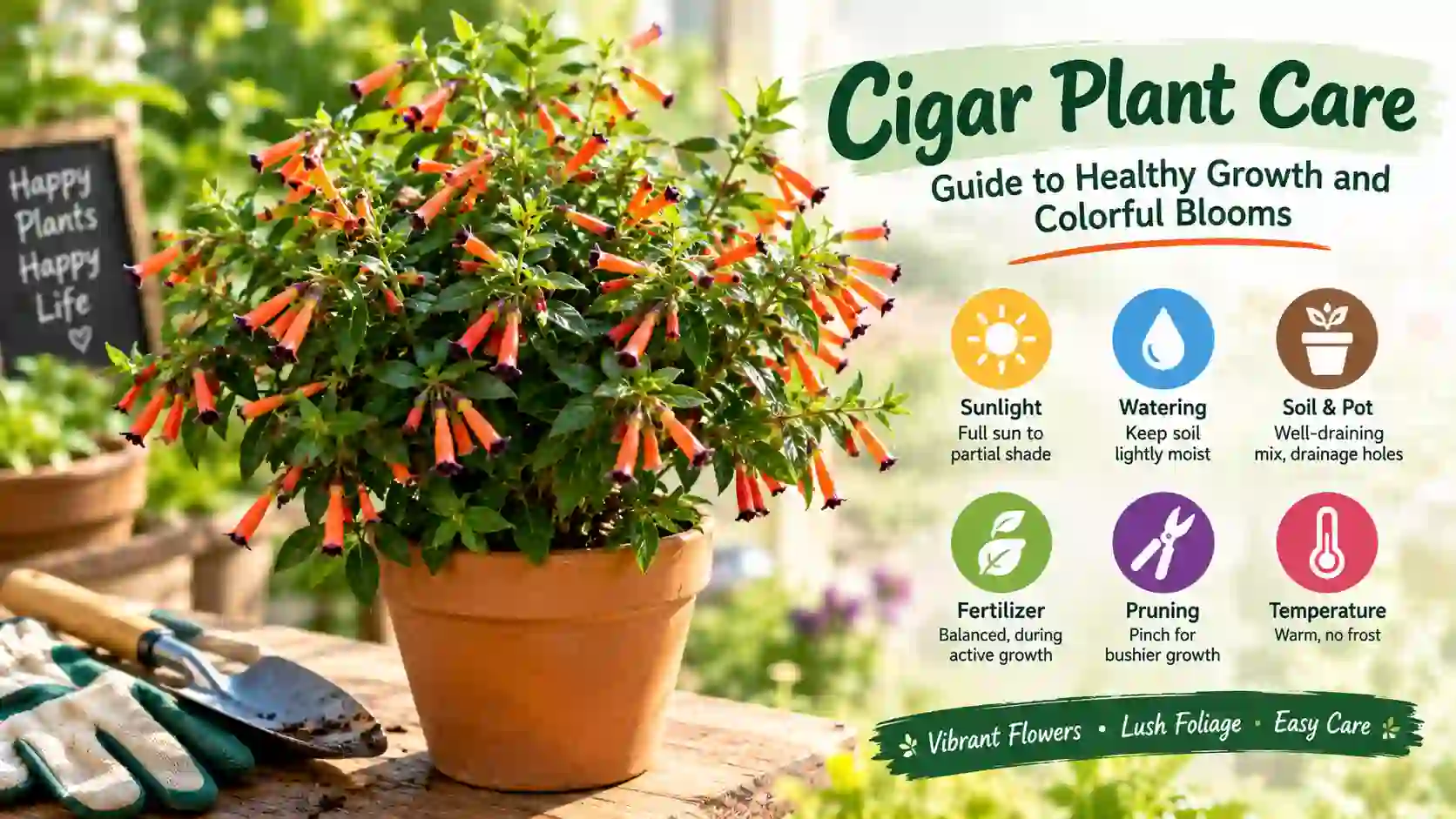
Cigar plant is a colorful flowering plant known for its narrow, tubular orange-red flowers that resemble tiny lit cigars. Also called firecracker plant or Mexican cigar plant, Cuphea ignea brings a tropical look to patios, garden borders, containers, and sunny outdoor spaces.
Despite its striking flowers, cigar plant care is relatively straightforward. The biggest challenges are usually insufficient sunlight, poorly drained soil, irregular watering, and cold temperatures. A plant that receives too little light may produce plenty of green foliage but fewer flowers. One that stays waterlogged can develop yellow leaves and unhealthy roots.
The good news is that you do not need an elaborate gardening setup to grow a healthy cigar plant. With the right location, sensible watering, occasional pruning, and suitable seasonal care, you can encourage a compact plant covered in colorful blooms.
This guide explains how to grow cigar plants in containers or garden beds, maintain flowering, troubleshoot common problems, and protect plants through changing seasons.
Quick Answer:
Cigar plant (Cuphea ignea) grows best in full sun to partial shade, warm temperatures, and well-draining soil. Water when the top inch of soil begins to dry, and avoid keeping the roots constantly wet. Feed with a balanced fertilizer during active growth, and pinch back growing tips to encourage bushier growth and more flowers. In warm climates, cigar plants can bloom for long periods, attracting hummingbirds and other pollinators.
1. Get to Know the Cigar Plant (Cuphea ignea)

The cigar plant, botanically known as Cuphea ignea, is a tropical, semi-woody flowering perennial native to Mexico. It belongs to the loosestrife family, Lythraceae, and is grown for its unusual tubular flowers and dense green foliage.
Its flowers are typically orange-red, often with pale rims and dark tips that resemble the end of a cigar. Depending on the climate and variety, the plant may flower for much of the warm season.
Why Grow a Cigar Plant?
- Long flowering season: Warm conditions and regular new growth can encourage flowers over an extended period.
- Compact size: Many plants reach around 18–30 inches tall and wide, making them suitable for patios and smaller gardens.
- Container-friendly growth: You can grow cigar plants in pots, raised beds, and garden borders.
- Pollinator appeal: The nectar-rich flowers attract hummingbirds where they occur, along with butterflies and other pollinators.
- Manageable maintenance: Regular watering, occasional feeding, and light pruning are usually sufficient.
North Carolina Extension Gardener Plant Toolbox+1
One important distinction: the common name “firecracker plant” can refer to other species, including Russelia equisetiformis. This guide focuses on Cuphea ignea. Check the botanical name on the nursery label when purchasing your plant.
2. Cigar Plant Care Requirements at a Glance
Use these recommendations as a starting point for growing a healthy plant.
| Care factor | Best starting conditions |
|---|---|
| Botanical name | Cuphea ignea |
| Light | Full sun to partial shade |
| Soil | Fertile, moisture-retentive but well-draining |
| Water | Regular moisture; avoid waterlogged soil |
| Temperature | Warm conditions; protect from frost |
| Fertilizer | Balanced fertilizer during active growth |
| Pruning | Pinch growing tips to encourage branching |
| Mature size | Approximately 18–30 inches tall and wide |
| Flower color | Orange-red, often with dark tips |
| Propagation | Stem cuttings or seeds |
| Growing style | Containers, borders, patio gardens |
| Cold tolerance | Tender perennial; frost can cause severe damage |
These are general guidelines for Cuphea ignea. Actual growth, mature size, and flowering depend on the cultivar, climate, and growing conditions.
3. How Much Sunlight Does a Cigar Plant Need?

Sunlight has a major influence on flowering and plant shape. Cigar plants generally perform best in full sun or partial shade. Adequate light encourages fresh growth, which supports the development of additional flowers.
Full Sun or Partial Shade?
Full sun: Aim for around six or more hours of direct sunlight when the weather is moderate and the plant has adapted to the exposure. This is often a good choice for gardens with mild summers.
Partial shade: Provide morning sunlight and some protection during the hottest part of the day. This can be preferable in regions with intense summer heat.
In a hot climate, more sunlight is not always better. A plant exposed to fierce afternoon sun may wilt quickly in a small container, even when its roots are healthy. Start with morning sun and observe how the leaves respond before increasing exposure.
Signs Your Cigar Plant Needs a Different Location

Too little light
Stems may become elongated, foliage may look sparse, and flowering may decline. Move the plant gradually to a brighter location.

Excessive heat or sun stress
Leaves may droop during the hottest hours, especially when the pot dries quickly. Check soil moisture and consider afternoon shade.

Suitable light
The plant develops healthy foliage and regular flowering when light, moisture, and nutrition are balanced.
Can You Grow a Cigar Plant Indoors?
Yes, provided you have a bright window or suitable grow light. However, cigar plants are generally easier to maintain outdoors in warm weather because they receive stronger natural light and better airflow.
For indoor growing:
- Choose the brightest available window.
- Rotate the pot occasionally if growth leans toward the light.
- Avoid cold air-conditioning drafts.
- Check for pests on the undersides of leaves.
- Water according to soil moisture rather than a fixed schedule.
If the plant becomes leggy indoors, improve its light before applying more fertilizer.
Image suggestion: A three-panel infographic showing cigar plants in full sun, partial shade, and low light, with a short explanation of how each location affects flowering.
4. How to Water a Cigar Plant Correctly

Cigar plants appreciate regular moisture, particularly while establishing roots and producing new growth. However, they do not benefit from soil that stays saturated for long periods. Good drainage is essential.
When Should You Water?
Rather than watering every day automatically, use the soil and the weather to guide you.
- Check the top inch of soil with your finger.
- If it feels dry, check slightly deeper to see whether the root zone is also drying.
- Water thoroughly when the mix needs moisture.
- Allow excess water to drain from the pot.
- Check again during hot weather, when containers may dry much faster.
Established plants in garden beds may tolerate short dry spells. Container-grown plants often need more frequent attention because their limited soil volume loses moisture quickly.
How Often Should You Water a Cigar Plant?
There is no universal weekly schedule.
- Hot, sunny weather: Check the soil daily in small pots, watering when needed.
- Mild weather: Soil may remain moist longer, so checks can be less frequent.
- Rainy weather: Reduce supplemental watering if rainfall keeps the root zone moist.
- Winter or slow growth: Water less frequently when the plant uses less moisture.
Do not confuse a wilted plant with a plant that always needs more water. If the soil is already wet, wilting may indicate root damage or heat stress rather than thirst.
What Is the Best Watering Method?
For container plants, water slowly across the soil surface until some water drains through the bottom. Empty standing water from the saucer.
For garden plants, direct water toward the root zone rather than repeatedly wetting the foliage. A layer of organic mulch can help stabilize soil moisture, but keep it away from the main stems.
Expert tip: If a cigar plant wilts every afternoon but recovers by evening, check whether the pot is drying too quickly. If it remains wilted while the soil is wet, inspect drainage and roots before watering again.
5. Choose the Best Soil and Pot for Cigar Plants

The best soil for cigar plants retains enough moisture to support growth while allowing excess water to escape. A fertile, well-draining loam or quality container mix is a good choice.
What Soil Mix Should You Use?
For a container, start with:
- Two parts quality all-purpose potting mix.
- One part perlite or pumice if the mix drains poorly.
This is a practical starting blend, not a mandatory formula. A commercial potting mix that already drains well may need no amendment.
Avoid heavy garden soil in pots because it can compact and restrict airflow around the roots. At the same time, avoid a very coarse mix that dries out so rapidly that the plant struggles to maintain moisture.
What Pot Size Is Best?
Choose a pot that accommodates the existing root ball and allows some room for growth. Make sure it has drainage holes.
An oversized pot can hold more unused wet soil than the roots can absorb. This can increase the risk of root problems, particularly in cool or rainy weather.
A pot that is too small can dry rapidly during hot weather and may require frequent watering. If roots fill the container or emerge through drainage holes, consider moving the plant into a slightly larger pot.
Can You Grow Cigar Plants in Garden Beds?
Yes. Choose a site with good drainage and suitable sunlight.
Before planting:
- Loosen compacted soil.
- Incorporate mature compost if the soil needs improvement.
- Avoid planting in depressions where water collects.
- Water thoroughly after planting.
- Apply a thin layer of mulch to help conserve moisture.
If your garden soil remains saturated after rain, improve drainage or grow the plant in a raised bed or container instead.
6. Temperature and Humidity: Protect Your Cigar Plant From Cold
Cigar plants are warm-climate plants. They grow best in warm conditions and are not frost tolerant. In cooler regions, they are often grown as annuals or moved indoors before cold weather arrives.
What Temperature Is Best?
A comfortable warm growing environment is ideal. As a practical target, aim for roughly 65–85°F (18–29°C), while avoiding prolonged cold exposure and extreme heat.
In very hot weather, protect container plants from excessive afternoon heat if they repeatedly wilt despite adequate moisture.
How to Protect a Cigar Plant in Winter
If your winters are cold:
- Move container plants indoors before frost threatens.
- Place them in a bright location.
- Reduce watering as growth slows.
- Avoid placing pots beside cold windows or heating vents.
- Check leaves regularly for pests after moving plants indoors.
In warm climates where frost is uncommon, a cigar plant may remain outdoors and continue growing for much of the year.
Does a Cigar Plant Need High Humidity?
It generally does not require special humidity equipment outdoors. Ordinary garden humidity is usually adequate.
For indoor plants, provide reasonable airflow and avoid keeping foliage continuously wet. If indoor air is extremely dry, monitor the plant for moisture stress rather than automatically misting it.
7. How to Fertilize a Cigar Plant for More Flowers

Fertilizer supplies nutrients for new stems, leaves, and flowers. Cigar plants grown in containers may need more regular feeding than plants in fertile garden soil because repeated watering gradually removes some nutrients.
Which Fertilizer Should You Use?
A balanced, complete fertilizer for flowering plants is a sensible choice. Follow the label for the product and your plant’s growing conditions.
During active growth:
- Apply fertilizer at the recommended dilution.
- Feed regularly according to the product label.
- Reduce or pause feeding when growth slows.
- Avoid fertilizing a severely wilted or root-damaged plant until the problem is corrected.
Can Too Much Fertilizer Reduce Flowering?
Yes. Excess fertilizer can encourage weak growth, damage roots, or contribute to salt buildup. More fertilizer does not guarantee more blooms.
If the foliage becomes unusually lush but flowers remain sparse, review the light level and feeding rate. Insufficient sunlight is often a more important problem than a lack of fertilizer.
If you see a white crust on the potting mix or leaf-edge damage, excess fertilizer salts may be involved. Flush the container with water if drainage is good, and reduce feeding afterward.
8. Pruning Cigar Plants to Encourage Bushier Growth

Cigar plants can become leggy as their stems lengthen. Pinching the growing tips encourages branching and can create a fuller, more balanced shape. The University of Florida’s gardening guidance specifically recommends tip-pruning to promote denser growth.
How to Prune a Cigar Plant

Step 1: Inspect the shape
Identify long stems, sparse areas, and healthy growing tips. Avoid removing large amounts of healthy growth at once.

Step 2: Pinch young tips
Remove the soft growing tip just above a pair of leaves. This can encourage side shoots to develop.

Step 3: Allow new growth
Give the plant adequate light, water, and time to produce branches. New growth can then support additional flowers.
When Should You Prune?
Light pinching during active growth is useful when the plant is young or becoming sparse. Avoid repeated heavy pruning when the plant is stressed by heat, drought, or cold.
For established plants that have become woody or untidy, a more substantial cutback may help renew the shape. In frost-prone areas, wait until the danger of frost has passed before cutting back damaged growth.
Do You Need to Deadhead Cigar Plant Flowers?
Not usually. Spent flowers often drop naturally, so routine deadheading is generally unnecessary. Remove damaged stems or untidy growth when needed, and focus on maintaining healthy new growth.
9. How to Propagate Cigar Plants From Cuttings

You can propagate Cuphea ignea from stem cuttings or seeds. Stem cuttings are useful when you want a new plant that retains the characteristics of the parent plant.
Step-by-Step Stem Cutting Propagation
- Select a healthy stem. Choose a non-flowering or lightly flowering shoot with healthy leaves and no visible pest damage.
- Take a cutting. Use clean scissors to cut a section approximately 3–5 inches long, just below a leaf node.
- Prepare the cutting. Remove the leaves from the lower portion, keeping several healthy leaves near the tip.
- Insert into propagation mix. Place the lower stem into a moist, airy mix of propagation medium and perlite.
- Provide warmth and indirect light. Keep the medium lightly moist and protect the cutting from strong direct sun.
- Check for root development. Once the cutting begins producing new growth and has established roots, gradually acclimate it to brighter light and normal growing conditions.
Rooting time varies with temperature, stem maturity, and growing conditions. Avoid pulling the cutting out repeatedly to check for roots.
Can You Grow Cigar Plants From Seeds?
Yes. Sow seeds in a suitable seed-starting mix and follow the seed supplier’s instructions for planting depth and germination conditions. Keep the medium moist but not saturated, and provide bright light after seedlings emerge.
Seed-grown plants may differ from their parent, particularly if the original plant is a selected cultivar or hybrid.
Image suggestion: A step-by-step propagation infographic showing a healthy stem, a prepared cutting, a cutting inserted into moist soil, and a rooted young cigar plant.
10. Common Cigar Plant Problems and How to Fix Them
Cigar plants are generally considered relatively low-maintenance, but poor growing conditions can still cause problems. Most issues become easier to correct when you identify the cause rather than treating every symptom with fertilizer or extra water.

Problem: Yellow leaves
Possible causes: Waterlogged soil, natural aging, nutrient imbalance, or root stress.
What to do: Check soil moisture and drainage first. Remove badly damaged leaves and review fertilizer use only after checking the roots.

Problem: Leggy growth
Possible causes: Insufficient light or a lack of branching.
What to do: Gradually improve light exposure and pinch back healthy growing tips during active growth.

Problem: Wilting leaves
Possible causes: Dry soil, extreme heat, or damaged roots.
What to do: Check the soil before watering. If it is dry, water thoroughly. If it is wet, inspect drainage and consider root damage.

Problem: Few or no flowers
Possible causes: Insufficient sunlight, limited new growth, excessive fertilizer, or cold weather.
What to do: Increase suitable light, pinch leggy tips, and maintain consistent moisture. Avoid adding fertilizer until you have reviewed the growing conditions.

Problem: Brown or crispy leaves
Possible causes: Drought stress, intense heat, fertilizer buildup, or root damage.
What to do: Stabilize watering, protect the plant from excessive heat, and check whether fertilizer salts have accumulated.
How to Recognize Root Rot
Root rot becomes more likely when soil stays wet and drainage is poor. Warning signs include persistent wilting, yellowing leaves, soft dark roots, and an unpleasant smell from the potting mix.
If you suspect root rot:
- Remove the plant carefully from its pot.
- Inspect the roots and remove any clearly rotten sections with clean tools.
- Discard the old, saturated mix.
- Repot in fresh, well-draining soil in a container with drainage holes.
- Water cautiously while the plant recovers.
A severely damaged root system may not recover. Prevention through good drainage and appropriate watering is more reliable than trying to rescue a plant after extensive rot.
11. Pests and Diseases That Affect Cigar Plants

Cigar plants often have relatively few serious pest problems, but aphids, whiteflies, spider mites, and leaf-chewing insects may occasionally appear, especially on stressed or indoor plants.
Common Pests and Their Symptoms
| Pest | Signs | Practical response |
|---|---|---|
| Aphids | Small clusters on tender shoots | Remove visible insects and inspect new growth |
| Whiteflies | Tiny white insects flying up when disturbed | Inspect leaf undersides and isolate affected indoor plants |
| Spider mites | Fine stippling, sometimes webbing | Check leaf undersides closely and reduce plant stress |
| Chewing insects | Holes or missing leaf tissue | Inspect leaves and remove pests when practical |
How to Prevent Pest Problems
- Inspect new plants before adding them to your garden.
- Avoid excessive fertilizer that produces weak, tender growth.
- Remove badly damaged or fallen plant material.
- Maintain suitable airflow around container plants.
- Check the undersides of leaves regularly.
If an infestation persists, identify the pest before choosing a treatment. Use only products labeled for that pest and for the intended growing environment, following all label instructions.
12. Seasonal Cigar Plant Care in Hot and Cool Climates
The right care routine depends on your climate. A cigar plant growing outdoors in a warm region may continue flowering for much of the year, while one exposed to frost may suffer severe damage or die back.
Spring
- Plant outdoors once cold conditions have passed.
- Cut back damaged growth if necessary.
- Begin regular watering as new growth develops.
- Resume moderate feeding during active growth.
- Pinch young stems to encourage a compact shape.
Summer
- Check container moisture more frequently.
- Provide afternoon shade if extreme heat causes repeated wilting.
- Continue feeding according to the fertilizer label.
- Inspect foliage for pests and remove damaged stems.
Autumn
- Reduce pruning if growth is slowing.
- Take stem cuttings if you want to preserve the plant.
- Move containers indoors before frost threatens.
- Reduce fertilizer as growth declines.
Winter
- Keep overwintered plants in a bright location.
- Reduce watering when growth slows.
- Avoid cold drafts and waterlogged soil.
- Check regularly for pests on indoor foliage.
Growing Cigar Plants in Pakistan
In warm areas such as Lahore, outdoor cigar plants may grow well during suitable parts of the year, but extreme summer heat and monsoon rainfall require attention.
For better results:
- Provide morning sun and consider afternoon shade during severe heat.
- Use a container with generous drainage holes.
- Check pots regularly during hot, dry spells.
- Reduce watering after heavy rain if the soil remains wet.
- Protect plants from unusual cold spells.
A plant that wilts during a hot afternoon may be experiencing heat stress, even if the soil is moist. Conversely, a plant that remains wet for days during rainy weather may need improved drainage rather than more sunlight alone.
13. A Simple Weekly Cigar Plant Care Checklist
Use this checklist to monitor your plant without overwatering or unnecessary pruning.
Weekly care routine
0/6Check soil moisture before wateringInspect leaves for yellowing, pests, or damageConfirm the pot drains freelyCheck sunlight exposure and heat stressPinch back leggy tips if neededReview new growth and flowering
Reset checklist
This is an observation routine, not a list of tasks that must all be performed every week. Water only when needed, and prune or fertilize according to the plant’s growth.
14. Frequently Asked Questions About Cigar Plant Care
Is a cigar plant easy to grow?
Yes. Cuphea ignea is generally easy to grow when it receives adequate sunlight, regular moisture, and well-draining soil. The most common challenges are cold damage, waterlogged roots, and insufficient light.
How much sunlight does a cigar plant need?
Cigar plants grow well in full sun to partial shade. Aim for around six hours of direct sunlight when conditions are suitable, but provide afternoon protection in extremely hot climates.
How often should I water my cigar plant?
Water when the soil begins to dry near the surface. Plants in small pots may need more frequent watering during hot weather, while garden plants may need less supplemental water after establishment.
Why is my cigar plant not flowering?
Insufficient sunlight, cold weather, limited new growth, and excessive fertilizer can all reduce flowering. Improve the light conditions, maintain appropriate moisture, and pinch leggy stems to encourage branching.
Can cigar plants grow in pots?
Yes. Use a container with drainage holes and a fertile, well-draining potting mix. Monitor soil moisture closely because containers dry out faster than garden beds during hot weather.
Should I deadhead cigar plant flowers?
Usually not. Spent flowers often drop naturally. Light pruning and occasional removal of damaged stems are generally sufficient to maintain a tidy plant.
cigar flower ‘Roxy’
Is cigar plant a perennial or an annual?
It is a tender perennial in warm climates. In regions where frost occurs, it may be grown as an annual or overwintered indoors in a bright location.
Can I grow a cigar plant indoors?
Yes, if you provide bright light, warmth, adequate airflow, and good drainage. A sunny window or supplemental grow light can help maintain healthy growth.
How do you make a cigar plant bushier?
Pinch back the tips of young, healthy stems during active growth. This encourages branching and helps prevent the plant from becoming tall and sparse. Avoid heavy pruning when the plant is stressed.
Does a cigar plant attract butterflies?
Yes. Its flowers attract butterflies and other pollinators. Hummingbirds also visit cigar plants in regions where they occur.
Conclusion: Keep Your Cigar Plant Healthy and Flowering
Successful cigar plant care starts with the right balance of sunlight, moisture, and drainage. Give Cuphea ignea a bright location, water when the soil begins to dry, and use a fertile mix that allows excess water to escape.
If your plant becomes leggy or produces fewer flowers, check its light exposure and encourage branching with light tip-pruning. Feed during active growth without overfertilizing, and protect the plant from frost.
For gardeners in hot climates, pay particular attention to afternoon heat and moisture levels in containers. Small adjustments to the plant’s location and watering routine can make a meaningful difference.
With consistent care, cigar plants can reward you with dense green foliage and distinctive orange-red flowers that brighten patios, containers, and garden borders throughout the warm growing season.