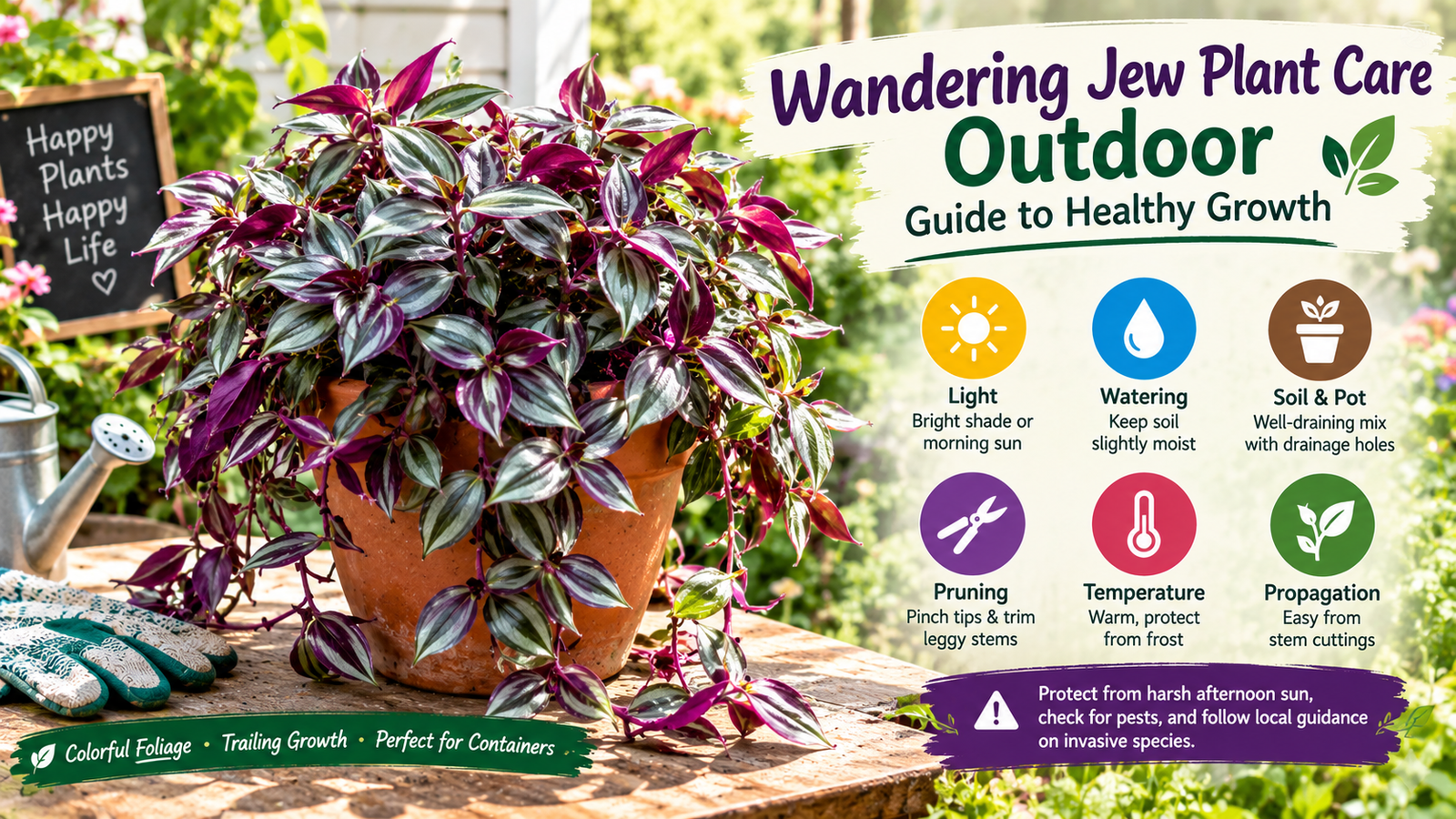
Growing a wandering Jew plant outdoors can transform a plain patio, balcony, or garden corner into a lush display of colorful foliage. Its trailing stems, striped leaves, and purple or green tones make it especially attractive in hanging baskets, window boxes, and decorative containers.
However, outdoor conditions can create challenges that indoor growers rarely face. Intense sunlight may scorch the leaves, heavy rain can keep the roots too wet, and cold nights may damage tender growth. Some varieties also spread rapidly when their stems touch moist soil.
The key to successful wandering Jew plant care outdoors is to match the plant’s light, watering, and temperature needs to your local climate. This guide explains how to choose the right location, encourage fuller growth, prevent common problems, and manage spreading responsibly.
Quick Answer:
Wandering Jew plant care outdoors starts with bright, indirect light or gentle morning sun, well-draining soil, and regular watering when the top layer of soil begins to dry. These colorful trailing plants grow well in warm weather and can thrive in hanging baskets, patio containers, and sheltered garden beds. Protect them from harsh afternoon sun, cold temperatures, and waterlogged soil. Before planting them directly in the ground, check whether your particular Tradescantia species is invasive in your area, as some spread aggressively.
Which wandering Jew plant do you have?
Before adjusting care, identify the variety in your pot. The name “wandering Jew” has historically been used for several trailing Tradescantia species; many gardeners now prefer names such as inch plant, wandering dude, purple heart, or spiderwort. The exact care requirements depend on the species.

1. Tradescantia zebrina — Inch plant
Green, silver, and purple striped leaves
Best for hanging baskets and shaded patios. It prefers bright filtered light or light shade and regular watering with some drying between waterings.

2. Tradescantia pallida — Purple heart
Long, pointed purple leaves and purple stems
This variety handles more direct sun and develops stronger purple coloring in brighter conditions. It needs well-draining soil and protection from cold temperatures.

3. Tradescantia fluminensis — Green inch plant
Small, fleshy green leaves on spreading stems
It prefers moist soil and shade or filtered light, but can root at stem nodes and spread aggressively. Check local invasive-plant guidance before growing it outdoors.
Practical tip: If your plant has striped silver-and-purple leaves, start with the care advice for T. zebrina. If the leaves are almost entirely purple, the plant may be T. pallida, which usually tolerates more sunshine.
Image suggestion: A three-panel identification graphic showing the striped leaves of T. zebrina, the solid purple foliage of T. pallida, and the green leaves of T. fluminensis.
Best outdoor growing conditions at a glance
| Care factor | Recommended approach |
|---|---|
| Light | Bright filtered light or partial shade for most varieties |
| Morning sun | Usually beneficial if introduced gradually |
| Afternoon sun | Protect striped-leaf varieties from intense direct sunlight |
| Water | Water thoroughly when the upper soil begins to dry; adjust for heat and rainfall |
| Soil | Loose, fertile, well-draining potting mix |
| Temperature | Warm conditions; protect tropical types when temperatures approach 50°F (10°C) |
| Fertilizer | Balanced, diluted fertilizer during active growth if needed |
| Pruning | Pinch stem tips and trim leggy or damaged growth |
| Best containers | Pots or hanging baskets with unobstructed drainage holes |
| Main risks | Sun scorch, waterlogged soil, cold damage, pests, and uncontrolled spreading |
These are starting points rather than fixed rules; species, pot size, weather, and soil conditions all affect care.
1. Choose the right outdoor location
Light is one of the biggest factors in how well a wandering Jew plant grows outdoors. A suitable spot encourages compact growth and attractive foliage, while excessive direct sun can fade or scorch leaves.
How much sunlight does it need?
For most striped Tradescantia zebrina plants, choose bright, filtered light or partial shade. An east-facing balcony or a location beneath a tree canopy can work well.
- Morning sunlight: Usually gentle enough to encourage healthy growth.
- Bright indirect light: A good everyday choice for striped and variegated varieties.
- Harsh afternoon sun: Can bleach, brown, or curl delicate leaves, particularly during hot weather.
- Deep shade: Plants may survive but grow slowly, become stretched, or lose some foliage color.
Purple heart (T. pallida) is an important exception. It generally develops deeper purple coloring in full sun, provided it is acclimated gradually and the roots do not dry excessively.
How to acclimate an indoor plant to the outdoors
Do not move a plant straight from a dim room into direct midday sunlight. Even a healthy plant can develop sunburn because its leaves have not adjusted to the stronger outdoor light.
- Place it in a sheltered, bright-shade location for several days.
- Gradually expose it to a little morning sun if the variety benefits from it.
- Check the leaves daily for pale patches, crisp edges, or curling.
- Move it back into brighter shade if scorching appears.
Real-world example: If a striped plant looks healthy indoors but develops bleached patches after two sunny afternoons, reduce its direct sun exposure before changing its watering or fertilizer routine.
Image suggestion: A simple outdoor light guide showing a hanging Tradescantia basket in bright shade, gentle morning sun, and harsh afternoon sun.
2. Watering wandering Jew plants outdoors
Outdoor plants often need more frequent watering than indoor plants because wind, sunlight, and warm air increase moisture loss. However, frequent rain or heavy soil can keep the roots too wet.
The goal is even moisture without constantly saturated soil.
When should you water?
Check the soil before reaching for the watering can.
- Insert your finger about an inch (2–3 cm) into the soil.
- If the upper layer feels dry, water the plant thoroughly.
- Let excess water drain through the bottom of the pot.
- If the soil is still moist, wait and check again later.
This approach follows general Tradescantia growing guidance, which recommends watering when the upper soil begins to dry.
Adjust watering to the weather
| Outdoor condition | Watering adjustment |
|---|---|
| Hot, dry, windy weather | Check soil more often; containers may dry quickly |
| Mild weather | Water when the upper soil begins to dry |
| Rainy or humid weather | Check moisture before watering |
| Cool weather | Water less frequently as growth slows |
| Recently planted cuttings | Keep the mix lightly moist while roots establish, without leaving it soggy |
A small pot on a sunny balcony may dry much faster than a large pot under a covered patio. Therefore, a rigid schedule such as watering every day is unreliable.
Signs of watering problems
Possible underwatering:
- Limp or drooping stems
- Dry, crispy leaf edges
- Soil pulling away from the pot
- Rapid recovery after appropriate watering
Possible overwatering:
- Persistently wet soil
- Yellowing leaves and soft stems
- A sour smell from the potting mix
- Dark, mushy roots in advanced cases
Yellow leaves alone do not prove overwatering. Check the soil, drainage, and recent weather before deciding what to change.
Image suggestion: A watering infographic showing a finger checking dry topsoil, a watering can soaking the root zone, and water draining freely from the pot.
3. Use a well-draining soil mix
Wandering Jew plants grow in a range of potting mixes, but roots need access to both moisture and air. Soil that remains waterlogged can cause root damage, especially during rainy periods.
For container growing, use a quality all-purpose potting mix that drains freely. If it holds too much water, blend it with perlite or fine pumice to improve aeration.
A practical starting mix is:
- 2 parts all-purpose potting mix
- 1 part perlite or pumice
- Optional: a small amount of fine orchid bark if the mix needs a looser structure
This is a useful container recipe, not a strict botanical requirement. Test how quickly your mix drains and adjust it to your local conditions.
What kind of pot works best?
Choose a container with drainage holes. Plastic pots retain moisture longer, while terracotta pots dry more quickly because moisture can evaporate through their walls.
- Choose a pot only slightly larger than the root ball.
- Empty any saucer after watering or heavy rain.
- Raise outdoor pots slightly if their drainage holes sit flat against a surface.
- Avoid decorative outer pots that trap standing water.
Common mistake: Repotting a small plant into a very large container may seem helpful, but the unused soil can remain wet for too long. Increase pot size gradually instead.
4. Manage heat, humidity, and temperature
Most commonly grown tropical Tradescantia varieties prefer warm weather. They can grow vigorously outdoors during the warm season, but cold conditions and sudden temperature changes can damage their soft stems.
Many tropical types can be injured when temperatures fall to around 50°F (10°C), although the exact tolerance varies by species and cultivar.
Outdoor care in hot climates
In very warm regions, including parts of Pakistan, outdoor care requires special attention to afternoon heat.
- Give striped varieties filtered light during the hottest hours.
- Use a potting mix that drains well but does not dry out instantly.
- Check hanging baskets more frequently than large floor pots.
- Water the soil rather than repeatedly soaking the foliage.
- Move containers away from hot walls and reflective paving if leaves scorch.
In a Lahore-style summer, a shaded balcony can be more suitable for T. zebrina than an exposed rooftop. Purple heart may tolerate more sunshine, but newly purchased or recently propagated plants still benefit from gradual acclimation.
What about winter?
When cold weather approaches, move tender plants into a protected, bright location before temperatures become damaging. Reduce watering as growth slows, but do not allow the root ball to remain bone-dry for extended periods.
If the plant has become leggy indoors, wait until active growth resumes before pruning heavily or applying fertilizer.
Image suggestion: A seasonal care panel showing a Tradescantia outdoors in warm weather and protected in a bright sheltered spot during winter.
5. Fertilize for healthy leaves and fuller growth
Wandering Jew plants are relatively easy to grow, so heavy feeding is rarely necessary. Too much fertilizer can cause weak, rapid growth and may leave salts in the potting mix.
During active growth, use a balanced liquid houseplant fertilizer diluted according to its label. Feed only when the plant is growing well and the soil is moist.
Keep these guidelines in mind:
- Start with the lower end of the product’s recommended strength.
- Do not fertilize a severely wilted, recently repotted, or root-damaged plant.
- Reduce or stop feeding when growth slows in cool weather.
- If a pale crust forms on the soil or pot rim, consider excess fertilizer salts and flush the mix with clean water if drainage is good.
Expert tip: If your plant already has vigorous, colorful foliage and is growing in fresh potting mix, it may not need extra fertilizer immediately. Correct light and watering usually matter more than frequent feeding.
6. Prune to encourage bushy growth
Pruning is one of the simplest ways to keep outdoor wandering Jew plants attractive. Trailing stems naturally lengthen, and older growth may become sparse near the center of the pot.
How to prune correctly
- Use clean, sharp scissors or pruning snips.
- Trim long stems just above a healthy leaf node.
- Pinch growing tips to encourage branching.
- Remove damaged or discolored leaves.
- Thin crowded growth if poor airflow is contributing to disease problems.
Avoid removing too much foliage from a plant that is already stressed by heat, drought, or root damage. Restore suitable growing conditions first.
What should you do with the cuttings?
Healthy stem cuttings are easy to propagate, so pruning can also help you make new plants. However, keep cuttings contained and dispose of unwanted pieces responsibly. Some Tradescantia species can root from small stem fragments and spread beyond the intended planting area.
Image suggestion: A before-and-after pruning illustration showing a leggy Tradescantia becoming a fuller, more compact plant.
7. Propagate wandering Jew plants outdoors
Stem cuttings are the easiest way to produce new plants. They can root in water or directly in a suitable potting mix, making propagation useful when a plant becomes leggy or you want to fill another container.
Step-by-step propagation

Step 1: Take a healthy cutting
Cut a stem several inches long, ideally with multiple nodes and healthy leaves. Avoid stems with mushy sections or visible pests.

Step 2: Expose a node
Remove the leaves from the lower portion of the cutting so a node can sit in water or beneath the potting mix.

Step 3: Encourage roots
Place the node in clean water or insert it into lightly moist, well-draining mix. Keep the cutting in bright, indirect light.

Step 4: Pot and acclimate
Once roots are established, plant the cutting if it was rooted in water. Introduce it gradually to outdoor light and keep the soil lightly moist while it settles in.
Tradescantia cuttings often root readily, but the time required depends on warmth, light, and the condition of the cutting.
Important: Do not discard unwanted cuttings into natural areas or waterways. Bag them securely or use a disposal method recommended by your local waste service, particularly if your species is invasive.
8. Common outdoor pests and plant problems
Outdoor plants encounter changing weather, insects, and physical damage. Inspect your plant when you water it so you can address problems before they spread.
| Problem | What you may notice | What to do |
|---|---|---|
| Sun scorch | Pale, bleached, or crispy patches | Move striped varieties into brighter shade |
| Overwatering | Yellow leaves, soggy mix, soft stems | Improve drainage and allow excess moisture to escape |
| Underwatering | Limp stems and dry leaf edges | Water thoroughly and review how quickly the pot dries |
| Leggy growth | Long stems with widely spaced leaves | Improve suitable light and pinch growing tips |
| Aphids | Small insects clustered on young growth | Rinse them off or use an appropriate labeled insecticidal soap |
| Mealybugs | White, cotton-like clusters | Isolate container plants and remove pests carefully |
| Spider mites | Fine webbing and speckled leaves | Check leaf undersides, rinse foliage, and improve plant care |
| Stem rot | Blackened or mushy stem sections | Remove damaged sections and correct persistent wetness |
Common pests reported on Tradescantia include aphids, mealybugs, scale insects, spider mites, and thrips; wet soil can also contribute to root rot.
How to troubleshoot without making the problem worse
If leaves turn yellow: Check soil moisture first. A pot that stays wet for days needs a different response from one that dries out every afternoon.
If the foliage loses its stripes: The plant may be receiving too little light, although leaf color also varies by cultivar. Increase light gradually rather than exposing it to harsh midday sun.
If the plant looks wilted in wet soil: Do not automatically add more water. Check drainage and the roots if the problem persists; damaged roots may struggle to absorb moisture even when the pot is wet.
If stems turn brown after pruning: Inspect the cut ends. Healthy stems should remain firm. Remove rotting tissue with clean tools and avoid keeping the plant in saturated soil.
9. Can you grow wandering Jew plants directly in the ground?
Yes, some varieties can be grown as ground cover in suitable climates. However, container growing is often the safer option when the plant’s spreading behavior is uncertain.
Certain Tradescantia species root at their nodes and can form dense mats. T. fluminensis, in particular, is considered invasive in several regions and can smother other vegetation. T. zebrina is also assessed as invasive in southern Florida, while recommendations differ across regions.
Before planting outdoors:
- Identify the species as accurately as possible.
- Check local invasive-plant lists and gardening guidance.
- Keep fast-spreading plants in containers where appropriate.
- Collect stem fragments during pruning.
- Prevent discarded cuttings from reaching drains, streams, or natural areas.
A hanging basket is useful because it displays trailing foliage while limiting direct contact between stems and garden soil. Still, collect fallen fragments and prevent stems from rooting in nearby beds.
10. Seasonal care checklist
Outdoor conditions change throughout the year, so adjust your routine instead of following the same watering and feeding schedule every month.
Outdoor care checklist
0 of 4 complete
Spring: Check for new growth, trim damaged stems, and begin feeding only when active growth resumes.
Summer: Check containers frequently, protect sensitive foliage from intense afternoon sun, and monitor pests.
Autumn: Reduce feeding as growth slows, inspect for pests, and take healthy cuttings if needed.
Winter: Protect tender varieties from cold, reduce watering, and provide suitable light in a sheltered location.
Reset checklist
11. Common mistakes to avoid
A few small changes can make outdoor care much easier.
- Moving plants into full sun too quickly: Acclimate them gradually to prevent leaf scorch.
- Watering by the calendar: Check soil moisture and recent rainfall instead.
- Using pots without drainage: Standing water can damage roots even when the foliage looks healthy at first.
- Fertilizing a stressed plant: Address light, moisture, or root problems before feeding.
- Planting without identifying the species: Some varieties spread much more aggressively than others.
- Ignoring small stem fragments: A discarded piece may root under favorable conditions.
- Pruning with dirty tools: Clean tools help reduce the chance of spreading pests or disease between plants.
One final safety consideration: the sap of some Tradescantia species can irritate sensitive skin, and ingestion may cause irritation in people or pets. Wear gloves if you have sensitive skin, wash your hands after pruning, and keep plant material away from children and animals that may chew it.
Frequently asked questions
Can wandering Jew plants survive outdoors all year?
In warm, frost-free climates, some varieties can grow outdoors year-round. Tropical types such as T. zebrina may suffer damage when temperatures approach 50°F (10°C), so protect them from cold weather. Hardiness varies by species.
Does wandering Jew like full sun or shade?
Most striped varieties prefer bright filtered light or partial shade. Purple heart (T. pallida) usually develops richer purple foliage in full sun, but intense heat can still stress plants. Introduce stronger light gradually.
How often should I water wandering Jew outdoors?
Water when the upper inch of soil begins to dry, then let excess water drain away. Check more frequently during hot, windy weather and less often after rain or during cooler periods.
Why is my outdoor wandering Jew plant dying?
The most common causes to investigate are waterlogged roots, severe sun exposure, underwatering, cold damage, and pests. Check the soil and inspect the stems before changing several care conditions at once.
Can wandering Jew grow in hanging baskets?
Yes. Trailing Tradescantia varieties are well suited to hanging baskets and patio containers. Use a pot with drainage holes, provide appropriate light, and trim long stems to encourage fuller growth.
How do I make wandering Jew grow fuller?
Pinch the tips of healthy stems and prune long, sparse growth. You can insert suitable healthy cuttings back into the same pot to create a fuller appearance, provided the species is appropriate to grow in your area.
Is wandering Jew invasive outdoors?
Some species are invasive in certain regions. Tradescantia fluminensis is considered invasive in several places, and T. zebrina is classified as invasive in southern Florida. Check your local guidance before using any variety as ground cover.
Is wandering Jew safe for pets?
Do not assume it is harmless. Some Tradescantia species can irritate skin and may cause mouth or stomach irritation if ingested. Keep plants away from pets that chew foliage and consult a veterinarian if your pet eats the plant and develops symptoms.
Conclusion
Successful wandering Jew plant care outdoors comes down to three priorities: suitable light, moisture that matches the weather, and protection from temperature extremes. Striped varieties generally perform best in filtered light, while purple heart often tolerates more sun. All benefit from well-draining soil, occasional pruning, and regular checks for pests.
For most gardeners, a container or hanging basket offers an attractive way to enjoy trailing foliage while keeping spreading under control. Identify your plant before planting it in the ground, and check local invasive-species guidance. With these precautions, you can maintain colorful, healthy growth without creating extra problems in your garden.