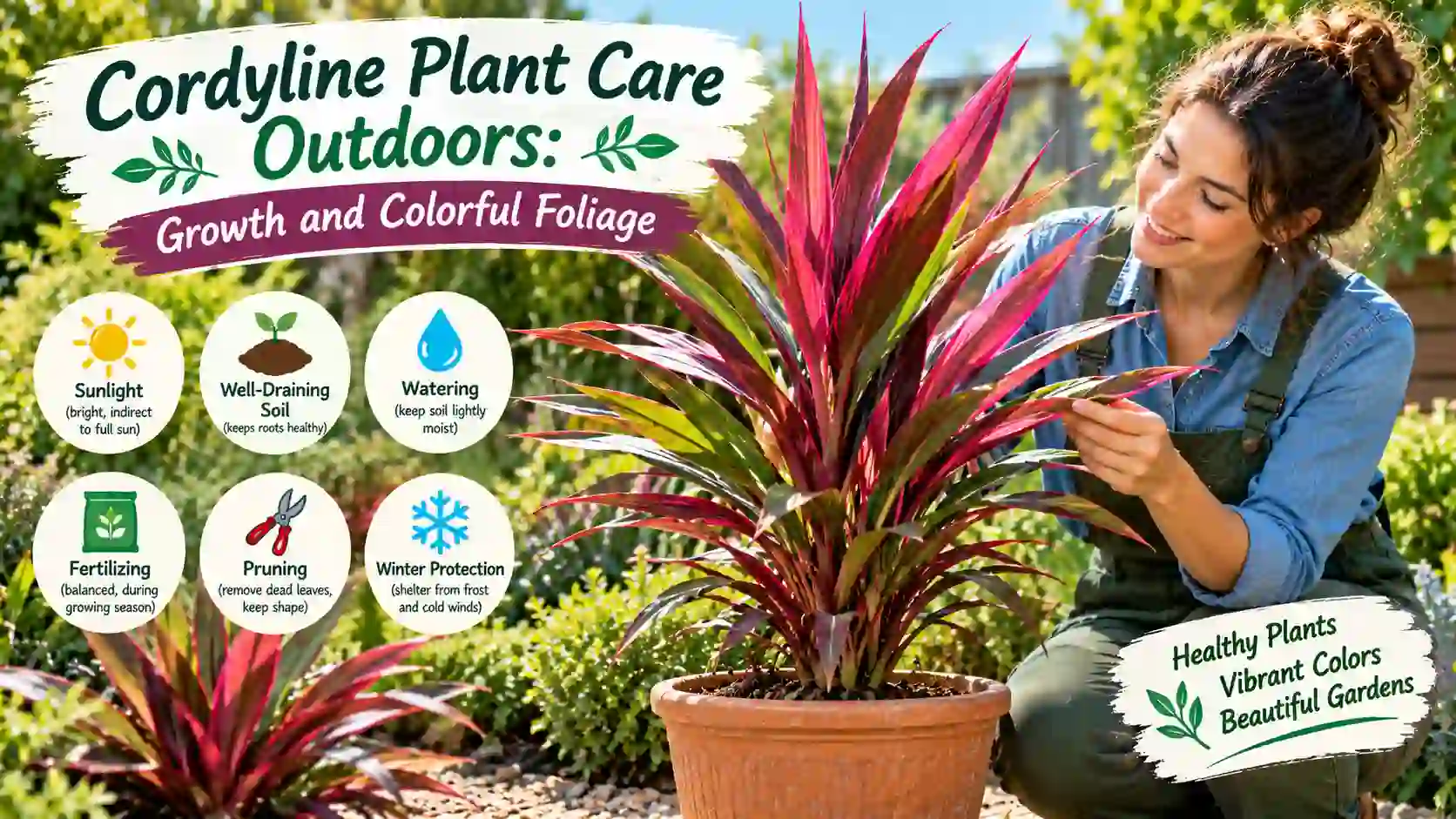
Cordylines bring a bold, tropical look to gardens, patios, borders, and outdoor containers. Their sword-shaped leaves can be green, burgundy, pink, purple, or beautifully striped, making them useful as focal points in many landscape designs.
However, a cordyline that thrives in one garden may struggle in another. Sun exposure, drainage, wind, winter temperatures, and the particular variety all influence its growth.
The key to successful cordyline plant care outdoors is understanding what your plant needs rather than following a rigid watering or feeding schedule. A cordyline growing in a sunny, sheltered border has different needs from one growing in a pot on a windy patio.
This guide explains how to choose a suitable location, water correctly, maintain colorful foliage, manage common problems, and protect your plant through changing seasons.
Quick Answer
For successful cordyline plant care outdoors, grow your plant in a bright location with suitable sunlight, fertile but well-draining soil, and regular watering while it establishes. Most cordylines prefer soil that stays lightly moist without becoming waterlogged. Protect tender varieties from frost, strong winds, and extreme temperature changes. Choose a variety suited to your local climate, and adjust watering according to rainfall, soil moisture, and the season.
1. Understand Which Cordyline You Have
Before changing your care routine, identify the type of cordyline growing in your garden. Different species have different temperature tolerances and light preferences.

Cordyline australis
This species develops a woody trunk topped with long, narrow green leaves. It can become a substantial garden feature and generally tolerates more sun than many tropical types. Young plants still need protection from severe cold.

Cordyline fruticosa
Often called the ti plant, this type has broad, colorful leaves in shades of red, pink, burgundy, and green. It prefers warmth and usually does best outdoors in a sheltered, partially shaded location in hot climates.

Colorful Cordyline australis cultivars
Varieties such as ‘Red Star’ have dramatic reddish-purple leaves. Their sunlight needs depend on the cultivar and local climate, so protect foliage from excessive heat if it shows scorching or fading.
The Royal Horticultural Society recommends sheltered, well-drained growing conditions and notes that many cordylines need winter protection.
Practical tip: Keep the plant label if you have one. Knowing the species or cultivar makes it easier to judge how much direct sun and cold exposure it can tolerate.
Image suggestion: A three-panel comparison of green Cordyline australis, colorful Cordyline fruticosa, and a burgundy-leaved cultivar.
2. Choose the Best Outdoor Location
Location affects leaf color, growth, and how often your cordyline needs water. A plant in the wrong position may develop brown tips, faded leaves, or weak growth even when you water it correctly.
How much sunlight does a cordyline need?
Most cordylines grow in full sun or partial shade, but the best balance depends on the variety and climate.
- Green-leaved types: Often tolerate or prefer a sunny position, provided the heat is not excessive.
- Pink, red, or variegated types: Usually benefit from bright light, with some protection from harsh afternoon sun in hot climates.
- Tender tropical types: Generally appreciate a warm, sheltered spot with filtered sunlight or partial shade.
In very hot weather, direct afternoon sun can scorch leaves, especially on plants that have been growing in shade. Introduce a cordyline to stronger sunlight gradually rather than moving it suddenly into intense sun.
Protect the plant from strong wind
Long cordyline leaves can tear, bend, or develop ragged edges in exposed locations. Strong winds can also dry out container plants quickly.
Choose a position near a sheltered wall, fence, or larger planting, while leaving enough space for air to circulate. Avoid placing the plant where roof runoff constantly saturates the soil.
For a patio, a bright position protected from the strongest wind is often a good starting point.
Image suggestion: A cordyline in a sheltered garden corner, with small icons showing sunlight, partial shade, and wind protection.
3. Prepare Soil That Drains Well
Cordylines need enough moisture to support their leaves, but their roots should not remain in saturated soil. Poor drainage is especially troublesome during cool weather or prolonged rain.
What type of soil is best?
Aim for soil that is:
- Well-draining and not persistently soggy.
- Moderately fertile, with organic matter to support root growth.
- Loose enough for roots to spread.
- Able to retain some moisture without becoming waterlogged.
A garden soil that drains naturally is often suitable. If the ground is heavy clay, improve the planting area before planting or consider a raised bed. Simply adding a small amount of sand to heavy clay may not improve its structure reliably.
For a container, use a quality potting mix suitable for outdoor foliage plants and add a drainage amendment such as horticultural grit or perlite when needed. The pot must have open drainage holes.
How to check drainage before planting
- Dig a small test hole in the intended planting area.
- Add water and observe how quickly it drains.
- Check whether water remains standing for a long period or the soil stays saturated after rain.
- If drainage is poor, select a raised planting position or use a container with suitable growing mix.
Avoid planting the root ball in a depression where water naturally collects.
Expert tip: Do not judge drainage only by how dry the soil surface looks. The upper layer can feel dry while the deeper root zone remains wet.
Image suggestion: A side-by-side illustration of cordyline roots in well-drained soil versus roots surrounded by waterlogged soil.
4. How to Plant a Cordyline Outdoors
Spring is a useful planting time in climates with cold winters because the plant can establish before the next cold season. In warm climates, choose a period when extreme heat is less intense and provide temporary shade if necessary.
Step-by-step planting guide

Step 1: Select the location
Choose a bright, sheltered site with enough space for the plant’s mature height and spread. Check the variety’s expected size before planting near a path or wall.

Step 2: Prepare the root ball
Water the plant in its nursery pot if the root ball is dry. Slide it out carefully and loosen any tightly circling roots without tearing healthy roots unnecessarily.

Step 3: Plant at the correct depth
Make the hole roughly as deep as the root ball and wider than it. Position the plant so the top of the root ball sits level with the surrounding soil. Do not bury the stem deeply.

Step 4: Water and settle the soil
Backfill around the roots, firm the soil gently, and water thoroughly. This helps remove large air pockets and brings soil into contact with the roots.
Water regularly while the plant establishes, particularly during hot, dry weather. Do not keep adding water if the root zone is already wet.
Growing cordyline in a pot
Container growing is useful when you need to move a tender variety into shelter during winter or protect it from intense summer sun.
Choose a sturdy pot with drainage holes and enough room for the root ball. Avoid placing a small plant directly into an oversized container filled with wet compost, as the unused mix can stay damp for too long.
Raise the pot slightly on feet if its drainage holes sit flat against a patio. Empty any saucer after watering so the roots do not stand in water.
Image suggestion: A step-by-step planting infographic showing hole preparation, correct planting depth, backfilling, and watering.
5. Watering Cordyline Plants Outdoors
Watering is one of the most important parts of cordyline plant care outdoors. Both underwatering and overwatering can cause leaf damage, but they require different solutions.
How often should you water a cordyline?
There is no single schedule that works for every plant. Watering frequency depends on temperature, rainfall, soil type, plant size, and whether the cordyline grows in the ground or a pot.
| Growing condition | Watering approach |
|---|---|
| Newly planted in the ground | Check the soil frequently and water when the root zone begins to dry |
| Established plant in the ground | Water during extended dry periods when the soil is dry below the surface |
| Container plant in warm weather | Check often; water thoroughly when the mix has begun to dry |
| Cool or rainy weather | Water less often and check for soggy soil |
| Winter in a cool climate | Keep the mix relatively dry, but do not allow a container root ball to become severely desiccated |
Established cordylines can tolerate some drought, while container plants usually need more frequent attention.
The correct way to water
- Check the soil a few centimeters below the surface, not just the top.
- If the root zone is beginning to dry, water slowly around the base.
- For a container, continue until excess water drains from the bottom.
- Let the excess water escape freely.
- Check again before watering next time.
Do not water automatically every day unless the conditions and soil genuinely require it.
Signs of underwatering
A thirsty cordyline may develop drooping or curling leaves, dry brown tips, and a dry root ball. Container plants can dry quickly during hot, windy weather.
What to do: Check the soil. If it is dry, water thoroughly and review how quickly the container dries between waterings.
Signs of overwatering
Persistently wet soil, yellowing foliage, declining growth, and a soft or rotting base may point to excessive moisture or root damage.
What to do: Pause watering while you assess the soil and drainage. If the soil remains saturated, improve drainage and inspect the roots if necessary. Do not simply add fertilizer to a plant with suspected root problems.
Image suggestion: A troubleshooting infographic comparing a thirsty cordyline with a waterlogged cordyline, including soil-moisture checks.
6. Fertilizing for Healthy Growth and Colorful Leaves
Cordylines do not always need heavy feeding. Plants growing in reasonably fertile garden soil may grow well without regular fertilizer, while container-grown plants can benefit from feeding during active growth.
Which fertilizer should you use?
A balanced, general-purpose fertilizer is suitable for many container-grown cordylines. Follow the product label, and avoid applying more than recommended.
- In-ground plants: Improve poor soil with mature compost before planting. Additional fertilizer is usually unnecessary unless growth or soil conditions indicate a need.
- Potted plants: Apply a balanced liquid fertilizer during spring and summer according to the label.
- Plants under stress: Correct watering, drainage, light, or root problems before feeding.
- Cool-season plants: Reduce or stop feeding when growth slows.
The RHS recommends feeding container-grown cordylines during the growing season, while established plants in garden borders generally need little or no additional feeding.
Can too much fertilizer harm a cordyline?
Yes. Excess fertilizer can build up salts around the roots, damage root tips, and cause brown leaf edges. Too much nitrogen can also encourage soft growth that may be more vulnerable to damage.
If your cordyline has brown tips after repeated feeding, stop fertilizing temporarily and review the dosage, watering, and drainage.
Image suggestion: A cordyline in a container with simple fertilizer, healthy-root, and spring-growth icons.
7. Pruning and Maintaining Cordyline Leaves
Cordylines are naturally architectural plants, so they usually need less pruning than many flowering shrubs. The goal is to remove damaged growth while preserving the plant’s natural shape.
How to prune a cordyline
- Remove completely dead or badly damaged leaves with clean, sharp pruning shears.
- Cut unwanted leaves close to the main stem without cutting into the trunk.
- Remove faded flower spikes if you prefer a tidier appearance.
- Disinfect pruning tools between plants, especially if disease is suspected.
Brown tips do not always mean the entire leaf needs removal. If only a small portion is damaged, you can trim the brown section along the leaf’s natural shape. This is mainly cosmetic; the cut edge may turn brown again.
Should you cut back a tall or leggy cordyline?
Some cordylines can be cut back to encourage new shoots from the remaining stem or lower portions of the plant. However, this is a more substantial intervention than removing dead leaves.
Before cutting a tall specimen, identify the variety and consider the season, plant health, and appearance you want. Avoid severe pruning immediately before a period of extreme cold or heat.
If frost has damaged the crown, wait until the damage is clearer and the weather improves before removing healthy-looking tissue. Some plants can produce new shoots after crown damage.
Image suggestion: A before-and-after illustration showing dead lower leaves being removed while the central crown remains intact.
8. Protecting Outdoor Cordylines in Winter
Cold tolerance varies substantially between cordyline species and cultivars. A variety that survives mild winters outdoors may suffer serious damage in a colder region. Cold, wet soil can be particularly harmful.
How to protect a cordyline in cold weather
- Check the variety’s hardiness. Do not assume every cordyline tolerates frost.
- Move container plants to shelter. Put tender plants in a bright, protected location before cold weather arrives.
- Protect in-ground plants. In frost-prone locations, use suitable horticultural fleece and shelter the crown and trunk as appropriate.
- Keep drainage clear. Prevent pots from sitting in water and avoid excessive winter watering.
- Inspect after cold spells. Wait until damage becomes clearer before pruning severely affected leaves or stems.
Tying foliage loosely together can help reduce wind damage and prevent water from collecting in the growing point. Avoid tying it so tightly that leaves are crushed, and remove temporary coverings when conditions improve to prevent overheating or trapped moisture.
The RHS identifies Cordyline australis as one of the hardier species, but notes that young plants and colorful cultivars can still be vulnerable to winter damage.
Outdoor cordyline care in hot climates
In regions with very hot summers, excessive heat may be a bigger challenge than frost for some varieties.
- Provide protection from harsh afternoon sun if leaves scorch.
- Check container moisture more often during hot, dry, windy periods.
- Use a well-draining mix and avoid leaving pots in standing water.
- Acclimate plants gradually when moving them between shade and direct sunlight.
For gardeners in climates with both hot summers and cool winter nights, growing a tender cordyline in a movable container can make seasonal care much easier.
Image suggestion: Two panels showing a cordyline protected during a cold spell and another sheltered from intense afternoon sun.
9. Common Cordyline Problems and How to Fix Them
A cordyline’s leaves often reveal when its growing conditions need attention. However, the same symptom can have several causes, so inspect the soil, weather, and plant’s recent care before deciding what to change.
| Problem | Possible cause | What to do |
|---|---|---|
| Brown leaf tips | Dry air, irregular watering, salt buildup, wind, or heat | Check soil moisture, review fertilizer use, and reduce harsh exposure if necessary |
| Yellow leaves | Natural aging, overwatering, poor drainage, or stress | Check whether only older lower leaves are affected and inspect soil moisture |
| Faded leaf color | Too much intense sun, insufficient light, or variety-related color changes | Adjust light gradually according to the cultivar |
| Drooping leaves | Dry soil, root damage, heat, or transplant stress | Check the root zone before deciding whether to water |
| Blackened leaves after cold weather | Frost or cold damage | Move container plants to shelter and wait to assess which tissue is dead |
| Soft or rotting base | Prolonged saturation or rot | Stop unnecessary watering and investigate drainage and root health |
| Ragged or torn leaves | Wind, physical damage, or handling | Move the plant to a more sheltered location if wind is the cause |
Why are my cordyline leaves turning brown?
Brown tips are common, but they are not a diagnosis by themselves. A plant in a windy patio may dry out faster than one in a sheltered border. Another plant may show similar symptoms because its roots are sitting in wet soil.
Use this quick check:
- Is the soil dry well below the surface? Underwatering may be involved.
- Is the soil still wet several days after watering? Check drainage and possible root problems.
- Did the browning appear after a heatwave, frost, or strong wind? Environmental damage may be responsible.
- Have you recently increased fertilizer? Review the dose and frequency.
Change the condition that is causing the problem rather than treating every brown leaf with the same solution.
What if the cordyline crown is damaged?
The crown is the growing point at the top of the stem. Severe cold or prolonged wet conditions can damage it.
If the crown becomes brown or soft, wait until the extent of the damage is clear. Remove clearly dead tissue with clean tools, but do not cut into healthy growth unnecessarily. Some cordylines can reshoot from lower parts of the stem or from the base, although recovery is not guaranteed.
Image suggestion: A four-panel cordyline diagnosis infographic showing brown tips, yellow leaves, frost damage, and a healthy plant.
10. Seasonal Cordyline Care Calendar
Your cordyline’s needs change throughout the year. Use the following calendar as a starting point, then adapt it to your local weather and the variety you grow.
| Season | Main care tasks |
|---|---|
| Spring | Plant or repot if needed, remove dead leaves, inspect drainage, and resume feeding container plants as growth starts |
| Summer | Monitor soil moisture, protect heat-sensitive varieties from harsh afternoon sun, and check for pests |
| Autumn | Reduce feeding as growth slows, clear away dead foliage, and prepare tender plants for colder weather |
| Winter | Protect frost-sensitive plants, avoid keeping the soil waterlogged, and reduce watering when growth slows |
In warm climates, the growing season may extend beyond summer. In cooler regions, the need for frost protection may begin in autumn.
A simple weekly inspection routine
Once a week, check the soil moisture, look at the newest leaves, inspect the crown, and examine the undersides of leaves for pests. During heatwaves or heavy rain, check more frequently.
This small routine can reveal problems before they become severe. It also helps you avoid unnecessary watering, feeding, and pruning.
Image suggestion: A four-season infographic showing spring growth, summer foliage, autumn preparation, and winter protection.
11. Common Mistakes to Avoid
Even a relatively low-maintenance cordyline can struggle when its basic needs are overlooked.
1. Watering on a fixed schedule
Watering every day regardless of rainfall or soil moisture can leave roots saturated. Check the root zone before watering.
2. Planting in poorly drained soil
Cordylines dislike persistently waterlogged conditions. Improve drainage or choose a raised bed or container before planting.
3. Exposing a shade-grown plant to intense sun too quickly
Sudden changes in light can scorch leaves. Acclimate the plant gradually and observe how its foliage responds.
4. Ignoring the variety’s cold tolerance
Some cordylines are much more tender than others. Check the plant’s identity and plan protection before cold weather arrives.
5. Overfertilizing to encourage faster growth
Excess fertilizer can damage roots and leaf edges. Feed only when appropriate, following the product label.
6. Cutting away healthy foliage unnecessarily
Cordylines naturally form a dramatic crown of leaves. Remove dead or damaged growth, but avoid pruning simply to force a particular shape unless you understand how your variety responds.
7. Choosing a pot without drainage holes
Excess water must be able to escape. A decorative pot without drainage is best used as an outer cover, with the plant kept in a draining nursery pot that can be removed for watering.
12. Frequently Asked Questions
Can cordyline grow outdoors all year?
Yes, some varieties can remain outdoors year-round in suitable climates. Others are frost-sensitive and need winter protection or a sheltered location. The species, cultivar, and local weather determine whether permanent outdoor growing is practical.
Does cordyline prefer full sun or shade?
Many cordylines grow well in full sun or partial shade. Green-leaved varieties often tolerate more direct sun, while colorful or variegated types may benefit from protection against harsh afternoon sunlight. Adjust exposure according to your climate and the plant’s response.
How often should I water an outdoor cordyline?
Water newly planted cordylines regularly while they establish. Established plants in the ground may need little additional water outside extended dry periods. Container plants generally require more frequent checks, especially during warm weather.
Why is my outdoor cordyline losing leaves?
Older lower leaves naturally die as the plant grows. However, widespread leaf loss can indicate water stress, poor drainage, cold damage, or other environmental problems. Check whether the newest growth is healthy and assess the soil before changing your care routine.
Should I remove brown leaves from a cordyline?
Remove completely dead leaves with clean pruning shears. If only the tips are brown, you can trim them for appearance, but first investigate the cause. Removing damaged leaves alone will not fix poor drainage, excessive sun, or irregular watering.
Can I grow cordyline in a pot outdoors?
Yes. Choose a sturdy container with drainage holes and a well-draining potting mix. Container-grown plants usually need closer moisture monitoring and may be easier to protect from cold by moving them into shelter.
What is the best fertilizer for cordyline?
A balanced general-purpose fertilizer can work well for container-grown plants during active growth. In-ground plants growing in fertile soil often need little extra feeding. Follow the fertilizer label and avoid feeding a plant with suspected root damage.
Will a damaged cordyline grow back?
It may. Some cordylines can produce new shoots from the stem or base after damage, but recovery depends on the variety and the condition of the remaining plant. Wait until the extent of the damage is clear before making major cuts.
Is cordyline suitable for a hot climate?
Some varieties grow successfully in warm climates, but tender types may need shade from intense afternoon sun and protection from cold winter nights. In very hot locations, monitor container moisture closely and use a sheltered position with appropriate light.
How can I keep my cordyline colorful?
Provide enough light for the cultivar while avoiding leaf scorch. Maintain good drainage, water according to soil moisture, and avoid excessive fertilizer. Remember that the natural color also depends on the variety, so care cannot make a green cultivar develop the same foliage as a red or pink one.
Conclusion
Successful cordyline plant care outdoors comes down to choosing the right variety, providing suitable light, maintaining well-drained soil, and adjusting watering to the weather. Most established plants need relatively little attention once they are growing in the right position.
Pay particular attention to drainage, strong winds, extreme heat, and winter conditions. These factors often make a greater difference than frequent feeding or unnecessary pruning.
Start by checking your cordyline’s variety and growing conditions. Make small adjustments, observe new growth, and give the plant time to respond. With the right care, a cordyline can become a striking focal point with healthy, colorful foliage.