Lavender is loved for its fragrant flowers, silvery-green foliage, and ability to attract bees and other pollinators. It can bring color and fragrance to garden borders, pathways, raised beds, and patio containers.
However, lavender sometimes struggles outdoors even when gardeners provide plenty of water and fertilizer. The problem is often the opposite of what beginners expect: lavender usually suffers more from wet roots and poor drainage than from moderately dry soil.
The best approach to lavender plant care outdoors depends on your climate, soil, and the variety you grow. A plant that thrives in a cool, dry Mediterranean-style garden may struggle in a humid, rainy region or during an extremely hot summer.
This guide explains how to choose a suitable planting site, water correctly, encourage repeat blooms, prune without damaging the plant, and troubleshoot common problems before they become serious.
Quick Answer:
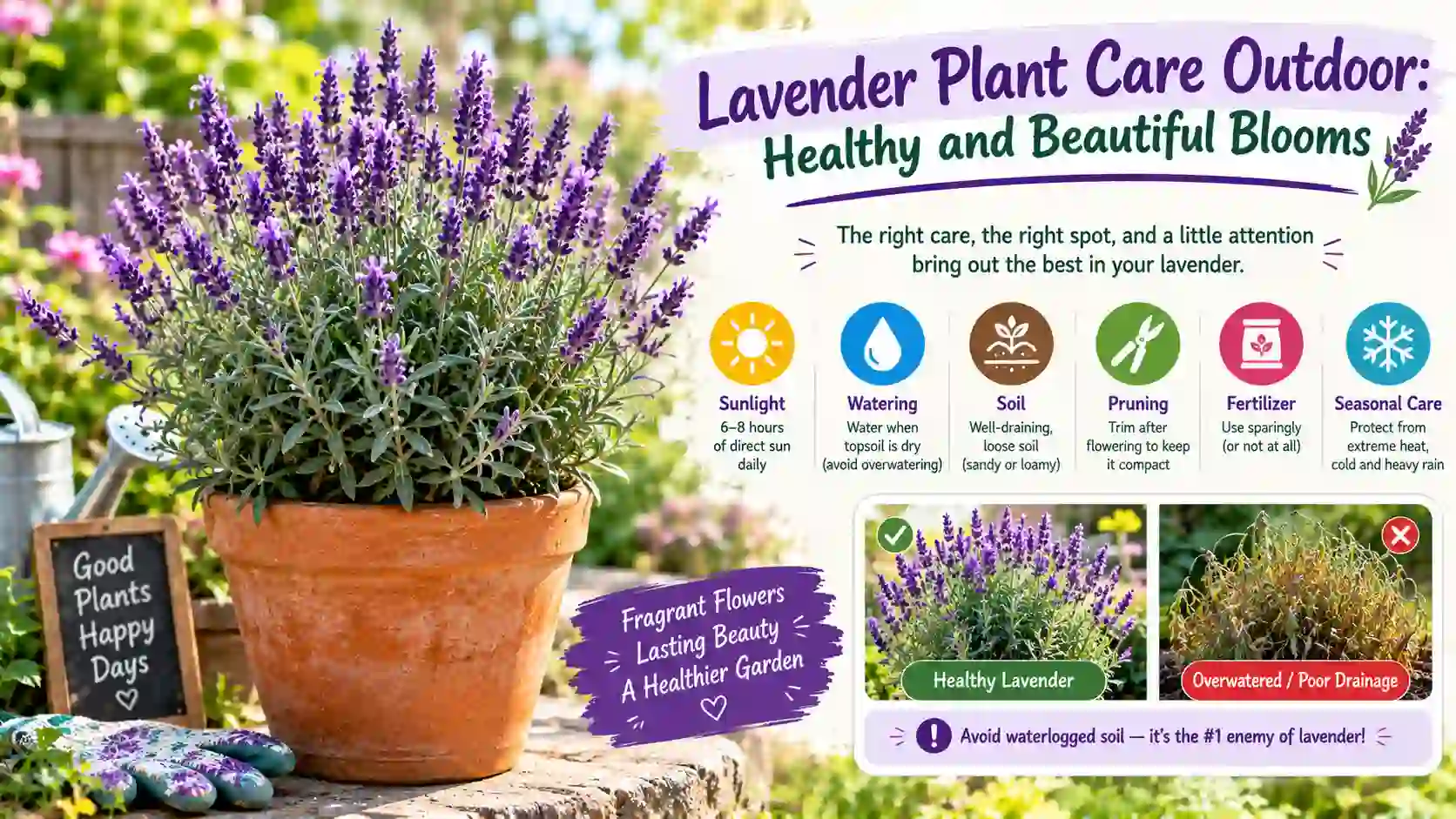
Successful lavender plant care outdoors requires at least 6–8 hours of sunlight, sharply draining soil, and careful watering. Plant lavender in a sunny location where rainwater does not collect around its roots. Water young plants while they establish, then allow the soil to dry between waterings. Avoid rich, constantly moist soil and heavy pruning into old, leafless wood. The right lavender variety, good airflow, and proper drainage are essential for healthy foliage and fragrant purple blooms.
Lavender plant care outdoor: essential requirements
| Care factor | Best practice |
|---|---|
| Sunlight | At least 6 hours of direct sun daily; 6–8 hours is ideal |
| Soil | Loose, well-draining soil; sandy or gravelly soil often works well |
| Soil moisture | Allow the soil to dry between waterings |
| Soil fertility | Low to moderately fertile; avoid excessive nitrogen |
| Planting time | During mild weather when the soil is workable and not waterlogged |
| Spacing | Allow room for the mature width of the selected cultivar |
| Pruning | Trim after flowering or at the appropriate seasonal time for your variety |
| Containers | Use a pot with drainage holes and a fast-draining growing mix |
| Airflow | Give plants enough space to dry quickly after rain |
| Feeding | Usually little or no fertilizer is necessary |
Lavender performs best in sunny locations with free-draining soil and modest fertility.
1. Choose the right lavender variety for your climate
Not every lavender plant responds to outdoor conditions in the same way. Some varieties tolerate cold winters, while others prefer longer, warmer growing seasons.

English lavender (Lavandula angustifolia)
A strong choice for many temperate gardens. It has fragrant purple or blue-purple flower spikes and generally handles cold weather better than tender types. It needs excellent drainage and full sun.

Lavandin (Lavandula × intermedia)
A vigorous hybrid with long flower stems and a strong fragrance. It suits sunny borders and larger spaces, provided the soil drains well.

Spanish lavender (Lavandula stoechas)
Recognizable by its flower heads topped with decorative bracts that resemble ears. It prefers sun and drainage but is generally less cold-hardy than English lavender.

French lavender (Lavandula dentata)
Often grown in warm climates, with toothed foliage and a long flowering season in suitable conditions. It is less tolerant of freezing temperatures than many English lavender cultivars.
The common names “French lavender” and “Spanish lavender” are sometimes used inconsistently, so check the botanical name on the plant label. The Royal Horticultural Society distinguishes hardy English types from several less-hardy lavenders that need winter protection.
Buying tip: If you live somewhere with hot summers and mild winters, choose a variety suited to warm conditions and pay particular attention to drainage. If you experience freezing winters, select a reliably hardy cultivar rather than relying on the general label “lavender.”
Image suggestion: A comparison graphic showing English, lavandin, Spanish, and French lavender, with each variety’s foliage, flower shape, and climate preference.
2. Give outdoor lavender enough sunlight
Lavender is a sun-loving plant. Adequate light supports compact growth, flower production, and the aromatic oils that give its foliage and blooms their characteristic scent.
How much sunlight does lavender need?
Aim for 6–8 hours of direct sunlight per day. A south- or west-facing garden area may work well in cooler climates, while a very hot region may require attention to reflected heat and soil moisture.
Choose a spot that:
- Receives direct sun for most of the day.
- Is not shaded by buildings or dense trees.
- Has good air circulation.
- Does not collect runoff from roofs or irrigation.
- Allows enough room for the mature plant to spread.
Lavender grown in shade often develops long, weak stems and produces fewer flowers. Moving a struggling plant into better light can help, but introduce stronger sunlight gradually if it has been growing in shade.
What if your outdoor area is extremely hot?
In hot climates, full sun is still important, but the hottest walls, paved courtyards, and rooftops can intensify heat stress. Start by selecting a variety suited to warm conditions and use a container or raised bed if the soil stays wet.
Do not assume that brown leaves always indicate sunburn. Check whether the plant is also drying out too quickly, sitting in saturated soil, or suffering from root damage.
Image suggestion: A sunlight placement infographic comparing a sunny garden border, a bright patio container, and a shaded location where lavender may flower poorly.
3. Prepare soil that drains quickly
Soil drainage is one of the most important parts of lavender plant care outdoors. Lavender roots need oxygen, and soil that stays saturated can lead to root rot and premature plant decline.
What soil is best for lavender?
Lavender generally prefers well-draining, sandy, gravelly, or loamy soil. It can tolerate relatively low fertility and often grows well in neutral to alkaline conditions, depending on the variety.
Before planting, test your garden soil:
- Dig a small hole and fill it with water.
- Observe whether the water drains away reasonably well.
- Check the soil again after rain to see whether water pools around the proposed planting site.
- If the ground remains wet for long periods, consider a raised bed or container.
A simple drainage check does not replace a formal soil test, but it can reveal obvious problems.
How to improve heavy clay soil
Heavy clay can hold too much moisture for lavender. Rather than adding a small amount of sand to a large area of clay, which may create an even denser mixture, improve the planting conditions with a raised bed or a properly prepared mound containing suitable mineral soil.
For containers, use a quality potting mix amended with coarse horticultural grit or perlite. Ensure the container has generous drainage holes.
Avoid this common mistake: Adding lots of compost or manure to make the soil “richer.” Lavender does not need highly fertile soil, and excess fertility can encourage leafy growth at the expense of sturdy flowering stems.
4. Water outdoor lavender correctly
Lavender becomes drought-tolerant once its roots are established, but newly planted specimens need regular attention while they settle into the garden.
Watering newly planted lavender
During establishment:
- Water thoroughly after planting.
- Check soil moisture regularly, especially during dry weather.
- Water again when the root zone begins to dry.
- Avoid repeatedly soaking soil that is already wet.
The goal is to encourage roots to grow outward and downward without keeping them permanently saturated.
Watering established lavender
Established plants growing in the ground often need little supplemental watering unless conditions become exceptionally dry. Container-grown lavender usually needs closer monitoring because pots contain less soil and lose moisture faster.
| Condition | Recommended response |
|---|---|
| Newly planted in dry weather | Check frequently and water as needed |
| Established in garden soil | Water during prolonged drought if the plant needs it |
| Growing in a container during summer | Check moisture regularly; water when the mix has dried appropriately |
| Rainy or humid weather | Reduce watering and ensure the pot or bed drains freely |
| Cool weather | Water less often as growth slows |
How can you tell if lavender needs water?
Look at the soil before judging the foliage. Wilting is not a reliable sign of thirst when roots are damaged by wet conditions.
If the soil is dry several inches below the surface, give the root zone a thorough watering. If it is damp and the plant looks unhealthy, investigate drainage before adding more water.
Image suggestion: A three-step watering illustration showing a soil moisture check, careful watering at the base, and water draining from a container.
5. Plant lavender outdoors step by step
Planting correctly from the beginning is easier than trying to rescue lavender that struggles in unsuitable soil.

Step 1: Select the planting site
Choose a sunny, open position with good drainage. Avoid low spots where rainwater collects.

Step 2: Prepare the soil
Loosen compacted ground and improve drainage where necessary. Use a raised bed if the existing soil stays wet.

Step 3: Set the plant at the right depth
Place the root ball at approximately its original soil level. Avoid burying the crown or packing wet soil around the stems.

Step 4: Water and allow room to grow
Water the plant in, then monitor moisture during establishment. Space plants according to their expected mature width so air can circulate.
Spring is a common planting time in temperate regions because the soil begins to warm. In warmer climates, choose a mild period rather than planting during the most intense heat. Avoid planting into cold, saturated ground.
6. Grow lavender successfully in outdoor pots
Container growing is useful when garden soil drains poorly, space is limited, or you need to move tender varieties into shelter during cold weather.
Choosing the right pot
Select a sturdy container with several drainage holes. A pot around 30–40 cm (12–16 inches) wide is a reasonable starting point for many young lavender plants, but the mature variety and root ball determine the best size.
For the growing medium:
- Use a free-draining container mix.
- Add coarse horticultural grit or perlite if needed.
- Avoid dense garden soil that compacts in the pot.
- Keep drainage holes clear.
- Empty standing water from saucers after watering.
Terracotta pots can be helpful because their walls allow moisture to evaporate, although they may dry out faster during hot, windy weather.
Where should you place a potted lavender plant?
Choose a location with abundant sunlight and airflow. Avoid putting the pot where roof runoff repeatedly soaks the compost or where it sits in a puddle after rain.
In very hot weather, check container moisture more often, but do not keep the soil constantly wet. In cool or rainy weather, sheltering the pot from excessive rainfall may be more useful than watering it.
Image suggestion: A lavender plant in a terracotta pot with labeled drainage holes, gritty potting mix, a sunny placement, and a saucer kept free of standing water.
7. Fertilizer: why less is often better
Lavender is adapted to relatively lean soil. Heavy feeding, especially with nitrogen-rich fertilizer or manure, may produce excessive foliage, weaker stems, and less attractive growth.
Most garden-grown lavender does not need regular fertilizer if the soil is suitable.
If a plant grows poorly, investigate these factors first:
- Is it receiving enough direct sunlight?
- Does water drain away promptly?
- Is the plant crowded by nearby vegetation?
- Are the roots healthy?
- Is the soil severely depleted or the plant root-bound?
Do not use fertilizer as a substitute for correcting poor drainage. If a container-grown plant genuinely needs nutrients, use a modest amount of an appropriate balanced fertilizer according to the product label.
8. Prune lavender for a compact shape and more flowers
Pruning helps lavender remain dense and attractive rather than becoming tall, woody, and uneven. However, lavender does not reliably produce new shoots from old, leafless wood, so cutting it back too severely can permanently damage its shape.
When should you prune outdoor lavender?
For many English lavender cultivars, trim after the main flowering period, often in late summer. The ideal timing varies with variety and climate. Avoid heavy pruning immediately before cold or wet weather if fresh cuts and new growth could be vulnerable.
How to prune safely
- Use clean, sharp pruning shears.
- Remove finished flower stalks and lightly trim the green growth.
- Shape the plant into a compact mound.
- Keep some leafy growth on every stem.
- Never cut deeply into thick, bare woody stems.
A light spring tidy-up can remove dead or winter-damaged tips. If the plant is old, very woody, and sparse, replacing it may be more successful than attempting a severe rejuvenation cut.
How to encourage repeat blooms
Some varieties may produce additional flowers after spent blooms are removed, especially when growing conditions remain favorable. Deadhead faded flower stalks, maintain adequate sunlight, and avoid excess fertilizer.
Image suggestion: A before-and-after pruning graphic showing a compact lavender shrub, the green growth to trim, and the bare woody section that should be avoided.
9. Common outdoor lavender problems and how to fix them
Lavender is usually relatively trouble-free when grown in suitable conditions. Persistent wetness, poor airflow, and unsuitable light are more likely to cause major problems than a need for extra fertilizer.
| Problem | Likely cause | Practical fix |
|---|---|---|
| Yellowing leaves | Waterlogged roots, stress, or natural aging | Check drainage and inspect the plant before changing care |
| Brown, crispy leaves | Drought stress, heat, or root damage | Check soil moisture and review sun exposure |
| Few flowers | Insufficient sunlight, excessive nitrogen, or pruning at the wrong time | Improve light and reduce unnecessary feeding |
| Woody, sparse growth | Plant age or years without suitable pruning | Trim lightly if green growth remains; replace if mostly bare |
| Blackened stems | Possible rot or cold damage | Remove damaged tissue and correct wet conditions |
| Gray mold or leaf spots | Prolonged moisture and poor airflow may contribute | Improve spacing, avoid excess wetness, and remove affected material |
| Plant wilts in wet soil | Roots may be damaged or unable to absorb water | Check root health and drainage before watering again |
Why is my lavender dying despite regular watering?
This is a common situation: the gardener sees drooping leaves and waters again, but the plant continues to decline. If the soil is already moist, extra water can worsen root damage.
Check the root zone and drainage. Healthy roots should not be persistently surrounded by saturated soil. If roots are extensively soft or decayed, recovery may be difficult; take healthy cuttings from unaffected growth if appropriate for the variety.
Why does my lavender have lots of leaves but few flowers?
Too much shade and excessive nitrogen are two possible causes. Lavender needs strong light to flower well, and rich feeding can encourage leafy growth. Correct the light and fertilizer routine before trying several remedies at once.
10. Seasonal lavender care outdoors
Spring
- Inspect plants for dead or damaged stems.
- Check whether winter rain has compacted or saturated the soil.
- Remove weeds competing for light and water.
- Plant or repot when conditions are mild.
- Begin watering according to actual soil moisture and new growth.
Summer
- Enjoy the main flowering period for many varieties.
- Monitor newly planted lavender during dry spells.
- Water containers when needed, but do not leave them saturated.
- Deadhead or prune lightly after flowering where appropriate.
- Watch for heat stress and poor airflow.
Autumn
- Complete routine pruning at a suitable time for the cultivar and climate.
- Avoid late, heavy cuts in cold or wet regions.
- Reduce watering as temperatures and growth decline.
- Check that rainwater drains away from the plant’s base.
Winter
- Keep hardy varieties in well-drained ground.
- Protect tender types according to their cold tolerance.
- Move vulnerable containers to a sheltered, bright location.
- Avoid keeping potting mix persistently wet during cool weather.
English lavender and its hybrids are generally among the hardier options, while several tender types need more protection. Container roots are more exposed to cold than roots in the ground.
11. Can lavender grow outdoors in hot or humid climates?
Yes, but success depends on the variety, the local weather, and especially drainage. Lavender can struggle in climates with intense summer heat combined with high humidity or frequent rainfall, because the roots and foliage may remain damp for long periods.
For hot regions:
- Choose a variety suited to warm conditions.
- Provide abundant light and good airflow.
- Use raised beds or containers if the ground drains poorly.
- Avoid thick, moisture-trapping mulch against the crown.
- Monitor container moisture during heat waves.
- Protect plants from prolonged heavy rain where practical.
For a climate with very hot summers, such as parts of Pakistan, a sunny location with excellent drainage is essential. In an exposed rooftop or paved courtyard, pots may heat up and dry rapidly, so check them regularly. If humidity and rainfall are high, prioritize airflow and drainage rather than increasing fertilizer.
Important: No single lavender variety is guaranteed to thrive in every hot climate. If lavender repeatedly declines despite correct drainage and sunlight, consider testing a different cultivar or growing it in a container where conditions are easier to manage.
Frequently asked questions
How many hours of sunlight does outdoor lavender need?
Aim for at least 6 hours of direct sunlight daily, with 6–8 hours often ideal. Insufficient light can cause weak growth and fewer flowers.
How often should I water lavender outdoors?
There is no universal schedule. Water newly planted lavender when the root zone begins to dry, and monitor container plants more frequently. Established plants in the ground often need little supplemental water unless conditions are very dry.
Does lavender need fertilizer?
Usually not if it grows in suitable soil. Excess fertilizer, particularly nitrogen, can encourage leafy growth at the expense of compact form and flowering.
Should I cut lavender back after flowering?
For many varieties, a light trim after the main flowering period helps maintain shape. Remove spent flower stalks and some green growth, but do not cut into bare woody stems.
Can lavender grow in pots outdoors?
Yes. Use a container with drainage holes and a fast-draining mix. Place it in full sun, check moisture regularly during summer, and protect tender varieties from cold weather.
Why is my outdoor lavender turning brown?
Brown foliage may result from drought, heat, root rot, cold injury, or normal aging of older stems. Check the soil moisture and inspect the base of the plant before deciding on a fix.
Is lavender drought-tolerant?
Established lavender is drought-tolerant, especially when planted in well-drained soil. Young plants and container-grown specimens need more attention because their roots have less access to moisture.
What is the best soil pH for lavender?
Lavender generally tolerates neutral to alkaline soil and often performs well in sandy or chalky conditions. Drainage is usually more important than chasing a precise pH number. If plants struggle, a soil test can help identify a pH or nutrient issue.
Conclusion
The secret to successful lavender plant care outdoors is not constant attention or frequent feeding. It is choosing a suitable variety, giving it plenty of sun, and preventing its roots from staying wet.
Start with a sunny, well-drained planting site. Water young plants while they establish, then reduce watering as they mature. Prune carefully to preserve green growth, and protect tender varieties when weather becomes too cold or wet.
If your lavender has struggled before, check the drainage first. That simple step, combined with the right variety and enough sunlight, can make the difference between a sparse, woody plant and a compact shrub filled with fragrant blooms.