
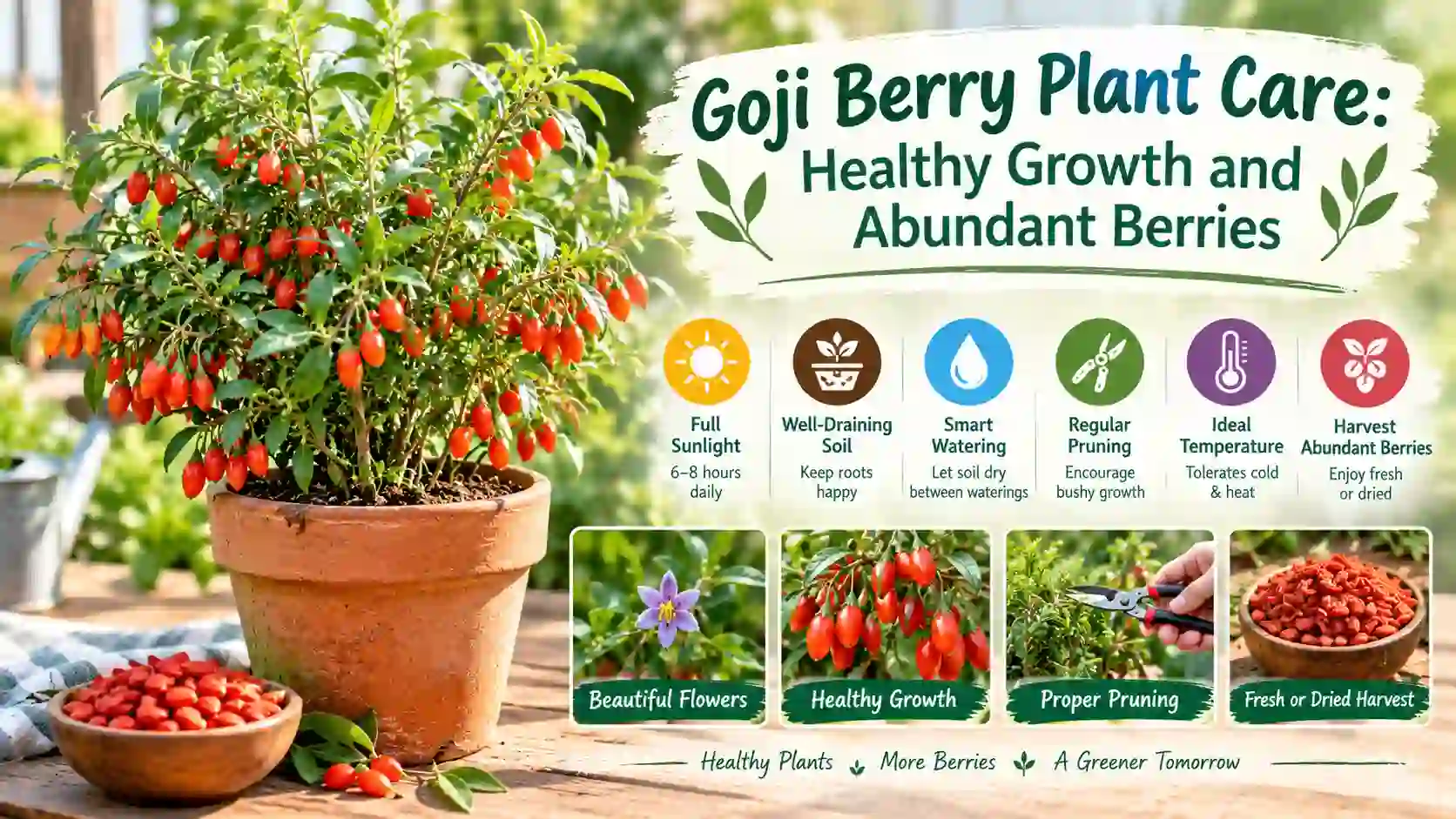
Goji berry plants are hardy fruiting shrubs known for their narrow green leaves, purple flowers, and bright red-orange berries. Gardeners grow them for their edible fruit, ornamental value, and ability to thrive in many temperate climates.
However, successful goji berry plant care involves more than planting a shrub and waiting for fruit. Poor drainage, excessive shade, inconsistent watering, and neglected pruning can all affect plant health and berry production.
Goji berries can grow in garden beds, raised beds, and large containers. They may also spread through arching branches and produce new shoots around the base, so choosing the right location makes ongoing maintenance easier.
This guide explains how to grow goji berries from young plants, maintain healthy roots and foliage, prune for better fruiting, troubleshoot common problems, and harvest ripe berries. It also covers the differences between growing goji berries in the ground and in containers, so you can adapt your care routine to your garden and climate.
Quick Answer:
Goji berry plants (Lycium barbarum) grow best in full sun, well-draining soil, and a location with good airflow. Water young plants regularly while their roots establish, then water established plants during prolonged dry periods. Prune annually to control their spreading, arching branches and encourage productive growth. Goji berries tolerate cold winters and relatively dry conditions once established, but consistent sunlight, sensible watering, and proper pruning help produce healthier plants and better fruit yields.
1. Understand the Goji Berry Plant Before You Grow It


The common goji berry plant is Lycium barbarum, also called wolfberry. It belongs to the nightshade family, which includes tomatoes, peppers, and eggplants.
Goji is a deciduous, woody shrub with slender, sometimes thorny branches. Its small flowers develop into red-orange berries under suitable growing conditions. Depending on the variety and pruning method, the plant can grow upright or develop long, arching stems.
According to Utah State University Extension, unpruned plants can reach around 12 feet, while regular pruning can keep them considerably smaller. Goji plants are self-fruitful, so you generally do not need two different plants for pollination.
Here are the main characteristics to understand:
- Growth habit: Spreading branches can take up considerable space.
- Sunlight preference: Full sun generally produces better fruit yields than shade.
- Water needs: Young plants need consistent moisture; established plants tolerate some drought.
- Cold tolerance: Many goji varieties tolerate cold winters, although young plants and container roots need extra protection.
- Fruit production: Plants may begin fruiting within a few years, depending on their variety and growing conditions.
Important planning tip: Goji can spread through root suckers. Choose a location where you can remove unwanted shoots without damaging nearby plants, paths, or lawn areas.
2. Choose the Best Location and Sunlight
Sunlight is one of the biggest factors affecting goji berry growth and fruit production. Although the plant tolerates some shade, a sunny position generally encourages more flowering and better fruiting.
How much sunlight does a goji berry plant need?
Aim for at least six hours of direct sunlight daily. Six to eight hours is a useful target for productive plants.
Choose a location that offers:
- Full morning and afternoon sunlight.
- Enough room for branches to spread.
- Good airflow around the foliage.
- Soil that does not remain waterlogged after rain.
- Convenient access for pruning and harvesting.
In very hot climates, a little afternoon shade can help young container plants cope with intense heat. However, excessive shade may lead to leafy growth with fewer flowers and berries.
Can goji berries grow in partial shade?
Yes. Goji plants can survive in partial shade, but fruit production may be lower. If your main goal is harvesting berries, choose the sunniest practical location.
If your plant grows vigorously but produces few flowers, evaluate its light exposure before changing its fertilizer routine.
Image suggestion: A 16:9 comparison infographic showing a productive goji shrub in full sun beside a leafy but less productive plant growing in partial shade.
3. Prepare the Right Soil for Healthy Roots
Goji berry plants adapt to different soil types, including sandy, loamy, and some clay soils. The most important requirement is adequate drainage. Persistently saturated soil can damage roots and increase the risk of root rot.
What soil is best for goji berries?
A well-draining loam containing some organic matter is a good choice. A soil pH around 6.5–8.0 is suitable in many growing situations, although the ideal range depends on local soil conditions and the growing system.
Before planting:
- Check whether water drains away after rainfall.
- Remove persistent weeds and competing vegetation.
- Loosen compacted soil where practical.
- Incorporate mature compost if the soil is poor in organic matter.
- Avoid adding large amounts of fertilizer or manure directly into the planting hole.
If your soil is heavy clay, use a raised bed or another well-drained planting area rather than creating a small pocket of loose soil surrounded by dense, wet clay.
Soil mix for container-grown goji berries
For a large pot, use a quality potting mix that retains some moisture without becoming soggy. You can improve drainage by incorporating perlite, pumice, or another suitable mineral amendment.
Avoid filling containers with dense garden soil. It can compact over time and make moisture management difficult.
4. Plant Goji Berries Properly
Planting correctly helps the shrub establish strong roots and reduces the need for corrective work later.

When should you plant goji berries?
In regions with cold winters, spring is often a practical planting time because the shrub has a growing season to establish before winter. Autumn planting may also work in suitable climates when roots have enough time to establish before severe cold.
In warm regions, choose a mild period and avoid planting during extreme heat.
Step-by-step planting guide
- Select a healthy plant. Look for firm stems, healthy foliage, and no obvious pest infestations.
- Choose a sunny location. Leave enough room for the shrub to spread and for you to reach its branches.
- Prepare the soil. Loosen the planting area and improve drainage where needed.
- Dig a suitable hole. Make it wide enough to accommodate the root ball without bending the roots.
- Set the plant at the correct depth. Keep the top of the root ball level with the surrounding soil.
- Backfill and water. Firm the soil gently and water thoroughly to settle it around the roots.
- Apply mulch if useful. Keep organic mulch away from direct contact with the main stem.
For multiple plants, spacing of approximately 6–7 feet is a useful starting point for many home gardens. Allow more room for vigorous varieties or when growing shrubs as spreading landscape plants.
Should you use a trellis?
A trellis or wire support can help control long branches and make fruit harvesting easier. It is especially useful if you want a tidy row of plants rather than a sprawling shrub.
Install supports early so you can guide young branches without forcing mature, woody stems into position.
5. Water Goji Berry Plants the Right Way
Goji berries need adequate water while young, particularly during warm, dry weather. Established plants are more drought-tolerant, but that does not mean they produce their best fruit when consistently deprived of moisture.
University of Florida guidance notes that water requirements vary with plant size, soil type, and season. Water supply is especially important during flowering and fruit development.
How often should you water goji berries?
There is no single schedule that suits every garden. Sandy soil dries faster than clay soil, while plants in small containers dry faster than shrubs growing in the ground.
Use these practical guidelines:
| Plant condition | Watering approach |
|---|---|
| Newly planted shrub | Check soil frequently and keep the root zone lightly moist |
| Established plant in the ground | Water deeply during prolonged dry weather |
| Flowering and fruiting plant | Avoid prolonged drought stress |
| Container-grown shrub | Check moisture more often, especially in summer |
| Cool or rainy weather | Reduce watering if the soil remains moist |
The best watering method
- Water near the base of the plant.
- Apply water slowly enough for the soil to absorb it.
- Moisten the root zone rather than wetting only the surface.
- Allow excess water to drain.
- Check soil moisture before watering again.
For a young plant, avoid letting the root ball dry out completely during establishment. For a mature plant, allow the upper soil to dry somewhat between waterings without leaving the shrub stressed for long periods.
Common mistake: Treating drought tolerance as a reason never to water. Established goji berries may survive dry conditions, but fruit size and yield can suffer when water is inadequate during critical growth stages.
6. Fertilize Goji Berry Plants Without Overdoing It
Goji berries benefit from appropriate soil fertility, but excessive fertilizer can encourage unnecessary vegetative growth and make a spreading shrub harder to manage.
For home gardens, begin by assessing soil quality and the plant’s growth. A balanced fertilizer applied according to its label may be useful in spring if the soil is poor or growth is weak. Well-prepared soil may require much less supplemental feeding.
A practical fertilizing routine
- At planting: Mix in mature compost if the soil needs organic matter.
- Early spring: Consider a balanced fertilizer when new growth begins, based on plant condition and soil fertility.
- During fruit development: Maintain consistent moisture and adequate nutrition rather than automatically adding more fertilizer.
- Late in the growing season: Avoid unnecessary nitrogen applications that encourage tender new growth before cold weather.
If your goji berry plant has plenty of leaves but few flowers, do not assume it needs more fertilizer. Excess nitrogen, insufficient sunlight, immature age, and pruning at the wrong time can all affect flowering and fruiting.
7. Prune Goji Berries for Better Growth and Fruit
Pruning is one of the most useful parts of goji berry plant care. Without maintenance, branches can become tangled, spread across nearby plants, and make harvesting difficult.
The best pruning approach depends on whether you want a compact shrub, a trained plant, or maximum fruit production.


When should you prune goji berries?
Late winter or early spring is a practical time for structural pruning in many climates, before vigorous new growth begins. Remove dead, damaged, and crossing branches first.
Goji fruiting habits can vary with cultivar and pruning system. Some guidance emphasizes preserving productive older framework, while other recommendations focus on encouraging new fruit-bearing shoots. Avoid removing all healthy older branches without understanding your plant’s growth pattern.
RHS
+2
How to prune a goji berry plant
- Wear sturdy gardening gloves because some plants have spiny stems.
- Remove dead or damaged branches.
- Cut out branches that cross and rub against one another.
- Thin crowded growth to improve airflow.
- Shorten overly long branches to a suitable side branch or support point.
- Remove unwanted root suckers before they become established.
For a newly planted shrub, focus on establishment and remove only damaged or badly positioned growth. Heavy pruning too early can delay the plant’s development.
How to encourage more berries
A productive pruning routine should allow light to reach the branches while maintaining enough healthy wood to support flowering and fruiting.
If you grow goji on a trellis, tie branches loosely and spread them apart. This improves access for maintenance and makes it easier to spot developing fruit.
Image suggestion: A labeled 16:9 pruning infographic showing dead branches to remove, crowded stems to thin, healthy framework to preserve, and new shoots to train.
8. Grow Goji Berries in Pots
You can grow goji berries in containers if you have a sunny balcony, patio, or small garden. The main challenges are providing enough root space, managing water, and controlling the plant’s spreading branches.

Choose a large container
Goji berries develop substantial root systems, so small decorative pots are usually unsuitable for long-term growth. A container of at least 5 gallons is a useful starting point, but a larger pot is often better for a mature, fruiting shrub.
Choose a pot with:
- Several unobstructed drainage holes.
- Enough depth and width for root development.
- A stable base that can support a tall shrub.
- Room for a support stake or small trellis if needed.
Container care tips
Watering: Check the soil regularly because pots can dry quickly in hot weather.
Fertilizing: Container soil has a limited nutrient supply. Feed according to plant growth and the fertilizer label rather than using repeated heavy applications.
Pruning: Keep branches within the available space and remove unwanted suckers.
Repotting: Move the plant into a larger container when roots become crowded or water passes through the pot too quickly because the root mass has filled it.
Winter protection: In cold climates, protect the container because roots in pots experience more temperature fluctuation than roots in the ground.
9. Grow Goji Berries in Hot Climates
Goji berries can tolerate heat and dry conditions once established, but intense summer weather still affects their water needs and fruit development.
If you live in a hot region, focus on managing root-zone moisture, preventing waterlogging, and reducing stress during flowering and fruiting.
Practical care for hot weather
- Plant in full sun where the plant can receive adequate light without excessive reflected heat.
- Use mulch to moderate soil temperature and reduce moisture loss.
- Water deeply when the root zone begins to dry.
- Check container plants daily during extreme heat, but water only when needed.
- Provide temporary afternoon shade for young plants if they show heat stress.
- Avoid heavy pruning during extreme heat.
A plant wilting in hot afternoon sunlight does not always need immediate watering. Check the soil first. If it is already wet, additional water can worsen root problems.
Can goji berries grow in Pakistan?
They may grow in suitable locations, but success depends on local temperatures, winter conditions, drainage, and the variety selected. Goji is adapted to temperate growing conditions, and prolonged extreme heat or humid weather can make cultivation more challenging.
For warm regions, choose a sunny but well-ventilated planting site, use well-drained soil, and monitor young plants carefully during summer. If you live in an area with very hot summers, testing one plant before establishing a larger planting is a sensible approach.
10. Propagate Goji Berry Plants
Goji berries can be propagated from seeds, stem cuttings, or root suckers. For many home gardeners, cuttings are a practical way to produce a new plant that retains the characteristics of the parent.

Propagation from stem cuttings
- Select a healthy, disease-free stem.
- Cut a suitable section with clean pruning shears.
- Remove leaves from the lower portion of the cutting.
- Insert the stem into a clean, moist, well-draining propagation medium.
- Place it in bright light away from harsh direct sun.
- Keep the medium lightly moist without saturating it.
- Check for root development over the following weeks.
Rooting time varies according to the cutting type, temperature, and growing conditions. Wait until the cutting has developed roots before moving it into a larger container.
Growing goji berries from seed
Seed propagation is possible, but seedlings may not produce fruit identical to the parent plant. They also need time to mature before they begin cropping.
For more predictable fruit quality, buy a named cultivar from a reputable nursery or propagate a healthy plant with desirable characteristics.
Should you keep root suckers?
Goji shrubs often produce shoots from their roots. You can remove these to prevent unwanted spread or carefully separate suitable suckers to grow additional plants.
Check that a sucker has enough roots to establish independently before replanting it.
11. Harvest Goji Berries at the Right Time
Goji berry plants commonly begin fruiting within a few years, although the exact timing depends on the cultivar, plant age, climate, and growing conditions. Some selected cultivars may crop earlier, while others take longer to become productive.

When are goji berries ripe?
Ripe berries usually develop a deep red-orange color and soften slightly. They should detach relatively easily when ready.
Avoid eating unripe berries. Wait until the fruit is fully colored and ripe before harvesting.
How to harvest without damaging the fruit
- Wear gloves if the shrub has spiny branches.
- Pick ripe berries gently by hand.
- Avoid squeezing the fruit because ripe berries bruise easily.
- Harvest in dry weather when possible.
- Remove damaged fruit and refrigerate fresh berries promptly.
Some gardeners gently shake ripe berries onto a clean sheet placed beneath the shrub. This can reduce handling, although it works best when the berries are fully ripe and the plant is trained for easy access.
How to store goji berries
Fresh goji berries are delicate and should be refrigerated if they will not be used promptly. For longer storage, you can dry them using a food dehydrator or another appropriate food-drying method.
Dry the berries thoroughly and store them in a clean, airtight container. Discard any fruit that develops mold or an unusual odor.
12. Common Goji Berry Plant Problems and Their Solutions
Most goji berry problems become easier to manage when you identify the underlying cause instead of treating every symptom with fertilizer or water.
| Problem | Likely cause | What to do |
|---|---|---|
| Yellow leaves | Waterlogging, nutrient imbalance, or seasonal leaf drop | Check soil moisture and the plant’s seasonal growth pattern |
| Wilting leaves | Drought, heat stress, or damaged roots | Inspect the root zone before watering |
| Few flowers | Insufficient sun, young plant, or excessive nitrogen | Improve light and review fertilizer use |
| Flowers but few berries | Weather, pollination conditions, or plant stress | Maintain suitable moisture and observe flowering |
| Brown or dead branches | Winter injury, drought, or disease | Prune damaged wood and assess growing conditions |
| White powder on foliage | Possible powdery mildew | Improve airflow and remove badly affected material |
| Sticky leaves or clusters of insects | Possible aphids | Inspect new growth and treat the identified pest |
| New shoots appearing far from the shrub | Root suckering | Remove unwanted shoots and monitor the surrounding soil |
Goji berries can be affected by aphids, mites, leaf beetles, fungal diseases, and root problems. Good airflow and appropriate watering reduce some risks, but they do not eliminate every pest or disease.
Why is my goji berry plant not producing fruit?
Several factors can delay fruiting or reduce the crop:
- The plant is still too young.
- It receives insufficient sunlight.
- It has been pruned too heavily.
- Excess nitrogen encourages leafy growth.
- Water stress affects flowering or fruit development.
- Local weather is unsuitable during flowering.
Start by checking the plant’s age, light exposure, and pruning history. Avoid making several drastic changes at once.
Why are my goji berry leaves turning yellow?
Yellowing can indicate excessive soil moisture, nutrient problems, or natural seasonal leaf drop. Goji is deciduous, so some leaf loss during autumn is normal in climates with cool winters.
If yellowing occurs during active growth, inspect the soil. Persistently wet soil points toward drainage or watering problems, while pale growth in otherwise healthy, well-drained soil may justify checking nutrient availability.
How do I control goji berry root suckers?
Remove unwanted shoots while they are young. If the plant is spreading into lawn or garden beds, inspect the surrounding area regularly.
Planting goji where you can mow or maintain the perimeter makes long-term management easier. Invasive behavior varies with conditions, but the plant’s tendency to spread should be considered before planting.
13. Seasonal Goji Berry Care Calendar
Goji berry care changes throughout the year. Use this seasonal guide as a starting point and adjust it to your local climate.

Spring — Plant, inspect, and prune
Plant new shrubs when conditions are suitable. Remove damaged branches, check soil drainage, and consider a balanced fertilizer if needed.

Summer — Support flowering and fruiting
Monitor moisture, especially during heat waves. Maintain airflow, guide spreading branches, and watch for aphids and other pests.
Autumn — Harvest and prepare
Pick fully ripe berries, remove fallen fruit, and reduce watering when the soil dries more slowly. Avoid encouraging excessive tender growth late in the season.

Winter — Protect and plan
Let established outdoor plants enter dormancy naturally. Protect container roots from severe cold and plan structural pruning for the appropriate time before spring growth.
The exact timing of flowering, harvesting, and dormancy varies with climate and cultivar. In warm regions, these stages may not follow the same calendar as they do in colder temperate areas.
14. Frequently Asked Questions About Goji Berry Plant Care
How much sunlight does a goji berry plant need?
Goji berries grow best in full sun, ideally receiving at least six hours of direct sunlight daily. More sunlight generally supports better flowering and fruit production when other growing conditions are suitable.
How often should I water a goji berry plant?
Water young plants regularly while their roots establish. Mature plants generally need supplemental water during prolonged dry periods, especially when flowering and producing fruit. Always consider soil moisture, weather, and drainage.
Can goji berries grow in pots?
Yes. Use a large container with drainage holes, quality potting mix, and a sunny location. Monitor watering carefully because container soil can dry quickly in hot weather.
Do goji berry plants need two plants to produce fruit?
No. Goji berry plants are generally self-fruitful, so a single plant can produce fruit. However, its age, growing conditions, and cultivar influence how much fruit it produces.
How long does it take for a goji berry plant to produce fruit?
Some plants begin fruiting within one to three years, but timing varies by cultivar and growing conditions. Plants may take several more years to reach their full production potential.
Should I prune my goji berry plant every year?
Annual pruning is useful for controlling size, removing dead wood, and improving airflow. However, prune according to the plant’s growth habit and fruiting system rather than removing large amounts of healthy wood automatically.
Why does my goji berry plant have flowers but no berries?
Possible causes include unsuitable weather during flowering, plant stress, insufficient sunlight, or problems affecting fruit set. Check watering, light, and plant health before applying additional fertilizer.
Can goji berries survive winter?
Many goji varieties are cold-hardy, particularly when established in the ground. Young plants and container-grown shrubs may need additional protection in severe winter conditions.
Do goji berry plants need fertilizer?
Not always. Plants in reasonably fertile soil may grow well with little supplemental feeding. If growth is poor, check sunlight, drainage, and root health before assuming a nutrient deficiency.
Are goji berry plants invasive?
Goji plants can spread through root suckers and seeds in some environments. Their behavior varies by location, so check local guidance before planting and remove unwanted shoots regularly.
Can I grow goji berries in a hot climate?
Potentially, yes. Choose a sunny, well-drained location and monitor moisture carefully during extreme heat. Local climate suitability and the variety selected are important, particularly where summers are persistently hot and humid.
When should I harvest goji berries?
Harvest when the berries are fully colored, usually red-orange, and detach easily. Handle them gently to avoid bruising and refrigerate fresh fruit if you will not use it promptly.
Conclusion: Build a Healthy, Productive Goji Berry Plant
Successful goji berry plant care begins with a sunny location, well-draining soil, and sensible watering. Once the plant establishes strong roots, it generally needs less attention than many other fruiting shrubs.
To keep your plant healthy and productive:
- Choose a sunny planting site with enough room for spreading branches.
- Water young plants consistently and established plants when conditions require it.
- Avoid waterlogged soil and excessive fertilizer.
- Prune thoughtfully to maintain a manageable shape and encourage productive growth.
- Watch for pests, root suckers, and signs of water stress.
- Harvest berries only when they are fully ripe.
The most important step is to match your care routine to your growing conditions. A goji berry shrub in a hot container needs different attention from one growing in the ground in a temperate garden.
With suitable sunlight, careful moisture management, and regular maintenance, you can grow a healthy shrub that adds attractive foliage, delicate flowers, and homegrown berries to your garden.