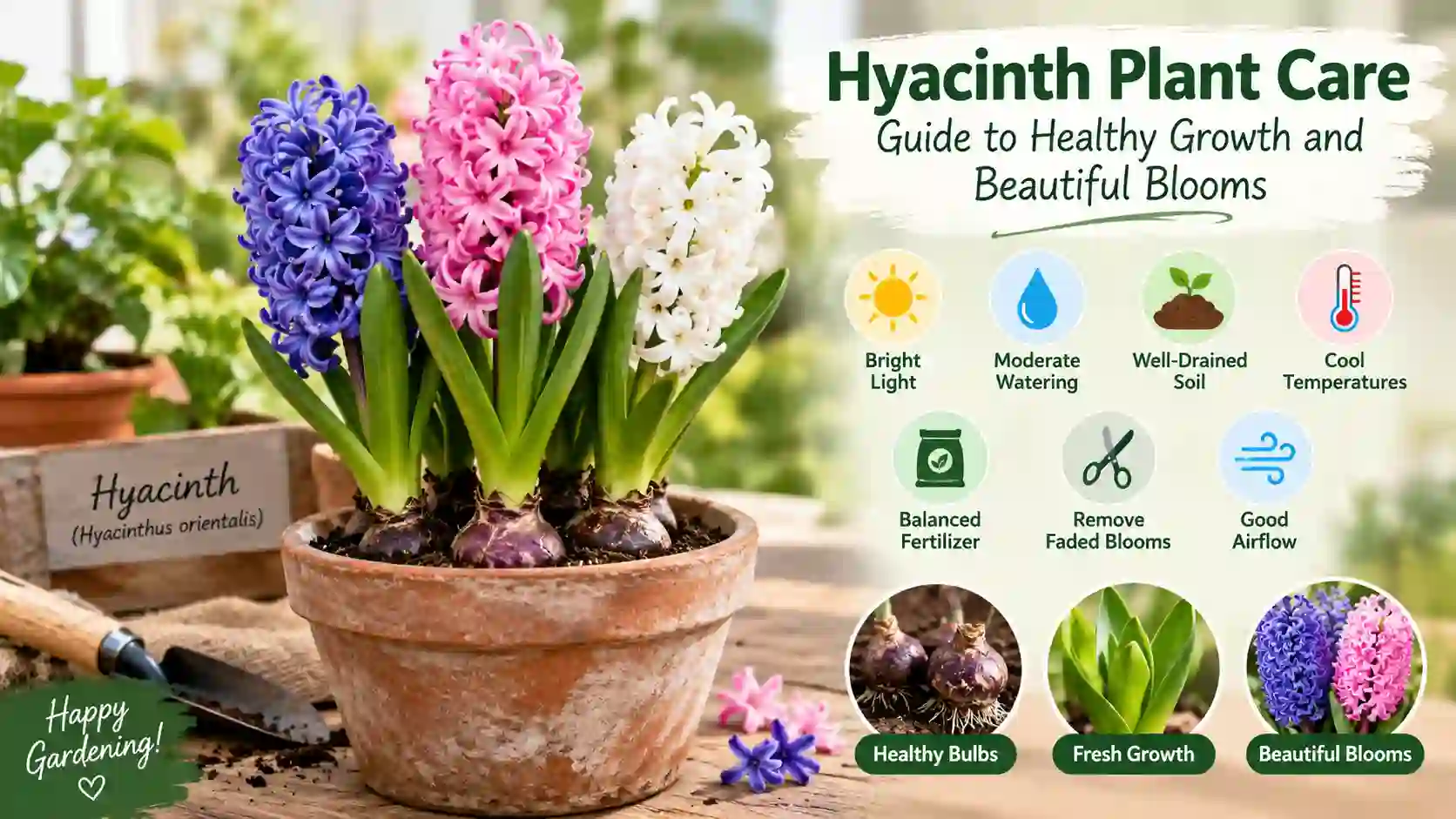
Hyacinths are popular spring-flowering bulbs known for their dense flower spikes, vibrant colors, and sweet fragrance. Their flowers appear in shades of purple, pink, blue, white, yellow, and red, making them excellent choices for garden borders, containers, and indoor displays.
However, successful hyacinth plant care requires more than occasional watering. These bulbs need the right combination of light, temperature, moisture, and seasonal timing to flower well.
One common mistake is treating hyacinths like ordinary houseplants. Many indoor hyacinths are grown from bulbs that need a period of cold temperatures before flowering. Without this chilling period, they may produce leaves but fail to bloom properly.
This guide explains how to grow hyacinths indoors and outdoors, encourage healthy flowers, solve common problems, and care for bulbs after blooming. You’ll also learn what to do when flowers fade and how to help your hyacinths return in future seasons.
Quick Answer:
Hyacinth plant care involves providing bright light, well-draining soil, moderate moisture, and cool temperatures. Plant bulbs in autumn for spring blooms outdoors, or chill prepared bulbs before growing them indoors. Water when the soil begins to dry, but never leave bulbs sitting in soggy soil. After flowering, remove faded flower spikes while keeping healthy leaves intact. Those leaves help replenish the bulb’s energy for future growth.
1. Understanding the Hyacinth Plant

Hyacinth (Hyacinthus orientalis) is a spring-flowering bulb in the asparagus family, Asparagaceae. It produces upright flower spikes covered with small, fragrant, bell-shaped flowers.
Most garden hyacinths grow approximately 6–12 inches tall, depending on the variety and growing conditions.
Hyacinths are commonly grown in:
- Garden beds and borders
- Pots and decorative containers
- Indoor seasonal displays
- Special bulb vases filled with water
They are perennial bulbs, but flower quality may decline after the first season.
What makes hyacinths different from ordinary houseplants?
Hyacinths store energy in their bulbs. Their leaves collect sunlight, while the bulb stores nutrients needed for future growth and flowering.
This means their care changes throughout the year. They need active growth and flowering conditions in one season, followed by a natural resting period.
A hyacinth that stops flowering after its first indoor display is not necessarily dead. It may simply need a complete growing cycle before it can bloom again.
Image suggestion: A botanical identification infographic showing a hyacinth bulb, roots, green leaves, flower spike, and mature blooms.
2. Hyacinth Plant Care Requirements at a Glance
Use this table as a quick reference when planning your care routine.
| Care factor | Recommended conditions |
|---|---|
| Light | Full sun to partial shade outdoors; bright light indoors |
| Water | Keep soil lightly moist during active growth, never waterlogged |
| Soil | Fertile, well-draining potting mix or garden soil |
| Temperature | Cool conditions support flowering; avoid excessive indoor heat |
| Planting time | Usually autumn for spring flowers |
| Planting depth | About 4 inches deep for garden bulbs, adjusting for bulb size and local guidance |
| Fertilizer | Moderate feeding when needed during active growth |
| Flowering season | Usually spring outdoors |
| Dormancy | Allow leaves to yellow and die naturally |
| Propagation | Mainly through offsets and specialist bulb propagation |
Hyacinths perform best when their growing conditions match their seasonal cycle. Good drainage and appropriate winter chilling are especially important.
3. Choosing the Right Location and Light
Light affects leaf strength, flower development, and the plant’s ability to store energy after blooming.
Growing hyacinths outdoors
Choose a location that receives full sun or light partial shade. A sunny position generally produces stronger flowering, especially when bulbs remain in the ground for several years.
Good planting locations include:
- Along garden paths where you can enjoy the fragrance.
- Near entrances and patios.
- In raised beds with good drainage.
- In containers placed in a bright outdoor area.
Avoid low spots where rainwater collects. Bulbs can rot if the soil remains saturated.
Growing hyacinths indoors
Place a flowering hyacinth near a bright window where it receives plenty of natural light without excessive heat.
A cool room is usually better than a hot windowsill above a radiator or heater. Excess warmth can cause flower stems to grow weakly or flowers to open before the stems elongate properly.
RHS
+1
Rotate the pot occasionally if the plant leans toward the window. This encourages more balanced growth.
Expert tip: If the flower spike is short and the blooms open among the leaves, move the plant to a cooler, bright location. More fertilizer will not correct a temperature-related problem.
Image suggestion: A side-by-side comparison of a healthy hyacinth in bright, cool light and a stretched hyacinth in a dim, warm room.
4. How to Water a Hyacinth Plant Correctly

Watering is one of the most important parts of hyacinth plant care. The bulb needs moisture to develop roots and support flowers, but excessive moisture can cause rot.
How often should you water hyacinths?
There is no universal watering schedule. Frequency depends on temperature, pot size, drainage, sunlight, and whether the plant is actively growing.
Follow these guidelines:
- Check the top inch of potting mix with your finger.
- Water when the surface begins to dry and the mix underneath is no longer wet.
- Apply water evenly around the soil rather than repeatedly soaking the bulb’s neck.
- Let excess water drain completely.
- Empty the saucer so the pot never sits in standing water.
During active growth and flowering, check the soil more frequently. Reduce watering as the foliage yellows and the bulb enters dormancy.
What happens if you overwater hyacinths?
Overwatering reduces oxygen around the roots and encourages bulb decay. Early warning signs include yellowing leaves, a soft bulb, unpleasant smells, and persistently wet soil.
If you notice these symptoms, stop watering temporarily and check the bulb and roots. If the bulb is mushy or rotten, it may not recover.
Can you grow hyacinths in water?
Yes. Special hyacinth vases allow roots to grow into water while the bulb remains above the waterline.
For this method:
- Fill the vase until the water sits just below the bulb’s base.
- Keep the bulb itself out of the water.
- Place the vase in a cool, dark location initially while roots develop.
- Move it into brighter light once the roots and shoots have developed.
- Keep the water level below the bulb and refresh it when necessary.
Direct contact between the bulb and water increases the risk of rot. Hyacinths grown this way are usually treated as seasonal displays, and reblooming can be difficult.
Image suggestion: A three-step watering infographic showing soil inspection, watering a potted hyacinth, and excess water draining through the pot.
5. The Best Soil and Pot for Hyacinths
Hyacinths need soil that holds enough moisture for root development but drains quickly enough to prevent rot.
Best soil mix
For container growing, use a quality, well-draining potting mix. A mix formulated for flowering plants can work well if it does not remain soggy.
You can improve drainage by incorporating a suitable coarse material, such as horticultural grit or perlite, into a dense potting mix.
For outdoor beds, improve heavy soil with suitable organic matter and choose a location where water drains freely. If the ground stays wet after rain, a raised bed or container may be a better option.
Choosing a suitable pot
Select a container with drainage holes. It should be deep enough to accommodate the bulbs and their roots without crowding them.
For a fuller display, plant several bulbs close together, leaving a little space between them. Avoid letting bulbs touch, and keep them away from the pot’s edges.
Do not add a layer of stones to the bottom as a substitute for drainage holes. The entire container should allow excess water to escape.
Expert tip: A decorative outer pot can hide a plain nursery pot, but remove the inner pot for watering and allow it to drain before returning it to the display.
Image suggestion: An educational cutaway illustration of a hyacinth bulb planted in well-draining soil inside a pot with drainage holes.
6. When and How to Plant Hyacinth Bulbs
Planting time determines whether bulbs have enough time to develop roots and receive the cold conditions needed for flowering.
When should you plant hyacinth bulbs?
In climates with cool winters, plant outdoor hyacinth bulbs in autumn, generally before the ground freezes. This gives them time to establish roots before spring growth begins.
In warm-winter climates, standard garden hyacinths may not receive sufficient natural chilling. Choose pre-chilled bulbs or prepared varieties suitable for your conditions, and follow the supplier’s guidance.
Step-by-step planting guide

Step 1: Select healthy bulbs
Choose firm, plump bulbs without soft spots, deep cuts, mold, or unpleasant odors. Wear gloves if your skin is sensitive to bulb handling.

Step 2: Prepare the soil
Loosen the ground and remove weeds. Improve drainage before planting rather than trying to fix waterlogged soil afterward.

Step 3: Position the bulbs
Place each bulb with its pointed end facing upward and its root plate facing downward. Garden bulbs are commonly planted about 4 inches deep, with spacing adjusted for bulb size and local recommendations.

Step 4: Cover and water
Cover the bulbs with soil, water to settle the mix, and allow excess moisture to drain. Avoid repeatedly watering soil that is already wet.
For outdoor beds, a spacing of approximately 3 inches between bulbs is common. Container displays can be more closely spaced as long as the bulbs do not touch.
Image suggestion: A planting-depth diagram showing bulb orientation, soil coverage, spacing, and the roots developing below the surface.
7. How to Grow Hyacinths Indoors
Indoor hyacinths bring color and fragrance into the home during the cooler months. However, flowering successfully indoors depends on choosing the right bulbs and providing suitable temperatures.
Do indoor hyacinths need chilling?
Most traditional hyacinth bulbs need a period of cold exposure to flower properly. Many varieties require approximately 10–12 weeks of chilling, although the exact requirement varies by cultivar and preparation.
If you want flowers during winter, purchase bulbs labeled prepared or pre-chilled for indoor flowering.
Indoor growing steps
- Fill a pot with well-draining potting mix and make sure it has drainage holes.
- Plant prepared bulbs with their pointed tips facing upward.
- Keep the container in the recommended cool conditions for the required chilling period, if the bulbs are not already chilled.
- Once shoots and roots develop, gradually introduce the pot to bright light.
- Maintain cool indoor temperatures while the flowers develop.
- Water when needed without allowing the potting mix to become waterlogged.
After chilling, flowers often appear within a few weeks, depending on the variety and growing conditions.
Why are my indoor hyacinths not flowering?
The most likely reasons include:
- The bulbs did not receive enough cold treatment.
- The bulbs were small, damaged, or depleted.
- The plant received insufficient light during growth.
- Excessive warmth disrupted flower-stem development.
Check the bulb’s growing instructions before changing your watering or fertilizer routine. Chilling is often the missing step.
Image suggestion: A four-panel infographic showing a hyacinth bulb during chilling, root development, green shoot growth, and full indoor flowering.
8. Temperature and Humidity Requirements
Hyacinths generally prefer cool growing conditions, especially while their flower spikes develop.
| Growth stage | Recommended approach |
|---|---|
| Root development | Provide the cool conditions required by the bulb variety |
| Shoot growth | Keep the plant cool and bright |
| Flowering | Avoid hot rooms and sudden temperature changes |
| After flowering | Maintain suitable light and moisture while green leaves remain |
| Dormancy | Allow the foliage to die back naturally |
Indoor hyacinths often last longer in a cool room than in a warm room. High temperatures can shorten the display and cause stems to become weak or flowers to fade quickly.
Hyacinths do not usually need special humidity equipment. Normal household humidity is generally sufficient when the plant receives suitable light and watering.
Avoid placing flowering plants beside heaters, hot appliances, or strong drafts.
9. Fertilizing Hyacinths for Healthy Growth
Hyacinths store much of their flowering energy in their bulbs. Fertilizer supports growth, but it cannot compensate for poor drainage, inadequate chilling, or unhealthy bulbs.
When should you fertilize?
Outdoor bulbs planted in fertile soil may need little additional feeding during their first season.
For container-grown hyacinths, a suitable flowering-plant fertilizer may help support foliage after blooming. The Royal Horticultural Society recommends a liquid, high-potassium feed for container-grown bulbs from early spring until around six weeks after flowering. Follow the product label for dosage and frequency.
Common fertilizing mistakes
- Applying fertilizer to dry or stressed roots.
- Using excessive nitrogen, which can encourage leafy growth without improving flowering.
- Feeding dormant bulbs.
- Assuming fertilizer will make a bulb flower again immediately after indoor forcing.
Expert tip: If your hyacinth has healthy green leaves but no flowers, investigate chilling history and bulb condition before adding more fertilizer.
Image suggestion: A simple fertilizer infographic showing a flowering hyacinth, a measured liquid feed, and healthy green foliage.
10. What to Do After Hyacinths Finish Flowering

Post-flowering care determines how well a hyacinth bulb stores energy for a future season.
When flowers fade, the plant still needs its leaves. They continue photosynthesis, helping replenish the bulb’s reserves.
Follow these steps after flowering
- Remove the faded flower spike. Cut the flower stalk near its base without damaging the leaves.
- Keep the leaves intact. Allow them to remain green for as long as possible.
- Continue watering appropriately. Keep the soil lightly moist while the leaves are actively growing.
- Provide sufficient light. Place indoor pots in a bright location or grow outdoor bulbs in a sunny spot.
- Let the foliage die naturally. Reduce watering as the leaves turn yellow and dry.
- Prepare for the next season. Leave suitable outdoor bulbs in well-drained soil, or lift and store bulbs where local conditions require it.
Cutting the foliage off while it is still green weakens the bulb and can reduce future flowering.
Will indoor hyacinths bloom again?
Sometimes, but it depends on how they were grown.
- Outdoor garden bulbs: Often return in suitable climates, although flower spikes may become smaller over time.
- Indoor bulbs grown in potting mix: Can sometimes be planted outdoors after flowering, but may need a season to rebuild their reserves.
- Bulbs grown in water: Often struggle to flower again because they have limited opportunities to rebuild their energy reserves.
Forced bulbs are generally less reliable for repeat flowering than bulbs grown naturally outdoors.
Image suggestion: A seasonal timeline illustrating flowering, deadheading, green-leaf growth, natural dieback, and the next planting season.
11. Common Hyacinth Problems and How to Fix Them
Hyacinth problems are easier to solve when you identify whether the cause is watering, temperature, light, bulb quality, or the natural growth cycle.

Yellow leaves
Likely causes: Overwatering, poor drainage, or natural seasonal dieback.
What to do: Check soil moisture and inspect the bulb if yellowing happens early. If flowering has finished and the leaves are gradually yellowing, allow them to die naturally.

Flower stems falling over
Likely causes: Warm conditions, a heavy flower head, or insufficient light.
What to do: Move the plant to a cooler, bright location. Use a small support if necessary, taking care not to pierce the bulb.

Leaves but no flowers
Likely causes: Insufficient chilling, an immature or depleted bulb, or poor growing conditions.
What to do: Verify the variety’s chilling requirements and let the leaves complete their growth cycle. Do not expect extra fertilizer to replace missing cold exposure.

Soft or rotten bulbs
Likely causes: Waterlogged soil, inadequate drainage, or bulb disease.
What to do: Remove badly rotted bulbs and discard them. Improve drainage and avoid replanting in contaminated or persistently wet soil.

Flowers opening too low among the leaves
Likely causes: The room is too warm or the flower stem has not elongated properly.
What to do: Move the pot to a cooler, bright room as soon as you notice the problem.
Temperature-related flowering problems and bulb rot are recognized issues in hyacinth cultivation.
12. How to Propagate Hyacinths
Hyacinths can be propagated through offsets, which are small bulbs that develop beside the parent bulb. However, they usually multiply slowly.
Propagating through offsets
- Allow the parent plant to finish flowering.
- Keep the leaves healthy until they naturally die back.
- During the appropriate dormant period, carefully lift the bulb if conditions allow.
- Separate well-developed offsets from the parent bulb.
- Replant the offsets at the recommended depth and spacing.
- Continue growing them through successive seasons.
Small offsets may need several growing seasons before they produce substantial flowers.
Can you propagate hyacinths from seeds?
Yes, but seed propagation is slow and is mainly useful for breeding or specialist growing. Seed-grown plants may take several years to flower, and their characteristics may differ from those of the parent plant.
For most home gardeners, offsets are the more practical option.
Image suggestion: A labeled illustration showing a mature hyacinth bulb, attached offsets, and newly separated young bulbs.
13. Seasonal Hyacinth Plant Care Calendar
The exact calendar depends on your climate and whether you grow hyacinths indoors or outdoors.
| Season | Main care task |
|---|---|
| Autumn | Plant outdoor bulbs in suitable climates; begin chilling unprepared bulbs intended for indoor flowering |
| Winter | Maintain appropriate cold treatment and protect containers from unsuitable temperature extremes |
| Spring | Enjoy flowering, deadhead faded blooms, and support healthy leaves |
| Late spring to summer | Allow foliage to die naturally; reduce watering during dormancy |
| Next planting season | Replant stored bulbs or leave suitable bulbs in the ground |
In warm climates, natural winter temperatures may not provide enough chilling for reliable flowering. In those conditions, prepared bulbs and controlled chilling are often more practical than relying on the local seasonal cycle.
14. Common Hyacinth Care Mistakes to Avoid
Avoid these common errors to keep your bulbs healthy and your flowers attractive.
- Watering on a fixed schedule: Check the soil instead of watering automatically.
- Using pots without drainage: Excess moisture can damage roots and bulbs.
- Skipping the chilling period: Many varieties need cold treatment before flowering.
- Keeping flowering plants too warm: High temperatures can shorten blooms and weaken stems.
- Cutting green leaves too early: The bulb needs those leaves to replenish its reserves.
- Expecting forced bulbs to rebloom immediately: Indoor forcing can deplete bulbs, and recovery may take a full growing season.
- Ignoring bulb quality: Soft, damaged, or diseased bulbs are poor candidates for planting.
- Handling bulbs without protection when sensitive: Hyacinth bulbs may irritate skin, so wear gloves if needed and wash your hands afterward.
The most important principle is to match care to the bulb’s stage of growth. Healthy flowering starts with the right bulb, suitable temperatures, and well-drained soil.
15. Are Hyacinths Safe for Homes With Pets?
Hyacinths are not considered safe to eat. All parts can cause stomach upset if ingested, and the bulbs can be particularly problematic. Handling bulbs may also trigger skin irritation in sensitive people.
If you have pets or young children:
- Place pots where they cannot easily be reached or knocked over.
- Store spare bulbs securely.
- Wear gloves when handling bulbs if you have sensitive skin.
- Contact a veterinarian or appropriate medical professional promptly if ingestion occurs.
Do not assume a plant is safe simply because it is commonly sold as a decorative flower.
16. Frequently Asked Questions About Hyacinth Plant Care
How often should I water a hyacinth plant?
Check the soil regularly and water when the surface begins to dry. Keep the soil lightly moist during active growth, but never leave the bulb sitting in water. Reduce watering as the foliage naturally dies back.
Do hyacinths need full sun?
Outdoor hyacinths generally flower best in full sun, although they can tolerate partial shade. Indoor plants need bright light, and cooler conditions help flowers last longer.
Can hyacinths grow indoors all year?
Hyacinths can be displayed indoors during their growing and flowering period, but they are not typical year-round houseplants. They follow a seasonal cycle that includes flowering and dormancy.
Why is my hyacinth not blooming?
Common causes include insufficient chilling, poor bulb quality, inadequate light, or a bulb that has not recovered from previous flowering. Check its growing requirements before changing fertilizer or watering.
Should I cut off hyacinth leaves after flowering?
No. Remove the faded flower stalk, but leave green leaves intact until they turn yellow and die naturally. The leaves help replenish the bulb’s energy reserves.
Can hyacinths grow in pots?
Yes. Use a container with adequate drainage and a well-draining potting mix. Plant several bulbs together for a fuller display, leaving a little space between them.
Can hyacinths grow in warm climates?
They can be grown in suitable conditions, but many traditional varieties need a period of cold exposure to flower well. Pre-chilled or prepared bulbs are often the most practical option where winters are mild.
How long do hyacinth flowers last?
Flowering duration depends on the variety, temperature, and growing conditions. Flowers generally last longer in cool conditions than in hot rooms.
Do hyacinths come back every year?
Outdoor bulbs may return for several years when the climate and soil conditions suit them. Flower quality can decline over time. Indoor forced bulbs may need recovery time and might not flower well again.
Are hyacinths toxic to cats and dogs?
Yes. Hyacinths can cause illness if eaten, and the bulbs are particularly concerning. Keep them away from pets and contact a veterinarian if ingestion occurs.
Conclusion
Successful hyacinth plant care comes down to a few essential habits: choose healthy bulbs, provide appropriate light and cool growing conditions, use well-draining soil, and water according to soil moisture rather than a rigid schedule.
For outdoor plants, autumn planting and suitable winter conditions help prepare bulbs for spring flowering. For indoor displays, prepared bulbs and correct chilling are often the keys to success.
Most importantly, do not remove healthy leaves when the flowers fade. Let the foliage die back naturally so the bulb can replenish its energy.
With the right seasonal care, hyacinths can bring beautiful colors and an unmistakable fragrance to your garden or home. Start with the right bulb and growing conditions, and the rest of the process becomes much easier.