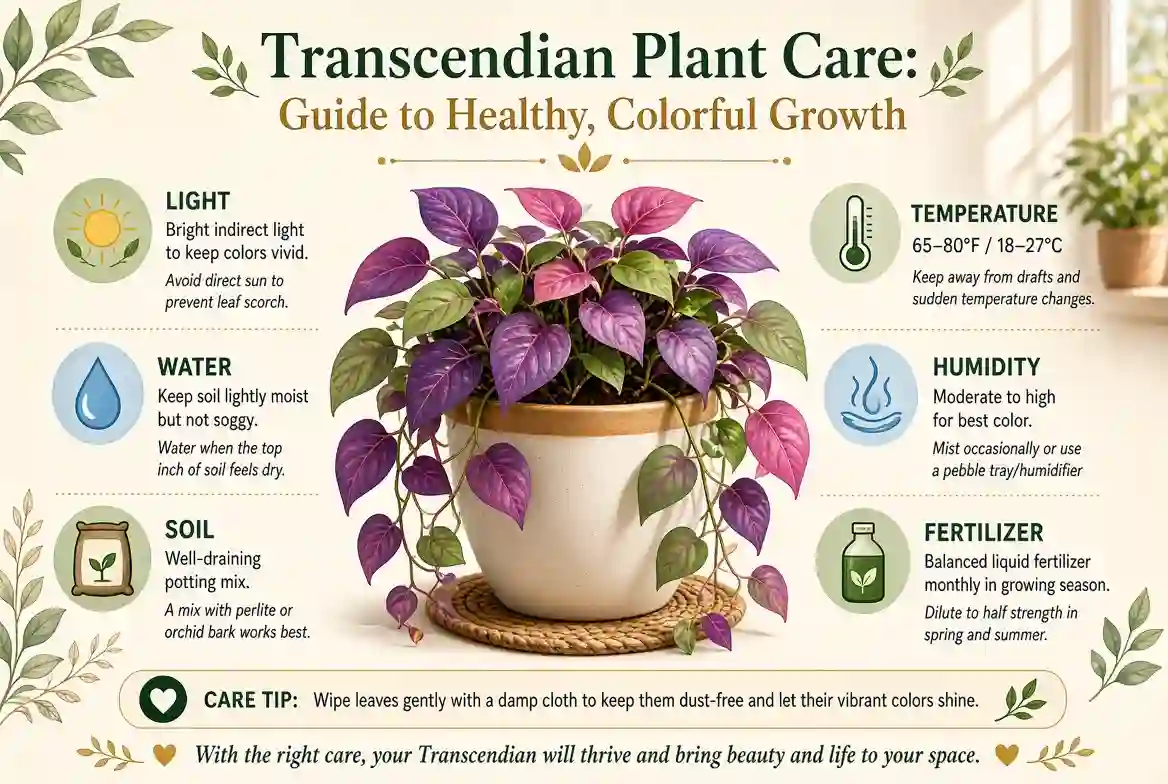
Searching for transcendia plant care can be confusing because the plant name may be misspelled on a label, website, or online listing. If your plant has trailing stems and colorful, striped leaves, it may be a Tradescantia.
Tradescantia plants are popular for their decorative foliage, quick growth, and easy propagation. However, even these forgiving houseplants can develop faded colors, brown leaves, bare stems, or rotting roots when their growing conditions are unsuitable.
The secret to keeping Tradescantia attractive is balancing light and moisture. Regular pruning also matters because older stems can become sparse while their tips continue growing.
This guide covers plant identification, lighting, watering, soil, propagation, seasonal care, and common problems. If your plant’s label specifically says “Transcendia,” check its botanical name or share a photo before applying these recommendations.
Quick Answer:
If your plant is a Tradescantia, provide bright, indirect light, well-draining potting mix, and moderate watering. Let the upper layer of soil dry before watering again, and never leave the pot standing in water. Trim long stems regularly to encourage fuller growth. Most Tradescantia varieties are easy to propagate from stem cuttings, making it simple to refresh a sparse plant and create new ones.
1. How to Identify Your Plant Before Caring for It
Before changing your watering routine or buying plant-care products, check the leaves and growth pattern. Similar-looking houseplants can have very different needs.

Zebra plant — Tradescantia zebrina
Look for green and silver stripes, purple undersides, and trailing stems. It is a common match for searches about colorful Tradescantia care.
Wisconsin Horticulture

Purple Heart — Tradescantia pallida
This variety has elongated leaves and deep purple foliage. It generally needs stronger light to maintain its rich color.
Fine Gardening
+1

Tradescantia ‘Nanouk’
Its broader leaves display pink, green, white, and violet tones. Protect it from harsh direct sunlight, especially when growing it indoors near a hot window.
Wisconsin Horticulture
+1
If your plant has large, solid-green heart-shaped leaves or finely divided fern-like fronds, it may be a different genus entirely. Identify it before following a specific care routine.
Image suggestion: A botanical identification infographic showing three Tradescantia varieties, their leaf patterns, and their botanical names.
2. Light Requirements for Healthy, Colorful Leaves
Light is one of the most important parts of Tradescantia care. It affects leaf color, stem strength, and how closely new leaves grow together.
Where should you place the plant?
Choose a location with bright, indirect light for most of the day. An east-facing window often works well because it provides gentler morning sunlight.
A bright south- or west-facing window can also work if you place the plant away from intense midday or afternoon rays.
| Light condition | Likely result | What to do |
|---|---|---|
| Bright, indirect light | Strong growth and attractive foliage | Maintain the position |
| Very low light | Long stems and fading colors | Move it closer to a bright window |
| Harsh direct sunlight | Scorched or bleached leaves | Filter the sunlight |
| Sudden exposure outdoors | Possible sunburn | Acclimate gradually |
Tradescantia zebrina can lose its vivid markings in low light. However, intense sun in hot climates can also fade or damage foliage.
How to tell if your plant needs more light
Look at the newest growth rather than judging only the oldest leaves.
If new stems grow long distances between leaves, the plant may not be receiving enough light. Faded patterns and leaf loss near the pot can also indicate poor lighting.
Move the plant gradually to a brighter position. Avoid correcting the problem by adding fertilizer first, because extra nutrients cannot replace insufficient light.
Image suggestion: A side-by-side comparison of a compact, colorful Tradescantia in bright indirect light and a pale, leggy plant in a dark corner.
3. Watering: How Much and How Often?
Watering mistakes are a common cause of declining houseplants. Tradescantia prefers moisture during active growth but does not tolerate continuously soggy potting mix.
When should you water?
Use this simple method:
- Touch the upper layer of the potting mix.
- If it still feels damp, wait and check again later.
- If the surface layer has dried, check slightly deeper before watering.
- Water thoroughly when needed, allowing excess water to escape through the drainage holes.
- Empty the saucer so the roots do not remain in standing water.
The exact interval depends on temperature, light, pot size, soil composition, and plant growth. A small pot in warm, bright conditions may dry much faster than a large pot in a cool room.
Should you water on a fixed schedule?
No. A weekly schedule can be a useful reminder, but it should not determine whether the plant needs water.
In warm weather, the mix may dry quickly. During winter or periods of weak light, the same pot may stay moist for considerably longer.
The reliable approach is to check the soil each time.
Signs of incorrect watering
| Symptom | Possible cause | Practical response |
|---|---|---|
| Soft, mushy stems near the soil | Excess moisture or root rot | Check roots and improve drainage |
| Drooping with dry soil | Underwatering | Water thoroughly |
| Yellowing leaves with wet soil | Overwatering or poor drainage | Let the mix dry appropriately and inspect roots |
| Crispy, dry leaves | Drought, intense sun, or dry air | Check soil moisture and lighting |
These symptoms can overlap, so always inspect the soil before deciding what is wrong.
Image suggestion: A four-step watering infographic showing soil inspection, thorough watering, drainage, and checking moisture before the next watering.
4. Best Soil and Pot for Tradescantia
A suitable potting mix holds enough moisture for the roots while allowing excess water to escape. Dense, compacted soil can remain wet for too long and increase the risk of root problems.
Recommended potting mix
Start with a quality indoor potting mix that drains freely. If it stays wet for too long, incorporate a suitable aeration material such as perlite according to the mix’s texture and your growing conditions.
The goal is a mix that remains lightly moist after watering but does not become waterlogged.
Choose the right container
Look for a pot with drainage holes. A decorative pot without drainage can trap water around the roots.
Choose a container only modestly larger than the root ball. An oversized pot holds more unused soil, which can remain wet after the roots have absorbed what they need.
Repot when roots crowd the container, drainage becomes difficult, or the mix has broken down. Moving a healthy plant into a much larger pot simply to encourage faster growth is unnecessary.
Image suggestion: A labeled soil-and-pot infographic featuring a Tradescantia, an airy potting mix, perlite, and a container with drainage holes.
5. Temperature and Humidity
Most common tropical Tradescantia houseplants grow well in ordinary warm indoor conditions. Protect them from frost, cold drafts, and abrupt temperature changes.
- Temperature: Aim for comfortable room temperatures and avoid exposing the plant to cold conditions.
- Humidity: Average household humidity is usually adequate for common varieties.
- Airflow: Maintain gentle air circulation around dense foliage.
- Placement: Keep the plant away from direct blasts of air from air conditioners or heaters.
If you live in a hot climate, watch the plant’s response to window heat. A bright location is useful, but a hot pane receiving intense afternoon sun can scorch leaves.
Do not assume brown edges automatically mean the room is too dry. Check watering, sunlight, and root health before making changes to humidity.
6. Fertilizing for Steady Growth
Tradescantia grows relatively quickly when conditions are favorable. During active growth, a balanced liquid houseplant fertilizer can support healthy foliage.
The Royal Horticultural Society recommends monthly feeding during active growth for Tradescantia zebrina, with less watering during winter.
silver inch plant
Follow these guidelines:
- Use a balanced fertilizer labeled for houseplants.
- Apply it according to the product label, avoiding excessive concentrations.
- Feed mainly during active growth.
- Reduce or stop feeding when growth slows significantly.
- Avoid fertilizing a severely stressed plant until you identify the problem.
Overfertilizing will not fix faded foliage caused by low light. It can also contribute to salt buildup in the potting mix.
If a crust forms on the soil surface or leaf tips brown after repeated feeding, review the fertilizer concentration and watering practices.
7. Pruning: How to Keep Your Plant Full and Bushy
A Tradescantia may look lush at the tips while becoming sparse near the pot. This is common in fast-growing trailing plants, particularly when light is insufficient or the stems have grown for a long time.
Regular pruning helps manage the shape and encourages branching. The removed stems can also become new plants.
Step-by-step pruning guide
- Inspect the plant and identify long, bare, or damaged stems.
- Use clean scissors to cut just below a healthy node.
- Remove dead or mushy growth.
- Pinch growing tips when the plant is actively growing.
- Replant healthy cuttings to fill empty areas around the pot.
Do not cut every stem back severely at once if the plant is already weak. Remove the worst growth first and improve the growing conditions.
The most important point is to address the reason the plant became leggy. Pruning alone cannot compensate for inadequate light.
Image suggestion: A step-by-step pruning infographic showing a healthy Tradescantia stem, the node to cut below, and fresh cuttings being placed back into the pot.
8. How to Propagate Tradescantia from Cuttings
Propagation is one of the easiest ways to refresh an aging plant. Healthy stem cuttings can develop roots in water or moist potting mix, without requiring rooting hormone.
Method A: Propagation in water
- Choose a healthy stem with several leaves and visible nodes.
- Cut below a node with clean scissors.
- Remove any leaves that would sit underwater.
- Place the lower node in clean water while keeping the leaves above the surface.
- Keep the cutting in bright, indirect light and replace the water when it becomes cloudy.
- When the roots are developed enough to handle potting, transfer the cutting into a draining container with suitable potting mix.
Method B: Propagation in soil
- Take healthy cuttings with at least one or two nodes.
- Place the lower node against or just beneath lightly moist potting mix.
- Keep the mix slightly moist without making it soggy.
- Provide bright, indirect light and avoid intense heat.
- Check for new growth as the cuttings establish.
Which propagation method is better?
| Method | Main advantage | Main consideration |
|---|---|---|
| Water | Roots are easy to observe | Roots must adapt to potting mix afterward |
| Soil | Cuttings establish directly in their growing medium | Root development is less visible |
For a fuller-looking plant, place several established cuttings around the edge of the original pot. This fills empty spaces and creates a more balanced appearance.
Image suggestion: A propagation infographic comparing Tradescantia cuttings rooting in a clear glass of water and in moist potting mix.
9. Common Transcendia Plant Care Problems and Solutions
If your plant is struggling, diagnose the visible symptom before changing several care conditions at once.

Problem: Long, leggy stems
Likely cause: Insufficient light or growth that has not been pruned.
Fix: Move the plant to brighter indirect light, then trim long stems and root healthy cuttings to fill sparse areas.

Problem: Yellow leaves
Likely cause: Overwatering, poor drainage, or normal aging of older leaves.
Fix: Check the soil and roots. If roots are dark, soft, or foul-smelling, remove damaged portions and repot into fresh, well-draining mix.

Problem: Brown or crispy leaves
Likely cause: Dry soil, excessive sunlight, fertilizer buildup, or dry conditions.
Fix: Check soil moisture first. If the soil is wet, do not add more water automatically; examine the roots and lighting instead.

Problem: Faded or mostly green leaves
Likely cause: Light levels that are too low for strong coloration.
Fix: Increase bright, indirect light gradually. Observe the color of new leaves rather than expecting old leaves to regain their original pattern immediately.
A practical troubleshooting rule
If several symptoms appear together, examine the growing conditions in this order:
- Check whether the soil is excessively wet or completely dry.
- Inspect the stems and roots for rot.
- Review the amount and intensity of light.
- Check for pests, especially spider mites, aphids, mealybugs, and thrips.
- Review recent fertilizer use and any sudden environmental changes.
Tradescantia can be susceptible to several common houseplant pests, including spider mites, mealybugs, aphids, and thrips.
Image suggestion: A troubleshooting chart comparing leggy growth, yellow leaves, brown edges, and faded foliage with a practical fix beneath each symptom.
10. Seasonal Care: Spring, Summer, Autumn, and Winter
Tradescantia care should follow the plant’s growth and the conditions in your home, rather than a rigid calendar.
| Season | Care priorities |
|---|---|
| Spring | Resume regular checks for watering needs, prune as needed, and begin feeding if growth becomes active. |
| Summer | Monitor soil more frequently in warm weather and protect foliage from harsh afternoon sun. |
| Autumn | Reduce fertilizer as growth slows and check how quickly the pot dries. |
| Winter | Water less often when the mix stays wet longer, provide the brightest suitable light, and avoid cold drafts. |
In warmer regions, a plant kept near a sunny window may continue growing during much of the year. In cooler rooms or lower light, growth may slow considerably.
The soil is a better watering guide than the season alone.
11. Common Mistakes to Avoid
Even an easy-care plant can decline when small mistakes become habits.
- Watering automatically: Check soil moisture instead of watering just because a certain number of days has passed.
- Keeping the plant in a dark corner: The plant may survive, but growth can become stretched and colors may fade.
- Using a pot without drainage: Trapped water can keep the roots wet for too long.
- Ignoring bare stems: Prune and propagate before the plant becomes severely sparse.
- Overfeeding: Excess fertilizer will not solve problems caused by unsuitable light or watering.
- Changing several conditions at once: Adjust one major factor, then observe the new growth before making further changes.
- Ignoring plant identification: A different plant sold under an unusual label may require a different care routine.
One overlooked point is that an older Tradescantia can become sparse even when it is not seriously ill. Replanting healthy cuttings can be more effective than trying to preserve every old stem.
12. Is Transcendia Plant Care Safe Around Pets?
Because “Transcendia” is not a verified plant identification, its safety cannot be determined from that name alone.
Some Tradescantia species can irritate sensitive skin. The University of Wisconsin notes that the sap of Tradescantia zebrina may cause skin irritation in susceptible people, while the Royal Horticultural Society identifies it as a potential skin allergen.
Take these precautions:
- Wear gloves if you have sensitive skin or are pruning extensively.
- Wash your hands after handling cut stems.
- Keep unidentified plants away from children and pets until you confirm their identity.
- Check a reliable veterinary or poison-control resource if a pet chews the plant.
Do not assume a plant is pet-safe because it is sold under an unfamiliar name.
13. Frequently Asked Questions
Is Transcendia a real plant?
“Transcendia” is not a name I could verify as a recognized houseplant genus or species in the botanical sources reviewed. It may be a spelling error, a seller’s label, or a name used informally. Check the plant’s botanical name before following a specific care guide.
Is Transcendia the same as Tradescantia?
Possibly, but the names cannot be treated as interchangeable without identifying the plant. If your plant has trailing stems and purple, silver, green, or pink-striped foliage, it may be Tradescantia.
How often should I water a Tradescantia plant?
Water when the upper layer of potting mix has dried and the soil beneath is approaching dryness. Water thoroughly, allow excess water to drain, and adjust the interval according to light, temperature, and pot size.
Why is my Tradescantia losing its purple color?
Insufficient light is a common reason for fading foliage. Move the plant gradually to a brighter position with indirect light, and avoid harsh sunlight that can scorch leaves.
How do I make Tradescantia grow fuller?
Pinch or trim the growing tips to encourage branching. Root healthy cuttings and replant them in sparse areas. Also improve the light if the stems have become long and thin.
Can Tradescantia grow indoors?
Yes. Many Tradescantia varieties grow well indoors in bright, indirect light, suitable potting mix, and a container with drainage holes.
Can I grow Tradescantia in water?
Yes. Healthy stem cuttings can root in water. Once they have developed sufficient roots, you can transfer them to potting mix and keep the mix appropriately moist while they establish.
Does Tradescantia need fertilizer?
A balanced houseplant fertilizer can support active growth. Follow the label and reduce feeding when growth slows. Fertilizer is not a substitute for proper lighting or watering.
Why are the stems of my plant turning mushy?
Mushy stems near the soil may indicate excessive moisture or root rot. Check the roots, remove severely damaged tissue, and repot healthy portions into fresh, well-draining mix if necessary.
Is Tradescantia safe for cats and dogs?
Do not assume it is safe to chew. Some Tradescantia species can cause irritation, and the exact risk depends on the plant’s identity. Confirm the species and consult a reliable veterinary resource.
Conclusion:
Successful transcendia plant care starts with identifying the plant correctly. If you have a Tradescantia, focus on bright indirect light, moderate watering, well-draining soil, and regular pruning.
When growth becomes sparse, do not immediately add more fertilizer or water. Check the light, soil moisture, and roots first. Then use healthy cuttings to refresh the plant and fill empty areas.
Most importantly, verify the botanical name if your plant was sold as “Transcendia.” Accurate identification is the first step toward providing the right care.